Lamborghini recently hit a milestone with their Lamborghini Aventador LP700-4 – they have produced 2000 Aventadors’ in the short time span of two years. That comes out to five cars a day. The 2000th example is Nero Nemisis (black), bound for the U.S. AT&T’s Chief Information Officer, Thaddeus Arroyo. He also happens to own a Gallardo LP550-2 Spyder, according to Lamborghini.
In case you’ve forgotten, the Aventador is powered by a 6.5-liter V-12 engine good for 700 hp and 509 lb-ft of torque. Power is sent through a seven-speed single-clutch transmission to all four wheels via a Haldex all-wheel-drive system. The Italian supercar is good for a top speed of 217 mph.
Here’s a picture of the proud Lamborghini crew posing in front of #2000. Congratulations, Lamborghini. I can’t wait to post on #10000!
After almost 16 of being noticeably absent from the legendary 24 Hours of Le Mans endurance race, Porsche is developing a prototype. The last Porsche-backed effort at Le Mans was in 1998, when a Porsche 911 GT1 won 1st place overall.
A few days ago, Porsche teased some pictures and a video of the LMP1 prototype running laps around the Nurburgring. The car will be entered in the World Endurance Championship 2014 Season, as well as the 24 Hours of Le Mans.
The 2014 Porsche LMP1 was developed in-house by Porsche Motorsports. Factory driver Timo Berhnard was involved with the development of the car from Day 1. He recently took the car out for initial testing at Porsche’s massive R&D center in Germany. Berhnard said of the car, “I’m very proud that I was the one to take our baby through its first paces today. Already now the car feels great. I look forward to testing the vehicle in the coming weeks and months with my friend and colleague Romain Dumas.” Both Bernhard and Dumas will conduct testing for the final development of the LMP1 car at various international tracks between now and the start of the 2014 race season.
While the LMP1 may still be clad in camouflage, one can see that the car will be very distinctive. It has eight bug-eyed headlamps, a gigantic front spoiler, and a surprisingly small rear wing for a car that will be going down the back straights of many tracks in speeds exceeding 200 mph. Be prepared.
Don’t ask me about the location – I don’t know why! I guess South Africa is full of car buffs. The Franschhoek Motor Museum is located about an hour away from Cape Town, South Africa. It contains a horde of classic cars that will make ANYBODY’s mouth start drooling!
About 100 cars out of a collection of 300 are displayed at one time. According to the knowledgeable staff, about 200 of the cars run. Five full-time mechanics take painstaking care of them, while restoring selected cars that don’t run. Each of the running cars is driven at least once a month, on days when the museum is closed to the public. The cars don’t sit there doing nothing, either!
One nice feature of the museum is that the museum offers rides in one or two cars to visitors. It can be educational for children of all ages to be crammed next to the driver in a 1930’s Austin. Visitors can also be chauffeured around in an early-1950’s BMW 502 Sedan, or lounge in the backseat of a Rolls-Royce Silver Shadow and a Cadillac Fleetwood (both cars are rare to South Africans).
From Formula 1 race cars to humble two-stroke DKW sedans from post-war Germany, the collection marries idiosyncrasy with a deep appreciation for the significant cars of the past century.
There is a wide variety of cars that range from the crowd-pleasing Ferrari 250 GT SWB and the McLaren F1, but also more obscure, rare cars like the 1911 Lorraine Dietric luxury tourer with a brass horn in the shape of a snake curling along its fender, or a 1910 Wolseley town car from the Edwardian period.
For truck lovers, they can stare at the 1923 Ford Model T pickup with wooden sides and the Chesterfield Cigarettes logo.
For those of you who have owned a Japanese sports car, you know that they have the perfect balance of performance, practicality, and speed. My dad drove a 1970 Datsun 240Z, one of the most sought-after Japanese cars – ever! It was fast, barrels of fun, reliable, and easy to drive (if one didn’t mind the light, loose rear end). It was fast in the curves, but it could win in a straight line, as well. He could get 1/4 mile times in the 11.5 second range. He would pass Ferrari’s, Porsche’s, Lamborghini’s, and just about every other super car of the early 1980’s. But, he would be smoked by the time he reached 1/2 of a mile. He was topped out by then. He didn’t mind.
One of our family friends owns a 1967? Datsun Fairlady Roadster. It’s a sight to see! It looks like a Triumph, but it’s way better! It seats the same amount of people, yet it weighs almost 300 pounds less. It’s also infinitely more reliable, and faster.
I have compiled a list of the top 25 Japanese sports cars that enthusiasts give the thumbs-up to. Enjoy my list.
1969 Toyota 2000GT: The Toyota 2000GT was Toyota’s answer to the Porsche 911 and Jaguar E-Type. It was the unspoken answer. James Bond drove one in You Only Live Twice. To this day, that chase scene is one of the best in movie history. The Toyota 2000GT looked like a Jaguar E-Type Coupe that sat two. However, it’s high price and exclusivity prevented it from becoming the Japanese Jaguar E-Type.
1970 Datsun 240Z: The Datsun 240Z was designed to be an affordable, faster, better-looking competitor to the Chevrolet Corvette and Porsche 911. The Datsun 240Z was powered by a 2.4-liter inline 6-cylinder engine making somewhere close to 200 horsepower. It weighed about 2500 pounds, so it went everywhere in a hurry. It could keep up with Ferrari 250 GTO’s on the track all day long, and shame a Camaro Z/28 in a drag race. This car was a rocket. Today, 240Z’s sell for about $25,000 for a good example. But, don’t buy one at an auction – Barrett-Jackson sold one in Monterrey for $155,000 in 2012.
1985 Toyota MR2: The Toyota MR2 was one of the smallest sports cars of the 1980s. It was also like looking at a race car. It had a mid-mounted 1.6-liter 4-banger that pumped out 125 horsepower. It revved to 9000 RPM, and had a cam for every 3000 RPM. It had a top speed of 154 mph, and it was stable in almost every condition. It tipped the scales at 1900 pounds.
1999 Toyota Supra: The Toyota Supra was the last true Toyota-built sports car. It was also a massive change in technology and direction for Japanese sports cars. It was powered by a 3.0-liter inline six cylinder engine that was boosted by twin turbos that ramped power up to a raspy 220 horsepower. It was fast, and it looked like it came out of rally-car racing. It had a massive rear wing, a raspy engine note that turned into a bellowing howl at redline, and meaty tires that wouldn’t look out of place on a Dodge Viper. This puppy wants to play.
1986 Toyota Celica AE86: The 1980s were the peak of lightweight sports cars. The Toyota Celica AE86 was no exception. It was based off of the AE86-generation Corolla economy car (that generation was the only generation of Corolla that was fun to drive!). It was light, insane, relatively powerful, good-looking, and fun to drive. My dad wanted one (he ended up buying a Honda Accord). So did most teens and young adults. That’s how good the Celica AE86 was. It left a lasting impression on everybody who drove it.
1996 Nissan Silvia S15: The Nissan Silvia S15 was the last generation of the wildly popular Nissan Silvia. It boasted a powerful 250-horsepower six-cylinder engine that was helped out by a massive turbocharger. At full throttle, it sounded like a F/14 Tomcat fighter jet. Tuners adored it. Paul Walker, star of the Fast & Furious series movies, owns a 580-horsepower S15 Silvia.
1990 Mazda MX-5 Miata: The 1990 Mazda MX-5 Miata turned the world around. Safety standards in the U.S. were so strict that it was almost impossible to build a light roadster. Mazda had the RX-7 (but it was powered by a rotary engine), but it was too heavy and large. Mazda built the Miata out of forged aluminum, which brought the car’s weight down to 2000 pounds. Other automakers were building cars that weighed 3500 pounds, because they thought it was more expensive to build cars out of forged aluminum. Mazda proved them all wrong. The 1990 Mazda MX-5 Miata is still one of the most amazing cars in the world to drive.
1993 Mazda RX-7 CSL: The Mazda RX-7 is one of the few cars to be powered by a rotary engine. The RX-7 CSL was a lightweight version of the popular RX-7. It was faster, and all models were built for Japan (right hand drive). Except for one. The only Mazda RX-7 CSL to have left-hand drive is at Mazda USA’s headquarters in California.
2007 Toyota MR-S: The Toyota MR-S is viewed to be the last sports car that Toyota built. Yes, Lexus and Scion build sports cars, but Toyota doesn’t anymore. Anyways, the Toyota MR-S paid homage to the MR2 of the 1990s, with a mid-mounted engine and front-wheel drive. While it may look like a chick magnet, it is one fast chick magnet.
2000 Acura Integra GS-R: The Acura Integra was one of the best-selling Acura’s ever. It had a high-revving I4 engine, a five-speed manual transmission, it was practical, and it was fast. All of that was put together into a tidy, sleek package. The final iteration of the Integra introduced the world to something called VTEC. While VTEC is standard on all four-cylinder Honda’s and Acuras, altered valve timing and valve lift was F1 stuff in 2000.
2006 Mazda Mazdaspeed 3: The Mazda 3 was already a popular economy car, but Mazda knew that they could get far more out of the car. They turned to their in-house tuner, Mazdaspeed. Mazdaspeed turbocharged the engine, put big, aluminum rims, sticky tires, a big rear wing, and torque steer. Torque steer is what Mazdaspeed is associated with nowadays.
2000 Mazda RX-8: The Mazda RX-8 may have ended production in 2011, but that doesn’t stop it from being on this list. It had suicide doors (now only seen in pickup trucks), a rotary engine, and good looks. It also happened to be heavy and under powered. Nothing stopped people from loving, however.
1998 Nissan 240SX: The Nissan 240SX was popular here in the States. Not only did it have stunning looks, but it had performance to match it. Unfortunately, the only engine we got here was a 2.4-liter four-banger from the Frontier pickup truck.
1986 Nissan Pulsar GTI-R: This car could not be built again. It was a subcompact hatchback that could barely squeeze two adults into the tiny cabin. The GTI-R took performance to a whole different level. It was built to satisfy World Rally Championship homogilation rules. Only 5,000 baby Godzilla’s were built, but they were fast. Fast as a bat out of hell. It had a turbocharged engine, AWD, and lots of bodykit add-ons.
2009 Nissan GT-R: The Nissan GT-R has been around for over 40 years in some form or another. Godzilla was Motor Trend’s 2009 Car of the Year. It packed a twin-turbocharged 3.8-liter V6. Nissan has come out with various iterations of this generation of the GT-R. The most recent is the 2013 Nissan GT-R Track Pack (the fastest stock Nissan to date).
1988 Honda CRX Si: The Honda CRX was one of the fastest econoboxes of the 1980s. It was light, extremely fun to drive, and stylish. Plus, it was based off of the wildly popular Civic. The CRX Si was the final CRX. In the U.S., it came with a less powerful I4 than Japan’s. That ushered in the era of Honda shade-tree mechanics.
2003 Nissan 350Z: The Nissan 350Z brought back affordable, quick, sportiness to the world. It was about the same size of the 300SX, but it didn’t have two turbochargers. It had a powerful naturally-aspirated V6 that garnered praise from automotive journalists around the world. The engine was so sweet that Nissan still uses it for many of their V6 cars.
2000 Acura Integra Type-R: Yes, I know that there are two Acura Integra’s on this list. They deserve to be. Especially this one. The Integra Type-R was the last Integra made. It got the Type-R treatment (lower weight, more power, more looks, more chassis-stiffening). It was also the most stolen Acura to date.
2000 Honda S2000: Most people celebrate their 50th birthday with lots of friends and family. Honda built a very special car. The Honda S2000 was a track-oriented beast of a car. It had a 237-horsepower engine, rear-wheel-drive, and perfect balance. A manual transmission helped a lot, as well.
2009 Subaru Impreza WRX STi: Subaru took the hum-drum Impreza, turned it into a rally-rocket with a turbocharged engine, a manual transmission, and lots of bodywork. Then, Subaru’s rally team got their hands on it. They built the raucous Impreza WRX STi. STi stands for Specially Tuned Impreza. It is fast, practical, and barrels of fun. It’s the equivalent of a bouncy ball coming out of a gumball dispenser. Unfortunately, it’s ending production. Buy one while you can.
2010 Mitsubishi Lancer EVO MR/GSR: This is possibly the most radical Mitsubishi ever. It has a 291-horsepower turbocharged I4. It also has a dual-clutch transmission pulled from rally cars. AWD is standard.
Datsun 510: The Datsun 510 closely resembles a BMW 2002 Tii. Why? Why not? Japanese automakers used to build their cars in a similar fashion to their European competitors. It came with fully independent suspension, a Positraction rear end, a five speed manual, and a high-revving four-banger. It was a hoot to drive.
Acura NSX: The first widely produced Japanese exotic car sent Ferrari, Lamborghini, Porsche, and Chevy scrambling for the drawing board. It changed the definition of super car. In my eyes, it’s the most influential Honda ever. If that wasn’t a big enough slap to Ferrari, Lamborghini, Porsche, and Chevy, F1 driver Ayrton Senna assisted in the development of the car.
Scion FR-S/Subaru BRZ: The Scion FR-S and Subaru BRZ may only have 200 horsepower, but they are so perfect at what they do that it’s not even funny. They are rear-wheel-drive beasts on winding roads and tracks. Just don’t drag race anything other than a Smart Car. You’ll lose. Badly.
1993 Honda Prelude: The Honda Prelude was one step behind the Acura NSX in terms of looks, performance, and just about everything. It had front-wheel-drive, VTEC (shhh!), seating for four, and stunning good looks. It revved to 10,000 RPM in some versions, and power was always there. It is still a collector’s item for Japanese car fans. I can only wonder why…
One might think that you would have to be drunk or high to crash your perfectly good car into a tree to test out the airbags. You might also think that you can stuff your airbags back into their containers for another round of tree-bashing. Ehh! Please try again!
You might even think the German man who did all of these things was clearly under the influence of some other psychotropic drug, if he wasn’t drunk. Try again.
Uwe Schrager, a German man, attempted to add to the already-large world of automotive research.
When police and emergency response crews arrived at the scene, the perfectly conscious Schrager explained his methodology: He had crashed into concrete walls at lower speeds, before deciding to test out his hypothesis on an innocent tree. Poor tree.
Police are currently evaluating him for psychiatric issues.
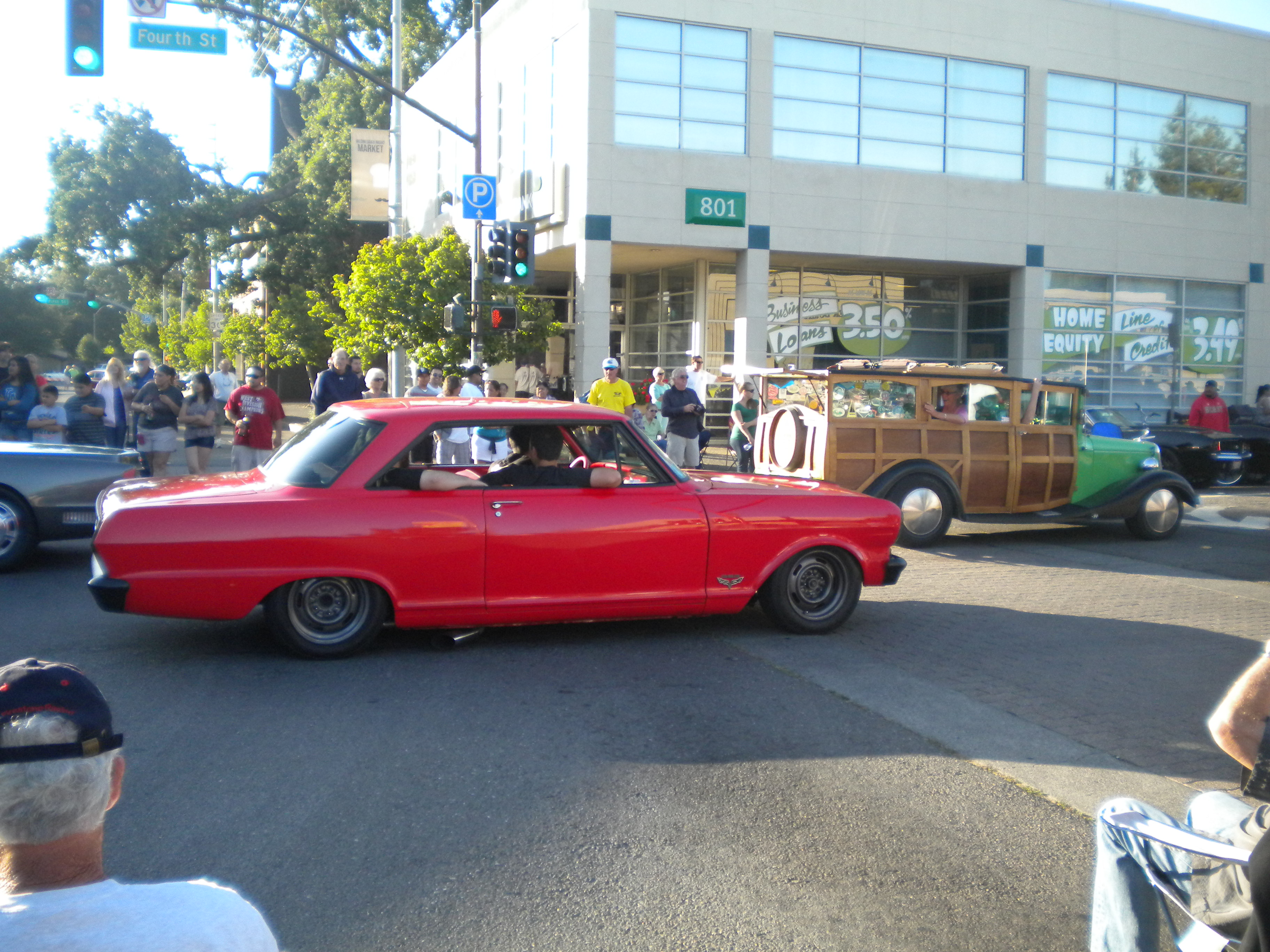
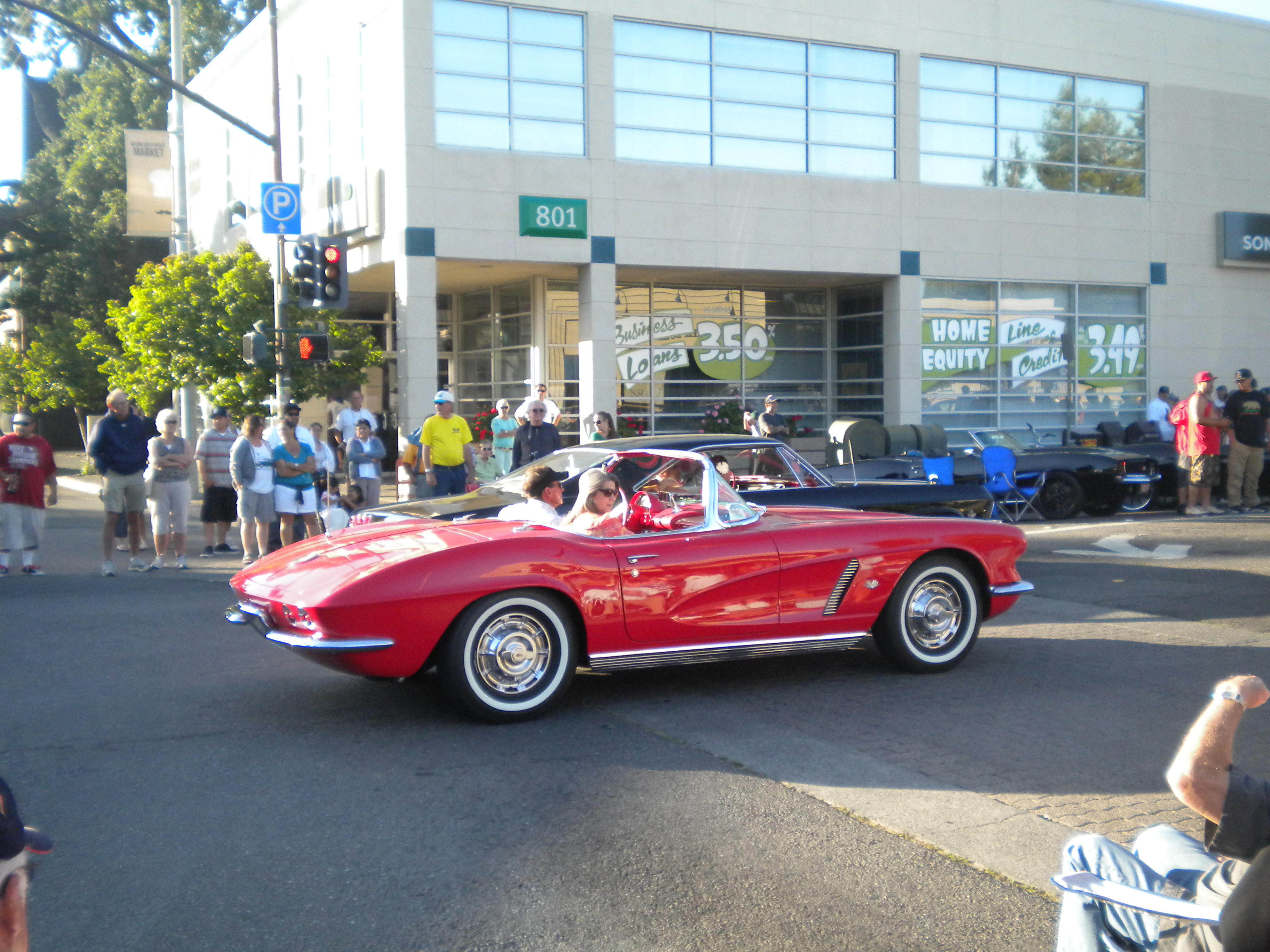
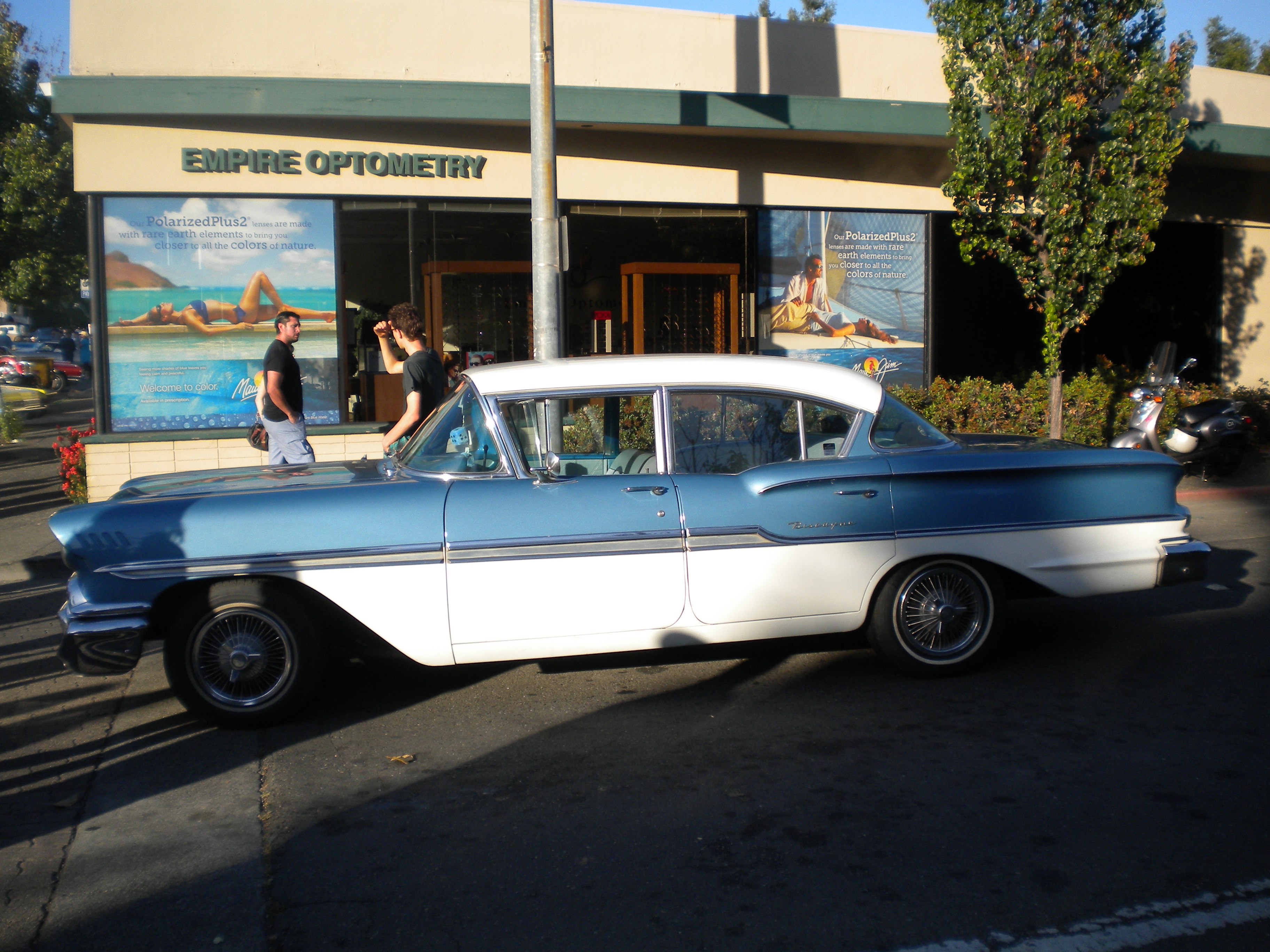
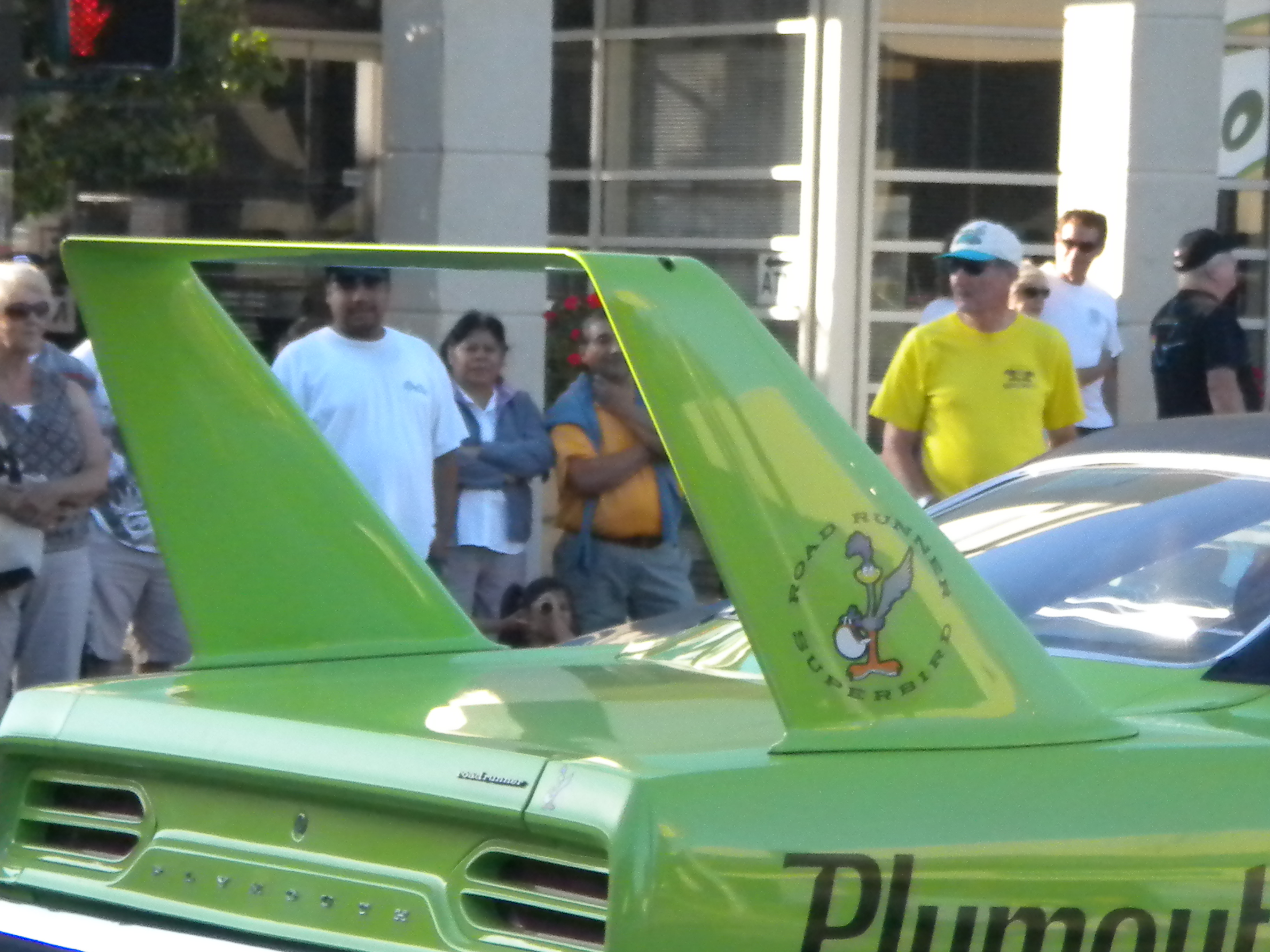
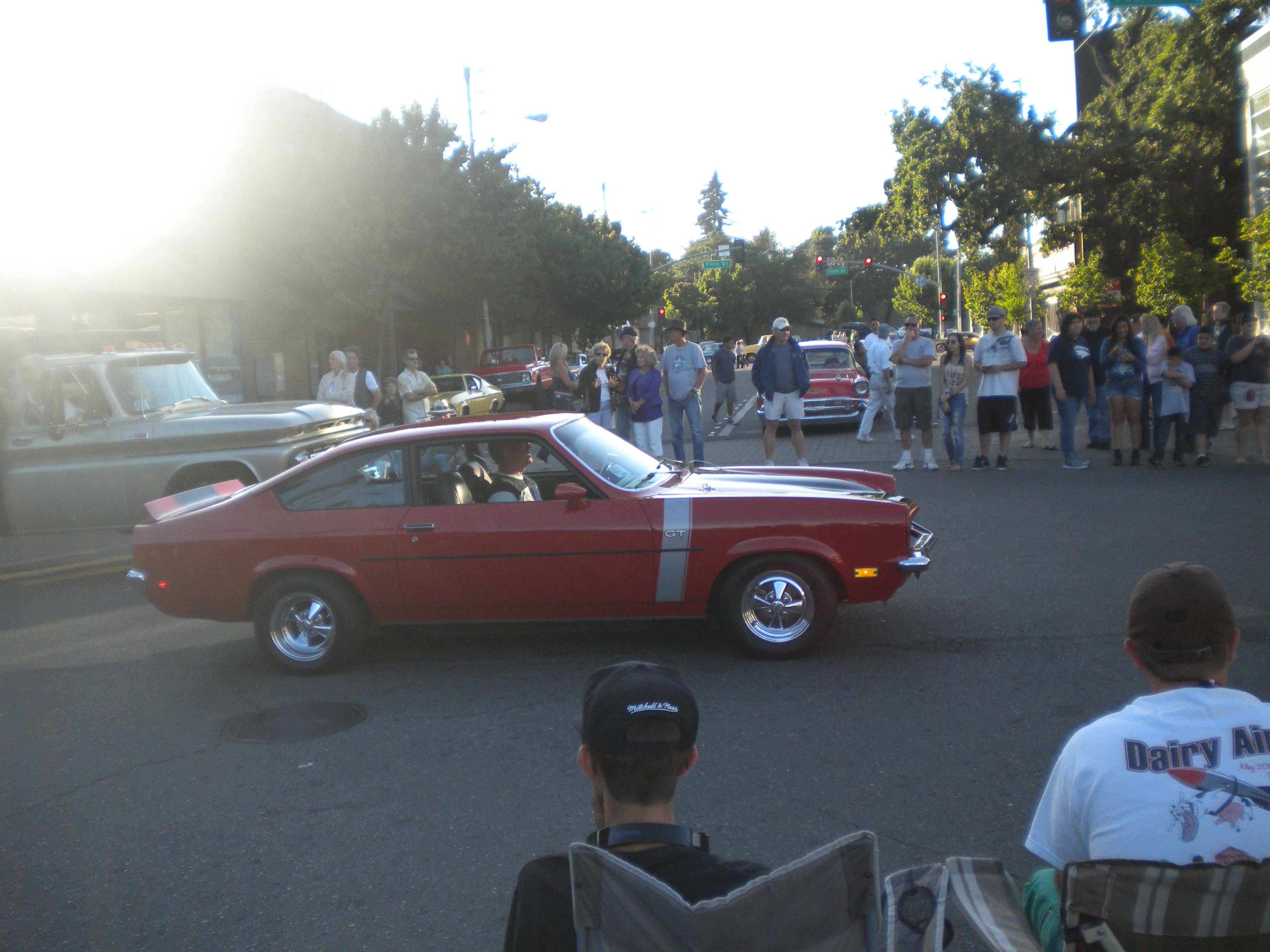
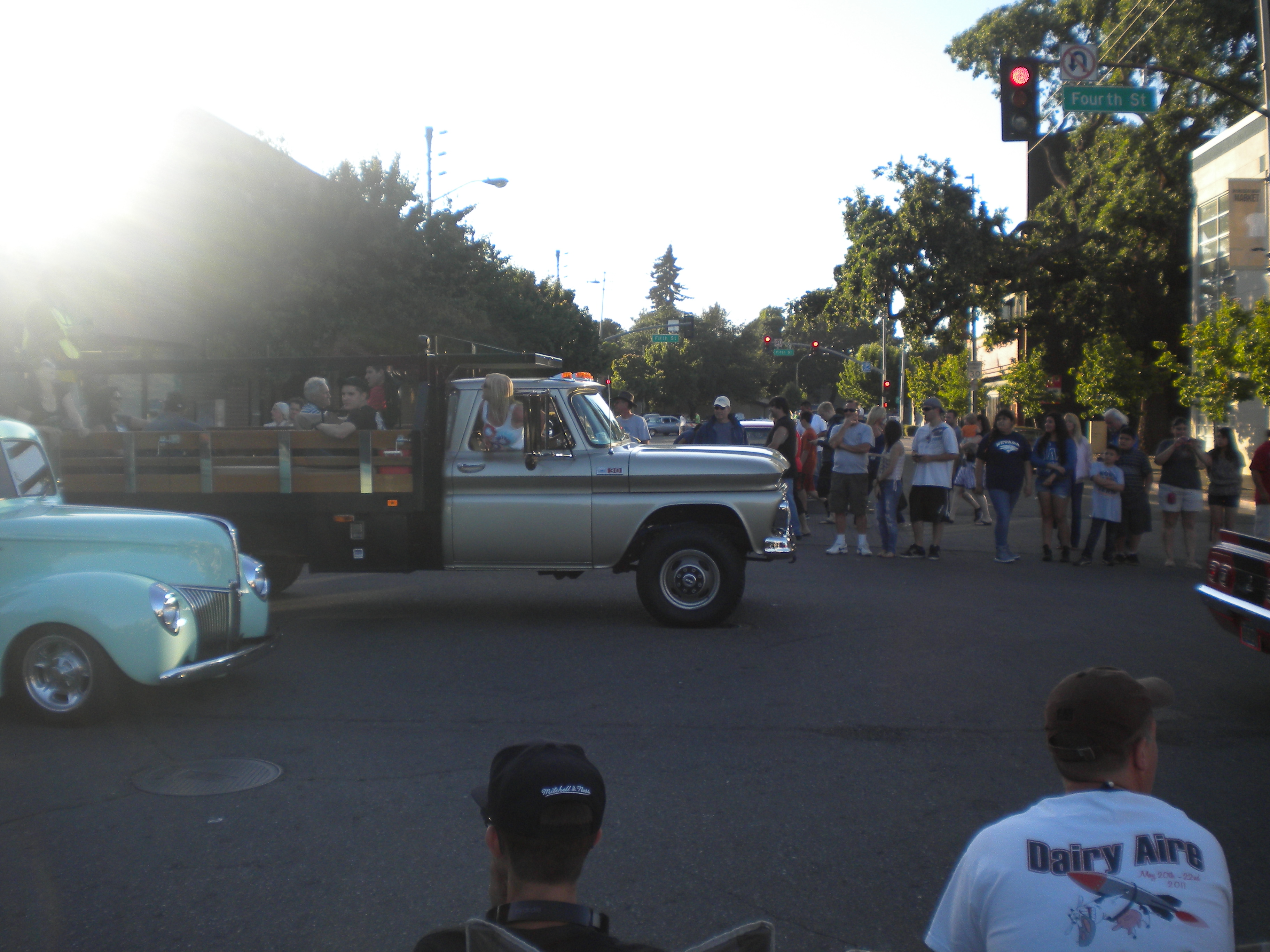
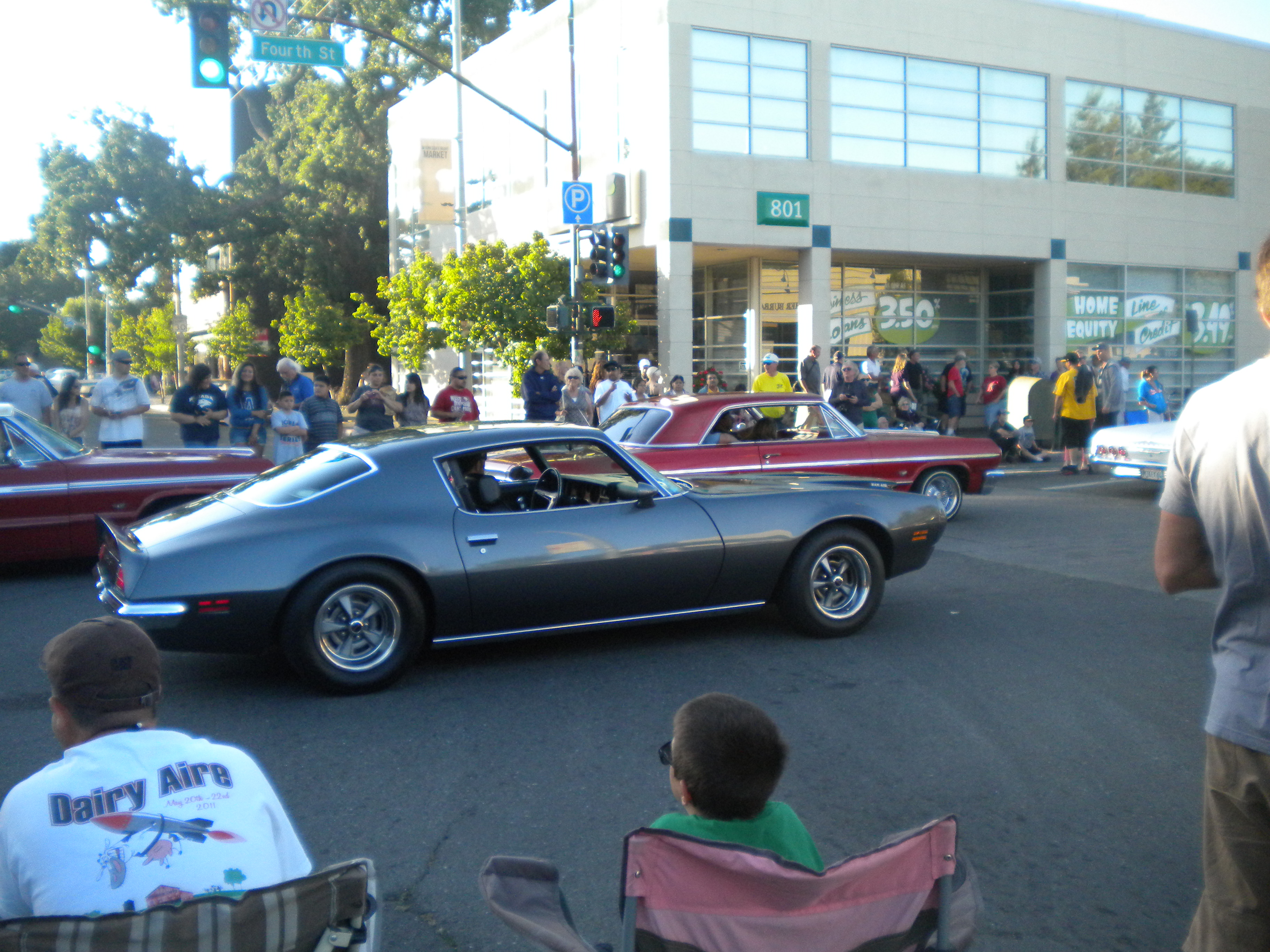
Every year, the Peggy Sue All-American Cruise and its related events take over sunny Santa Rosa, CA. Restored cars, hot rods, low riders, raised Jeeps, and antique American cars are all part of the mix. We have entered our 1950 GMC 100, “Betsy” twice. It’s always been a lot of fun for me to see all of the classic cars in the parade or the massive parking lot where they are displayed! This year, one of my good friends joined me in watching the classic American cars cruise around downtown Santa Rosa. Revving engines? Check. Drunk people yelling at drivers to “Step it up, dude!”? Check. Squealing tires? Check? The smell of burnt brakes? Check. Annoyed and overworked event staff? Right on. I know that you are getting bored reading my words about what was going on. I’ll cut to the chase: It was a LOT of fun, and you should join me next year. Enjoy the pictures.
I don’t know what this Chevy Nova had under the hood, but it sounded NASTY! Many of the cars at the parade were either restored to Concours-levels or were built for the drag strip. This one was built to rule the streets.
This 1959 Chevrolet Corvette is a rare “Fuelie.” Instead of a carburetor, it has a primitive version of fuel injection. This particular example was restored to a “Level 1.” Level 1 means that it is virtually perfect. That it is.
This 1966 Chevrolet Biscayne is a powerful, efficient, and stylish family sedan from the muscle car era. It has a 327 cubic-inch V8 engine and a two-speed automatic Powerglide transmission. It’s lovely.
I find it nice that the interior of the same Biscayne matches the exterior of the car. Even the steering wheel has chrome on it!
Same car. This is the model designation. The car is a barn find from somewhere around Redwood City, according to the owner. He restored it himself, and he did a very good job of it!
For those of you old enough, you should remember the aero-wars days, when big engines and aerodynamics were all the rage. The 1971 Plymouth Roadrunners and Superbirds were the car of choice for many famous NASCAR drivers. Richard Petty left Ford in 1969 to go to Plymouth. He did so much better in a Plymouth Superbird that Ford built the Torino Talladega as a response. This particular Roadrunner has the 440 Six Pack (a 440 cubic-inch V8 with THREE two-barrel carburetors!), which was just one step below the mighty 426 Hemi engine. It is painted in the iconic Lime Green that is popular with automotive restorers.
This Corvette is one of the nicest Corvettes that I’ve seen in a LONG time! It is painted Aqua Blue and Snow White, with a matching interior. It has the 283 cubic-inch V8 and a four-speed manual. It is a 1956 Corvette. The only shame? That it’s far too nice to tour Route 66 in.
Sorry about the fingertip on the top of the camera view. The sun was shining and I REALLY wanted to tell you about this truck! It’s a 1965 Chevy K10 with the optional 327 cubic-inch engine and a three-speed manual. It is built to tackle any trail, and take anything that you want with it. It may not be stock, but it looks like it will outrun just about any Jeep from the same era off-road.
Remember the Chevy Vega? If you don’t, it’s okay. The Vega was powered by a 305 cubic-inch V8. It was relatively powerful and fast, but it was a minor disaster for Chevy. This Vega is a 1974 model. It wasn’t the nicest car there, but it was one of the newer cars there.
The best part about this 1969 Chevrolet C30 is that it is used a lot. I don’t know how much, but I have seen it at Sonoma Raceway’s Wednesday Night Drags as a tow vehicle. It’s the perfect tow vehicle. It’s got a 350 cubic-inch engine that’s all-original. So is most of the truck.
This rare 1971 Pontiac Firebird Trans Am is one speedy car. It’s all stock, and plenty fast that way. It’s got the 350 cubic-inch V8 engine found in many GM vehicles from 1969-1999. The top speed is 130 mph. This car means business. The lucky driver had to keep the car in first gear. he also kept touching the brakes because the car wants to leap forward. Lucky him.
I’m going to apologize in advance for the direction of the photo. This 1951 Dodge cab-over semi has been so heavily customized that the only thing original about it is the cab. That’s it. The rest of it is custom-built. The truck is a heavy-duty car-hauler with three axles. The engine is a brand-new 6.7-liter Cummins Diesel engine that has two turbos instead of one. Wow!
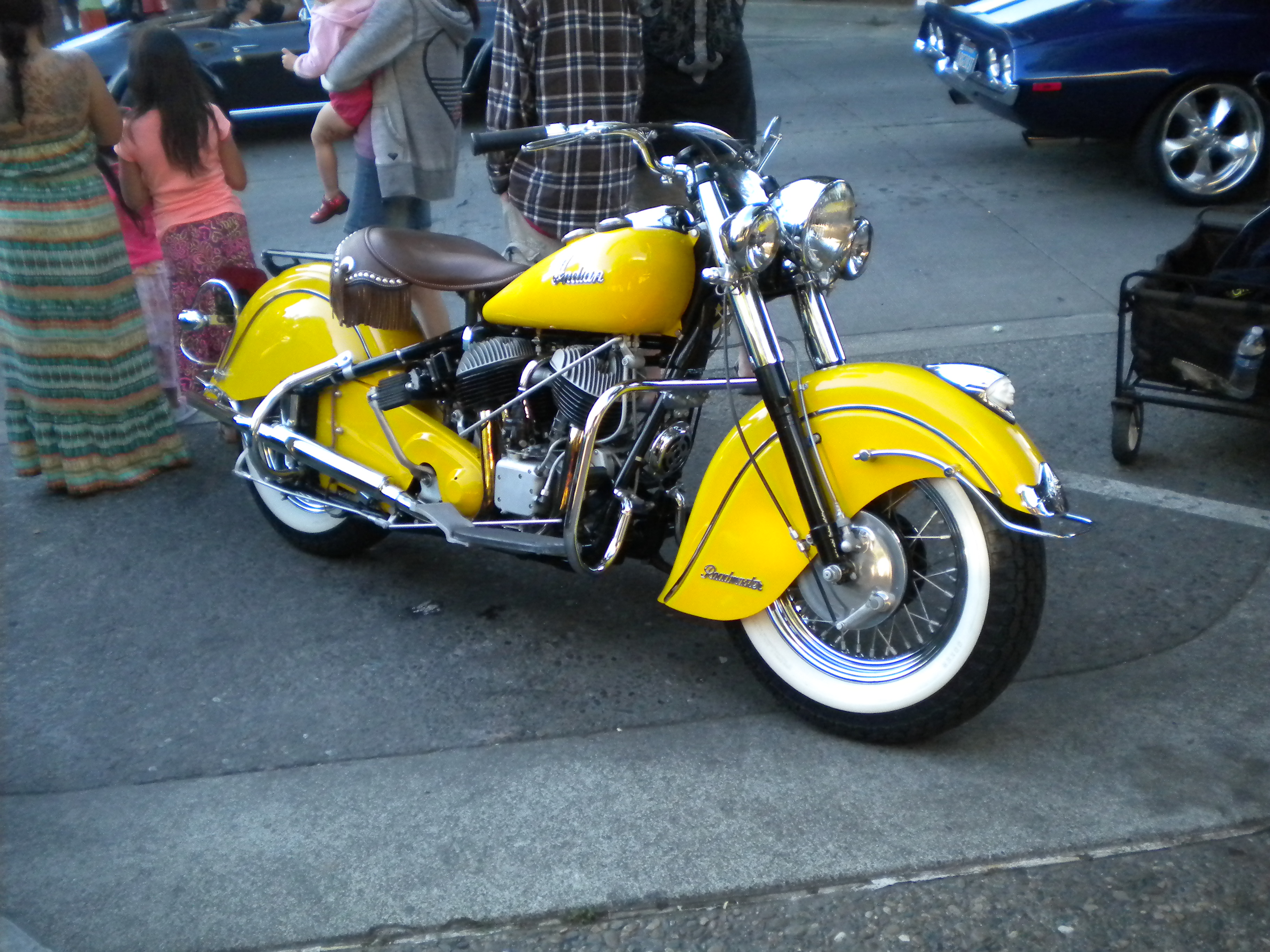
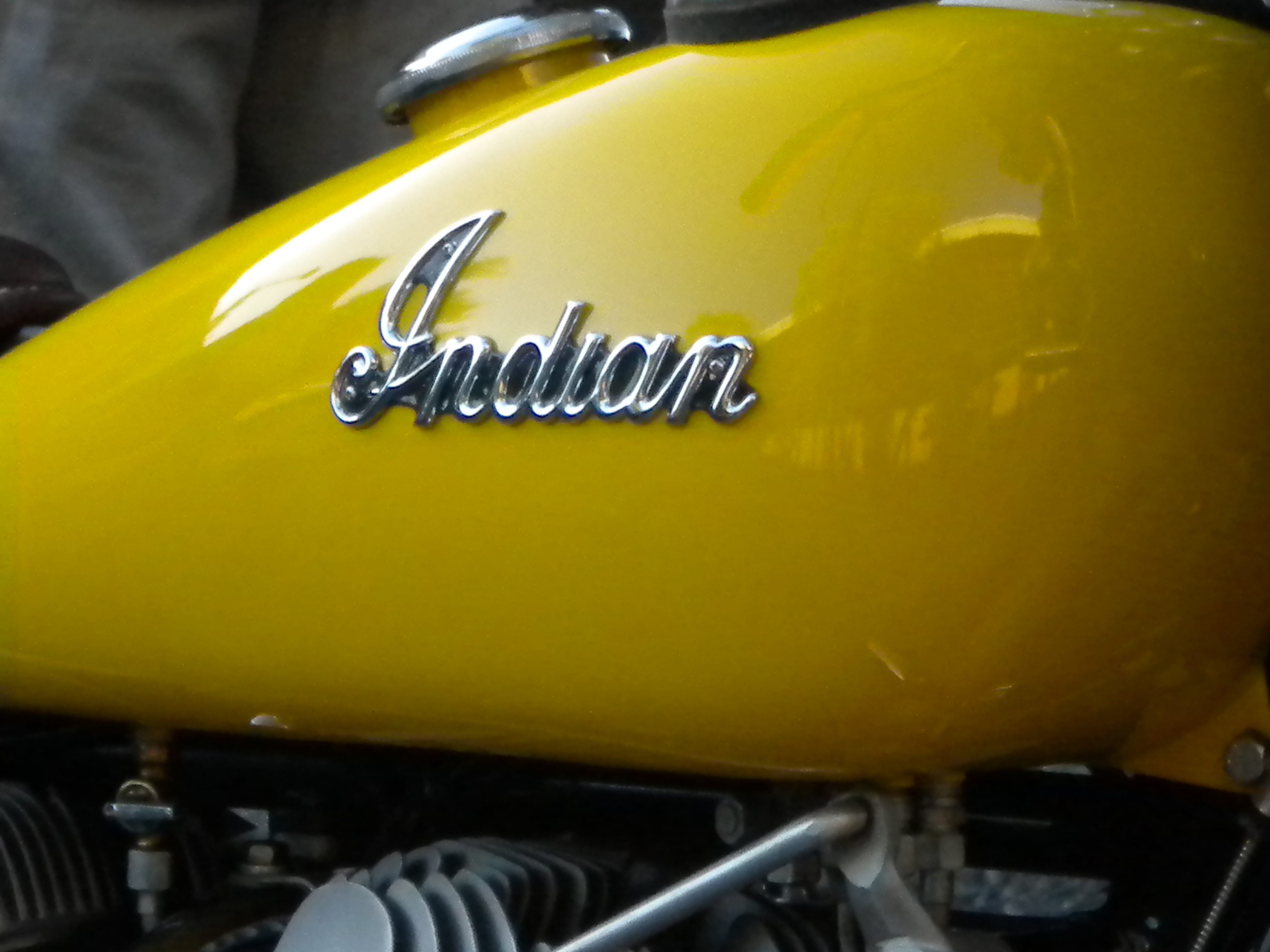
While motorcycles aren’t as common in the parade as cars, there were still a good three or four. This 1946 Indian Roadmaster has the iconic “shovelhead” engine that many motorcycle enthusiasts favor. This Indian Roadmaster is banana yellow with the “caramel cream” seat. I like old motorcycles like this. Maybe some readers will buy me one…
The Indian logo is still in the original chrome, almost 65 years later. The gas tank can hold 10 gallons. It says that on the chrome gas cap.
I like the way that Indian made the front wheel cover so stylish. I was talking to the owner for a minute, and I found out that he drove it all the way down to Santa Rosa from Healdsburg. That’s not a lot of fun on an old motorcycle, yet Indian motorcycles are built to cruise. I’m guessing that it was probably a comfortable ride down to Santa Rosa.
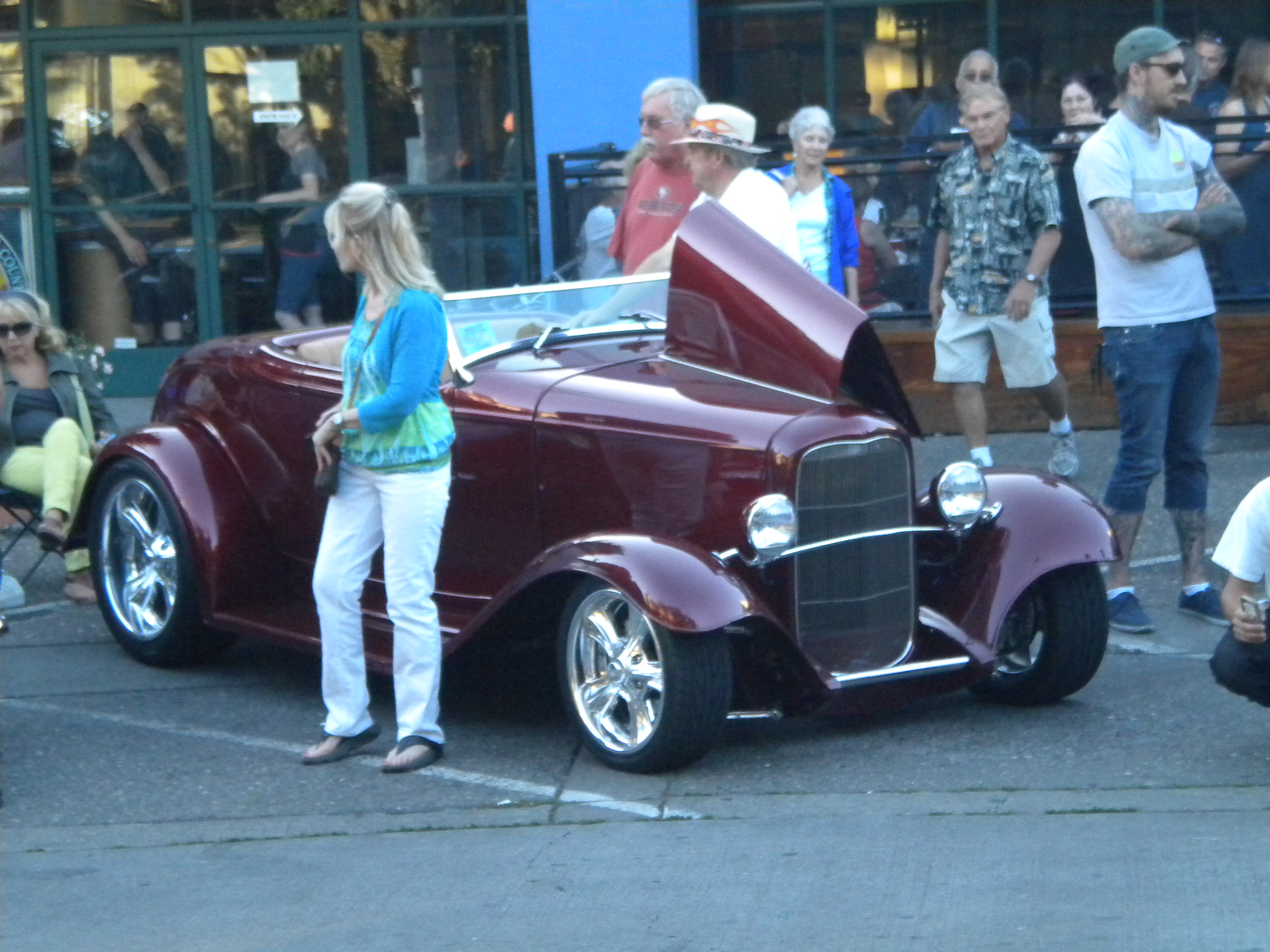
This 1932 Ford Roadster is a sick hot rod. The lady standing by the car is the owner. The car has a Ford 351 Windsor V8 engine. It has a Jaguar rear end, and a five-speed manual. This car means business. I don’t know what I like more: The mechanical parts of the car, or the exterior? That’s a decision that YOU will let me know in the comments section…
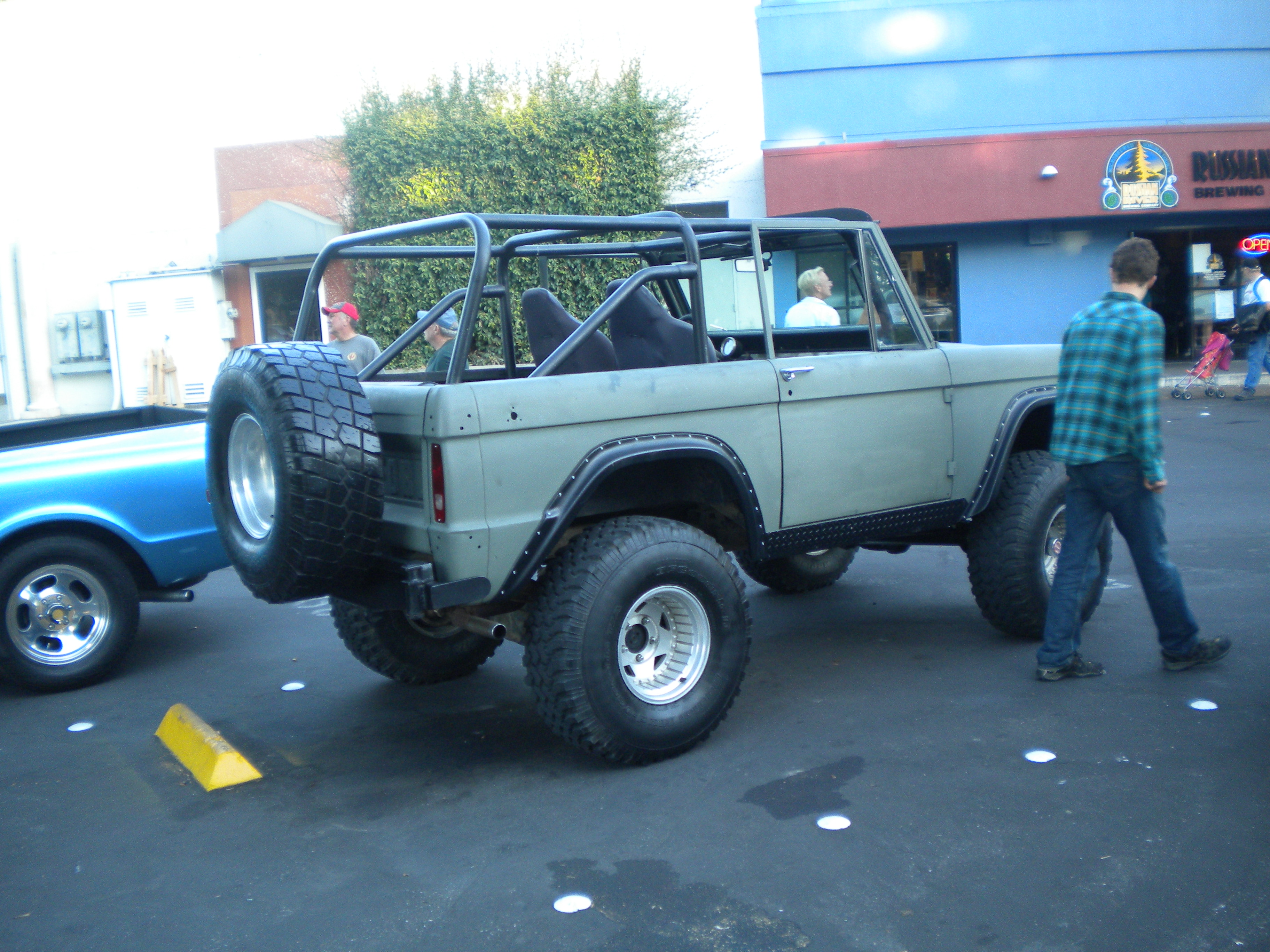
This Ford Bronco looks like it came out of some post-apocalyptic movie. It’s got aggressive tires, a six-inch lift kit, and a 302 cubic inch V8. I don’t know the exact year, but it looks like it’s from around 1967-8. This is one nice Bronco.
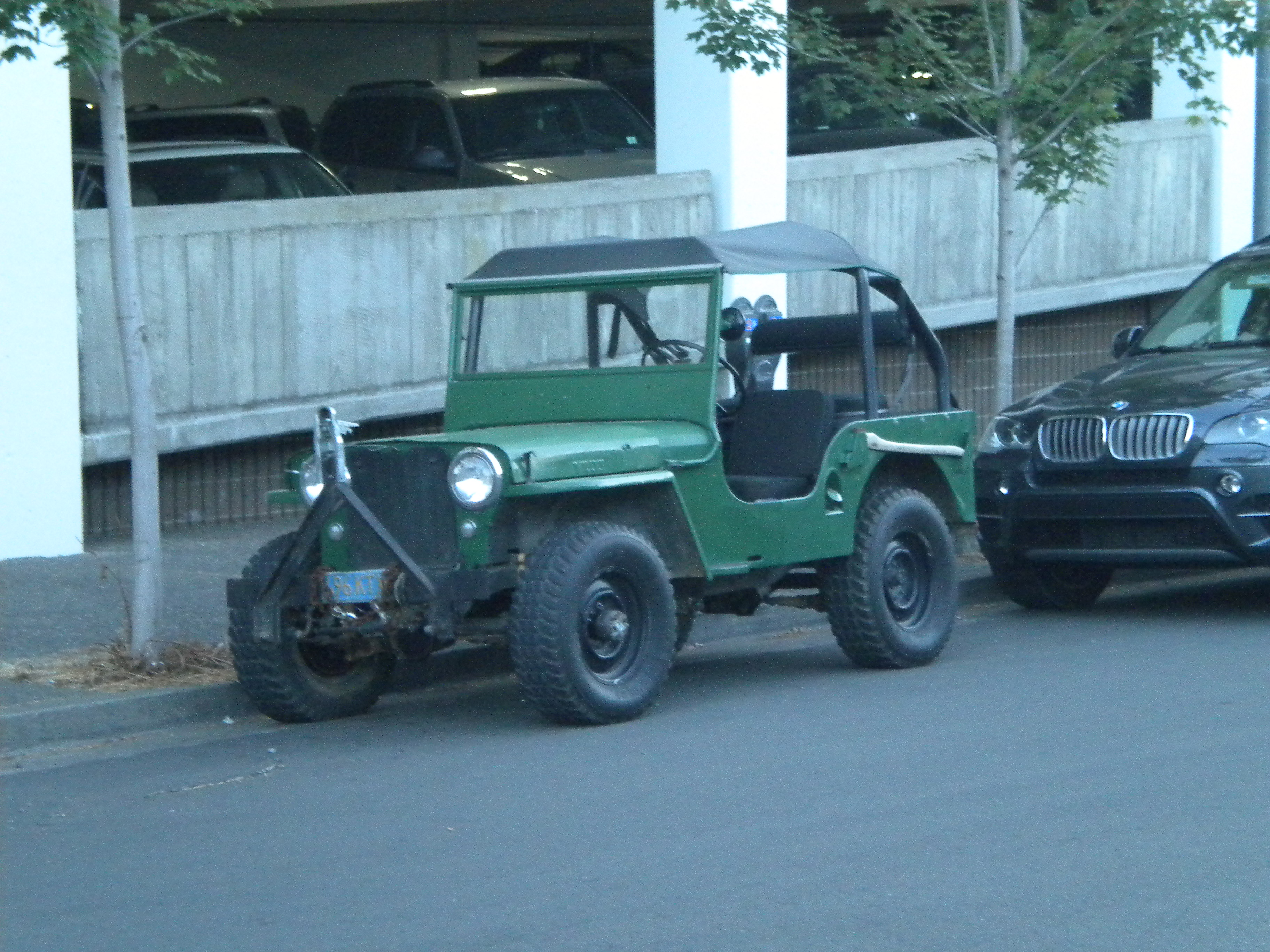
This is one of the coolest, most amazing Jeep CJs that I’ve ever seen. And that’s saying a lot. This CJ is stock, and is a 1947 model. Between the drivers seat and the passengers seat, there is a metal rifle/shotgun holder for two high-powered guns. Not that it would be used for that!
How often do you see a stock 1932 Ford roadster? Not at all often! This is a stock 1932 Ford roadster that could sell for upwards of $150,000 in its current condition. It even has the rumble seat and the original interior! It’s beautiful!
I’m sure most of you know of this already, but the, er, unfortunate, uneducated soul on CNN a few weeks ago called the latest addition to the Dubai Police Force the Lamborghini AvenTadoor. Not the Aventadoor, the AvenTadoor. Sounds like something out of Star Wars, right? Well, let’s try and forgive her (I can’t, but somebody might…)…Anyhow, the Dubai Police Force is just itching to pull some of those Saudi Midsize Hooners (YouTube “Saudi Midsize Hooners” to see what I’m talking about!)!
It’s true. The Dubai Police Force has gone and done it. They went out and bought a Lamborghini Aventadoor LP 700-4. While it has a top speed of 217 mph, don’t expect for them to go cruising around at those speeds while eating donuts (or whatever Middle-Eastern cops eat by the ton)! The Aventadoor is going to be used to deter owners of high-powered supercars and/or promote tourist areas in Dubai. This probably means that there are going to be pictures of friends in Dubai. Sitting in the car that you wish you drive next to some Saudi Arabian cop who’s the same size as Arnold Schwarzenegger. Okay, that’s an exaggeration, but who cares, anyways?
While no changes have been made mechanically to the car (it’s so powerful and cop-ready that it doesn’t need to have any mechanical upgrades), there are some regulatory changes made to the interior. Inside, there is an advanced video monitoring system, a GPS data logger, a radar gun, and other necessary police equipment. A set of flashing lights has been added to the roof that’s less than 3 feet off of the ground!
This is not the first time that a Lamborghini has been enlisted for police duty. The first Lamborghini to be used for police service was a 2008 Gallardo LP 560-4 that was bought by the Italian State Police.
Until now, the fastest police car in the Middle East was a 2011 Nissan GT-R used by the Abu Dhabi police force. Now, they’ve got a Lamborghini Aventadoor, a Chevrolet Camaro SS, a Ferrari FF, and a 2013 Ford Mustang Boss 302. Those are some spoiled cops!
I know that many people have done similar posts on the best muscle cars ever. It’s generic. I DID NOT take any of their lists for this post! Since the Ford Mustang is 1 year away from 50, I thought that it would be nice to honor the Mustang and its competitors through the ages. Enjoy.
Since Ford broke created the muscle car segment in 1964 with the Mustang, there have been many other cars that have redefined the term of muscle car. Every car buff will crack a grin when he/she sees one of these muscle cars. Below the description of each car, you can drool over the picture of the car.
1964 Ford Mustang: The Ford Mustang created the muscle car segment. To this day, it is still a sales and performance leader. Plus, it’s got looks and heritage to back it up. You can’t beat the good ol’ formula of a big V8 engine mated to a manual transmission and rear-wheel-drive. Ford says that they might add their EcoBoost V6 to the Mustang. Whatever they do, I’m hooked!
1970 Buick GSX: A derivative of the already-amazing Buick GS, the GSX added crazy into the mix. It had a monstrously underrated 455-cubic-inch V8 engine that Buick rated at 360 horsepower and a thundering 510-lb-ft of torque. They say that such a car can never be built again. They’re right! Only 678 1970 Buick GSX were ever produced.
1968 Pontiac Firebird Coupe: If you think of the Pontiac Firebird, a bland, uninspired 1990s coupe comes to mind. If it’s not that, it’s the hood icons from the 1980s, right? But, the Firebird goes back to 1968, when the muscle car era was in full swing. It came with a bellowing 400-cubic-inch V8 that was good for at least 335 horsepower. Then, there were the small blocks. But, that’s another story for another time.
1969 Plymouth Roadrunner: The Plymouth Roadrunner was a cheaper, stripped-down sister to the Plymouth Superbird favored by Richard Petty. The 440 Six-Barrel Roadrunner models had no hubcaps and a lift-off fiberglass hood. Most hoods stayed off. That engine was almost as fast and nearly as powerful as the smaller, lighter, and more powerful 426 Hemi for which Mopar ruled the dragstrip with. The economical-yet-fast 383-cubic-inch small block was a good option for the budget-conscious. The car shown below is a 440 Six-Barrel Roadrunner in Mango Orange.
1970 Chevrolet Chevelle 454 SS: The Chevrolet Chevelle was already a fast car, but Chevy wanted to be the biggest, baddest, fastest, of them all. They shoehorned a 7.4 liter (454 cubic inch) V8 into the car. It made a totally bonkers 450 horsepower at 2000 RPM! It represented the limit of the horsepower wars. To this day, it is still the most powerful stock big-block engine ever made.
1965 Pontiac GTO: The Pontiac GTO scared the living daylights out of cops, Ford, Chevy, and Mopar. It was based on the already-quick Belvedere coupe. It weighed a scant 3500 pounds, it eventually offered a 455-cubic-inch engine, and it was fast. Scary fast. It ruled the streets until 1968, with the introduction of the Shelby GT500KR.
1969 Chevrolet Camaro COPO: COPO stands for Central Office Production Order, which is where all of the orders for the cars come into. To thank the tireless staff, Chevrolet built a Camaro that ruled the dragstrip well into the 1980s. It was street-legal, and only 69 were built. 27 owners returned them because they were too fast. Go figure. It had a 427-cubic-inch V8 under the hood.
1970 Plymouth Hemi Barracuda: The AAR Cuda was the fastest, with its walloping 426 Hemi V8 engine. It was offered with no less than FIVE high-horsepower engines, a four-speed manual transmission, and dragstrip times into the low 13-second range. While its nose-heavy weight distribution made for sketchy handling, nobody was digging their fingers out of the dashboard when they were going down the dragstrip (if you don’t know what I am talking about, watch Planes, Trains, and Automobiles!).
1970 Ford Mustang Boss 302: Ford wanted to beat Chevy in Trans-Am racing, so they had to build a car that would win. The size limit for the engine was 302 cubic inches, and Ford made use of every single cubic inch. It was grossly underrated at 290 horsepower, which matched the also-grossly-underrated 290 horsepower of the 1969 Chevrolet Camaro Z28. That was good for a 0-60 time under 7 seconds, and a quarter mile time of 14 seconds. While it wasn’t a COPO Camaro, it certainly was fast.
1969 Chevrolet Camaro Z28: Guaranteed to stir emotion in any automotive enthusiast’s heart, the Chevrolet Camaro Z28 was a total monster of a car. It had a 302-cubic-inch V8 that was severely underrated at 290 horsepower. While Chevy fans moaned and grieved about the new small-block V8, it sparked the fire that started the legendary 350 V8, and the slough of small-blocks after it. Little was left to be desired.
1969 Dodge Charger: If you don’t recognize the iconic 1969 Dodge Charger, then you simply didn’t see the Dukes of Hazzard in the 1980s. The earliest of the bad@#$ Chargers had the 440 Magnum V8 cranking out 375 horsepower. The 440 Magnum engine weighed half a ton by itself, but the car was so powerful that weight was of no worry…
1967 Shelby GT500: Essentially a factory-authorized tuner Mustang, the Shelby GT500 had a Ford Police Interceptor 428-cubic-inch V8 stuffed under the hood. It was one of the fastest cars of its day on the dragstrip and the roads. A version of the GT500 was used for Gone in 60 Seconds.
1970 Ford Mustang Boss 429: The costliest Ford at the time that wasn’t a Shelby was the Mustang Boss 429. Ford wanted an engine to use for NASCAR, so they had to build at least 1,000 cars with that engine for homologation reasons. The car was perfect for races such as the Daytona 500.
1966 Shelby Cobra 427 S/C: Quite possibly the rarest Shelby ever made, the Cobra 427 S/C was a twin-turbocharged version of the already-speedy Cobra 427. It made an estimated 480 horsepower at the wheels. One was made for Bill Cosby. The other was made for Carroll Shelby, the man who invented a legend. Bill Cosby sold his because it was too fast. Its next owner put it into a lake at 130 mph. Shelby’s was sold in 2007 for a massive $5.5 million. The Cobra S/C shown is Shelby’s Cobra S/C.
1968 Chevrolet Corvette L88: The L88 was an engine destined for NASCAR. It made 550 horsepower. Chevy had to build at least 1,000 cars for homologation purposes. They ended up building over 8,000.
1970 AMC Javelin Rebel Machine: While AMC is best known for the Gremlin and the AMX, the Javelin Rebel Machine was one screaming machine! The engine was the standard AMC 390-cubic-inch V8. For just $500, you could get over 400 horsepower and a quarter mile time in the high 12-second range.
1970 Pontiac GTO Judge Ram Air IV: The Pontiac GTO was already a speedy car, but buyers wanted more. Pontiac came out the the GTO Judge, which packed a 455-cubic-inch V8 into a stylish car. It was scary fast, beautiful, loud, and amazing. Now, it’s time to move on to the modern muscle cars…
2013 Ford Mustang GT500: The Mustang GT500 has been a staple of epic burnouts and horsepower. The 2013 Mustang GT500 makes 662 horsepower from a supercharged, 5.8-liter V8. It goes to 60 in a scant 4.0 seconds. Ford claims that the GT500 can go 200 mph. Motor Trend got the GT500 all the way to a ridiculous 197 mph. But, given a long, flat, straight piece of road, there is no doubt that the GT500 will go 200 or more. I’m sensing my readers setting something up (hint, hint!).
2000 Ford Mustang Cobra R: The Ford Mustang Cobra R showed the world that the 1960s were NOT a bygone era. It was fast, and it looked like it was straight out of Fast & Furious! It packed a walloping 385 horsepower and 385 lb-ft of torque from a 5.4-liter V8. That meant that it has one of the best exhaust notes you’ll ever hear! It’s still one of the most capable American cars to ever hit the road.
2002 Pontiac Firebird WS-6 Trans Am: After 35 years, the Pontiac Firebird and Trans Am models flared out. However, they weren’t going to go out without a bang. It made up to 345 horsepower from an all-aluminum engine, and it looked speedy. Had GM not killed Pontiac in 2009, it is highly likely that the Firebird would have been sold alongside the Chevrolet Camaro.
2004 Mercury Marauder: They say that rugby is a hooligan’s sport played by gentlemen. I don’t doubt them. The Mercury Marauder was the fastest American sedan of its day. It gave out an ominous appearance, and it was adequately fast for the average grandparent. Thanks to the bench seats, limited-slip differential, and the aluminum driveshaft and upgraded transmission, it was the last cool Mercury built before Mercury was axed in 2011.
2007 Dodge Charger Super Bee: A homage to the rumbling kings of the track from the 1970s, the 2007 Dodge Charger Super Bee didn’t disappoint. It was a souped-up SRT8 model, which meant that it had the 6.1-liter Hemi V8 engine that produced a mighty 425 horsepower. It only came in one paint scheme: Detonator Yellow with Marauder Black. Other versions were sold in 2008 and 2009, but Yellow/Black is the only way to go for a speedy muscle car, right?…
2012 Dodge Challenger SRT8: The Dodge Challenger has long held a special place in my heart. Why? Because it looks amazing, it’s fast, and it’s loud. It offers exclusivity, speed, comfort, power, and an unforgettable exhaust note. Plus, there’s 24 paint schemes to choose from. Then, there’s the pinstriping that Dodge offers.
2008 Dodge Magnum SRT8: Exclusivity? Check. Speed? Check. Looks? Check. While the Dodge Magnum was a Dodge Charger station wagon, it never quite lived up to its name. That is, until Dodge took the Charger SRT8 and turned it into the Magnum SRT8. If you want to embarrass your neighbor who thinks he’s cool because he owns a Camaro SS, take him to the dragstrip and challenge him to get to 60 mph before you. He won’t.
2009 Ford Mustang Bullitt: If you watched the Steve McQueen movie, Bullitt, then you’re probably wishing that your significant other will get you a Mustang that looks and handles like the one used in the film. He/she shouldn’t spend a lot of money on a bad-handling old Mustang that sounds good and looks cool. Well, they should, but the 2009 Mustang Bullitt will always hold a place in any Ford Mustang enthusiast’s heart. It’s 4.6-liter V8 gave 15 more horsepower to the driver, it had absolutely no badges on it, and it was painted Highland Green, just like the original.
2010 Chevrolet Camaro SS: The Chevrolet Camaro SS may have vision that is worse than a bunker with no windows, but it looks cool, it’s fast, and it can embarrass a lot of fancier, more expensive cars around a track (in some versions). The manual SS has 426 horsepower from a slightly detuned Corvette LS3 engine. If you want even more exterior/interior styling, get one with the RS package. It adds cool lights to the headlights, it has unique rally-style gauges, and it’s a bit faster.
2013 Chevrolet Camaro SS 1LE: Quite possibly the best-handling Camaro…ever. The Chevrolet Camaro SS 1LE is a track-day monster that can be driven every day. Easily, happily, and quietly. It starts off as the Camaro SS, but it then adds the 1LE performance package, which adds wheels and brakes from the ZL1, and various suspension bits from the Corvette ZR1.
A few weeks ago, the Guinness Book of World Records stripped Bugatti of their title of the World’s Fastest Production Car. According to the Guinness Book of World Records, the Bugatti Veyron Super Sport that was used for the record attempt had been modified in a way that would be unavailable to the public.
Bugatti had put a speed limiter for 258 mph for customers on the grounds of safety (I don’t know how THAT logic works!), but the Veyron Super Sport that broke the record went 267.883, in other words, 268 mph.
Bugatti never kept the fact that ALL Veyron Super Sports came with a 258 mph speed limiter. In fact, they’d even told the Guinness Book of World Records in 2010, when they were about to attempt the record.
Doubts of the legality of the record started when Hennessey Performance Engineering got their Venom GT super car up to 265.7 mph and claimed that it was the fastest production car ‘actually’ available to the public.
Fast forward three years to April 15, 2013. Guinness Book of World Records officials reinstated the Veyron Super Sport as the fastest production car on the grounds that a change to the speed limiter does not affect the car or its engine.
The full statement, first sent to the Sunday Times, states: Following a thorough review conducted with a number of external experts, Guinness World Records is pleased to announce the confirmation of Bugatti’s record of Fastest production car achieved by the Veyron 16.4 Super Sport. The focus of the review was with respect to what may constitute a modification to a car’s standard specification. Having evaluated all the necessary information, Guinness World Records is now satisfied that a change to the speed limiter does not alter the fundamental design of the car or its engine.”
The fact that the Hennessey Venom GT came within 3 mph of the Veyron Super Sport makes me wonder how long it will be before the record is broken. Of course, the record could be broken by an even faster Veyron! Bugatti’s 2013 Veyron Grand Vitesse got the title of the World’s Fastest Convertible at 254 mph! There’s also talk from Bugatti of an even-faster, more-powerful Veyron in the works. This ultra-Veyron would have about 1,600 horsepower and go about 280 mph. That math was done by somebody other than me! This Veyron-in-the-works would need about 400 more horsepower than the Super Sport to go faster. It would also need tires that can handle the high speeds. The tires used for the Veyron Super Sport cost almost $3,000 a piece to make. They only last 12 minutes at full throttle or 1 mile at 268 mph. They wouldn’t be able to handle going 280 mph for more than a second or two. Currently, the only tires that can handle these speeds are stock cars, INDY cars, and F1 tires. Guinness Book of World Records requires that the tires used for the land-speed record attempt are street-legal, and used on the vehicles sold to the public.
I’m pretty sure that I’ll be getting some comments from you wonderful readers telling me that I am one lucky guy. I know that I am, thank you very much! You’re probably wondering why I’m so lucky. Allow me to explain.
In the beginning of March, my uncle set me up with one of his friends who was going to be lapping his 1970 Datsun 240Z at Sonoma Raceway. Emails were exchanged, and then we got to the track early. We saw the Z (pictures will be near the bottom of this post!), and went into that garage. The team mechanics were going through the checklist. I’ll be monkey’s uncle if I tell you that car didn’t sound amazing! It sounded wonderful! At idle, it had a burble that popped, hummed, whistled, and belched at the same time. Since it has such a high idle speed (2000 RPM, average), it’s kind of loud. At full throttle, it sounds like a Lamborghini Aventador, a Ford Mustang Shelby GT500, a motorcycle, and a Corvette ZR1. Life couldn’t be much better.
The owner and driver of the Z, David Martin, showed up, and we said hello. After a few minutes of talking, we went down to pit row and watched as David’s instructor, Ken, told him to do 10 warm up laps. We sat on the concrete barrier wall, and watched classic race cars go flying around the track. One team had a large trailer with about five classic Porsche 911’s and a couple of new ones. Next to us was a portable shade tent that was keeping a Can-Am Ferrari and a 375 America from 1956 from the harsh effects of the sun. The 375 was beautiful, and extremely fast. The Can-Am Ferrari was scarily fast.
In one of the garage stalls near us was a team with a 2005 Ford GT super car. They had a guy sitting there with a laptop computer analyzing everything about the car. When I say everything, I MEAN everything! The Can-Am Ferrari (don’t ask what it was – I don’t know!) was faster than the Ford GT, which knocked out 1 minute, 30 second laps.
At lunch, we talked with David’s instructor, Ken. Ken used to race everything from F1 to stock cars. His story is sad, but I can tell you something good about him: He’s one of the best drivers I’ve ever seen! After lunch, we had to wait for a bit because a car blew its engine on the final turn, and all the oil spilled out. We waited. And waited. And waited. Finally, cars were allowed back on the track. David waited until other cars had gone through where the oil slick was. Then, he headed out, but he went much slower those laps.
At about 2:00 PM, it was time for us to go. Sadly, track day was over. We said our goodbyes, and headed home. I think that you will enjoy the history of David’s Z. I’ll also share with you some pictures of him and his Z.
Here’s the history:
In 1974, Brad Fisselle made the decision to step up from the SCCA (Sports Car Club of America) Professional Division to IMSA (International Motor Sports Association). he formed a full team and company, which was named Transcendental Racing. Transcendental Racing built, developed, tested, and raced their new creation. Their creation? A 1970 Datsun 240Z prototype for the IMSA Camel GT Series. In 1975, Brad had his first three professional victories and was awarded IMSA’s Most Improved Driver award, becoming the only man to win these coveted awards in both IMSA and the SCCA. He then went on to win eight out of the eleven races that his team entered in for the IMSA GTU series. During this time, Brad Fisselle beat the Datsun factory team many times.
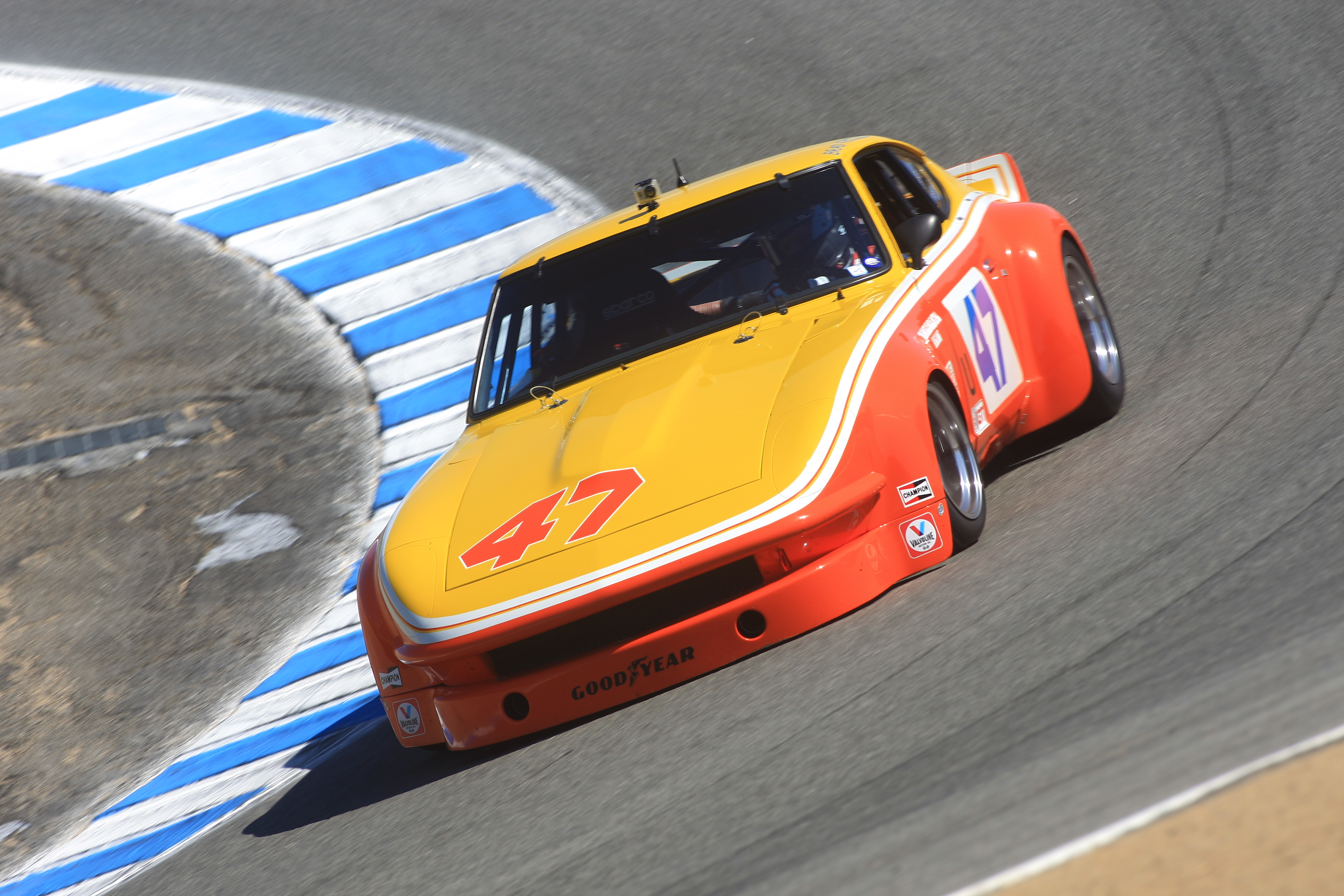
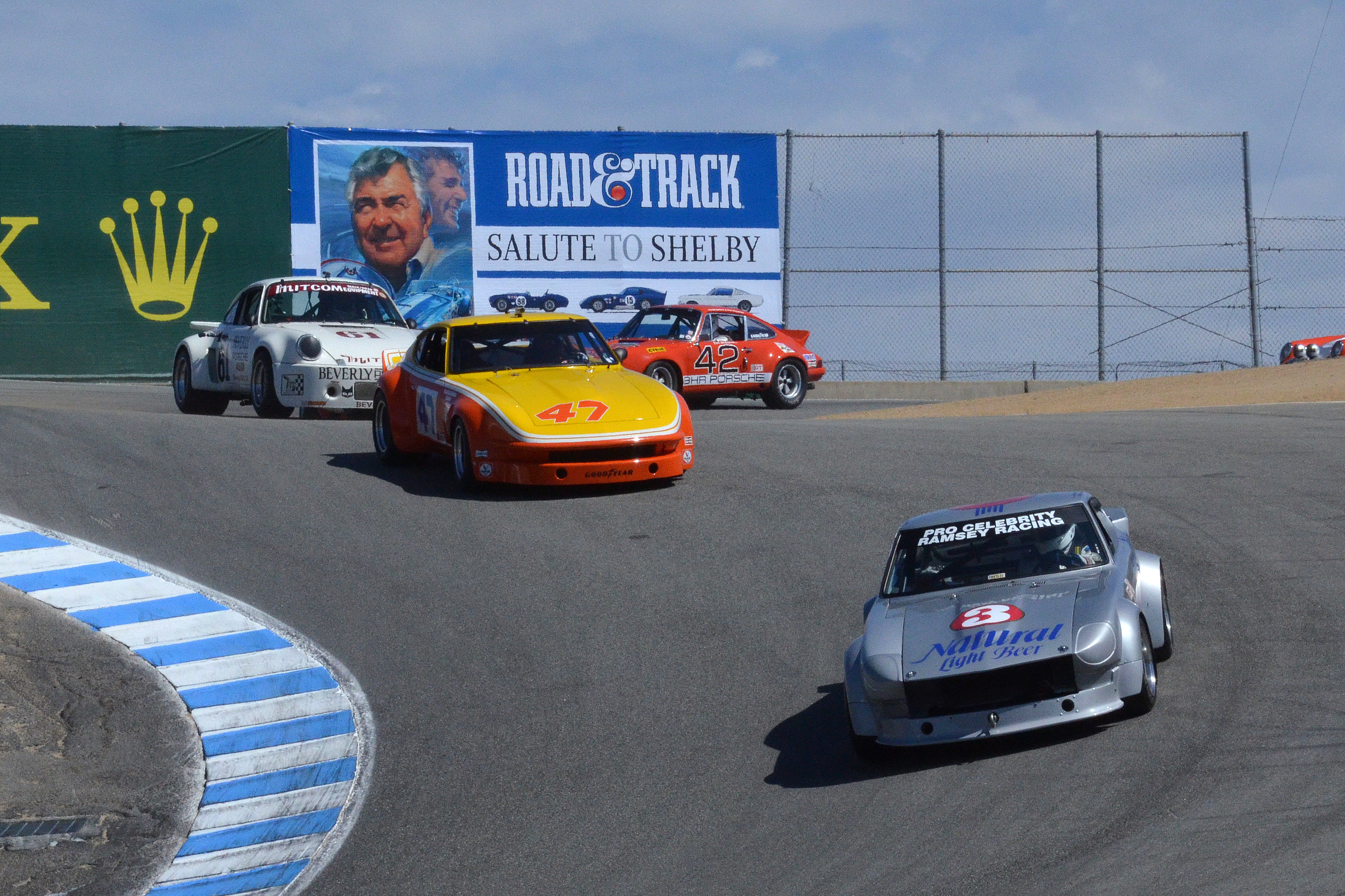
This Datsun 240Z is the 1976 IMSA GT/U Championship car. The chassis of this car was the first 240Z imported to the United States in 1970. My dad had one of the original 240Z’s as his father did all the legal work for Datsun! Mac Tilton designed the suspension and built some of the specialized parts. The chassis, roll cage and body were all constructed by Dave Kent with assistance from Yoshi Suzuka. Yoshi was also responsible for the design of the aerodynamics on the car. John Knepp of Electramotive built the engine. Many of these businesses are long dead. In it’s day, this Datsun 240Z was the fastest and most technologically advanced car in IMSA and SCCA.
Sometime in the early 1990’s it was decided that a full restoration was needed. The car was starting to fall apart, and didn’t look as good. The team’s original captain, Joe Cavaglieri was hired for this task. The car was stripped down to the chassis, and rebuilt from the tires up to 1976 IMSA GTU specifications. Using development parts from the NISSAN GTP program, modern electronics, and new piston and cam designs the engine produces 400hp. Considering that this comes from a 2.0-liter inline six-cylinder, that’s quite impressive. No turbochargers or superchargers have ever been near this car.
In the day the team was the one of the very best in IMSA, the preparation of the car was always at the highest level, more like that of a top Indy Car team than a GTU team. The restoration was done with that same mindset. The car is absolutely perfect both cosmetically and in performance. The fit and finish, attention to detail and superb craftsmanship exhibited in this restoration is spectacular. Right now, the car is capable of winning a podium position at any classic car race, or winning a Best-in-Show at Pebble Beach. Since the completion of the restoration, the car has competed in the Mitty at Road Atlanta and the Monterey Historic Automobile Races plus two club events and one test day.
Here is a list of the championships that the car has competed in:
IMSA GT/U (Grand Touring Under 2.5L) 1975 Season Mid Ohio 2nd GTU (Pole Position) Laguna Seca 2nd GTU Mosport 1st GTU Mid America 1st GTU Talladega 1st GTU
1976 Season (IMSA GT/U Champion): Road Atlanta 1st, GTU 15 OA, Laguna Seca 2nd, GTU 10, OA Ontario 4th, GTU 12, OA Lime Rock, 1st GTU, OA Mid Ohio 1st, GTU 5, OA Daytona 250 1st, GTU 9, OA Sears Point 2nd, GTU 9, OA Talladega 1st, GTU 5, OA Pocono 1st, GTU 5, OA Road Atlanta 500 1st, GTU 8, OA with John Morton Daytona Final 1st GTU.
I’ll stop keeping the pictures from you, and share them with you.
This is David at the 2012 Rolex Reunion at Mazda Raceway Laguna Seca at the infamous Corkscrew S-Bend.This is the same race, but on a different lap. This is also at the Corkscrew.
I’d like to give many, many thanks to David Martin of Red Car Winery and the Martin Group for letting me hang around and watch him. I’d also like to say thanks to his awesome mechanics and instructor, who were kind enough to talk to me about racing throughout the day! Thanks to my amazing uncle who originally set me up with David! Thanks to David, his team, and my uncle, for letting me come with my dad so we could have an awesome day watching an awesome person drive an awesome car! Clearly, I had a great day. Told you I was lucky.









 The Unmuffled Auto News