Why a Rare Porsche Will Top $1.5 Million at Auction

While you could say that just about any Porsche 959 is a stunning car, this one is just an absolute neck-turner.  It’s black over carmel brown, and it’s one of only three made in this color combination.  Talk about rare.

Porsche only made 337 959’s from 1986-1989.  Each and every single one of them is still a technological tour-de-force, but when they came out, there was truly nothing else like it on the road.

The car that I’m talking about is a 1988 model, and it could be yours, should you be going to the Gooding & Company Pebble Beach auction in August.  It’s sale price is estimated to be between $1.6-1.8 million, which, if proved accurate, will only reflect the voracious appetite for collectible Porsches like this.

The Porsche 959 remains one of the most technologically-advanced and interesting supercars ever built.  Up until recently, they were a rare, astonishing sight in the US, due to the idiotic, bureaucratic import laws that the US has.  Why?  Because only 50 out of the 329-337 (production numbers vary, depending on who you ask at Porsche) built between 1986-1989 came to the US.  However, since the bulk of 959’s were built before 1988, the import laws are completely open on them, meaning that you can drive them legally on US roads without fear of the car getting crushed and you getting massive fines.  This is very good news for American car enthusiasts and collectors.

Gooding & Company is calling this car a “Komfort” model, which means that it’s the road-going version of the 959.  Komfort was Porsche’s way of differentiating the road-going 959 from the “Sport” version of the 959, which raced in everything from rally to endurance racing.  The Komfort cars were powered by a 444-horsepower, twin-turbocharged, 2.8-liter flat six-cylinder engine that was connected to a six-speed manual (most cars at the time still had four-speed manuals – a six-speed was simply out of this world).  It was completely ahead of its time in terms of speed, technology and handling.

“Car & Driver” recorded a smoking 3.6-second 0-60 run, and somehow had the cojones to get it all the way up to 190 mph.  Porsche says that the car has the potential to hit 205 mph, so it seems obvious that “Car & Driver” just didn’t have the nerve…That being said, the 190 mph that they recorded held their top speed record until 1997 and the McLaren F1.

What made the car so revolutionary was the fact that it had electronically-controlled AWD. The only other production car to use electronically-controlled AWD was the Audi Quattro, which started using the system back in the mid-1980s.  This system could distribute torque depending on the dynamic load on each wheel.  It could also be locked at a fixed torque split.

I’ve never quite seen such a beautiful Porsche, and while I’ve never seen a 959 in person, this is an absolute stunner.  The 959 is high up on my automotive bucket list, and this one only elevates it to be alongside other legendary cars like the Pagani Huayra, Dodge Daytona, Ford GT40, and Shelby Cobra, among others.

I’ve attached the link to the car from Gooding & Company for you to look at.  There are very few details on it, but they will be available closer to the auction date (think late July).  http://www.goodingco.com/vehicle/1988-porsche-959-komfort-2/

If you can’t afford that much, there is a beautiful 1973 Porsche 911 Carrera 2.7 RS Lightweight at the same auction that is estimated to go for $1.0-1.2 million.  I’ve attached the link for it also.  If you have the means, I highly recommend buying both and driving the wheels off of them.  Cars like these are meant to be driven.  http://www.goodingco.com/vehicle/1973-porsche-911-carrera-2-7-rs-lightweight-3/#tab1

This is the 959 coming up for sale in August.  It's beautiful.
This is the 959 coming up for sale in August. It’s beautiful.

What to Look for When Buying Used Engine Parts

Used engine parts can be a great deal, if you know what you are looking for. They can also kill your engine. Here’s what to look for in used engine parts. Most of the places that you’d go engine parts hunting are swap meets. Bring a cheat sheet of engine codes and casting numbers with you, or you might end up with a completely different part than you need.

  • Intake Manifolds: Most factory performance air intakes are fairly easy to identify because there is a casting number and date code on them. Cast iron intakes are virtually indestructible, but are fairly heavy. Aluminum intakes offer better performance, but are more susceptible to problems. Look at the thermostat’s counterbore, as it is common for that area to get rusted and corroded on aluminum intakes only. If it’s not too badly eaten away, any good machinist can repair it. If it’s badly eaten away, look for another one. If you really want it, however, the bad area can be cut out, and a new piece can be welded on and machined to the original shape. It’s common to see other problems, and if it looks like it’s been modified, make sure that it was done well!
  • Pistons: Careful with these. Most new pistons are relatively inexpensive, but you can score a good deal on them at a swap meet if you know what you’re looking for. If there’s a full set of them and they’re still in the box, you’ve got a great deal. Get them if they fit your car. If they are used, be sure to clean off all of the carbon deposits from the tops and inspect them thoroughly. Also, check for ring lands and grooves on them – this means that something was wrong with the engine that they came out of, and that they are damaged. DON’T buy those! If they don’t fit your engine, they make great pencil or screw holders.
  • Connecting Rods: Used connecting rods are very difficult to evaluate without the proper equipment. Yes, it’s easy to bead-blast and hone an old pair, but you need to take them to a good machinist to make sure that they are good to put into your engine.
  • Camshafts: If it’s unused, in it’s original box, and has full documentation from day one, you can definitely consider it. When buying used camshafts, it’s very difficult to tell whether it’s a stock, weak camshaft or a high-performance camshaft. Plus, modern camshaft technology has advanced so much in the past 50 years that it’s worth it to just buy a brand-new camshaft. It’ll be easier to get one that’s essentially tailored for your driving style.
  • Exhaust Manifolds and Headers: Exhaust manifolds are sturdy parts, but can be abused and broken. It’s not uncommon to find a broken stud in an exhaust manifold. Luckily, they are fairly easy to remove. Used headers can be a great deal or a massive head ache. Ask the seller what they fit, rather than, “will they fit on my Challenger?” Check the welds and flanges on the headers – if the flanges are warped, they will not seal against the head, resulting in exhaust leaks. You don’t want to be like Freiburger and Finnegan from Roadkill. Also inspect headers for dents and scratches that could have come from bottoming out or from hammering them into place.
  • Carburetors: Have a carburetor cheat sheet on hand when you go looking for carbs. You can determine it’s original application and CFM rating. The overall appearance of a carburetor is a good indicator of it’s health. Rebuild kits are available for nearly every carburetor under the sun, so it makes it a good deal less risky to buy a used carburetor.
These are aluminum intakes for Chevy big-block V-8s.
People will try to sell you pistons in conditions far worse than this. They don't even make good pencil holders!
People will try to sell you pistons in conditions far worse than this. They don’t even make good pencil holders!
These are brand-new connecting rods for a Chevy small-block V-8. You can luck out if you know what you are looking for at a swap meet.
This guy lucked out and found a camshaft for his Dodge pickup with the Cummins diesel engine at the Pomona swap meet.
This is what you'll see when you go in search of headers at a swap meet.
This is what you’ll see when you go in search of headers at a swap meet.
This is the sight you'll see when you go to a swap meet to find carburetors.
This is the sight you’ll see when you go to a swap meet to find carburetors.

Why Gearhead Shirts are Important

You can always recognize a car person by their t-shirt, sweatshirt, or polo shirt.  I won’t even go into the different kinds of car t-shirts you can find – that would be an undertaking in insanity.

Ed Iskendarian is the guy who started the whole car t-shirt craze way back in 1949.  He’s still alive today.  Almost 67 years later, the car t-shirts are a mainstay of automotive culture.  It’s automotive anthropology.  You might not realize it, but you’re an automotive anthropology student if you have a car t-shirt.

Here are the main kinds of car t-shirts you will see:

Car Show T-Shirt:  Most car t-shirts typically have two or three cars drawn on it, along with the name of the event, maybe a palm tree, diner, or gas station, and the date of the event.  The name of the event is usually in cursive on the front, with the drawing on the back.  These t-shirts tell other car people you’re a park and polish kind of person.  You’re probably not the person you’ll see ripping around an autocross – you might see them cruise the main boulevard of town once in a while on a nice day.

Retro Style T-Shirts:  This is dangerous ground.  Anything with pinstriping, vintage lettering, iron crosses, or distressed lettering could mean that you really do live the vintage lifestyle with cars – all the power to you then!  It could also mean that you just jumped onto that Von Dutch bandwagon.  Tread lightly.

Race T-Shirts:  Any race car driver worth their car will have a race shirt.  These usually aren’t t-shirts (sometimes they are), but rather bowling shirts that have the logo of the team, name of the car, and primary sponsors.  Wearing one of these means you know your stuff.  You’re either a racing insider, fanatic, or you know somebody who is.  Most big-time racers will sell t-shirts that look like their race shirts.  They will usually have other merchandise, like sweatshirts, baseball caps, beanies, etc.  Just be careful if you’re a racer wearing your own merchandise in public.  It’s like a band member wearing a band t-shirt while on stage.

Old Race Track T-Shirts:  When you wear something like an Orange County International Raceway shirt, and it’s threadbare and faded, it’s obvious you bought that shirt AT Orange County International Raceway, and would never consider buying a reproduction shirt.  Instant cred among any car nut.  It’s not nearly as much cred as the guys who got a Lions Drag Strip leather jacket when they won a race at Lions.  This also applies to old event shirts, or ancient speed parts shirts.

Wrecked:  It doesn’t matter what style of t-shirt you’re wearing (it doesn’t even need to have to be a car t-shirt), but if it’s got oil stains, holes from welding, it’s got that hands-on cred.  Wearing that shirt in public and not caring if you smell like you rubbed that shirt in coolant says you’re hard core.

What do I have?  Well, I have a couple of car show t-shirts, a race t-shirt, a lot of vintage-style t-shirts, and a couple of wrecked shirts.  I’m still looking for a race track t-shirt.  I’ll find one…eventually.

These t-shirts, or other car apparel make great gifts for other automotive enthusiasts.  Hint, hint!

The Best Holiday Gifts for the Car Enthusiast!

The holidays are rapidly approaching.  We’ve all got at least one car enthusiast in the family.  Here’s what to get them (or you!).

Calendars

Hemmings Motor News has always had a great selection of calendars.  There’s pretty much a calendar for every car lover here.  You can’t go wrong.  http://www.hemmings.com/store/calendars

Calendars are helpful in many more ways than sitting up on the wall.  Write down schedules, birthdays, etc. on the best calendars for car lovers.

Books

This is going to be a really good, long list that I really want.  Maybe I’ll see some around the holidays…(I know, more of my shameless begging)

  • Miller’s Time: A Lifetime at Speed
    • Don Miller went from street racing to being the guy who stood next to Roger Penske for over 30 years.  He’s set records at the Bonneville Salt Flats, been in Victory Lane at Indy multiple times, built cars from nothing more than a pile of steel tubing and a welding machine, and taken a kid from ramshackle dirt tracks to a Winston Cup title.  If you’re ready for racing honesty and humor, GET this book!  You can get it for about $30 on Amazon, and you might be lucky enough to get a signed copy!
  • Getting Started in the Collector-Car Hobby
    • This book from the fabulous Hemmings Motor News staff details many important aspects of the collector-car hobby for a newbie.  It’s only $6.95, and that family member or friend will be thanking you when they get that cool old car!
  • Ayrton Senna – McLaren
    • I’ve heard great things about this book.  It details the racing life of a legend through the people who knew him best – his teammates, mechanics, engineers, and management staff for his McLaren team.  His dream was to help underprivileged children in his home country of Brazil.  The Ayrton Senna Foundation, established shortly after his tragic death in 1994, has helped over two million kids in Brazil.  This book has been written with the full support of his family, something rare in the racing world.  A portion of the money used to buy this book will go to the foundation to help more children.  You can find a new one on Amazon for about $40, and you’ll help Brazilian children, and enjoy a good book.
  • MotorBinder
    • This book offers an astonishingly cool peek into the golden age of motorsport – when amazing ingenuity, drivers with no fear, and no such things as crowd control existed in race cars.  It’s a beautiful anthology of pictures, mostly taken at California tracks, but also at Nassau and Indy, as well as other famous race tracks.  It focuses on the action and personalities of such legends as Sir Phil Hill, Carroll Shelby, Roger Penske, Sir Stirling Moss, and Bruce McLaren, among others.  Many of the pictures have never been seen before, many of which were taken by the San Francisco Chronicle motorsports editor, Gordon Martin.  It’s $69 on Amazon, and truly amazing.

Of course, there are far more books than these, but these are the ones that I would recommend in a heartbeat.

Clothing

OK, talk about a HUGE list!  Everybody always wants cool clothing.  I’m going to try to keep this list sane, but I make NO promises!

  • Hemmings Motor News Polo Shirt
    • Polo shirts are nice.  They make you look classy, but casual.  Car enthusiasts love them.  Here’s one that will strike a conversation with any car lover.  http://www.hemmings.com/store/wearabledetail?category2=HBPOLO
  • Hemmings Muscle Machines Youth T-Shirt
    • Here’s one for the kiddos.  It’s the same as the Hemmings Muscle Machines T-Shirt for adults, just pint-sized.  It features brightly-colored cars from America’s fastest decade, and it’s sure to be a favorite among them.  I promise.  http://www.hemmings.com/store/wearabledetail?category2=MUSMY
  • Hemmings Work Shirt
    • You should NEVER work on your classic without a work shirt.  They are durable, easy to wash, and can be sharp enough to go out in public in.  Here’s one you’ll wear with pride.  http://www.hemmings.com/store/wearabledetail?category2=HWKST
  • Hemmings Motor News Hats
    • Hemmings Motor News has a nice selection of ball caps.  There’s one for everybody.  Here’s my personal favorite.  http://www.hemmings.com/store/wearabledetail?category2=blkh
  • Roadkill “Original Vintage Tee”
    • I have this t-shirt.  I love it.  I get a lot of thumbs ups from fellow car nuts.  And a lot of questions (i.e. Why would you wear a shirt that has the name of dead animals on the side of the road?).  Get it while supplies last.  http://www.musclecarmagswag.com/index.php?route=product/product&path=66&product_id=129
  • Roadkill Dickies Jacket.
    • Roadkill is sponsored by Dickies.  Freiburger is always wearing a Roadkill Dickies jacket.  You can join him and other Roadkill fans by buying this Roadkill Dickies Jacket.  It’s expensive, but it’s cool and I want one.  http://www.musclecarmagswag.com/index.php?route=product/product&path=66&product_id=113
  • Super Chevy Men’s Racing Shirt
    • Racing shirts are cool.  I should get some.  This is one I want.  Hint, hint.  http://www.musclecarmagswag.com/index.php?route=product/product&path=59&product_id=58
  • Mopar Muscle Garage T-Shirt
    • Show off your Mopar allegiance with this t-shirt.  I’m a fan of different cars, but I’ll always have a soft spot for Mopars.  This is a cool t-shirt styled like something from the 1970’s, but with a modern twist.  http://www.musclecarmagswag.com/index.php?route=product/product&path=60&product_id=89

OK, that’s it for clothing…you’ll find something for me in this list, right?

Diecasts

Diecasts are different than the cheapy DIY cars you can get at Michael’s.  Those things don’t fit together well and take forever to build.  Getting a diecast means that it’s made out of high-quality materials, and comes in a box ready and waiting for you.  How nice is that?

  • Hemmings 60th Anniversary Gas Pump Island
    • Limited to just 1250 units, this 1:12 scale model has six separate pieces that will make a great addition/start to a diecast collection.  It’s got a base/pump island, a tall Hemmings sign, two sandwich boards showing scaled-down versions of real Hemmings signs, two Gilbarco gas pumps with Hemmings 60th Anniversary logos, and a Hemmings oil can display.  This is cool, and what makes it even better is that the gas pumps are also coin banks!  The hose nozzle unlocks the coin door on the bottom.
  • Ford GT White 1/12 Diecast
    • The Ford GT was really the American supercar of the first decade of the 2000s.  Ford took the supercharged 5.4-liter V-8 from the F-150 SVT Lightning pickup, and tuned the engine up to 550 horsepower.  It’s really, really cool.  While prices of the real thing are going up and up, diecast prices aren’t!  http://www.ebay.com/itm/FORD-GT-WHITE-1-12-DIECAST-MODEL-CAR-BY-MOTORMAX-73001-/150302163215
  • Mercedes-Benz SLR McLaren
    • This was Germany’s answer to the Ford GT, Ferrari Enzo, and Porsche Carrera.  It was diabolical.  It looks demonic in black, and you can own one…kind of!  http://www.ebay.com/itm/HUGE-MOTORMAX-1-12-MERCEDES-BENZ-SLR-MCLAREN-DIECAST-MODEL-CAR-BLACK-/351062371729

Miscellaneous Items

This is the random (but still cool) stuff.  It’s stuff life water bottles, shot glasses, tool kits, etc.

  • Hemmings 60th Anniversary Wall Clock
    • It’s pretty amazing that the “Bible of the Hobby” has been around for 60 years.  What better way to remember that by looking at a cool clock?  http://www.hemmings.com/store/detail?product_id=1883
  • Car Quiz for the Classic Car Aficionado
    • Think you and your family/friends know a thing or two about classic cars?  You’ll love this game!  Give everybody a run for their money!  http://www.hemmings.com/store/detail?product_id=1199
  • Hemmings Aluminum Water Bottle
    • Sometimes it’s nice to have the nice feel of aluminum in this world of crinkly plastic.  Get this solid Hemmings water bottle.  http://www.hemmings.com/store/detail?product_id=1679
  • Hemmings Fleece Blankets
    • Stadium blankets are useful for more than just going to the game.  They’re great for spontaneous picnics, and car shows.  These navy blue blankets have the Hemmings logo embroidered into them.  They roll up courtesy of nylon straps with handles for easy carrying.  http://www.hemmings.com/store/detail?product_id=1054
  • Hemmings Flashlight, Pen Set, and Tire Pressure Gauge
    • Keep this in your glovebox, and you’ll be prepared for map reading in the dark, jotting down important numbers, and checking tire pressures.  Plus, it comes in a nice case.  http://www.hemmings.com/store/detail?product_id=1391
  • Roadkill Shot Glass
    • This is a sharp-looking shot glass.  You can drink your favorite adult beverage from a shot glass with your favorite car show on it.

Of course, there’s plenty more in terms of miscellaneous car odds and ends.  Just go to a local car dealership and mosey around (do it when you take your car in for service).  See what you can find.  You’ll be surprised.  Ask the sales staff.  They’ll be happy to help!

Going to a car show is also a good place.  Bring cash and/or credit cards (sometimes they only take cash).  At big car shows, manufacturers will often have merchandise like a thermos, a bag, and random stuff like that.  Chat them up.  They’re often stressed, tired, and are happy to talk to you about anything related to that brand.  They really open up, and they are very knowledgeable about the technologies in the various cars on display.

The Best All-Weather Cars for the Holiday Season Part 1

The holiday season is a time when many of us travel (sometimes by plane, sometimes by car – I highly recommend by car!) to see our families.  If you’re in the market for a new (or used) car to see your family in, here are my recommendations of 2014.  Some of these cars are new, and some of them are old.

  • 2014 Chevrolet Suburban:  Chevy’s biggest SUV offering has been redesigned for 2014.  It’s got handsome styling, more space, more efficient engines, and it’s just a very good choice if you need the space.  Just one engine/transmission choice is available – GM’s 5.3-liter EcoTec V-8 and the antiqued 6L80 six-speed automatic transmission.  The engine itself is a solid engine, but the transmission favors high gears for better fuel economy.  It’s got four (yes, four) USB ports up front alone, power-folding second AND third row seats, and enough legroom for tall people.  The Suburban can tow up to 8,500 pounds, which is probably more than most people will ever need.
  • 2014 Ford Expedition:  Ford’s gigantic competitor to the Chevy Tahoe, Suburban, and GMC Yukon/XL/Denali twins is a solid choice.  It’s got a torque-filled 3.5-liter EcoBoost V-6, lots of space for whatever you should find to throw into it, and good value.  However, nothing about it is cutting-edge.  The styling is essentially a warmed-over version of the ugly previous generation, and one can make a good point that it’s a styling regression.  The continuously variable dampers in the suspension likely gives amazing ride quality.  It can tow a lot – up to 9,000 pounds if properly equipped.  That should be enough to take the snowmobiles and off-road machines.
  • Tesla Model S P85D:  This is the real performance car for the family that you want to buy.  Forget the Mercedes-Benz S63 AMG 4Matic.  The P85D’s benchmark was the McLaren F1.  Yes, the first supercar out of England that can still beat a Ferrari.  Twenty-two years ago, the McLaren F1’s 0-60 time of 3.2 seconds was out of this world.  Launching the F1 was an exercise in possible death.  The Model S is as well, but the only noise you’ll hear is your own screams.  While the P85D weighs a substantial 197 pounds more, it’s really not that burdened by the extra weight.  One could say that the P85D was the car that was a long time in the making.  The P85D gets to 60 in an astonishing 3.1 seconds.  The Model S will hold it’s ground through the 1/4 mile, where it’s lack of a second gear will show up.  Because of the extra motor in the front of the car, the Tesla Model S can now be AWD.  That’s a good thing for those of you in the snow belt.  You can laugh at your friends who have to keep their Hellcats inside all winter…and pick them up.

Which Modern Ponycar is the Best?

Modern ponycars have progressed a lot in the past 50 years.  While the Ford Mustang started the ponycar craze, the Chevy Camaro and Dodge Challenger have caught up (and surpassed it) in many ways.  If you are looking for a new ponycar, I hope that this post will help you.

2015 Ford Mustang:  The 2015 Ford Mustang is pretty groundbreaking.  It’s the first Mustang to come from the factory with fully independent front AND rear suspension.  Most Mustangs that had IRS (independent rear suspension) were factory hot-rod specials (Mustang Cobra, SVO, etc.).  Not any more.  The 2015 Mustang comes right off of the assembly line with IRS in any iteration.  Previous generations of Mustang used an antiqued live rear axle circa 1964.  Going over a bump or around a curve was not for the faint of heart.  Axle hop is scary, especially if you happen to be going at a high rate of speed.  Motor Trend recently tested a 2015 Mustang GT, and found that it weighed a whopping 196 pounds heavier than the previous generation.  While this certainly isn’t Ford’s first foray into IRS with the Mustang, the rear end bobbling around while on the gas is not fun, and neither is massive understeer when the gas is let off.

However, that’s NOT how most Mustang drivers are going to drive their car.  IRS pays off big time when you’re cruising in any car.  The IRS is worlds better than a live axle when you’re cruising.  In previous generations of Mustang, one small bump was enough to make you think that the semi in the lane next to you would be the last thing that you’d see.  Think about how much you drive on the freeway.  It’s a lot, right?  Heavier is often better on the freeway.  Not for fuel economy, mind you, but for cruising.  You just feel more planted to the ground.

Powering the Mustang is Ford’s fabulous (and famous) 302 cubic inch V-8 (5.0 liters).  It’s lightweight, aluminum, and it’s got a lot of power.  It’s got 435 horsepower and 400 lb-ft of torque, thank in no small part to the previous-generation Boss 302’s valves, springs, connecting rods, and crankshaft.  Part of what makes this engine so fun is the fact that it loves to rev.  It doesn’t rev high, but it revs better than a pushrod V-8 has any right to.  A big part of a muscle car is driving around with the windows down and listening to that sweet thundering bellow that these engines make.  Ford’s 302 sounds good…once you put an aftermarket exhaust system on it.  I’m going to hedge a safe bet that 2015 Mustang owners will go straight to the muffler shop right after the warranty runs out.  Putting that power to the ground is either a six-speed manual or a six-speed automatic.  Go for the manual.  It automatically makes a car more fun to drive.  Trust me.  I drive a stick.

The base engine is a high-revving 3.7-liter V6 borrowed from the Interceptor Utility.  It’s a good engine, but my first choice is the 2.3-liter EcoBoost four-cylinder engine.  It’s small, but it’s got a turbocharger on it.  I know that a turbocharger does not a car make, but it does in this case.  Here’s why you should get the Mustang EcoBoost:  Lower weight, better fuel economy, and 320 lb-ft of torque.  Getting the EcoBoost Mustang also shaves a massive 96 pounds off of the front of the car.  Listening to the EcoBoost Mustang is fun, thanks to an amplified exhaust note.  It’s got a series of growls and pops, and when you pop the hood, you hear whooshes and whistles from the twin-scroll turbocharger.

Stopping the porky Mustang is a set of big Brembo slotted disc brakes.  Brembo makes probably the best brakes in the world.  They never overheat or lose stopping distance.  The brakes on the Mustang are almost 15 inches tall, and they work great, stopping the overweight pony in just 107 feet.  By no means is the EcoBoost Mustang meant to be a replacement for the Mustang GT – the Mustang GT is a completely different car.  It’s just meant to be a fun alternative to it.  

2015 Chevrolet Camaro:  Ever since it made a big splash in the ponycar segment in 2010, the Camaro has been an entertaining car.  In SS form, it comes with a free-revving LS3 6.2-liter V-8 making 426 horsepower.  It’s got visibility akin to a ski mask, but the burbling, rumbling engine note is almost enough to forgive the visibility.  However, an engine does not a car make.  The SS without the 1LE package understeered my dear friend at Motor Trend, Jonny Lieberman, right off of the track at Willow Springs International Raceway.  That would be traumatizing for anybody.  Not Jonny!  He’s driven just about every current-generation Camaro, and the best he’s driven is the fire-breathing Z/28.  I’m still jealous.  For us mere mortals that don’t have $75,000 to spend on a Chevrolet Camaro, the SS 1LE is almost as good a driver’s car.  It’s simply unflappable.  You’re going to make a mistake before the car does, let’s put it that way.  Why is that?  Well, it’s got specatcular magneothermal shocks borrowed from the Corvette ZR1 and Camaro ZL1.  This is the Camaro to (almost) end all Camaros.  Jonny’s fallen in love with this car – for good reason.  It’s just one of those cars that begs you to go faster around the next corner.  I would kill for a Z/28 Camaro, but until then, my faithful readers will have to get me a SS 1LE.  

2015 Dodge Challenger:  The big news about the Challenger is the Hellcat.  For about $60,000, you can have THE most powerful factory muscle car ever.  It’s not as powerful as the current bunch of hypercars, nor is it as fast.  But, it’s far, far cheaper.  I mean, who doesn’t want 707 horsepower?  If you can’t afford the Hellcat, it’s all good.  You can get the Challenger Scat Pack.  You can get a car with 485 horsepower for under $40,000!  The problem with the Challenger is weight.  It’s simply not a small car.  It’s big, wide, loud, powerful, and it soaks up anything the road can throw at it with ease.  It’s also 400 pounds heavier than the Camaro 1LE.  You won’t notice the weight in a straight line because it’s got more horsepower than it’s rivals.  The Challenger isn’t something you want to take in tight, windy roads.  It’s just too big.  It is, however, the car that you would want to tour the country in.  The Hellcat is insanely loud – I’ve heard one at speed, and it sounds about as loud as a NASCAR Sprint Cup Series car.  It’s that loud.  Dialing the Challenger back into the realm of sanity is the Challenger Scat Pack.  It’s got the 6.4-liter HEMI V-8 from the Challenger SRT8, and it just howls and revs to the heavens.  It sounds like a mini Hellcat, minus the blower whine.  Speaking of blower whine, the Hellcat got it just right.  The engine was so loud that they had to put an amplifying cooling chamber in the supercharger itself to make it be heard.  A job well done, Dodge.  The Challenger is the car you want to take on a road trip.  It’s big, comfortable, it can take two large coolers and luggage in the trunk, and it can take the kids, or two buddies easily in the back.  Driving this with the windows down is the only way to drive it.  You can just sit back and listen the the burbling, howling, crackling exhaust note that sounds right out of a vintage Trans Am race.  Want to know what the Hellcat sounds like?  It sounds like NASCAR, a Ferrari V8, a plane, and a Top Fuel dragster, with blower whine mixed in.  It’s a haunting, addictive melody.  It’s the car that you just want to cruise around in, revving the engine and doing burnouts and donuts in empty parking lots.

Overall, which car would I take?  That’s hard to say.  The Mustang EcoBoost is certainly a good choice, but you just can’t hear the engine itself very well.  The Camaro Z/28 is an excellent choice, too, but it’s a stripped-down track toy that’s not meant for daily driving (case in point:  air conditioning is an option).  The Camaro 1LE is good, too,  so I’d probably get the 1LE Camaro.  The Challenger?  Hellcat, Hellcat, Hellcat!  It’s just the very definition of muscle car.  It’s so powerful that when you’re going straight with ALL of the nannies on, it will still go completely sideways.  Think of another modern car that can do that.  I certainly can’t.

If I had to go with just one of these cars, I’d get the Hellcat.  It’s the very definition of affordable performance, and even a tuner car Mustang with 800 horsepower won’t be the same.  The most powerful Camaro offered is the 580-horsepower ZL1, which handily beats the 435-horse Mustang.  Just go with the Hellcat and let me know when you get it!  I’ll feature you, sing praises about the Hellcat (it shouldn’t be too hard), and never stop saying thank you.

P.S.  Ford made the Mustang Cobra Jet (a factory drag-strip only special) until August, but there are some to be found at various racing dealerships or classifieds.  I’ve even seen a few in Hemmings Motor News.

P.P.S.  Chevrolet makes the COPO Camaro (also a factory drag-strip special).  It’s got more engine choices than the Cobra Jet, and it looks pretty darn cool.

The One and Only Reason Why You Must Own an XBox One

Well, maybe there are more.  There are plenty of good automotive racing games out there for the XBox.  But, I think that Forza Horizon 2 is the only reason why you need an XBox One.  I’m going to be quiet and let you watch the launch trailer and debate on whether to mail me an XBox One, Forza Horizon 2, Forza Motorsport 5, and pre-order Project CARS while you’re at it.  I’ll probably never do another blog post again.  I’m not OK with that, but I will do a live feed of my progressions through the ranks of Forza on my blog…

Here’s the launch trailer of Forza Horizon 2.  http://www.youtube.com/watch?v=xMRQh6wFWHw

Why should you send my Forza Motorsport 5?  Well, everything from pure race cars to trucks to sports cars to luxury cars to economy cars and everything in between is represented in truly stunning details.  Each vehicle is able to go around most of the tracks around the world, again in stunning details.  Each car drives exactly like it would in the real world on the exact same track.  It’s just up to the driver to have fun and beat their friends.  The Rolls-Royce Wraith is now available in a variety of color schemes.  Rolls-Royce offers somewhere between a zillion and infinity paint options, but Forza only offers 12.  The Roller won’t be a slouch anywhere.  It’s got a 624-horsepower twin-turbo V-12, and power goes to the wheels via a satellite-aided transmission.  Yes, the transmission actually sends a GPS signal to a satellite to help make sure that the transmission is always in the right gear at the right time.  One cool part is the interior looks the same as it would in real life.  We’re dealing with a headliner that looks like the night sky, folks.

Send me a copy of Forza Horizon 2 if you’re not kind enough to send an XBox One – that’s what eBay is for!  You can even send me Forza Motorsport 5.  I won’t complain.  If you want to see a Rolls-Royce raising hell on a properly manicured British lawn, watch this video.  http://www.youtube.com/watch?v=I-pzol0sxro

What to Look for in Used Police Cars!

When you think of police cars, the Ford Crown Victoria comes to mind.  For those of you older than that 30-year span of the Ford Crown Vic, you might remember the Chevy Caprice 9C1, the legendary AMC Javelin Alabama State Patrol cars, the Dodge Monaco, and countless others.  Most used police cars these days consist of the Ford Crown Victoria, the occasional Ford Expedition or Explorer, maybe a Dodge Charger, or the Chevrolet Impala.  Here’s what to look for in these powerful bare-bones cars.

For the dollar-per-dollar factor, it’s hard to beat a used police car.  If you don’t drive that much, or if you carpool with a few buddies, a used police car is well worth the money.  However, you shouldn’t EVER go to a police auction and bid on the first police car that goes on the block.  This is a bad, bad, bad idea!  You have to do a lot of homework to find a good one among the thrashed and abused ones.

Most city auctions don’t allow private buyers that aren’t dealers or salvage pickers.  This way, they don’t have to deal with the major hassle of the fact that “as is” means “you bought the car.  It’s your problem that it won’t start now.”

So, how does one figure out what a good used police car is when the description says something like, “should start with a boost, minor body damage, minor interior damage on seats, exposed wires on interior and holes on the exterior.”

Start with realistic expectations.  Don’t expect a brand-new car.  The chance of that happening are slim to none.  Some of these cars may have been sitting on a back lot for weeks, months, even years after they were after on the road.  Some could have a bad engine or transmission, and you, the unlucky buyer, will be saddled with a car that has terrible rod knock or a hole in the headers.  It’s practically guaranteed that you will have to replace the battery.  Bring a jump box to get the car running, if you go to check the car out in person, which I strongly advise you do.

There’s a pecking order when it comes to Police Interceptors.  Cars that are used in the line of duty often have crummy cloth seats and vinyl rear seats that often have rips or holes in them.  You WILL see wires and holes where police equipment was – don’t be alarmed!  Most used Police Interceptors will have this.

In terms of paint, these cars are exceptionally well-kept.  This allows for scratches to be fixed easily, and for decals and logos to show better.  Black and white cars will often sell for less money than a single-color car, like a black, silver, or white car.  Single colors are often easier to retail, so my advice is get a black and white car and take it to a paint shop and paint it a single color.  A step above both of those is the Police Interceptor that has an all-cloth interior and no hanging wires or gaping holes like the active duty cars.  These cars tend to be abused far less, as they are usually used by government employees or police officials who don’t engage in high-speed chases (like lieutenants or captains).  These cars will go for more money, thanks to their lower mechanical wear and retail-ready interiors.  Another thing that adds retail value is police equipment.  Push bumpers, radios, spotlights, and the like will add a few hundred or so to the value of the car.

Always focus on no more than two vehicles, as it will allow you to put a lot more effort into looking at those cars.  Always, always, always inspect the car(s) with a professional mechanic or knowledgeable person before bidding.  Try to find out as much about how well the vehicle in question was maintained as you can.  Take a picture of the VIN so you can do a CarFax search when you get home.  Online descriptions are laughable, but sometimes you’ll luck out and get a real gem.

Not everything you’ll buy from a police auction is going to run like a top the moment you buy it.  The Ford Crown Victoria in particular has become well-known among car dealers for being the “almost car” because a full-sized car that people “kinda sorta” want with rear-wheel-drive, fuel economy that is worse than dismal, and more cheap plastic bits than your local LEGO store isn’t something that people exactly flock to in hordes.

Throw in exposed sometimes-live wires from the police-only parts that were removed, heavily worn seats, and you can sometimes buy a car for about 10% of it’s original retail price after 7 years.

If you want a cop car so that a cop will wave you by when you’re speeding to get to work, or that you can do burnouts, drifts, and cruise all day long in comfort while scaring the general public half to death when you zoom up in their rear-view mirror, take your time getting one.  Nobody’s going to laugh at you when you get a gem and they have to fork over a couple of thousand for a new engine because they bid on the first car they saw.  You’ll be the one laughing.  But, PLEASE, don’t lock yourself in the backseat.  You’ll get to listen to the entire 9-1-1 dispatch center, then the fire dispatch center, and then the tow truck driver and the fire crew laugh at you.  The worst will be if you lock your friends in the backseat while you go into the gas station to use the bathroom.

If you own or have owned a previous police car, tell us what to look for in the comment section.  We’d love to hear what you have to say about these cars.  They are surprisingly fun to drive, despite a transmission best suited for intergalactic travel and an engine that’s better on the bottom of the ocean.  If you want really good reliability and power, suck it up and buy a 5.0-liter V8 crate motor from Ford Racing.  Oh, and get a new transmission while you’re at it.  Also, tell us your funny stories involving police cars.  I’m sure that all of us have plenty.

Bad Boys: Dodge Challenger SRT Hellcat Vs. Chevrolet Camaro ZL1

Chevrolet’s had the 5th-generation Camaro ZL1 out for a couple of model years now, and it’s only real muscle car competition was the now-defunct Ford Mustang Shelby GT500.  The GT500 is now out of production, as the 2015 Mustang will go into production soon.  Dodge’s heavy Challenger SRT8 is a great car for cruising the boulevards and highways of America, it’s just not a handling muscle car like the ZL1.  The ZL1 is meant to be a car that you can take to your local track day without a trailer, win, and drive home.  Dodge desperately needed a competitor to the ZL1, so they rolled out the awesome Challenger Hellcat.  The Hellcat is the most powerful stock American V8 ever.  It makes a thundering, throaty, screaming, 707 horsepower.  That’s right.  However, a dyno test by Motor Trend showed that the Hellcat actually makes more than that.  Back to that later.  The Hellcat is meant to be a car that you can drive to your local drag strip, win against other bone-stock cars, and drive home.

The Camaro uses a detuned LS9 6.2-liter supercharged V8 that pumps out 580 horsepower.  It puts the power down to the ground through either a six-speed manual or a six-speed automatic transmission.  Plus, you can get it as a convertible, which would eliminate most of the visibility issues associated with the 5th-generation Camaro coupe.  While the Camaro may make far less horsepower than the Challenger Hellcat, it makes up for it in a trick suspension and 400 fewer pounds than the Challenger Hellcat.  Sometimes less is more.  Besides, the Camaro beat the 662-horsepower Mustang GT500 in it’s last shootout.

The Challenger uses an all-new 6.2-liter supercharged Hellcat V8 that pumps out a claimed 707 horsepower.  It puts all of those raging ponies down to the ground through either a six-speed manual or a quick-shifting 8-speed automatic adapted from the ZF 8-speed slushbox found in many cars nowadays.  It also comes with a trick suspension adapted from the Viper, and a variety of cool driving modes (like Valet Mode, which lowers the horsepower to 300, limits the revs to 4,000 RPM, and turns all of the nannies on).  Plus, it comes with more street appeal than just about any other new car on the market.  Well, with the exception of the Pagani Huayra…

If you want to kill them with consistency in the acceleration department, go for the ZL1.  It thunders to 60 mph in just 3.9 seconds.  It then goes on to slaughter the 1/4 mile in a stonking fast 12.2 seconds at 116.6 mph.  Whatever way you look at it, that’s pretty fast.  Enter the Hellcat.  It makes the Camaro feel slow.  That’s not surprising.  What makes it’s times even more impressive is the fact that it puts 707+ horsepower down to the ground through relatively skinny 275 millimeter-width tires.  Granted, the tires are Pirelli P Zeroes, but that’s a lot of power going to the ground through not very much tire.  This, of course, makes the Hellcat a difficult one to launch.  Even with launch control enabled, the Hellcat’s best 0-60 run was “just” 3.7 seconds to 60 mph.  It’s probably best to launch the Hellcat in 2nd gear, as that much power can get the Hellcat up to speed quickly, plus it eliminates a time-sapping gearshift.  It then goes on to absolutely embarrass the ZL1 in the 1/4 mile by doing a crazy-fast 11.7 second at 125.4 mph run.  That trap speed won’t only embarrass a Camaro ZL1 owner – it will embarrass a Porsche 911 Turbo S AND a Nissan GT-R Nismo in the 1/4 mile.  America for the win.

Then, you go onto a skid pad.  This is where the intended functions of these two cars show.  The Camaro ZL1 pulled 0.99 G’s on the skidpad.  This is probably thanks to the cool Delphi magnetic shocks, and the quick steering in the ZL1.  While the ZL1 may behave like a sports car, the Hellcat doesn’t.  As Motor Trend‘s Scott Evans put it, “The Challenger handles just like a Challenger.  Understeer into the corner, oversteer out.”  The Hellcat may handle like a boat, but it sticks.  Just ask the 0.94 G’s pulled on the skidpad.  The Challenger may not be the best choice for corner carving on a tight, windy race track, but it will put to shame many well-tuned drift cars as it shreds its skinny rear tires.

I literally couldn’t stop laughing when I heard this, but it’s 100% true.  Motor Trend‘s Kim Reynolds said that the Camaro felt like something developed by Infiniti’s Red Bull Racing Formula 1 team or McLaren’s Formula 1 team.  The Hellcat, on the opposite side of the spectrum, “feels like it was developed by HOT ROD’s Freiburger and Finnegan.”

Should you choose to road-trip either of these two cars, invite me or some friends along!  The Camaro has visibility akin to a solitary confinement prison cell at Abu Grahib, but it’s V8 hums along, the cool shocks absorb anything any road can throw at it, and it’s got a great sound system.  The Challenger Hellcat is THE ultimate road trip car.  I’ve heard that it’s ride is a bit busier, but it keeps you more alert than the quiet, subdued Camaro ZL1.  It’s seats are something that you’ll want in your living room.  The supercharged Hellcat Hemi has an absolutely demonic supercharger whine when you step on it – batten the hatches when the Hellcat comes to town!  The 8-speed automatic transmission is found in almost every new Chrysler/Dodge/Jeep/Ram/SRT product these days, and it is more beefed up in the Challenger Hellcat to handle the crazy power numbers.  The Hellcat’s engine note when you step on it sounds like somebody supercharged Roadkill’s Blasphemi 1955 Chevrolet Bel Air gasser.  It sounds absolutely spectacular.  The best part is, Dodge has released a Hellcat Hemi engine note ringtone.

Inside, the Challenger is definitely the car of choice.  Aside from the crazy powerful engine and the sinister sheetmetal that looks straight out of 1970, the Challenger is really quite the ticket to being comfortable.  It’s got one of the best interiors in the segment, which it has had since day 1, an intuitive infotainment system, an even better Boston Acoustics sound system, plenty of room for five adults, and a stunningly low entry price of $60,995.  Then, the Camaro ZL1 enters the room.  Sure, it’s got Alcantara all over the bloody cabin, and snug, comfortable Recaro bucket seats, but you can tell Chevy cared more about what was under the hood.  Dodge didn’t have to try very hard to update the cabin in the Challenger.  If you can’t swing $60,995, no worries.  Chevy has a great Camaro ZL1 with your name on it for just $57,650.

While these two cars have traded blows in straight lines, in the curves, and elsewhere, street appeal is definitely part of what muscle cars are all about.  In a nutshell, the Camaro looks like just another Camaro with big black wheels and a vented hood, while the Challenger looks like it just stepped out of the Trans-Am racing series.  It just looks like pure evil.

This is America.  Just like basketball (and many other ball sports), there are NO ties.  There are only winners and losers.  In my humble opinion, the Challenger Hellcat will always come out on top.  It’s got a focus on power, presence, and straight-line performance define what a muscle car is supposed to be.  It shows that the boys over at Dodge know how to make a world-class muscle car after years and years of being pushed around by Ford and Chevy.  While I like the ZL1 as a capable and well-balanced sports car, it just doesn’t really seem like as good of a muscle car of the Challenger Hellcat.  Like the muscle cars of the 1960’s and 1970’s, the Challenger Hellcat is built to dominate the streets with some serious power under the beautifully sculpted hood.  The Hellcat proves to me that the ultimate muscle car wasn’t built in the 1960’s or 1970’s – it is now, and here to stay.

Now for the dyno results.  The Challenger Hellcat is rated by the SAE (Society of American Engineers) at 707 horsepower and 650 pound-feet of torque at the crank.  Dodge is lying through their teeth.  This engine is almost as powerful as an engine in NASCAR’s Nationwide Series.  The Hellcat Challenger puts down 635 horsepower and 591 pound-feet of torque at the wheels.  Factor in a 12% driveline loss (automatics are getting more and more efficient every year), and the Challenger Hellcat makes about 722 horsepower and 672 pound-feet of torque at the crank.  Both of those are more than advertised.  Some other cool things about the Challenger Hellcat:  When Motor Trend did their dyno test at K&N Air Filter’s Riverside, CA dyno shop, the Hellcat was the fastest car ever strapped down to the massive rollers there.  The speedometer topped out at 202 mph, but the Hellcat accelerated to 225 mph, which is the fastest the dyno can possibly go there.  While the Hellcat will never, ever get up to 225 mph stock (a brick goes through the air better), it’s cool to know that the SRT team of engineers didn’t bother fitting a speed limiter to the car.  Not only is it the fastest, but it’s also the hottest.  The Hellcat took five industrial fans pointed at it to keep it cool for it’s dyno pull.  An interesting fact to know about the Hellcat is that it will suck all of the air out of a 10 X 13 foot room in just one minute at full throttle.  It will also drain all 19 gallons of it’s fuel tank in a minute at full throttle.

Now on to the Camaro ZL1.  The ZL1 makes only 580 horsepower and 556 pound-feet of SAE-rated torque.  The car that Motor Trend tested made just 472 horsepower and 482 pound-feet of torque at the wheels.  K&N noted that that’s about 20 fewer horsepower than they are used to seeing from a stock Camaro ZL1.  Assuming a 10% driveline loss for the Camaro, it’s making a still-impressive 524 horsepower and 536 pound-feet at the crank.  That’s almost 60 horsepower than rated.

Why did the Hellcat need five industrial fans pointed at it?  Well, the Hellcat needs a LOT of air to operate optimally, and superchargers throw off lots of heat.  This 2.9-liter supercharger shoves 11.9 pounds of boost into the engine.  This supercharger is common in tuned muscle cars, and it’s not uncommon to see more boost out of it.  However, I just think that the Hellcat’s engine can’t easily make more power before it presses the self-destruct button.  It’s like the Nissan GT-R, where the engine has been tuned so much that Motor Trend found in a test last year that the engine kept loosing 5 pounds of boost from the two massive turbos.  That’s a lot of boost, so you’ve got to wonder if engines this powerful are tuned to within an inch of their life.

What about the ZL1?  Was it a dud car, or has GM just been radically overrating their engines?  Who knows?  Dyno results range anywhere from far more than what the manufacturer says to far below.  It depends on the dyno itself, the way the car is strapped down, if it has enough air going into the engine, the temperature of the air, and what gear the car is in.  There are literally thousands of different factors in dynoing a car.  It probably wasn’t in Motor Trend’s best interest to dyno two powerful cars with heat-making superchargers in the end of a SoCal summer in Riverside.  While Dodge does say that the Hellcat will last 20 minutes in 100 degree heat at a track and get consistent results, one has to wonder if the Challenger can really last that long without overheating.  Time will tell (pardon the pun) the reliability of this powerful engine.

The engine technology in the Hellcat Hemi goes back to 2002.  That’s a really long time for a cylinder head design to be around in one basic form or another.  Granted, that design works – really well, but Ford and Chevy have definitely stepped up their engine game.  The Mustang GT500 used an aluminum block, which took off 100 pounds off of the front of an already-heavy car, and a bunch of other really cutting-edge engine technology.  Chevy’s LS9 and LSA V8’s are really beasts of engines, but obviously not in the ZL1 dynoed by Motor Trend.  The Hellcat engine block was originally going to be aluminum, but was vetoed at the 11th hour by a Dodge executive.  It’s a shame.  The aluminum engine block would have shaved at least 100 pounds off of the front of a nose-heavy car, bringing it’s curb weight down to about 4350 pounds or so, which would be almost 100 pounds heavier than the also-chubby Camaro.

When it comes to transmissions, the ZF 8-speed automatic is the best transmission in a muscle car now.  Chevy’s six-speed automatic doesn’t like to downshift, even when told to.  Ford didn’t offer an automatic transmission in the GT500, but it used a TREMEC TR6060 six-speed manual.  This is a great six-speed manual.  It’s used by Ford, Chevy, and Dodge.  It’s also common in road-racing cars.  It’s beefy, reliable, and has good gearing for almost any engine.  The fact is, the Hellcat with the 8-speed ZF transmission is probably the best combination.  It’s going to be hard for even an experienced driver of a manual transmission to put 635 horsepower and 591 pound-feet of torque down to the ground.  That’s why Dodge offers 3 power settings – 300 horsepower, 500 horsepower, and 700+ horsepower.  In daily driving, the most power anybody will ever really need is 150 horsepower and about 200 pound-feet of torque.  Plus, the Hellcat with the automatic transmission will get 24 mpg on the highway.  The Camaro only gets 21.  The Mustang only got 22.

If you get a Hellcat, please, please, pretty please, let me know!  I will feature you on my blog, but ONLY if you either take me for a ride, or let me drive it!  If you do either of these, I will interview you, take wonderful pictures, and wax poetic about being in a Dodge Challenger SRT Hellcat for the rest of my life.

2014-chevrolet-camaro-zl1-2015-dodge-challenger-srt-hellcat

2014-chevrolet-camaro-zl1-engine

2014-chevrolet-camaro-zl1-interior-view

2014-chevrolet-camaro-zl1

2015-dodge-challenger-srt-hellcat

2015-dodge-challenger-srt-hellcat-engine

2015-dodge-challenger-srt-hellcat-interior-view

2015-dodge-challenger-srt-hellcat-boost-setup

Blancfleet Hopes to Be the Supercar Version of ZipCar!

Blancfleet, a New York City-based supercar-rental company, is really, really cool.  While most of us can’t afford to buy a supercar, let alone drive one for a day or more, Blancfleet makes driving one for an extended period of time possible by using a timeshare program very much like ZipCar.  Blancfleet founder Charles Polanco says that “Blancfleet aims to become the next ZipCar,” though your average ZipCar drop-off point likely won’t have a Nissan GT-R, Pagani Huayra, or Bugatti Veyron Grand Sport Vitesse.  Many supercar rental companies charge fees that would give even Bill Gates a nightmare.  Blancfleet, however, uses crowdfunding to get the large fees one normally sees down to (relatively) sane levels.  As Blancfleet stated in May, the company actually BUYS the cars, rather than leasing the cars from the automaker for a certain period of time.  Most other supercar rental companies lease the cars for three years so they can get the new versions when they come out.  Blancfleet allows each car a certain amount of rental hours per year, and money made from these hourly rental periods is used to pay for the cars (just like ZipCar).

ZipCar has become wildly popular with urbanites who don’t want the hassle of having to own a car.  With ZipCar, you rent a car for a certain amount of hours, go to a designated drop-off and pick-up point, and the car is waiting for you.  ZipCar users pay the fee either electronically or on-site through a ZipCar representative.  Paperwork is filled out online once unless something personal changes.  ZipCar is marginally more expensive than renting a car through, say, Hertz, because the insurance costs are built into the rental fee.

Back to Blancfleet.  Blancfleet knows that it can be extremely difficult to obtain insurance to rent a supercar.  The potential damage that could happen to any given supercar in the Blancfleet fleet could easily eclipse the average price of a house or condominium.  For the renter of the car, liability insurance can only cover so much, except in rare instances.  The massive deposits required by many other supercar rental firms mean that even a scratch on a given rented supercar could cost the renter thousands of dollars.  To make the rental process more attractive, Blancfleet self-insures all of it’s cars – all costs are mushed into the rental fee, and the risk of damage is spread through the hundreds of people who have crowdfuned Blancfleet.  This means that renting a supercar through Blancfleet is far less expensive than renting it through the Hertz Dream Car fleet.

Of course, renting a supercar and cheap don’t exactly rhyme.  If you want to drive around New York City in a Bugatti Veyron or cruise the streets of Fort Lauderdale in a Pagani Huayra, you’ll have to cough up $1,325 and $1,040 an hour, respectively.  That is, once enough people pledge enough hours to afford the car’s $1 million+ dollar price tags.  However, you could have a LOT of time in a $83-an-hour Nissan GT-R, or even a $204-an-hour Ferrari 458 Italia.  Both the GT-R and the Ferrari are already in Blancfleet’s fleet.  But, the important thing is that you’ll be able to rent a Pagani Huayra or Bugatti Veyron – that is, if you skip the bills for a month (or three).  Plus, you’ll feel like a million bucks driving it around!  Or, you could just stop daydreaming and head over to Blancfleet’s website at https://blancfleet.com/Home.aspx and sign yourself up for a rental period.  Just let me know when you do.  Sign-up looks to be pretty straightforward and quick, so do it NOW!

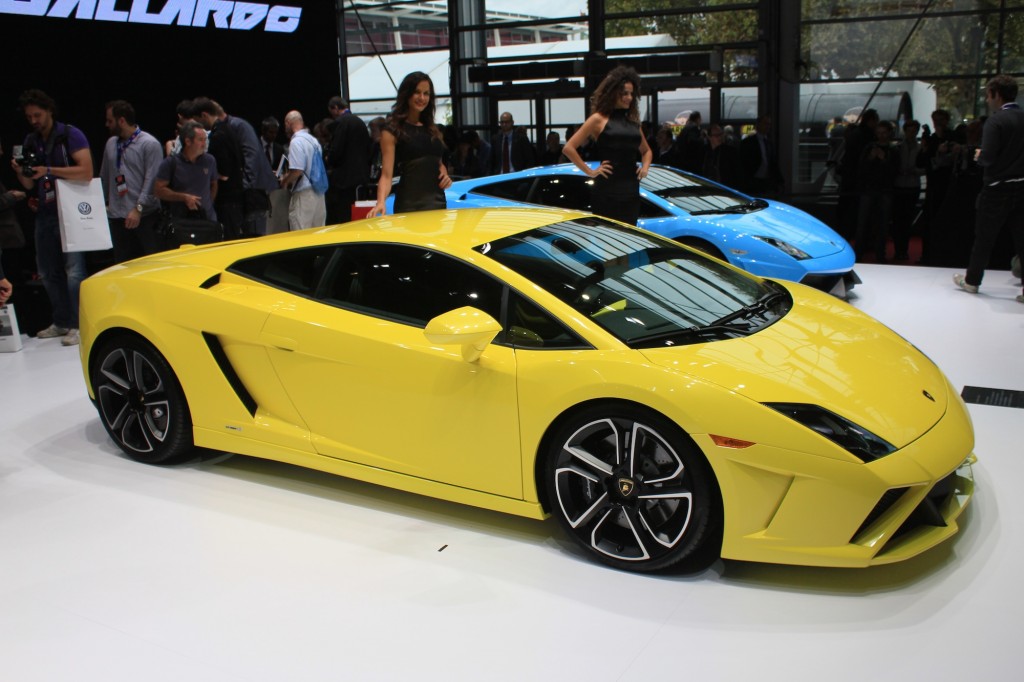
The current Blancfleet fleet includes:  Mercedes-Benz S550, Tesla Model S, Lamborghini Gallardo, Mercedes-Benz G550, Land Rover Range Rover Sport, Mercedes-Benz SLS AMG, Porsche 911, and a Nissan GT-R.  Prices for the cheapest vehicle – the GT-R start at $83 an hour.  Blancfleet has not yet bought the Veyron or the Huayra, but is planning to do so soon.  Until then, you’ll have to settle for something equally as cool – the Tesla Model S.

Blancfleet is currently only based in New York City, but is currently building a Blancfleet drop-off and pick-up office in Fort Lauderdale.