What the OPTIMA Search for the Ultimate Street Car is Really About

It all began at the SEMA show in 2004 or 2005.  OPTIMA’s Director of Product Development and Marketing, Cam Douglass, was in awe of all of the pro-built cars being shown, and couldn’t help but wonder if there was more to these cars than just having brand name parts and looking cool.

It took him a few years of talking to people and a whole lot of planning, but then Douglass met Jimi Day, and the idea became a reality.  It went from the SEMA show floor to the nearby track, Spring Mountain Motorsports Ranch.

As expected, Pro-Touring cars were all over the headlines.  I mean, how could they not be when iconic cars like RJ Gottlieb’s Big Red Camaro and Steven Rupp’s Bad Penny Camaro were competing?  In fact, they continued to grab headlines because Gottlieb and Rupp were more than willing to push both themselves and their cars to the absolute limit.

In the first year alone of OUSCI (OPTIMA Ultimate Street Car Invitational), there were some well-performing cars in the field.  There was a 2004 Porsche 911, a brand-new Pontiac G8, a Lincoln MKX of all things, a new Dodge Challenger, and several late-model Corvettes.

Why such a diverse field of cars?  Because otherwise, how would you determine what the “ultimate” street car really was?  The whole point of OUSCI is to see if SEMA show cars could perform as well on the track as they could look good at a show.  There never were, and never will be limitations on the year, make, model, or build style of the cars. Otherwise there would be no real valid way to determine whether the winner was the ultimate street car.

The OUSCI field is the most diverse it has ever been, with cars like Jonathan Ward’s 1948 Buick ICON Special to Dieter Heinz-Kijora’s 2014 Mercedes-Benz CLA45 AMG, and more than 100 cars in between those extremes.  Yes, Pro-Touring cars are still a big part of the mix, but anybody who owns a street-legal car or truck has a chance at getting to the invitational.  Just ask Thomas Smith about his 120,000 mile daily-driven 2005 Subaru WRX STI.

If you’re interested in going to a qualifying event to just watch, or to try and get to the invitational, they happen all over the country.  I’ve attached a link for you, where you can register for a qualifying event if you’re interested at http://driveusca.com/events/

Every vehicle that makes the cut is placed on display at SEMA for a week, before heading out to the OUSCI at Las Vegas Motor Speedway.

This is 2010 OUSCI competitor Mike Musto's 1969 Dodge Charger Daytona replica.  He's a host for the /DRIVE network on YouTube, which I highly recommend, and this is one of the coolest cars I've ever seen.
This is 2010 OUSCI competitor Mike Musto’s 1969 Dodge Charger Daytona replica. He’s a host for the /DRIVE network on YouTube, which I highly recommend, and this is one of the coolest cars I’ve ever seen.
This is just a beautiful picture from Las Vegas Motor Speedway.  It was taken at the end of the 2014 OUSCI.
This is just a beautiful picture from Las Vegas Motor Speedway. It was taken at the end of the 2014 OUSCI.
This is Bob Benson's totally cool 1972 De Tomaso Pantera from the  2013 OUSCI.  It's just epic looking, isn't it?
This is Bob Benson’s totally cool 1972 De Tomaso Pantera from the 2013 OUSCI. It’s just epic looking, isn’t it?


The Vehicles That Forever Changed the Automotive Landscape

These are not the best cars ever made.  Rather, they are the cars that have shaped modern cars.  I hope that you enjoy my list.  Please share any corrections if you feel necessary.

  • Ford Model T:  This was the car that made the production line possible.  It was also the car that made cars affordable to the American public.  Ford produced well over 15 million of them before production ended in 1927.  They are fairly simple to own, and they can keep up with city traffic if you want.  With so many built, there are many clubs and associations for the Model T all over the country.  Just look up “Ford Model T club <insert your area here>” on Google.  I can practically guarantee you that there is at least one club that you can join if you are the new owner of a Model T.  People drive them all over the place on tours.  You can take one into Alaska if you so please.  There are always plenty for sale anywhere between $10,000-40,000.  If you want to daily drive one, all you need is a good arm to crank-start it, and some adjustments to the timing.  Just retard the timing a big, be gentle with the gas, and you’ll have a car that gets up to 35 mph.  That’s plenty good for most city driving.
  • 1916 Cadillac Type 53:  Every single modern car owes a lot to this Caddy.  It was the first car EVER to come from the factory with an electric starter and a modern control layout, both of which we take for granted today.  The Type 53 wasn’t popular with Americans or the world, mostly because of it’s price (about $3,000).  However, the Austin Seven copied the Caddy and set the die for all cars to come.  Yet, I still credit the Cadillac.
  • 1932 Ford:  This was the first affordable car available to the American public with a V-8 engine.  It had a flathead V-8 making a whopping 85 horsepower.  Today, that’s comparable to a car making 500 horsepower from a V-6 (not unheard of).  Anyhow, it was affordable to some Americans.  It became known as “The Deuce,” as did the third-generation Chevrolet Nova.  It was the fastest affordable car of it’s day, which is why it was the escape vehicle of choice for Bonnie and Clyde.  It’s unclear how many were made, but it’s estimated that well over 1.5 million were sold.  Remember that Ford was selling these cars in 1932, right before the peak of the Great Depression!  It became one of the most popular cars to hot rod.  I want one, and we can call ourselves lucky that there are reproduction steel bodies, chassis (yes, that is plural and singular), and used engines aplenty.  How’s that for cool?  You can build your very own reproduction Deuce for about $20,000.  It’s going to be so much more fun than that Corolla you’ve had your eye on.
  • Willys/Bantam/Ford Jeep:  WWII veterans say that the Jeep was the vehicle that won WWII.  They are right.  It can still embarrass most purpose-built vehicles on a dirt road or in mud.  It was the first 4X4 to be sold to the American public en masse, and it proved to be popular.  After WWII, Willys decided to market the Jeep as an alternative to a tractor for farmers.  Chrysler still rakes in hundreds of millions on new Jeep Wranglers every year.  It’s truly an iconic vehicle.
  • 1948 MG TC:  This little wood-framed British roadster is what allowed such amazing cars as the Lotus Elise, Mazda Miata, and even the mighty Shelby Cobra to be.  Every single great American racing legend – Carroll Shelby, Phil Hill, Richie Ginther, and many others got their start in an MG TC.  On a winding road, this little car that only made 55 horsepower and 64 lb-ft of torque would simply run away from any American car, regardless of power output.  Much of what we hold dear as an automotive enthusiast was started by this little car.  It’s influence on every single sports car from 1948 on is immeasurable.  It’s still fast enough to embarrass a modern Chevy Camaro Z/28 on a windy road.  That’s pretty damn fast for a car that makes 450 less horsepower.
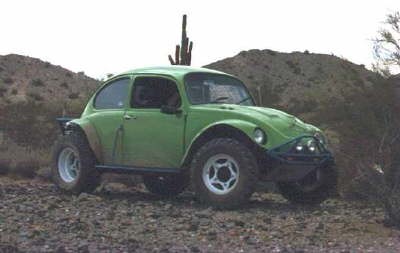
  • VW Beetle Type 1:  It’s the single most-produced car in history.  It’s an elegantly simple design that has stood the test of time better than most cars produced at the same time.  It was the foundation for the legendary Porsche 356, Meyers Manx dune buggy, and VW Transporter bus.  It was FWD, came as either a convertible or a coupe, had a tiny rear-mounted four-cylinder engine, and cost far less than any new American car on the road.  It became extremely popular with people of all ages and demographics.  Many new parents went out and bought a Beetle, and it would serve millions of families around the world faithfully for 20 years or more without major problems.  Most new cars can’t say that.  In the hippie movement, it became extremely popular.  Once the off-roading community got their hands on one, the legendary Baja Bug was born.  It is still fast enough to keep pace with a modern Trophy Truck in the horrible dirt roads of Baja, or the sand dunes of Pismo Beach.  Almost every desert town in the world will have at least several Baja Bugs running around.  It’s fast, sturdy, and capable, yet can be driven around town without complaining.  And the best part is you can build yourself one for about $5,000!  That’s not including a starter vehicle, by the way!  My grandparents owned one.  You probably know somebody who’s owned one.
  • Toyota 2000GT:  This was the car that put the Japanese automotive industry on notice with the world.  It was a more expensive alternative to the Jaguar E-Type, Chevrolet Corvette, Ford Thunderbird, Porsche 911, and the like.  It’s achingly gorgeous, and only a handful were built.  It’s also achingly expensive.  Toyota proved that they could hang with whatever Europe happened to build.  James Bond drove one.
  • Lamborghini Miura:  It’s not the quintessential Lamborghini – that goes to the equally-amazing Countach, but it set the standard for supercars.  It came around because Ferrucio Lamborghini wanted to build a better Ferrari.  When Lamborghini was going to debut the Miura concept car at the Geneva Motor Show in 1965, they didn’t even have a body!  They had a chassis with a V-12, a transmission, and wheels.  That was it.  However, the Miura looks absolutely stunning.  It’s one of the most beautiful cars ever built, and every single supercar owes a lot to the Lamborghini Miura.
  • Citroen DS:  When it debuted in 1955, it was the most technologically-advanced car in the world.  It had hydraulic suspension, a streamlined fiberglass body shell, four wheel disc brakes, a twin-cam V6, and many other technological innovations.  It was one of the first truly modern cars.  One can compare it to the Tesla Model S.  That’s how revolutionary it was.
  • 1955-1957 Chevrolet 210/Bel Air:  The Tri-Five Chevrolet’s are some of the most beautiful cars ever produced.  My personal favorite is the 1957 Chevrolet Bel Air coupe.  The 1955 Chevy became forever immortalized with Two Lane Blacktop and American Graffiti.  Yes, the sinister ’55 is the same car in both movies!  The 1955 Chevrolet introduced the revolutionary Chevrolet small-block (Mouse motor) V-8 to the world.  The 1957 Chevy Bel Air with the 283 cubic-inch V-8 and Rochester mechanical fuel injection became legendary on NASCAR tracks and dragstrips around the country.  It was as fast the Jaguar E-Type 10 years later.  I’m still wanting one!
  • Austin Mini:  Alec Issigonis sketched it on a bar napkin.  He never knew that it would become one of the most popular vehicles of the 20th century.  Let’s forget that it’s a cultural icon for a moment.  It was the first FWD car to come with a transversely-mounted engine (the engine was mounted sideways), which means that it’s the template for most FWD cars on the road today.  It became a motorsports icon in everything from endurance racing to rally racing.  It also became iconic in several movies – The Italian Job, The Bourne Identity, Mr. Bean, and Goldmember.  It’s also a major cultural icon.
  • Ford Explorer:  This was the vehicle that kicked off the SUV craze of the 1990s-today.  It was based off of the lowly Ranger pickup, but had a comfortable interior and the second generation had good looks.  It’s still a best-seller today.  It’s popular with the off-road community because it’s a Ranger with more space for people.  My parents owned one.  You probably know somebody who’s owned one.
  • Shelby Cobra:  Yeah it’s an obvious one for this list.  Carroll Shelby took a British roadster, and put a small-block Ford motor from the Mustang into it.  Then, he went hog-wild and put a big-block Ford into it.  That catapulted the Shelby Cobra into automotive fame.  Anybody who knows something about cars knows of the Shelby Cobra.  It could hang with anything.  It could beat a Chevrolet Corvette with the coveted L88 big-block V-8 in the curves and straightaways.  It dominated endurance and road racing for a glorious 3 years before Shelby stopped production of it.  It also dominated the NHRA Pro Stock drag racing class for a few years.  Today, there are at least 20 different companies who will sell you a Cobra replica.  Get a Factory Five replica.  It’s Shelby of North America licensed, and it comes with modern mechanical parts, yet can still hang with a modern hypercar.  
  • Chevrolet El Camino:  In it’s first generation, it was quite a looker.  Chevy didn’t sell too terribly many of the Impala-based ute, but you’ve probably seen a few driving around your town/city.  The second generation proved to be much more popular.  It was based off of the massively popular Chevelle, and you could get one with the rare, coveted LS6 V-8.  I remember reading an article about an owner of an LS6 Elco (a nickname for the El Camino), and he said that he has to drive it around with sandbags in the bed to keep it from spinning out.  That’s what happens when you have a massively-underrated 450 horsepower and no weight over the rear tires.  If you could get it to hook up, it would go through the 1/4 mile in 13 seconds flat at 125 mph.  That’s about as fast as a modern sports car.  I’ve heard driving one isn’t any different than driving a Chevelle, except for throttle modulation.  Flooring it from a stop, even with the still-powerful 327 cubic-inch V-8 will give a glorious burnout.  I want one.
  • 1968-1970 Dodge Charger/Charger 500/Daytona:  The second-generation Dodge Charger is one of the most beautiful cars ever built.  It’s got muscular elegance.  It had curvy “Coke Bottle” styling, and a plethora of engine choices.  The base engine was the “poly” 318 cubic-inch small-block V-8 that stayed in production in one form or another from 1959-2004.  The next step up was the 383 cubic-inch “Commando” big-block V-8.  After that, it was the 440 “Super Commando” big-block V-8.  One rung above that was the 440 Six Pack – a 440 with three two-barrel Holley carburetors.  The top of the ladder was the mighty 426 HEMI “Elephant Motor” big-block V-8.  The Charger 500 was designed for NASCAR, so it had a rear window flush with the body, along with other small aero modifications.  The Daytona was truly legendary.  Only 503 were sold to the general public, only 70 of which had the 426 HEMI.  The rest had the 440 Six Pack.  It was designed for NASCAR superspeedways, and it truly dominated.  It looked comical with it’s 19-inch long nose cone and nearly two-foot tall rear wing.  The only reason the wing was so high is that anything shorter and the trunk wouldn’t close! The Charger was catapulted into fame by The Dukes of Hazzard for one generation, and for the millenials, they were captivated by the supercharged 1968 Charger used in Fast & Furious.
  • Datsun 240Z:  This little Japanese sports car wasn’t a smashing success, but it certainly left it’s mark on sports cars.  It was light, looked drop-dead gorgeous, had a reliable, powerful engine, and a five-speed manual transmission.  Very few cars at the time had a five-speed.  All of that combined meant that it was a serious threat on a windy road.  Today, they are becoming collector cars, which is a shame, as they are built to be driven.  That’s not to be said that you can’t find a cheap one – you still can.  Hot rodders who are enamored by Japanese cars, but love the power of an American V-8 put a Chevy small-block V-8 and some suspension bits in, and have one hell of a ride.  My grandparents and dad owned one.
  • Audi Quattro:  This AWD notchback with a turbocharged 5-cylinder engine was so successful on the rally circuit that AWD was banned from the sport for about 10 years.  Stock, it’s not at all reliable (except for the first two years of production), but upgrading the engine internals will give you a strong, reliable, fast, and cool daily driver.  It’s truly an all-weather car.  I chose this car because of the impact that it had on rallycross and rally racing.  Any car with AWD past 1985 would have been much worse if it weren’t for the Audi Quattro.  My uncle owned one.  He should have kept it and given it to me.
  • Ford Mustang:  This was the car that started the ponycar craze.  No matter how much Ford hypes it as a muscle car (and Chevy with the Camaro), it IS NOT and never will be.  It is a pony car.  The Dodge Challenger is a muscle car.  Sorry Ford, but I’m just stating the truth.  Don’t shoot the messenger.  That being said, Ford introduced a whole new type of car to America.  Buying a Mustang with the base six-cylinder engine meant that you were carefree but had to watch your cash.  Getting it with the V-8 meant that you were carefree, but who cared about money – you only live once!  Getting it as a convertible only reinforced that.  The Shelby GT350 Mustang of 1965 was part of a deal with Hertz where you could rent the car on Friday, drive it to the racetrack on Saturday, race and win, go again on Sunday and win, and then drive it back to the rental lot.  It was somewhat streetable, but it really did well on the racetrack.  Carroll Shelby originally didn’t want to do it – he told Lee Iaccoca that “Lee, you can’t make a racehorse out of a mule.”  Yet that so-called mule became a massive racing success.  It’s still in production 50 years later.  Many American moms went from a station wagon to a Mustang and never looked back.
  • Pontiac GTO:  Originally offered as a package on the mid-size Tempest in 1963, the GTO took the thundering 389 cubic-inch V-8 from the Le Mans and shoved it into the considerably smaller Tempest.  It was a smashing success, so Pontiac decided to turn it into it’s own model in 1964.  It was much more popular that way, and the ultimate model was the 1969 Judge Ram Air IV.  It came with the then-new 455 cubic-inch V-8 and a functional Ram Air hood (the Ram Air package came in four stages), a Muncie M-22 “Rock Crusher” transmission, and bodywork that let you know that you really were king of the street.  It was truly stunning, especially in green.  It went dormant for 20+ years before appearing as a rebadged Holden Monaro in the US.  It wasn’t very popular.  It’s probably because Ford launched the retro-styled S197-generation Mustang right around the same time.  The 2004-2006 GTO looked nothing at all like any other GTO.  It didn’t look very good.  Nowadays, the modern “Goat” is popular with hot rodders who want to have all of the modern conveniences and glorious power.  Some even take the body off of the GTO and put on a classic car’s body.  Voila, you have a car that looks like a classic, but handles and drives like a new car.  Plus, they are easy to put bigger engines in.  Drifters are starting to find them.  Beware.
  • Lexus LS400:  This big Lexus was the car that sent Germany scrambling back to the drawing board.  The LS400 competed with the Mercedes-Benz S-Class and BMW 7-Series.  The German cars were stodgy cruisers that were heavy, large beasts on the street, but smooth on the highway.  The Lexus took that trademark Japanese agility and feeling of being a smaller car, threw in a buttery-smooth engine and transmission (the ads showed a champagne flute on the hood while the engine revved.  The champagne never overflowed – or came close to that!), a sumptuous leather interior, and made it a fun car to drive.  Lexus kept it in production from 1989-2000 in one basic form or another.  It sold well, and is a completely bulletproof car in terms of reliability.
  • Chevrolet S-10:  OK, I am a bit biased on this, but hear me out.  The Chevrolet S-10 replaced the dismal LUV pickups of the 1970s in 1982.  It came with an underpowered 4-cylinder engine or a more powerful 2.8-liter V-6.  In 1988, Chevy added their new 4.3-liter V-6 to the S-10.  It literally doubled the towing and hauling capacity, as well as making it a far more enjoyable truck to drive.  My S-10 is a 1989 Tahoe model.  That means that it was top of the line.  It has a cloth interior, an AM/FM radio, air conditioning, and it has fuel injection (the 1988 model had a carburetor).  You could get it as a regular cab or an extended cab.  Bed sizes were a 5-foot bed or a 6.5-foot bed. That’s not huge, but for somebody in a crowded city who needs a pickup, it’s perfect.  You could get it in 2WD or 4WD.  Mine is 2WD.  It was wildly successful, and you can still see a lot on the road.  Some people are taking modern Chevy LS3 E-Rod engines (smog-legal V-8’s) and stuffing them into an S-10.  They’re quite the sleeper.
  • Porsche 911 Turbo:  When it first debuted in 1975, it was a total animal of a car.  Lift off of the gas going into a corner, and you’d hit the guardrail with the backside of the car.  You had to keep your foot in it.  It made an underrated 276 horsepower (think closer to 350), had no ABS, a clutch that was so stiff that some had to literally push their leg down to depress the clutch, and a 5-speed manual transmission.  It was a total monster of a car that dominated the racing circuits, but was completely and totally unstreetable.  But, put one on a windy canyon road, modulate the throttle, and you had a recipe for speed.  Porsche still makes it.  However, it now makes a ridiculous 520 horsepower, and is truly the ultimate all-weather supercar.
  • Ford GT40:  This was the car that dominated endurance racing during the 1960’s.  It was the result of Enzo Ferrari refusing to sell his company to Ford in 1964.  Henry Ford II decided to beat Enzo Ferrari at his own game on his own turf.  Talk about owning a bully.  The GT40 was aerodynamic, muscular-looking, and was built for racing.  Ford built about 20-40 for the street (it’s unclear how many).  The first models came with a Shelby-tuned 289 cubic-inch V-8 that made 300 horsepower via a tri-power (three two-barrel carburetor) setup and forged internals and an Isky cam.  This engine was so durable that when Ford disassembled the engine after the season was over, it looked brand-new.  Later models came with Ford’s mighty 427 cubic-inch FE-Series “Cammer” engine.  This engine was the same one in the Shelby Cobra.  It made about 500 horsepower.  Both engines were mated to a four-speed manual.  The GT40 simply dominated the 24 Hours of Le Mans and 24 Hours of Nurburgring.  It was insanely fast, and it could be heard from over a mile away.  It beat Ferrari at their own game for years, before the FIA changed the rules, and both Ferrari and Ford had to comply.  Ford pulled out of Le Mans endurance racing for 20+ years and let Ferrari dominate.


Yes, that is a young Harrison Ford standing next to one of the most iconic hot rods ever.  It’s a 1932 Ford Hi-Boy (the body was lifted off of the frame so the frame could be tweaked).  It has a Chevy 283 cubic-inch small-block V-8 with crackling sidepipes.  This was the car that made me appreciate the little deuce coupe.

This is a fuelie 1957 Chevy Bel Air.  It became known as the “Black Widow” because it only came in black with white tape stripes, a black-and-white interior, and the red center caps on the wheels.

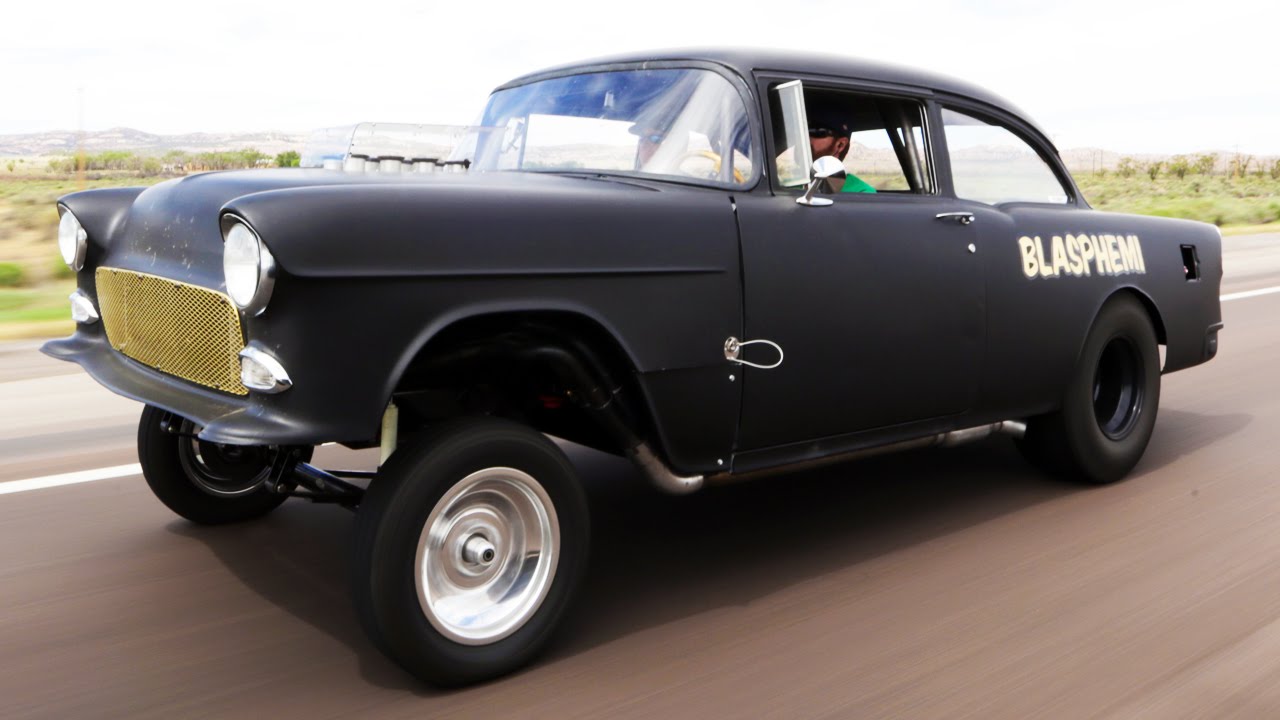
This is a gasser.  Gassers got their name because of the drag racing class they were in (B/Gas or blown/gas).  They had big engines with no supercharger, or smaller supercharged engines.  Look up “Roadkill Blasphemi” on YouTube for the build and cross-country blitz of one of my favorite cars – “Blasphemi.”

This is probably the ultimate Shelby Cobra.  It’s called the “Super Snake” because it has twin superchargers on top of an already-powerful engine.  Bill Cosby almost bought one, but took it on a test drive and thought he was going to die.  Carroll Shelby bought it.  Only two were made, but it was incredibly fast.  It’s rumored that in testing the car hit 210 mph – in 1966!  To me, it’s the ultimate factory hot rod.

This is a 1969 Dodge Daytona replica made by a host of the /DRIVE Network, Mike Musto.  It’s one of my favorite cars ever.  He took a 1969 Charger and turned it into a Daytona.  It’s the ultimate cross-country cruiser.  Just looking at it sends shivers down my spine.

The only stock part about this Mustang is the roof, A-pillar, and C-pillar.  It’s the latest creation from the brilliantly mad folks at RTR and Hoonigan.  Ken Block had it built.  It’s got a stroked NASCAR-spec engine that makes 850 horsepower that goes to all four wheels.  That’s right, this car is AWD.  You need to watch “Gymkhana 7” if you haven’t already.  It’s simply amazing.


Bad Boys: Dodge Challenger SRT Hellcat Vs. Chevrolet Camaro ZL1

Chevrolet’s had the 5th-generation Camaro ZL1 out for a couple of model years now, and it’s only real muscle car competition was the now-defunct Ford Mustang Shelby GT500.  The GT500 is now out of production, as the 2015 Mustang will go into production soon.  Dodge’s heavy Challenger SRT8 is a great car for cruising the boulevards and highways of America, it’s just not a handling muscle car like the ZL1.  The ZL1 is meant to be a car that you can take to your local track day without a trailer, win, and drive home.  Dodge desperately needed a competitor to the ZL1, so they rolled out the awesome Challenger Hellcat.  The Hellcat is the most powerful stock American V8 ever.  It makes a thundering, throaty, screaming, 707 horsepower.  That’s right.  However, a dyno test by Motor Trend showed that the Hellcat actually makes more than that.  Back to that later.  The Hellcat is meant to be a car that you can drive to your local drag strip, win against other bone-stock cars, and drive home.

The Camaro uses a detuned LS9 6.2-liter supercharged V8 that pumps out 580 horsepower.  It puts the power down to the ground through either a six-speed manual or a six-speed automatic transmission.  Plus, you can get it as a convertible, which would eliminate most of the visibility issues associated with the 5th-generation Camaro coupe.  While the Camaro may make far less horsepower than the Challenger Hellcat, it makes up for it in a trick suspension and 400 fewer pounds than the Challenger Hellcat.  Sometimes less is more.  Besides, the Camaro beat the 662-horsepower Mustang GT500 in it’s last shootout.

The Challenger uses an all-new 6.2-liter supercharged Hellcat V8 that pumps out a claimed 707 horsepower.  It puts all of those raging ponies down to the ground through either a six-speed manual or a quick-shifting 8-speed automatic adapted from the ZF 8-speed slushbox found in many cars nowadays.  It also comes with a trick suspension adapted from the Viper, and a variety of cool driving modes (like Valet Mode, which lowers the horsepower to 300, limits the revs to 4,000 RPM, and turns all of the nannies on).  Plus, it comes with more street appeal than just about any other new car on the market.  Well, with the exception of the Pagani Huayra…

If you want to kill them with consistency in the acceleration department, go for the ZL1.  It thunders to 60 mph in just 3.9 seconds.  It then goes on to slaughter the 1/4 mile in a stonking fast 12.2 seconds at 116.6 mph.  Whatever way you look at it, that’s pretty fast.  Enter the Hellcat.  It makes the Camaro feel slow.  That’s not surprising.  What makes it’s times even more impressive is the fact that it puts 707+ horsepower down to the ground through relatively skinny 275 millimeter-width tires.  Granted, the tires are Pirelli P Zeroes, but that’s a lot of power going to the ground through not very much tire.  This, of course, makes the Hellcat a difficult one to launch.  Even with launch control enabled, the Hellcat’s best 0-60 run was “just” 3.7 seconds to 60 mph.  It’s probably best to launch the Hellcat in 2nd gear, as that much power can get the Hellcat up to speed quickly, plus it eliminates a time-sapping gearshift.  It then goes on to absolutely embarrass the ZL1 in the 1/4 mile by doing a crazy-fast 11.7 second at 125.4 mph run.  That trap speed won’t only embarrass a Camaro ZL1 owner – it will embarrass a Porsche 911 Turbo S AND a Nissan GT-R Nismo in the 1/4 mile.  America for the win.

Then, you go onto a skid pad.  This is where the intended functions of these two cars show.  The Camaro ZL1 pulled 0.99 G’s on the skidpad.  This is probably thanks to the cool Delphi magnetic shocks, and the quick steering in the ZL1.  While the ZL1 may behave like a sports car, the Hellcat doesn’t.  As Motor Trend‘s Scott Evans put it, “The Challenger handles just like a Challenger.  Understeer into the corner, oversteer out.”  The Hellcat may handle like a boat, but it sticks.  Just ask the 0.94 G’s pulled on the skidpad.  The Challenger may not be the best choice for corner carving on a tight, windy race track, but it will put to shame many well-tuned drift cars as it shreds its skinny rear tires.

I literally couldn’t stop laughing when I heard this, but it’s 100% true.  Motor Trend‘s Kim Reynolds said that the Camaro felt like something developed by Infiniti’s Red Bull Racing Formula 1 team or McLaren’s Formula 1 team.  The Hellcat, on the opposite side of the spectrum, “feels like it was developed by HOT ROD’s Freiburger and Finnegan.”

Should you choose to road-trip either of these two cars, invite me or some friends along!  The Camaro has visibility akin to a solitary confinement prison cell at Abu Grahib, but it’s V8 hums along, the cool shocks absorb anything any road can throw at it, and it’s got a great sound system.  The Challenger Hellcat is THE ultimate road trip car.  I’ve heard that it’s ride is a bit busier, but it keeps you more alert than the quiet, subdued Camaro ZL1.  It’s seats are something that you’ll want in your living room.  The supercharged Hellcat Hemi has an absolutely demonic supercharger whine when you step on it – batten the hatches when the Hellcat comes to town!  The 8-speed automatic transmission is found in almost every new Chrysler/Dodge/Jeep/Ram/SRT product these days, and it is more beefed up in the Challenger Hellcat to handle the crazy power numbers.  The Hellcat’s engine note when you step on it sounds like somebody supercharged Roadkill’s Blasphemi 1955 Chevrolet Bel Air gasser.  It sounds absolutely spectacular.  The best part is, Dodge has released a Hellcat Hemi engine note ringtone.

Inside, the Challenger is definitely the car of choice.  Aside from the crazy powerful engine and the sinister sheetmetal that looks straight out of 1970, the Challenger is really quite the ticket to being comfortable.  It’s got one of the best interiors in the segment, which it has had since day 1, an intuitive infotainment system, an even better Boston Acoustics sound system, plenty of room for five adults, and a stunningly low entry price of $60,995.  Then, the Camaro ZL1 enters the room.  Sure, it’s got Alcantara all over the bloody cabin, and snug, comfortable Recaro bucket seats, but you can tell Chevy cared more about what was under the hood.  Dodge didn’t have to try very hard to update the cabin in the Challenger.  If you can’t swing $60,995, no worries.  Chevy has a great Camaro ZL1 with your name on it for just $57,650.

While these two cars have traded blows in straight lines, in the curves, and elsewhere, street appeal is definitely part of what muscle cars are all about.  In a nutshell, the Camaro looks like just another Camaro with big black wheels and a vented hood, while the Challenger looks like it just stepped out of the Trans-Am racing series.  It just looks like pure evil.

This is America.  Just like basketball (and many other ball sports), there are NO ties.  There are only winners and losers.  In my humble opinion, the Challenger Hellcat will always come out on top.  It’s got a focus on power, presence, and straight-line performance define what a muscle car is supposed to be.  It shows that the boys over at Dodge know how to make a world-class muscle car after years and years of being pushed around by Ford and Chevy.  While I like the ZL1 as a capable and well-balanced sports car, it just doesn’t really seem like as good of a muscle car of the Challenger Hellcat.  Like the muscle cars of the 1960’s and 1970’s, the Challenger Hellcat is built to dominate the streets with some serious power under the beautifully sculpted hood.  The Hellcat proves to me that the ultimate muscle car wasn’t built in the 1960’s or 1970’s – it is now, and here to stay.

Now for the dyno results.  The Challenger Hellcat is rated by the SAE (Society of American Engineers) at 707 horsepower and 650 pound-feet of torque at the crank.  Dodge is lying through their teeth.  This engine is almost as powerful as an engine in NASCAR’s Nationwide Series.  The Hellcat Challenger puts down 635 horsepower and 591 pound-feet of torque at the wheels.  Factor in a 12% driveline loss (automatics are getting more and more efficient every year), and the Challenger Hellcat makes about 722 horsepower and 672 pound-feet of torque at the crank.  Both of those are more than advertised.  Some other cool things about the Challenger Hellcat:  When Motor Trend did their dyno test at K&N Air Filter’s Riverside, CA dyno shop, the Hellcat was the fastest car ever strapped down to the massive rollers there.  The speedometer topped out at 202 mph, but the Hellcat accelerated to 225 mph, which is the fastest the dyno can possibly go there.  While the Hellcat will never, ever get up to 225 mph stock (a brick goes through the air better), it’s cool to know that the SRT team of engineers didn’t bother fitting a speed limiter to the car.  Not only is it the fastest, but it’s also the hottest.  The Hellcat took five industrial fans pointed at it to keep it cool for it’s dyno pull.  An interesting fact to know about the Hellcat is that it will suck all of the air out of a 10 X 13 foot room in just one minute at full throttle.  It will also drain all 19 gallons of it’s fuel tank in a minute at full throttle.

Now on to the Camaro ZL1.  The ZL1 makes only 580 horsepower and 556 pound-feet of SAE-rated torque.  The car that Motor Trend tested made just 472 horsepower and 482 pound-feet of torque at the wheels.  K&N noted that that’s about 20 fewer horsepower than they are used to seeing from a stock Camaro ZL1.  Assuming a 10% driveline loss for the Camaro, it’s making a still-impressive 524 horsepower and 536 pound-feet at the crank.  That’s almost 60 horsepower than rated.

Why did the Hellcat need five industrial fans pointed at it?  Well, the Hellcat needs a LOT of air to operate optimally, and superchargers throw off lots of heat.  This 2.9-liter supercharger shoves 11.9 pounds of boost into the engine.  This supercharger is common in tuned muscle cars, and it’s not uncommon to see more boost out of it.  However, I just think that the Hellcat’s engine can’t easily make more power before it presses the self-destruct button.  It’s like the Nissan GT-R, where the engine has been tuned so much that Motor Trend found in a test last year that the engine kept loosing 5 pounds of boost from the two massive turbos.  That’s a lot of boost, so you’ve got to wonder if engines this powerful are tuned to within an inch of their life.

What about the ZL1?  Was it a dud car, or has GM just been radically overrating their engines?  Who knows?  Dyno results range anywhere from far more than what the manufacturer says to far below.  It depends on the dyno itself, the way the car is strapped down, if it has enough air going into the engine, the temperature of the air, and what gear the car is in.  There are literally thousands of different factors in dynoing a car.  It probably wasn’t in Motor Trend’s best interest to dyno two powerful cars with heat-making superchargers in the end of a SoCal summer in Riverside.  While Dodge does say that the Hellcat will last 20 minutes in 100 degree heat at a track and get consistent results, one has to wonder if the Challenger can really last that long without overheating.  Time will tell (pardon the pun) the reliability of this powerful engine.

The engine technology in the Hellcat Hemi goes back to 2002.  That’s a really long time for a cylinder head design to be around in one basic form or another.  Granted, that design works – really well, but Ford and Chevy have definitely stepped up their engine game.  The Mustang GT500 used an aluminum block, which took off 100 pounds off of the front of an already-heavy car, and a bunch of other really cutting-edge engine technology.  Chevy’s LS9 and LSA V8’s are really beasts of engines, but obviously not in the ZL1 dynoed by Motor Trend.  The Hellcat engine block was originally going to be aluminum, but was vetoed at the 11th hour by a Dodge executive.  It’s a shame.  The aluminum engine block would have shaved at least 100 pounds off of the front of a nose-heavy car, bringing it’s curb weight down to about 4350 pounds or so, which would be almost 100 pounds heavier than the also-chubby Camaro.

When it comes to transmissions, the ZF 8-speed automatic is the best transmission in a muscle car now.  Chevy’s six-speed automatic doesn’t like to downshift, even when told to.  Ford didn’t offer an automatic transmission in the GT500, but it used a TREMEC TR6060 six-speed manual.  This is a great six-speed manual.  It’s used by Ford, Chevy, and Dodge.  It’s also common in road-racing cars.  It’s beefy, reliable, and has good gearing for almost any engine.  The fact is, the Hellcat with the 8-speed ZF transmission is probably the best combination.  It’s going to be hard for even an experienced driver of a manual transmission to put 635 horsepower and 591 pound-feet of torque down to the ground.  That’s why Dodge offers 3 power settings – 300 horsepower, 500 horsepower, and 700+ horsepower.  In daily driving, the most power anybody will ever really need is 150 horsepower and about 200 pound-feet of torque.  Plus, the Hellcat with the automatic transmission will get 24 mpg on the highway.  The Camaro only gets 21.  The Mustang only got 22.

If you get a Hellcat, please, please, pretty please, let me know!  I will feature you on my blog, but ONLY if you either take me for a ride, or let me drive it!  If you do either of these, I will interview you, take wonderful pictures, and wax poetic about being in a Dodge Challenger SRT Hellcat for the rest of my life.

2014-chevrolet-camaro-zl1-2015-dodge-challenger-srt-hellcat

2014-chevrolet-camaro-zl1-engine

2014-chevrolet-camaro-zl1-interior-view

2014-chevrolet-camaro-zl1

2015-dodge-challenger-srt-hellcat

2015-dodge-challenger-srt-hellcat-engine

2015-dodge-challenger-srt-hellcat-interior-view

2015-dodge-challenger-srt-hellcat-boost-setup

Amazing Photos From IROC Racing!

“Spanning the globe to bring you a constant variety of sports; the thrill of victory and the agony of defeat. The human drama of athletic competition … This is ABC’s Wide World of Sports.”  Legendary ABC Sports broadcaster Jim McKay spoke those words every Saturday afternoon for 37 years, from 1961-1998, when ESPN became the premier sports broadcasting channel.  Those words of Jim McKay were heard in millions of American homes.

ABC Sports was particularly fond of showing motorsports.  Every Saturday afternoon, millions of American children (and adults!) were treated to 90 minutes of non-mainstream motorsports like NASCAR, NHRA, demolition derbies, surfing, and even the Joie Chitwood Thrill Show.  While I’ve never seen the Joie Chitwood Thrill Show, it must have been good enough to be shown on one of the very few TV channels on the air at the time.  This is when IROC racing entered the motorsports scene in the early 1970’s.  It ran for a good 15 years or so, reaching it’s peak around 1980.  There was no other place where you could watch NASCAR legends like Richard Petty and Bobby Allison duke it out with F1 legends like Emerson Fittipaldi and Denis Hulme.  Throw in Mario Andretti, and you were bound to sit back and watch one hell of a ride.

The late Chris Economaki was always commentating on some form of motorsports, and his talent showed during the pre-race commentary of IROC V.  IROC V was the 5th IROC season, and the year was 1978.

While most younger Camaro enthusiasts will think that IROC was simply an option package developed for the Camaro starting in 1985, there’s more to the story.  The story behind IROC goes all the way back to 1973 with Roger Penske, Les Richter, and Mike Phelps (no relation to the swimmer of the same name!) all had the amazing idea to put 12 of the world’s greatest race car drivers in identical cars to compete on road courses and NASCAR superspeedways alike in a four-race series.  Richter was cautious enough to say that the IROC series might not determine who the best driver was, “but we sure go a long way towards that goal.”

The first IROC season was the 1974 season, and it kicked off on October 27, 1973.  It consisted of 4 events with all racing done in identically-prepared Porsche 911 RSR’s.  For the 1975 season, Chevrolet came on board, and the Chevrolet Camaro was the car of choice.

Here are some pictures that have only recently been released to the public.  Enjoy.

The Greatest American Turbocharged Cars

Many people think that turbochargers belong in heavily modified import cars.  Well, that’s partially true.  Europe has turned out some impressive turbocharged cars, as well as the US of A.  Here are America’s greatest turbocharged cars.

  • Ford Mustang SVO:  The 2015 Ford Mustang has a 2.3-liter turbocharged 4-cylinder engine, just like the SVO Mustangs of the 1980’s.  The first turbocharged Ford Mustang showed up in 1979 with a 135-horsepower, turbocharged, 2.3-liter four-cylinder engine.  It was an alternative to the downsized 4.2-liter V8 found in the Mustang GT.  But, it wasn’t until Ford’s Special Vehicle Operations (SVO, now known as Special Vehicle Tuning or SVT) got their hands on one that it became anything noteworthy.  It came with a factory-installed Hurst short-throw shifter, revolutionary Koni adjustable shocks, ABS disc brakes at all four corners, a limited-slip differential, and a screaming, turbocharged 205 horsepower.  Drivers even had the cool option of flicking a dash-mounted switch that allowed the car to run on lower-grade fuel for a certain amount of time.  When it ended it’s production run in the late 1980’s, it was something to be feared.  It looked especially menacing in grey.
  • 1965 Chevrolet Corvair:  Believe it or not, the Corvair actually had a go-fast option.  It had two, in fact.  One was the Crown Corvair, which used a mid-mounted 283-cubic-inch Corvette V8, and the other was a turbocharger bolted onto the engine.  From the factory.  It made 150 horsepower initially, but by the time the Corvair died, it made 180 horsepower.  Unlike many other turbocharged cars, the turbocharged Corvair did not use a wastegate, the internal exhaust flap that opens at higher engine speeds to prevent over-spinning the turbine.  Instead, Chevy engineers simply built enough backpressure into the exhaust system to prevent overboost and serious engine damage.  Very few Corvairs with the turbocharged engine were ever made.
  • Oldsmobile F85 Jetfire:  Oldsmobile was one of the early adopters of turbocharging technology.  It released the powerful F85 Jetfire in April of 1962, and the car was something of a small success.  It took the fabled 3.5-liter high-compression “Rocket” V8, cranked up the boost, and let it rev.  It made a screaming 215 horsepower, and it was easily quicker than many naturally aspirated cars of 1962.  Plus, owners got an ashtray-sized boost gauge in front of the shifter.  The engine had problems with detonation, which is the process where the hot air-fuel mixture under pressure spontaneously ignites before the spark plug has a chance to ignite it.  So, the Turbo-Rocket engine was fed a mixture of methanol alcohol and water (the same stuff fed to dragsters).  This allowed the mixture to not ignite as quickly and get a higher octane level.  Today, water/alcohol injection is commonplace in high-performance tuner car applications, but isn’t it cool that F85 Jetfire owners had to periodically fill their “Turbo Rocket Fluid” reservoir?
  • Buick GNX:  If there’s a poster-child for American turbocharged cars, the Buick GNX wins, hands-down.  The all-black, tire-smoking, Ferrari Testarossa-beating, quarter-mile waltzing Buick GNX was and still is a force of nature.  Buick initially started turbocharging it’s anemic 3.8-liter V6 in 1978 for the Regal and the LeSabre, introducing the fast Regal Grand National line in 1982.  It culminated with 1987 with the GNX.  Buick purposefully underrated the crank horsepower at 276 horsepower, but dyno tests showed that the car made at least 315 horsepower at the wheels.  This means that the car made somewhere close to 360-370 horsepower at the crank.  It even beat the twin-turbo Callaway Corvette that I featured on my blog a couple of months ago in the quarter mile.  The GNX would go through the quarter mile in the low 13-second range at around 125-130 mph.  Just 547 GNX’s were built in 1987, each specially massaged by AMC/McLaren.  Today, the turbo Buick’s are something of a legend, and many go for upwards of $30,000.  The car was so successful on the street the Buick entered a naturally-aspirated V8 version of the car in NASCAR’s Grand National series (now known as the Nationwide Series), where it was extremely competitive.
  • 1989 Pontiac 20th Anniversary Turbo Trans Am:  The all-white Pontiac Trans Am picked to be the pace car for the 73rd annual Indy 500 was completely different than the first turbocharged Trans Am, which was all mustache and no Burt.  This 1989 force-fed pony car was something completely different.  I liken it as the Pontiac storm trooper to the Buick GNX Darth Vader.  Pontiac subcontracted an engineering firm to swap Buick GNX engines (made by Buick for Pontiac) into the Trans Am.  But, the story doesn’t (and shouldn’t) end there.  Anniversary-edition Trans Am’s got better-flowing heads than the GNX, stainless-steel headers, GNX-sized Eaton intercoolers, a cross-drilled Comp Cams crankshaft, and their own engine tuning higher up in the powerband.  The net result was a car that officially produced 250 horsepower at the crank, but made closer to 320 horsepower at the crank.  This marked a return to the horsepower-underrating days of the muscle car, started by, you guessed it, Pontiac.  It was the fastest pace car ever in the history of the Indy 500, which is impressive, given the fact that many fast cars have been chosen since then.
  • Ford Thunderbird Turbo Coupe:  The Beach Boys made the T-Bird famous with the line, “fun, fun, fun, until her daddy takes it away.”  The T-Bird was fun until Daddy (the EPA) introduced emissions regulations that took the fun out of the T-Bird.  By 1982, the T-Bird was a horrible, anemic shoebox of a car.  Happily, 1983 saw the rising of the phoenix.  It’s beak-like hood had twin nostrils that meant that there was a turbocharged engine underneath that pointy hood.  Other than the amazingly 1980’s-FILA edition, the T-Bird Turbo Coupe was at it’s peak in 1987 and 1988.  That was when stick-shifted version of the Fox-bodied T-Bird came equipped with a whistling 190 horsepower, four-wheel ABS disc brakes, and a limited-slip differential.  Those nostrils on the hood, by the way, are functional, as they feed air directly to the top-mounted intercooler.
  • Shelby GLHS:  It’s hard to find a car that has a shape that’s more square than the Dodge Omni.  The blocky Omni had all of the sporting pretensions of a worn-out water shoe.  Then, you hand the Omni over to Carroll Shelby.  Early Omni GLH (unofficially Goes Like Hell) cars weren’t turbocharged, but by the mid-1980’s, America was becoming obsessed with the turbocharger.  So, by the mid-1980’s, the Omni GLH had enough punch to beat any VW GTI of the era.  For the 1986 model year only, 500 cars were further tweaked by Shelby to become the Omni GLHS (Goes Like Hell S’More), which was a 175-horsepower breadbox with more boost, better suspension, and factory options like a roll cage and heavy-duty oil cooler borrowed from the Ram 250 with the Cummins Diesel.  Quite possibly the best part of the GLHS:  The uprated top speed of the GLHS was too much for the regular 85 mph speedometer of the Omni, so Shelby simply added a sticker to the bottom of the gauge with increments up to 135 mph.
  • Shelby CSX-VNT:  Another Shelby creation was the CSX-VNT, which was based off of the homely Plymouth Sundance and Dodge Shadow.  Initially, the CSX-VNT packed 175 horsepower, and like the earlier GLHS, went like a bat out of hell.  Shelby built a small run of 1,001 cars for the Thrifty rental car company with slightly less power.  In the final year of CSX-VNT production, 1989, the CSX-VNT included some new, unique technology previously only seen on race cars – variable turbine geometry.  Computer-controlled vanes moved to direct the hot exhaust gas stream to improve spool-up time.  While it’s power rating remained the same at 175 horsepower, it had dramatically better response time in the low end, virtually eliminating turbo lag.  The next time this technology would show up in the U.S. market would be in 2011, with the 997-generation Porsche 911 Turbo.  That was more than 15 years later.
  • GMC Syclone:  In 1990, Gale Banks Engineering cracked the 200-mph mark at the Bonneville Salt Flats in a compact GMC pickup truck with no turbocharger or supercharger.  In 1991, the streetable version of that high-powered pickup showed up on dealer lots.  It’s 4.3-liter Vortec V6 engine was turbocharged with the help of Gale Banks himself.  It came standard with ABS and AWD, neither of which were options on the S15 Sonoma.  You couldn’t haul much with the Syclone, unfortunately, as it was only rated to haul 500 pounds.  Too bad, but you could still fill the bed with the egos of every single Porsche, Ferrari, Lamborghini, and Maserati driver on the road.  This all-black, one-year-only mini-truck was the fastest-accelerating production vehicle in America for a few years, easily getting off of the line, thanks to the torque-rich engine and AWD.  It got to 60 mph somewhere in the low 4-second range.
  • GMC Typhoon:  A spin-off of the one-year-only Syclone, the Jimmy-bodied Typhoon was officially rated at 280 horsepower, though dyno tests showed that it made at least that at the wheels, meaning that it made somewhere around 320 horsepower at the crank.  It could easily beat a Ferrari 348 off of the line and up to about 70 mph, when the 348 really got into the powerband.  Just under 5,000 Typhoons were made between 1992-1993, and unlike the black-only Syclone, could be bought in a variety of colors.  In fact, Clint Eastwood used to drive a Forest Green Typhoon around in his Dirty Harry days, where he would pull up to a stoplight and ask punks if they felt lucky. Most thought they were going to beat some middle-aged guy in his SUV with their Mustang or import car.
  • Dodge Neon SRT4:  In 2003, Chrysler/Dodge’s Street Racing Technology (SRT) team got hold of the friendly-faced Neon subcompact car, and built what is still the car to beat for bang-for-your-buck performance.  A frog-eyed four-door sedan with a functional front-mounted intercooler peeking out of the grille, the tiny Neon made mincemeat out of everything from a Porsche Boxster to a Nissan 350Z.  Dodge claimed 230 horsepower, though dyno testing showed that the car made at least that much, if not more at the wheels.  This means that the engine was making close to 280 horsepower at the crank.  Something else that is cool about the Neon SRT4 is the fact that it doesn’t have a muffler on it.  This allows it to have vastly better turbo flow.  Resonators keep the volume semi-sane, but the Neon really makes a lot of noise when you give it some go-juice.
  • Chevrolet SS Turbocharged:  Initially available only as a supercharged coupe, the Cobalt SS was always OK in performance testing, but it wasn’t going to set any records.  Starting in 2009, the Cobalt SS came as either a sedan or coupe with a turbocharger bolted onto a small four-cylinder engine.  It made 260 horsepower.  Should you want a cool sleeper, if you aren’t afraid of the ignition recall, you can get a Cobalt SS, take the badges off, swap the big chrome rims for something more discreet (like the regular Cobalt rims), and you’d have the makings of a good sleeper.  It had a no-lift-shift system – just keep your right foot floored so that you don’t loose boost – and you’ll see the quarter mile fly by in under 13 seconds, and will keep up with a Porsche 911 on a road course.  Take it out to the twisties out on the road, and you’ll be able to keep up with a motorcycle, thanks to the tiny size of the Cobalt.

1986 Ford Mustang SVO 1986 Shelby Omni GLHS 1988 Ford Thunderbird Turbo Coupe

1989 Shelby CSX-VNT 2004 Dodge Neon SRT4


1962 Oldsmobile F85 Jetfire 1965 Chevrolet Corvair Spyder Turbo

1987 Buick GNX

1989 Pontiac Trans Am 20th Anniversary Edition

1991 GMC Syclone 1992 GMC Typhoon


10 Cars That You Just Have to Love, Even if They Were Lemons

Lots of cars are reliable.  Lots of cars aren’t reliable.  A lot of British and German cars fall into the not-so-reliable category.  My uncle can attest to that with the fact that his 2001 Jaguar XK8 has spent about half of its life in the shop.  On the other side of reliability, another one of my uncles had an Audi Quattro for something like 10 years, and he never had any reliability issues.  My dad’s had trouble with his 2003 GMC Sierra 2500 HD with the Duramax diesel engine.  My 2003 Chrysler Town & Country is just a few hundred miles away from hitting 200,000 miles, and it’s been one of the most reliable cars that I’ve ever seen.  Anyhow, the basic premise of this blog post is to tell you the top 10 cars that we all love, even if they were (or still are) lemons.

  1. 2001-2005 Porsche 911 and Boxster:  The 996-generation Porsche 911 was the first Porsche to ever have a water-cooled engine.  For Porschephiles, that’s the equivalent of the Pope converting to Buddhism.  The 2001-2005 Porsche 911 and Boxster had a teeny, weeny, little problem with their engines where the faulty intermediate shafts could fail, turning a fine sports car into a very expensive paperweight.  Even after enough owner complaints, Porsche started fixing the problem, but only on a case-by-case basis, which meant that many owners were left out to dry unfairly.  It’s easily one of the largest black spots in Porsche history, which is a true shame, because these cars were otherwise some very nice drives.
  2. 2001-2003 Subaru WRX:  The first Subaru WRX to be offered in the U.S. had a massive problem with the transmission.  The five-speed manuals were extremely fragile, and the tuner-friendly engine often meant that the tiny boxer four-cylinder engine was tuned to within an inch of its life.  All Subarus have problems with their head gasket, but the 2001-2003 WRX often gave its head gasket up before it even reached 100,000 miles.  I can forgive all of this, because aside from these two problems, it’s a reliable daily driver that’s a LOT of fun.  The purity of these WRX’s means that your inner Swedish rally driver fantasies can come true.
  3. 1993-1995 Mazda RX-7:  One of the last rotary-powered cars (the last was the Mazda RX-8), the Mazda RX-7 was a true driver’s car.  However, apex seal failure hangs over every owner’s head like a cloud.  Apex seal failure means a complete engine rebuild or replacement if the car is not maintained at the proper intervals.  The massive amounts of premium fuel and oil going into the engine didn’t help matters, either.  Still, the 3rd-generation Mazda RX-7 is an amazing driver’s car.  Plus, many owners say that there’s  truly nothing like spooling up the second sequential turbocharger.  Mazda had made the RX-7 with two turbochargers – one for the lower rev range only, and the other for the upper rev range only.  It’s been a long, long time since the last RX-7 was built, and I really hope that Mazda gets their act together and builds an RX-9.
  4. 1999 Ford Mustang SVT Cobra:  This was a one-model-year special put on by Ford, and it was supposed to be a drag racing special for the street.  However, it didn’t  take long for enthusiasts, mainly drag racers, to figure out that it was making WAY less than the 320 horsepower that Ford advertised.  Ford traced the problem to aluminum residue in the intake and exhaust systems.  Ford did well by fixing the problem free of charge.  However, the public snafu on Ford’s part caused Ford to drop production of the SVT Cobra after just one model year.  The upside is that there are no other reliability problems with the SVT Cobra Mustang.  Because it’s a single-model-year special-edition Mustang, it’s got potential to be a future classic.  Don’t be intimidated if you see one for sale with lots of modifications – Ford designed this car to be tuner-friendly.  Just make sure that there’s good documentation of the car.
  5. 2008-2010 Nissan GT-R:  Like many supercars, the Nissan GT-R came with launch control.  The difference was that the launch control function could potentially blow up the transmission and void the warranty, leaving the unlucky owner with a $20,000 repair bill.  Nissan settled a class-action lawsuit in Decemer 2010, and the launch control was dialed back on 2011-up models.  It’s impossible not to love the GT-R and it’s mind-altering ability to be an absolute freight train on race tracks of any kind, just avoid the hard launches.
  6. 2001-2006 MINI Cooper S:  Anybody who was (or is) an owner of the 2001-2006 MINI Cooper S felt more like a beta tester for a video game than anything else.  Here’s the relatively short list of, uh, ‘bugs:’  Electric power steering pumps that could catch fire, supercharger failure after just 80,000 miles, and head gaskets that seemed to be timed to blow up as soon as the warranty expired.  Despite it being a sub-$20,000 car new (and used), it’s got maintenance costs of a 2001-2005 Porsche 911 or Boxster (see #1 on this list for reference).  If you can forgive those faults, the handling is some of the best this world has ever seen.
  7. 2010 Ferrari 458 Italia:  Most mid-engine Ferrari’s have a wholly undeserved reputation for spontaneous combustion.  However, with the 2010 Ferrari 458 Italia, the argument was valid.  The adhesive bonding between the wheelwell and the engine heat shield would melt and catch fire.  Reports vary, and if Ferrari is to be believed, only 11 cars were affected by this.  All 1248 Ferrari 458 Italias sold until that point were recalled.  Ferrari still claims that this only happened during hard driving, but asking owners of Ferraris to not drive their car hard is laughable.  After the concerns of owners becoming BBQ, the Ferrari 458 Italia once again ascended to its rightful place as the best mid-engine car the world has ever seen.
  8. 2003 GMC Sierra 2500HD:  These things are supposed to be bulletproof, right?  Think again.  The fuel injection systems on the Duramax diesel-engine trucks are notorious for the fuel injectors cracking.  My dad has a 2003 GMC Sierra 2500HD, and the engine’s been rebuilt something like 4 times.  If you buy one of these vehicles, make sure to get it with the LQ4 6.0-liter V8.  The Allison 1000 heavy-duty transmissions will go over 150,000 miles without trouble.  Just DON’T get it with the Duramax!  Not only are engine rebuilds expensive, but they are frequent.  If you buy one, make sure you find one with good documentation, as many of these were used for hauling and towing, both of which put phenomenal stress on the engine and transmission.
  9. 1996-2005 Volkswagen Passat:  This was the infamous era of VW unreliability.  The B5-generation of the Passat had steering problems – the rack-and-pinion assembly was prone to stripping, which means no steering.  When it stripped, it would burn out the power booster, which means that other parts are brought into the mix.  Volkswagen made a lot of these cars, and some of them are good.  Other family sedans are good choices.
  10. 2003 Land Rover Freelander:  This is quite possibly one of THE most unreliable vehicles EVER!  It was quite simply bad.  The engine was bad, the cheap interior fell apart after just a few thousand miles, and forget replacing parts for it.  The replacement parts were usually just as bad as the stock parts.  Avoid this car at ALL costs!


The Best Cars for the End of the Holiday Season!

I think that this is a bit of a tradition for me.  Last year, I wrote a post about the same time as this one.  It was also about the best cars for the end of the holiday season.  I have fond memories of picking through cars that I thought deserved to be on this list.  While my list may not be as prestigious as Car & Driver’s 10Best, I would like to think of it as my personal version.  Except, I will be doing a list like this for every season!  That’s right:  Winter, spring, summer, and fall!  After much thought, I have finally decided what cars deserve to be on my list.  The criteria for the cars:  The cars on the list must all be new or substantially updated, they must be able to be entertaining in a snowy climate, and they must be able to seat at least four people comfortably (that way you can go on a road trip with the kids or friends!).  Enjoy my list!

  1. Bentley Flying Spur:  The Bentley Continental Flying Spur Speed was on my list last year.  However, the Flying Spur is no longer burdened with the Continental name.  It does still share a platform with the Continental, though.  It’s a brute of a car, weighing in at 5644 pounds.  It’s definitely as large as an elephant – it is 17.4 feet long, and it it weighs as much as a male elephant bull.  Don’t despair – this car rockets to 60 mph in an equally stunning 4.3 seconds.  This car will keep pace with a sprightly Lotus Evora S all day, without much drama or effort.  This car has 616 horsepower mated to a superb ZF 8-speed automatic transmission.  The powerful W12 engine is more efficient – it gets 12/20 MPG city/highway, according to the EPA.  However, snowy hoonage will likely lower that number…  It has every option one can imagine, including private multimedia screens for the kids.  Bang & Olufsen sound-deadening wireless headphones will keep the people in front sane.
  2. Ford F-150 FX2/FX4 Sport Tremor:  The Ford F-150 SVT Raptor Crew Cab rumbled and burbled its way onto my list last year because of its substantial updates, most notably the 6.2 liter V8.  This year, it’s more efficient, yet just-as-fun sister joins the party.  The Sport Tremor comes in 2WD or 4WD, regular cab only.  It comes with Ford’s powerful, efficient 3.5-liter twin-turbo EcoBoost V6.  Power gets there through a 4.10:1 rear end, so these trucks will be fast.  I know that it doesn’t seat four, but don’t despair – you can always get the Raptor!  The performance figures for the Sport Tremor aren’t out yet, but a 2012 Ford F-150 XLT 4X4 Crew Cab got to 60 in a quite-respectable 6.2 seconds.  Expect the Sport Tremor to get there in about 5.8-5.9 seconds.  While it won’t keep up with the Bentley in a straight line, it CAN haul a whole lot more, and get better gas mileage!
  3. SRT Viper/GTS/TA:  The Viper has a ground-shaking 8.4-liter V10 that pumps out 640 horsepower.  It comes with a 6-speed manual transmission and RWD only.  This will play with the boys.  I know that it doesn’t seat four, but hey, it’s a Viper.  It’s not a Bentley!  The RWD, 640 horse Viper should be a hoot to hoon around in the snow.  Stability control and traction control will help.
  4. Porsche 911 Turbo/Turbo S:  The Porsche 911 Turbo is a great car to own.  Not only will the 991-generation Turbo remain a collectible for a long time, but the 991 911 Turbo/Turbo S has a bunch of new technology designed to help the driver get around a track faster.  It has AWD, 560 horsepower in the Turbo S, and seats for four.  While the rear seats may only be fit for presents, the kids will have to suck it up and squeeze in there for a bit.  But, the drive there will be worth it.  The 911 Turbo/Turbo S is turbocharged, which makes it a cinch to drive fast, especially in wet or low-traction environments.  This car was designed to make the worst of drivers look good, and the best of drivers look legendary.  Have fun with this car.
  5. Porsche 918 Spyder:  If you own this car, I want to go for a spin in it!  Porsche has had the 918 Spyder in testing for years – prototypes were running around Germany as far back as 2007.  The 918 Spyder has a hybrid-electric system that distributes the gobs of 874 horsepower and an astounding 944 lb-ft of torque to all four wheels.  The 918 Spyder Weissach Package loses 88 pounds by using ceramic wheel bearings and film wrap instead of conventional aluminum and paint.  It won’t seat any more than two, but that’s okay.  This car will blow your mind at the speeds it reaches without effort, as well as the confidence it gives the driver at any speed.
  6. Subaru WRX:  Subie is legendary in the rally world for building fast, reliable cars that don’t look like much.  The 2015 WRX lives up to these statements.  It loses the massive rear wing found on the previous generation of WRXs, but it has power and fun.  It is bigger, but it makes 268 horsepower and 258 lb-ft of torque.  It’s suspension has been firmed up 39% in the front, and 62% in the rear.  This car will play all day with a Mitsubishi Lancer Evo, and be as flat as a Porsche Cayman S while cornering.  The torque vectoring system uses the rear differential instead of the brakes to vector the torque.  It doesn’t look pretty, but then again, no Subie in recent memory has looked mesmerizing.  Subaru invests money in engineering, not in styling.  That’s fine with me.
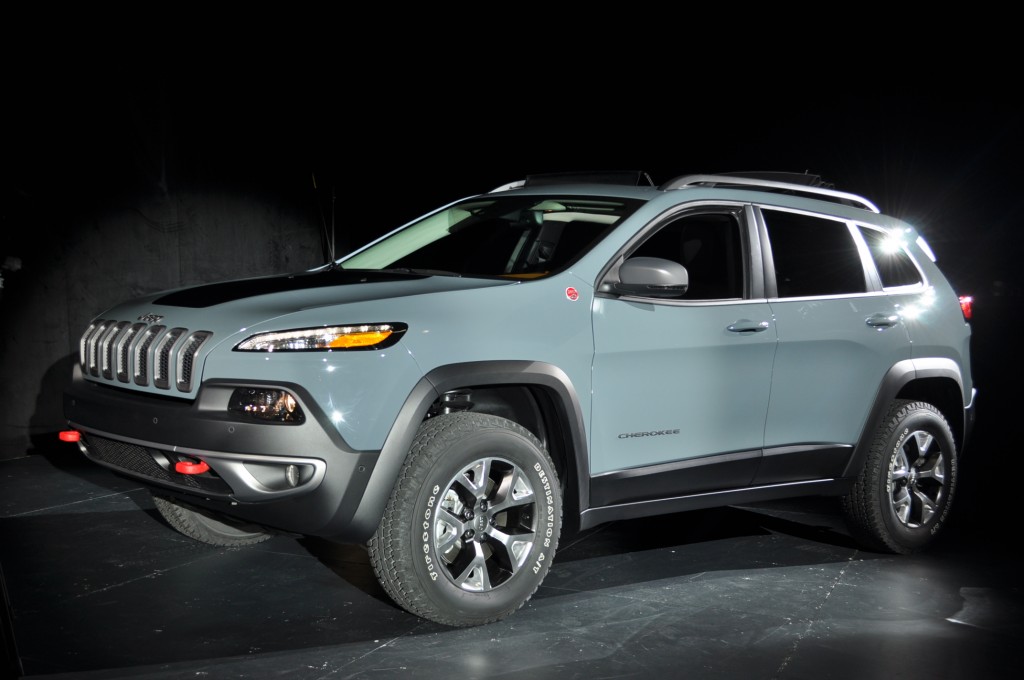
  7. Jeep Cherokee:  For those of you who remember the Jeep Cherokees of yore, close this tab, shut off your computer, grab your wallet, and go get a Jeep Wrangler.  This Cherokee is NOTHING like the harsh-riding Cherokees of the 1980s and 1990s.  This Cherokee comes standard with FWD, but 4WD is optional.  The Cherokee Trailhawk will keep pace with a stock Wrangler or SVT Raptor all day long without breaking a sweat.  The Cherokee is packed with lots of useful, cool tech.  I won’t bore you all of that technology, but I will say that for those in need of something affordable with 4WD, the Cherokee deserves a second look.
  8. Chevrolet SS:  The Chevy SS is the thunder from down under.  It’s based off of the Holden Commodore, and it’s got a high-performance 6.2-liter V8 with 415 horsepower.  The SS is the first RWD Chevy sedan since 1996 for civilian use – the Caprice PPV is available for lucky cops, and it’s truly spectacular.  It is capable of making those who owned a muscle car as a teenager feel young again, while allowing Mom and the kids to experience the fun.  It’s not all about burnouts – the SS can hold its own in the twisties.  The 415-horse V8 and six-speed automatic mated to RWD will make it entertaining for anybody to drive, any season, at any time.  I want one, if you haven’t noticed!
  9. 2014 Chevrolet Silverado:  Chevy is good at this game!  Two cars on my list is kinda hard.  Yet, Chevy introduced two cars capable of being on this list, which both of them are.  The 2014 Silverado truly gives the buyer everything that is needed or wanted, and then some.  There are literally 50 different cab/bed combinations, let alone the plethora of engine/transmission/2WD/4WD combinations.  The 2014 Silverado was designed to be one of the best in the game, and it doesn’t disappoint.  It’s got clever tech for all of the engines to make the engines more competitive in an ever-evolving segment.  The Silverado doesn’t come with the option of an extended cab anymore – safety regulations and loss of demand killed it for Chevy, but it comes with a “Quad Cab” option that offers more space than an extended cab, as well as the look of a crew cab.  It starts off as a perfectly nice base model, before climbing the ladder of expensive and unneeded options to become a pure luxury truck.
  10. Ram 1500:  The Ram 1500 has long been one of my favorite 1/2 ton trucks.  Ever since it’s massive – and popular redesign in 1993, the Ram 1500 has always had a brutish Hemi V8 underhood.  Recently, Ram introduced an EcoDiesel V6 shared with the Jeep Grand Cherokee.  It’s the first diesel in a 1/2 ton pickup since the 1980s.  I know the deal about diesels.  My dad owns a 2003 GMC 2500 4X4 with the Duramax diesel.  But, the Ram 1500 offers the same noise levels as the Ram equipped with the Hemi V8.  If you don’t want a diesel, you can always opt for the refreshed Hemi V8, which has more cool tech to aid in towing and hauling.

Have a fun, happiness-filled end of the holiday season!  In these final days of 2013, I urge you to take a walk in the park with friends, your kids, and/or the family dog (if you have one), and do whatever fills your heart with enjoyment.  Have a wonderful Winter Break!

Enjoy the pictures of the cars (and trucks!) on my list: