The Cars Best Suited for Just One Task

A lot of time, cars will try and be good at everything, and fail miserably. They end up being great at nothing. The cars I’m going to list all aimed for one specific thing, and completely dominate it.

  • Alfa Romeo 4C: Putting Italian car reliability concerns out the window, let’s talk about what a wonderful car the Alfa Romeo 4C is. It’s the perfect dance partner for winding mountain roads. The sensible money would go to the Porsche Cayman. The Cayman is a wonderful car – don’t get me wrong there. It’s got fantastic power, an interior that would make any car proud, and is relatively affordable. Look at the Alfa Romeo 4C on paper. It looks like an awful car to own. Four-cylinder engine, manual steering, few creature comforts, and some interior trim pieces wouldn’t look out of place in a Chevy Spark. Drive it in the city, and you’ll want to stop it in traffic and run after the bus. But, take it out on a winding back road and you’ll never want to stop driving it. It’s got a guttural four-cylinder with a whooshing turbocharger, a quick-shifting dual clutch transmission, and who needs navigation or a radio for back road blasting? 
  • Dodge Viper ACR: All it takes is one quick look to realize that the Dodge Viper ACR is probably one of the worst cars to drive on a daily basis. It’s got a massive rear wing, a thundering exhaust note that you can hear from a mile away, and it’s just a big car. It would be intriguing to see someone try to daily drive one, but my spine says let them do it! This car is built to keep up with racecars on the track, and set records. That’s exactly what it does. So far, it’s set lap records at 13 different tracks. Yes, 13 different tracks. Few street cars, save for hypercars (even those would have a serious run for their money), could have any chance of touching this car. The exhaust note might sound like it’s right out of a tractor, but tractors sound nice to me!
  • Dodge Challenger Hellcat: How can you not love 707 horsepower for around $60,000? If you expected Dodge to turn it’s burnout machine into some sort of corner carving demon, you should just press ALT + F4 right now. It’s got no interest in chasing Viper ACRs and McLaren P1s around tracks or canyon roads; no this car is the best for burnouts and drag racing (it ran 10.80 seconds in the 1/4 mile on street-legal drag slicks).
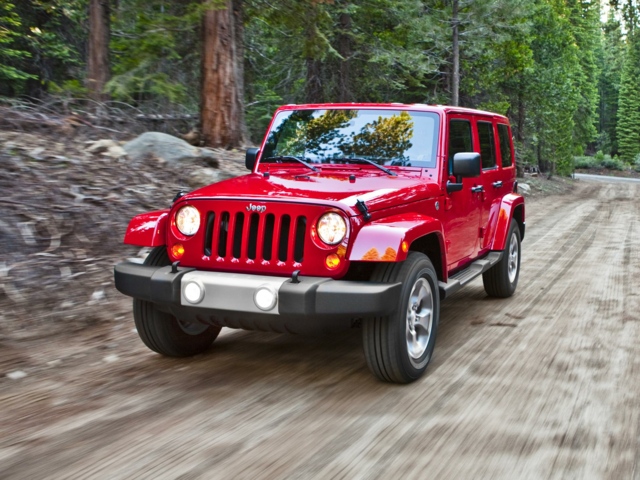
  • Jeep Wrangler Rubicon: The Jeep Wrangler has always been one of those vehicles that even non-car people love. It makes you feel instantly cooler, no matter what job you have, even if you never take it off-road. This is especially true in Rubicon form. Just promise me that you’ll take it off-road, because that’s where you WILL be cool. You don’t need to do anything to it to go just about anywhere in it. Just put some gas, friends, and a cooler full of cold drinks and some snacks, and you’re good to hit the trails.
  • Mitsubishi Lancer Evo: There used to be a time when the Mitsubishi Lancer Evo was one of the most desirable cars out there. It had cutting-edge technology that made it feel like you were blasting down a rally stage, even if you were just going to work. Today, unfortunately, that’s far from the case. With Mitsubishi’s announcement that they are going to be ceasing production of the Evo, and no significant updates to the car since it’s launch in 2008, it feels, like well, a car from 2008. However, that all changes when you get less traction. It doesn’t matter how old the car feels; it just feels right at home. That’s where all Evos have shined, and this one is no exception. Taking one for a spin down a dirt road will put a gigantic grin on your face.
  • Nissan Versa: Many people think that the Mitsubishi Mirage is the cheapest new car sold in the U.S., but they are wrong. The Nissan Versa starts about $1,000 lower than the Mirage. If you’re paying $60,000 for a luxury sedan, $1,000 is pretty insignificant. With a $12,000 car, that’s a lot. Then again, you don’t get much of anything for that price. You get air conditioning, ABS, and traction control, and a radio. That’s about all of the major things on the car. Still, it’s the best at being the cheapest new car sold in the U.S. Yes there are dealer wars to see who can sell the car for the least amount of money, but that’s always been the case.
  • Ram ProMaster: If all the cargo you carry home is takeout from Domino’s, then chances are likely that you don’t need a Ram ProMaster. But, if you haul a bunch of stuff around all day, every day, then the Ram ProMaster is a great choice. It’s got an incredibly low loading height, and a lot of space. With all the stuff you can carry in it, you’ll be catching a bunch of nasty looks from UPS and FedEx drivers.
  • Rolls-Royce Phantom: Set aside it’s hefty price tag for a minute. It weighs nearly 6,000 pounds. It’s far from a driver’s car. Even though it has a 6.8-liter V12, it’s far from a fast car. But, the Phantom chucks all of those notions out the window. It’s not concerned with any of those petty things. No, it’s by far the most comfortable car you could ever be in. It’s sumptuous leather seats have only the finest hides sourced from the finest tanneries in the world. It’s whisper-quiet. It’s also astronomically expensive.
  • Toyota Prius: Yes, I know what you’re thinking. I lost my mind a very long time ago! The Toyota Prius is the ultimate car for fuel economy. The new Prius is more fun to drive than the previous generation, but it’s no sports car by any stretch of the imagination. If you go with the Eco model, you’ll get an incredible 58 mpg city and 50 mpg highway. It also looks worlds better. The Prius has been a ground-pounder in terms of paving the way for every other mainstream hybrid.
  • Pagani Huayra: For outright beauty, the Huayra is untouchable. It’s also stonking fast, but there are few cars that you can just sit and stare at for days at a time. It has so many beautiful little details that you really have to look for. It’s the brainchild of the absolutely brilliant industrial designer Horacio Pagani, the man who helped revolutionize carbon fiber technology back in the late 1980s.
  • Ford F-550: This behemoth pickup truck is one of the heavyweights in the towing/hauling ring. It’s basically a step below an International TerraStar. It can tow up to 26,000 pounds, which is absolutely mind-boggling. The insane part is that it does it without really breaking a sweat. It also costs a lot of money, but if you tow and haul lots of heavy stuff around all the time, there is no better option. All you need is a Class C driver’s license, which is the same one for passenger cars.
  • Mazda Miata: For cheap thrills, nothing beats a Mazda Miata. It’s cheap, fights far out of it’s class, and wins. It’s slow in a straight line, but few cars can catch it in the curves. It’s also really nice to go for a late-night cruise with the top down in your Miata. 
  • Dodge Grand Caravan: Like hauling people around, but don’t need a 12-passenger van? The Dodge Grand Caravan is your ticket. It’s got a powerful V6, lots of space, a nice interior, and is easy on the wallet. It’s probably one of the best vehicles to pile your friends in, and go for a long road trip in. Even the third row is usable for adults! 

Tell me what your favorite cars at one specific task are!

Ferruccio Lamborghini – a Biography of the Man Who Wanted a Better Ferrari

When you see a Lamborghini for the first time, you are probably wondering if an alien owns it.  It looks otherworldly.  This blog post is going to delve into the story behind the man who created Lamborghini Automobili, Ferruccio Lamborghini.  I hope you find his life as interesting as I do.

Ferruccio Lamborghini was born on April 28, 1916 to Antonio and Evelina Lamborghini in the beautiful region of Northern Italy.  Not much is known about his childhood, other than the fact that his parents were viticulturists.  What we do know is that Ferruccio Lamborghini was fascinated with farming machinery, rather than the farming lifestyle.  Following his passion for mechanics, Ferruccio went to the Fratelli Taddia technical institute in Bologna.  In 1940, Ferruccio was drafted into the Italian Royal Air Force for WWII.  He started off as a vehicle mechanic at the Italian garrison on the island of Rhodes.  He eventually became supervisor of the vehicle maintenance unit there.  When the island fell to the British in 1945, Ferruccio was taken prisoner.  He was unable to return home until 1946.  Upon his return, he married, but his wife died in 1947 while giving birth to their son, Antonio Lamborghini.

After that, Ferruccio opened a small garage near Bologna.  In his spare time, Ferruccio modified an old Fiat Topolino that he had purchased, one of the many that he would own over the years.  He took his extensive mechanical abilities to the tiny city car and turned it into a thundering, two-seat, open-top, 750-cc, roadster.  He entered the car in the 1948 Mille Miglia.  His participation in the tiny Topolino ended after 700 miles, when he ran the car into the side of a restaurant in the town of Fiano, in the province of Turin.  As a result of the crash, Lamborghini lost all enthusiasm for racing, a bitter sentiment that would last until the late 1960s.

In 1949, Ferruccio started Lamborghini Trattori, a small tractor company that would eventually become the European equivalent of John Deere.  His increasing wealth allowed him to buy more expensive, faster cars than the tiny Fiats that had provided with reliable, albeit slow, transportation for many years.  In the early 1950’s, he owned such cars as Lancia’s and Alfa Romeo’s, and at one point, he owned enough cars to drive a different one for every day of the week.  He added a Mercedes-Benz 300SL Gullwing, a Jaguar E-Type coupe, and two Maserati 3500GT’s.  He once said of the latter, “Adolfo Orsi, then the owner of Maserati, was a man I had a lot of respect for: he had started life as a poor boy, like myself.  But I did not like his cars much.  They felt heavy and did not really go fast.”

In 1958, Lamborghini traveled to Modena to buy a Ferrari 250GT, an early Ferrari with a Pininfarina body.  He went on to own several more 250GT’s, including a Scaglietti-designed 250 SWB Berlinetta and a 250GT 2+2.  He thought that Enzo Ferrari’s cars were good, they were too noisy and rough to be proper road cars.  He categorized the 250GT’s as repurposed track cars with poorly done interiors.  Ouch.

He found that Ferrari’s had bad clutches, requiring frequent, expensive trips to Modena to replace them.  Ferrari technicians would squirrel the cars away for hours on end to perform the service, which immensely dissatisfied Lamborghini.  He had expressed his dissatisfaction about Ferrari’s after sales service multiple times before, which he perceived to be extremely substandard compared to other auto manufacturers.  He brought this to Enzo Ferrari’s attention, but was rudely dismissed by the pride-filled Ferrari.  He eventually successfully modified one of his personal 250GT’s to outperform stock 250GT’s, he decided that he was going to start an automobile manufacturing venture of his own, with an aim to create the perfect touring car that he felt nobody could build for him.  His belief was that a grand touring car should have attributes lacking in Ferrari’s, namely high performance without compromising tractability, ride quality, or interior appointments.  Being a clever businessman, Lamborghini knew that he could triple the profits if he used tractor parts from his tractor company.

The 1970’s OPEC Oil Crisis caused a large financial crisis for Lamborghini.  Lamborghini Trattori, which exported about half of it’s tractors, ran into trouble when the South African importer cancelled all of their orders.  The Bolivian military government cancelled a large shipment of tractors ready to ship from Genoa.  Since all of the Lamborghini Trattori employees were unionized, they could not be fired or laid off, which put immense financial strain on the company.  Lamborghini sold his entire share of the company (72%) to SAME, a rival tractor company, in 1972.

Not long after that, the entire Lamborghini franchise found itself in dire straights.  Development at Lamborghini Automobili slowed as costs were cut.  So, Ferruccio started negotiations with Georges-Henri Rossetti, a wealthy Swiss businessman and close friend.  Ferruccio sold Rossetti a 51% share in the company for US$600,000, which was enough to keep Lamborghini Automobili alive.  He continued to work at the factory even though he had no official controlling share in the company.  Rossetti rarely involved himself in Lamborghini Automobili’s affairs.

The 1973 OPEC Oil Crisis didn’t improve financial matters, either.  Consumers flocked in droves to smaller, more practical cars with better fuel economy.  By 1974, Ferruccio had become so disenchanted with the automobile manufacturing business that he severed all connections with the automobile manufacturer that bore his name.  He sold his remaining 49% share of the company to Rene Leimer, a friend of Rossetti.

After departing the automotive world, Lamborghini started an industrial valve and equipment manufacturer, as well as a heating and air conditioning company, Lamborghini Calor.

In 1974, Lamborghini exited the industrial world and retired to a 740-acre estate named La Fiorita on the shores of Lake Trasimeno, in Central Italy.  Returning to his farming roots, Lamborghini took delight in hunting and making his own wines.  He even designed a personal golf course.  At age 58, he fathered Patrizia Lamborghini.

At age 76, Lamborghini died on February 20, 1993 at Silvestrini Hospital after suffering a heart attack 15 days earlier.  He is buried at the Monumental Cemetery of the Certosa di Bologna monastery.

Bullfighting is an integral part of the Lamborghini identity.  In 1962, Lamborghini visited the Seville ranch of Don Eduardo Muira, a renowned breeder of fighting bulls.  He was so impressed with the raging bulls that he decided to adopt a raging bull as the emblem of Lamborghini Automobili.

After producing two cars with alphanumeric designations, Lamborghini once again turned to bullfighting for inspiration.  Don Eduardo was filled with pride when he learned that Lamborghini had named a car after his family and their legendary line of bulls.  The fourth Lamborghini Muira was unveiled to him at his ranch.

The Lamborghini Islero was named for the bull that killed the legendary bullfighter Manolete in 1947.

The Lamborghini Espada was named after the Spanish word for sword, and sometimes used to refer to the bullfighter himself.

The Lamborghini Jarama had a special double meaning – it was intended to refer to the historic bullfighting region of Spain, but Ferruccio was worried that there would be confusion with the also-historic Jarama motor racing track.

After naming the Lamborghini Urraco after a bull breed, Lamborghini broke from tradition and named the Countach, not for a bull, but for a rather rude expression used by Piedmontese men to describe a beautiful woman.  I don’t know why either.  Legend has it that designer Nuccio Bertone uttered the word in surprise when he saw the Countach prototype.  The Lamborghini LM002 SUV and Lamborghini Silhouette were the other exceptions.

The 1982 Lamborghini Jalpa was named for a bull breed.

The Lamborghini Diablo was named for the Duke of Veragua’s bull that fought an epic battle against El Chicorro in 1869.  It also means “devil” in Spanish.

The Lamborghini Murcielago was named for the legendary bull whose life was spared by El Lagartijo for his ferocious performance in 1879.  It also means “bat” in Spanish.

The Lamborghini Reventon was named for the bull that killed the young Mexican bullfighter Felix Guzman in 1943.

The 2008 Lamborghini Estoque concept car was named for the estoc, the sword traditionally used by matadors.

The Lamborghini Aventador was named for a bull that was bred by the sons of Don Celestino Cuadri Vides.  The bull was killed in a particularly gruesome fight, and after the fight, the left ear was cut off of the bull and given to the matador for good luck.

The Lamborghini Gallardo was named for one of the five ancestral castes of the Spanish bullfighting breed.

The Lamborghini Huracan is named for a bull that fought in 1879.  Huracan also means “hurricane” in Spanish.

All of Lamborghini’s companies are still around in some form or another today.  Lamborghini Trattori is still a subsidiary of SAME.  His son, Tonino (Antonio) Lamborghini designs a line of clothing and accessories under the Tonino Lamborghini brand.  His daughter, Patrizia Lamborghini, runs the private winery on his estate.

A museum near the factory honoring Lamborghini, the Centro Studi e Richerche Ferruccio Lamborghini, opened in 2001.  The museum is located just 25 km (15.2 miles) from the factory in Sant’Agata Bolognese.  Tonino may even be there to greet you, as you have to write ahead to get in, as conferences often happen and the museum is closed to the public.