Blancfleet Hopes to Be the Supercar Version of ZipCar!

Blancfleet, a New York City-based supercar-rental company, is really, really cool.  While most of us can’t afford to buy a supercar, let alone drive one for a day or more, Blancfleet makes driving one for an extended period of time possible by using a timeshare program very much like ZipCar.  Blancfleet founder Charles Polanco says that “Blancfleet aims to become the next ZipCar,” though your average ZipCar drop-off point likely won’t have a Nissan GT-R, Pagani Huayra, or Bugatti Veyron Grand Sport Vitesse.  Many supercar rental companies charge fees that would give even Bill Gates a nightmare.  Blancfleet, however, uses crowdfunding to get the large fees one normally sees down to (relatively) sane levels.  As Blancfleet stated in May, the company actually BUYS the cars, rather than leasing the cars from the automaker for a certain period of time.  Most other supercar rental companies lease the cars for three years so they can get the new versions when they come out.  Blancfleet allows each car a certain amount of rental hours per year, and money made from these hourly rental periods is used to pay for the cars (just like ZipCar).

ZipCar has become wildly popular with urbanites who don’t want the hassle of having to own a car.  With ZipCar, you rent a car for a certain amount of hours, go to a designated drop-off and pick-up point, and the car is waiting for you.  ZipCar users pay the fee either electronically or on-site through a ZipCar representative.  Paperwork is filled out online once unless something personal changes.  ZipCar is marginally more expensive than renting a car through, say, Hertz, because the insurance costs are built into the rental fee.

Back to Blancfleet.  Blancfleet knows that it can be extremely difficult to obtain insurance to rent a supercar.  The potential damage that could happen to any given supercar in the Blancfleet fleet could easily eclipse the average price of a house or condominium.  For the renter of the car, liability insurance can only cover so much, except in rare instances.  The massive deposits required by many other supercar rental firms mean that even a scratch on a given rented supercar could cost the renter thousands of dollars.  To make the rental process more attractive, Blancfleet self-insures all of it’s cars – all costs are mushed into the rental fee, and the risk of damage is spread through the hundreds of people who have crowdfuned Blancfleet.  This means that renting a supercar through Blancfleet is far less expensive than renting it through the Hertz Dream Car fleet.

Of course, renting a supercar and cheap don’t exactly rhyme.  If you want to drive around New York City in a Bugatti Veyron or cruise the streets of Fort Lauderdale in a Pagani Huayra, you’ll have to cough up $1,325 and $1,040 an hour, respectively.  That is, once enough people pledge enough hours to afford the car’s $1 million+ dollar price tags.  However, you could have a LOT of time in a $83-an-hour Nissan GT-R, or even a $204-an-hour Ferrari 458 Italia.  Both the GT-R and the Ferrari are already in Blancfleet’s fleet.  But, the important thing is that you’ll be able to rent a Pagani Huayra or Bugatti Veyron – that is, if you skip the bills for a month (or three).  Plus, you’ll feel like a million bucks driving it around!  Or, you could just stop daydreaming and head over to Blancfleet’s website at https://blancfleet.com/Home.aspx and sign yourself up for a rental period.  Just let me know when you do.  Sign-up looks to be pretty straightforward and quick, so do it NOW!

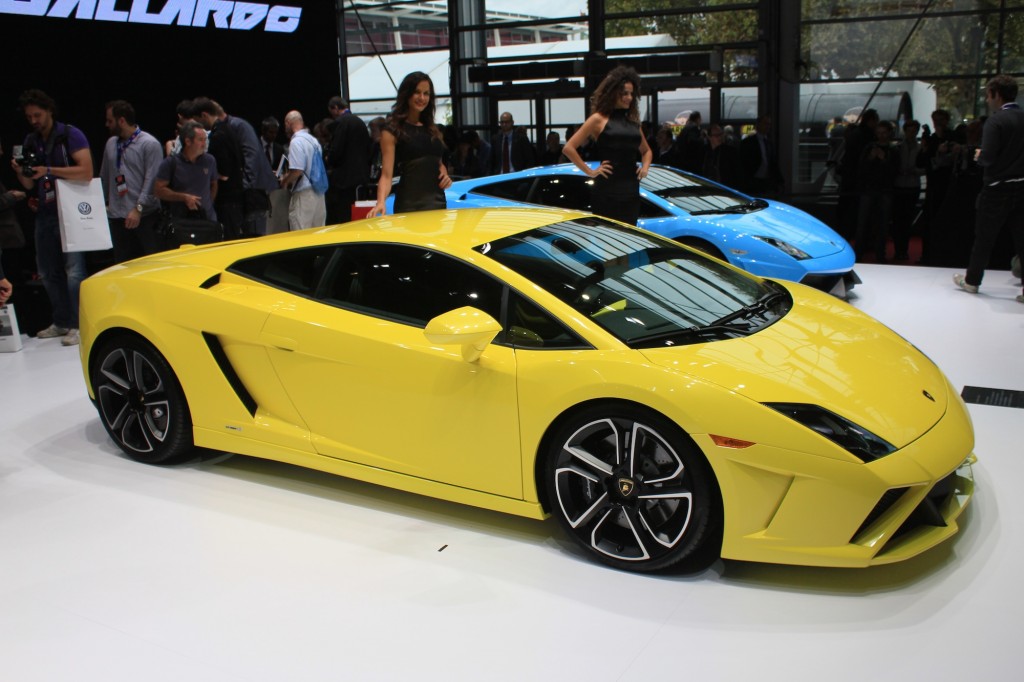
The current Blancfleet fleet includes:  Mercedes-Benz S550, Tesla Model S, Lamborghini Gallardo, Mercedes-Benz G550, Land Rover Range Rover Sport, Mercedes-Benz SLS AMG, Porsche 911, and a Nissan GT-R.  Prices for the cheapest vehicle – the GT-R start at $83 an hour.  Blancfleet has not yet bought the Veyron or the Huayra, but is planning to do so soon.  Until then, you’ll have to settle for something equally as cool – the Tesla Model S.

Blancfleet is currently only based in New York City, but is currently building a Blancfleet drop-off and pick-up office in Fort Lauderdale.


The 100 Most Significant and Influential Chevrolet’s of All Time Part 1!

  1. 1955 Chevrolet Bel Air:  Some 59 years after it was introduced to the American public, the 1955 Chevrolet Bel Air is often overlooked for it’s revolutionary parts and price.  The body was all-new, and is still breathtaking 59 years later.  Just on appearance, the car was (and still is!) absolutely stunning.  It looked like it could have come from Cadillac or Mercedes-Benz.  Even the lower-priced models were stunning.  The interior was equally beautiful.  Then, there was the all-new chassis that had revolutionary suspension parts borrowed from the Corvette.  The 1955 Chevrolet could keep pace with a Jaguar XK120 on a canyon road without trying hard.  Of course, Chevrolet’s all-new small-block V8 was what enthusiasts still love.  It was Chevrolet’s first all-new V8 since 1917.  It displaced 265 cubic inches (4.3 liters), and it introduced Chevrolet owners to a whole new side of performance.  I consider it to be one of the cars that kicked off the muscle car craze.  The ’55 Chevy was Chevrolet’s best-selling car up till the 1960’s, but that’s another story for another car on this list…For all of these reasons, it is my Most Significant Chevrolet ever.
  2. 1969 Chevrolet Camaro:  The 1969 Chevrolet Camaro was the last update for the legendary first-generation Camaro.  Many amazing Camaro’s came out in 1969.  The legendary COPO Camaro with the Corvette 427 cubic-inch V8 came out in 1969.  Chevrolet also introduced new, better styling for 1969.  The 1969 Chevrolet Camaro Z/28 remains one of the most legendary Camaro’s ever, thanks to it’s success on the racetrack and streets.  This, and the multitude of engine, transmission, paint, and other such options, puts the 1969 Chevrolet Camaro as the second-most influential Chevrolet ever.
  3. 1970 Chevrolet Chevelle SS 454 LS6:  The Chevelle was Chevrolet’s full-size sports coupe.  It was popular as was, but it wasn’t very fast.  The SS 396 of 1967 was fast and became a small legend, so it was no wonder that Chevrolet put their 396 cubic-inch (6.5-liter) V8 into the Chevelle to create the first of the new body-style Chevelle SS.  It was fast, but the 396 wasn’t the most powerful engine.  Enter the 454.  The 454 came in two very powerful forms – the 360-horsepower LS5 or the earth-shaking 450-horsepower LS6.  The fastest 1/4 mile time that anybody got out of a stock Chevelle SS 454 LS6 was a 13.2-second time at 106 horsepower.  That’s still fast and relevant today.   Easy tuning tricks like bigger carburetors, drag slicks, and open headers could get you into the mid-12-second range easily.  This made the 1970 Chevelle SS 454 LS6 one of the most legendary cars ever.  Enthusiasts still are in awe of it.  This is why it is my number 3.
  4. 1957 Chevrolet Bel Air:  The 1957 Chevrolet Bel Air was hardly the first car to have one horsepower per cubic inch, but it was the first one to offer it at an affordable price.  The 283-horsepower, 283 cubic-inch (4.6 liter) V8 came with Rochester fuel injection, a solid-lifter Iskendarian cam (Isky for short), and a great engine note.  A fuel-injected 1957 Chevrolet Bel Air was the car that put blistering performance in the hands of the average working Joe.  The body was perhaps the finest of the Tri Five Chevrolet’s (1955-1957), and it’s looks are some of my favorites.  It set many speed records in the day, and the fuel-injected cars are rare and desirable today.
  5. 1963 Chevrolet Corvette:  The first of the second-generation Corvette (C2) is now one of the most collectible Chevrolet’s ever.  The story behind the 1963 Corvette is an interesting one.  Here goes:  GM design chief Bill Mitchell dictated that the C2 Corvette Stingray look like the 1959 Corvette race car designed by legendary designer Peter Brock.  Also-legendary designer Larry Shinoda designed the iconic 1963 Corvette Stingray.  While the convertible version of the car was drool-worthy, the coupe was the one that still turns heads right off of their axis (including owls!).  Zora Arkus-Duntov was strongly opposed to the split rear-window design, as it greatly hampered rear vision.  Bill Mitchell won – for a year.  The 1964 Corvette came with a single piece of glass.  The fuel-injected Stingray’s were the cars to beat for 1963.  But, Chrysler’s introduction of the 426 HEMI in the Dodge Polara and Plymouth Savoy in 1964 gave the fuelie Vette a serious run for it’s money.
  6. 1962-1964 Chevrolet Impala/Biscayne:  In the early 1960’s, Chevrolet performance technology was advancing at a rate never seen before.  While Chevrolet’s legendary 409 cubic-inch V8 (6.7 liters) was a technological dead end after 1964, it was an amazing engine for drag racing.  In 1962, the 409 made 1 horsepower per cubic inch, but later in the year, the Z-11 code-name engine breathed better thanks to better heads, a bigger cam, and a cold-air intake.  Thanks to the Beach Boys using the 409 for two of their biggest hits – “Surfin’ Safari” and “409,” Chevy had all the publicity it could want.  In 1963, prospective buyers could get three 409’s – a 340-horsepower 409, a 400-horsepower 409, and a thundering 425-horsepower 409.  All three of these powerful 409’s were dwarfed by the thundering, massively-underrated 430-horsepower 427 cubic-inch (7.0 liters) Magical Mystery engine only available for drag racing and NASCAR.  The Magical Mystery 427 actually made closer to 560 horsepower!  Once Chevy pulled out of racing in 1963, the Magical Mystery engine made it’s way into the Corvette and next-generation Impala, Caprice, and Biscayne.  In 1964, much of the Impala’s street cred was gone, thanks in no small part to the Pontiac GTO.
  7. 1967 Chevrolet Camaro SS350:  The first-generation Camaro SS came with a 295-horsepower 350 cubic-inch V8 (5.7 liters).  This engine would power many Chevrolet’s until around 2000.  The 350 was standard, and a 396 cubic-inch V8 (6.5 liters) was optional with the RS/SS package.  The 350 was a Camaro exclusive at the time, and it was a legitimate performance vehicle for under $2,800.  It would send a 271-horsepower, 289-cubic-inch V8 (4.7 liters) Mustang running for cover in a straight line.  The same went for the legendary Mustang Shelby GT350.  It would also take down quite a few big-block Fords, Chevys, Pontiacs, and Buicks.
  8. 1968 Chevrolet Corvette Sting Ray:  Much to the dismay of Zora Arkus-Duntov, the new 1968 Corvette was little more than a rebodied 1963 Corvette with a new interior, the relatively new 350 cubic-inch V8 (5.7 liters), and a reworked suspension.  He was in the minority.  The public literally went bananas over the new Corvette, which was based off of Bill Mitchell’s Mako Shark II concept car of 1966.  Sales of the 1968 Corvette exceeded any sales of the Corvette from 1963-1967, and only went up from there.  It was the longest-running series of Corvette ever (1968-1972), and sales increased as performance decreased.  Corvette annual sales peaked in 1979 at 53,807, which is still a Corvette sales record to this day.  In the mid-1970’s, the Corvette went from a street brawler to more of a luxury Grand Touring car.
  9. 1967 Chevrolet II L-79/Nova:  Pontiac may have created the midsize muscle car with the GTO in 1964, but Chevrolet took it a very large step further with the 1967 Chevy II with the L-79 350 cubic-inch V8 (5.7 liters).  It was a compact muscle car, with a screaming engine and attitude.  It didn’t look like much, so it was a sleeper.  Bill “Grumpy” Jenkins became well-known with the car on the drag strip after a few years of embarrassing Dodge/Plymouth 426 HEMI-engine cars in the A/Stock NHRA (National Hot Rod Association) class with his 1966 “Black Arrow” L-79 Nova.  This car, surprisingly, was not a big seller.  Only 5,481 were built in 1966.  In 1967, it is believed that only 6 were built, as Chevrolet stopped taking orders for the car after the first day of orders from dealers were taken.  Nobody knows for sure what Chevrolet’s reason was to cancel the car.  Maybe they needed the extra people to market the Camaro.  The bottom line is that this car still makes it’s presence known on the street and drag strip 47 years later.
  10. 2010-Present Chevrolet Camaro:  As the modern muscle car era started to heat up with supercharged Mustangs, Hemi-powered Chargers and Challengers, and a host of other monsters, Chevy only watched from 2003-2009 on the sidelines.  Sure, there were plenty of Corvettes that could pummel any one of those given muscle cars, but some people needed the backseat, or didn’t want to have a fiberglass car.  The 2010 Camaro returned with styling that looked similar to that of the 1969 Camaro, yet didn’t look exactly like it.  It has outsold the Mustang every month (save two) since it’s 2010 reintroduction.  It has exceeded all of it’s internal sales goals (129,000+ in 2010), and remains the only Chevrolet sold without rebates.  Many Camaro’s are fully optioned by customers, and the sales revenue generated by the Camaro helped GM claw it’s way out of bankruptcy.  It literally helped save GM.  2011 saw the reintroduction of the Camaro convertible, 2012 saw the return of the snorting ZL1, and 2014 saw the return of the hallowed Z/28.
  11. 1966 Chevrolet Chevelle SS396:  While it is true that the 1965 Z16 Chevelle was the first Chevelle to pack Chevrolet big-block “rat motor” V8 power in the form of the 396 cubic-inch V8 (6.5 liters), the 1966 Chevelle put the power in the hands of the people.  With a stylish, sleeker new body and interior, the 1966 Chevrolet Chevelle SS396 was just the car that Chevrolet had ordered up to embarrass their internal rival, Pontiac.  It especially embarrassed any Pontiac in it’s 375-horsepower 396 cubic-inch V8 version.  While production of the Z16 Chevelle was a tiny 201, the 1966 Chevelle SS396 sold 72,272 of them.
  12. 2009-2013 Chevrolet Corvette ZR1:  Code-named the “Blue Devil” inside of GM in honor of ex-GM Chairman Rick Wagoner’s alma mater (Duke University), the 638-horsepower, supercharged, 6.2-liter (378 cubic inch) V8-powered Corvette is the fastest, most powerful car ever sold by GM.  Ever.  It’s top speed is 205 mph, and Chevrolet poured everything that they knew about going fast into this car.  Having gone for a ride (in the passenger seat!) in a 2013 ZR1, I can attest to the fact that this car is a monster!  In testing at the Nurburgring in Germany in 2009, the ZR1 set a lap record for a production car that was soon eclipsed by the Cadillac CTS-V.  In 2011, Chevrolet engineers went back with the new tire/wheel package and shaved well over 7 seconds from it’s previous lap time, nearly making a new lap record!
  13. 1969 Yenko Camaro:  The legendary SYC Yenko-tuned 1969 Chevrolet COPO Code 9561 Camaro received special graphics, gauges, and many go-fast goodies from Don Yenko’s mechanics before they were sold to buyers from his dealer lot in Canonsburg, Pennsylvania, or sent to one of his other dealers across America.  They came with a tuned L-72 427 cubic-inch V8 (7.0 liters) that made well over 600 horsepower at the crank.  They were available in only six colors:  LeMans Blue, Rally Green, Fathom Green, Daytona Yellow, Hugger Orange, and Olympic Gold.  Today, they are likely some of the most recognized and sought-after cars of the muscle car era in America’s fastest decade.  They easily fetch well over $100,000 at auctions.
  14. 1962 Chevrolet Bel Air “Old Reliable II”:  It had a Bill Jenkins-built 409-horsepower 409 cubic-inch V8 (6.7 liters), a Borg-Warner four-speed manual transmission, and 4.56:1 gears in the rear end.  Dave Strickler drove Old Reliable II to many a victory in the 1962 NHRA drag racing season.  Bill Jenkins added 9 station wagon springs to the front, stiffer springs to the rear, and relocated the frame mounts about an inch behind the stock location.  All of this was done in the name of improved traction.  The car won the Super Stock title at the 1962 U.S. Nationals, and won the Pomona, CA Winternationals the following year.  It was later equipped with an aluminum nose for lighter weight.  Old Reliable II became the first B/FX Stocker to run 11-second quarter mile times.
  15. 1968-1970 Chevrolet Nova L-78:  If there was any such thing as overkill in the Chevrolet lineup at the time, the 1968-1970 Nova L-78 would have fit the bill.  It had a 375-horsepower, 396 cubic-inch V8 (6.5 liters), a Borg-Warner four-speed overdrive manual transmission, and menacing, sleek looks.  While the freshly-redesigned 1968 Nova may have gained some weight over the previous generation, the L-78 engine made it downright terrifying.  On the skinny stock tires, the car ran low 14-second quarter mile times at 100 mph, but with open headers, drag slicks, and other traction aids, the car easily went into the 12-second quarter mile club.
  16. 1956 Chevrolet Bel Air:  While the 1955 Chevrolet Bel Air line was sporty, especially with it’s Ferrari-inspired egg-crate grille, the 1956 Chevy was more formal-looking.  Still, the tagline in advertisements for the car read, “The Hot One’s Even Hotter.”  The base engine was the Super Turbo-Fire (NOT turbocharged) 265 cubic-inch (4.3 liter) V8 that produced 205 horsepower.  The optional engine was the Corvette’s 225-horsepower dual-quad-version of the same engine.   Style-wise, a four-door sedan was added to the lineup, and perhaps, the coolest feature was the gas cap hidden behind the left taillight.
  17. 1955 Chevrolet Cameo Carrier Pickup:  Not only was Chevrolet leading the way in styling for 1955 with it’s passenger cars, but it took their once-lowly pickup to new, unprecedented heights.  It had a unique flush-side fiberglass bed, and was full of car-like features (a two-tone interior, chrome bumpers, air conditioning, and an optional V8).  This was a truck that was at least 30 years ahead of it’s time.
  18. 1959 Chevrolet Corvette Stingray Race Car:  While Chevrolet may have been out of racing in 1959, that didn’t stop GM design chief Bill Mitchell from buying a leftover Corvette SS race car chassis and putting Peter Brock’s stunning Stingray race car body over it.  Mitchell then hired Dr. Dick Thompson, “The Flying Dentist” to campaign it in sports car events across the country.  Thompson won the SCCA’s C/Modified National Championship in 1960.  The car was clocked at 145 mph on the back straight of Road America, and the top speed was believed to be about 160+ mph.  The production 1963 Stingray’s styling was based on this car’s.
  19. 1961 409 Biscayne:  While Motor Trend called the 1961 Impala SS409 “A family car that is really a racing machine,” the bottom line was that you didn’t have to buy an upscale Impala to get the 360-horsepower 409 cubic-inch V8 (6.7 liters).  You could get it in a Biscayne without any options, and you could shame just about any sedan out there.  The 11.25:1 compression-ratio 409 was a screaming engine, and according to Motor Trend, could run the 1/4 mile in just 14.02 seconds at 98.14 mph.  How’s that for fast in 1961?
  20. 1965 Chevrolet Chevelle Z16:  Rounding out the top 20 most influential and significant Chevrolet’s is the 1965 Chevelle Z16.  Chevy was blindsided by Pontiac and the GTO in 1964, and they didn’t have an engine over 400 cubic inches, so the Chevelle Z16 was Chevy’s very overdue answer to the Goat.  It was essentially a limited-edition car because 201 cars were only ever sold.  It came with a 160-mph speedometer, a 6,000 RPM tachometer mounted on the dashboard, and a 375-horsepower version of the new 396 cubic-inch V8 (6.5 liters).  This engine put the Chevelle Z16’s performance right on par with any stock GTO.

That’s all for part 1!  Look for part 2 soon!

The Greatest American Turbocharged Cars

Many people think that turbochargers belong in heavily modified import cars.  Well, that’s partially true.  Europe has turned out some impressive turbocharged cars, as well as the US of A.  Here are America’s greatest turbocharged cars.

  • Ford Mustang SVO:  The 2015 Ford Mustang has a 2.3-liter turbocharged 4-cylinder engine, just like the SVO Mustangs of the 1980’s.  The first turbocharged Ford Mustang showed up in 1979 with a 135-horsepower, turbocharged, 2.3-liter four-cylinder engine.  It was an alternative to the downsized 4.2-liter V8 found in the Mustang GT.  But, it wasn’t until Ford’s Special Vehicle Operations (SVO, now known as Special Vehicle Tuning or SVT) got their hands on one that it became anything noteworthy.  It came with a factory-installed Hurst short-throw shifter, revolutionary Koni adjustable shocks, ABS disc brakes at all four corners, a limited-slip differential, and a screaming, turbocharged 205 horsepower.  Drivers even had the cool option of flicking a dash-mounted switch that allowed the car to run on lower-grade fuel for a certain amount of time.  When it ended it’s production run in the late 1980’s, it was something to be feared.  It looked especially menacing in grey.
  • 1965 Chevrolet Corvair:  Believe it or not, the Corvair actually had a go-fast option.  It had two, in fact.  One was the Crown Corvair, which used a mid-mounted 283-cubic-inch Corvette V8, and the other was a turbocharger bolted onto the engine.  From the factory.  It made 150 horsepower initially, but by the time the Corvair died, it made 180 horsepower.  Unlike many other turbocharged cars, the turbocharged Corvair did not use a wastegate, the internal exhaust flap that opens at higher engine speeds to prevent over-spinning the turbine.  Instead, Chevy engineers simply built enough backpressure into the exhaust system to prevent overboost and serious engine damage.  Very few Corvairs with the turbocharged engine were ever made.
  • Oldsmobile F85 Jetfire:  Oldsmobile was one of the early adopters of turbocharging technology.  It released the powerful F85 Jetfire in April of 1962, and the car was something of a small success.  It took the fabled 3.5-liter high-compression “Rocket” V8, cranked up the boost, and let it rev.  It made a screaming 215 horsepower, and it was easily quicker than many naturally aspirated cars of 1962.  Plus, owners got an ashtray-sized boost gauge in front of the shifter.  The engine had problems with detonation, which is the process where the hot air-fuel mixture under pressure spontaneously ignites before the spark plug has a chance to ignite it.  So, the Turbo-Rocket engine was fed a mixture of methanol alcohol and water (the same stuff fed to dragsters).  This allowed the mixture to not ignite as quickly and get a higher octane level.  Today, water/alcohol injection is commonplace in high-performance tuner car applications, but isn’t it cool that F85 Jetfire owners had to periodically fill their “Turbo Rocket Fluid” reservoir?
  • Buick GNX:  If there’s a poster-child for American turbocharged cars, the Buick GNX wins, hands-down.  The all-black, tire-smoking, Ferrari Testarossa-beating, quarter-mile waltzing Buick GNX was and still is a force of nature.  Buick initially started turbocharging it’s anemic 3.8-liter V6 in 1978 for the Regal and the LeSabre, introducing the fast Regal Grand National line in 1982.  It culminated with 1987 with the GNX.  Buick purposefully underrated the crank horsepower at 276 horsepower, but dyno tests showed that the car made at least 315 horsepower at the wheels.  This means that the car made somewhere close to 360-370 horsepower at the crank.  It even beat the twin-turbo Callaway Corvette that I featured on my blog a couple of months ago in the quarter mile.  The GNX would go through the quarter mile in the low 13-second range at around 125-130 mph.  Just 547 GNX’s were built in 1987, each specially massaged by AMC/McLaren.  Today, the turbo Buick’s are something of a legend, and many go for upwards of $30,000.  The car was so successful on the street the Buick entered a naturally-aspirated V8 version of the car in NASCAR’s Grand National series (now known as the Nationwide Series), where it was extremely competitive.
  • 1989 Pontiac 20th Anniversary Turbo Trans Am:  The all-white Pontiac Trans Am picked to be the pace car for the 73rd annual Indy 500 was completely different than the first turbocharged Trans Am, which was all mustache and no Burt.  This 1989 force-fed pony car was something completely different.  I liken it as the Pontiac storm trooper to the Buick GNX Darth Vader.  Pontiac subcontracted an engineering firm to swap Buick GNX engines (made by Buick for Pontiac) into the Trans Am.  But, the story doesn’t (and shouldn’t) end there.  Anniversary-edition Trans Am’s got better-flowing heads than the GNX, stainless-steel headers, GNX-sized Eaton intercoolers, a cross-drilled Comp Cams crankshaft, and their own engine tuning higher up in the powerband.  The net result was a car that officially produced 250 horsepower at the crank, but made closer to 320 horsepower at the crank.  This marked a return to the horsepower-underrating days of the muscle car, started by, you guessed it, Pontiac.  It was the fastest pace car ever in the history of the Indy 500, which is impressive, given the fact that many fast cars have been chosen since then.
  • Ford Thunderbird Turbo Coupe:  The Beach Boys made the T-Bird famous with the line, “fun, fun, fun, until her daddy takes it away.”  The T-Bird was fun until Daddy (the EPA) introduced emissions regulations that took the fun out of the T-Bird.  By 1982, the T-Bird was a horrible, anemic shoebox of a car.  Happily, 1983 saw the rising of the phoenix.  It’s beak-like hood had twin nostrils that meant that there was a turbocharged engine underneath that pointy hood.  Other than the amazingly 1980’s-FILA edition, the T-Bird Turbo Coupe was at it’s peak in 1987 and 1988.  That was when stick-shifted version of the Fox-bodied T-Bird came equipped with a whistling 190 horsepower, four-wheel ABS disc brakes, and a limited-slip differential.  Those nostrils on the hood, by the way, are functional, as they feed air directly to the top-mounted intercooler.
  • Shelby GLHS:  It’s hard to find a car that has a shape that’s more square than the Dodge Omni.  The blocky Omni had all of the sporting pretensions of a worn-out water shoe.  Then, you hand the Omni over to Carroll Shelby.  Early Omni GLH (unofficially Goes Like Hell) cars weren’t turbocharged, but by the mid-1980’s, America was becoming obsessed with the turbocharger.  So, by the mid-1980’s, the Omni GLH had enough punch to beat any VW GTI of the era.  For the 1986 model year only, 500 cars were further tweaked by Shelby to become the Omni GLHS (Goes Like Hell S’More), which was a 175-horsepower breadbox with more boost, better suspension, and factory options like a roll cage and heavy-duty oil cooler borrowed from the Ram 250 with the Cummins Diesel.  Quite possibly the best part of the GLHS:  The uprated top speed of the GLHS was too much for the regular 85 mph speedometer of the Omni, so Shelby simply added a sticker to the bottom of the gauge with increments up to 135 mph.
  • Shelby CSX-VNT:  Another Shelby creation was the CSX-VNT, which was based off of the homely Plymouth Sundance and Dodge Shadow.  Initially, the CSX-VNT packed 175 horsepower, and like the earlier GLHS, went like a bat out of hell.  Shelby built a small run of 1,001 cars for the Thrifty rental car company with slightly less power.  In the final year of CSX-VNT production, 1989, the CSX-VNT included some new, unique technology previously only seen on race cars – variable turbine geometry.  Computer-controlled vanes moved to direct the hot exhaust gas stream to improve spool-up time.  While it’s power rating remained the same at 175 horsepower, it had dramatically better response time in the low end, virtually eliminating turbo lag.  The next time this technology would show up in the U.S. market would be in 2011, with the 997-generation Porsche 911 Turbo.  That was more than 15 years later.
  • GMC Syclone:  In 1990, Gale Banks Engineering cracked the 200-mph mark at the Bonneville Salt Flats in a compact GMC pickup truck with no turbocharger or supercharger.  In 1991, the streetable version of that high-powered pickup showed up on dealer lots.  It’s 4.3-liter Vortec V6 engine was turbocharged with the help of Gale Banks himself.  It came standard with ABS and AWD, neither of which were options on the S15 Sonoma.  You couldn’t haul much with the Syclone, unfortunately, as it was only rated to haul 500 pounds.  Too bad, but you could still fill the bed with the egos of every single Porsche, Ferrari, Lamborghini, and Maserati driver on the road.  This all-black, one-year-only mini-truck was the fastest-accelerating production vehicle in America for a few years, easily getting off of the line, thanks to the torque-rich engine and AWD.  It got to 60 mph somewhere in the low 4-second range.
  • GMC Typhoon:  A spin-off of the one-year-only Syclone, the Jimmy-bodied Typhoon was officially rated at 280 horsepower, though dyno tests showed that it made at least that at the wheels, meaning that it made somewhere around 320 horsepower at the crank.  It could easily beat a Ferrari 348 off of the line and up to about 70 mph, when the 348 really got into the powerband.  Just under 5,000 Typhoons were made between 1992-1993, and unlike the black-only Syclone, could be bought in a variety of colors.  In fact, Clint Eastwood used to drive a Forest Green Typhoon around in his Dirty Harry days, where he would pull up to a stoplight and ask punks if they felt lucky. Most thought they were going to beat some middle-aged guy in his SUV with their Mustang or import car.
  • Dodge Neon SRT4:  In 2003, Chrysler/Dodge’s Street Racing Technology (SRT) team got hold of the friendly-faced Neon subcompact car, and built what is still the car to beat for bang-for-your-buck performance.  A frog-eyed four-door sedan with a functional front-mounted intercooler peeking out of the grille, the tiny Neon made mincemeat out of everything from a Porsche Boxster to a Nissan 350Z.  Dodge claimed 230 horsepower, though dyno testing showed that the car made at least that much, if not more at the wheels.  This means that the engine was making close to 280 horsepower at the crank.  Something else that is cool about the Neon SRT4 is the fact that it doesn’t have a muffler on it.  This allows it to have vastly better turbo flow.  Resonators keep the volume semi-sane, but the Neon really makes a lot of noise when you give it some go-juice.
  • Chevrolet SS Turbocharged:  Initially available only as a supercharged coupe, the Cobalt SS was always OK in performance testing, but it wasn’t going to set any records.  Starting in 2009, the Cobalt SS came as either a sedan or coupe with a turbocharger bolted onto a small four-cylinder engine.  It made 260 horsepower.  Should you want a cool sleeper, if you aren’t afraid of the ignition recall, you can get a Cobalt SS, take the badges off, swap the big chrome rims for something more discreet (like the regular Cobalt rims), and you’d have the makings of a good sleeper.  It had a no-lift-shift system – just keep your right foot floored so that you don’t loose boost – and you’ll see the quarter mile fly by in under 13 seconds, and will keep up with a Porsche 911 on a road course.  Take it out to the twisties out on the road, and you’ll be able to keep up with a motorcycle, thanks to the tiny size of the Cobalt.

1986 Ford Mustang SVO 1986 Shelby Omni GLHS 1988 Ford Thunderbird Turbo Coupe

1989 Shelby CSX-VNT 2004 Dodge Neon SRT4


1962 Oldsmobile F85 Jetfire 1965 Chevrolet Corvair Spyder Turbo

1987 Buick GNX

1989 Pontiac Trans Am 20th Anniversary Edition

1991 GMC Syclone 1992 GMC Typhoon


Out and About in Sonoma County and Oregon!

It’s been a while since I published an Out and About in Sonoma County.  However, that’s because I got some great pictures from Oregon AND Sonoma County!  I hope you enjoy them!  I will provide commentary on ALL of the cars – basically fun facts on them!  I also got some pictures from Mother’s Day Weekend up in Redding, CA.  Those are included as well.

This is my 300th post, so next week, I am doing a giveaway of a Roadkill hat!  Every reader or subscriber MUST leave a comment saying that they wish to be entered in the giveaway.  Remember, leave a comment to get a chance to win!

Oregon:  

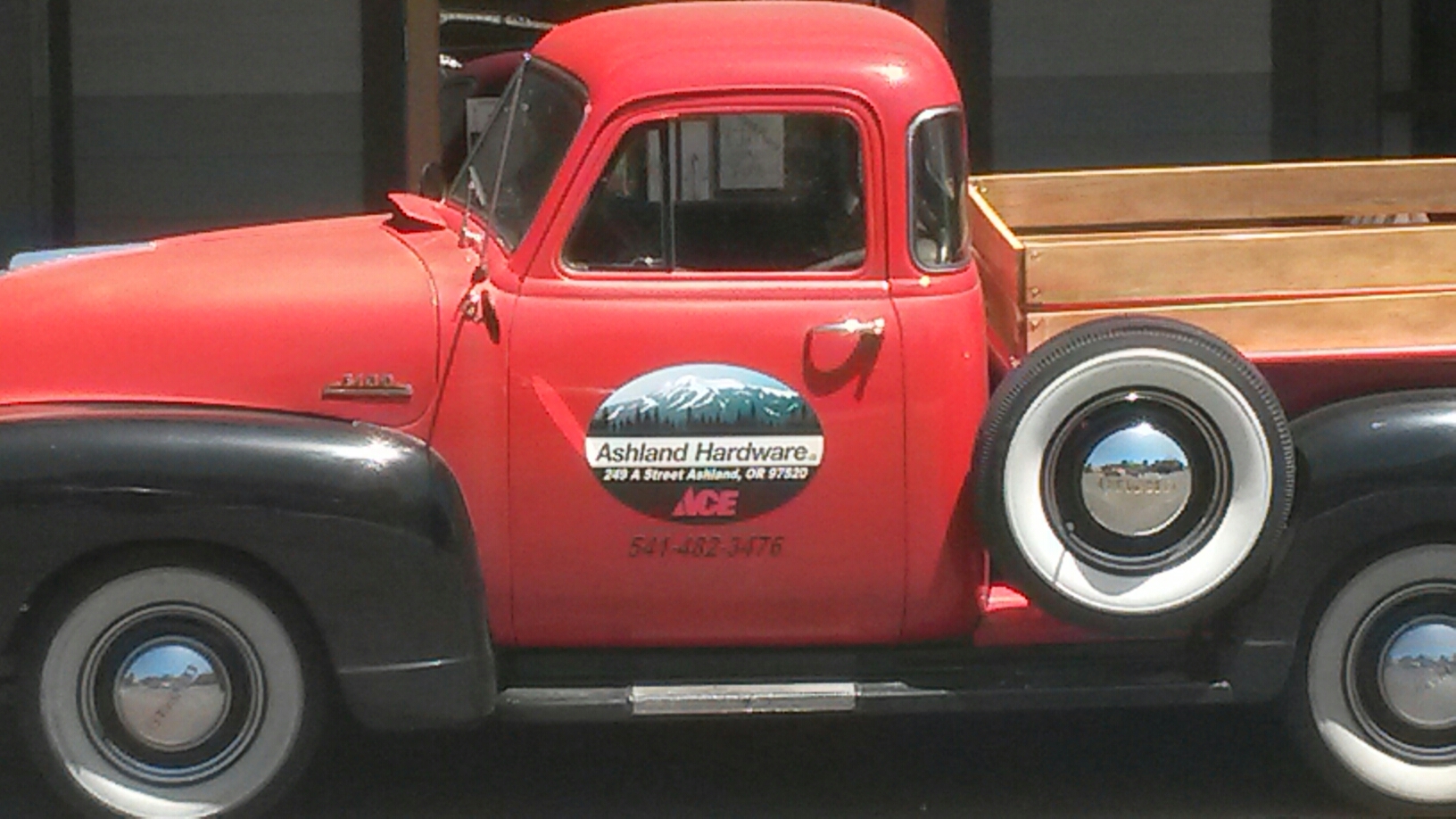
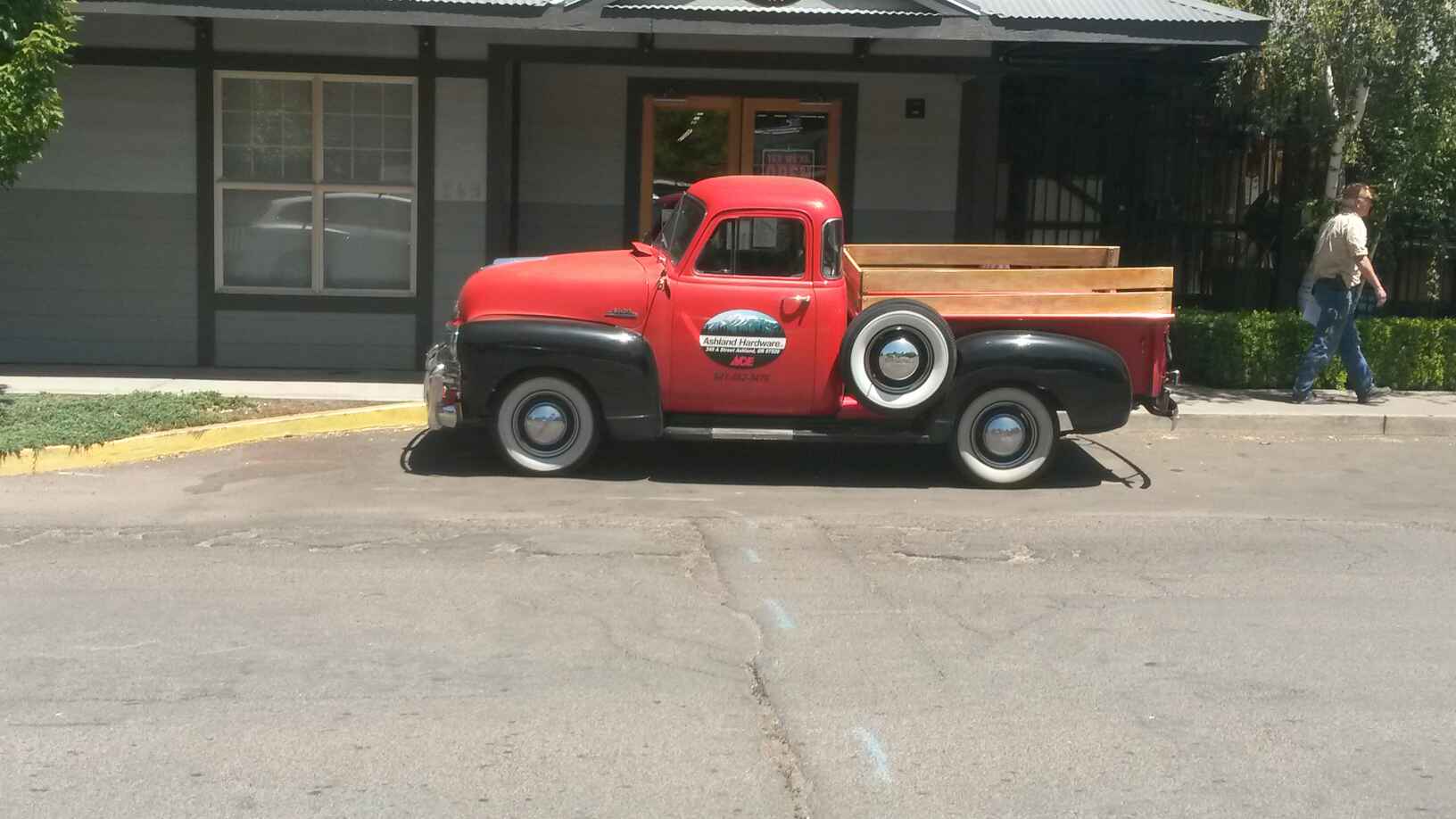
The Ashland, Oregon ACE hardware store has this simply stunning 1950-52? Chevrolet 3100.  It's absolutely stunning.
The Ashland, Oregon ACE hardware store has this simply stunning 1950-52? Chevrolet 3100. It’s absolutely stunning.  The thing popping up right in front of the windshield is for the air conditioner.  It’s like the air grabber hoods on the hi-performance 1960’s Mopars – it pulls air in when the switch is flipped on.
I'm simply in love with the Harley-Davidson themed paint!  It really helps accentuate the beautiful lines on these old trucks.
I’m simply in love with the Harley-Davidson themed paint! It really helps accentuate the beautiful lines on these old trucks.
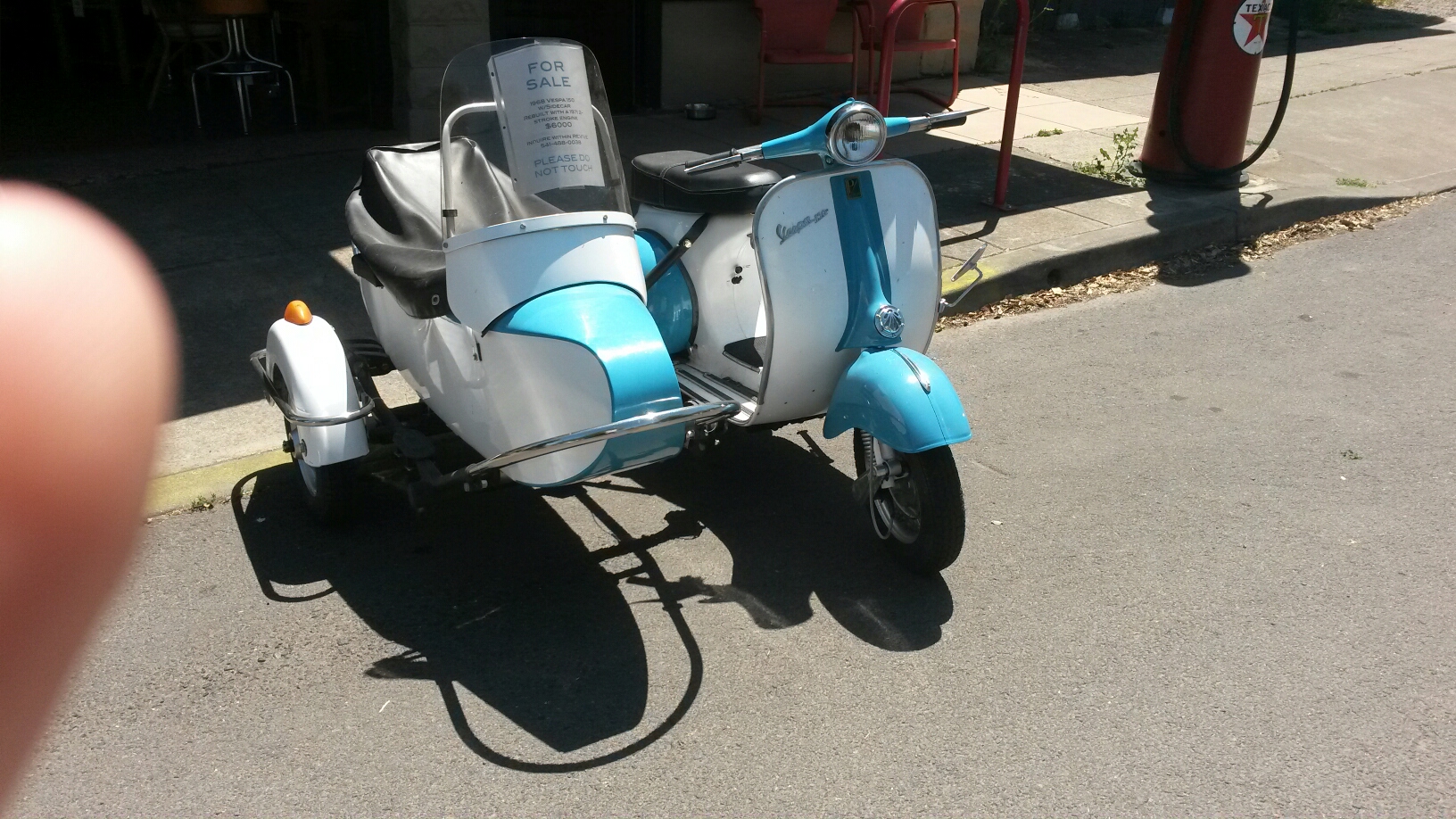
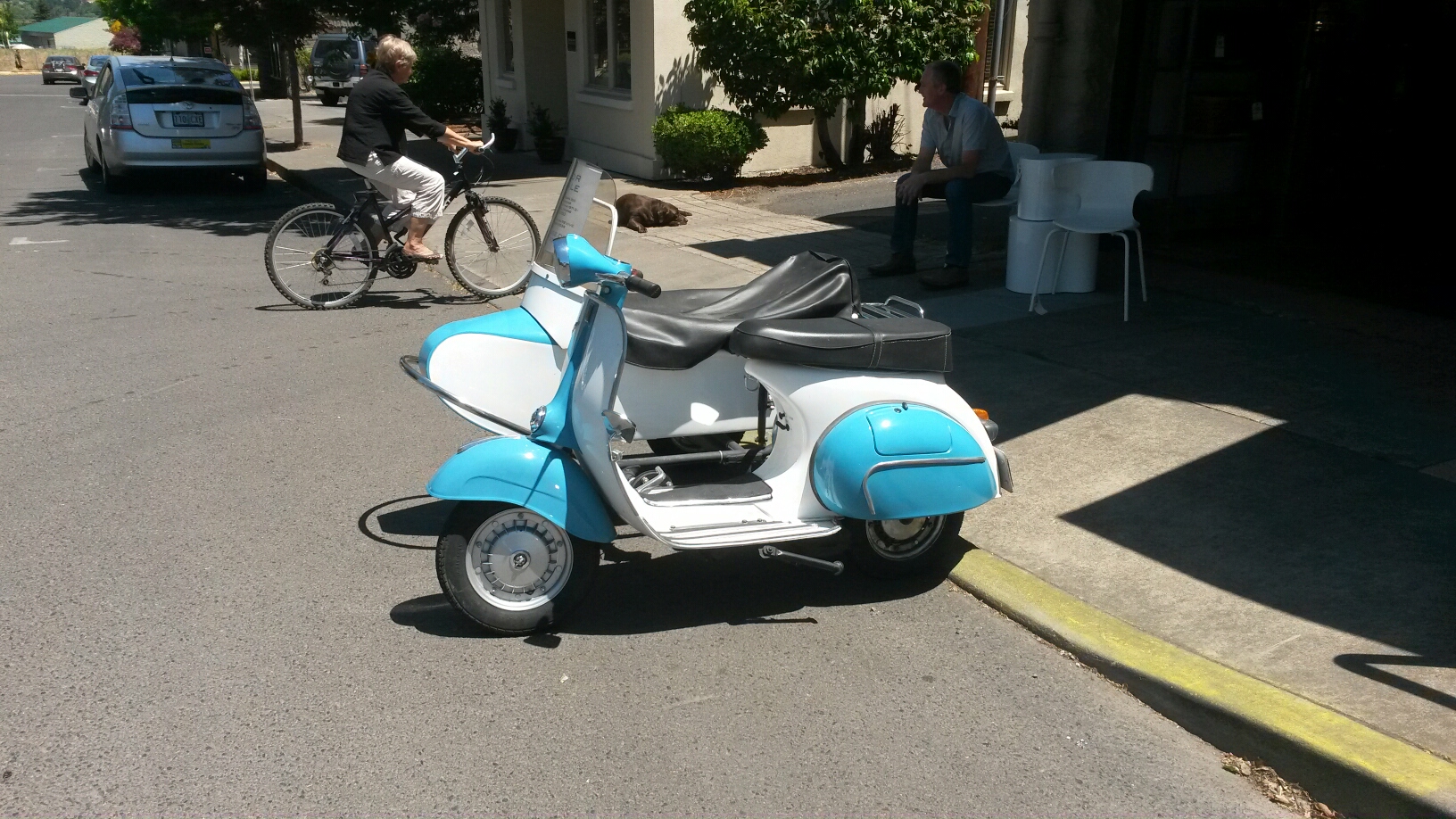
Are you a fan of a classic Vespa?  This stunning 1968 Vespa was for sale for a meager $6,000!  I was working on going 50/50 on it with my sister.  It didn't work.  It  has a 1971 engine for a bit more poewr and reliability.  The sidecar gives it a practical side...
Are you a fan of a classic Vespa? This stunning 1968 Vespa was for sale for a meager $6,000! I was working on going 50/50 on it with my sister. It didn’t work. It has a 1971 engine for a bit more poewr and reliability. The sidecar gives it a practical side…

20140606_123559

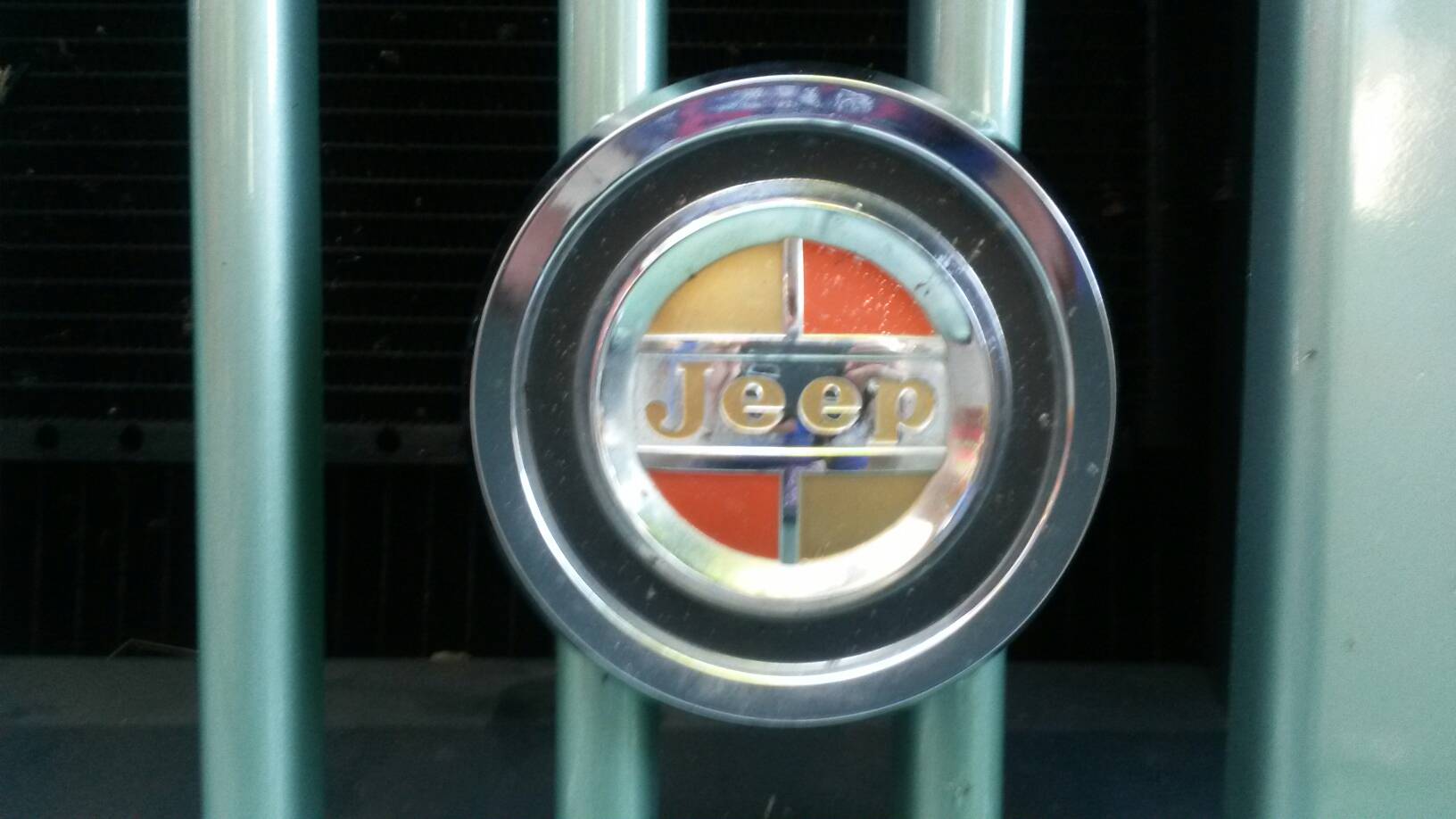
This is probably the best Jeep badge that the world has ever seen.  It may be a direct BMW rip-off, but whatever!
This is probably the best Jeep badge that the world has ever seen. It may be a direct BMW rip-off, but whatever!
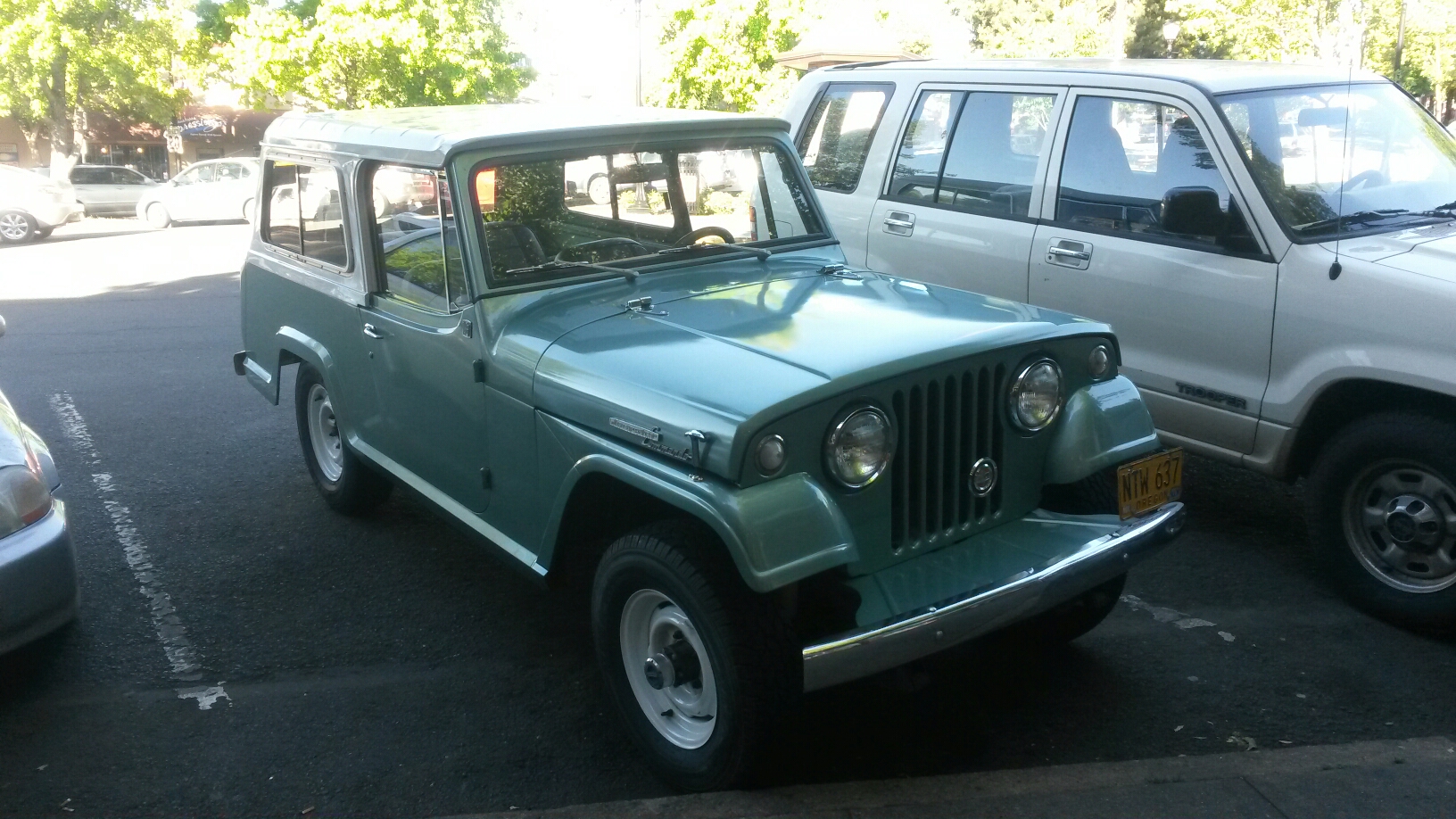
This simply amazing Jeep Jeepster Commando was probably the nicest Jeep that I have ever seen - I don't care if it's 2WD or not!
This simply amazing Jeep Jeepster Commando was probably the nicest Jeep that I have ever seen – I don’t care if it’s 2WD or not!
How's this for cool?  I've never really seen a '32 Ford dirt track racer before, so this was a cool first for me!  I wasn't able to get closer to it, otherwise I would have done a separate blog post on it!  It was a very cool '32 Ford, though!
How’s this for cool? I’ve never really seen a ’32 Ford dirt track racer before, so this was a cool first for me! I wasn’t able to get closer to it, otherwise I would have done a separate blog post on it! It was a very cool ’32 Ford, though!

Sonoma County:  


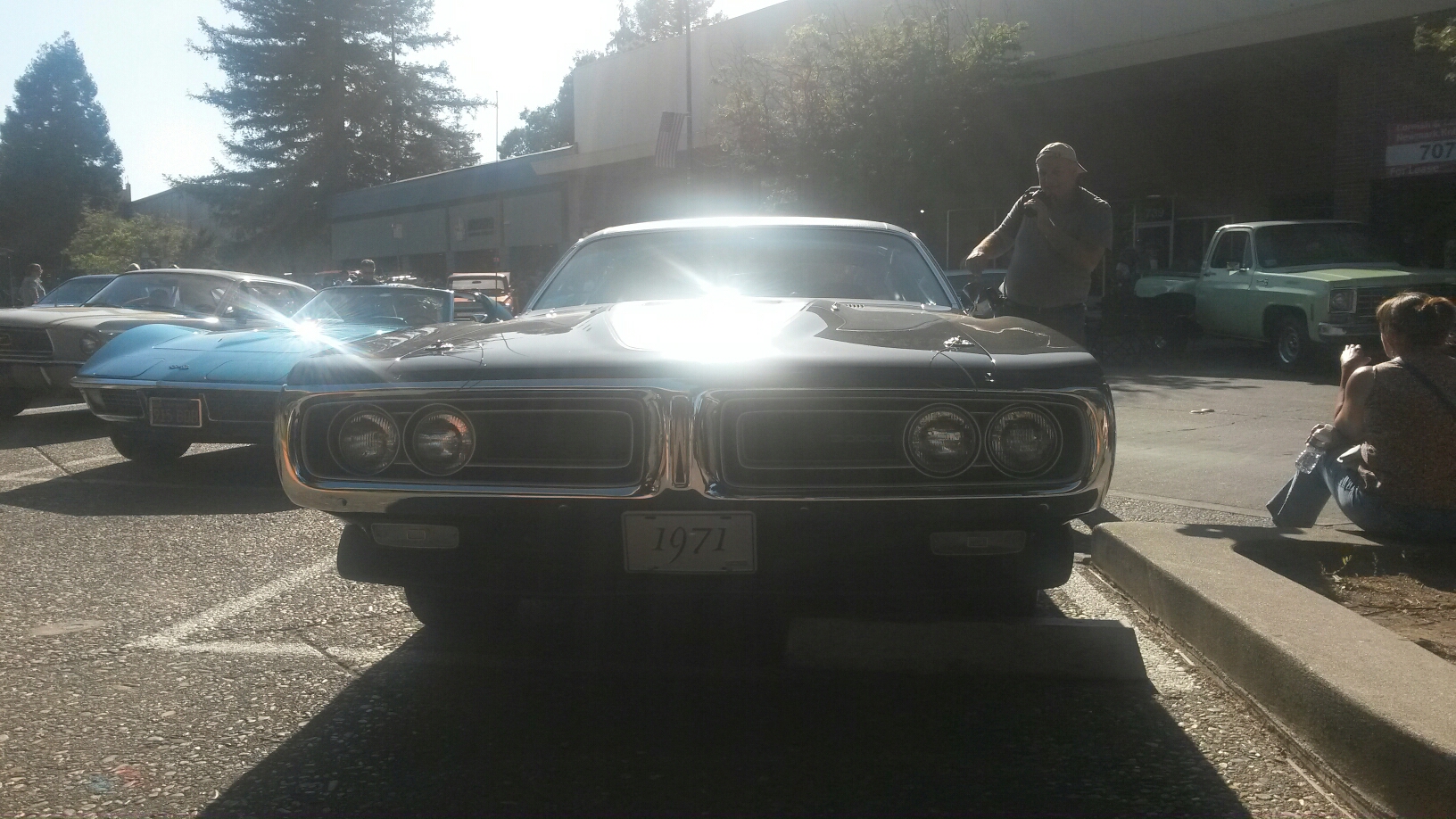
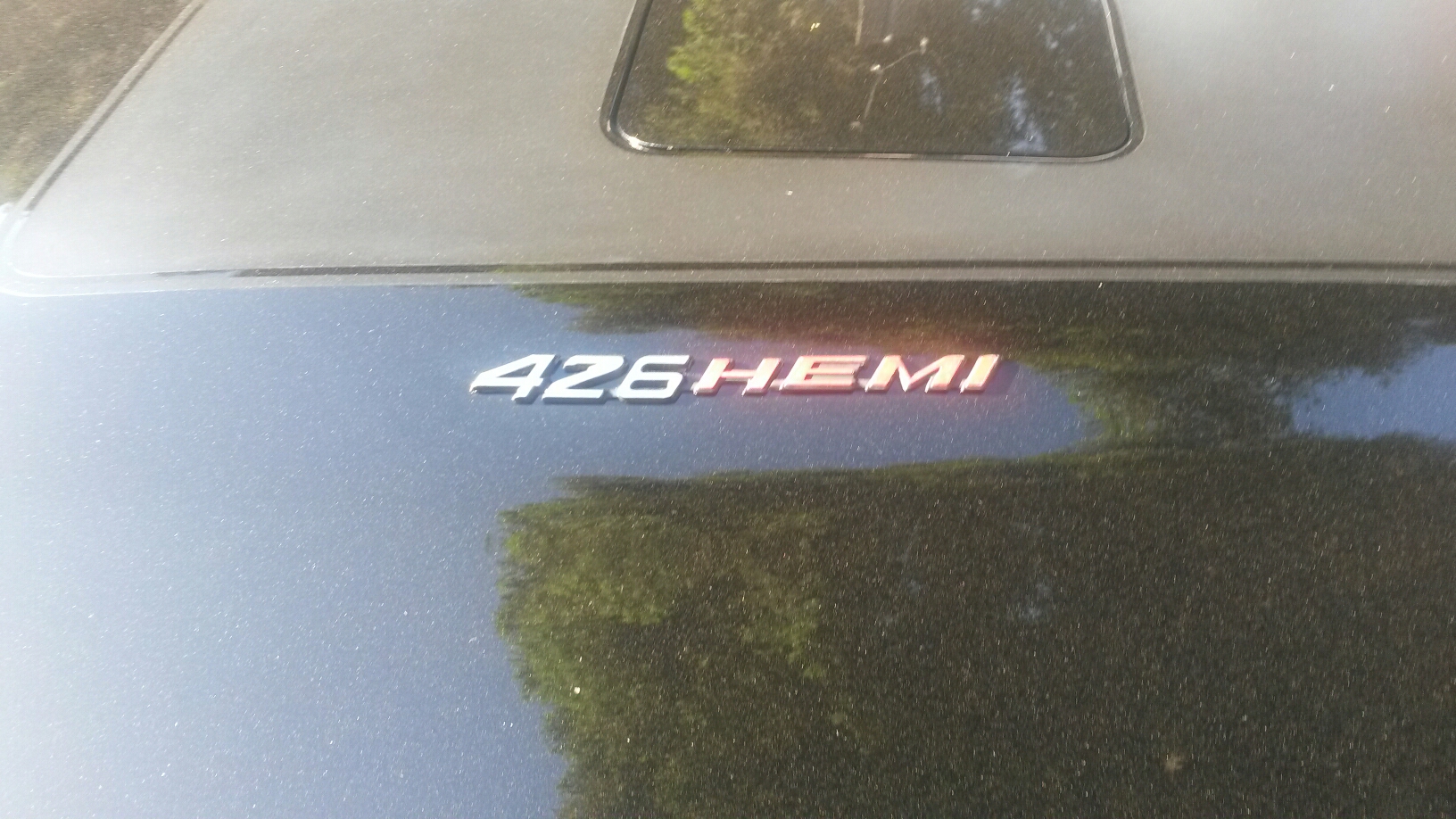
How'd you like this to be in your rearview mirror?  Sorry if I just gave you nightmares...This 1971 Dodge Charger R/T is equipped with the 426 HEMI.  It doesn't get much better than that!
How’d you like this to be in your rearview mirror? Sorry if I just gave you nightmares…This 1971 Dodge Charger R/T is equipped with the 426 HEMI. It doesn’t get much better than that!
Man, this is just one of THE best engines in the world!  Let me tell you a funny story about this car and another car.  Somebody in a 1949 Chevy lowrider tried to do a burnout.  All he did was send a bunch of smoke out of his tailpipes.  The owner of this fine triple-black '71 Charger proceeded to do a burnout without really having to try too terribly hard right through an empty intersection!
Man, this is just one of THE best engines in the world! Let me tell you a funny story about this car and another car. Somebody in a 1949 Chevy lowrider tried to do a burnout. All he did was send a bunch of smoke out of his tailpipes. The owner of this fine triple-black ’71 Charger proceeded to do a burnout without really having to try too terribly hard right through an empty intersection!
If this doesn't make you drool, then I don't know what will!  This stunning 1970 Plymouth Superbird was SOOOOO cool!  It was in the Limelight Green color, along with the Super Commando 440 cubic-inch V8.  More to come on this iconic car.
If this doesn’t make you drool, then I don’t know what will! This stunning 1970 Plymouth Superbird was SOOOOO cool! It was in the Limelight Green color, along with the Super Commando 440 cubic-inch V8. More to come on this iconic car.
Yes, the Superbird really does make the iconic "meep-meep" from Looney Tunes - as does the Plymouth Roadrunner that the Superbird is based off of!
Yes, the Superbird really does make the iconic “meep-meep” from Looney Tunes – as does the Plymouth Roadrunner that the Superbird is based off of!

Redding, CA:  

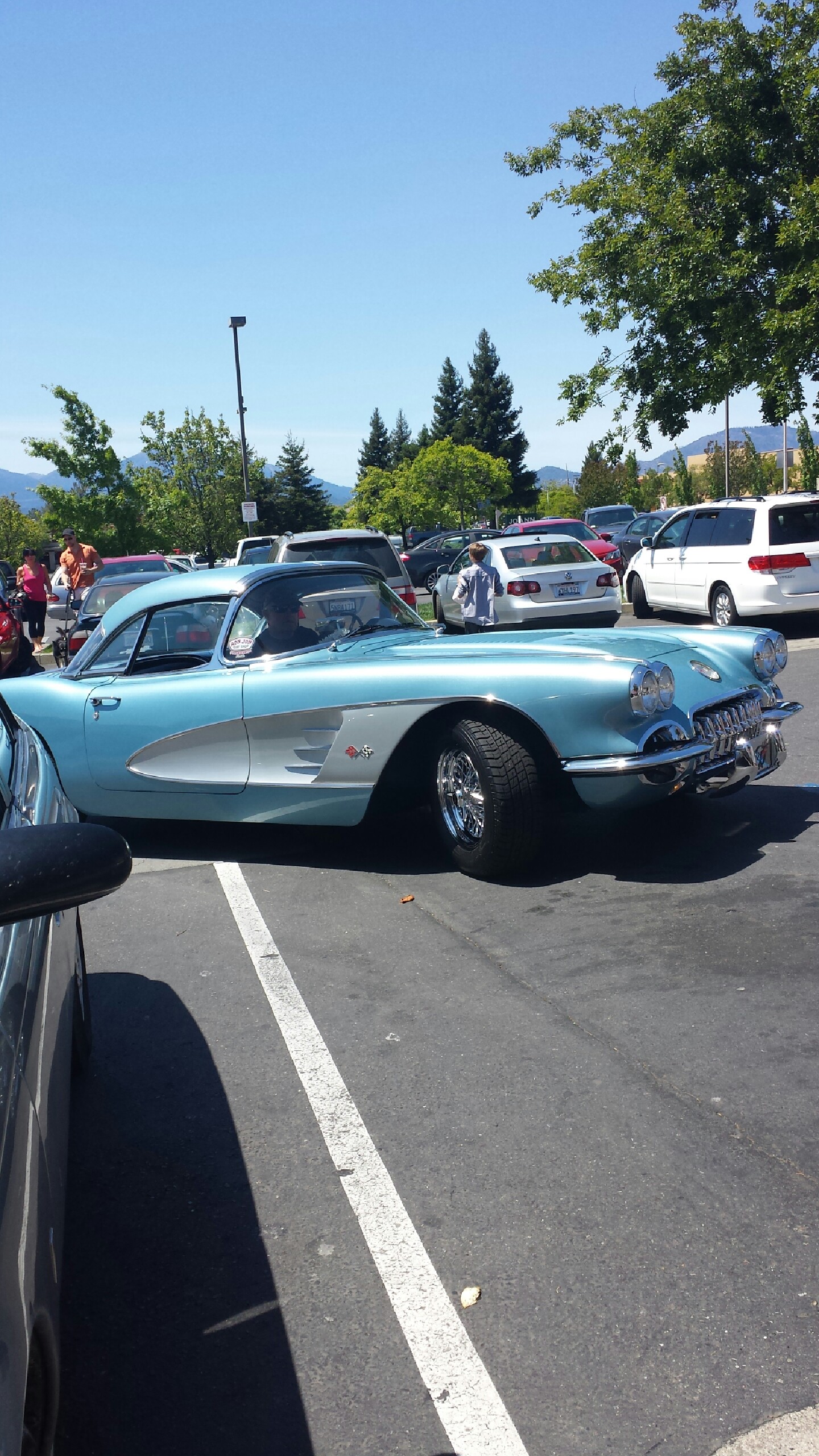
How's this for nice?  This is probably one of THE nicest Corvettes that i have ever seen!  It was all-original, so it has the punchy 283 cubic-inch V8 and a four-speed manual.  Plus, it's got absolutely amazing looks.  The only thing that isn't original is the wheels, but they went perfectly with the car.  This would be an excellent car for touring the country with.  One of these days I will do that in a classic car - I promise!
How’s this for nice? This is probably one of THE nicest Corvettes that i have ever seen! It was all-original, so it has the punchy 283 cubic-inch V8 and a four-speed manual. Plus, it’s got absolutely amazing looks. The only thing that isn’t original is the wheels, but they went perfectly with the car. This would be an excellent car for touring the country with. One of these days I will do that in a classic car – I promise!

The Ferrari LaFerrari is a Dream Come True…for a Lucky Few!

It should be worth mentioning to you that copious amounts of drool may ensue while reading this article.  If you’re a numbers junkie, read ahead.  If you’re an experience junkie, read ahead.  If you’re a looks person, read ahead.  Well, you got it.  There’s something for everybody in this car, and this article! The 2015 Ferrari LaFerrari is the most powerful production Ferrari ever made.  Yipe.  It’s also the first hybrid Ferrari ever made.  Yowza.  It’s carbon-fiber tub (where the driver and passenger sit) is made from the same carbon fiber as the frighteningly fast Ferrari F1 cars, and it’s formed by the same team that makes the F1 cars.  Wow.  It’s name translates to “The Ferrari.” As emissions regulations around the world get harder, supercar manufacturers are forced to turn to alternative different forms of power.  McLaren’s powerful P1 hypercar uses two turbochargers, an electric motor, and an already powerful 3.8-liter V8.  Stuttgart fired back with an equally impressive salvo that is the 918 Spyder, which uses an insanely powerful naturally aspirated V8 with two electric motors.  The LaFerrari is just as, if not more impressive.  It’s pretty darn hard to beat a Ferrari V12 for power, reliability, and sound. All three of said cars are spiritual and literal successors to simply amazing hypercars from about 10-15 years ago.  The P1 is the successor to the legendary McLaren F1 of the late 1990’s.  The 918 replaces the controversial Carrera GT, the car that Paul Walker and Roger Rodas died in late last year.  The LaFerrari replaces the stunning Enzo, named for Enzo Ferrari, the founder of Ferrari.  But, we aren’t going to be talking THAT much about the LaFerrari’s rivals. The seats are bolted directly to the carbon fiber tub, which means that they are not adjustable.  Ferrari tailors seat padding for each and every customer and their passenger.  A small lever does move the pedals fore and aft.  The flat-bottomed steering wheel adapted from the Ferrari 458 Italia Speciale telescopes and moves up and down.  The LCD screen that is the speedometer and tachometer has a 9000 RPM redline, but the engine will briefly go to 9250 RPM. The V12 engine is pulled from the F12 Berlinetta, which means that it displaces 6.3 liters, and puts out a shriek like nothing of this world.  It trades low-end power for a higher redline (the F12 stops revving at 8250 RPM, and the LaFerrari stops revving at 9000).  It also makes 58 more horsepower (731 versus 789).  The 161-horsepower electric motor that is bolted to the back of the equally fabulous seven-speed twin-clutch automatic transmission kicks in at low speeds and when the engine hits redline.  There is no EV mode, as Ferrari estimates that the range from the batteries is under 6 miles, and Ferrari has no plans of adding more batteries or EV range. With a combined 950 horsepower, this car is more far more powerful than the 903-horsepower P1 or the 887-horsepower 918 Spyder.  This means that the Launch button looks pretty dang tantalizing.  Ferrari claims 0-60 in under 3 seconds, but won’t allow any major automotive media publications to gather data. A nice touch is the small plaque at the bottom of the steering wheel, which allows owners to put whatever they want onto it.  The steering should be quick, as Ferrari says that the steering wheel will turn just under two turns lock-to-lock.  That’s on par with an F1 car.  Yet another Ferrari first is the electromechanical steering.  That basically means that an electric motor boosts the steering in addition to the power booster. The rear wing moves up and down, yet Ferrari claims that it shouldn’t impede driver rearview visibility too terribly much.  The flaps at the front of the hood lift up when the brakes are applied.  Combine those two flaps with the rear wing, and the car can generate up to 800 pounds of downforce at 125 mph. The LaFerrari also has an active exhaust system.  This means that there is a series of flaps inside of the mufflers to mute the noise when you’re not digging into the throttle.  When you get into the throttle, the valves stay open for more noise.  Another bonus – the electric motor’s high-pitched whine is drowned out by the wail of the V12! Yet another added bonus is the fact that every single piece of electronics in the LaFerrari don’t interfere with the driver, which means that the driver can drive as fast as they want to (on a track!) without having to fight all of the nannies.  That’s a problem with most new cars.  Give a driver a car with nannies that they have to fight, and it can lead to a horrible driving experience.

Ferrari LaFerrari Drift

Ferrari LaFerrari


Richard Petty to Drive His 1967 Plymouth Belvedere at the Goodwood Festival of Speed

Richard Petty is one of the foremost racing legends ever.  He dominated NASCAR from 1964-1986.  He was a brilliant, uncompromising driver who set so many winning records in NASCAR during his brilliant career that nobody except Dale Earnhardt ever came close to matching him.  When asked of what his most iconic car was, many people will immediately tell you his 1970 Plymouth Superbird or 1967 Plymouth Belvedere are his most iconic car. More people will tell you that his Superbird is the most iconic car to ever race NASCAR.  I’m inclined to agree.  All of Petty’s Plymouth’s were powered by the legendary, versatile 426 Hemi.  What I am here to tell you about is Petty will be driving his 1967 Plymouth Belvedere.

Richard Petty’s big, Petty Blue 1967 Plymouth Belvedere will be an amazing sight to see at the 2014 Goodwood Festival of Speed.  It’s going to be a change from the wailing Le Mans and F1 cars that populate the Festival of Speed.  It was the car that Richard Petty drove in his most dominant season ever, 1967.  Just next month, Petty and his big, blue, burbling Plymouth will reunite.

Petty’s 1967 Belvedere was actually a 1966 model redone as a 1967 model (it can get expensive to supply a brand-new car that hasn’t hit the market yet for one person to race).  Normally, it lives over at the Petty Museum in North Carolina, but it has also been displayed at the NASCAR Hall of Fame.  For the 1967 NASCAR season, Richard Petty was a force of nature.  He was simply unstoppable.  He won 27 out of 48 races entered, including a 10-race winning streak.  That is a NASCAR record that stands to this day.  It would be the second of his seven championships.  His first championship was in 1964.  Until 1967, Petty was referred to as “The Randleman Rocket.”  After 1967, his new nickname was “The King.”  I’m trying to resist the urge to make bad Hakuna Matata jokes…

While the full list of the 2014 Goodwood Festival of Speed invitees hasn’t been finalized, we do know that Indy 500 legend Al Unser will be driving his 1978 Lola-Cosworth Team Penske Indy car.  We also know that Formula 1 legends John Surtees and Emerson Fittipaldi will be driving a Ferrari 158 and a McLaren M23, respectively.

Some other highlights of this year’s Festival of Speed:  Sebastian Loeb will be attempting to set a record in his Pikes Peak-winning Peugeot 208 T16, and a timed supercar run of a prototype Acura Honda NSX.

On a sad note, Richard Petty’s longtime wife, Lynda Gayle Owens Petty passed away on March 25, 2014.  She was 72.  It was unclear for a few weeks on whether Richard Petty would come to the Festival of Speed.  A quiet announcement on Petty’s website a few weeks ago said that he will be going to Goodwood.  I would like to offer my sincere condolences to the entire Petty family.


A Cool Classic

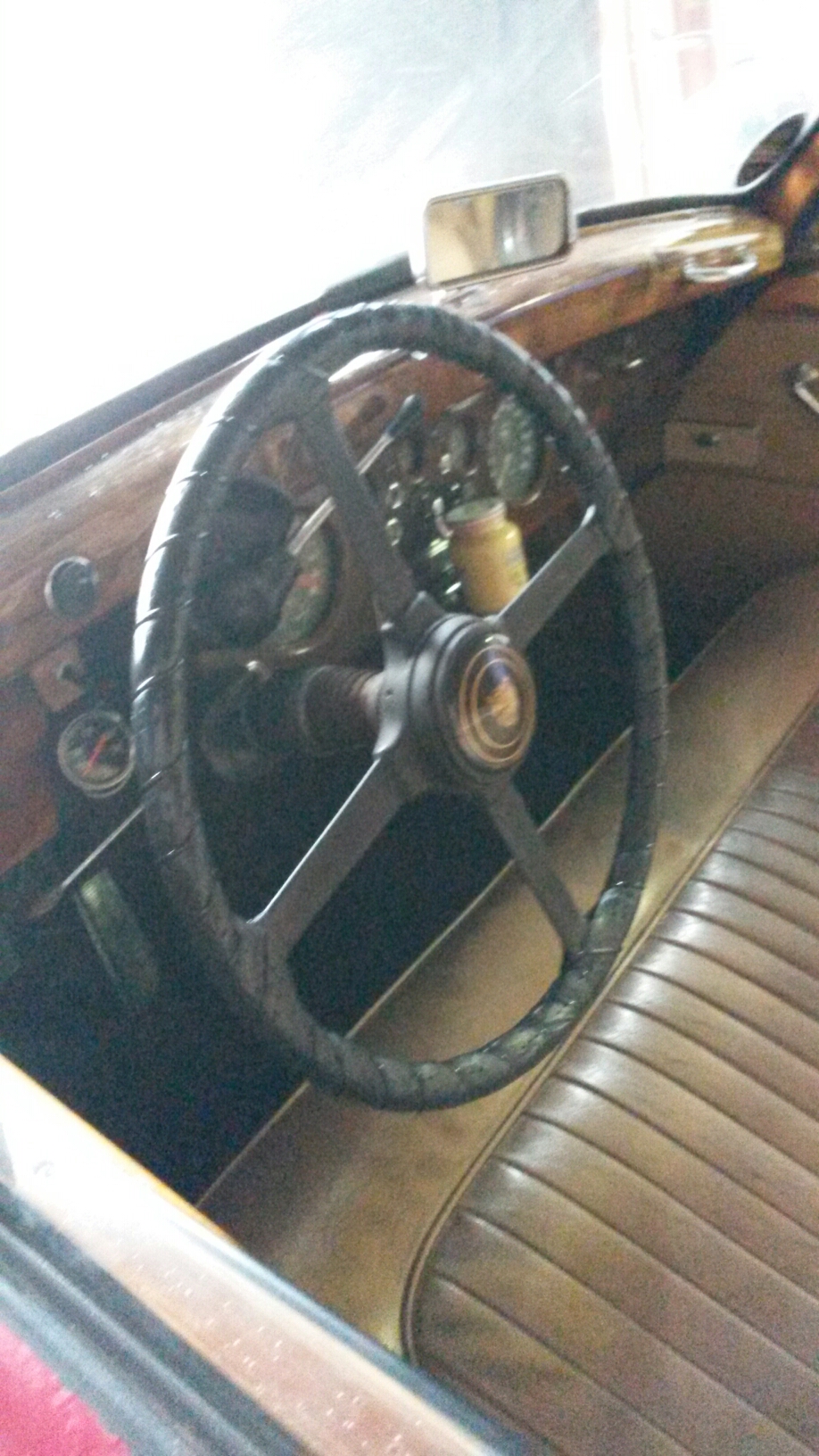
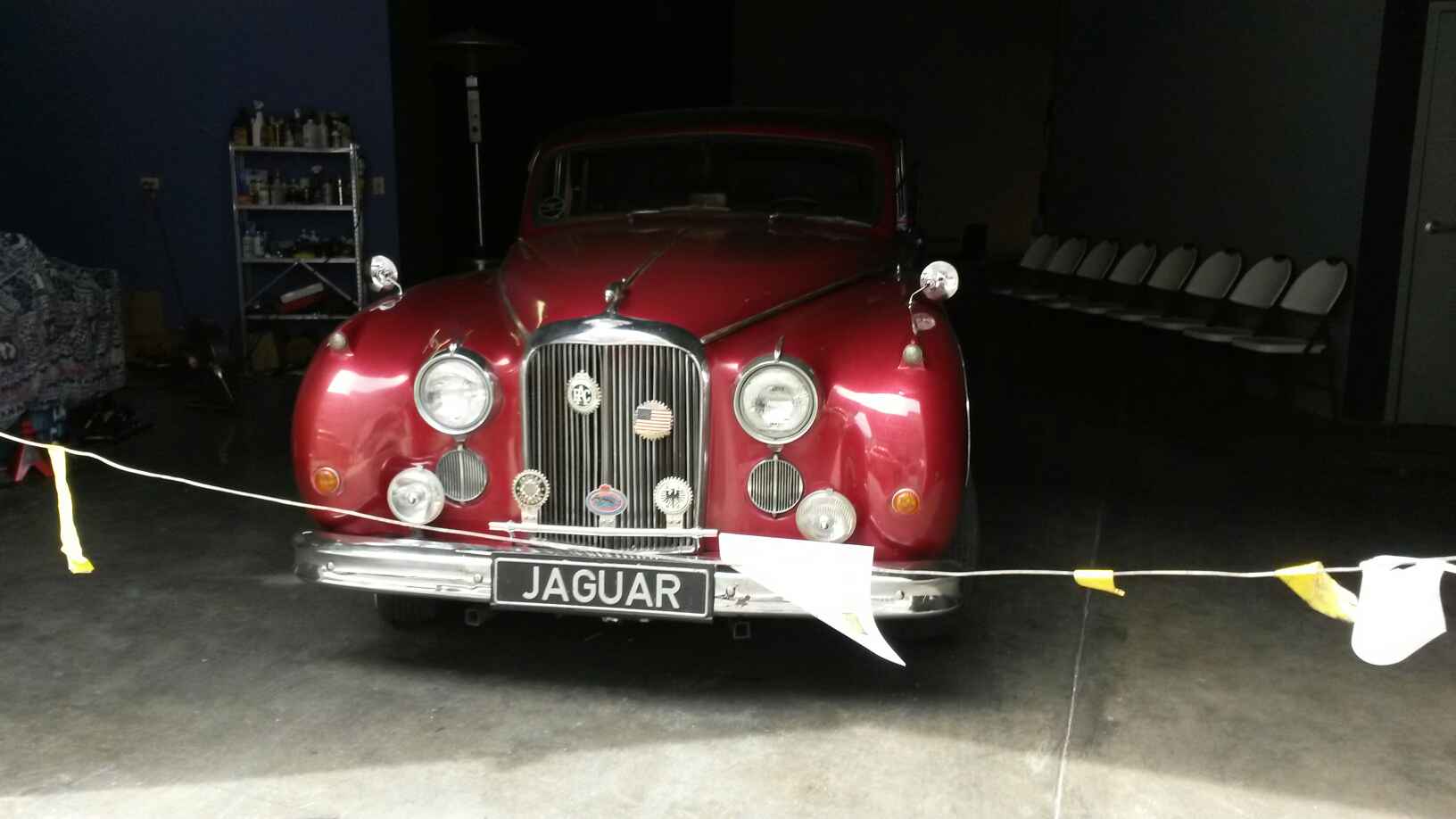
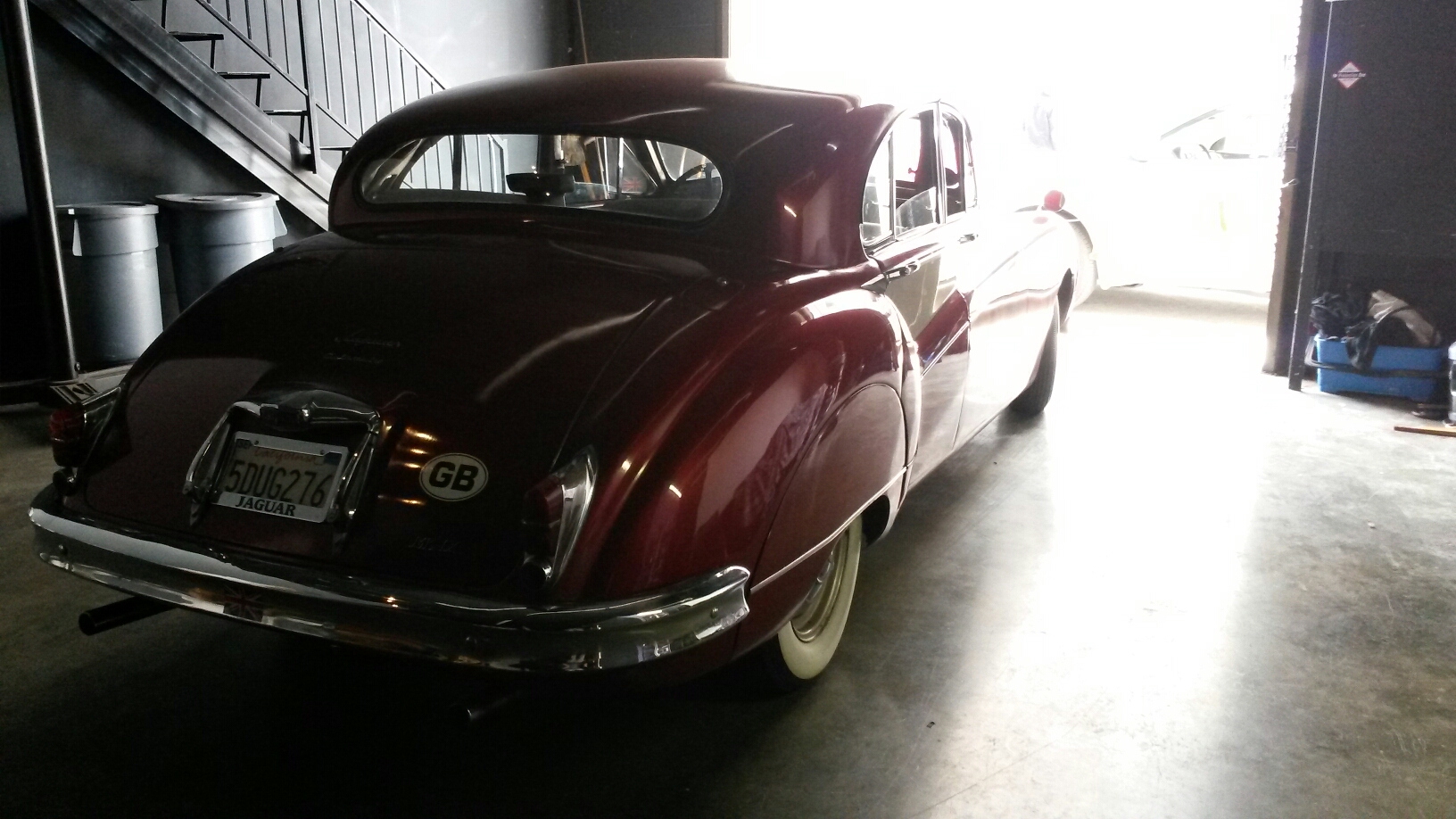
A while ago, my dad introduced me to one of his business partners who just happened to happen to own a 1960 Jaguar MK9.  Hmm…Maybe I just needed to see it…Well, I’m happy to report to you that it is, without doubt, one of the most breathtaking cars that I have ever laid my eyes on.  Not only does the beautifully patina’d maroon and good paint look absolutely stunning.  Oh, and if stunning looks and a spotless beige leather interior complete with Grey Poupon jars (you never know who might need them!) aren’t enough, this car used be Ike Turner’s car.  So, this car isn’t just ANOTHER Jaguar MK9…

The story behind the owner of the car is an interesting one in itself.  My dad’s business partner, Michael Page, used to be the bassist for Iggy and the Stooges, which was a band that opened for the Rolling Stones.  Mike also played for Chuck Berry and other bands in the 1970’s.  Mike now runs a small studio down in Southern California.  When I asked Mike if he still played musical instruments, his reply was, “Naw, I’m content to listen to it now.”

The story behind how the car ended up being in Michael’s hands is an interesting story itself.  During Ike and Tina Turner’s long divorce, Ike parked the Jag on blocks in a back lot of Paramount Pictures for somewhere around 17 years.  One day when Mike was walking in the back lot, he saw the Jag, was absolutely smitten, and made an offer on the spot.  It was accepted.  He then proceeded to, as he put it, “I stood on my head for about an hour with the guy from Paramount just trying to figure out what kind of engine was in it.  Eventually, I saw a label that said ‘Chevrolet 350 C.I. V8.'”  That means that the engine is a Chevrolet 350 cubic-inch small-block V8.  The Chevy 350 V8 is a popular choice for engine swaps in Jaguars.  It requires very little work to install, it has decent power stock (a LOT when it’s tuned), and it’s an extremely reliable engine.  That can’t be said about any Jaguar engine.  Just ask my uncle or grandmother.  As a whole, a 1960 Jaguar is a pretty sturdy car.  It’s made all out of steel (the only aluminum is inside), it’s got glass that could probably stop a bullet, and the tire treads wouldn’t look out of place on something destined to go off-road.

After Mike had owned the car for a couple of months, he decided to take it out for a spin on the freeway.  When he got up to 55 mph, the engine was screaming at something close to 5,000 RPM, and he was playing tag with a bunch of tractor-trailers and grandparents.  Not exactly my (or his) definition of fun.  He got off of the freeway and went to the local transmission shop and had them install an overdrive.  Now, the RPM’s are cut down to 2,500 RPM (most modern cars turn 1,800-2,000 RPM’s on the highway), and he can go up to 70 mph without worrying about killing the engine.  The overdrive, Chevy small-block V8 and Turbo 350 transmission are the only parts that didn’t come with the car.  That is, other than the tires!

Speaking of tires, the tires are modern Coker radial tires with big, tall whitewalls on them.  If whitewalls are put on the right car, they can turn a show-stopper into a car that will literally make people’s heads turn right off their neck!  That’s what my dad’s business partner did with this Jaguar.  The whitewalls make this classic Jaguar look better than it did when it rolled off of the Jaguar assembly line in Coventry, England, in 1960.  Not many cars can pull that off.  Plus, the engine, transmission, and overdrive give a car that wasn’t really driveable before the engine/transmission swap driveability.

In terms of driveability, Mike says that it drives like a wallowy, new car.  It’s got suspension technology from 1960, so it’s not the best choice to throw around a road course.  With the stock engine and transmission sans overdrive unit, the Jaguar MK9 isn’t easy to drive unless you toodle around town.  The stock engine was designed for people to take a slow, scenic drive of the British countryside, not for freeway cruising.  Bring a car like that to America where there are vast expanses of freeways, and you’re essentially got a death wish.  Mike essentially said the same.  The stock three-speed manual has a stiff clutch, according to Mike, and three short speeds aren’t going to do you any favors when you’re cruising.  The Turbo 350 transmission greatly improves the driveability factor.  The Jag doesn’t have power steering, but it tips the scales at about 3,400 pounds, so you’re really not having to put THAT much effort into turning it.  It does, however, have power brakes, so that does make it easier to stop it, even though there was no such thing as ABS back then.  With the Chevy engine and transmission, plus the overdrive unit, Mike could easily drive across the state of California if he so wished.

His Jaguar doesn’t have thousands of man-hours put into restoring it to #1+ condition.  It doesn’t have ABS, cruise control, or satellite radio like most modern cars.  It’s a survivor car.  Trust me, the Jag is perfectly fine that way.  It’s got absolutely gorgeous looks before the paint, which accentuates the car’s looks even more.  It has beautiful walnut wood varnished to an almost matte look.  It doesn’t need to have hundreds of thousands of dollars to get best-of-show at every car show.  These old Jaguars have a certain charm to them that very few other cars, classic or modern, can duplicate.  They’re not absolutely cute like a Austin-Healey Bugeye Sprite nor do they look like they were hewn from a block of stone like a 1967 Chevrolet Camaro.  They have an understated elegance to them, plus that cute British charm.  With the right paint colors on them, like gold and maroon, they can be quite a looker.

If you have a self-esteem issue, buy a Jaguar MK9 NOW!  Nobody really lusts after them, so they cost far less than a 1960 MK2, which is also a good car for those with self-esteem issues.  People will want to take pictures of themselves standing in or next to the car (#selfie), and Mike says that whenever he goes out, he literally has to either leave an hour just to talk to people, or park the car and run.  I’d leave an hour.  Running’s not my thing…

I’ve attached some photos of the Jag for you to literally drool over.  As I’ve previously said, it’s one of the most beautiful cars that I’ve ever seen.  It really looks stunning, especially with some light, but not too much.  I’ve never seen it at sunrise or sunset, but I can only imagine how beautiful it is at those times.


Badges are awesome - just ask this car!
Badges are awesome – just ask this car!


Grey Poupon is a requirement for British cars, I guess...
Grey Poupon is a requirement for British cars, I guess…


Sorry about the view - it was the best that I could get!
Sorry about the view – it was the best that I could get!

Editor’s note:  Mike actually played with Chubby Checker, NOT Chuck Berry!  My apologies!

The Seven Most Significant Carroll Shelby Cars Ever!

Carroll Shelby was a guy who built cars the way that they should be built.  This meant that every single Shelby creation was a masterpiece.  He is best remembered for the 1963-1966 Cobra, but he also built many more cars that are noteworthy.  The racer-turned-chicken-farmer-turned-respected-tuner was an amazing guy who did much, much more than make fast cars go faster.  After his heart transplant, he started a foundation.  His foundation, Carroll Shelby Foundation helps fund heart surgeries for children.

  1. 1965 Ford Mustang Shelby GT-350.  The Ford Mustang was an affordable musclecar.  It was fast in a straight line, but it wasn’t meant to go around corners.  When Lee Iaccoca called Carroll Shelby in 1965, Carroll Shelby told Iaccoca, “Lee, you can’t make a racehorse out of a mule.”  Yet, the 1965 Shelby Mustang GT-350 was one of the fastest cars of the decade.  It used Ford’s all-aluminum 289 cubic-inch V8, a Muncie M-22 “Rock Crusher” transmission, and tons of suspension and chassis modifications.  It was available through a “Get it Friday, Race it Saturday and Sunday, and Drive it Back Monday” program through Hertz.  The GT-350K was the highly successful racing version.
  2. 1965 Shelby Cobra Daytona Coupe.  The Shelby Cobra is one of the world’s most iconic cars, let alone America’s.  It used a stylish, lightweight British AC Ace body and chhassis, a Ford V8, and way too much fun for one person.  The most iconic Cobra was the 427 Cobra, which utilized Ford’s new, all-aluminum 427 cubic-inch V8 that was designed to compete with the 426 Hemi (the engine Shelby originally wanted for the Cobra).  That turned it into one of the fastest cars ever.  In late 1964, the 427 Cobra enjoyed massive racing success, but it didn’t have enough aerodynamic oomph for the long straights at Le Mans.  So, Carroll Shelby had Peter Brock design the Cobra Daytona Coupe.  The Daytona Coupe made a 1-2-3 finish at Sebring International Raceway, and it then went on to win the same finish at Le Mans, putting it 4th overall behind three Ferrari prototypes.
  3. 1965 Shelby Cobra 427.  Arguably the most iconic Shelby ever built, the 427 Cobra was a monster.  It used Ford’s race-proven 427 cubic-inch V8, and your Pontiac GTO or Chevrolet Camaro RS would run for mommy.  The 427 Cobra was a fairly neutral car in terms of handling, even when you got your foot into it.  Even then, it was predictable. Yet, when those 480 pound-feet of torque kicked in at 6,000 RPM, you’d better be holding onto something and have a lot of road ahead of you.  It tipped the scales at just over 2,700 pounds, and the big Ford V8 made a beautiful sound when you nailed it.
  4. 1968 Ford Mustang Shelby GT500KR.  The GT500KR used Ford’s all-new 428 Cobra Jet engine, which was kind of a loud, torquey boat anchor in stock form, but Shelby had a few tricks up his sleeve.  He took the cylinder heads and manifolds from the 427 racing engine, and raised the redline by 1,000 RPM.  This engine gained almost 30 horsepower just by that.  Car Life said of the car in 1968, “At 6000 RPM, the Cobra Jet will pull a semi trailer up Pikes Peak.  At less than 2000, it wouldn’t pull the petals off of a daisy.”  People still rave over the engine almost 50 years later.  It was docile under 2,000 RPM, but it came alive above that.
  5. 1986 Dodge Omni Shelby GLH-S.  The little Dodge Omni was a pretty decent little car, but Carroll Shelby slapped a turbocharger and suspension upgrades onto this little car.  It started the hot-hatch craze, and it still shames many hot hatches today.  It was a sleeper.  Many automotive magazines said that it would leave two very skinny, long tire marks through third gear.  If that’s not impressive, I don’t know what is.
  6. 2002 Shelby Series 1.  The Shelby Series 1 was the last Shelby to actually be built from the ground up by Shelby.  It used an Oldsmobile Aurora V8, a GM 700R4 transmission, and a Ford 9-inch rear-end.  Many people complained about the fact that it felt like an unfinished car.  You know what?  Let them yammer.  it was fast, fun, and stylish.
  7. 2013 Ford Mustang Shelby GT500.  This Mustang deserves to be on this list.  It was the last car to have personal oversight by Carroll Shelby, and it shows.  Shelby took the supercharged 5.4-liter V8 found in the 2012 GT500, and stroked it out to 5.8 liters. It gained 112 horsepower with the stroking of the engine and other tricks.  It uses Mahle pistons, a Tremec TKO600 transmission, a single-overhead-cam, a special Comp Cams valvetrain, and a big 2.3-liter Eaton supercharger.  The engine only gained about 50 pounds, thanks to extensive use of aluminum and titanium.  Ford claims that it will go 200+ miles an hour.  Motor Trend got one up to 197 mph, but I bet that if it was given enough open road, they would see at least 200.  When it was dyoned, it topped the dyno out at 211 mph, and it was still pulling.

The Best Places on the Internet to Showcase Your Ride

As summer rapidly approaches, many of us who have classic cars, whether they be hot rods, muscle cars, whatever they may be, want others to see their cars.  Sure, there are cruises, parades, and driving your ride around.  But, if you want a LOT of people to see your car, put it up on the internet.  I’m not joking.  If you have, for example, a 1969 Ford Mustang Mach 1 that you think others way outside of your state should see, put it up on one of the online car communities listed below for you.  Even if you have a brand new Mustang GT500 and you want the world to see it, drive it and put it up on the internet!  Cars are meant to be driven.  It’s what they like to do.  Cars aren’t meant to sit around in your garage waiting for some new parts to be installed, or wait for you to be driven.  Cars enjoy being driven.  Fast cars enjoy being pushed to their limit, whether it be on a canyon road, or down the dragstrip.  Drive your car the way it’s meant to be driven!  If you’ve got a classic musclecar, do burnouts, launch it down the quarter mile, do whatever it was meant to do.  Have fun with it.  Make a day out of it by driving it to work, pick the kids up from school in it, enjoy it.  Otherwise, it’s not meant for you.

Back to the original point of this blog post.  There are plenty of online car communities and forums on the internet that are just dying to see your ride.  Here is a list of the best online car communities.

  • eBay Motors is a great place to get parts for your car, talk with others on how to fix or modify your car, and share stories with your car.  The website even gives recommendations on what parts your car will need.  It’s intuitive, fun, and time consuming.  Using hashtags will help you find other garages similar to yours.  The stories of how the owners got their car(s) and what they did to their car(s) is just an added bonus.  http://www.ebay.com/motors/garage
  • My Classic Garage is one of the other awesome sites out there.  My Classic Garage is a cloud-based tool for classic car collectors.  I can’t say enough good things about it.  Many major classic automotive dealers are on My Classic Garage, which makes it fun to look through all of their cars for sale.  Plus, the Classic Trivia game is a lot of fun.  You can find my very own My Classic Garage page as Curbside Motorsports.   http://myclassicgarage.com/
  • Hagerty Car Insurance, believe it or not, has a place on its website where owners can share their stories.  It’s pretty neat that an insurance company does that.  And, no, the stories are not about how the owners got good insurance quotes!  The stories are about how the owners found their car, restored their car, etc.  Hagerty gives monthly prompts for you, but you are always welcome to tell your story without using a Hagerty quote.  Tell your story at http://www.hagerty.com/yourstories
Those are the three big, good online car communities that I would recommend, and if you belong to another one that I didn’t mention, please tell me what it is, and I will gladly do a Part II of this blog post!


The World’s Fastest Electric Car!

Don Garlits is a drag racing legend.  It’s why he’s known as “Big Daddy.”  Garlits has set records, not only for the amount of wins, but also for eclipsed times, trap speeds, etc.  He’s been active in the drag racing world for the better part of 60 years.  Many credit him for actively starting to make Top Fuel drag racing safer.  He’s learned the hard way on how unsafe old nitromethane dragsters are.  His favorite engine is the 426 Hemi that propelled him to many a victory.  Now, at age 81, he’s trying to set yet another record.

The eerie silence of electric vehicles is a bit creepy to some.  Nowhere is it more apparent than a 1/4 mile dragstrip.  Top Fuel dragsters make 8,000 horsepower, shake your body to the core, and easily hit 150 decibels.

Big Daddy’s Swamp Rat 37 isn’t what he usually drag races.  This is evidenced by the fact that he went 323 mph six years ago.  He regularly drag races a 2009 Dodge Challenger Drag Pak (Dodge’s equivalent of the Ford Mustang Cobra Jet and Chevy COPO Camaro, except it’s got a 600 horsepower Viper V10 under the hood).  Anyhow, Swamp Rat 37 isn’t nearly as quick as other cars he’s sailed down the 1320 feet of a quarter mile in.  But, his new record proves that electric dragsters aren’t slow, either.  According to Wired, Garlits and Swamp Rat 37 just went 7.258 seconds at 184.01 mph at Brandenton Motorsports Park in Florida.  That’s a little bit short of the 200 mph Garlits is aiming for, but he still went 24.16 mph faster than the previous record.

Very few electric cars make supercars look slow, though the Tesla Model S does come close – very close.  However, Big Daddy’s dragster makes every supercar look slow.  Swamp Rat 37 has six 7.5-inch DC electric motors.  Total output from those motors is 1,500 kilowatts, equivalent to about 2,000 horsepower.  Power for those motors is provided by four lithium-ion battery packs that store 420 volts and 3,600 amps.  It’s a little bit more powerful than sticking your finger into an electrical outlet.  Since he’s living his life 1320 feet at a time, there’s no such thing as range anxiety.

Big Daddy built up to full power over the course of several runs, turning in a 10.9, an 8.75, and on his fifth run, he hit 178.42 mph.  His sixth run was the record-shattering run.  For me, the most striking noise is not the whir of the electric motors, but the tires.  The noise of the tires is always drowned out by the thundering engines used in Top Fuel dragsters.  For some,  this may devalue electric dragsters forever, but Big Daddy has shown the world that there’s potential in everything.

Enjoy the video of Garlits setting the record.  http://www.youtube.com/watch?v=Ea4igN8Thtg