Truly, Only in Dubai!

I’m sure most of you know of this already, but the, er, unfortunate, uneducated soul on CNN a few weeks ago called the latest addition to the Dubai Police Force the Lamborghini AvenTadoor.  Not the Aventadoor, the AvenTadoor.  Sounds like something out of Star Wars, right?  Well, let’s try and forgive her (I can’t, but somebody might…)…Anyhow, the Dubai Police Force is just itching to pull some of those Saudi Midsize Hooners (YouTube “Saudi Midsize Hooners” to see what I’m talking about!)!

It’s true.  The Dubai Police Force has gone and done it.  They went out and bought a Lamborghini Aventadoor LP 700-4.  While it has a top speed of 217 mph, don’t expect for them to go cruising around at those speeds while eating donuts (or whatever Middle-Eastern cops eat by the ton)!  The Aventadoor is going to be used to deter owners of high-powered supercars and/or promote tourist areas in Dubai.  This probably means that there are going to be pictures of friends in Dubai.  Sitting in the car that you wish you drive next to some Saudi Arabian cop who’s the same size as Arnold Schwarzenegger.  Okay, that’s an exaggeration, but who cares, anyways?

While no changes have been made mechanically to the car (it’s so powerful and cop-ready that it doesn’t need to have any mechanical upgrades), there are some regulatory changes made to the interior.  Inside, there is an advanced video monitoring system, a GPS data logger, a radar gun, and other necessary police equipment.  A set of flashing lights has been added to the roof that’s less than 3 feet off of the ground!

This is not the first time that a Lamborghini has been enlisted for police duty.  The first Lamborghini to be used for police service was a 2008 Gallardo LP 560-4 that was bought by the Italian State Police.

Until now, the fastest police car in the Middle East was a 2011 Nissan GT-R used by the Abu Dhabi police force.  Now, they’ve got a Lamborghini Aventadoor, a Chevrolet Camaro SS, a Ferrari FF, and a 2013 Ford Mustang Boss 302.  Those are some spoiled cops!

History Buffs, Classic Cars, Say Hello!

Chickens and eggs, salt and pepper, cars and guys (and gals), these things all go together!  Want to know what brings geeks and car buffs together?  Car websites!  I guess it’s good that I’m the best of both worlds…I’m excited right now because two of the world’s most successful Japanese automakers recently added websites that can help history-loving car buffs truly enjoy their classic cars!  Don’t know who I am talking about?  Think Nissan and Toyota.  These websites are addictive, educational, and fun.  Both websites detail the entire lineup of both automakers.  From Day One.  What is fun on the Toyota website is the “Select a Body style” button, where you can click pickup trucks, and it will show you every single Toyota pickup truck since Toyota started 75 years ago!  On both websites, clicking on a car will bring up a photo gallery, as well as a full list of specs, and the origins of the car’s name.  Those unfamiliar with Toyota’s names outside the American market will be pleasantly surprised.  For example, would you rather have a Lexus RX, or a Toyota Harrier?  I know what I’d choose? If that’s not enough for Toyota fans, you can organize the list into what cars have what engine choices.  You can choose from the bulletproof 22R four-cylinder to the tuner-favorite 2JZ inline-six.  Nissan’s website isn’t as full of cool tricks as Toyota’s, it does have full lists of the evolution of each Nissan model.  Each car has it’s own photo gallery, specs sheet, and a short blurb about the car.

You can get lost in the depths of Toyota’s website from the link below:

http://www.toyota-global.com/company/history_of_toyota/75years/vehicle_lineage/family_tree/index.html

You can get lost in the depths of Nissan’s website from the link below:

http://press.nissan-global.com/COMMON/HERITAGE/database/en_index.html

Out ‘N About In Sonoma County

I am going easy on you, what with the holiday rush.  So, here’s a picture heavy/text light post.  Look at what great cars I get to see as I go about my daily life.

The photos of the Datsun pickup are of our mechanic’s 1973 Datsun 1/4 ton that he inherited from his grandfather.  IMG_0705

IMG_0703It’s a pretty cool truck with a nice leather interior.  It’s got American Racing Torqthrust wheels that give it a shiny aftertaste.  It’s a nice little hauler/daily driver!

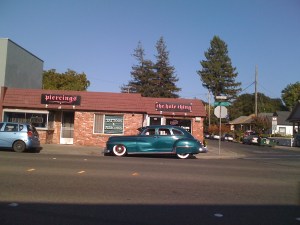
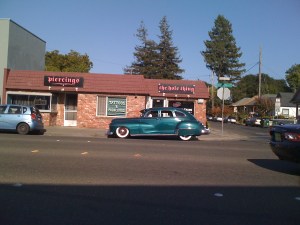
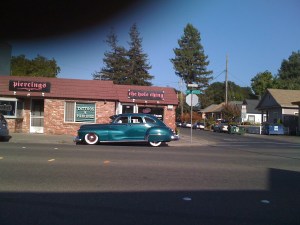
IMG_0694A couple of weeks ago, my mom was driving by a smoke shop and happened to see this lovely 1930s Cadillac.  I like the Chevy Aveo trying to look cool in the picture!IMG_0693IMG_0691In Santa Rosa, CA, there is an avid fire truck collector/restorer.  I happened to be driving by and there was an early Ward LaFrance fire truck from the 1960s!  They don’t get much nicer than this one!  IMG_0709

IMG_0708We also saw a lovely 1942 Ford Tudor Convertible (I know that they didn’t make any Tudor convertibles, but the owner seems to think so…)

IMG_0710

While volunteering for community service at an event at John Ash & Co, I happened to see this lovely 1952 Chevy delivery van.  It’s driven most days, from what I’ve heard.  Go to the event in style and have a lot of space left over!  Booyah!

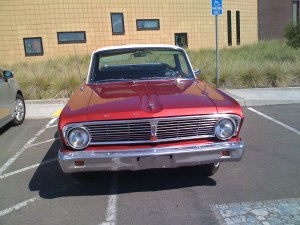
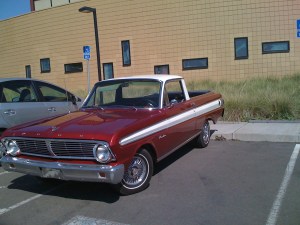
Photo0112My mom snapped the pictures of this lovely Ford Ranchero when she was at “work.”  IMG_0715

IMG_0714

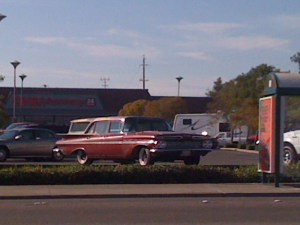
Yet another beauty we saw was this pristine 1960 Chevrolet Impala wagon.  IMG_0713

IMG_0712

For those of you who enjoy old Ford pickups, this one’s for you.  My mom and I were going to pick my sister up and we saw this beautiful old Ford F-2 from around 1955 driving along.  From what I could see, it’s used a lot.

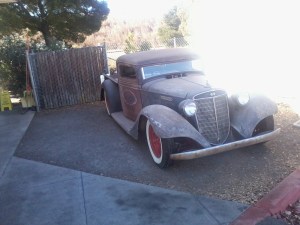
Photo0120When my dad and I were at a regatta, we saw quite a few lovely old trucks.  I’ll start off with this old Dodge rat rod.  I’ve seen it a lot, but it’s usually being driven too fast for me to take a picture!  It’s pretty cool.

Photo0099

We also saw this ancient Chevy Cameo pickup from Oregon.  It’s loaded with a lot of miscellaneous items, but it’s a hard-working old pickup that earns it’s oil changes.  Photo0101

While there, we also happened to see this period-correct Ford F-1 ice cream truck.  The owner was raking in the cash, and the truck got a lot of thumbs-up!  Photo0100

The El Camino peeking its nose into the picture with the ice cream truck is driven daily, and looks amazing.  It was marketed as a truck that drove like a car.  This one is from the late 1970s, and is all original!  Photo0098

I hope that you had a bountiful holiday season, and wish you a happy New Year.  Since New Year’s day is on a Tuesday, I’m going to take a mini-vacation from the blog, and will be back next week.  Thanks for being such loyal and wonderful readers.  You can look forward to more interesting and wonderful posts in 2013.  I happen to have a FABULOUS one up my sleeve!  Stay tuned.

Happy New Year!

Audi’s Allroad is Back and Hungry!


Just six years ago, any potential buyer for a family-friendly Audi station wagon could choose between the:  A4 Avant (wagon in German), A6 Avant, or the A6-based Allroad.  The Allroad was slightly higher than the A4 and A6 Avant’s, and was more fun to drive (but notoriously unreliable).

Determined NOT to let Volvo get out of sight, Audi has re-introduced the Allroad.  This time, it is based on the very reliable A4 platform.  Even though the A4 is a smaller car than the A6, the Allroad is actually a bit bigger than the older model.  It’s engine is much less powerful than the mighty 250 horsepower, 258 lb-ft of torque twin-turbo, 2.7-liter V6.  The 300 horsepower, 280 lb-ft of torque V8 is still much more powerful than the much more fuel-efficient 2.0 liter turbo four cylinder that pumps out 211 horsepower and 258 lb-ft of torque.

Also, the ride-height-adjustable air suspension isn’t available on the new model.  But, Audi has raised the A4-based Allroad 1.5 inches, compared with the normal A4 Avant.  Plus, it borrows the A5 coupe/convertible’s one-inch wider track, front and rear.  To keep the new Allroad competitive, Audi changed the tire size from a 245/40/18 to a 245/45/18.  You can still get the 245/40/18’s on optional 19-inch wheels.  Audi predicts most buyers will stick with the 245/45/18’s.  Audi has also changed the final driv ratio to compensate for the tall tires.

Even though those various mechanical bits are very exciting, Audi has to protect them.  So, stainless-steel skidplates come standard on the Allroad.  There’s also enough plastic cladding around both the bumpers to make a Tupperware jealous.  For those who don’t want to look like their car belongs to yet another Bear Grylls fan, Audi will paint all that plastic cladding body color for just $1,000 (it’s worth it to look rugged on the Allroad…)!

Inside the Allroad, the interior is pretty much the same as the outgoing A4.  But, some materials have been upgraded.  The electronics are state-of-the-art.  The MMI navigation and infotainment system can be had with a T-Mobile SIM card that wirelessly connects to Google Maps.  This will add $15 to $30 to your monthly payment, but the graphics and navigation are on par with the high-end private jets.  This little SIM card also allows for weather information, points of interest, and a few other features.  It’s well worth that extra money.

The Audi Allroad really doesn’t have much competition.  It’s only real competition is the Volvo XC70, which Motor Trend last tested way back in 2008.  The 235-horsepower, inline-six cylinder powered Volvo may look WAY cheaper on paper, but it doesn’t come with:  all-wheel-drive, navigation, leather interior, sunroof, and power seats (all of which are standard on the $40,900 Audi), you’ve added almost SEVEN THOUSAND dollars to the Volvo’s $33,825 base price.  Now, the Audi seems like a pretty good deal…

Even though the Allroad is bigger than the old model, it doesn’t feel like it inside.  Audi has always been in the top five for safety, and the Allroad is no exception.  All of its safety equipment seems to take away a lot of interior space.  While there isn’t much room in the back seat, you can go for a few hundred miles sitting on very comfortable seats, knowing that all the airbags in the back will protect you from death.  In comparison, the Volvo is bigger, being about five inches longer and wider.  But, the Volvo has about 350 pounds on the Audi (which isn’t a lightweight either).

At Motor Trend‘s test track, the whole test crew was impressed at how fast the chunky (ish) Audi is.  The Quattro all-wheel-drive system puts down all of those 258 lb-ft of torque with a lot of ease.  Since the Allroad is more focused towards touring, it doesn’t have the rear-wheel biased feel as the A4 Avant.  Instead, the center differential of the Quattro all-wheel-drive system has a 50/50% torque distribution.  Surprisingly, there is very little brake dive and body role in the Allroad.  The electro-mechanical steering may be a bit light feeling, but responds to a command almost instantly.  Michael Febbo of Motor Trend would like to see Audi Drive Select become an option on the Allroad someday.  Also, an Allroad S with the supercharged 3.0 liter V6 from the S4 would be nice.

But, the Allroad is still a pretty quick station wagon. 0-60 in 6.5 seconds may not seem like a lot, but it is for a station wagon.  The Volvo XC70 hits 60 in a leisurely 8.9 seconds. In the quarter mile, the chunky Swede falls far behind, with a run of 16.7 seconds at 87.9 miles per hour.  The Audi will do the quarter mile in 15 seconds flat at 92.4 miles per hour.  That’s pretty fast for a station wagon.

The Allroad will go just about 90% of the places a CUV (compact utility vehicle) will go.  That’s pretty good for a station wagon.  It also handles like a station wagon (still pretty fu n to drive), looks like a CUV, and is a good car.  Overall, the Allroad is a good car for a family of four who is outdoorsy and needs some four-wheel-drive capability, without having to sacrifice the fuel economy and sport touring gains of a station wagon.  I’d recommend it to almost anybody in the market for a $40,000 station wagon.  Also, it’s a good compromise for automotive journalists who will miss the two station wagons and one hatchback option.  As I said before, it’s a great car.  How about this as a replacement to the old family car?


Making A Grand Entrance, or Getting to Thanksgiving in Style

As you know, Thanksgiving kicks off the holiday season with a full belly.  At least 80% of all Americans travel for the holiday.  I know that those who are traveling by road will be traveling the crowded interstates.  For those taking the back roads, I’ve put together a list of ten cars that have at least 400 horsepower and seat four people comfortably.  Tell me which one you’d like to take.

  1. Audi S8:  The 2013 Audi S8 has 520 horsepower, yet it isn’t a car that is 6000 pounds and fast in a straight line like a Rolls.  Instead, it weighs 4400 pounds.  With Audi’s signature Quattro AWD system, the S8 will go where a Rolls would never think of going.  Do you know of any full-size sedans other than the S8 than can get to 60 in 3.5 seconds?  Plus, the interior will enclose you in Alacantara and leather sourced from the finest tanneries in the world.  Not a bad way to travel…
  2. Bentley Mulsanne:  Would you like to make an even grander entrance than the S8?   If you do, take the 2013 Bentley Mulsanne.  A 505 horsepower 6.75 liter, twin turbo V8 powers the massive Bentley to a heart-stopping 4.8 seconds to 60.  It might not be as fast as the S8, but it will look better at speed.  All four of you and your lucky friends will be enshrouded in pillowy, massaging seats that have leather.
  3. Cadillac CTS-V Wagon:   The Caddy is one of the more powerful cars here, yet one of the first choices for a back-road blast.  The CTS-V Wagon is fast, with a top speed of 190 mph (governed!), and it will carry turkeys, luggage, and plenty of eggnog and brew for Thanksgiving without breaking a sweat.  Plus, it will look like you are having a blast.  Which you WILL be, right?
  4. Dodge Charger SRT-8:   The Charger has long held a soft spot in my big car heart.  It’s fast, it makes a statement, and it’s loud.  What’s not to love?  Plus, the SRT-8 can be purchased for under $50,000!  60 mph comes up in a show-stopping 4.3 seconds.  This makes it the large family-oriented performance car of the century!
  5. Hyundai Genesis 5.0 R-Spec:  The Hyundai is the first Korean performance sedan.  It competes with the Mercedes-Benz E550, yet offers almost as much room as a MBZ S-Class.  It may be smaller than the gigantic Equus, but it’s MUCH more fun to drive.  Plus, it will get people asking what it is.  Some will think it’s a Lexus, others will think is a Mercedes.  Tell them it’s a Hyundai, and take some photos for me!
  6. Jaguar XJL Supercharged:  The 470 horsepower, 5.0 liter engine is powerful enough to move this big boy.  Fast.  The interior is even nicer than the engine.  There is a suede-like material that Jag used for the headliner that is very soft and nice.  The engine is so powerful that you can load up the trunk and have your friends in the back stretched out.  What’s not to love?
  7. Land Rover Range Rover Supercharged:  The Range Rover Supercharged has a 510 horsepower engine that is basically the same one you’ll find in the XJL Supercharged.  This powerful engine will take the nearly 5000-pound SUV to 60 in a mere 5.2 seconds.  Plus, it will haul all your gear wherever you want it.  You can quite literally load up the shotguns and go hunting wild turkeys in the Rockies.  Plus, it’s got  a very similar interior to the XJL Supercharged.  Not bad for an SUV that costs almost $120,000.
  8. Mercedes-Benz GL550:  The GL wowed the 2013 Motor Trend SUV of the Year judges so much that they named it SUV of the year.  It’s the first MBZ to win that title since 2001.  The GL550 doles out globs of torque and 429 horsepower.  It’s powerful, fast, quiet, AND it will follow the Range Rover Supercharged.  For a while.  The Designo interior rivals that of the luxurious S-Class, with comfortable leather seats that seat seven.  Plus, you can take all your gear in the back and still have room.  It’s bigger than an Escalade, yet smaller than a Navigator EL.
  9. Porsche Panamera GTS:  The powerful Panamera GTS will haul four people in relative comfort, thanks to it’s leather-covered Recaro seats.  It has AWD and 430 horsepower.  It’s like the Nissan GT-R Black Edition, with two more doors!  And a rumbling V8!  Plus, it will get 24.5 mpg on the highway!  VROOOOOOOOM!
  10. Tesla Model S Signature Performance Edition:  The 2013 Motor Trend Car of the Year deserves to be on this list.  Why?  It’s extremely powerful electric motor produces 416 horsepower at the wheels.  This means that it’s there as soon as you start it.  It might not have the range of the Mulsanne or the Panamera, but it will make the most amazing entrance ever.  It carries almost as much as a Chevy Equinox, plus it has 285 miles of range!  Plus, you can get to 60 in jolting 4.0 seconds!  This is one silent VROOOOOOOOOOOM!

Have fun daydreaming about what could be, when you’re stuck on the interstate wishing you’d taken the backroads. These cars may not be ‘The Family’s New Car’, but they definitely have serious style!   P.S.  Do you have any cars that have at least 400 horsepower and seat four comfortably?  I’m sure you do…

The Family’s New Car – Minivan Style

Due to the popularity of last week’s post, The Family’s New Car, I decided to go ahead and evaluate minivans.     I researched  four top picks:  The Mazda5, the Chrysler Town & Country, the Nissan Quest, and the Toyota Sienna.  Good luck shoppers!

2012 Mazda5: There wasn’t enough information available for me to evaluate te 2013, so here is the 2012 information.  With a starting price of $22,975 for a top-of-the line Mazda5, the Mazda5 undercuts the other minivans by almost $4,000.  It is fun to drive, seats six, and looks good while doing it.  The Mazda5 has a small 2.5 liter four-cylinder engine that has Mazda’s Skyactive engine technology.  This engine pumps out a somewhat-measly 157 horsepower and 163 lb-ft of torque.  When loaded down with five people and luggage, the engine struggles to keep the car at 70.  However, the Mazda5 is the only minivan that gets relatively good mileage.  It gets 21/28 city/highway.  Power is fed to the front wheels through a five-speed automatic that is relatively quick, yet outdated for today’s standards.  The Mazda5 has the lowest monthly fuel cost of the four minivans mentioned at $203.  But, the Mazda5 has the smallest fuel tank of the bunch at 15.9 gallons.  Bluetooth, A/C  and climate control, heated/cooled seats, Satellite Radio, and leather are standard and/or in the Mazda5.  All-season tires, a power glass sunroof, and Alloy wheels are also standard.  ABS, an anti-theft system, child-seat anchors, side/curtain airbags, stability control, and traction control are all standard, as well.  The Mazda5 is also relatively spacious.  It is relatively quiet for a minivan, with noise levels mainly staying with minimal amounts of wind noise.

The 2013 Nissan Quest is the car that Motor Trend dubbed the unspoken hero of the minivan world.  With an invoice of $24,222, the Quest undercuts the Chrysler Town & Country by almost $4,000.  It is remarkably fun to drive, with responsive steering, good power delivery, comfortable seating for seven, amazing visibility.  It’s 3.5 liter V6 is shared across the Nissan board, and it is smooth and powerful.  It’s fuel tank can hold up to 20 gallons.  Plus, the Quest gets 19/25 city/highway, with a monthly fuel bill running you $232.  With 260 horsepower and 240 lb-ft of torque coming from the engine, the Quest seems like it is a bit underpowered on paper.  When you drive it, there are substantial amounts of torque on demand.  The CVT transmission is smooth, but it buzzes when the engine revs above 4500 rpm.  Considering the fact many CVT’s are noisy transmissions, the Quest’s CVT is smooth.  Bluetooth is standard on the SV trim and above.  Keyless ignition is standard on the S model.  The interior is cloth, but don’t let that throw you off from buying an S.  The seats are supportive and comfortable for long road trips.  All-season tires are standard on the S.  However, the Quest is the only minivan available with steel wheels.  ABS, an anti-theft system, child seat anchors, side/curtain airbags, traction control and stability control are all standard.  The Quest is also one of the most spacious minivans on the market, with almost 60 cubic inches of rear legroom.

The Chrysler Town & Country is the most powerful minivan available for purchase currently.  Chrysler’s new Pentastar V6 is the only engine option, yet it produces 283 horsepower and 260 lb-ft of torque.  It is also the most expensive minivan that one can buy for a base model.  It costs $28,735.  However, the Town & Country has a lot going for it.  It’s six-speed automatic has been retuned for maximum fuel-efficiency.  The Town & Country gets okay mileage at 17/25 city/highway.  It also has the largest monthly fuel bill of $243.  A/C with climate control, bluetooth, a built-in hard-drive, navigation, power seats, rear-seat DVD, Satellite Radio, and leather are all standard and/or optional on the base model.  All-season tires are mounted on alloy wheels.  ABS, an anti-theft system, child seat anchors, side/curtain airbags, stability control, traction control are all standard and/or optional.  The EPA says that the Town & Country has up to 196.5 cubic inches of interior room just itching to be used.  Plus, the Town & Country is fun to drive, due to the fact that it has perfect amounts of torque at almost any rpm over 1,000 rpm.  The Town & Country also has responsive steering, but tire howl can be easily achieved by going around a corner too fast.  The Town & Country also has comfortable leather that is standard across the board.

The 2013 Toyota Sienna has long been a bestseller in the minivan segment.  However, the 2011 redesign brought substantial updates but funky looks.  To many (including me), the Sienna looks like a cross between a pug and a bullfrog.  It has a V6 engine that is standard (a four-cylinder was available until the 2012 model year, then cut) that produces 266 horsepower and 245 lb-ft of torque.  It is responsive and quick, but it gets very loud under acceleration.  Drivers will not appreciate the large rearview mirror when driving forward.  With fuel economy ratings of 18/25 city/highway, the Sienna has a monthly fuel bill of $232.  Bluetooth, rear-seat DVD, Satellite Radio, cloth, an iPod dock are all standard/optional.  All-season tires are mounted on alloy wheels.  ABS, an anti-theft system, child seat anchors, side/curtain airbags, and stability control and traction control are all standard/optional.

My first choice to Mom would be the Mazda5.  However, we may need that extra seat, so the Quest would be next on the list.  After that, I would recommend the Town & Country, as it is a good blend of looks, power, and comfort.  The Sienna is last, due to the fact that it is slower than all of the others except for the Mazda5, and it is not very much fun to drive.  If I had to buy any one of these minivans, I would have to go with the Mazda5.  Why?  It looks good, it’s adequately powered, and it is barrels of fun to drive.
The Family’s New Car – What Will it Be?

So many people have been driving their old cars.  The economy, ya know.  Well, the old cars need CPR (or most likely, a quick and painless retirement).  I decided to research options.  So here you are, a comparison, and contrast, of  the:  Toyota Prius Plug-In, the Toyota Camry Hybrid, and the Chevrolet Volt.  I thought that this topic would interest you, so this post is going to be a bit longer than usual.

Toyota Prius Plug In:  The Toyota Prius plug-in is virtually indistinguishable from a normal Prius.  The only way one can tell the Prius Plug-In apart from a regular Prius are the silver paint on the mirrors, door handles, and tailgate, the car looks the same.  Of course, the blue-and-white PLUG-IN HYBRID stickers help.  There is also a cutout in the left fender that houses the outlet for the charging cord.  In terms of the inside, there are only a few PLUG-IN HYBRID stickers and logos.  The cargo floor is also a couple of inches higher, due to the larger battery pack.  From the driver’s seat, the car is virtually the same as a regular Prius.  The only differences are the fact that the battery pack is much heavier (it is made out of lithium-ion).  The car will take a tortoise-like 11.3 seconds to reach 60.  In three hours (from a 110-volt current), the car will be completely charged.  However, if you have a 220-volt current, you will be on your way in an hour and a half.  If you drive like a senior, you can get 13 miles of range before the car starts the normal hybrid cycle of a Toyota Prius.  If you drive faster, the range will subsequently go down.  Quickly.  You can go up to 62 in full electric mode, but that will drain the battery within minutes.  Accelerating to freeway speed or going up a hill will bring a moan that sounds like Leo when he’s tired from the engine.  Car & Driver gingerly drove the car in the city and were sustained by pure electric power 39% of the time, and got an average of 56 mpg neatly displayed on the navigation screen.  However, there are limited dealers that are authorized to sell the Prius Plug-In, so be sure to contact dealers near you.  The Toyota Prius Plug-In that I configured on the Toyota website came into a grand total of $33,208 (including an $850 destination charge/shipping tax).

Toyota Camry Hybrid:  The Toyota Camry Hybrid has crisper handling than the basic Camry.  The Camry Hybrid has a larger trunk than the previous generation (a gain of 2.5 cubic inches to 13.1 cubic inches) and the right side of the rear seat is now the only side that can accommodate long objects.  Passenger space has increased to 102.7 inches from 101.4 inches.  Toyota has trimmed about 220 pounds from the previous Camry Hybrid, thanks to the use of high-strength steel.  The low-rolling-resistance tires and a slicker drag coefficient of 0.27 makes the Camry Hybrid more fuel-efficient and faster.  The three “optitron” dials in the car’s multi-information display show:  mileage, range, and very important energy flow.  In uplevel XLE models, a leather interior and an infotainment system will run you $1160.  The eco setting accessed through the multi-information display will significantly inhibit throttle openings and will lower the air-conditioning power consumption to a dull roar.  When in pure electric mode, one can travel 1.6 miles below 25 mph.  While the Camry Hybrid won’t win a drag race against a Mustang, it will win a drag race against the basic Camry.  The Camry Hybrid rockets to 60 mph in a monumental 7.3 seconds!  The Camry Hybrid will brake shorter and sooner than the previous generation Camry Hybrid.  Stops have been measured at 178 feet, compared to the older Camry Hybrid’s 200.  Also, the new electric braking system is so smooth that you won’t feel queasy, even if you stomp on the brake pedal.  There is not enough lateral support in the front seats during hard cornering.  There is more rear-seat room, thanks to the car’s redesign and the center console and front seatbacks being redesigned.  This is especially better for the passenger in the center seat.  The Camry Hybrid LE that I configured on the Toyota website came into a grand total of $27,033.  That includes the $850 destination charge/shipping tax, which puts the car on par with the Chevrolet Volt (in terms of pricing).

Chevrolet Volt:  Changes in the battery pack in the Chevrolet Volt have made the car’s range go up to 38 miles in pure electric mode.  The EPA fuel economy for the car has gone up to 98 mpg.  The larger battery pack means that the charging time from a 120-volt current will snap up 10.5 hours of charging time.  With a 240-volt current, that time is dramatically reduced to 4.25 hours.  Any Chevrolet Volt sold in California will automatically come with a low-emissions package that will make it legal to drive in the carpool lane with only one person.  For many owners, work is just within reach of the electric range, so they can charge the car at work and come home without ever turning on the gas generator engine.  When owners DO use the gas generator engine, the cost is usually less than $100 a month.  This is mainly because of the massive amounts of technology stored in the Volt.  The regenerative braking system can eke about 8 more miles of range into the car.  The car will give owners neck-snapping performance in sport mode, and very little acceleration in eco mode.  The Volt that I configured on the Chevrolet website was $42,720, but of you add in the $10,000 discount on the Volt, the Volt will run you a mere $22,720.  Add in the $7,500 tax rebate and the Volt will run you $25,220.

The Kia Optima Hybrid is a hybrid family sedan that competes (ish) with the Camry Hybrid.  It has a lot of bang for the buck, but it has surprisingly bad fuel economy for something with a hybrid logo.  The Optima Hybrid is stylish, fun to drive, relatively fast, and did I mention that it will cause traffic jams because of its looks?  It only costs a mere $26,000 base price!

Here’s where the fun begins!  Comparing and contrasting the three cars won’t be easy.  I never thought it would be.  The Prius won’t win a beauty contest.  That goes to the Volt.  In terms of range, the Volt wins again.  In terms of being family-friendly, hats off to the Camry Hybrid.  In terms of technology, the Prius Plug-In and the Volt are tied.  The Volt wins the performance criteria.  In terms of utility, the Prius Plug-In wins again.  In terms of pricing, the Volt is REALLY trying to end up in your driveway.  The Camry Hybrid is REALLY good at making it into your driveway.  The Prius Plug-In has the potential to sell as well as the conventional Prius.  Which car would I recommend to my parents, or their friends?  I would recommend the Volt to them, as it is the most efficient, fun to drive, and has a good deal of storage space.  Plus, it wins the beauty contest (in my eyes).  It also comes with leather at no added cost, an HOV sticker, and a REALLY cool sound system.  Oh, and did I mention that it was the 2011 Motor Trend Car of the Year!.  My second choice?  The Camry Hybrid.  In years to come, the Camry Hybrid will be easy to find parts for, and it should last us a very long time.  Plus, it’s still family-friendly and it’s a winning formula that’s been proven many times over.  It’s also got crisp handling (a much-needed improvement for Toyota), and it has over 600 miles of range.  Why wouldn’t I recommend the Prius Plug-In to them?  Well, it’s not as fun to drive (important), it looks like it came out of Star Trek, and only certain dealers can service it.  That’s a BIG, BIG problem.  The Optima Hybrid lags behind the others in everything but looks.

Out ‘N About!

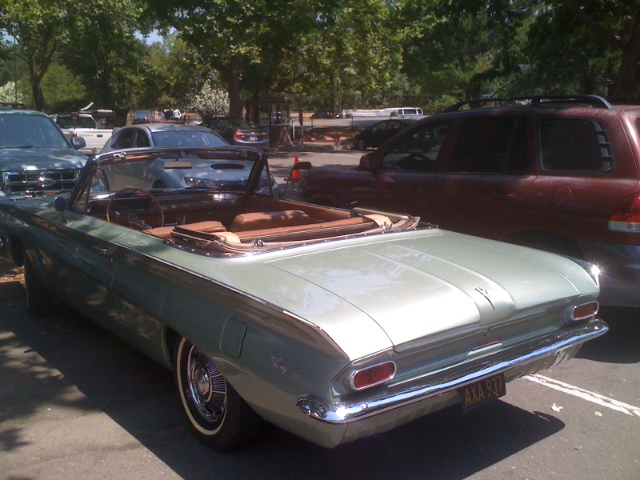
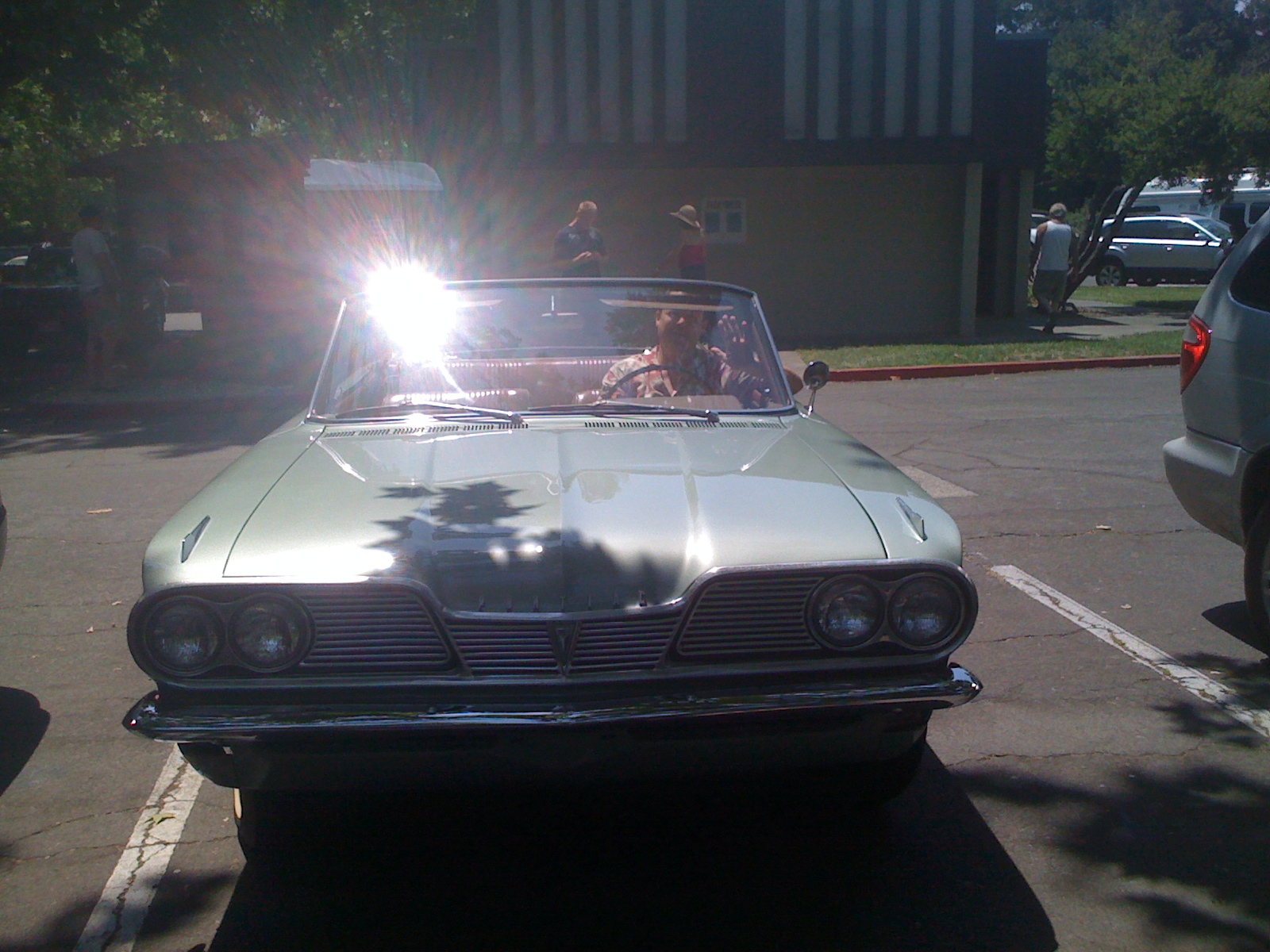
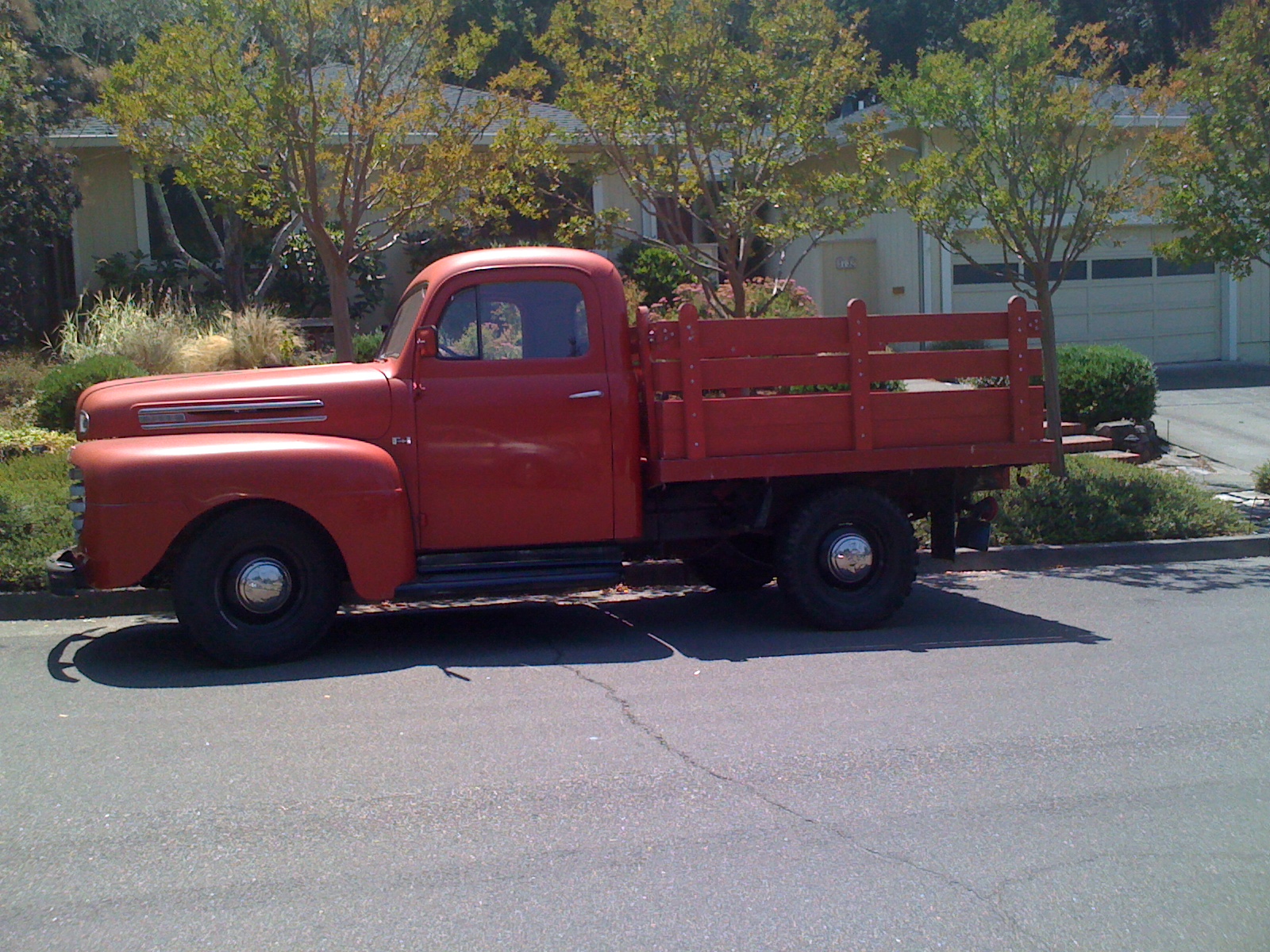
As I promised, here are two classic rides from my neck of the woods:

I know that the Pontiac convertible is a 1962 Tempest Convertible.  It has the big ol’ 389 cubic-inch V8 and the automatic slushbox transmission.

I do not know what year the lovely Ford F1 is, but I do know that it is the first generation of the Ford F-Series.

One of the World’s Oldest Luxury Automobile Makers is 110 (and two days)!

Happy Birthday to you, Cadillac!  110 years and two days ago, Cadillac was formed by Henry Leland.  Henry Leland took the remnants of the Henry Ford Company, and started Cadillac.  110 years and two days later, Cadillac is still very much a part of the luxury automobile industry.  In honor of the 110th anniversary of Caddy, here is a list of the top five coolest Cadillacs from Motor Trend.  After that, I will add about one or two to the list.  Feel free to comment with your favorite Caddy.  I can’t wait to see what your favorites are!

1937 Cadillac Phaeton model 5859 — Look up classic beauty in the dictionary, and you’ll see an image of the custom-built 1937 Cadillac Fleetwood V-16 shown here. The Phaeton model 5859 was built by coachbuilder Fran Roxas who relied on the original blueprints of Cadillac designer John Hampshire. The original sketches of the powerful V-16 car served as inspiration for the Ciel concept car.

1937 Fleetwood Cadillac V16 300x187 image

1937 Cadillac Phaeton model 5859

1949 Cadillac— The 1949 Cadillac was a major step forward for the company, as the outgoing car’s ancient L-head V-8 was replaced by a flathead V-8 that put out 10 more horsepower (160 versus 150). The new engine was about 200 pounds lighter, revved higher, and got better fuel mileage. The Cadillac was also named as Motor Trend’s very first Car of the Year!

1949 Cadillac Series 62 Club Coupe

1959 Cadillac Eldorado — This beauty incorporated new styling, with sharp and massive tailfins that have gone down in automotive history. Its twin-bullet taillights, and jewel-like grille added to its appeal, and let’s not forget its name translates to “the golden one” in Spanish.

1959 Cadillac Eldorado Biarritz Convertible

Cadillac Ciel concept — The Cadillac Ciel is just a concept, but it’s still one of the most gorgeous cars we’ve ever seen wearing the brand’s logo. Cadillac Ciel Concept Left Front Driving 300x187 image

The Ciel concept stunned spectators at Pebble Beach last year with its effortless combination of strong retro themes with Cadillac’s current design language. The four-door convertible wears rear-hinged “suicide” doors, and is powered by a twin-turbocharged 3.6 liter V-6 mated to a hybrid all-wheel-drive drivetrain producing an estimated 425 hp and 430 lb-ft of torque.

Cadillac CTS-V (second generation) — Where do we even begin? The CTS-V is fast, has a wonderfully composed chassis, and looks like a million bucks on the road. How do we know? We had a CTS-V in our garage for a year, and nearly everyone who got seat time with the beast fell in love.

2009 cadillac CTS V

2009 Cadillac CTS-V

Here’s my list of MY favorite Cadillacs:

2003 Cadillac CTS:  The 2003 Caddy CTS was a game-changer for Cadillac.  This was one of Cadillac’s darkest days, and the CTS is really what saved Cadillac from becoming limos.  It was the first sporty Cadillac since the mid-50’s.  This is a beautiful car that deserves a lot of recognition.  Over 300,000 were sold before production ended for the first generation in 2008.

PHOTO (select to view enlarged photo)

2003 Cadillac CTS

Cadillac Escalade:  All three generations.  The Cadillac Escalade was introduced for the 1999 model year in response to the Lincoln Navigator, the Mercedes-Benz ML320/350/500, and the Lexus RX300.  The first generation didn’t sell well.  The second generation sold very well.  Money was looser than it is now.  People bought Escalades because they could.  The third generation is currently the best-selling Cadillac of the 21st Century.  According to the National Highway Loss Administration, the Cadillac Escalade is the most-stolen vehicle in the U.S.

1999 Cadillac Escalade

P.S.  Google Images is always a good place to find nice pictures of a Caddy that you want to attach for the comment.

The Two Italian Space Ships from the 80s Face Off Again!

I’m sorry that I didn’t post on Friday.  I’ve been fighting an ear infection, and I had high school orientation.  I hope this post garners forgiveness from your kind and sympathetic hearts…  Match of the 80’s, Lamborghini versus Ferrari.  Let’s all take take a nostalgic trip.

Drawn in 1970 by the infamous designer, Marcello Gandini, the man who penned the now-infamous Lamborghini Muira and Lancia Stratos, the Lamborghini Countach was a radical departure from what Ferruccio Lamborghini would have imagined.

First shown to the world at the 1971 Geneva Motor Show, the Countach wowed the breath out of just about everybody there.  The Countach’s design still takes one’s breath away, when lucky enough to view one.  It’s amazing how far the borders of reality are.  The Countach pushes them until you remember it’s a car, not a ride to space.

Of course, I’ll have to start somewhere on the Countach.  How about the name?  The name is actually a quite vulgar Piedmontese expression when a man sees an attractive woman.  Countach is actually pronounced coontash.  It quite literally means “What a piece of a@%!”  Some rumors say that Nuccio Bertone of the design studio walked in and said, “Countach!”

Let’s see what we’ve reviewed.  We’ve reviewed the unearthly design, the right-out-of-South Park-name,and now we’ll move on to Satan’s orchestra of an engine and exhaust.   If you own a Countach, you could quite possibly put up posters throughout town, and charge a good deal of money to let various strangers listen to you start the Countach from a cold start.  All it takes is a simple twist of the key, and then that massive 5.2 liter V12 bangs, rumbles, roars, sets off car alarms, and does other destructive-sounding sounds as it gets all the way up to 3000 rpm in less than two minutes.

The Countach is as much fun to drive as it is to admire.  But, beware of the clutch that will requires at least 50 pounds of pressure to move, and the steering is almost as hard to navigate, requiring just about 35 pounds of pressure to manhandle the steering wheel to the left or the right.

1988 Lamborghini Countach 5000QV And 1993 Ferrari 512 TR Rear Left Side View  photo

On the other hand, the Ferrari Testarossa is a much more civilized car that will keep pace  with the much louder Countach (if you lose the Countach while in the Testarossa, you’ll definitely hear it!).  Motor Trend’s Senior Editor, Jonny Lieberman found the 1993 512 Testarossa to be a much more fun car than the larger-than-life Countach.  Why?  Because the Ferrari is faster, it shifted better, it rode better, it turned into corners better, and in just about every way that a car can separate itself from it’s competitors, the prancing horse pranced away from the bellowing, rumbling, raging bull.  Don’t put Lamborghini down.  The Countach is certainly a good car.  It’s just not a great car to drive.  The monstrously extroverted Countach feels primitive and much older than the Testarossa.  It’s amazing how much two supercars can feel so different.  That’s what five years will do to you.

For Jonny and those of you who had posters of the Countach, it’s a score for you.  But, for my generation (and any other generation), it’s a score for both of the cars.  I’d take either of them.  Just throw me the keys, a driver’s license, insurance papers, and anything else needed, and you won’t see me for a while.

P.S.  the Countach and Testarossa are MUCH safer than a Morgan!