Why Europe Should Be Worried About the Runaway Success of the Ford Mustang

The 2016 Ford Mustang is a great car, especially in the supercar-slaying GT350/GT350R form. It’s relatively fast, affordable, and can be easily modified. It turns out that the Yankee muscle car is now the most popular sports car in Germany. Why should they be worried?

In March, the Ford Mustang outsold the Porsche 911, Porsche Cayman and Boxster, and the Audi TT. It’s not that it’s inexpensive in Germany – a Mustang GT with no options costs about 50,000 Euros, while it costs $32,395 here in the U.S.

The Internet loves to trash talk the typical Mustang owner. A spike in high-profile crashes at car club meets doesn’t help with the Mustang’s PR either.

One of the problems that I have found about the Mustang is that the 1979 “Fox body” Mustang and it’s immediate successors were immensely popular and somehow durable. What does that mean? There’s a ton of them around, and used Mustangs are cheap horsepower. In 1979, there was a Dodge Challenger, which was a re-badged Mitsubishi Galant Coupe intended for the Japanese domestic market. The Challenger/Galant had a lifespan of five years at most, so it’s safe to say that your microwave has some Mitsubishi DNA in it!

Because the Mustang is so inexpensive, various misconceptions about the Mustang are out there. There’s nothing like a Porsche 911 or BMW M3 owner looking down on your ragged-looking Mustang GT with a set of Bilstein coilover shocks on it. Those owners have nothing better to do than look down at the lowly Mustang owner. Show up to a track day in a brand-new Mustang GT, and you’ll hear this kind of trash talk: the Mustang is heavy, it wallows, it doesn’t turn or stop very well, the rear end is uncontrollable, and you’re going to end up taking somebody else out when you spin. None of that is really true.

While the Mustang isn’t exactly light, the GT350R comes within 100 pounds of the BMW M4, a direct competitor to the GT350R. The steering in the GT350R is, according to pro race car drivers, worlds better than the M4. Don’t like the way it stops, even with the available massive Brembo brakes? That’s OK; the aftermarket will give you brakes that are IMSA (endurance racing) spec for less than half the cost of a single Porsche 911 GT3’s brake disc. You can walk into any Ford dealer, walk out with a Mustang in 45 minutes, and have a ton of fun. The GT350 (non-R model) is in a league of it’s own among four-seat performance cars. What about the Mustang being a tail-happy crash magnet? Well, the previous generation is notorious for that. It has a live rear axle, which wouldn’t be out of place on a Conestoga wagon, and couple that with 400+ horsepower, a driver who doesn’t know how to handle that much horsepower, and you know where I’m going. It’s mostly due to user error that there are so many Mustangs crashing. There have been a good deal of BMW M4 crashes as well. Trust me, it’s the same thing with Porsches.

If you haven’t driven a Mustang in a while, or your opinions are based on the old Mustangs with the live rear axle, I strongly encourage you to go down to the local Ford dealer and take a Mustang for a test drive. Any Mustang will do. Your expectations will be shattered.

Inside the Mustang, you’ll be pleasantly surprised. The fit and finish holds up against whatever Germany and Japan have to offer. The interior is both classic and modern. The seats hold you in a bear hug, but are incredibly comfortable for any person. The infotainment systems are easy-to-use, and you’ll never really want more out of them. You’ll get plenty of feedback from the steering wheel, and all of the controls feel like Ford pulled them out of an Audi.

While the Mustang might be a large car, it feels perfectly comfortable on small back roads. You know exactly where the car is, what it’s doing, and how much gas you can give it. The overall driving experience feels like something Mercedes-Benz and Audi would co-develop. The only real differences between any current Mustang and a BMW 4-Series are the high door sills in the Mustang…and the availability of a manual transmission with every engine!

But, don’t take my word for any of this. I’m just an 18-year-old car enthusiast who does all of his automotive homework. Just ask any German car enthusiast. Clearly there’s something amazing about the Mustang, or there’d be a spike in Audi TT sales. Don’t get me wrong – all of the major automotive magazines have given rave reviews of the TT. It’s just you get a whole lot more car for the money out of the Mustang. Even in it’s home country, the Porsche 911, Cayman, Boxster, or BMW M4 is a rare sight. Why? Because they’re really expensive to buy and maintain. While it’s true that the Porsche 911 GT3RS will leave the Mustang (and most cars) far behind at any race track, the 911 GT3RS is a very rare and expensive sighting.

Of course, most German car enthusiasts will say that this article is a load of garbage. Why? Because the March sales are an “isolated incident.” It’s just inventory availability, rebates, and the same occasional fascination with American novelty that sends so many European tourists to the U.S. to ride rental Harley-Davidson motorcycles along Route 66. But, what if it’s not an isolated incident? What if it’s a perfectly reliable indicator of things to come?

After all, BMW, Mercedes-Benz, and Audi have spent the past 15 years engineering any semblance of character and authentic heritage out of their vehicles. The same industry that introduced so many to wonderful cars like the air-cooled Porsche 911, the Mercedes-Benz 450SEL 6.9, the E39 BMW M5, the Audi Quattro, the E30 BMW M3, the AMG Hammer, and the Porsche 944, has abandoned those wonderful examples for 5000-pound SUVs making gobs of horsepower from high-tech twin-turbocharged engines, put down to the ground through fragile AWD drivetrains, all controlled by hundreds of pounds of self-destructive electronics meant to save them from doing just that.
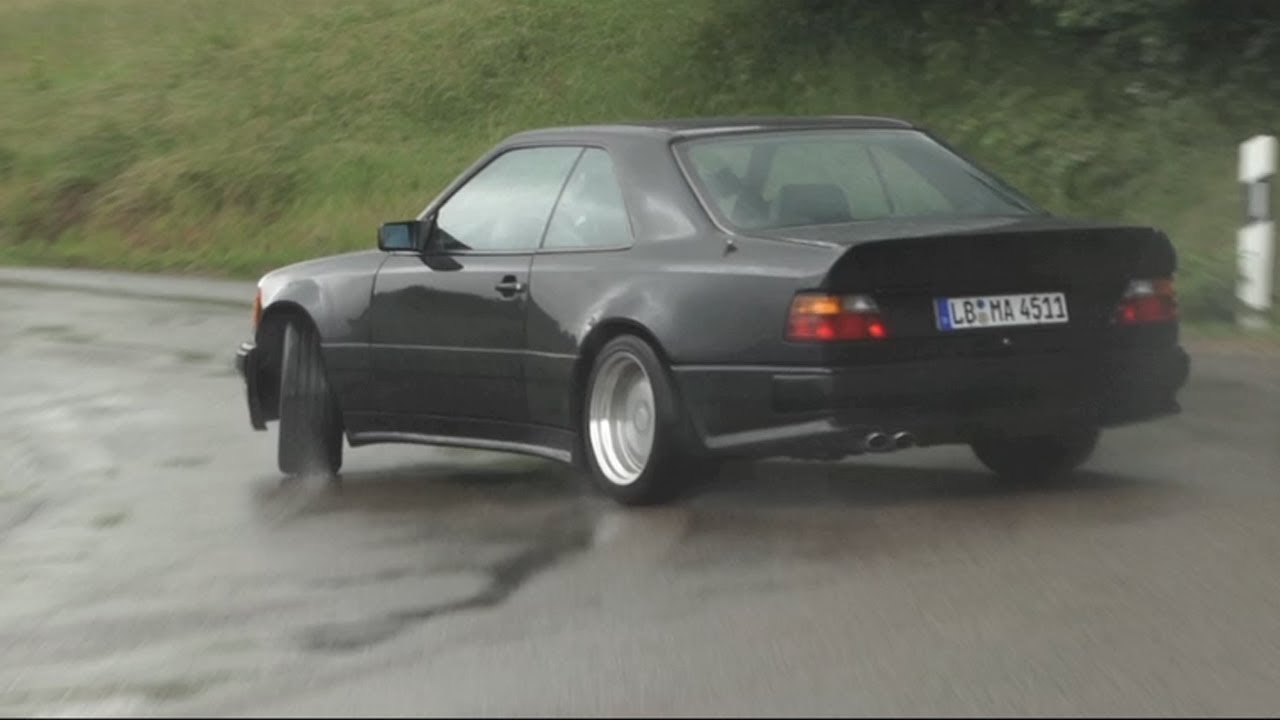
Let’s imagine that this isn’t just an isolated incident. Maybe the Germans are tired of driving expensive, self-destructive, massive transportation pods. They want something that reminds them of their dad’s AMG Hammer, their grandpa’s Mercedes-Benz 450SEL 6.9, their uncle’s Audi Quattro. They want something different. Something real. The Mustang will continue to sell in droves. Soon, the mighty roar and scream of the Dodge Challenger Hellcat will be heard across the Atlantic on the last unrestricted sections of the Autobahn. Trails once populated by Nissan Patrols and Mercedes-Benz G-Classes will be filled to capacity with Jeep Wrangler Rubicons. You’ll hear the bellowing shriek of the Corvette Z06 at the Nurburgring and the Hockenheimring. What’s that massive hulking truck taking up the tiny country road? Is it really a Ford F-250?

OK, I’m going to start to wrap this up. What does this all mean? No matter what happens, there is a very important lesson to be heard. American automakers got lazy during the late 1970s through the late 1980s. This in turn allowed German automakers to bring us incredible cars. Can you imagine picking a Lincoln Versailles over a BMW 528i, or picking a Cadillac DeVille over a Cosworth-powered Mercedes-Benz 190E 2.3-16 (2.3 is the engine size in liters, 16 is the number of valves)?

If German car enthusiasts are buying a Ford Mustang over a BMW M4 or a Porsche Cayman, that should be a message ringing loud and clear in automotive executive boardrooms all over Europe. The last time something like this happened, it was in 1989 with the Lexus LS400. That sent BMW, Mercedes-Benz, Audi, and Lincoln scrambling back to their drawing boards. In turn, that gave us such gems as the BMW 740i, a wonderful crisp, clean cruiser plagued by electronic maladies, and the Lincoln Town Car, which was a great car held back by the fact that it had a horrific drivetrain. The Lexus LS400 also inspired hideous cars like the early 1990s version of the Mercedes-Benz S-Class, which had so many electrical problems it was a miracle if the door opened.

It seems like it might be America’s turn. The German Big Three put peanut butter on their homework and gave it to their dog. America did the same thing 30 years ago, but they have made massive strides with their cars.

All of this is not to say that the BMW M4, Porsche 911, Cayman, Boxster, and Audi TT are horrible cars. In fact, it’s quite the opposite. They are all incredible performance cars that many of us would love to own, or at least go for a spirited drive in. This is a golden age of automotive performance, and the performance cars put out by various manufacturers (American or otherwise) are fantastic.


What You Should Fill Your Two Car Garage With

If you had such strong brand loyalty that you had to fill your two-car garage, what car combinations would they be? Here are mine. Tell me what you would fill your garage with!

  • BMW i8 and X5 M: For the moment, the closest thing to a spaceship you’ll get is the BMW i8. It has liberal use of carbon fiber, and it’s fast enough for most of us mortals. The X5 M is fast, luxurious, comfortable, and can haul a lot of people or random things you get. The funny thing is that the i8 gets better fuel economy than the X5 M, and the X5 M is almost as fast as the i8. Sounds like a good combination to me!
  • Cadillac CTS-V and Escalade: Cadillac aimed for the throat when they introduced  the CTS-V in 2004. That hasn’t changed one bit, and we should be grateful. The CTS-V uses a barely-detuned version of the Corvette Z06’s LT4 motor. If you need to haul a bunch of people in the lap of luxury, go for the Escalade. The Escalade radically changed the SUV game in 1999. This might be even better than the BMW combination.
  • Chevrolet Corvette Z06 and Colorado Z71: The Corvette Z06 is the automotive equivalent of a fighter jet that an inexperienced pilot can dogfight in. The Z06 will hold it’s own against a flat-out racecar on a track, but you can daily drive it. However, you’d be better off daily driving the Colorado Z71. Get the Colorado with the Duramax diesel engine, and you’ll get great fuel economy and have more fun than with a gasoline-powered Colorado in the process.
  • Ford Mustang Shelby GT350 and F-150: You’ll get the utmost in performance with the Mustang Shelby GT350. Road & Track named it their Performance Car of the Year. I can’t say the 2017 F-150 SVT Raptor is the perfect garage-mate for it because it hasn’t come out yet. You’ll have to make do with the F-150, which is a great truck in it’s own right. Plus, good luck carrying anything bigger than a shopping bag or briefcase in your Mustang.
  • Jeep Wrangler Rubicon and Grand Cherokee SRT-8: Few unmodified cars can do as well off-road as a Jeep. However, when you build one towards the heavens to explore places few others have been, they tend to be horrific on the street. See, the solution to that is to have a Grand Cherokee SRT-8 for actual streets. If you’re only going to drive a Jeep on the streets, it might as well have 475 horsepower…
  • Mercedes-Benz AMG GT and E63 AMG wagon: Mercedes has a giant killer on their hands with the spectacular AMG GT. We shall see if it will topple the giant that is the Porsche 911. Either way, the AMG GT is a fantastic driver’s car. In fact, Motor Trend named it their Best Driver’s Car. If you need more utility than a two-seat supercar can offer you, but still want to go fast, get the E63 AMG wagon. It’s slower than the AMG GT, but you can take the whole family with you.
  • Porsche 911 GT3 RS and Macan Turbo: Unless you go out and buy a legitimate race car, the Porsche 911 GT3 RS is the closest you’ll get. It’s street legal, so you can drive it to the track. It won’t be at all fun with potholes, speedbumps, and road imperfections, so fill out your garage with a Macan Turbo. If you squint hard enough, you could convince yourself it’s just a hatchback with really big wheels.
  • Tesla Model S P90D and Model X P90D: I’m sure that most of us would love to own a Tesla. The Model S was a groundbreaking car. The Model X is pretty damn cool as well. I’m still holding out for the Model 3, and would love to see a Tesla Roadster version 2.0, but this would be the perfect electric garage.
  • Volvo S60 Polestar and XC90 T8: I’ve always been a fan of Volvos. However, very few of their cars are truly exciting. However, the S60 Polestar is by far the sportiest car that Volvo has offered in a very long time. The XC90 rivals Range Rovers in terms of luxury, but at a much lower price. Go for the T8, and you’ll have a 400 horsepower hybrid to play around with. How can you not love that?
  • Mazda Miata and Miata Cup Racer: It’s just like with Jeeps. If you buy one to build it up to win races, you should have a stock one to drive around. With the ND generation (4th generation) of the Miata, you can get a stock Miata for daily driving, and a full-out race car. The Miata Cup Racer costs a tad more than $50,000, and a loaded stock Miata goes for around $30,000. While not everybody can afford both of these Miatas, it’s likely that nobody on this list could buy the combinations of cars I’ve listed.

The Vehicles That Forever Changed the Automotive Landscape

These are not the best cars ever made.  Rather, they are the cars that have shaped modern cars.  I hope that you enjoy my list.  Please share any corrections if you feel necessary.

  • Ford Model T:  This was the car that made the production line possible.  It was also the car that made cars affordable to the American public.  Ford produced well over 15 million of them before production ended in 1927.  They are fairly simple to own, and they can keep up with city traffic if you want.  With so many built, there are many clubs and associations for the Model T all over the country.  Just look up “Ford Model T club <insert your area here>” on Google.  I can practically guarantee you that there is at least one club that you can join if you are the new owner of a Model T.  People drive them all over the place on tours.  You can take one into Alaska if you so please.  There are always plenty for sale anywhere between $10,000-40,000.  If you want to daily drive one, all you need is a good arm to crank-start it, and some adjustments to the timing.  Just retard the timing a big, be gentle with the gas, and you’ll have a car that gets up to 35 mph.  That’s plenty good for most city driving.
  • 1916 Cadillac Type 53:  Every single modern car owes a lot to this Caddy.  It was the first car EVER to come from the factory with an electric starter and a modern control layout, both of which we take for granted today.  The Type 53 wasn’t popular with Americans or the world, mostly because of it’s price (about $3,000).  However, the Austin Seven copied the Caddy and set the die for all cars to come.  Yet, I still credit the Cadillac.
  • 1932 Ford:  This was the first affordable car available to the American public with a V-8 engine.  It had a flathead V-8 making a whopping 85 horsepower.  Today, that’s comparable to a car making 500 horsepower from a V-6 (not unheard of).  Anyhow, it was affordable to some Americans.  It became known as “The Deuce,” as did the third-generation Chevrolet Nova.  It was the fastest affordable car of it’s day, which is why it was the escape vehicle of choice for Bonnie and Clyde.  It’s unclear how many were made, but it’s estimated that well over 1.5 million were sold.  Remember that Ford was selling these cars in 1932, right before the peak of the Great Depression!  It became one of the most popular cars to hot rod.  I want one, and we can call ourselves lucky that there are reproduction steel bodies, chassis (yes, that is plural and singular), and used engines aplenty.  How’s that for cool?  You can build your very own reproduction Deuce for about $20,000.  It’s going to be so much more fun than that Corolla you’ve had your eye on.
  • Willys/Bantam/Ford Jeep:  WWII veterans say that the Jeep was the vehicle that won WWII.  They are right.  It can still embarrass most purpose-built vehicles on a dirt road or in mud.  It was the first 4X4 to be sold to the American public en masse, and it proved to be popular.  After WWII, Willys decided to market the Jeep as an alternative to a tractor for farmers.  Chrysler still rakes in hundreds of millions on new Jeep Wranglers every year.  It’s truly an iconic vehicle.
  • 1948 MG TC:  This little wood-framed British roadster is what allowed such amazing cars as the Lotus Elise, Mazda Miata, and even the mighty Shelby Cobra to be.  Every single great American racing legend – Carroll Shelby, Phil Hill, Richie Ginther, and many others got their start in an MG TC.  On a winding road, this little car that only made 55 horsepower and 64 lb-ft of torque would simply run away from any American car, regardless of power output.  Much of what we hold dear as an automotive enthusiast was started by this little car.  It’s influence on every single sports car from 1948 on is immeasurable.  It’s still fast enough to embarrass a modern Chevy Camaro Z/28 on a windy road.  That’s pretty damn fast for a car that makes 450 less horsepower.
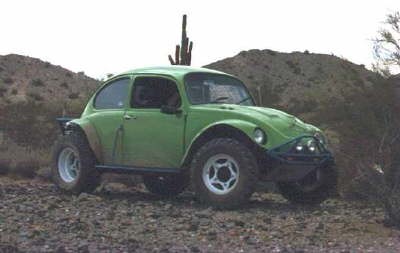
  • VW Beetle Type 1:  It’s the single most-produced car in history.  It’s an elegantly simple design that has stood the test of time better than most cars produced at the same time.  It was the foundation for the legendary Porsche 356, Meyers Manx dune buggy, and VW Transporter bus.  It was FWD, came as either a convertible or a coupe, had a tiny rear-mounted four-cylinder engine, and cost far less than any new American car on the road.  It became extremely popular with people of all ages and demographics.  Many new parents went out and bought a Beetle, and it would serve millions of families around the world faithfully for 20 years or more without major problems.  Most new cars can’t say that.  In the hippie movement, it became extremely popular.  Once the off-roading community got their hands on one, the legendary Baja Bug was born.  It is still fast enough to keep pace with a modern Trophy Truck in the horrible dirt roads of Baja, or the sand dunes of Pismo Beach.  Almost every desert town in the world will have at least several Baja Bugs running around.  It’s fast, sturdy, and capable, yet can be driven around town without complaining.  And the best part is you can build yourself one for about $5,000!  That’s not including a starter vehicle, by the way!  My grandparents owned one.  You probably know somebody who’s owned one.
  • Toyota 2000GT:  This was the car that put the Japanese automotive industry on notice with the world.  It was a more expensive alternative to the Jaguar E-Type, Chevrolet Corvette, Ford Thunderbird, Porsche 911, and the like.  It’s achingly gorgeous, and only a handful were built.  It’s also achingly expensive.  Toyota proved that they could hang with whatever Europe happened to build.  James Bond drove one.
  • Lamborghini Miura:  It’s not the quintessential Lamborghini – that goes to the equally-amazing Countach, but it set the standard for supercars.  It came around because Ferrucio Lamborghini wanted to build a better Ferrari.  When Lamborghini was going to debut the Miura concept car at the Geneva Motor Show in 1965, they didn’t even have a body!  They had a chassis with a V-12, a transmission, and wheels.  That was it.  However, the Miura looks absolutely stunning.  It’s one of the most beautiful cars ever built, and every single supercar owes a lot to the Lamborghini Miura.
  • Citroen DS:  When it debuted in 1955, it was the most technologically-advanced car in the world.  It had hydraulic suspension, a streamlined fiberglass body shell, four wheel disc brakes, a twin-cam V6, and many other technological innovations.  It was one of the first truly modern cars.  One can compare it to the Tesla Model S.  That’s how revolutionary it was.
  • 1955-1957 Chevrolet 210/Bel Air:  The Tri-Five Chevrolet’s are some of the most beautiful cars ever produced.  My personal favorite is the 1957 Chevrolet Bel Air coupe.  The 1955 Chevy became forever immortalized with Two Lane Blacktop and American Graffiti.  Yes, the sinister ’55 is the same car in both movies!  The 1955 Chevrolet introduced the revolutionary Chevrolet small-block (Mouse motor) V-8 to the world.  The 1957 Chevy Bel Air with the 283 cubic-inch V-8 and Rochester mechanical fuel injection became legendary on NASCAR tracks and dragstrips around the country.  It was as fast the Jaguar E-Type 10 years later.  I’m still wanting one!
  • Austin Mini:  Alec Issigonis sketched it on a bar napkin.  He never knew that it would become one of the most popular vehicles of the 20th century.  Let’s forget that it’s a cultural icon for a moment.  It was the first FWD car to come with a transversely-mounted engine (the engine was mounted sideways), which means that it’s the template for most FWD cars on the road today.  It became a motorsports icon in everything from endurance racing to rally racing.  It also became iconic in several movies – The Italian Job, The Bourne Identity, Mr. Bean, and Goldmember.  It’s also a major cultural icon.
  • Ford Explorer:  This was the vehicle that kicked off the SUV craze of the 1990s-today.  It was based off of the lowly Ranger pickup, but had a comfortable interior and the second generation had good looks.  It’s still a best-seller today.  It’s popular with the off-road community because it’s a Ranger with more space for people.  My parents owned one.  You probably know somebody who’s owned one.
  • Shelby Cobra:  Yeah it’s an obvious one for this list.  Carroll Shelby took a British roadster, and put a small-block Ford motor from the Mustang into it.  Then, he went hog-wild and put a big-block Ford into it.  That catapulted the Shelby Cobra into automotive fame.  Anybody who knows something about cars knows of the Shelby Cobra.  It could hang with anything.  It could beat a Chevrolet Corvette with the coveted L88 big-block V-8 in the curves and straightaways.  It dominated endurance and road racing for a glorious 3 years before Shelby stopped production of it.  It also dominated the NHRA Pro Stock drag racing class for a few years.  Today, there are at least 20 different companies who will sell you a Cobra replica.  Get a Factory Five replica.  It’s Shelby of North America licensed, and it comes with modern mechanical parts, yet can still hang with a modern hypercar.  
  • Chevrolet El Camino:  In it’s first generation, it was quite a looker.  Chevy didn’t sell too terribly many of the Impala-based ute, but you’ve probably seen a few driving around your town/city.  The second generation proved to be much more popular.  It was based off of the massively popular Chevelle, and you could get one with the rare, coveted LS6 V-8.  I remember reading an article about an owner of an LS6 Elco (a nickname for the El Camino), and he said that he has to drive it around with sandbags in the bed to keep it from spinning out.  That’s what happens when you have a massively-underrated 450 horsepower and no weight over the rear tires.  If you could get it to hook up, it would go through the 1/4 mile in 13 seconds flat at 125 mph.  That’s about as fast as a modern sports car.  I’ve heard driving one isn’t any different than driving a Chevelle, except for throttle modulation.  Flooring it from a stop, even with the still-powerful 327 cubic-inch V-8 will give a glorious burnout.  I want one.
  • 1968-1970 Dodge Charger/Charger 500/Daytona:  The second-generation Dodge Charger is one of the most beautiful cars ever built.  It’s got muscular elegance.  It had curvy “Coke Bottle” styling, and a plethora of engine choices.  The base engine was the “poly” 318 cubic-inch small-block V-8 that stayed in production in one form or another from 1959-2004.  The next step up was the 383 cubic-inch “Commando” big-block V-8.  After that, it was the 440 “Super Commando” big-block V-8.  One rung above that was the 440 Six Pack – a 440 with three two-barrel Holley carburetors.  The top of the ladder was the mighty 426 HEMI “Elephant Motor” big-block V-8.  The Charger 500 was designed for NASCAR, so it had a rear window flush with the body, along with other small aero modifications.  The Daytona was truly legendary.  Only 503 were sold to the general public, only 70 of which had the 426 HEMI.  The rest had the 440 Six Pack.  It was designed for NASCAR superspeedways, and it truly dominated.  It looked comical with it’s 19-inch long nose cone and nearly two-foot tall rear wing.  The only reason the wing was so high is that anything shorter and the trunk wouldn’t close! The Charger was catapulted into fame by The Dukes of Hazzard for one generation, and for the millenials, they were captivated by the supercharged 1968 Charger used in Fast & Furious.
  • Datsun 240Z:  This little Japanese sports car wasn’t a smashing success, but it certainly left it’s mark on sports cars.  It was light, looked drop-dead gorgeous, had a reliable, powerful engine, and a five-speed manual transmission.  Very few cars at the time had a five-speed.  All of that combined meant that it was a serious threat on a windy road.  Today, they are becoming collector cars, which is a shame, as they are built to be driven.  That’s not to be said that you can’t find a cheap one – you still can.  Hot rodders who are enamored by Japanese cars, but love the power of an American V-8 put a Chevy small-block V-8 and some suspension bits in, and have one hell of a ride.  My grandparents and dad owned one.
  • Audi Quattro:  This AWD notchback with a turbocharged 5-cylinder engine was so successful on the rally circuit that AWD was banned from the sport for about 10 years.  Stock, it’s not at all reliable (except for the first two years of production), but upgrading the engine internals will give you a strong, reliable, fast, and cool daily driver.  It’s truly an all-weather car.  I chose this car because of the impact that it had on rallycross and rally racing.  Any car with AWD past 1985 would have been much worse if it weren’t for the Audi Quattro.  My uncle owned one.  He should have kept it and given it to me.
  • Ford Mustang:  This was the car that started the ponycar craze.  No matter how much Ford hypes it as a muscle car (and Chevy with the Camaro), it IS NOT and never will be.  It is a pony car.  The Dodge Challenger is a muscle car.  Sorry Ford, but I’m just stating the truth.  Don’t shoot the messenger.  That being said, Ford introduced a whole new type of car to America.  Buying a Mustang with the base six-cylinder engine meant that you were carefree but had to watch your cash.  Getting it with the V-8 meant that you were carefree, but who cared about money – you only live once!  Getting it as a convertible only reinforced that.  The Shelby GT350 Mustang of 1965 was part of a deal with Hertz where you could rent the car on Friday, drive it to the racetrack on Saturday, race and win, go again on Sunday and win, and then drive it back to the rental lot.  It was somewhat streetable, but it really did well on the racetrack.  Carroll Shelby originally didn’t want to do it – he told Lee Iaccoca that “Lee, you can’t make a racehorse out of a mule.”  Yet that so-called mule became a massive racing success.  It’s still in production 50 years later.  Many American moms went from a station wagon to a Mustang and never looked back.
  • Pontiac GTO:  Originally offered as a package on the mid-size Tempest in 1963, the GTO took the thundering 389 cubic-inch V-8 from the Le Mans and shoved it into the considerably smaller Tempest.  It was a smashing success, so Pontiac decided to turn it into it’s own model in 1964.  It was much more popular that way, and the ultimate model was the 1969 Judge Ram Air IV.  It came with the then-new 455 cubic-inch V-8 and a functional Ram Air hood (the Ram Air package came in four stages), a Muncie M-22 “Rock Crusher” transmission, and bodywork that let you know that you really were king of the street.  It was truly stunning, especially in green.  It went dormant for 20+ years before appearing as a rebadged Holden Monaro in the US.  It wasn’t very popular.  It’s probably because Ford launched the retro-styled S197-generation Mustang right around the same time.  The 2004-2006 GTO looked nothing at all like any other GTO.  It didn’t look very good.  Nowadays, the modern “Goat” is popular with hot rodders who want to have all of the modern conveniences and glorious power.  Some even take the body off of the GTO and put on a classic car’s body.  Voila, you have a car that looks like a classic, but handles and drives like a new car.  Plus, they are easy to put bigger engines in.  Drifters are starting to find them.  Beware.
  • Lexus LS400:  This big Lexus was the car that sent Germany scrambling back to the drawing board.  The LS400 competed with the Mercedes-Benz S-Class and BMW 7-Series.  The German cars were stodgy cruisers that were heavy, large beasts on the street, but smooth on the highway.  The Lexus took that trademark Japanese agility and feeling of being a smaller car, threw in a buttery-smooth engine and transmission (the ads showed a champagne flute on the hood while the engine revved.  The champagne never overflowed – or came close to that!), a sumptuous leather interior, and made it a fun car to drive.  Lexus kept it in production from 1989-2000 in one basic form or another.  It sold well, and is a completely bulletproof car in terms of reliability.
  • Chevrolet S-10:  OK, I am a bit biased on this, but hear me out.  The Chevrolet S-10 replaced the dismal LUV pickups of the 1970s in 1982.  It came with an underpowered 4-cylinder engine or a more powerful 2.8-liter V-6.  In 1988, Chevy added their new 4.3-liter V-6 to the S-10.  It literally doubled the towing and hauling capacity, as well as making it a far more enjoyable truck to drive.  My S-10 is a 1989 Tahoe model.  That means that it was top of the line.  It has a cloth interior, an AM/FM radio, air conditioning, and it has fuel injection (the 1988 model had a carburetor).  You could get it as a regular cab or an extended cab.  Bed sizes were a 5-foot bed or a 6.5-foot bed. That’s not huge, but for somebody in a crowded city who needs a pickup, it’s perfect.  You could get it in 2WD or 4WD.  Mine is 2WD.  It was wildly successful, and you can still see a lot on the road.  Some people are taking modern Chevy LS3 E-Rod engines (smog-legal V-8’s) and stuffing them into an S-10.  They’re quite the sleeper.
  • Porsche 911 Turbo:  When it first debuted in 1975, it was a total animal of a car.  Lift off of the gas going into a corner, and you’d hit the guardrail with the backside of the car.  You had to keep your foot in it.  It made an underrated 276 horsepower (think closer to 350), had no ABS, a clutch that was so stiff that some had to literally push their leg down to depress the clutch, and a 5-speed manual transmission.  It was a total monster of a car that dominated the racing circuits, but was completely and totally unstreetable.  But, put one on a windy canyon road, modulate the throttle, and you had a recipe for speed.  Porsche still makes it.  However, it now makes a ridiculous 520 horsepower, and is truly the ultimate all-weather supercar.
  • Ford GT40:  This was the car that dominated endurance racing during the 1960’s.  It was the result of Enzo Ferrari refusing to sell his company to Ford in 1964.  Henry Ford II decided to beat Enzo Ferrari at his own game on his own turf.  Talk about owning a bully.  The GT40 was aerodynamic, muscular-looking, and was built for racing.  Ford built about 20-40 for the street (it’s unclear how many).  The first models came with a Shelby-tuned 289 cubic-inch V-8 that made 300 horsepower via a tri-power (three two-barrel carburetor) setup and forged internals and an Isky cam.  This engine was so durable that when Ford disassembled the engine after the season was over, it looked brand-new.  Later models came with Ford’s mighty 427 cubic-inch FE-Series “Cammer” engine.  This engine was the same one in the Shelby Cobra.  It made about 500 horsepower.  Both engines were mated to a four-speed manual.  The GT40 simply dominated the 24 Hours of Le Mans and 24 Hours of Nurburgring.  It was insanely fast, and it could be heard from over a mile away.  It beat Ferrari at their own game for years, before the FIA changed the rules, and both Ferrari and Ford had to comply.  Ford pulled out of Le Mans endurance racing for 20+ years and let Ferrari dominate.


Yes, that is a young Harrison Ford standing next to one of the most iconic hot rods ever.  It’s a 1932 Ford Hi-Boy (the body was lifted off of the frame so the frame could be tweaked).  It has a Chevy 283 cubic-inch small-block V-8 with crackling sidepipes.  This was the car that made me appreciate the little deuce coupe.

This is a fuelie 1957 Chevy Bel Air.  It became known as the “Black Widow” because it only came in black with white tape stripes, a black-and-white interior, and the red center caps on the wheels.

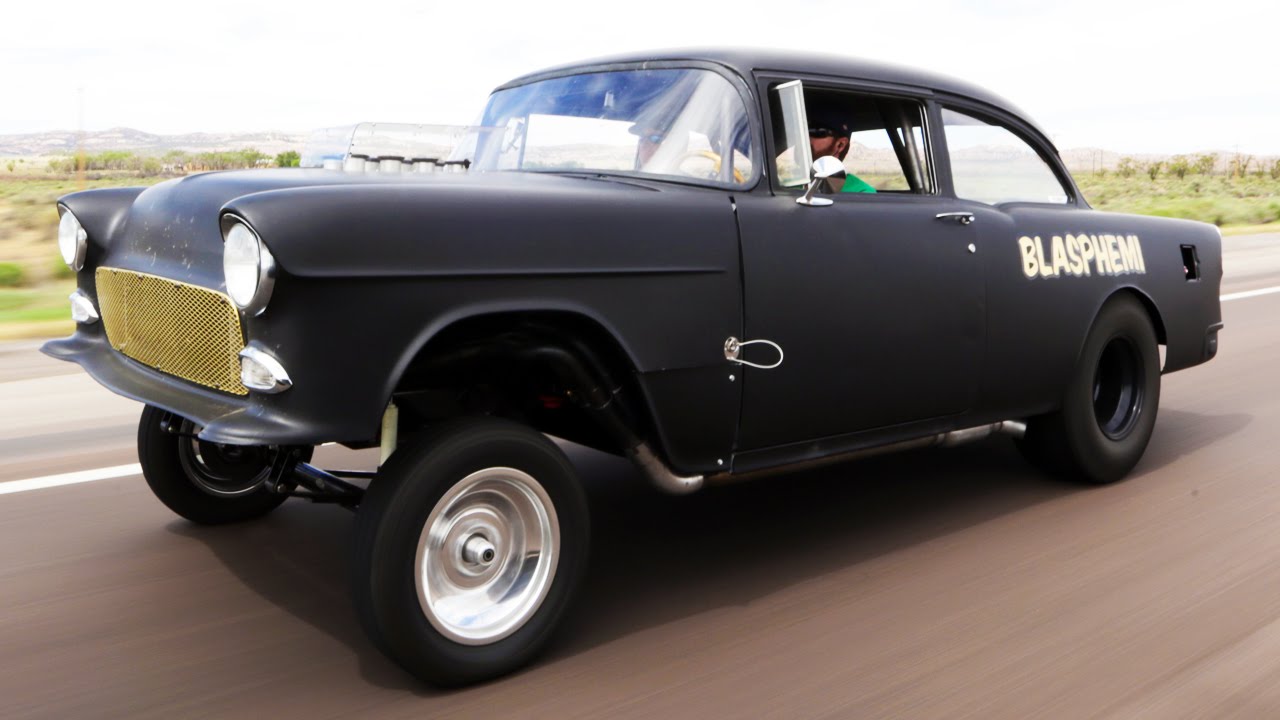
This is a gasser.  Gassers got their name because of the drag racing class they were in (B/Gas or blown/gas).  They had big engines with no supercharger, or smaller supercharged engines.  Look up “Roadkill Blasphemi” on YouTube for the build and cross-country blitz of one of my favorite cars – “Blasphemi.”

This is probably the ultimate Shelby Cobra.  It’s called the “Super Snake” because it has twin superchargers on top of an already-powerful engine.  Bill Cosby almost bought one, but took it on a test drive and thought he was going to die.  Carroll Shelby bought it.  Only two were made, but it was incredibly fast.  It’s rumored that in testing the car hit 210 mph – in 1966!  To me, it’s the ultimate factory hot rod.

This is a 1969 Dodge Daytona replica made by a host of the /DRIVE Network, Mike Musto.  It’s one of my favorite cars ever.  He took a 1969 Charger and turned it into a Daytona.  It’s the ultimate cross-country cruiser.  Just looking at it sends shivers down my spine.

The only stock part about this Mustang is the roof, A-pillar, and C-pillar.  It’s the latest creation from the brilliantly mad folks at RTR and Hoonigan.  Ken Block had it built.  It’s got a stroked NASCAR-spec engine that makes 850 horsepower that goes to all four wheels.  That’s right, this car is AWD.  You need to watch “Gymkhana 7” if you haven’t already.  It’s simply amazing.


The Seven Most Significant Carroll Shelby Cars Ever!

Carroll Shelby was a guy who built cars the way that they should be built.  This meant that every single Shelby creation was a masterpiece.  He is best remembered for the 1963-1966 Cobra, but he also built many more cars that are noteworthy.  The racer-turned-chicken-farmer-turned-respected-tuner was an amazing guy who did much, much more than make fast cars go faster.  After his heart transplant, he started a foundation.  His foundation, Carroll Shelby Foundation helps fund heart surgeries for children.

  1. 1965 Ford Mustang Shelby GT-350.  The Ford Mustang was an affordable musclecar.  It was fast in a straight line, but it wasn’t meant to go around corners.  When Lee Iaccoca called Carroll Shelby in 1965, Carroll Shelby told Iaccoca, “Lee, you can’t make a racehorse out of a mule.”  Yet, the 1965 Shelby Mustang GT-350 was one of the fastest cars of the decade.  It used Ford’s all-aluminum 289 cubic-inch V8, a Muncie M-22 “Rock Crusher” transmission, and tons of suspension and chassis modifications.  It was available through a “Get it Friday, Race it Saturday and Sunday, and Drive it Back Monday” program through Hertz.  The GT-350K was the highly successful racing version.
  2. 1965 Shelby Cobra Daytona Coupe.  The Shelby Cobra is one of the world’s most iconic cars, let alone America’s.  It used a stylish, lightweight British AC Ace body and chhassis, a Ford V8, and way too much fun for one person.  The most iconic Cobra was the 427 Cobra, which utilized Ford’s new, all-aluminum 427 cubic-inch V8 that was designed to compete with the 426 Hemi (the engine Shelby originally wanted for the Cobra).  That turned it into one of the fastest cars ever.  In late 1964, the 427 Cobra enjoyed massive racing success, but it didn’t have enough aerodynamic oomph for the long straights at Le Mans.  So, Carroll Shelby had Peter Brock design the Cobra Daytona Coupe.  The Daytona Coupe made a 1-2-3 finish at Sebring International Raceway, and it then went on to win the same finish at Le Mans, putting it 4th overall behind three Ferrari prototypes.
  3. 1965 Shelby Cobra 427.  Arguably the most iconic Shelby ever built, the 427 Cobra was a monster.  It used Ford’s race-proven 427 cubic-inch V8, and your Pontiac GTO or Chevrolet Camaro RS would run for mommy.  The 427 Cobra was a fairly neutral car in terms of handling, even when you got your foot into it.  Even then, it was predictable. Yet, when those 480 pound-feet of torque kicked in at 6,000 RPM, you’d better be holding onto something and have a lot of road ahead of you.  It tipped the scales at just over 2,700 pounds, and the big Ford V8 made a beautiful sound when you nailed it.
  4. 1968 Ford Mustang Shelby GT500KR.  The GT500KR used Ford’s all-new 428 Cobra Jet engine, which was kind of a loud, torquey boat anchor in stock form, but Shelby had a few tricks up his sleeve.  He took the cylinder heads and manifolds from the 427 racing engine, and raised the redline by 1,000 RPM.  This engine gained almost 30 horsepower just by that.  Car Life said of the car in 1968, “At 6000 RPM, the Cobra Jet will pull a semi trailer up Pikes Peak.  At less than 2000, it wouldn’t pull the petals off of a daisy.”  People still rave over the engine almost 50 years later.  It was docile under 2,000 RPM, but it came alive above that.
  5. 1986 Dodge Omni Shelby GLH-S.  The little Dodge Omni was a pretty decent little car, but Carroll Shelby slapped a turbocharger and suspension upgrades onto this little car.  It started the hot-hatch craze, and it still shames many hot hatches today.  It was a sleeper.  Many automotive magazines said that it would leave two very skinny, long tire marks through third gear.  If that’s not impressive, I don’t know what is.
  6. 2002 Shelby Series 1.  The Shelby Series 1 was the last Shelby to actually be built from the ground up by Shelby.  It used an Oldsmobile Aurora V8, a GM 700R4 transmission, and a Ford 9-inch rear-end.  Many people complained about the fact that it felt like an unfinished car.  You know what?  Let them yammer.  it was fast, fun, and stylish.
  7. 2013 Ford Mustang Shelby GT500.  This Mustang deserves to be on this list.  It was the last car to have personal oversight by Carroll Shelby, and it shows.  Shelby took the supercharged 5.4-liter V8 found in the 2012 GT500, and stroked it out to 5.8 liters. It gained 112 horsepower with the stroking of the engine and other tricks.  It uses Mahle pistons, a Tremec TKO600 transmission, a single-overhead-cam, a special Comp Cams valvetrain, and a big 2.3-liter Eaton supercharger.  The engine only gained about 50 pounds, thanks to extensive use of aluminum and titanium.  Ford claims that it will go 200+ miles an hour.  Motor Trend got one up to 197 mph, but I bet that if it was given enough open road, they would see at least 200.  When it was dyoned, it topped the dyno out at 211 mph, and it was still pulling.