The Vehicles That Forever Changed the Automotive Landscape

These are not the best cars ever made.  Rather, they are the cars that have shaped modern cars.  I hope that you enjoy my list.  Please share any corrections if you feel necessary.

  • Ford Model T:  This was the car that made the production line possible.  It was also the car that made cars affordable to the American public.  Ford produced well over 15 million of them before production ended in 1927.  They are fairly simple to own, and they can keep up with city traffic if you want.  With so many built, there are many clubs and associations for the Model T all over the country.  Just look up “Ford Model T club <insert your area here>” on Google.  I can practically guarantee you that there is at least one club that you can join if you are the new owner of a Model T.  People drive them all over the place on tours.  You can take one into Alaska if you so please.  There are always plenty for sale anywhere between $10,000-40,000.  If you want to daily drive one, all you need is a good arm to crank-start it, and some adjustments to the timing.  Just retard the timing a big, be gentle with the gas, and you’ll have a car that gets up to 35 mph.  That’s plenty good for most city driving.
  • 1916 Cadillac Type 53:  Every single modern car owes a lot to this Caddy.  It was the first car EVER to come from the factory with an electric starter and a modern control layout, both of which we take for granted today.  The Type 53 wasn’t popular with Americans or the world, mostly because of it’s price (about $3,000).  However, the Austin Seven copied the Caddy and set the die for all cars to come.  Yet, I still credit the Cadillac.
  • 1932 Ford:  This was the first affordable car available to the American public with a V-8 engine.  It had a flathead V-8 making a whopping 85 horsepower.  Today, that’s comparable to a car making 500 horsepower from a V-6 (not unheard of).  Anyhow, it was affordable to some Americans.  It became known as “The Deuce,” as did the third-generation Chevrolet Nova.  It was the fastest affordable car of it’s day, which is why it was the escape vehicle of choice for Bonnie and Clyde.  It’s unclear how many were made, but it’s estimated that well over 1.5 million were sold.  Remember that Ford was selling these cars in 1932, right before the peak of the Great Depression!  It became one of the most popular cars to hot rod.  I want one, and we can call ourselves lucky that there are reproduction steel bodies, chassis (yes, that is plural and singular), and used engines aplenty.  How’s that for cool?  You can build your very own reproduction Deuce for about $20,000.  It’s going to be so much more fun than that Corolla you’ve had your eye on.
  • Willys/Bantam/Ford Jeep:  WWII veterans say that the Jeep was the vehicle that won WWII.  They are right.  It can still embarrass most purpose-built vehicles on a dirt road or in mud.  It was the first 4X4 to be sold to the American public en masse, and it proved to be popular.  After WWII, Willys decided to market the Jeep as an alternative to a tractor for farmers.  Chrysler still rakes in hundreds of millions on new Jeep Wranglers every year.  It’s truly an iconic vehicle.
  • 1948 MG TC:  This little wood-framed British roadster is what allowed such amazing cars as the Lotus Elise, Mazda Miata, and even the mighty Shelby Cobra to be.  Every single great American racing legend – Carroll Shelby, Phil Hill, Richie Ginther, and many others got their start in an MG TC.  On a winding road, this little car that only made 55 horsepower and 64 lb-ft of torque would simply run away from any American car, regardless of power output.  Much of what we hold dear as an automotive enthusiast was started by this little car.  It’s influence on every single sports car from 1948 on is immeasurable.  It’s still fast enough to embarrass a modern Chevy Camaro Z/28 on a windy road.  That’s pretty damn fast for a car that makes 450 less horsepower.
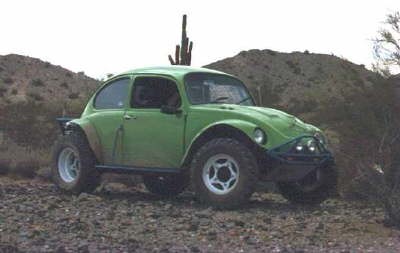
  • VW Beetle Type 1:  It’s the single most-produced car in history.  It’s an elegantly simple design that has stood the test of time better than most cars produced at the same time.  It was the foundation for the legendary Porsche 356, Meyers Manx dune buggy, and VW Transporter bus.  It was FWD, came as either a convertible or a coupe, had a tiny rear-mounted four-cylinder engine, and cost far less than any new American car on the road.  It became extremely popular with people of all ages and demographics.  Many new parents went out and bought a Beetle, and it would serve millions of families around the world faithfully for 20 years or more without major problems.  Most new cars can’t say that.  In the hippie movement, it became extremely popular.  Once the off-roading community got their hands on one, the legendary Baja Bug was born.  It is still fast enough to keep pace with a modern Trophy Truck in the horrible dirt roads of Baja, or the sand dunes of Pismo Beach.  Almost every desert town in the world will have at least several Baja Bugs running around.  It’s fast, sturdy, and capable, yet can be driven around town without complaining.  And the best part is you can build yourself one for about $5,000!  That’s not including a starter vehicle, by the way!  My grandparents owned one.  You probably know somebody who’s owned one.
  • Toyota 2000GT:  This was the car that put the Japanese automotive industry on notice with the world.  It was a more expensive alternative to the Jaguar E-Type, Chevrolet Corvette, Ford Thunderbird, Porsche 911, and the like.  It’s achingly gorgeous, and only a handful were built.  It’s also achingly expensive.  Toyota proved that they could hang with whatever Europe happened to build.  James Bond drove one.
  • Lamborghini Miura:  It’s not the quintessential Lamborghini – that goes to the equally-amazing Countach, but it set the standard for supercars.  It came around because Ferrucio Lamborghini wanted to build a better Ferrari.  When Lamborghini was going to debut the Miura concept car at the Geneva Motor Show in 1965, they didn’t even have a body!  They had a chassis with a V-12, a transmission, and wheels.  That was it.  However, the Miura looks absolutely stunning.  It’s one of the most beautiful cars ever built, and every single supercar owes a lot to the Lamborghini Miura.
  • Citroen DS:  When it debuted in 1955, it was the most technologically-advanced car in the world.  It had hydraulic suspension, a streamlined fiberglass body shell, four wheel disc brakes, a twin-cam V6, and many other technological innovations.  It was one of the first truly modern cars.  One can compare it to the Tesla Model S.  That’s how revolutionary it was.
  • 1955-1957 Chevrolet 210/Bel Air:  The Tri-Five Chevrolet’s are some of the most beautiful cars ever produced.  My personal favorite is the 1957 Chevrolet Bel Air coupe.  The 1955 Chevy became forever immortalized with Two Lane Blacktop and American Graffiti.  Yes, the sinister ’55 is the same car in both movies!  The 1955 Chevrolet introduced the revolutionary Chevrolet small-block (Mouse motor) V-8 to the world.  The 1957 Chevy Bel Air with the 283 cubic-inch V-8 and Rochester mechanical fuel injection became legendary on NASCAR tracks and dragstrips around the country.  It was as fast the Jaguar E-Type 10 years later.  I’m still wanting one!
  • Austin Mini:  Alec Issigonis sketched it on a bar napkin.  He never knew that it would become one of the most popular vehicles of the 20th century.  Let’s forget that it’s a cultural icon for a moment.  It was the first FWD car to come with a transversely-mounted engine (the engine was mounted sideways), which means that it’s the template for most FWD cars on the road today.  It became a motorsports icon in everything from endurance racing to rally racing.  It also became iconic in several movies – The Italian Job, The Bourne Identity, Mr. Bean, and Goldmember.  It’s also a major cultural icon.
  • Ford Explorer:  This was the vehicle that kicked off the SUV craze of the 1990s-today.  It was based off of the lowly Ranger pickup, but had a comfortable interior and the second generation had good looks.  It’s still a best-seller today.  It’s popular with the off-road community because it’s a Ranger with more space for people.  My parents owned one.  You probably know somebody who’s owned one.
  • Shelby Cobra:  Yeah it’s an obvious one for this list.  Carroll Shelby took a British roadster, and put a small-block Ford motor from the Mustang into it.  Then, he went hog-wild and put a big-block Ford into it.  That catapulted the Shelby Cobra into automotive fame.  Anybody who knows something about cars knows of the Shelby Cobra.  It could hang with anything.  It could beat a Chevrolet Corvette with the coveted L88 big-block V-8 in the curves and straightaways.  It dominated endurance and road racing for a glorious 3 years before Shelby stopped production of it.  It also dominated the NHRA Pro Stock drag racing class for a few years.  Today, there are at least 20 different companies who will sell you a Cobra replica.  Get a Factory Five replica.  It’s Shelby of North America licensed, and it comes with modern mechanical parts, yet can still hang with a modern hypercar.  
  • Chevrolet El Camino:  In it’s first generation, it was quite a looker.  Chevy didn’t sell too terribly many of the Impala-based ute, but you’ve probably seen a few driving around your town/city.  The second generation proved to be much more popular.  It was based off of the massively popular Chevelle, and you could get one with the rare, coveted LS6 V-8.  I remember reading an article about an owner of an LS6 Elco (a nickname for the El Camino), and he said that he has to drive it around with sandbags in the bed to keep it from spinning out.  That’s what happens when you have a massively-underrated 450 horsepower and no weight over the rear tires.  If you could get it to hook up, it would go through the 1/4 mile in 13 seconds flat at 125 mph.  That’s about as fast as a modern sports car.  I’ve heard driving one isn’t any different than driving a Chevelle, except for throttle modulation.  Flooring it from a stop, even with the still-powerful 327 cubic-inch V-8 will give a glorious burnout.  I want one.
  • 1968-1970 Dodge Charger/Charger 500/Daytona:  The second-generation Dodge Charger is one of the most beautiful cars ever built.  It’s got muscular elegance.  It had curvy “Coke Bottle” styling, and a plethora of engine choices.  The base engine was the “poly” 318 cubic-inch small-block V-8 that stayed in production in one form or another from 1959-2004.  The next step up was the 383 cubic-inch “Commando” big-block V-8.  After that, it was the 440 “Super Commando” big-block V-8.  One rung above that was the 440 Six Pack – a 440 with three two-barrel Holley carburetors.  The top of the ladder was the mighty 426 HEMI “Elephant Motor” big-block V-8.  The Charger 500 was designed for NASCAR, so it had a rear window flush with the body, along with other small aero modifications.  The Daytona was truly legendary.  Only 503 were sold to the general public, only 70 of which had the 426 HEMI.  The rest had the 440 Six Pack.  It was designed for NASCAR superspeedways, and it truly dominated.  It looked comical with it’s 19-inch long nose cone and nearly two-foot tall rear wing.  The only reason the wing was so high is that anything shorter and the trunk wouldn’t close! The Charger was catapulted into fame by The Dukes of Hazzard for one generation, and for the millenials, they were captivated by the supercharged 1968 Charger used in Fast & Furious.
  • Datsun 240Z:  This little Japanese sports car wasn’t a smashing success, but it certainly left it’s mark on sports cars.  It was light, looked drop-dead gorgeous, had a reliable, powerful engine, and a five-speed manual transmission.  Very few cars at the time had a five-speed.  All of that combined meant that it was a serious threat on a windy road.  Today, they are becoming collector cars, which is a shame, as they are built to be driven.  That’s not to be said that you can’t find a cheap one – you still can.  Hot rodders who are enamored by Japanese cars, but love the power of an American V-8 put a Chevy small-block V-8 and some suspension bits in, and have one hell of a ride.  My grandparents and dad owned one.
  • Audi Quattro:  This AWD notchback with a turbocharged 5-cylinder engine was so successful on the rally circuit that AWD was banned from the sport for about 10 years.  Stock, it’s not at all reliable (except for the first two years of production), but upgrading the engine internals will give you a strong, reliable, fast, and cool daily driver.  It’s truly an all-weather car.  I chose this car because of the impact that it had on rallycross and rally racing.  Any car with AWD past 1985 would have been much worse if it weren’t for the Audi Quattro.  My uncle owned one.  He should have kept it and given it to me.
  • Ford Mustang:  This was the car that started the ponycar craze.  No matter how much Ford hypes it as a muscle car (and Chevy with the Camaro), it IS NOT and never will be.  It is a pony car.  The Dodge Challenger is a muscle car.  Sorry Ford, but I’m just stating the truth.  Don’t shoot the messenger.  That being said, Ford introduced a whole new type of car to America.  Buying a Mustang with the base six-cylinder engine meant that you were carefree but had to watch your cash.  Getting it with the V-8 meant that you were carefree, but who cared about money – you only live once!  Getting it as a convertible only reinforced that.  The Shelby GT350 Mustang of 1965 was part of a deal with Hertz where you could rent the car on Friday, drive it to the racetrack on Saturday, race and win, go again on Sunday and win, and then drive it back to the rental lot.  It was somewhat streetable, but it really did well on the racetrack.  Carroll Shelby originally didn’t want to do it – he told Lee Iaccoca that “Lee, you can’t make a racehorse out of a mule.”  Yet that so-called mule became a massive racing success.  It’s still in production 50 years later.  Many American moms went from a station wagon to a Mustang and never looked back.
  • Pontiac GTO:  Originally offered as a package on the mid-size Tempest in 1963, the GTO took the thundering 389 cubic-inch V-8 from the Le Mans and shoved it into the considerably smaller Tempest.  It was a smashing success, so Pontiac decided to turn it into it’s own model in 1964.  It was much more popular that way, and the ultimate model was the 1969 Judge Ram Air IV.  It came with the then-new 455 cubic-inch V-8 and a functional Ram Air hood (the Ram Air package came in four stages), a Muncie M-22 “Rock Crusher” transmission, and bodywork that let you know that you really were king of the street.  It was truly stunning, especially in green.  It went dormant for 20+ years before appearing as a rebadged Holden Monaro in the US.  It wasn’t very popular.  It’s probably because Ford launched the retro-styled S197-generation Mustang right around the same time.  The 2004-2006 GTO looked nothing at all like any other GTO.  It didn’t look very good.  Nowadays, the modern “Goat” is popular with hot rodders who want to have all of the modern conveniences and glorious power.  Some even take the body off of the GTO and put on a classic car’s body.  Voila, you have a car that looks like a classic, but handles and drives like a new car.  Plus, they are easy to put bigger engines in.  Drifters are starting to find them.  Beware.
  • Lexus LS400:  This big Lexus was the car that sent Germany scrambling back to the drawing board.  The LS400 competed with the Mercedes-Benz S-Class and BMW 7-Series.  The German cars were stodgy cruisers that were heavy, large beasts on the street, but smooth on the highway.  The Lexus took that trademark Japanese agility and feeling of being a smaller car, threw in a buttery-smooth engine and transmission (the ads showed a champagne flute on the hood while the engine revved.  The champagne never overflowed – or came close to that!), a sumptuous leather interior, and made it a fun car to drive.  Lexus kept it in production from 1989-2000 in one basic form or another.  It sold well, and is a completely bulletproof car in terms of reliability.
  • Chevrolet S-10:  OK, I am a bit biased on this, but hear me out.  The Chevrolet S-10 replaced the dismal LUV pickups of the 1970s in 1982.  It came with an underpowered 4-cylinder engine or a more powerful 2.8-liter V-6.  In 1988, Chevy added their new 4.3-liter V-6 to the S-10.  It literally doubled the towing and hauling capacity, as well as making it a far more enjoyable truck to drive.  My S-10 is a 1989 Tahoe model.  That means that it was top of the line.  It has a cloth interior, an AM/FM radio, air conditioning, and it has fuel injection (the 1988 model had a carburetor).  You could get it as a regular cab or an extended cab.  Bed sizes were a 5-foot bed or a 6.5-foot bed. That’s not huge, but for somebody in a crowded city who needs a pickup, it’s perfect.  You could get it in 2WD or 4WD.  Mine is 2WD.  It was wildly successful, and you can still see a lot on the road.  Some people are taking modern Chevy LS3 E-Rod engines (smog-legal V-8’s) and stuffing them into an S-10.  They’re quite the sleeper.
  • Porsche 911 Turbo:  When it first debuted in 1975, it was a total animal of a car.  Lift off of the gas going into a corner, and you’d hit the guardrail with the backside of the car.  You had to keep your foot in it.  It made an underrated 276 horsepower (think closer to 350), had no ABS, a clutch that was so stiff that some had to literally push their leg down to depress the clutch, and a 5-speed manual transmission.  It was a total monster of a car that dominated the racing circuits, but was completely and totally unstreetable.  But, put one on a windy canyon road, modulate the throttle, and you had a recipe for speed.  Porsche still makes it.  However, it now makes a ridiculous 520 horsepower, and is truly the ultimate all-weather supercar.
  • Ford GT40:  This was the car that dominated endurance racing during the 1960’s.  It was the result of Enzo Ferrari refusing to sell his company to Ford in 1964.  Henry Ford II decided to beat Enzo Ferrari at his own game on his own turf.  Talk about owning a bully.  The GT40 was aerodynamic, muscular-looking, and was built for racing.  Ford built about 20-40 for the street (it’s unclear how many).  The first models came with a Shelby-tuned 289 cubic-inch V-8 that made 300 horsepower via a tri-power (three two-barrel carburetor) setup and forged internals and an Isky cam.  This engine was so durable that when Ford disassembled the engine after the season was over, it looked brand-new.  Later models came with Ford’s mighty 427 cubic-inch FE-Series “Cammer” engine.  This engine was the same one in the Shelby Cobra.  It made about 500 horsepower.  Both engines were mated to a four-speed manual.  The GT40 simply dominated the 24 Hours of Le Mans and 24 Hours of Nurburgring.  It was insanely fast, and it could be heard from over a mile away.  It beat Ferrari at their own game for years, before the FIA changed the rules, and both Ferrari and Ford had to comply.  Ford pulled out of Le Mans endurance racing for 20+ years and let Ferrari dominate.


Yes, that is a young Harrison Ford standing next to one of the most iconic hot rods ever.  It’s a 1932 Ford Hi-Boy (the body was lifted off of the frame so the frame could be tweaked).  It has a Chevy 283 cubic-inch small-block V-8 with crackling sidepipes.  This was the car that made me appreciate the little deuce coupe.
This is a fuelie 1957 Chevy Bel Air.  It became known as the “Black Widow” because it only came in black with white tape stripes, a black-and-white interior, and the red center caps on the wheels.
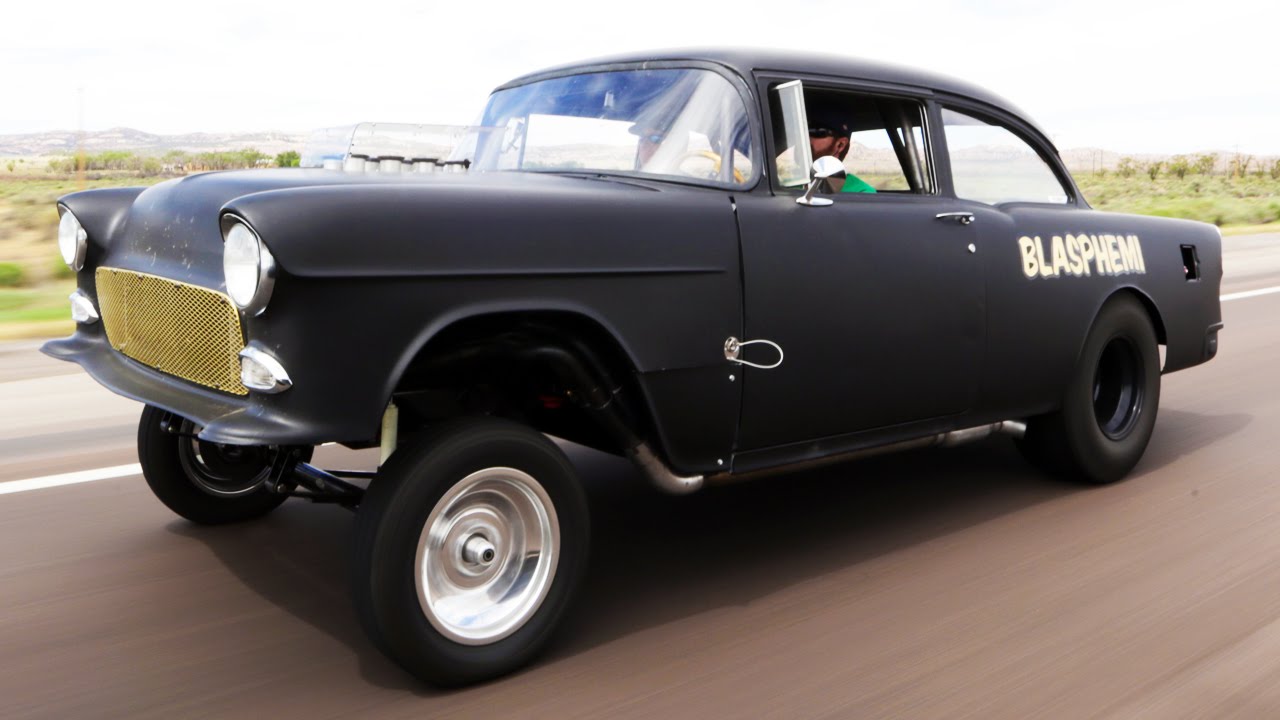
This is a gasser.  Gassers got their name because of the drag racing class they were in (B/Gas or blown/gas).  They had big engines with no supercharger, or smaller supercharged engines.  Look up “Roadkill Blasphemi” on YouTube for the build and cross-country blitz of one of my favorite cars – “Blasphemi.”

This is probably the ultimate Shelby Cobra.  It’s called the “Super Snake” because it has twin superchargers on top of an already-powerful engine.  Bill Cosby almost bought one, but took it on a test drive and thought he was going to die.  Carroll Shelby bought it.  Only two were made, but it was incredibly fast.  It’s rumored that in testing the car hit 210 mph – in 1966!  To me, it’s the ultimate factory hot rod.

This is a 1969 Dodge Daytona replica made by a host of the /DRIVE Network, Mike Musto.  It’s one of my favorite cars ever.  He took a 1969 Charger and turned it into a Daytona.  It’s the ultimate cross-country cruiser.  Just looking at it sends shivers down my spine.

The only stock part about this Mustang is the roof, A-pillar, and C-pillar.  It’s the latest creation from the brilliantly mad folks at RTR and Hoonigan.  Ken Block had it built.  It’s got a stroked NASCAR-spec engine that makes 850 horsepower that goes to all four wheels.  That’s right, this car is AWD.  You need to watch “Gymkhana 7” if you haven’t already.  It’s simply amazing.


Which Modern Ponycar is the Best?

Modern ponycars have progressed a lot in the past 50 years.  While the Ford Mustang started the ponycar craze, the Chevy Camaro and Dodge Challenger have caught up (and surpassed it) in many ways.  If you are looking for a new ponycar, I hope that this post will help you.

2015 Ford Mustang:  The 2015 Ford Mustang is pretty groundbreaking.  It’s the first Mustang to come from the factory with fully independent front AND rear suspension.  Most Mustangs that had IRS (independent rear suspension) were factory hot-rod specials (Mustang Cobra, SVO, etc.).  Not any more.  The 2015 Mustang comes right off of the assembly line with IRS in any iteration.  Previous generations of Mustang used an antiqued live rear axle circa 1964.  Going over a bump or around a curve was not for the faint of heart.  Axle hop is scary, especially if you happen to be going at a high rate of speed.  Motor Trend recently tested a 2015 Mustang GT, and found that it weighed a whopping 196 pounds heavier than the previous generation.  While this certainly isn’t Ford’s first foray into IRS with the Mustang, the rear end bobbling around while on the gas is not fun, and neither is massive understeer when the gas is let off.

However, that’s NOT how most Mustang drivers are going to drive their car.  IRS pays off big time when you’re cruising in any car.  The IRS is worlds better than a live axle when you’re cruising.  In previous generations of Mustang, one small bump was enough to make you think that the semi in the lane next to you would be the last thing that you’d see.  Think about how much you drive on the freeway.  It’s a lot, right?  Heavier is often better on the freeway.  Not for fuel economy, mind you, but for cruising.  You just feel more planted to the ground.

Powering the Mustang is Ford’s fabulous (and famous) 302 cubic inch V-8 (5.0 liters).  It’s lightweight, aluminum, and it’s got a lot of power.  It’s got 435 horsepower and 400 lb-ft of torque, thank in no small part to the previous-generation Boss 302’s valves, springs, connecting rods, and crankshaft.  Part of what makes this engine so fun is the fact that it loves to rev.  It doesn’t rev high, but it revs better than a pushrod V-8 has any right to.  A big part of a muscle car is driving around with the windows down and listening to that sweet thundering bellow that these engines make.  Ford’s 302 sounds good…once you put an aftermarket exhaust system on it.  I’m going to hedge a safe bet that 2015 Mustang owners will go straight to the muffler shop right after the warranty runs out.  Putting that power to the ground is either a six-speed manual or a six-speed automatic.  Go for the manual.  It automatically makes a car more fun to drive.  Trust me.  I drive a stick.

The base engine is a high-revving 3.7-liter V6 borrowed from the Interceptor Utility.  It’s a good engine, but my first choice is the 2.3-liter EcoBoost four-cylinder engine.  It’s small, but it’s got a turbocharger on it.  I know that a turbocharger does not a car make, but it does in this case.  Here’s why you should get the Mustang EcoBoost:  Lower weight, better fuel economy, and 320 lb-ft of torque.  Getting the EcoBoost Mustang also shaves a massive 96 pounds off of the front of the car.  Listening to the EcoBoost Mustang is fun, thanks to an amplified exhaust note.  It’s got a series of growls and pops, and when you pop the hood, you hear whooshes and whistles from the twin-scroll turbocharger.

Stopping the porky Mustang is a set of big Brembo slotted disc brakes.  Brembo makes probably the best brakes in the world.  They never overheat or lose stopping distance.  The brakes on the Mustang are almost 15 inches tall, and they work great, stopping the overweight pony in just 107 feet.  By no means is the EcoBoost Mustang meant to be a replacement for the Mustang GT – the Mustang GT is a completely different car.  It’s just meant to be a fun alternative to it.  

2015 Chevrolet Camaro:  Ever since it made a big splash in the ponycar segment in 2010, the Camaro has been an entertaining car.  In SS form, it comes with a free-revving LS3 6.2-liter V-8 making 426 horsepower.  It’s got visibility akin to a ski mask, but the burbling, rumbling engine note is almost enough to forgive the visibility.  However, an engine does not a car make.  The SS without the 1LE package understeered my dear friend at Motor Trend, Jonny Lieberman, right off of the track at Willow Springs International Raceway.  That would be traumatizing for anybody.  Not Jonny!  He’s driven just about every current-generation Camaro, and the best he’s driven is the fire-breathing Z/28.  I’m still jealous.  For us mere mortals that don’t have $75,000 to spend on a Chevrolet Camaro, the SS 1LE is almost as good a driver’s car.  It’s simply unflappable.  You’re going to make a mistake before the car does, let’s put it that way.  Why is that?  Well, it’s got specatcular magneothermal shocks borrowed from the Corvette ZR1 and Camaro ZL1.  This is the Camaro to (almost) end all Camaros.  Jonny’s fallen in love with this car – for good reason.  It’s just one of those cars that begs you to go faster around the next corner.  I would kill for a Z/28 Camaro, but until then, my faithful readers will have to get me a SS 1LE.  

2015 Dodge Challenger:  The big news about the Challenger is the Hellcat.  For about $60,000, you can have THE most powerful factory muscle car ever.  It’s not as powerful as the current bunch of hypercars, nor is it as fast.  But, it’s far, far cheaper.  I mean, who doesn’t want 707 horsepower?  If you can’t afford the Hellcat, it’s all good.  You can get the Challenger Scat Pack.  You can get a car with 485 horsepower for under $40,000!  The problem with the Challenger is weight.  It’s simply not a small car.  It’s big, wide, loud, powerful, and it soaks up anything the road can throw at it with ease.  It’s also 400 pounds heavier than the Camaro 1LE.  You won’t notice the weight in a straight line because it’s got more horsepower than it’s rivals.  The Challenger isn’t something you want to take in tight, windy roads.  It’s just too big.  It is, however, the car that you would want to tour the country in.  The Hellcat is insanely loud – I’ve heard one at speed, and it sounds about as loud as a NASCAR Sprint Cup Series car.  It’s that loud.  Dialing the Challenger back into the realm of sanity is the Challenger Scat Pack.  It’s got the 6.4-liter HEMI V-8 from the Challenger SRT8, and it just howls and revs to the heavens.  It sounds like a mini Hellcat, minus the blower whine.  Speaking of blower whine, the Hellcat got it just right.  The engine was so loud that they had to put an amplifying cooling chamber in the supercharger itself to make it be heard.  A job well done, Dodge.  The Challenger is the car you want to take on a road trip.  It’s big, comfortable, it can take two large coolers and luggage in the trunk, and it can take the kids, or two buddies easily in the back.  Driving this with the windows down is the only way to drive it.  You can just sit back and listen the the burbling, howling, crackling exhaust note that sounds right out of a vintage Trans Am race.  Want to know what the Hellcat sounds like?  It sounds like NASCAR, a Ferrari V8, a plane, and a Top Fuel dragster, with blower whine mixed in.  It’s a haunting, addictive melody.  It’s the car that you just want to cruise around in, revving the engine and doing burnouts and donuts in empty parking lots.

Overall, which car would I take?  That’s hard to say.  The Mustang EcoBoost is certainly a good choice, but you just can’t hear the engine itself very well.  The Camaro Z/28 is an excellent choice, too, but it’s a stripped-down track toy that’s not meant for daily driving (case in point:  air conditioning is an option).  The Camaro 1LE is good, too,  so I’d probably get the 1LE Camaro.  The Challenger?  Hellcat, Hellcat, Hellcat!  It’s just the very definition of muscle car.  It’s so powerful that when you’re going straight with ALL of the nannies on, it will still go completely sideways.  Think of another modern car that can do that.  I certainly can’t.

If I had to go with just one of these cars, I’d get the Hellcat.  It’s the very definition of affordable performance, and even a tuner car Mustang with 800 horsepower won’t be the same.  The most powerful Camaro offered is the 580-horsepower ZL1, which handily beats the 435-horse Mustang.  Just go with the Hellcat and let me know when you get it!  I’ll feature you, sing praises about the Hellcat (it shouldn’t be too hard), and never stop saying thank you.

P.S.  Ford made the Mustang Cobra Jet (a factory drag-strip only special) until August, but there are some to be found at various racing dealerships or classifieds.  I’ve even seen a few in Hemmings Motor News.

P.P.S.  Chevrolet makes the COPO Camaro (also a factory drag-strip special).  It’s got more engine choices than the Cobra Jet, and it looks pretty darn cool.

Bad Boys: Dodge Challenger SRT Hellcat Vs. Chevrolet Camaro ZL1

Chevrolet’s had the 5th-generation Camaro ZL1 out for a couple of model years now, and it’s only real muscle car competition was the now-defunct Ford Mustang Shelby GT500.  The GT500 is now out of production, as the 2015 Mustang will go into production soon.  Dodge’s heavy Challenger SRT8 is a great car for cruising the boulevards and highways of America, it’s just not a handling muscle car like the ZL1.  The ZL1 is meant to be a car that you can take to your local track day without a trailer, win, and drive home.  Dodge desperately needed a competitor to the ZL1, so they rolled out the awesome Challenger Hellcat.  The Hellcat is the most powerful stock American V8 ever.  It makes a thundering, throaty, screaming, 707 horsepower.  That’s right.  However, a dyno test by Motor Trend showed that the Hellcat actually makes more than that.  Back to that later.  The Hellcat is meant to be a car that you can drive to your local drag strip, win against other bone-stock cars, and drive home.

The Camaro uses a detuned LS9 6.2-liter supercharged V8 that pumps out 580 horsepower.  It puts the power down to the ground through either a six-speed manual or a six-speed automatic transmission.  Plus, you can get it as a convertible, which would eliminate most of the visibility issues associated with the 5th-generation Camaro coupe.  While the Camaro may make far less horsepower than the Challenger Hellcat, it makes up for it in a trick suspension and 400 fewer pounds than the Challenger Hellcat.  Sometimes less is more.  Besides, the Camaro beat the 662-horsepower Mustang GT500 in it’s last shootout.

The Challenger uses an all-new 6.2-liter supercharged Hellcat V8 that pumps out a claimed 707 horsepower.  It puts all of those raging ponies down to the ground through either a six-speed manual or a quick-shifting 8-speed automatic adapted from the ZF 8-speed slushbox found in many cars nowadays.  It also comes with a trick suspension adapted from the Viper, and a variety of cool driving modes (like Valet Mode, which lowers the horsepower to 300, limits the revs to 4,000 RPM, and turns all of the nannies on).  Plus, it comes with more street appeal than just about any other new car on the market.  Well, with the exception of the Pagani Huayra…

If you want to kill them with consistency in the acceleration department, go for the ZL1.  It thunders to 60 mph in just 3.9 seconds.  It then goes on to slaughter the 1/4 mile in a stonking fast 12.2 seconds at 116.6 mph.  Whatever way you look at it, that’s pretty fast.  Enter the Hellcat.  It makes the Camaro feel slow.  That’s not surprising.  What makes it’s times even more impressive is the fact that it puts 707+ horsepower down to the ground through relatively skinny 275 millimeter-width tires.  Granted, the tires are Pirelli P Zeroes, but that’s a lot of power going to the ground through not very much tire.  This, of course, makes the Hellcat a difficult one to launch.  Even with launch control enabled, the Hellcat’s best 0-60 run was “just” 3.7 seconds to 60 mph.  It’s probably best to launch the Hellcat in 2nd gear, as that much power can get the Hellcat up to speed quickly, plus it eliminates a time-sapping gearshift.  It then goes on to absolutely embarrass the ZL1 in the 1/4 mile by doing a crazy-fast 11.7 second at 125.4 mph run.  That trap speed won’t only embarrass a Camaro ZL1 owner – it will embarrass a Porsche 911 Turbo S AND a Nissan GT-R Nismo in the 1/4 mile.  America for the win.

Then, you go onto a skid pad.  This is where the intended functions of these two cars show.  The Camaro ZL1 pulled 0.99 G’s on the skidpad.  This is probably thanks to the cool Delphi magnetic shocks, and the quick steering in the ZL1.  While the ZL1 may behave like a sports car, the Hellcat doesn’t.  As Motor Trend‘s Scott Evans put it, “The Challenger handles just like a Challenger.  Understeer into the corner, oversteer out.”  The Hellcat may handle like a boat, but it sticks.  Just ask the 0.94 G’s pulled on the skidpad.  The Challenger may not be the best choice for corner carving on a tight, windy race track, but it will put to shame many well-tuned drift cars as it shreds its skinny rear tires.

I literally couldn’t stop laughing when I heard this, but it’s 100% true.  Motor Trend‘s Kim Reynolds said that the Camaro felt like something developed by Infiniti’s Red Bull Racing Formula 1 team or McLaren’s Formula 1 team.  The Hellcat, on the opposite side of the spectrum, “feels like it was developed by HOT ROD’s Freiburger and Finnegan.”

Should you choose to road-trip either of these two cars, invite me or some friends along!  The Camaro has visibility akin to a solitary confinement prison cell at Abu Grahib, but it’s V8 hums along, the cool shocks absorb anything any road can throw at it, and it’s got a great sound system.  The Challenger Hellcat is THE ultimate road trip car.  I’ve heard that it’s ride is a bit busier, but it keeps you more alert than the quiet, subdued Camaro ZL1.  It’s seats are something that you’ll want in your living room.  The supercharged Hellcat Hemi has an absolutely demonic supercharger whine when you step on it – batten the hatches when the Hellcat comes to town!  The 8-speed automatic transmission is found in almost every new Chrysler/Dodge/Jeep/Ram/SRT product these days, and it is more beefed up in the Challenger Hellcat to handle the crazy power numbers.  The Hellcat’s engine note when you step on it sounds like somebody supercharged Roadkill’s Blasphemi 1955 Chevrolet Bel Air gasser.  It sounds absolutely spectacular.  The best part is, Dodge has released a Hellcat Hemi engine note ringtone.

Inside, the Challenger is definitely the car of choice.  Aside from the crazy powerful engine and the sinister sheetmetal that looks straight out of 1970, the Challenger is really quite the ticket to being comfortable.  It’s got one of the best interiors in the segment, which it has had since day 1, an intuitive infotainment system, an even better Boston Acoustics sound system, plenty of room for five adults, and a stunningly low entry price of $60,995.  Then, the Camaro ZL1 enters the room.  Sure, it’s got Alcantara all over the bloody cabin, and snug, comfortable Recaro bucket seats, but you can tell Chevy cared more about what was under the hood.  Dodge didn’t have to try very hard to update the cabin in the Challenger.  If you can’t swing $60,995, no worries.  Chevy has a great Camaro ZL1 with your name on it for just $57,650.

While these two cars have traded blows in straight lines, in the curves, and elsewhere, street appeal is definitely part of what muscle cars are all about.  In a nutshell, the Camaro looks like just another Camaro with big black wheels and a vented hood, while the Challenger looks like it just stepped out of the Trans-Am racing series.  It just looks like pure evil.

This is America.  Just like basketball (and many other ball sports), there are NO ties.  There are only winners and losers.  In my humble opinion, the Challenger Hellcat will always come out on top.  It’s got a focus on power, presence, and straight-line performance define what a muscle car is supposed to be.  It shows that the boys over at Dodge know how to make a world-class muscle car after years and years of being pushed around by Ford and Chevy.  While I like the ZL1 as a capable and well-balanced sports car, it just doesn’t really seem like as good of a muscle car of the Challenger Hellcat.  Like the muscle cars of the 1960’s and 1970’s, the Challenger Hellcat is built to dominate the streets with some serious power under the beautifully sculpted hood.  The Hellcat proves to me that the ultimate muscle car wasn’t built in the 1960’s or 1970’s – it is now, and here to stay.

Now for the dyno results.  The Challenger Hellcat is rated by the SAE (Society of American Engineers) at 707 horsepower and 650 pound-feet of torque at the crank.  Dodge is lying through their teeth.  This engine is almost as powerful as an engine in NASCAR’s Nationwide Series.  The Hellcat Challenger puts down 635 horsepower and 591 pound-feet of torque at the wheels.  Factor in a 12% driveline loss (automatics are getting more and more efficient every year), and the Challenger Hellcat makes about 722 horsepower and 672 pound-feet of torque at the crank.  Both of those are more than advertised.  Some other cool things about the Challenger Hellcat:  When Motor Trend did their dyno test at K&N Air Filter’s Riverside, CA dyno shop, the Hellcat was the fastest car ever strapped down to the massive rollers there.  The speedometer topped out at 202 mph, but the Hellcat accelerated to 225 mph, which is the fastest the dyno can possibly go there.  While the Hellcat will never, ever get up to 225 mph stock (a brick goes through the air better), it’s cool to know that the SRT team of engineers didn’t bother fitting a speed limiter to the car.  Not only is it the fastest, but it’s also the hottest.  The Hellcat took five industrial fans pointed at it to keep it cool for it’s dyno pull.  An interesting fact to know about the Hellcat is that it will suck all of the air out of a 10 X 13 foot room in just one minute at full throttle.  It will also drain all 19 gallons of it’s fuel tank in a minute at full throttle.

Now on to the Camaro ZL1.  The ZL1 makes only 580 horsepower and 556 pound-feet of SAE-rated torque.  The car that Motor Trend tested made just 472 horsepower and 482 pound-feet of torque at the wheels.  K&N noted that that’s about 20 fewer horsepower than they are used to seeing from a stock Camaro ZL1.  Assuming a 10% driveline loss for the Camaro, it’s making a still-impressive 524 horsepower and 536 pound-feet at the crank.  That’s almost 60 horsepower than rated.

Why did the Hellcat need five industrial fans pointed at it?  Well, the Hellcat needs a LOT of air to operate optimally, and superchargers throw off lots of heat.  This 2.9-liter supercharger shoves 11.9 pounds of boost into the engine.  This supercharger is common in tuned muscle cars, and it’s not uncommon to see more boost out of it.  However, I just think that the Hellcat’s engine can’t easily make more power before it presses the self-destruct button.  It’s like the Nissan GT-R, where the engine has been tuned so much that Motor Trend found in a test last year that the engine kept loosing 5 pounds of boost from the two massive turbos.  That’s a lot of boost, so you’ve got to wonder if engines this powerful are tuned to within an inch of their life.

What about the ZL1?  Was it a dud car, or has GM just been radically overrating their engines?  Who knows?  Dyno results range anywhere from far more than what the manufacturer says to far below.  It depends on the dyno itself, the way the car is strapped down, if it has enough air going into the engine, the temperature of the air, and what gear the car is in.  There are literally thousands of different factors in dynoing a car.  It probably wasn’t in Motor Trend’s best interest to dyno two powerful cars with heat-making superchargers in the end of a SoCal summer in Riverside.  While Dodge does say that the Hellcat will last 20 minutes in 100 degree heat at a track and get consistent results, one has to wonder if the Challenger can really last that long without overheating.  Time will tell (pardon the pun) the reliability of this powerful engine.

The engine technology in the Hellcat Hemi goes back to 2002.  That’s a really long time for a cylinder head design to be around in one basic form or another.  Granted, that design works – really well, but Ford and Chevy have definitely stepped up their engine game.  The Mustang GT500 used an aluminum block, which took off 100 pounds off of the front of an already-heavy car, and a bunch of other really cutting-edge engine technology.  Chevy’s LS9 and LSA V8’s are really beasts of engines, but obviously not in the ZL1 dynoed by Motor Trend.  The Hellcat engine block was originally going to be aluminum, but was vetoed at the 11th hour by a Dodge executive.  It’s a shame.  The aluminum engine block would have shaved at least 100 pounds off of the front of a nose-heavy car, bringing it’s curb weight down to about 4350 pounds or so, which would be almost 100 pounds heavier than the also-chubby Camaro.

When it comes to transmissions, the ZF 8-speed automatic is the best transmission in a muscle car now.  Chevy’s six-speed automatic doesn’t like to downshift, even when told to.  Ford didn’t offer an automatic transmission in the GT500, but it used a TREMEC TR6060 six-speed manual.  This is a great six-speed manual.  It’s used by Ford, Chevy, and Dodge.  It’s also common in road-racing cars.  It’s beefy, reliable, and has good gearing for almost any engine.  The fact is, the Hellcat with the 8-speed ZF transmission is probably the best combination.  It’s going to be hard for even an experienced driver of a manual transmission to put 635 horsepower and 591 pound-feet of torque down to the ground.  That’s why Dodge offers 3 power settings – 300 horsepower, 500 horsepower, and 700+ horsepower.  In daily driving, the most power anybody will ever really need is 150 horsepower and about 200 pound-feet of torque.  Plus, the Hellcat with the automatic transmission will get 24 mpg on the highway.  The Camaro only gets 21.  The Mustang only got 22.

If you get a Hellcat, please, please, pretty please, let me know!  I will feature you on my blog, but ONLY if you either take me for a ride, or let me drive it!  If you do either of these, I will interview you, take wonderful pictures, and wax poetic about being in a Dodge Challenger SRT Hellcat for the rest of my life.

2014-chevrolet-camaro-zl1-2015-dodge-challenger-srt-hellcat

2014-chevrolet-camaro-zl1-engine

2014-chevrolet-camaro-zl1-interior-view

2014-chevrolet-camaro-zl1

2015-dodge-challenger-srt-hellcat

2015-dodge-challenger-srt-hellcat-engine

2015-dodge-challenger-srt-hellcat-interior-view

2015-dodge-challenger-srt-hellcat-boost-setup

Watch the Evolution of the Chevy Corvette, Ford Mustang, BMW 3 Series, and Honda Accord!

It’s astonishing just how much a car can change over the years.  Sometimes, the only similar parts about a car can be the badge name of the car.  It’s easy to compare a car to it’s predecessors when you put them next to each other, but that can be boring.  EBay Motors found a new way to show all of the different generations of some given cars.  The animations shown below from eBay Motors show the design progression and growth of four popular cars, with some of the cars going back over 60 years.

Ford Mustang Evolution

The Ford Mustang’s design evolution is truly all over the place when it comes to design and size changes.  The styling comes a complete 360 degrees, starting with the original 1964 1/2 model and progressing all of the way through the retro-styled years of 2005-2014.  Dimensions grow, then shrink drastically, then grow again, within just four generations.  By the time that we get to the 2015 model, the Mustang has shifted away from the cool retro styling and is almost as long as the 1971 model.  While it is difficult to say how accurate the scale is in all of these animations, eBay Motors says that the size changes are real-life.

Chevy Corvette Evolution

Next up is the Chevrolet Corvette, also an American icon.  It changes dramatically in the first 3 generations (C1, C2, and C3 for you Corvette enthusiasts), but begins a gradual design evolution from the 4th generation (C4) onwards.  The C4’s wedge-shaped front end and gradually sloping roof carry over into the C7 Corvette.  Granted, there are a lot of changes, but the basic profile of the C4 Corvette can still be clearly seen in any Corvette from then on out.

BMW 3 Series Evolution

The BMW 3-Series may see the most dramatic change in size.   Starting with the tiny E21 generation (the 1st generation), the 3 Series grows in every direction through each of it’s 6 generations until it bloats to the size of the F30 generation BMW 4 Series (the replacement for the 3 Series coupe).  Because of BMW’s new naming scheme, the 4 Series is shown to keep the two-door BMW 3 Series going.  The final car shown in the animation, the 4 Series, barely fits in the picture box.

Honda Accord Evolution

The Honda Accord’s size progression is almost as drastic as the BMW 3 Series.  It grows substantially from the small first generation model.  By the 8th generation, the Accord barely fits inside of the picture box.  The current model (the 9th generation) is a little bit smaller than the 8th generation model, but the car is still much, much larger than the tiny 1st generation Accord.  Styling-wise, the Accord is pretty gradual, especially in generations 6-9.

Some of the cars shown in the animations will shock you at how much they grow.  The BMW 3 Series and the Honda Accord shocked me.  See what shocks you.

A Chance to Buy Rare Muscle Cars from America’s Fastest Decade!

Owners of any given car can auction their car(s) off for any given reason.  You can auction the car off to get profit from an investment, to raise funds for another car, health reasons, etc.  Sometimes, however, it’s not the owner’s choice for the cars to be auctioned off.  Especially if the cars were purchased through illegal means.  David Nicoll amassed some very rare classic American muscle cars during his time as president of New Jersey’s Biodiagnostic Laboratory Services (BLS for short).  Now, Nicoll is facing somewhere between 17-22 years in federal prison for bribery charges.  His small collection of classic American muscle cars will be crossing the auction block on September 12 at a U.S. Marshal’s Service public auction in Lodi, New Jersey.

David Nicoll purchased his car collection literally through the blood of hours.  During his time as president of BLS, the FBI and the U.S. Attorney’s Office say that Nicoll received $33 million dollars in payments from a medical blood test bribery scheme that he personally oversaw for 7 years, and which netted well over $100 million dollars in total revenue.  Per the prosecution, BLS would bribe physicians to send their patients for medical tests which were often unnecessary, to be paid for by insurers.  Not one to be sly and frugal with his illegal gains, Nicoll was an extravagant spender.  It’s on FBI and IRS record that he spent $154,000 at a gentlemen’s club, over $400,000 in sports tickets, $700,000 on an apartment for his “female companion,” and over $5 million dollars in cars.

But, we’re not here to discuss fraud and extravagant spending on things like housing, clubs, and sports.  We are here, my friends, to talk about his fabulous taste in classic American iron.

Nicoll did not spend those ill-gotten $5 million dollars on chrome-clad Lamborghini Aventador’s or diamond-enrusted Rolls-Royce Ghosts.  His collection did, however, include a few Ferrari’s.  Instead, the bulk of that money was spent on some of the finest, rarest, and most expensive classic muscle cars ever created.  The inventory list of the A.J. Willner auction looks like a “best of 1967-1970.”  For sale are a:  1967 Shelby GT500, a 1969 Chevrolet Yenko Nova, a 1969 Chevrolet Yenko Camaro, a 1969 Chevrolet Yenko Chevelle, a 1970 Plymouth HEMI Superbird, a 1970 Chevrolet Chevelle SS 396 L78/L89 Convertible, and a 1970 Ford Mustang Boss 429.  Here’s the scoop on these cars:

  • 1969 Chevrolet Yenko Nova.  This is quite possibly one of the most coveted and valuable cars to be crossing the block.  It is a Rally Green 1969 Chevrolet Yenko Nova.  One of only 37 ever produced and believed to be only one of seven original Yenko-built Nova’s remaining, the Yenko Nova was said to be the fastest of the Yenko supercar trio because of it’s light weight.  It was able to get to 60 mph in just 4 seconds.  That’s about how long it takes a modern Porsche Boxster to get to 60.  Just like the other two Yenko supercars, the Nova is powered by Chevrolet’s answer to the 426 HEMI – the powerful L72 427 cubic-inch (7.0 liters) V8 Chevrolet big-block V8.  Nicoll purchased the car for $580,000, but classic coveted muscle car sales have been a series of peaks and valleys for the past few years.  The pre-auction estimate is about $475,000 or so, as another Yenko Nova sold for that in 2012 at the Indianapolis Mecum auction.  We shall see what the car will fetch at auction.
  • 1969 Chevrolet Yenko Camaro:  While “mass market” is a relative term for classic Yenko supercars, the Yenko Camaro and Chevelle were produced in slightly higher quantities.  Yenko only produced 201 Camaros and 99 Chevelles.  FBI records show that Nicoll spent about $365,000 on his Le Mans Blue Chevelle.  The amount spent on his Camaro was not disclosed.
  • 1970 Plymouth HEMI Superbird:  Nicoll didn’t limit his purchases to just Chevy’s – he bought a Tor Red 1970 Plymouth HEMI Superbird.  He bought the most valuable cars from the Big 3 (sorry, AMC!).  On the Mopar front is an extremely rare 1970 Plymouth Superbird with the 426 HEMI dressed in a stunning coat of Tor Red.  Plymouth only produced 135 Superbird’s with the 426 HEMI, and this car is one of even fewer HEMI ‘Bird’s with the 4-speed manual.
  • 1967 Ford Mustang Shelby GT500:  I’m not exactly sure of what the color is, but it looks like it is Lime Gold Poly.  Even if it’s a different color, it doesn’t make it any less stunning.  The GT500 is powered by Ford’s powerful 428 cubic-inch Police Interceptor V8 (7.0 liters) putting power down to the wheels through a Ford C4 3-speed automatic transmission.
  • 1970 Ford Mustang Boss 429:  This particular Boss 429 is finished in Grabber Green.  It is powered by Ford’s NASCAR-intended 429 cubic-inch V8 (7.0 liters) “semi-hemi” engine.  It puts the power down through a four-speed manual transmission.  It is quite possibly the most valuable Mustang ever created, with only 859 ever produced.

Those with a good deal of money wanting a bone-stock, amazing muscle car will almost certainly want to be in Lodi, New Jersey on September 12, 2014, for the U.S. Marshal’s Service Auction through A.J. Willner Auctions.  You can view the cars at A.J. Willner’s website at http://www.ajwillnerauctions.com/auctions/us-marshals-seized-vehicle-collection


The Most Underrated Muscle Cars Ever

Muscle cars get a bad rap for being fast in a straight line, uncomfortable, pig-like vehicles.  It’s deservedly so for some of them.  Some of them are just so good at what they do that you can’t help but love them, faults and all.  Then, there are the good ones that are underrated.  Some of the overrated ones are the modern Camaro ZL1, Mustang GT500, and the modern Dodge Charger.  Here are the muscle cars that should be overlooked less:

  • 1970 AMC Rebel Muscle Machine:  How can you not love a car that is called the “muscle machine,” has a red, white, and blue paint job, and a 390 cubic-inch V8 (6.3 liters)?  It was a seriously fast car, and it’s sister car, the Javelin wore the same paint scheme in the Trans-Am racing series of the 1970’s for a few years with some success.  However, picking a fight with the Rebel Muscle Machine meant that you’d better have a stonking fast car to beat it.  It was relatively light, made a lot of horsepower (340 stock, but could easily get boosted to well over 450), and looked like nothing else on the road.  Some people bought the car, painted it it all white, and simply wreaked havoc on the streets of America in a car that looked unassuming.
  • Ford Torino GT:  Ford took their full-size Torino, stuffed their biggest motor available into it, and turned it into what may be one of the best cars for cruising on the highway or up and down a drag strip.  The big Ford Torino was one seriously fast car that could take the family in comfort.  While it wasn’t exactly a looker, it came with a big black hood with a functional air scoop.  It also came with a four-barrel Holley carburetor, an Edelbrock air intake, a BorgWarner four-speed overdrive transmission, and Ford’s legendary 9-inch rear end with 4:11 gears.
  • Jensen Interceptor:  Ok, maybe it’s not a true muscle car because it was marketed as a GT car, but it’s the spirit of the law, not the letter of the law for this blog post.  It’s timeless Carrozzeria Touring design makes it look Italian.  Plus, you could get it with a Dodge 440 cubic-inch V8 and a Chrysler Torqueflite 4-speed automatic.  That definitely makes it a British muscle car in my eyes.
  • 1991 GMC Syclone:  It should have been called the Psyclone, not the Syclone.  This turbocharged mini truck was a force of nature.  For just $26,000 in 1991, you could easily embarrass a Ferrari 348, a car that commanded a price of almost $180,000.  Unfortunately, it wasn’t very truck-like, even with a bed, as it was only rated to carry and tow 500 pounds.
  • AMC Gremlin Randall 401-XR:  While the AMC Gremlin may have been a terrible economy car designed on an airline barf bag, it sold in droves.  But, when you turned some over to Randall Engineering, magic happened.  Randall Engineering ripped out the turdy big inline-six-cylinder engine, and stuffed a massive 401 cubic-inch V8 (6.5 liters) into the tiny engine bay.  The car ran high-13-second 1/4 mile times at about 90 mph.  And, you could get the car for just $2,995 in 1972.  And that included a donor car.  Options included a four-speed manual transmission or a Chrysler Torqueflite 4-speed automatic transmission, stainless steel headers, a “Twin Grip” differential (a fancy name for a limited-slip differential), four-wheel power disc brakes, a cam kit, and a high-rise intake manifold with a four-barrel Holley carburetor.
  • Shelby Ford Maverick:  This is quite possibly the rarest Shelby ever.  Only 300 were ever sold in Mexico only.  There are only a handful of pictures of the car, all of which can be viewed at http://www.maverick.to/shelbydemexico.php.  They were Brazilian-made Ford Mavericks with Mustang 302 cubic-inch V8’s (5.0 liters), cool paint, and some extra Shelby odds and ends.
  • Studebaker Super Lark:  Studebaker supercharged their 302 cubic-inch V8 (5.0 liters), and put it into their stunning Lark coupe.  The car made an impressive 335 horsepower and 320 pound-feet of torque way back in 1963.  The car weighed in right around 3,000 pounds, so it was fast.  It was luxurious enough that it was called the “businessman’s hot rod.”  I agree.  It was also one of the first true muscle cars.  It came out in 1963, about a year before the much-loved Pontiac GTO.
  • Mercury Cyclone:  While nobody will ever really lose sleep over the Ford Fairlane, it will be harder to lose sleep over it’s interestingly-styled brother, the Mercury Cyclone.  It came with Ford’s high-performance 428 cubic-inch (7.0 liters) Cobra Jet V8, and it took a mere 5.5 seconds to hit 60 mph.
  • Dodge Demon/Plymouth Duster:  While the Dodge Demon and Plymouth Duster were certainly not the fastest nor most powerful muscle cars of the early 1970’s, they were plenty capable of smoking a larger muscle car.  They were powered by Dodge’s 340 cubic-inch V8 (5.6 liters), which was a mid-lineup engine in the larger Challenger and Barracuda.  That, coupled with their relative light weight, meant that they were able to be pretty darn quick in the quarter mile.
  • Buick GS 455 Stage 1:  510 pound-feet of torque.  That’s all you need to know.  Not really, but this was the most powerful motor sold in America for a few years.  It was big, big, big, but very fast.  It was also really comfortable.  This is one of the best cars in the world for cruising the interstates.  I want one.

And, then there’s this…


The Greatest American Turbocharged Cars

Many people think that turbochargers belong in heavily modified import cars.  Well, that’s partially true.  Europe has turned out some impressive turbocharged cars, as well as the US of A.  Here are America’s greatest turbocharged cars.

  • Ford Mustang SVO:  The 2015 Ford Mustang has a 2.3-liter turbocharged 4-cylinder engine, just like the SVO Mustangs of the 1980’s.  The first turbocharged Ford Mustang showed up in 1979 with a 135-horsepower, turbocharged, 2.3-liter four-cylinder engine.  It was an alternative to the downsized 4.2-liter V8 found in the Mustang GT.  But, it wasn’t until Ford’s Special Vehicle Operations (SVO, now known as Special Vehicle Tuning or SVT) got their hands on one that it became anything noteworthy.  It came with a factory-installed Hurst short-throw shifter, revolutionary Koni adjustable shocks, ABS disc brakes at all four corners, a limited-slip differential, and a screaming, turbocharged 205 horsepower.  Drivers even had the cool option of flicking a dash-mounted switch that allowed the car to run on lower-grade fuel for a certain amount of time.  When it ended it’s production run in the late 1980’s, it was something to be feared.  It looked especially menacing in grey.
  • 1965 Chevrolet Corvair:  Believe it or not, the Corvair actually had a go-fast option.  It had two, in fact.  One was the Crown Corvair, which used a mid-mounted 283-cubic-inch Corvette V8, and the other was a turbocharger bolted onto the engine.  From the factory.  It made 150 horsepower initially, but by the time the Corvair died, it made 180 horsepower.  Unlike many other turbocharged cars, the turbocharged Corvair did not use a wastegate, the internal exhaust flap that opens at higher engine speeds to prevent over-spinning the turbine.  Instead, Chevy engineers simply built enough backpressure into the exhaust system to prevent overboost and serious engine damage.  Very few Corvairs with the turbocharged engine were ever made.
  • Oldsmobile F85 Jetfire:  Oldsmobile was one of the early adopters of turbocharging technology.  It released the powerful F85 Jetfire in April of 1962, and the car was something of a small success.  It took the fabled 3.5-liter high-compression “Rocket” V8, cranked up the boost, and let it rev.  It made a screaming 215 horsepower, and it was easily quicker than many naturally aspirated cars of 1962.  Plus, owners got an ashtray-sized boost gauge in front of the shifter.  The engine had problems with detonation, which is the process where the hot air-fuel mixture under pressure spontaneously ignites before the spark plug has a chance to ignite it.  So, the Turbo-Rocket engine was fed a mixture of methanol alcohol and water (the same stuff fed to dragsters).  This allowed the mixture to not ignite as quickly and get a higher octane level.  Today, water/alcohol injection is commonplace in high-performance tuner car applications, but isn’t it cool that F85 Jetfire owners had to periodically fill their “Turbo Rocket Fluid” reservoir?
  • Buick GNX:  If there’s a poster-child for American turbocharged cars, the Buick GNX wins, hands-down.  The all-black, tire-smoking, Ferrari Testarossa-beating, quarter-mile waltzing Buick GNX was and still is a force of nature.  Buick initially started turbocharging it’s anemic 3.8-liter V6 in 1978 for the Regal and the LeSabre, introducing the fast Regal Grand National line in 1982.  It culminated with 1987 with the GNX.  Buick purposefully underrated the crank horsepower at 276 horsepower, but dyno tests showed that the car made at least 315 horsepower at the wheels.  This means that the car made somewhere close to 360-370 horsepower at the crank.  It even beat the twin-turbo Callaway Corvette that I featured on my blog a couple of months ago in the quarter mile.  The GNX would go through the quarter mile in the low 13-second range at around 125-130 mph.  Just 547 GNX’s were built in 1987, each specially massaged by AMC/McLaren.  Today, the turbo Buick’s are something of a legend, and many go for upwards of $30,000.  The car was so successful on the street the Buick entered a naturally-aspirated V8 version of the car in NASCAR’s Grand National series (now known as the Nationwide Series), where it was extremely competitive.
  • 1989 Pontiac 20th Anniversary Turbo Trans Am:  The all-white Pontiac Trans Am picked to be the pace car for the 73rd annual Indy 500 was completely different than the first turbocharged Trans Am, which was all mustache and no Burt.  This 1989 force-fed pony car was something completely different.  I liken it as the Pontiac storm trooper to the Buick GNX Darth Vader.  Pontiac subcontracted an engineering firm to swap Buick GNX engines (made by Buick for Pontiac) into the Trans Am.  But, the story doesn’t (and shouldn’t) end there.  Anniversary-edition Trans Am’s got better-flowing heads than the GNX, stainless-steel headers, GNX-sized Eaton intercoolers, a cross-drilled Comp Cams crankshaft, and their own engine tuning higher up in the powerband.  The net result was a car that officially produced 250 horsepower at the crank, but made closer to 320 horsepower at the crank.  This marked a return to the horsepower-underrating days of the muscle car, started by, you guessed it, Pontiac.  It was the fastest pace car ever in the history of the Indy 500, which is impressive, given the fact that many fast cars have been chosen since then.
  • Ford Thunderbird Turbo Coupe:  The Beach Boys made the T-Bird famous with the line, “fun, fun, fun, until her daddy takes it away.”  The T-Bird was fun until Daddy (the EPA) introduced emissions regulations that took the fun out of the T-Bird.  By 1982, the T-Bird was a horrible, anemic shoebox of a car.  Happily, 1983 saw the rising of the phoenix.  It’s beak-like hood had twin nostrils that meant that there was a turbocharged engine underneath that pointy hood.  Other than the amazingly 1980’s-FILA edition, the T-Bird Turbo Coupe was at it’s peak in 1987 and 1988.  That was when stick-shifted version of the Fox-bodied T-Bird came equipped with a whistling 190 horsepower, four-wheel ABS disc brakes, and a limited-slip differential.  Those nostrils on the hood, by the way, are functional, as they feed air directly to the top-mounted intercooler.
  • Shelby GLHS:  It’s hard to find a car that has a shape that’s more square than the Dodge Omni.  The blocky Omni had all of the sporting pretensions of a worn-out water shoe.  Then, you hand the Omni over to Carroll Shelby.  Early Omni GLH (unofficially Goes Like Hell) cars weren’t turbocharged, but by the mid-1980’s, America was becoming obsessed with the turbocharger.  So, by the mid-1980’s, the Omni GLH had enough punch to beat any VW GTI of the era.  For the 1986 model year only, 500 cars were further tweaked by Shelby to become the Omni GLHS (Goes Like Hell S’More), which was a 175-horsepower breadbox with more boost, better suspension, and factory options like a roll cage and heavy-duty oil cooler borrowed from the Ram 250 with the Cummins Diesel.  Quite possibly the best part of the GLHS:  The uprated top speed of the GLHS was too much for the regular 85 mph speedometer of the Omni, so Shelby simply added a sticker to the bottom of the gauge with increments up to 135 mph.
  • Shelby CSX-VNT:  Another Shelby creation was the CSX-VNT, which was based off of the homely Plymouth Sundance and Dodge Shadow.  Initially, the CSX-VNT packed 175 horsepower, and like the earlier GLHS, went like a bat out of hell.  Shelby built a small run of 1,001 cars for the Thrifty rental car company with slightly less power.  In the final year of CSX-VNT production, 1989, the CSX-VNT included some new, unique technology previously only seen on race cars – variable turbine geometry.  Computer-controlled vanes moved to direct the hot exhaust gas stream to improve spool-up time.  While it’s power rating remained the same at 175 horsepower, it had dramatically better response time in the low end, virtually eliminating turbo lag.  The next time this technology would show up in the U.S. market would be in 2011, with the 997-generation Porsche 911 Turbo.  That was more than 15 years later.
  • GMC Syclone:  In 1990, Gale Banks Engineering cracked the 200-mph mark at the Bonneville Salt Flats in a compact GMC pickup truck with no turbocharger or supercharger.  In 1991, the streetable version of that high-powered pickup showed up on dealer lots.  It’s 4.3-liter Vortec V6 engine was turbocharged with the help of Gale Banks himself.  It came standard with ABS and AWD, neither of which were options on the S15 Sonoma.  You couldn’t haul much with the Syclone, unfortunately, as it was only rated to haul 500 pounds.  Too bad, but you could still fill the bed with the egos of every single Porsche, Ferrari, Lamborghini, and Maserati driver on the road.  This all-black, one-year-only mini-truck was the fastest-accelerating production vehicle in America for a few years, easily getting off of the line, thanks to the torque-rich engine and AWD.  It got to 60 mph somewhere in the low 4-second range.
  • GMC Typhoon:  A spin-off of the one-year-only Syclone, the Jimmy-bodied Typhoon was officially rated at 280 horsepower, though dyno tests showed that it made at least that at the wheels, meaning that it made somewhere around 320 horsepower at the crank.  It could easily beat a Ferrari 348 off of the line and up to about 70 mph, when the 348 really got into the powerband.  Just under 5,000 Typhoons were made between 1992-1993, and unlike the black-only Syclone, could be bought in a variety of colors.  In fact, Clint Eastwood used to drive a Forest Green Typhoon around in his Dirty Harry days, where he would pull up to a stoplight and ask punks if they felt lucky. Most thought they were going to beat some middle-aged guy in his SUV with their Mustang or import car.
  • Dodge Neon SRT4:  In 2003, Chrysler/Dodge’s Street Racing Technology (SRT) team got hold of the friendly-faced Neon subcompact car, and built what is still the car to beat for bang-for-your-buck performance.  A frog-eyed four-door sedan with a functional front-mounted intercooler peeking out of the grille, the tiny Neon made mincemeat out of everything from a Porsche Boxster to a Nissan 350Z.  Dodge claimed 230 horsepower, though dyno testing showed that the car made at least that much, if not more at the wheels.  This means that the engine was making close to 280 horsepower at the crank.  Something else that is cool about the Neon SRT4 is the fact that it doesn’t have a muffler on it.  This allows it to have vastly better turbo flow.  Resonators keep the volume semi-sane, but the Neon really makes a lot of noise when you give it some go-juice.
  • Chevrolet SS Turbocharged:  Initially available only as a supercharged coupe, the Cobalt SS was always OK in performance testing, but it wasn’t going to set any records.  Starting in 2009, the Cobalt SS came as either a sedan or coupe with a turbocharger bolted onto a small four-cylinder engine.  It made 260 horsepower.  Should you want a cool sleeper, if you aren’t afraid of the ignition recall, you can get a Cobalt SS, take the badges off, swap the big chrome rims for something more discreet (like the regular Cobalt rims), and you’d have the makings of a good sleeper.  It had a no-lift-shift system – just keep your right foot floored so that you don’t loose boost – and you’ll see the quarter mile fly by in under 13 seconds, and will keep up with a Porsche 911 on a road course.  Take it out to the twisties out on the road, and you’ll be able to keep up with a motorcycle, thanks to the tiny size of the Cobalt.

1986 Ford Mustang SVO 1986 Shelby Omni GLHS 1988 Ford Thunderbird Turbo Coupe

1989 Shelby CSX-VNT 2004 Dodge Neon SRT4


1962 Oldsmobile F85 Jetfire 1965 Chevrolet Corvair Spyder Turbo

1987 Buick GNX

1989 Pontiac Trans Am 20th Anniversary Edition

1991 GMC Syclone 1992 GMC Typhoon


The Seven Most Significant Carroll Shelby Cars Ever!

Carroll Shelby was a guy who built cars the way that they should be built.  This meant that every single Shelby creation was a masterpiece.  He is best remembered for the 1963-1966 Cobra, but he also built many more cars that are noteworthy.  The racer-turned-chicken-farmer-turned-respected-tuner was an amazing guy who did much, much more than make fast cars go faster.  After his heart transplant, he started a foundation.  His foundation, Carroll Shelby Foundation helps fund heart surgeries for children.

  1. 1965 Ford Mustang Shelby GT-350.  The Ford Mustang was an affordable musclecar.  It was fast in a straight line, but it wasn’t meant to go around corners.  When Lee Iaccoca called Carroll Shelby in 1965, Carroll Shelby told Iaccoca, “Lee, you can’t make a racehorse out of a mule.”  Yet, the 1965 Shelby Mustang GT-350 was one of the fastest cars of the decade.  It used Ford’s all-aluminum 289 cubic-inch V8, a Muncie M-22 “Rock Crusher” transmission, and tons of suspension and chassis modifications.  It was available through a “Get it Friday, Race it Saturday and Sunday, and Drive it Back Monday” program through Hertz.  The GT-350K was the highly successful racing version.
  2. 1965 Shelby Cobra Daytona Coupe.  The Shelby Cobra is one of the world’s most iconic cars, let alone America’s.  It used a stylish, lightweight British AC Ace body and chhassis, a Ford V8, and way too much fun for one person.  The most iconic Cobra was the 427 Cobra, which utilized Ford’s new, all-aluminum 427 cubic-inch V8 that was designed to compete with the 426 Hemi (the engine Shelby originally wanted for the Cobra).  That turned it into one of the fastest cars ever.  In late 1964, the 427 Cobra enjoyed massive racing success, but it didn’t have enough aerodynamic oomph for the long straights at Le Mans.  So, Carroll Shelby had Peter Brock design the Cobra Daytona Coupe.  The Daytona Coupe made a 1-2-3 finish at Sebring International Raceway, and it then went on to win the same finish at Le Mans, putting it 4th overall behind three Ferrari prototypes.
  3. 1965 Shelby Cobra 427.  Arguably the most iconic Shelby ever built, the 427 Cobra was a monster.  It used Ford’s race-proven 427 cubic-inch V8, and your Pontiac GTO or Chevrolet Camaro RS would run for mommy.  The 427 Cobra was a fairly neutral car in terms of handling, even when you got your foot into it.  Even then, it was predictable. Yet, when those 480 pound-feet of torque kicked in at 6,000 RPM, you’d better be holding onto something and have a lot of road ahead of you.  It tipped the scales at just over 2,700 pounds, and the big Ford V8 made a beautiful sound when you nailed it.
  4. 1968 Ford Mustang Shelby GT500KR.  The GT500KR used Ford’s all-new 428 Cobra Jet engine, which was kind of a loud, torquey boat anchor in stock form, but Shelby had a few tricks up his sleeve.  He took the cylinder heads and manifolds from the 427 racing engine, and raised the redline by 1,000 RPM.  This engine gained almost 30 horsepower just by that.  Car Life said of the car in 1968, “At 6000 RPM, the Cobra Jet will pull a semi trailer up Pikes Peak.  At less than 2000, it wouldn’t pull the petals off of a daisy.”  People still rave over the engine almost 50 years later.  It was docile under 2,000 RPM, but it came alive above that.
  5. 1986 Dodge Omni Shelby GLH-S.  The little Dodge Omni was a pretty decent little car, but Carroll Shelby slapped a turbocharger and suspension upgrades onto this little car.  It started the hot-hatch craze, and it still shames many hot hatches today.  It was a sleeper.  Many automotive magazines said that it would leave two very skinny, long tire marks through third gear.  If that’s not impressive, I don’t know what is.
  6. 2002 Shelby Series 1.  The Shelby Series 1 was the last Shelby to actually be built from the ground up by Shelby.  It used an Oldsmobile Aurora V8, a GM 700R4 transmission, and a Ford 9-inch rear-end.  Many people complained about the fact that it felt like an unfinished car.  You know what?  Let them yammer.  it was fast, fun, and stylish.
  7. 2013 Ford Mustang Shelby GT500.  This Mustang deserves to be on this list.  It was the last car to have personal oversight by Carroll Shelby, and it shows.  Shelby took the supercharged 5.4-liter V8 found in the 2012 GT500, and stroked it out to 5.8 liters. It gained 112 horsepower with the stroking of the engine and other tricks.  It uses Mahle pistons, a Tremec TKO600 transmission, a single-overhead-cam, a special Comp Cams valvetrain, and a big 2.3-liter Eaton supercharger.  The engine only gained about 50 pounds, thanks to extensive use of aluminum and titanium.  Ford claims that it will go 200+ miles an hour.  Motor Trend got one up to 197 mph, but I bet that if it was given enough open road, they would see at least 200.  When it was dyoned, it topped the dyno out at 211 mph, and it was still pulling.

The World’s Fastest Electric Car!

Don Garlits is a drag racing legend.  It’s why he’s known as “Big Daddy.”  Garlits has set records, not only for the amount of wins, but also for eclipsed times, trap speeds, etc.  He’s been active in the drag racing world for the better part of 60 years.  Many credit him for actively starting to make Top Fuel drag racing safer.  He’s learned the hard way on how unsafe old nitromethane dragsters are.  His favorite engine is the 426 Hemi that propelled him to many a victory.  Now, at age 81, he’s trying to set yet another record.

The eerie silence of electric vehicles is a bit creepy to some.  Nowhere is it more apparent than a 1/4 mile dragstrip.  Top Fuel dragsters make 8,000 horsepower, shake your body to the core, and easily hit 150 decibels.

Big Daddy’s Swamp Rat 37 isn’t what he usually drag races.  This is evidenced by the fact that he went 323 mph six years ago.  He regularly drag races a 2009 Dodge Challenger Drag Pak (Dodge’s equivalent of the Ford Mustang Cobra Jet and Chevy COPO Camaro, except it’s got a 600 horsepower Viper V10 under the hood).  Anyhow, Swamp Rat 37 isn’t nearly as quick as other cars he’s sailed down the 1320 feet of a quarter mile in.  But, his new record proves that electric dragsters aren’t slow, either.  According to Wired, Garlits and Swamp Rat 37 just went 7.258 seconds at 184.01 mph at Brandenton Motorsports Park in Florida.  That’s a little bit short of the 200 mph Garlits is aiming for, but he still went 24.16 mph faster than the previous record.

Very few electric cars make supercars look slow, though the Tesla Model S does come close – very close.  However, Big Daddy’s dragster makes every supercar look slow.  Swamp Rat 37 has six 7.5-inch DC electric motors.  Total output from those motors is 1,500 kilowatts, equivalent to about 2,000 horsepower.  Power for those motors is provided by four lithium-ion battery packs that store 420 volts and 3,600 amps.  It’s a little bit more powerful than sticking your finger into an electrical outlet.  Since he’s living his life 1320 feet at a time, there’s no such thing as range anxiety.

Big Daddy built up to full power over the course of several runs, turning in a 10.9, an 8.75, and on his fifth run, he hit 178.42 mph.  His sixth run was the record-shattering run.  For me, the most striking noise is not the whir of the electric motors, but the tires.  The noise of the tires is always drowned out by the thundering engines used in Top Fuel dragsters.  For some,  this may devalue electric dragsters forever, but Big Daddy has shown the world that there’s potential in everything.

Enjoy the video of Garlits setting the record.  http://www.youtube.com/watch?v=Ea4igN8Thtg

10 Cars That You Just Have to Love, Even if They Were Lemons

Lots of cars are reliable.  Lots of cars aren’t reliable.  A lot of British and German cars fall into the not-so-reliable category.  My uncle can attest to that with the fact that his 2001 Jaguar XK8 has spent about half of its life in the shop.  On the other side of reliability, another one of my uncles had an Audi Quattro for something like 10 years, and he never had any reliability issues.  My dad’s had trouble with his 2003 GMC Sierra 2500 HD with the Duramax diesel engine.  My 2003 Chrysler Town & Country is just a few hundred miles away from hitting 200,000 miles, and it’s been one of the most reliable cars that I’ve ever seen.  Anyhow, the basic premise of this blog post is to tell you the top 10 cars that we all love, even if they were (or still are) lemons.

  1. 2001-2005 Porsche 911 and Boxster:  The 996-generation Porsche 911 was the first Porsche to ever have a water-cooled engine.  For Porschephiles, that’s the equivalent of the Pope converting to Buddhism.  The 2001-2005 Porsche 911 and Boxster had a teeny, weeny, little problem with their engines where the faulty intermediate shafts could fail, turning a fine sports car into a very expensive paperweight.  Even after enough owner complaints, Porsche started fixing the problem, but only on a case-by-case basis, which meant that many owners were left out to dry unfairly.  It’s easily one of the largest black spots in Porsche history, which is a true shame, because these cars were otherwise some very nice drives.
  2. 2001-2003 Subaru WRX:  The first Subaru WRX to be offered in the U.S. had a massive problem with the transmission.  The five-speed manuals were extremely fragile, and the tuner-friendly engine often meant that the tiny boxer four-cylinder engine was tuned to within an inch of its life.  All Subarus have problems with their head gasket, but the 2001-2003 WRX often gave its head gasket up before it even reached 100,000 miles.  I can forgive all of this, because aside from these two problems, it’s a reliable daily driver that’s a LOT of fun.  The purity of these WRX’s means that your inner Swedish rally driver fantasies can come true.
  3. 1993-1995 Mazda RX-7:  One of the last rotary-powered cars (the last was the Mazda RX-8), the Mazda RX-7 was a true driver’s car.  However, apex seal failure hangs over every owner’s head like a cloud.  Apex seal failure means a complete engine rebuild or replacement if the car is not maintained at the proper intervals.  The massive amounts of premium fuel and oil going into the engine didn’t help matters, either.  Still, the 3rd-generation Mazda RX-7 is an amazing driver’s car.  Plus, many owners say that there’s  truly nothing like spooling up the second sequential turbocharger.  Mazda had made the RX-7 with two turbochargers – one for the lower rev range only, and the other for the upper rev range only.  It’s been a long, long time since the last RX-7 was built, and I really hope that Mazda gets their act together and builds an RX-9.
  4. 1999 Ford Mustang SVT Cobra:  This was a one-model-year special put on by Ford, and it was supposed to be a drag racing special for the street.  However, it didn’t  take long for enthusiasts, mainly drag racers, to figure out that it was making WAY less than the 320 horsepower that Ford advertised.  Ford traced the problem to aluminum residue in the intake and exhaust systems.  Ford did well by fixing the problem free of charge.  However, the public snafu on Ford’s part caused Ford to drop production of the SVT Cobra after just one model year.  The upside is that there are no other reliability problems with the SVT Cobra Mustang.  Because it’s a single-model-year special-edition Mustang, it’s got potential to be a future classic.  Don’t be intimidated if you see one for sale with lots of modifications – Ford designed this car to be tuner-friendly.  Just make sure that there’s good documentation of the car.
  5. 2008-2010 Nissan GT-R:  Like many supercars, the Nissan GT-R came with launch control.  The difference was that the launch control function could potentially blow up the transmission and void the warranty, leaving the unlucky owner with a $20,000 repair bill.  Nissan settled a class-action lawsuit in Decemer 2010, and the launch control was dialed back on 2011-up models.  It’s impossible not to love the GT-R and it’s mind-altering ability to be an absolute freight train on race tracks of any kind, just avoid the hard launches.
  6. 2001-2006 MINI Cooper S:  Anybody who was (or is) an owner of the 2001-2006 MINI Cooper S felt more like a beta tester for a video game than anything else.  Here’s the relatively short list of, uh, ‘bugs:’  Electric power steering pumps that could catch fire, supercharger failure after just 80,000 miles, and head gaskets that seemed to be timed to blow up as soon as the warranty expired.  Despite it being a sub-$20,000 car new (and used), it’s got maintenance costs of a 2001-2005 Porsche 911 or Boxster (see #1 on this list for reference).  If you can forgive those faults, the handling is some of the best this world has ever seen.
  7. 2010 Ferrari 458 Italia:  Most mid-engine Ferrari’s have a wholly undeserved reputation for spontaneous combustion.  However, with the 2010 Ferrari 458 Italia, the argument was valid.  The adhesive bonding between the wheelwell and the engine heat shield would melt and catch fire.  Reports vary, and if Ferrari is to be believed, only 11 cars were affected by this.  All 1248 Ferrari 458 Italias sold until that point were recalled.  Ferrari still claims that this only happened during hard driving, but asking owners of Ferraris to not drive their car hard is laughable.  After the concerns of owners becoming BBQ, the Ferrari 458 Italia once again ascended to its rightful place as the best mid-engine car the world has ever seen.
  8. 2003 GMC Sierra 2500HD:  These things are supposed to be bulletproof, right?  Think again.  The fuel injection systems on the Duramax diesel-engine trucks are notorious for the fuel injectors cracking.  My dad has a 2003 GMC Sierra 2500HD, and the engine’s been rebuilt something like 4 times.  If you buy one of these vehicles, make sure to get it with the LQ4 6.0-liter V8.  The Allison 1000 heavy-duty transmissions will go over 150,000 miles without trouble.  Just DON’T get it with the Duramax!  Not only are engine rebuilds expensive, but they are frequent.  If you buy one, make sure you find one with good documentation, as many of these were used for hauling and towing, both of which put phenomenal stress on the engine and transmission.
  9. 1996-2005 Volkswagen Passat:  This was the infamous era of VW unreliability.  The B5-generation of the Passat had steering problems – the rack-and-pinion assembly was prone to stripping, which means no steering.  When it stripped, it would burn out the power booster, which means that other parts are brought into the mix.  Volkswagen made a lot of these cars, and some of them are good.  Other family sedans are good choices.
  10. 2003 Land Rover Freelander:  This is quite possibly one of THE most unreliable vehicles EVER!  It was quite simply bad.  The engine was bad, the cheap interior fell apart after just a few thousand miles, and forget replacing parts for it.  The replacement parts were usually just as bad as the stock parts.  Avoid this car at ALL costs!