The Cars Best Suited for Just One Task

A lot of time, cars will try and be good at everything, and fail miserably. They end up being great at nothing. The cars I’m going to list all aimed for one specific thing, and completely dominate it.

  • Alfa Romeo 4C: Putting Italian car reliability concerns out the window, let’s talk about what a wonderful car the Alfa Romeo 4C is. It’s the perfect dance partner for winding mountain roads. The sensible money would go to the Porsche Cayman. The Cayman is a wonderful car – don’t get me wrong there. It’s got fantastic power, an interior that would make any car proud, and is relatively affordable. Look at the Alfa Romeo 4C on paper. It looks like an awful car to own. Four-cylinder engine, manual steering, few creature comforts, and some interior trim pieces wouldn’t look out of place in a Chevy Spark. Drive it in the city, and you’ll want to stop it in traffic and run after the bus. But, take it out on a winding back road and you’ll never want to stop driving it. It’s got a guttural four-cylinder with a whooshing turbocharger, a quick-shifting dual clutch transmission, and who needs navigation or a radio for back road blasting? 
  • Dodge Viper ACR: All it takes is one quick look to realize that the Dodge Viper ACR is probably one of the worst cars to drive on a daily basis. It’s got a massive rear wing, a thundering exhaust note that you can hear from a mile away, and it’s just a big car. It would be intriguing to see someone try to daily drive one, but my spine says let them do it! This car is built to keep up with racecars on the track, and set records. That’s exactly what it does. So far, it’s set lap records at 13 different tracks. Yes, 13 different tracks. Few street cars, save for hypercars (even those would have a serious run for their money), could have any chance of touching this car. The exhaust note might sound like it’s right out of a tractor, but tractors sound nice to me!
  • Dodge Challenger Hellcat: How can you not love 707 horsepower for around $60,000? If you expected Dodge to turn it’s burnout machine into some sort of corner carving demon, you should just press ALT + F4 right now. It’s got no interest in chasing Viper ACRs and McLaren P1s around tracks or canyon roads; no this car is the best for burnouts and drag racing (it ran 10.80 seconds in the 1/4 mile on street-legal drag slicks).
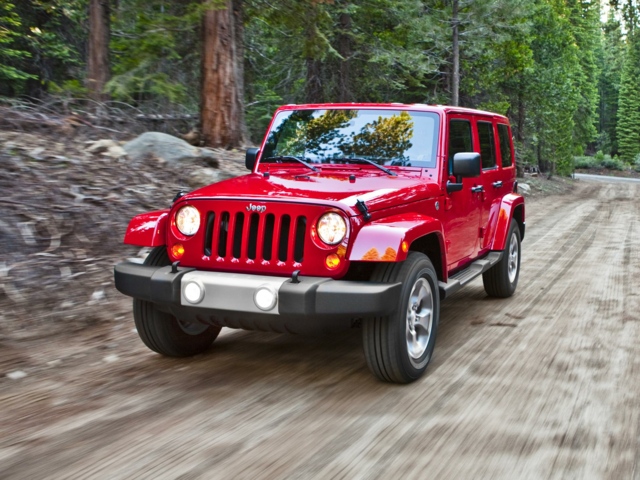
  • Jeep Wrangler Rubicon: The Jeep Wrangler has always been one of those vehicles that even non-car people love. It makes you feel instantly cooler, no matter what job you have, even if you never take it off-road. This is especially true in Rubicon form. Just promise me that you’ll take it off-road, because that’s where you WILL be cool. You don’t need to do anything to it to go just about anywhere in it. Just put some gas, friends, and a cooler full of cold drinks and some snacks, and you’re good to hit the trails.
  • Mitsubishi Lancer Evo: There used to be a time when the Mitsubishi Lancer Evo was one of the most desirable cars out there. It had cutting-edge technology that made it feel like you were blasting down a rally stage, even if you were just going to work. Today, unfortunately, that’s far from the case. With Mitsubishi’s announcement that they are going to be ceasing production of the Evo, and no significant updates to the car since it’s launch in 2008, it feels, like well, a car from 2008. However, that all changes when you get less traction. It doesn’t matter how old the car feels; it just feels right at home. That’s where all Evos have shined, and this one is no exception. Taking one for a spin down a dirt road will put a gigantic grin on your face.
  • Nissan Versa: Many people think that the Mitsubishi Mirage is the cheapest new car sold in the U.S., but they are wrong. The Nissan Versa starts about $1,000 lower than the Mirage. If you’re paying $60,000 for a luxury sedan, $1,000 is pretty insignificant. With a $12,000 car, that’s a lot. Then again, you don’t get much of anything for that price. You get air conditioning, ABS, and traction control, and a radio. That’s about all of the major things on the car. Still, it’s the best at being the cheapest new car sold in the U.S. Yes there are dealer wars to see who can sell the car for the least amount of money, but that’s always been the case.
  • Ram ProMaster: If all the cargo you carry home is takeout from Domino’s, then chances are likely that you don’t need a Ram ProMaster. But, if you haul a bunch of stuff around all day, every day, then the Ram ProMaster is a great choice. It’s got an incredibly low loading height, and a lot of space. With all the stuff you can carry in it, you’ll be catching a bunch of nasty looks from UPS and FedEx drivers.
  • Rolls-Royce Phantom: Set aside it’s hefty price tag for a minute. It weighs nearly 6,000 pounds. It’s far from a driver’s car. Even though it has a 6.8-liter V12, it’s far from a fast car. But, the Phantom chucks all of those notions out the window. It’s not concerned with any of those petty things. No, it’s by far the most comfortable car you could ever be in. It’s sumptuous leather seats have only the finest hides sourced from the finest tanneries in the world. It’s whisper-quiet. It’s also astronomically expensive.
  • Toyota Prius: Yes, I know what you’re thinking. I lost my mind a very long time ago! The Toyota Prius is the ultimate car for fuel economy. The new Prius is more fun to drive than the previous generation, but it’s no sports car by any stretch of the imagination. If you go with the Eco model, you’ll get an incredible 58 mpg city and 50 mpg highway. It also looks worlds better. The Prius has been a ground-pounder in terms of paving the way for every other mainstream hybrid.
  • Pagani Huayra: For outright beauty, the Huayra is untouchable. It’s also stonking fast, but there are few cars that you can just sit and stare at for days at a time. It has so many beautiful little details that you really have to look for. It’s the brainchild of the absolutely brilliant industrial designer Horacio Pagani, the man who helped revolutionize carbon fiber technology back in the late 1980s.
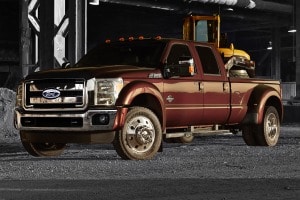
  • Ford F-550: This behemoth pickup truck is one of the heavyweights in the towing/hauling ring. It’s basically a step below an International TerraStar. It can tow up to 26,000 pounds, which is absolutely mind-boggling. The insane part is that it does it without really breaking a sweat. It also costs a lot of money, but if you tow and haul lots of heavy stuff around all the time, there is no better option. All you need is a Class C driver’s license, which is the same one for passenger cars.
  • Mazda Miata: For cheap thrills, nothing beats a Mazda Miata. It’s cheap, fights far out of it’s class, and wins. It’s slow in a straight line, but few cars can catch it in the curves. It’s also really nice to go for a late-night cruise with the top down in your Miata. 
  • Dodge Grand Caravan: Like hauling people around, but don’t need a 12-passenger van? The Dodge Grand Caravan is your ticket. It’s got a powerful V6, lots of space, a nice interior, and is easy on the wallet. It’s probably one of the best vehicles to pile your friends in, and go for a long road trip in. Even the third row is usable for adults! 

Tell me what your favorite cars at one specific task are!

More of the Best Japanese Sports Cars Ever!

This is a follow-up to one of my most popular posts of all time. Japan has given us some of the most iconic, endearing, and usable sports cars ever to drive.

  • 1959 Datsun Sports/Fairlady: It was known as the Datsun Fairlady in Japan, but over here, it was known as the Datsun Sports. It came with a 1,500 cc engine, a 1,600 cc engine, or a larger 2,000 cc engine. It started as a cheaper competitor to the MG Midget, but it had a fiberglass body instead of the aluminum used in the MG. It developed into one of the most successful road-racing cars in the SCCA (Sports Car Club of America).

    This is a 1962 model, but it is essentially the same as the 1959 model.
    This is a 1962 model, but it is essentially the same as the 1959 model.
  • 1963 Honda S500: This was Honda’s first car. While it’s successor, the S600 enjoyed numerous class wins in the SCCA and other road racing bodies, the S500 shouldn’t be forgotten. The S500 weighed a mere 1,500 pounds, and it was powered by a tiny 500 cc dual-overhead-cam engine with a 9,500 RPM redline. It had one motorcycle influence – chain-driven wheels. It was a fast, sprightly little car that could hang with the big boys.1963 Honda S500
  • 1965 Toyota Sports 800: This was Toyota’s first sports car, and while it wasn’t a hit in the US, it’s had a devout following since day one. It has 44 horsepower, and a removable targa top. Oh, and it’s pretty cute.

    The only thing that isn't stock about this beautiful 1965 Toyota Sports 800 are the wheels, but I think it adds a nice touch.
    The only thing that isn’t stock about this beautiful 1965 Toyota Sports 800 are the wheels, but I think it adds a nice touch.
  • 1967 Toyota 2000GT: Riding off of the success of the Sports 800 in Japan, Toyota decided to build a competitor to the Jaguar E-Type. The result is the absolutely stunning Toyota 2000GT. Toyota teamed up with Yamaha to develop the engine and transmission, and boy did Yamaha deliver! It’s an achingly gorgeous car that breezes well over $1 million at auction.1967 Toyota 2000GT; top car design rating and specifications
  • 1968 Datsun Bluebird/1300-1600/510: Datsun essentially reverse-engineered the legendary BMW 1600, and this wonderful rally/drift machine was born. It was known as the Bluebird in Europe, the 1300-1600 in Asia, and the 510 here in America. It still holds 2wd rally records. It’s one of the most legendary sports coupes ever made, and you can buy one for a relatively low price.

    This is a picture from one of the original advertisements that Datsun put out in 1968. The No. 85 car is one of the legendary rally cars.
    This is a picture from one of the original advertisements that Datsun put out in 1968. The No. 85 car is one of the legendary rally cars.
  • 1970 Datsun 240Z: This is certainly one of the most beautiful sports cars ever made, let alone one of the most beautiful cars ever made. My grandparents and dad used to own one, but guess who decided to sell it so I couldn’t enjoy it? It had a single-overhead-cam inline six cylinder engine, a five speed manual, and fully independent suspension. European sports cars never knew what passed them.1970 Datsun 240z
  • 1971 Mazda RX-2 and RX-3: These cars were the precursors to the legendary RX-7. The RX-2 set so many records and poles in IMSA that rotary engines got banned. The RX-3 went 160 mph at Bonneville. 
    This is a 1971 Mazda RX-2. It's not exactly pretty, but it got the job done.
    This is a 1971 Mazda RX-2. It’s not exactly pretty, but it got the job done.

    This is the slightly larger 1971 Mazda RX-3. It's equally homely, but it was much faster than the RX-2.
    This is the slightly larger 1971 Mazda RX-3. It’s equally homely, but it was much faster than the RX-2.
  • 1979 Toyota Celica: The original Toyota Celica was for all essential purposes, a Datsun 240Z with icing on the cake. While it didn’t have a six-cylinder engine, it had a rear seat, and therefore, more utility. It was originally somewhat homely, but then the legendary AE86 generation came around, and it had totally ’80s styling, man.

    Most teenage boys in the late 1970s and early 1980s really wanted to own a 1978 Celica notchback, like this. You can decide if they really wanted it that badly.
    Most teenage boys in the late 1970s and early 1980s really wanted to own a 1978 Celica notchback, like this. You can decide if they really wanted it that badly.
  • 1982 Datsun Maxima: This is the precursor to the Nissan Maxima. It borrowed powertrain components from the 240Z, and was supposed to be a very fun car to drive.1982 Datsun Maxima
  • 1985 Toyota MR2: You can call it Mister Two. It was inspired by the then-fast Ferrari Testarossa. It was a break from the monotonous, boring cars Toyota had been cranking out…oh wait, they still are!

    You can call it Mister 2.
    You can call it Mister 2.
  • 1986 Honda Civic, CRX, and Prelude Si: The year 1986 was a good year for car people. Honda released the Si model for the Civic, CRX, and Prelude. It upped speed and handling prowess. These cars are still fast enough to keep up with a modern Porsche Cayman on a winding road or a race track. Plus, you can get them for very little money, as Honda made a lot of them!
    This is the 1986 Civic Si, which was basically a four-seat CRX. It had more utility, but was slightly slower.
    This is the 1986 Civic Si, which was basically a four-seat CRX. It had more utility, but was slightly slower.
    The 1986 Prelude Si was a sporty, yet very refined car. It had tuned port fuel injection, which was rare for the time. Yet, it was still affordable to the everyman.
    The 1986 Prelude Si was a sporty, yet very refined car. It had tuned port fuel injection, which was rare for the time. Yet, it was still affordable to the everyman.

    This is the infamous 1986 Honda CRX Si. It's still fast enough to keep up with a new Miata.
    This is the infamous 1986 Honda CRX Si. It’s still fast enough to keep up with a new Miata.
  • 1988 Honda Prelude: Honda took the already-impressive Prelude Si, made all of it’s equipment standard, and then added four-wheel steering to it. It was a speedy little car.1988 Honda Prelude
  • 1990 Mazda MX-5 Miata: It’s a sprightly Lotus-inspired roadster that is now the world’s favorite roadster out there. It took all of the fun charms that British and Italian roadsters had, and added bulletproof reliability to the mix. It’s also the world’s most popular race car. Need I say more? I really want one (hint, hint Zayzee)…1990 Mazda Miata
  • 1991 Acura NSX: Acura’s NSX is still one of the most amazing supercars ever. It’s so reliable that you can daily drive it without having to worry about overheating it. It has a sleek aluminum body that looks fabulous in red (just to rub it in to Ferrari), and it’s 3.0-liter V6 revs to 8,000 RPM. It’s V6 has the original VTEC system, which is just a variable timing and lift valvetrain. VTEC comes from motorcycles, but it first appeared in 1989 with the Acura Integra GS-R for Japan only.

    It's 24 years old, yet it's still incredibly fast, and has styling that is superb.
    It’s 24 years old, yet it’s still incredibly fast, and has styling that is superb.
  • 1994 Toyota Supra: The Supra finally matured in it’s fourth generation. It’s still one of the most legendary sports cars around. It’s twin-turbocharged 2JZ-GTE engine further catapulted the Supra into fame. Most have been tuned to within an inch of their life, so it’s rare to see a stock fourth-generation Supra.1994 Toyota Supra
  • 1992 Mazda RX-7: The third, and final generation of the legendary Mazda RX-7 arrived in 1992 with sequential turbocharging, beautiful bodywork, and vastly improved handling. It’s been successful on the racing circuit, and is still winning awards in Formula Drift.1992 Mazda RX-7
  • 2000 Honda S2000: How does Honda celebrate their 50th birthday? By building an incredible successor to the S600, that’s how! The S2000 was powered by a 9,000 RPM 2.0-liter VTEC four-cylinder engine that screams to the heavens. It’s supposed to be one of the most visceral and engaging cars ever to come out of a factory’s doors.2000 Honda S2000
  • 2003 Mitsubishi Lancer Evolution VIII: It’s a cross between a road-racing machine and a rally car. It had massive Brembo brakes, Bilstein shocks with lots of travel that somehow allowed for perfect car control, and a massive, provocative carbon-fiber rear wing. It’s instantly recognizable.2003 Mitsubishi Lancer Evolution
  • 2004 Mazda RX-8: The Mazda RX-8 was the last dying gasp for rotary engines. It had doors like an extended cab pickup truck, and a backseat. It drank fuel like a sailor, and ate oil like a long-haul trucker. If you started driving it before the engine was warm, you’d flood the engine. If you turned it off without letting it idle for a few minutes, you’d cook the rotors. Yet, people still love them.Mazda RX-8, 2004 World Wide Launch Monterey, CA  12/29/2002
  • 2009 Nissan GT-R: Nissan took the GT-R to uncharted heights in terms of performance. It has a twin-turbo V6, AWD, and a video-game dashboard just for kicks. It’s performance is truly astonishing. It can grip like nothing else out there, and it’s acceleration is only rivaled by hypercars like the McLaren P1 and Porsche 918 Spyder. And a garden-variety brand-new one costs about $100,000.

    It's Godzilla! The nickname came around after an automotive journalist looked at all of the races that the original GT-R had won, and proclaimed it "Godzilla." It's a fitting nickname.
    It’s Godzilla! The nickname came around after an automotive journalist looked at all of the races that the original GT-R had won, and proclaimed it “Godzilla.” It’s a fitting nickname.
  • 2012 Lexus LFA: Lexus took a stab at the supercar market with the clunky and odd LFA. They brought a butterknife to a minigun fight. They built 500 LFA supercars that are somehow coveted right now. They aren’t fast by supercar standards, and they aren’t very much fun to drive. Their transmission can never replicate a shift, so you either get slammed back into your seat, or you don’t notice it shifting at all. There is no in between. That being said, it’s 4.8-liter V10 sounds spectacular, and revs to the heavens. Lexus likely lost money selling each LFA. Building supercars is an expensive, risky business.2012 Lexus LFA
  • 2012 Scion FR-S/Subaru BRZ/Toyota GT86: This might just be the best Subaru/Toyota pairing ever. It’s certainly an odd pairing – Toyota and Subaru are competitors, but their collaboration resulted in a really fun car. The Scion FR-S is a bit more loose, as it’s meant more for drifting, whereas the Subaru is a bit tighter, as it’s meant for canyon carving and track duty. They’re really affordable – a well-optioned one comes in about $30,000, and they have a lot to offer: RWD, fuel efficiency, fun-to-drive factor, reliability, standard manual transmission, etc.2012 Scion FR-S

2012 Subaru BRZ2012 Toyota GT86Those are what I think to be more of the best Japanese sports cars ever made. I’d love to hear more of your stories about any of these cars, or which one is your favorite.

The Ferrari LaFerrari is a Dream Come True…for a Lucky Few!

It should be worth mentioning to you that copious amounts of drool may ensue while reading this article.  If you’re a numbers junkie, read ahead.  If you’re an experience junkie, read ahead.  If you’re a looks person, read ahead.  Well, you got it.  There’s something for everybody in this car, and this article! The 2015 Ferrari LaFerrari is the most powerful production Ferrari ever made.  Yipe.  It’s also the first hybrid Ferrari ever made.  Yowza.  It’s carbon-fiber tub (where the driver and passenger sit) is made from the same carbon fiber as the frighteningly fast Ferrari F1 cars, and it’s formed by the same team that makes the F1 cars.  Wow.  It’s name translates to “The Ferrari.” As emissions regulations around the world get harder, supercar manufacturers are forced to turn to alternative different forms of power.  McLaren’s powerful P1 hypercar uses two turbochargers, an electric motor, and an already powerful 3.8-liter V8.  Stuttgart fired back with an equally impressive salvo that is the 918 Spyder, which uses an insanely powerful naturally aspirated V8 with two electric motors.  The LaFerrari is just as, if not more impressive.  It’s pretty darn hard to beat a Ferrari V12 for power, reliability, and sound. All three of said cars are spiritual and literal successors to simply amazing hypercars from about 10-15 years ago.  The P1 is the successor to the legendary McLaren F1 of the late 1990’s.  The 918 replaces the controversial Carrera GT, the car that Paul Walker and Roger Rodas died in late last year.  The LaFerrari replaces the stunning Enzo, named for Enzo Ferrari, the founder of Ferrari.  But, we aren’t going to be talking THAT much about the LaFerrari’s rivals. The seats are bolted directly to the carbon fiber tub, which means that they are not adjustable.  Ferrari tailors seat padding for each and every customer and their passenger.  A small lever does move the pedals fore and aft.  The flat-bottomed steering wheel adapted from the Ferrari 458 Italia Speciale telescopes and moves up and down.  The LCD screen that is the speedometer and tachometer has a 9000 RPM redline, but the engine will briefly go to 9250 RPM. The V12 engine is pulled from the F12 Berlinetta, which means that it displaces 6.3 liters, and puts out a shriek like nothing of this world.  It trades low-end power for a higher redline (the F12 stops revving at 8250 RPM, and the LaFerrari stops revving at 9000).  It also makes 58 more horsepower (731 versus 789).  The 161-horsepower electric motor that is bolted to the back of the equally fabulous seven-speed twin-clutch automatic transmission kicks in at low speeds and when the engine hits redline.  There is no EV mode, as Ferrari estimates that the range from the batteries is under 6 miles, and Ferrari has no plans of adding more batteries or EV range. With a combined 950 horsepower, this car is more far more powerful than the 903-horsepower P1 or the 887-horsepower 918 Spyder.  This means that the Launch button looks pretty dang tantalizing.  Ferrari claims 0-60 in under 3 seconds, but won’t allow any major automotive media publications to gather data. A nice touch is the small plaque at the bottom of the steering wheel, which allows owners to put whatever they want onto it.  The steering should be quick, as Ferrari says that the steering wheel will turn just under two turns lock-to-lock.  That’s on par with an F1 car.  Yet another Ferrari first is the electromechanical steering.  That basically means that an electric motor boosts the steering in addition to the power booster. The rear wing moves up and down, yet Ferrari claims that it shouldn’t impede driver rearview visibility too terribly much.  The flaps at the front of the hood lift up when the brakes are applied.  Combine those two flaps with the rear wing, and the car can generate up to 800 pounds of downforce at 125 mph. The LaFerrari also has an active exhaust system.  This means that there is a series of flaps inside of the mufflers to mute the noise when you’re not digging into the throttle.  When you get into the throttle, the valves stay open for more noise.  Another bonus – the electric motor’s high-pitched whine is drowned out by the wail of the V12! Yet another added bonus is the fact that every single piece of electronics in the LaFerrari don’t interfere with the driver, which means that the driver can drive as fast as they want to (on a track!) without having to fight all of the nannies.  That’s a problem with most new cars.  Give a driver a car with nannies that they have to fight, and it can lead to a horrible driving experience.

Ferrari LaFerrari Drift

Ferrari LaFerrari