Some of the Most Amazing American Race Cars

Racing is in America’s blood. We started off racing horses, which is still one of the most profitable forms of betting to this day. We also love boat racing, whether it be sailboats or motor boats. We also love racing planes. It should only seem logical that we decided to race cars when they came out.

Our country has created some of the boldest, most successful and boldest racecars in history. These cars are some of my personal favorites, and they only scratch the surface of America’s storied racing heritage.

  • Chaparral 2E: Chaparral’s 2D was a very successful racing chassis, the 2J earned immortality thanks to it’s snowmobile-engine-driven suction fans. The 2D was better than both combined. It ushered in the aerodynamics era thanks to it’s driver-adjustable rear wing (which was adjusted via a pedal in the cockpit) and it’s side-pod mounted water cooling system. It was pure Texan ingenuity. Every modern race car owes at least something to the Chaparral 2E.chaparral-2e-03
  • 1967 Gurney Eagle-Weslake Mk. 1: Dan Gurney was a true American racing pioneer. This is what I view to be his masterpiece. He also won a Formula 1 race in this car. That’s about as good as it gets, but I still love this car to pieces. The tiny 11,000 RPM V12 and styling that looks like a shark and torpedo are just icing on the cake.gurneyeagleweslakemk1
  • Lotus 56: It’s not just another turbine-powered IndyCar. It was a car that solidified the basic shape of most high-level race cars from 1967 on out. It sent the cigar shape packing. It also had a one-speed automatic and AWD. While turbines and AWD would be banned from future IndyCar seasons, the shape remained and evolved. Even though it’s got a Lotus name and Peter Chapman modifications, it’s still basically an all-American STP-Paxon car.lotus56
  • 2016 Ford GT GTE: There was no doubt in any car or race fan’s mind when this car rained on every other car’s parade at the Detroit Auto Show this year. It’s 3.5-liter EcoBoost V6 has been proven in the TUDOR Championship series, Chip Ganassi Racing has had lots of success racing Fords and is ready for a new challenge, and what might be most important to those automotive fans who like to cook (like me) is the fact that the rear diffuser is big enough to chiffonade an acre of potatoes without trying. The fact that it is dressed up in a very patriotic livery makes it just that much more amazing.fordgtgte
  • Dodge Viper GTS-R Mk. 1: The original Dodge Viper GTS-R immediately proved that a big V10 is an essential asset in endurance racing. On it’s third outing at Le Mans, the SRT Motorsports team took a class win in 1998. Again in 1999 and 2000. You can’t forget the overall wins at the Nurburgring, Daytona, Spa, and the five (yes, five) FIA GT and two ALMS championships. Plus, the fact that it was incredibly intimidating helped.dodgevipergtsrmk1
  • Corvette Racing’s C5.R, C6.R, and C7.R: For 17 years, The Corvette Racing team has put three generations of increasingly amazing Corvette race cars on the track. All have had an “.R” designation, except the first, which was a “-R.” They have proved themselves multiple times. 1999 marked the first year of the C5-R, which snatched three class wins at Le Mans (among many other wins). The C6.R took seven thundering liters of American muscle around the world, and won many races. The C7.R just grabbed the GTE Pro class win at Le Mans, and that was one of it’s first races!corvettec5-rcorvettec6.rcorvettec7.r
  • Panoz LMP-1 and LMP07: Many, many years before Nissan’s GT-R LM caused folks to scratch their heads as to why a front-engine endurance race car is a good idea, Panoz’s LMP-1 Roadster S and it’s less successful sibling LMP07 proved to the world that an endurance racing prototype does not need to carry their engine behind the driver. Neither car was wildly successful, but the LMP-1 certainly got into a few good battles with the BMW V12 LMRs and Ferrari 333 SPs to snag the 1999 ALMS team championship.panozlmp-1panozlmp07
  • Ford 999: Henry Ford should go down in the history books as a stark raving lunatic (for several reasons) because he took the crude, incredibly dangerous 18.9-liter Ford 999 racecar to 92 mph (the equivalent of somebody taking a car to 300 mph today) – a world record – on a frozen lake. The frozen lake was the only place large enough to get the car up to that speed. It made a whopping 80 horsepower, a lot of noise, and had killed a man a year before. It was a brutish, outrageous car that put Ford on the map, even if he became known for utilitarian and economical Model T’s and the now-legendary 1932 Ford.ford999
  • DeltaWing: No other American creation has so upset the normality of what race cars should look like as the Ben Bowlby-designed, Panoz-managed, Gurney’s All-American Racers-built DeltaWing. The car drastically reduced frontal area to reduce drag and fuel consumption. It worked, and even sparked a copycat (the Nissan ZEOD RC), even though it didn’t achieve any incredible success.deltawing
  • Cadillac ATS-V.R: Cadillac attained massive success for ten years with the CTS-V.R in the Pirelli World Championship Series. Now it’s the turn for the ATS-V.R to take the reins. It’s got some big shoes to fill. It’s got a twin-turbocharged 3.6-liter V6 making somewhere around 600 horsepower that sits somewhere between the massive fender flares and the huge extractor hood. Between this car and the Ford GT GTE, it looks like most, if not all, future American race cars will have forced induction engines.cadillacats-v.r
  • Swift 007.i: The year 1997 was a lucky year. The team owned by Paul Newman and Carl Haas stopped running a Lola chassis, and switched to a chassis made by the American company Swift. The car had a Ford Cosworth engine, Goodyear tires, and an all-American driver in Michael Andretti. I should probably mention that it won it’s first-ever race outing. Talk about coming in with style. Oh, and I was born that year.swift007.1
  • Shelby Cobra Daytona Coupe: This is quite possibly one of the most beautiful cars ever made, as well as one of the most successful. Carroll Shelby needed to make the already-successful Cobra 427 faster, but that meant he needed a more aerodynamic body. He brought on legendary designer Peter Brock, who helped design the 1963 Chevrolet Corvette Stingray. Brock designed a flowing, muscular body that still looks like nothing else on the track. The result was a smashing success. The car won the 24 Hours of Daytona, Le Mans, Spa, and countless other races.shelbycobradaytonacoupe
  • Dodge Daytona/Plymouth Superbird: Mopar’s “Winged Warriors” made aero cars illegal in NASCAR. That should be telling as to how good those cars were. They packed quite the punch with their 426 HEMI engines and special aerodynamics packages. NASCAR outlawed aero cars after 1970. Buddy Baker campaigned a Daytona through 1970, and Richard Petty had one of his most dominant years in 1970 with his Superbird. It’s also one of the most iconic race cars ever.dodgedaytonaplymouthsuperbird
  • 1966 Chevrolet Corvette: The 1966 Chevrolet Corvette is one of the best race cars Chevrolet ever had. It had a walloping punch with it’s 427 cubic-inch big block V8, with the code-name L-88. This engine made any car it was in a true monster. It’s still fast enough to show a modern NASCAR stock car how it’s done on a road course. It’s like carving a statue with a hydraulic shovel. 1966chevroletcorvettel88

Amazing Photos From IROC Racing!

“Spanning the globe to bring you a constant variety of sports; the thrill of victory and the agony of defeat. The human drama of athletic competition … This is ABC’s Wide World of Sports.”  Legendary ABC Sports broadcaster Jim McKay spoke those words every Saturday afternoon for 37 years, from 1961-1998, when ESPN became the premier sports broadcasting channel.  Those words of Jim McKay were heard in millions of American homes.

ABC Sports was particularly fond of showing motorsports.  Every Saturday afternoon, millions of American children (and adults!) were treated to 90 minutes of non-mainstream motorsports like NASCAR, NHRA, demolition derbies, surfing, and even the Joie Chitwood Thrill Show.  While I’ve never seen the Joie Chitwood Thrill Show, it must have been good enough to be shown on one of the very few TV channels on the air at the time.  This is when IROC racing entered the motorsports scene in the early 1970’s.  It ran for a good 15 years or so, reaching it’s peak around 1980.  There was no other place where you could watch NASCAR legends like Richard Petty and Bobby Allison duke it out with F1 legends like Emerson Fittipaldi and Denis Hulme.  Throw in Mario Andretti, and you were bound to sit back and watch one hell of a ride.

The late Chris Economaki was always commentating on some form of motorsports, and his talent showed during the pre-race commentary of IROC V.  IROC V was the 5th IROC season, and the year was 1978.

While most younger Camaro enthusiasts will think that IROC was simply an option package developed for the Camaro starting in 1985, there’s more to the story.  The story behind IROC goes all the way back to 1973 with Roger Penske, Les Richter, and Mike Phelps (no relation to the swimmer of the same name!) all had the amazing idea to put 12 of the world’s greatest race car drivers in identical cars to compete on road courses and NASCAR superspeedways alike in a four-race series.  Richter was cautious enough to say that the IROC series might not determine who the best driver was, “but we sure go a long way towards that goal.”

The first IROC season was the 1974 season, and it kicked off on October 27, 1973.  It consisted of 4 events with all racing done in identically-prepared Porsche 911 RSR’s.  For the 1975 season, Chevrolet came on board, and the Chevrolet Camaro was the car of choice.

Here are some pictures that have only recently been released to the public.  Enjoy.

Richard Petty to Drive His 1967 Plymouth Belvedere at the Goodwood Festival of Speed

Richard Petty is one of the foremost racing legends ever.  He dominated NASCAR from 1964-1986.  He was a brilliant, uncompromising driver who set so many winning records in NASCAR during his brilliant career that nobody except Dale Earnhardt ever came close to matching him.  When asked of what his most iconic car was, many people will immediately tell you his 1970 Plymouth Superbird or 1967 Plymouth Belvedere are his most iconic car. More people will tell you that his Superbird is the most iconic car to ever race NASCAR.  I’m inclined to agree.  All of Petty’s Plymouth’s were powered by the legendary, versatile 426 Hemi.  What I am here to tell you about is Petty will be driving his 1967 Plymouth Belvedere.

Richard Petty’s big, Petty Blue 1967 Plymouth Belvedere will be an amazing sight to see at the 2014 Goodwood Festival of Speed.  It’s going to be a change from the wailing Le Mans and F1 cars that populate the Festival of Speed.  It was the car that Richard Petty drove in his most dominant season ever, 1967.  Just next month, Petty and his big, blue, burbling Plymouth will reunite.

Petty’s 1967 Belvedere was actually a 1966 model redone as a 1967 model (it can get expensive to supply a brand-new car that hasn’t hit the market yet for one person to race).  Normally, it lives over at the Petty Museum in North Carolina, but it has also been displayed at the NASCAR Hall of Fame.  For the 1967 NASCAR season, Richard Petty was a force of nature.  He was simply unstoppable.  He won 27 out of 48 races entered, including a 10-race winning streak.  That is a NASCAR record that stands to this day.  It would be the second of his seven championships.  His first championship was in 1964.  Until 1967, Petty was referred to as “The Randleman Rocket.”  After 1967, his new nickname was “The King.”  I’m trying to resist the urge to make bad Hakuna Matata jokes…

While the full list of the 2014 Goodwood Festival of Speed invitees hasn’t been finalized, we do know that Indy 500 legend Al Unser will be driving his 1978 Lola-Cosworth Team Penske Indy car.  We also know that Formula 1 legends John Surtees and Emerson Fittipaldi will be driving a Ferrari 158 and a McLaren M23, respectively.

Some other highlights of this year’s Festival of Speed:  Sebastian Loeb will be attempting to set a record in his Pikes Peak-winning Peugeot 208 T16, and a timed supercar run of a prototype Acura Honda NSX.

On a sad note, Richard Petty’s longtime wife, Lynda Gayle Owens Petty passed away on March 25, 2014.  She was 72.  It was unclear for a few weeks on whether Richard Petty would come to the Festival of Speed.  A quiet announcement on Petty’s website a few weeks ago said that he will be going to Goodwood.  I would like to offer my sincere condolences to the entire Petty family.


Coverage from the 11th Annual Peggy Sue All-American Cruise!

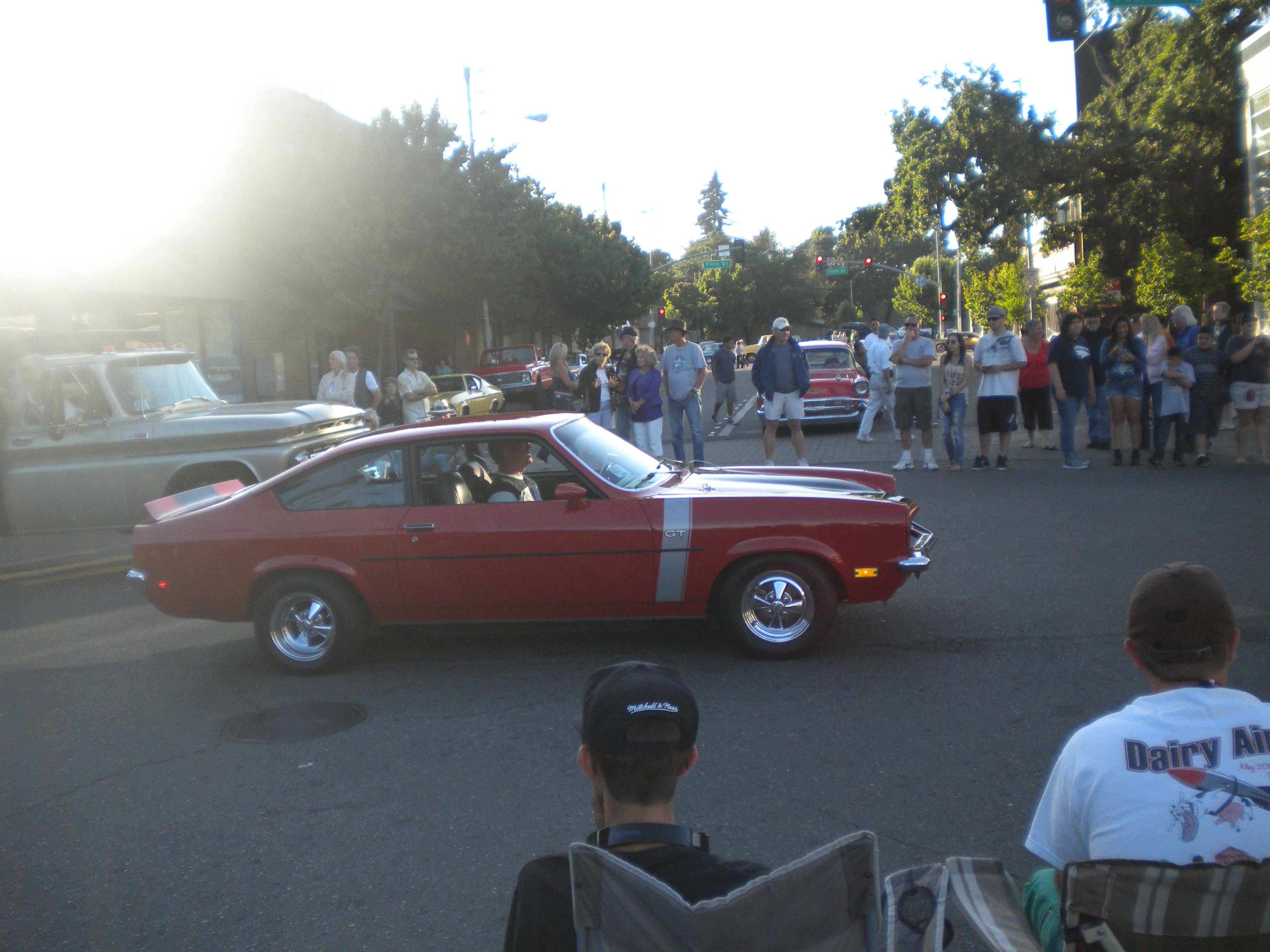
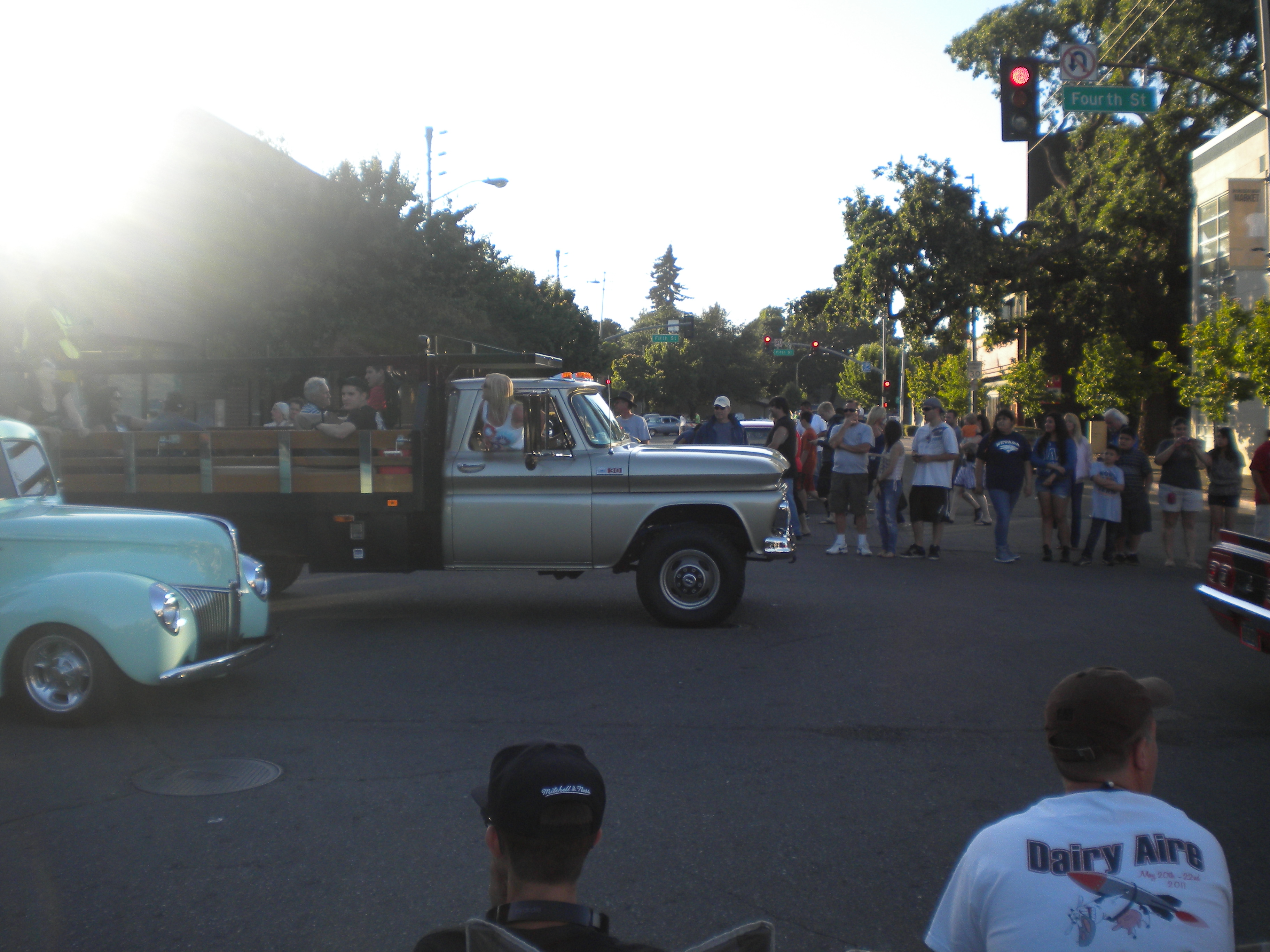
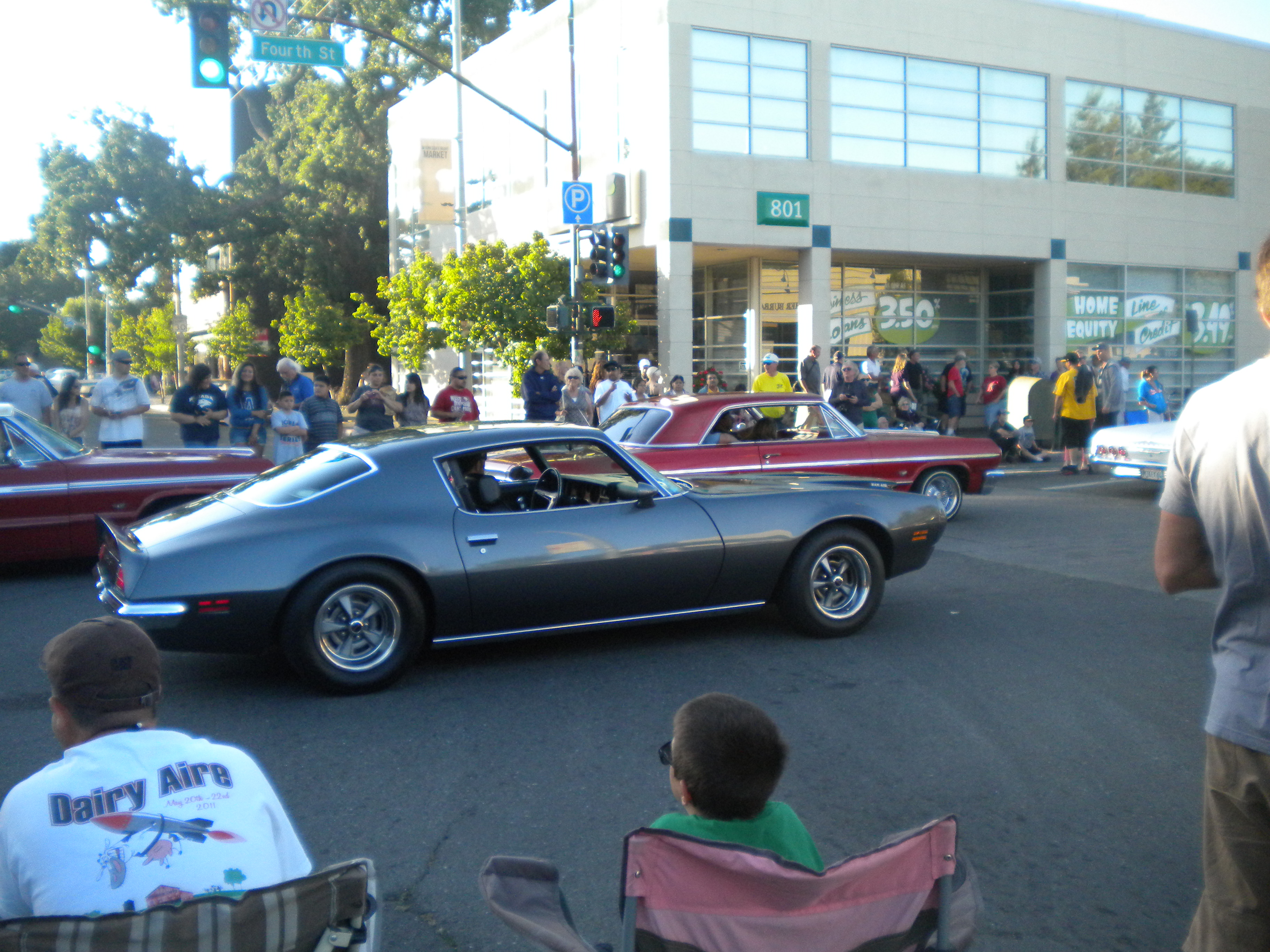
Every year, the Peggy Sue All-American Cruise and its related events take over sunny Santa Rosa, CA.  Restored cars, hot rods, low riders, raised Jeeps, and antique American cars are all part of the mix.  We have entered our 1950 GMC 100, “Betsy” twice.  It’s always been a lot of fun for me to see all of the classic cars in the parade or the massive parking lot where they are displayed!  This year, one of my good friends joined me in watching the classic American cars cruise around downtown Santa Rosa.  Revving engines?  Check.  Drunk people yelling at drivers to “Step it up, dude!”?  Check.  Squealing tires?  Check?  The smell of burnt brakes?  Check.  Annoyed and overworked event staff?  Right on.  I know that you are getting bored reading my words about what was going on.  I’ll cut to the chase:  It was a LOT of fun, and you should join me next year.  Enjoy the pictures.

DSCN1920

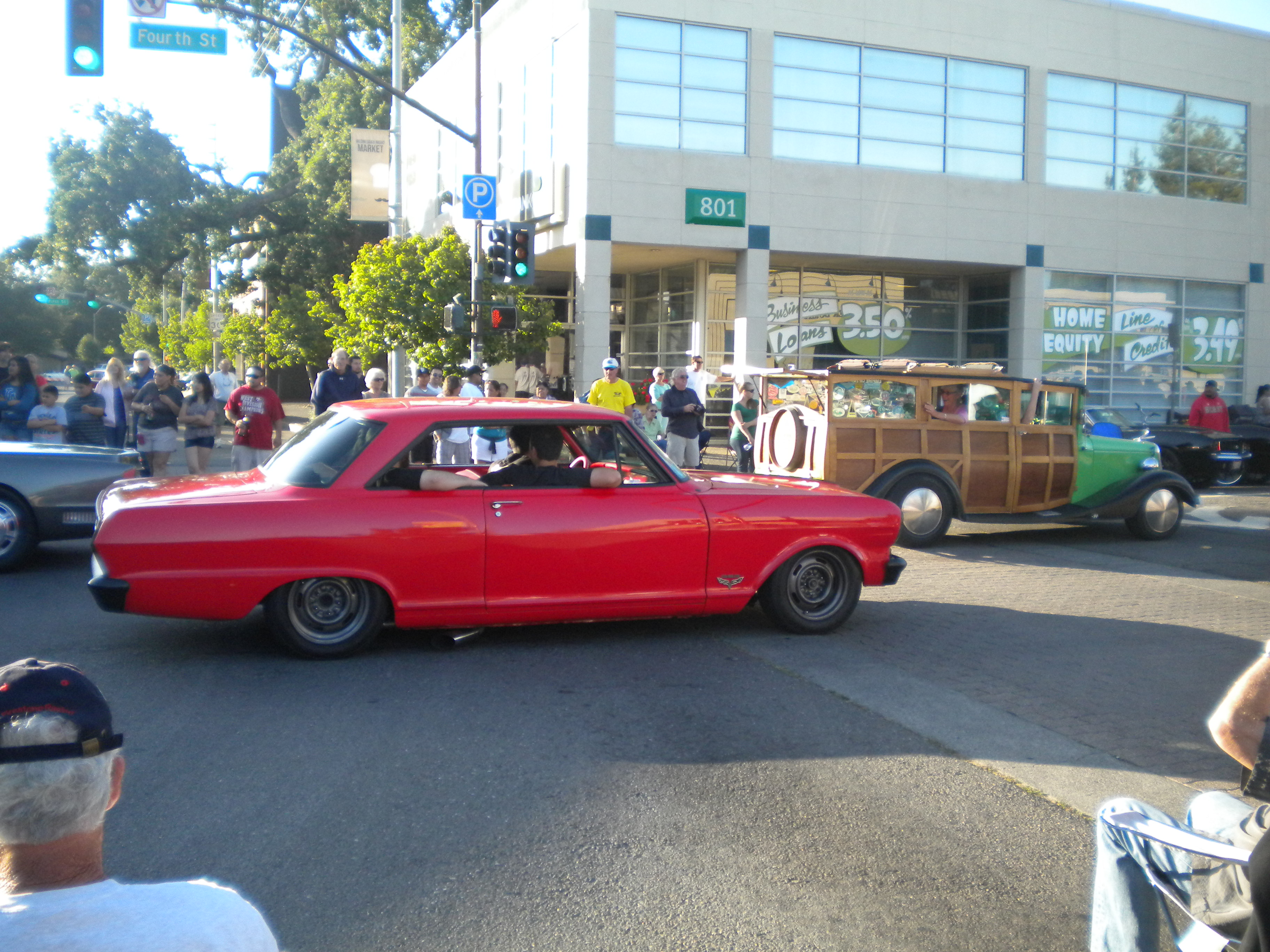
I don’t know what this Chevy Nova had under the hood, but it sounded NASTY!  Many of the cars at the parade were either restored to Concours-levels or were built for the drag strip.  This one was built to rule the streets.   DSCN1921

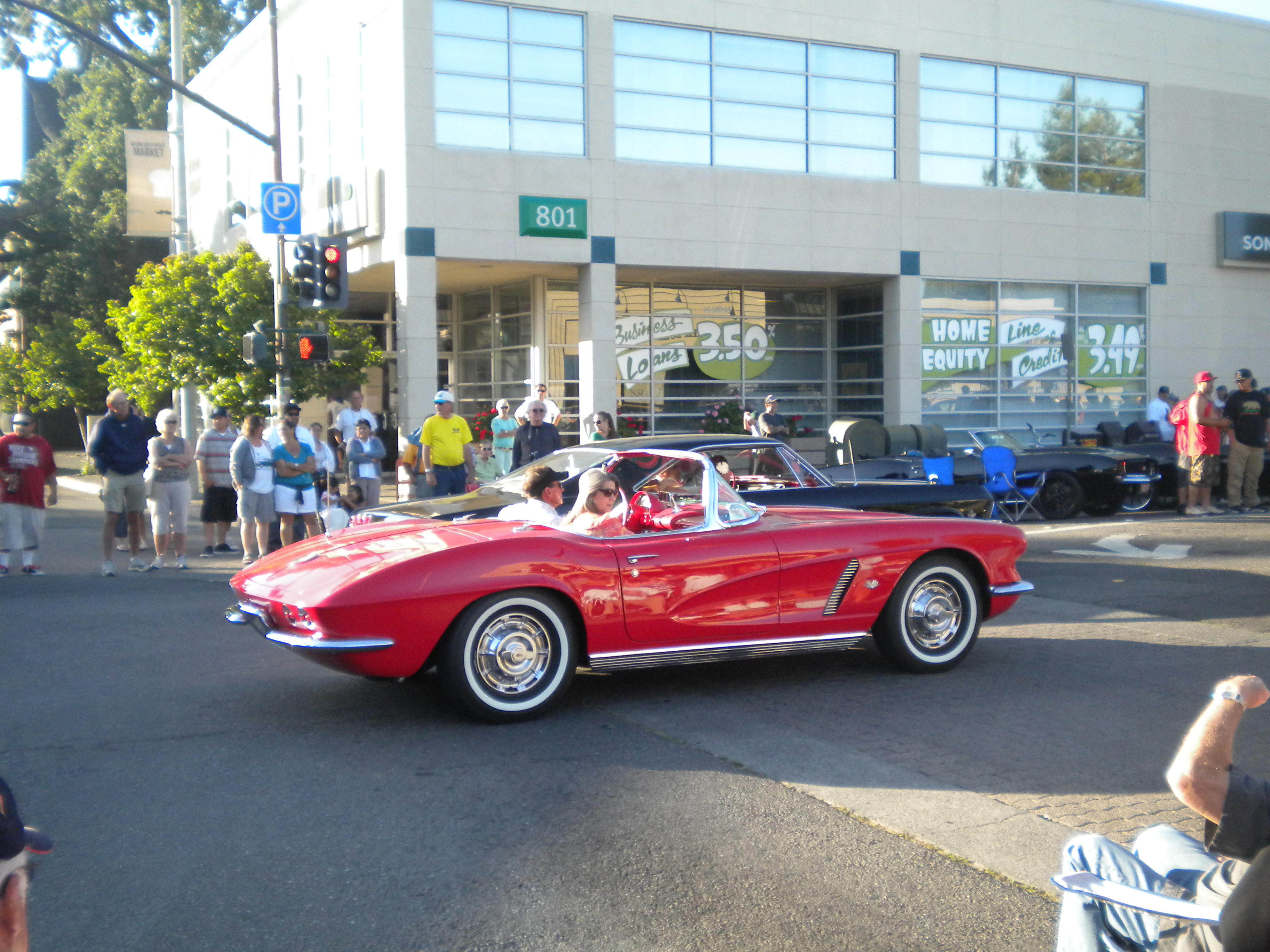
This 1959 Chevrolet Corvette is a rare “Fuelie.”  Instead of a carburetor, it has a primitive version of fuel injection.  This particular example was restored to a “Level 1.”  Level 1 means that it is virtually perfect.  That it is.

DSCN1922

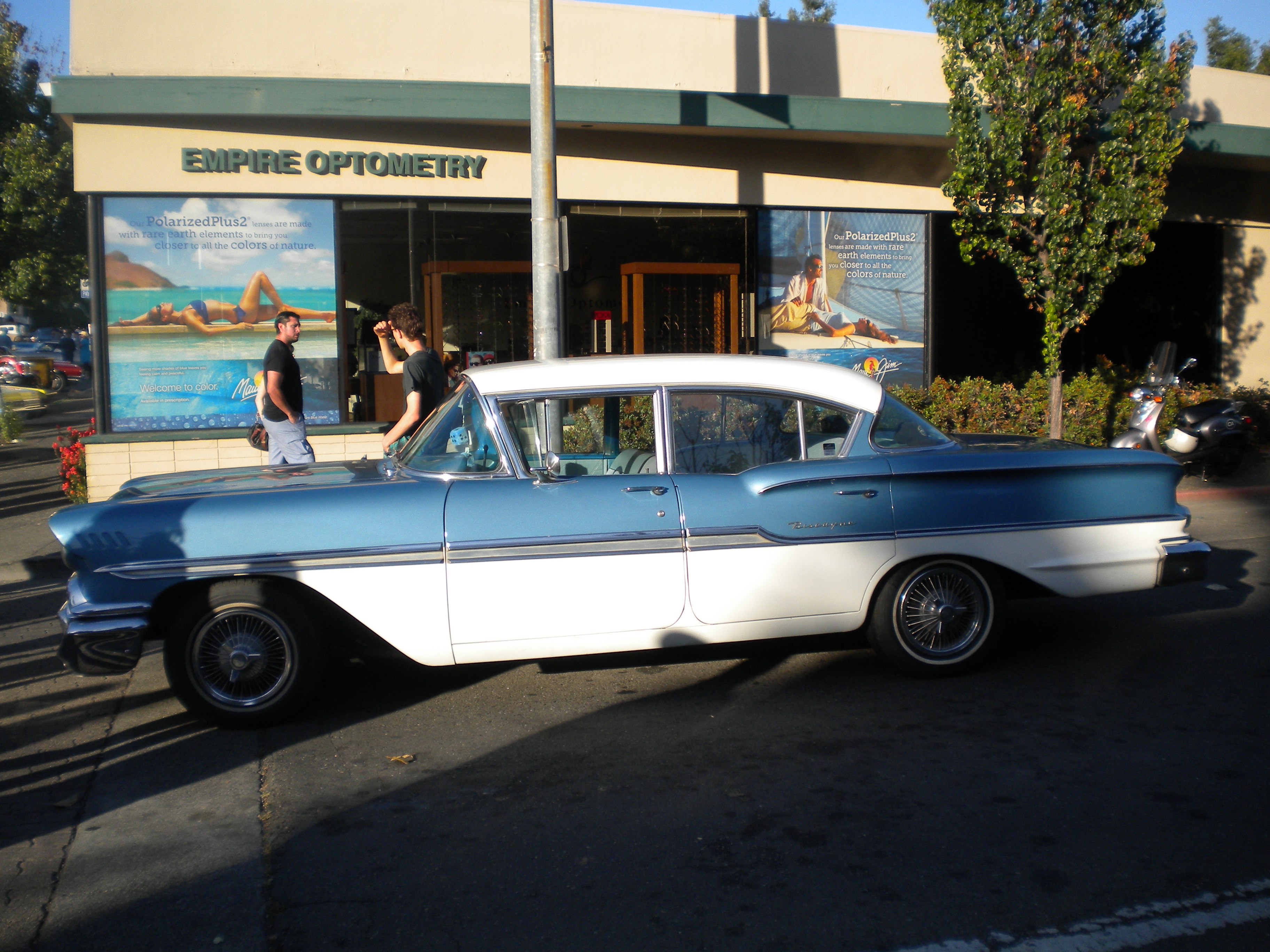
This 1966 Chevrolet Biscayne is a powerful, efficient, and stylish family sedan from the muscle car era.  It has a 327 cubic-inch V8 engine and a two-speed automatic Powerglide transmission.  It’s lovely.

DSCN1923

I find it nice that the interior of the same Biscayne matches the exterior of the car.  Even the steering wheel has chrome on it!

DSCN1924

Same car.  This is the model designation.  The car is a barn find from somewhere around Redwood City, according to the owner.  He restored it himself, and he did a very good job of it!

DSCN1925

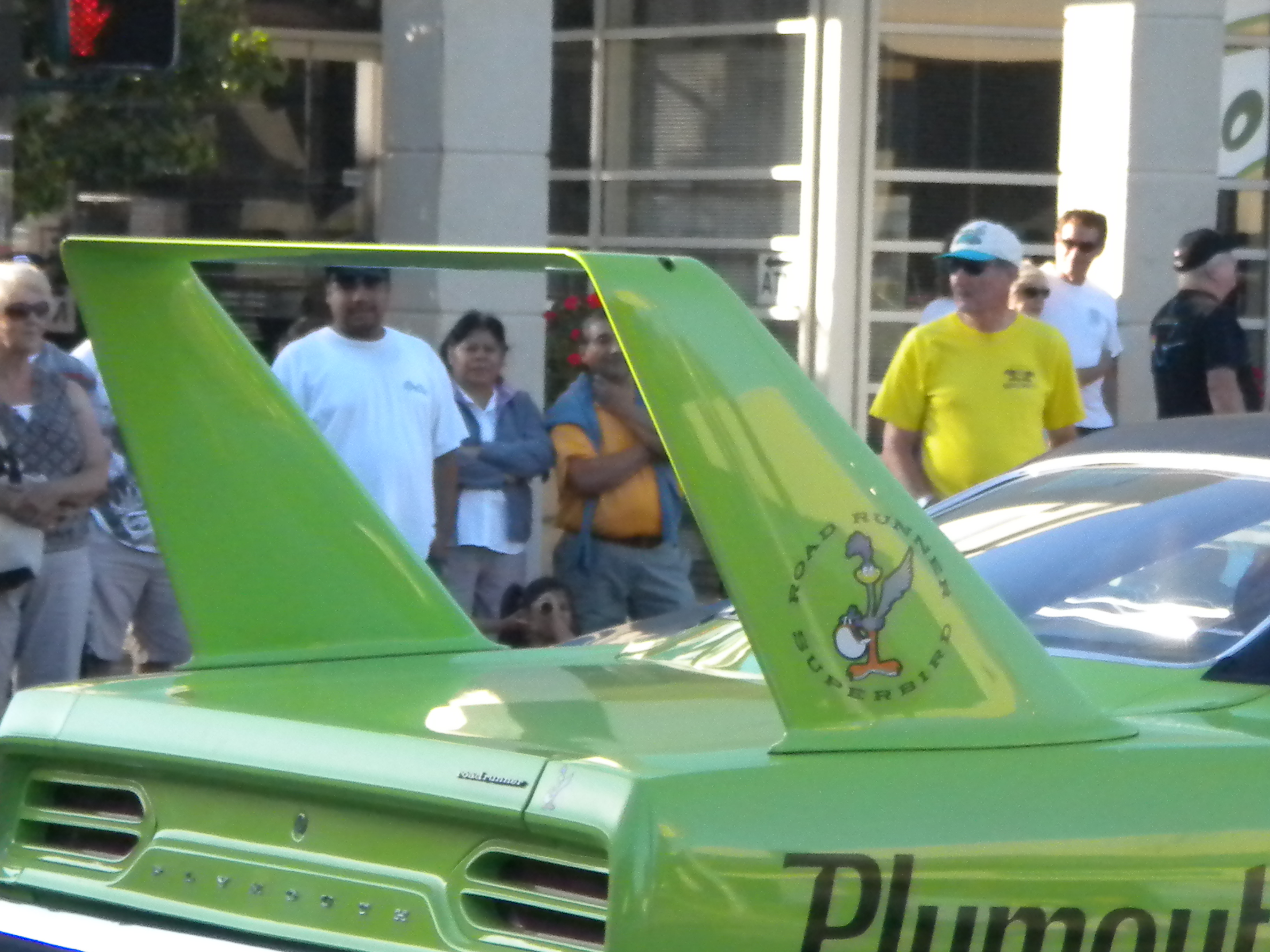
For those of you old enough, you should remember the aero-wars days, when big engines and aerodynamics were all the rage.  The 1971 Plymouth Roadrunners and Superbirds were the car of choice for many famous NASCAR drivers.  Richard Petty left Ford in 1969 to go to Plymouth.   He did so much better in a Plymouth Superbird that Ford built the Torino Talladega as a response.  This particular Roadrunner has the 440 Six Pack (a 440 cubic-inch V8 with THREE two-barrel carburetors!), which was just one step below the mighty 426 Hemi engine.  It is painted in the iconic Lime Green that is popular with automotive restorers.

DSCN1926

This Corvette is one of the nicest Corvettes that I’ve seen in a LONG time!  It is painted Aqua Blue and Snow White, with a matching interior.  It has the 283 cubic-inch V8 and a four-speed manual.  It is a 1956 Corvette.  The only shame?  That it’s far too nice to tour Route 66 in.

DSCN1927

Sorry about the fingertip on the top of the camera view.  The sun was shining and I REALLY wanted to tell you about this truck!  It’s a 1965 Chevy K10 with the optional 327 cubic-inch engine and a three-speed manual.  It is built to tackle any trail, and take anything that you want with it.  It may not be stock, but it looks like it will outrun just about any Jeep from the same era off-road.

DSCN1928

Remember the Chevy Vega?  If you don’t, it’s okay.  The Vega was powered by a 305 cubic-inch V8.  It was relatively powerful and fast, but it was a minor disaster for Chevy.  This Vega is a 1974 model.  It wasn’t the nicest car there, but it was one of the newer cars there.

DSCN1929

The best part about this 1969 Chevrolet C30 is that it is used a lot.  I don’t know how much, but I have seen it at Sonoma Raceway’s Wednesday Night Drags as a tow vehicle.  It’s the perfect tow vehicle.  It’s got a 350 cubic-inch engine that’s all-original.  So is most of the truck.

DSCN1930This rare 1971 Pontiac Firebird Trans Am is one speedy car.  It’s all stock, and plenty fast that way.  It’s got the 350 cubic-inch V8 engine found in many GM vehicles from 1969-1999.  The top speed is 130 mph.  This car means business.  The lucky driver had to keep the car in first gear.  he also kept touching the brakes because the car wants to leap forward.  Lucky him.

DSCN1931

I’m going to apologize in advance for the direction of the photo.  This 1951 Dodge cab-over semi has been so heavily customized that the only thing original about it is the cab.  That’s it.  The rest of it is custom-built.  The truck is a heavy-duty car-hauler with three axles.  The engine is a brand-new 6.7-liter Cummins Diesel engine that has two turbos instead of one.  Wow!

DSCN1932

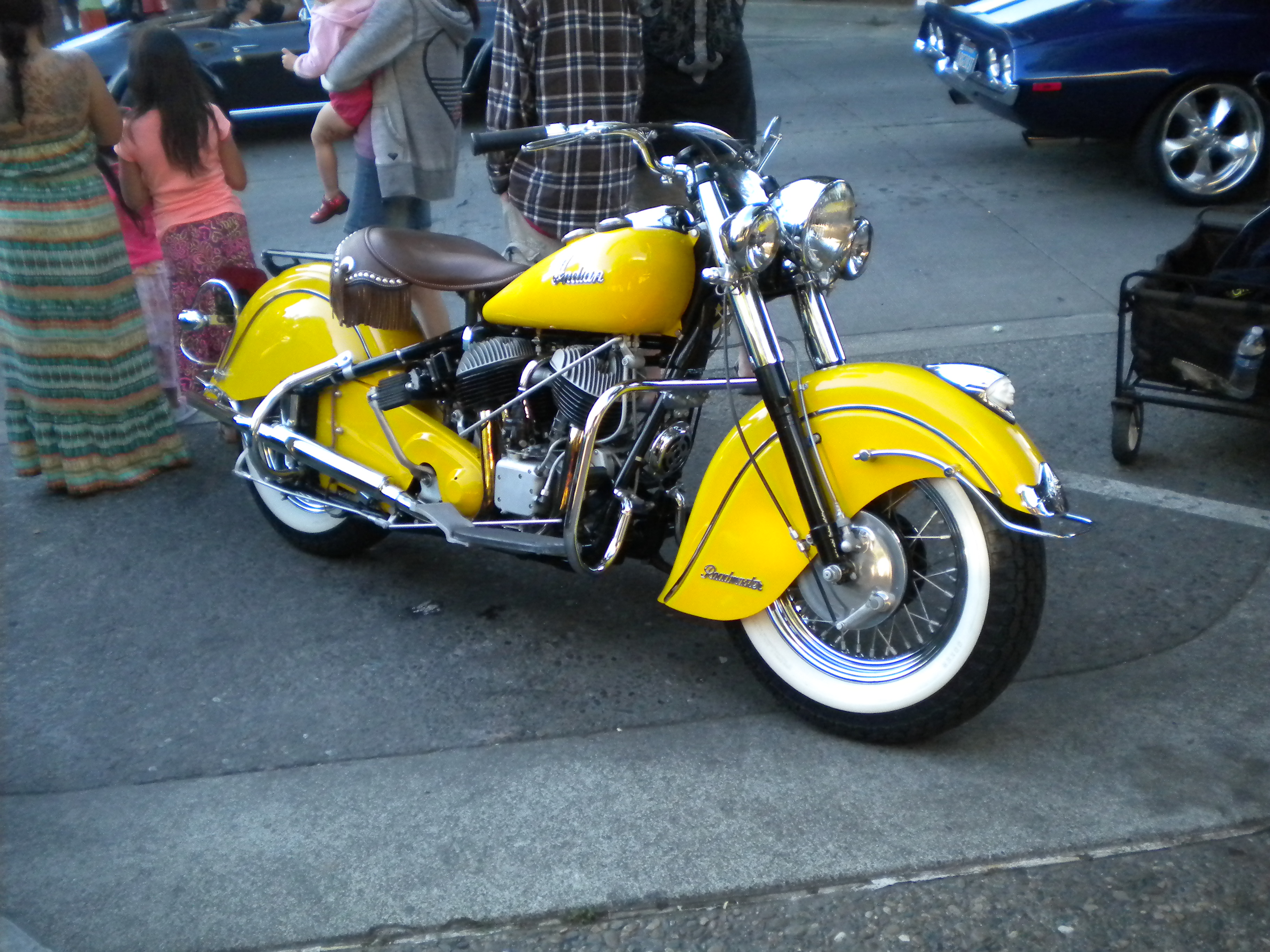
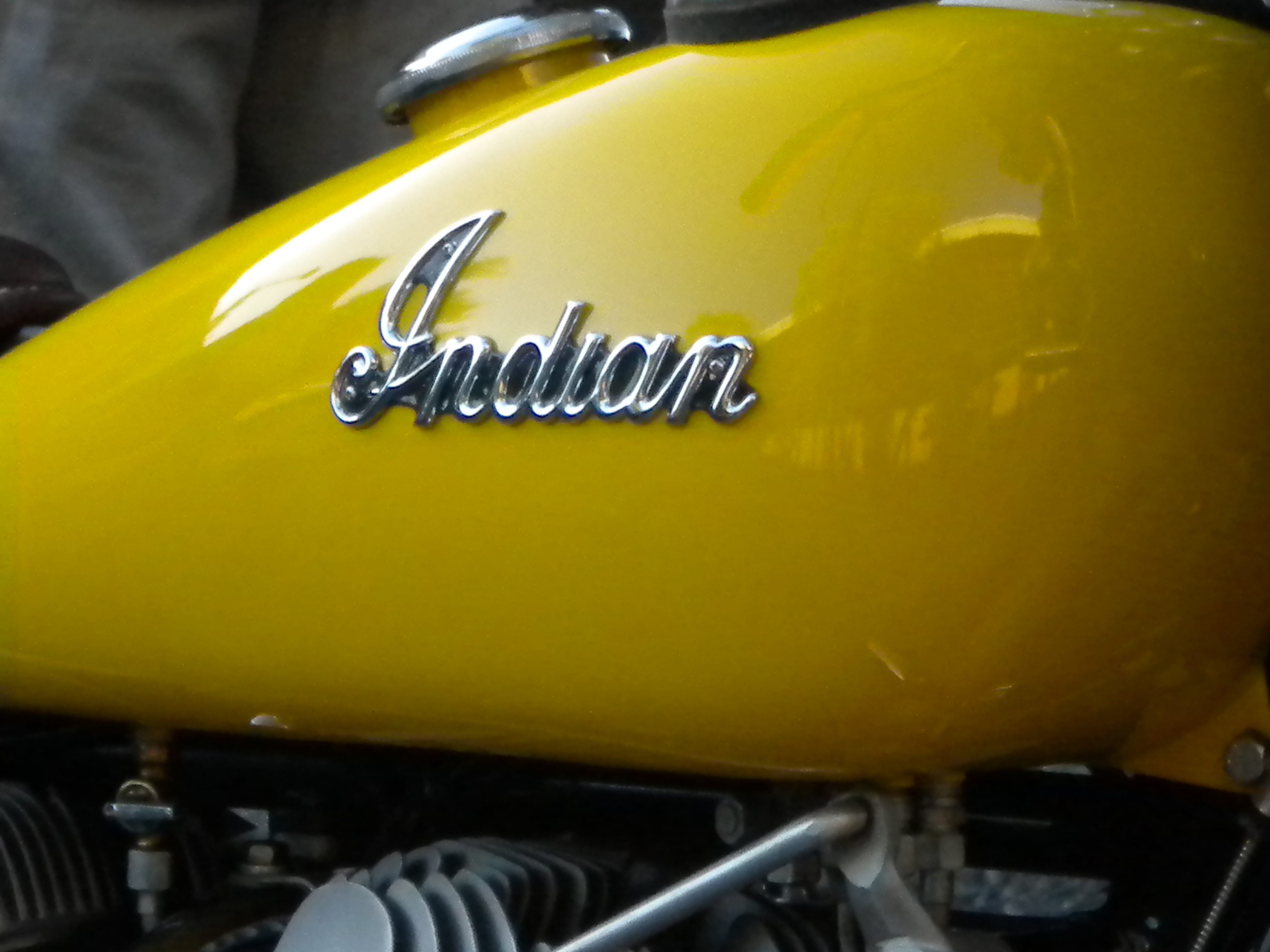
While motorcycles aren’t as common in the parade as cars, there were still a good three or four.  This 1946 Indian Roadmaster has the iconic “shovelhead” engine that many motorcycle enthusiasts favor.  This Indian Roadmaster is banana yellow with the “caramel cream” seat.  I like old motorcycles like this.  Maybe some readers will buy me one…

DSCN1933

The Indian logo is still in the original chrome, almost 65 years later.  The gas tank can hold 10 gallons.  It says that on the chrome gas cap.

DSCN1934

I like the way that Indian made the front wheel cover so stylish.  I was talking to the owner for a minute, and I found out that he drove it all the way down to Santa Rosa from Healdsburg.  That’s not a lot of fun on an old motorcycle, yet Indian motorcycles are built to cruise.  I’m guessing that it was probably a comfortable ride down to Santa Rosa.

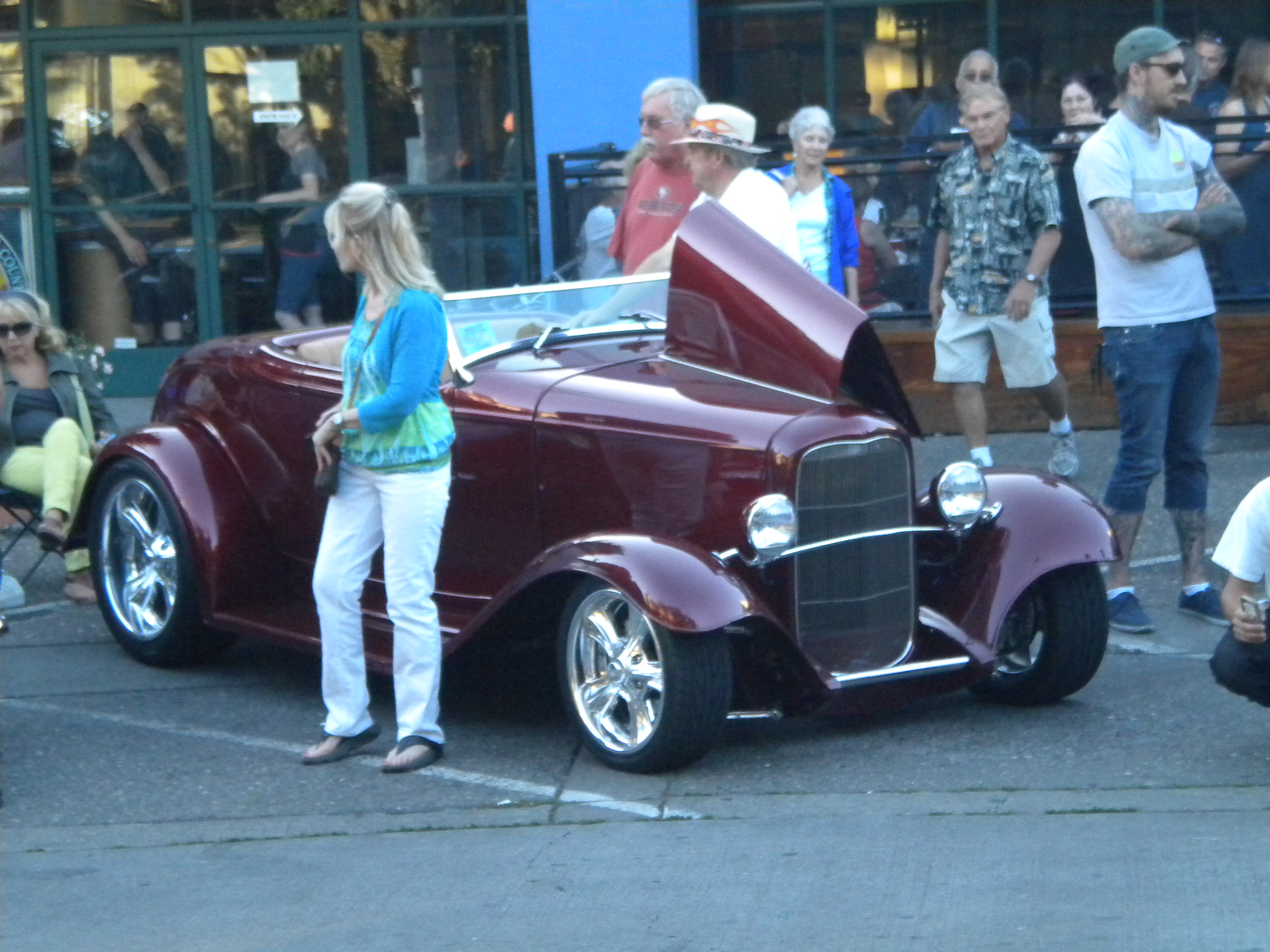
DSCN1937This 1932 Ford Roadster is a sick hot rod.  The lady standing by the car is the owner.  The car has a Ford 351 Windsor V8 engine.  It has a Jaguar rear end, and a five-speed manual.  This car means business.  I don’t know what I like more:  The mechanical parts of the car, or the exterior?  That’s a decision that YOU will let me know in the comments section…

DSCN1938

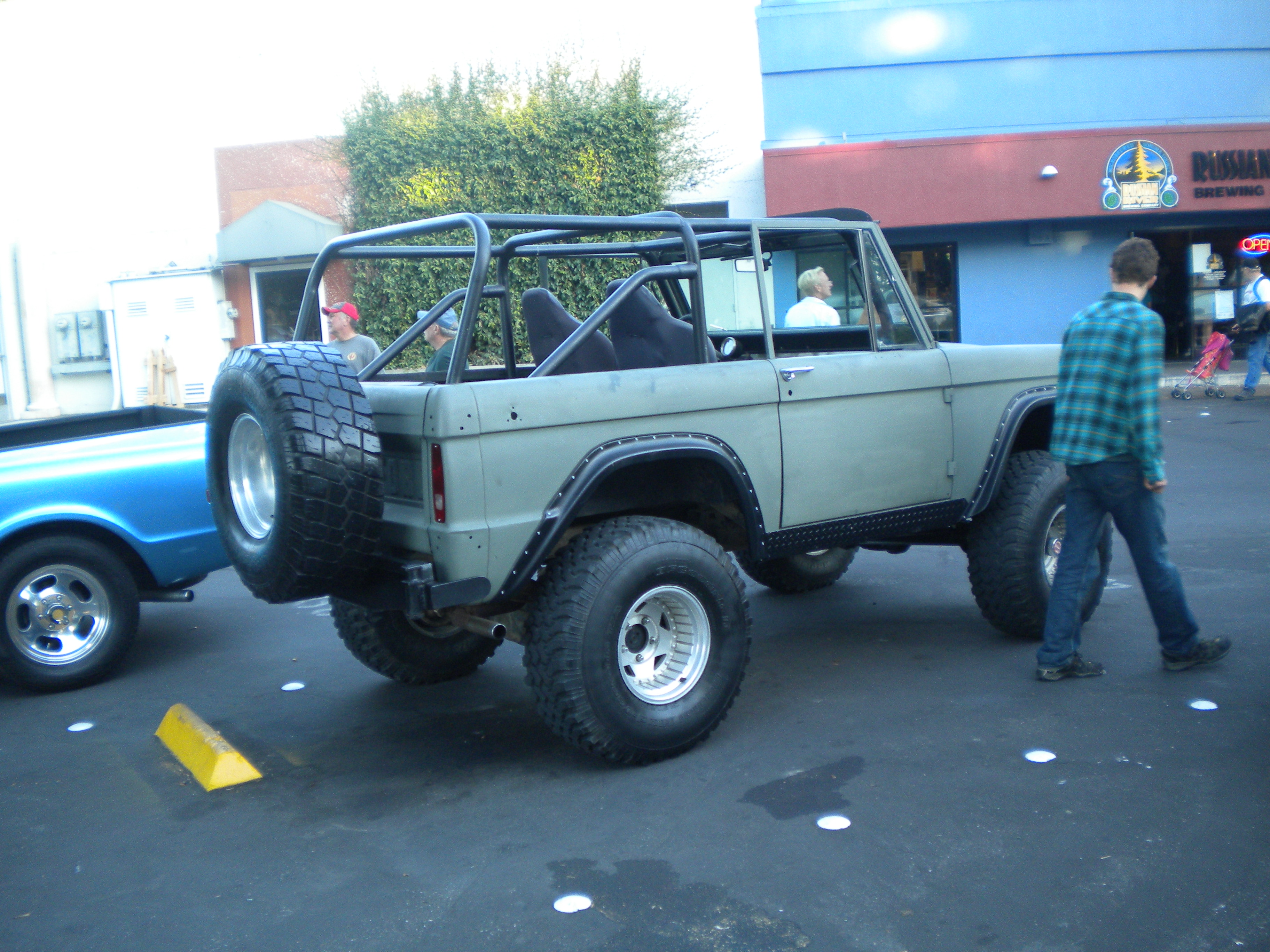
This Ford Bronco looks like it came out of some post-apocalyptic movie.  It’s got aggressive tires, a six-inch lift kit, and a 302 cubic inch V8.  I don’t know the exact year, but it looks like it’s from around 1967-8.  This is one nice Bronco.

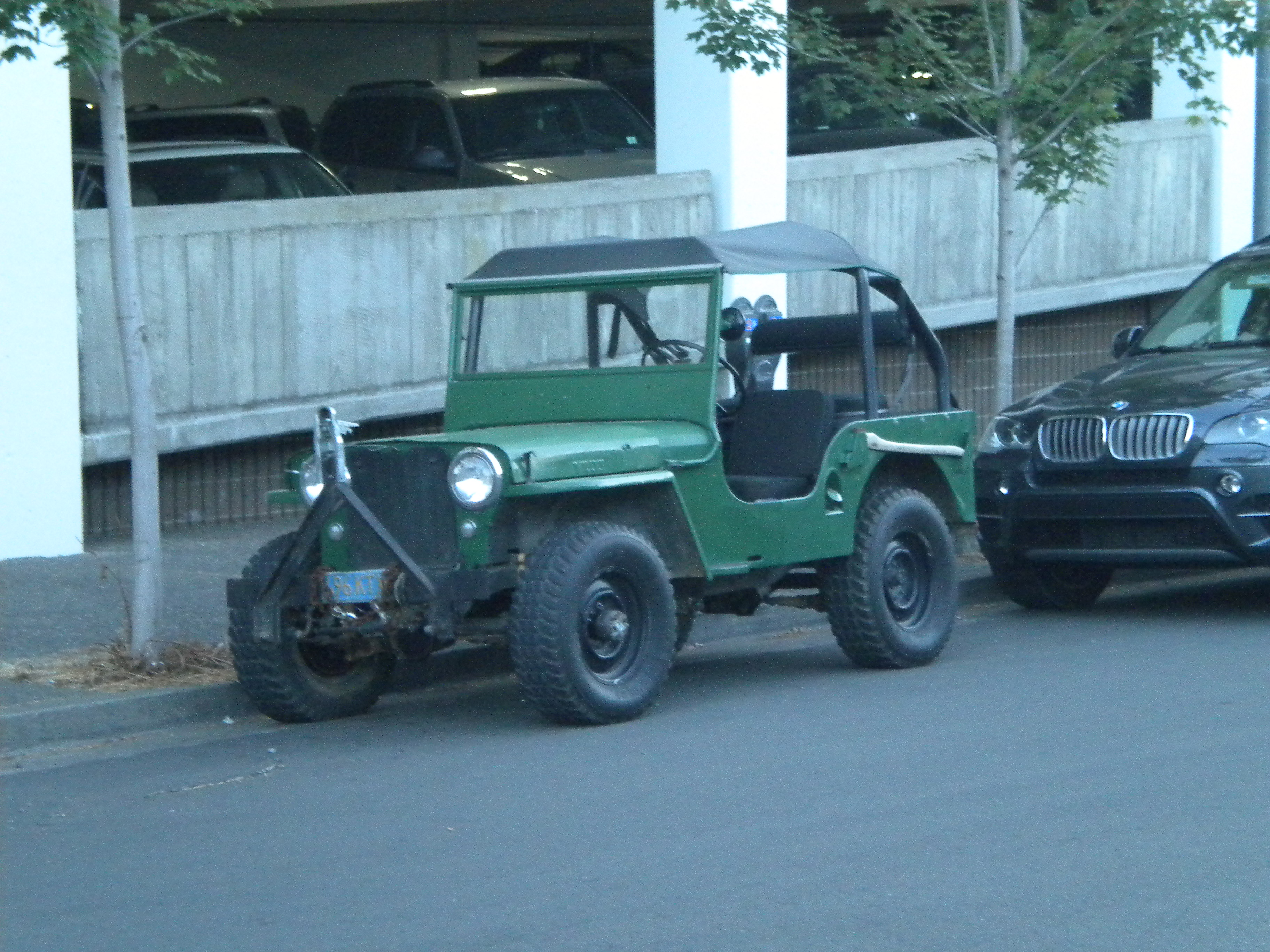
DSCN1940This is one of the coolest, most amazing Jeep CJs that I’ve ever seen.  And that’s saying a lot.  This CJ is stock, and is a 1947 model.  Between the drivers seat and the passengers seat, there is a metal rifle/shotgun holder for two high-powered guns.  Not that it would be used for that!

DSCN1942How often do you see a stock 1932 Ford roadster?  Not at all often!  This is a stock 1932 Ford roadster that could sell for upwards of $150,000 in its current condition.  It even has the rumble seat and the original interior!  It’s beautiful!

That’s all, folks!

If you would like to check out the Peggy Sue’s Cruise website, it is http://www.peggysuescruise.com/home/