The Best Cars for the End of the Holiday Season!

I think that this is a bit of a tradition for me.  Last year, I wrote a post about the same time as this one.  It was also about the best cars for the end of the holiday season.  I have fond memories of picking through cars that I thought deserved to be on this list.  While my list may not be as prestigious as Car & Driver’s 10Best, I would like to think of it as my personal version.  Except, I will be doing a list like this for every season!  That’s right:  Winter, spring, summer, and fall!  After much thought, I have finally decided what cars deserve to be on my list.  The criteria for the cars:  The cars on the list must all be new or substantially updated, they must be able to be entertaining in a snowy climate, and they must be able to seat at least four people comfortably (that way you can go on a road trip with the kids or friends!).  Enjoy my list!

  1. Bentley Flying Spur:  The Bentley Continental Flying Spur Speed was on my list last year.  However, the Flying Spur is no longer burdened with the Continental name.  It does still share a platform with the Continental, though.  It’s a brute of a car, weighing in at 5644 pounds.  It’s definitely as large as an elephant – it is 17.4 feet long, and it it weighs as much as a male elephant bull.  Don’t despair – this car rockets to 60 mph in an equally stunning 4.3 seconds.  This car will keep pace with a sprightly Lotus Evora S all day, without much drama or effort.  This car has 616 horsepower mated to a superb ZF 8-speed automatic transmission.  The powerful W12 engine is more efficient – it gets 12/20 MPG city/highway, according to the EPA.  However, snowy hoonage will likely lower that number…  It has every option one can imagine, including private multimedia screens for the kids.  Bang & Olufsen sound-deadening wireless headphones will keep the people in front sane.
  2. Ford F-150 FX2/FX4 Sport Tremor:  The Ford F-150 SVT Raptor Crew Cab rumbled and burbled its way onto my list last year because of its substantial updates, most notably the 6.2 liter V8.  This year, it’s more efficient, yet just-as-fun sister joins the party.  The Sport Tremor comes in 2WD or 4WD, regular cab only.  It comes with Ford’s powerful, efficient 3.5-liter twin-turbo EcoBoost V6.  Power gets there through a 4.10:1 rear end, so these trucks will be fast.  I know that it doesn’t seat four, but don’t despair – you can always get the Raptor!  The performance figures for the Sport Tremor aren’t out yet, but a 2012 Ford F-150 XLT 4X4 Crew Cab got to 60 in a quite-respectable 6.2 seconds.  Expect the Sport Tremor to get there in about 5.8-5.9 seconds.  While it won’t keep up with the Bentley in a straight line, it CAN haul a whole lot more, and get better gas mileage!
  3. SRT Viper/GTS/TA:  The Viper has a ground-shaking 8.4-liter V10 that pumps out 640 horsepower.  It comes with a 6-speed manual transmission and RWD only.  This will play with the boys.  I know that it doesn’t seat four, but hey, it’s a Viper.  It’s not a Bentley!  The RWD, 640 horse Viper should be a hoot to hoon around in the snow.  Stability control and traction control will help.
  4. Porsche 911 Turbo/Turbo S:  The Porsche 911 Turbo is a great car to own.  Not only will the 991-generation Turbo remain a collectible for a long time, but the 991 911 Turbo/Turbo S has a bunch of new technology designed to help the driver get around a track faster.  It has AWD, 560 horsepower in the Turbo S, and seats for four.  While the rear seats may only be fit for presents, the kids will have to suck it up and squeeze in there for a bit.  But, the drive there will be worth it.  The 911 Turbo/Turbo S is turbocharged, which makes it a cinch to drive fast, especially in wet or low-traction environments.  This car was designed to make the worst of drivers look good, and the best of drivers look legendary.  Have fun with this car.
  5. Porsche 918 Spyder:  If you own this car, I want to go for a spin in it!  Porsche has had the 918 Spyder in testing for years – prototypes were running around Germany as far back as 2007.  The 918 Spyder has a hybrid-electric system that distributes the gobs of 874 horsepower and an astounding 944 lb-ft of torque to all four wheels.  The 918 Spyder Weissach Package loses 88 pounds by using ceramic wheel bearings and film wrap instead of conventional aluminum and paint.  It won’t seat any more than two, but that’s okay.  This car will blow your mind at the speeds it reaches without effort, as well as the confidence it gives the driver at any speed.
  6. Subaru WRX:  Subie is legendary in the rally world for building fast, reliable cars that don’t look like much.  The 2015 WRX lives up to these statements.  It loses the massive rear wing found on the previous generation of WRXs, but it has power and fun.  It is bigger, but it makes 268 horsepower and 258 lb-ft of torque.  It’s suspension has been firmed up 39% in the front, and 62% in the rear.  This car will play all day with a Mitsubishi Lancer Evo, and be as flat as a Porsche Cayman S while cornering.  The torque vectoring system uses the rear differential instead of the brakes to vector the torque.  It doesn’t look pretty, but then again, no Subie in recent memory has looked mesmerizing.  Subaru invests money in engineering, not in styling.  That’s fine with me.
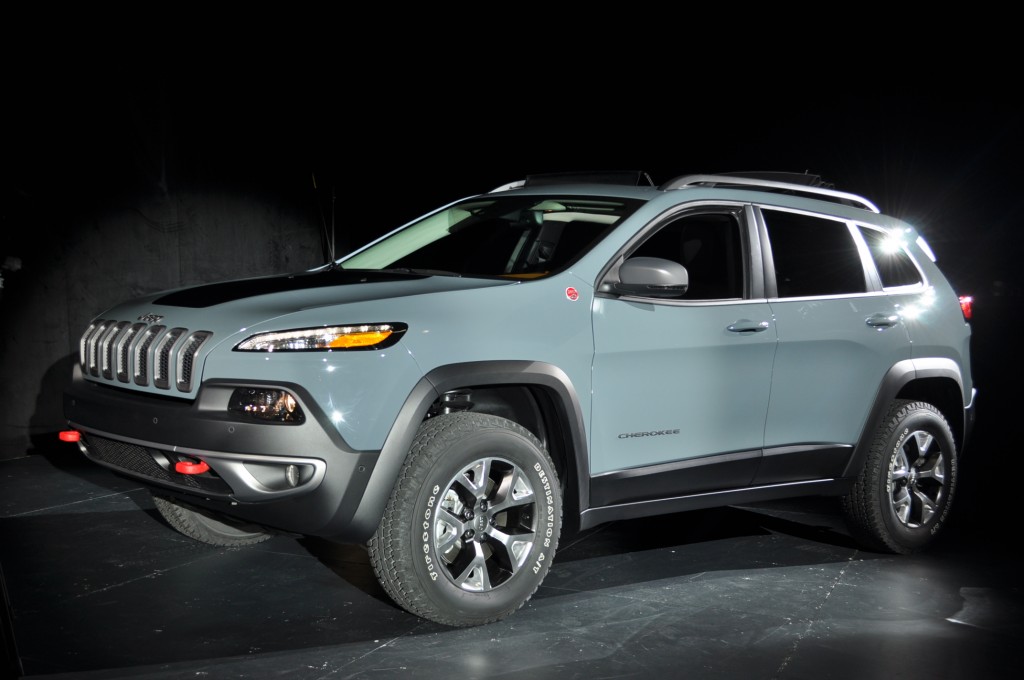
  7. Jeep Cherokee:  For those of you who remember the Jeep Cherokees of yore, close this tab, shut off your computer, grab your wallet, and go get a Jeep Wrangler.  This Cherokee is NOTHING like the harsh-riding Cherokees of the 1980s and 1990s.  This Cherokee comes standard with FWD, but 4WD is optional.  The Cherokee Trailhawk will keep pace with a stock Wrangler or SVT Raptor all day long without breaking a sweat.  The Cherokee is packed with lots of useful, cool tech.  I won’t bore you all of that technology, but I will say that for those in need of something affordable with 4WD, the Cherokee deserves a second look.
  8. Chevrolet SS:  The Chevy SS is the thunder from down under.  It’s based off of the Holden Commodore, and it’s got a high-performance 6.2-liter V8 with 415 horsepower.  The SS is the first RWD Chevy sedan since 1996 for civilian use – the Caprice PPV is available for lucky cops, and it’s truly spectacular.  It is capable of making those who owned a muscle car as a teenager feel young again, while allowing Mom and the kids to experience the fun.  It’s not all about burnouts – the SS can hold its own in the twisties.  The 415-horse V8 and six-speed automatic mated to RWD will make it entertaining for anybody to drive, any season, at any time.  I want one, if you haven’t noticed!
  9. 2014 Chevrolet Silverado:  Chevy is good at this game!  Two cars on my list is kinda hard.  Yet, Chevy introduced two cars capable of being on this list, which both of them are.  The 2014 Silverado truly gives the buyer everything that is needed or wanted, and then some.  There are literally 50 different cab/bed combinations, let alone the plethora of engine/transmission/2WD/4WD combinations.  The 2014 Silverado was designed to be one of the best in the game, and it doesn’t disappoint.  It’s got clever tech for all of the engines to make the engines more competitive in an ever-evolving segment.  The Silverado doesn’t come with the option of an extended cab anymore – safety regulations and loss of demand killed it for Chevy, but it comes with a “Quad Cab” option that offers more space than an extended cab, as well as the look of a crew cab.  It starts off as a perfectly nice base model, before climbing the ladder of expensive and unneeded options to become a pure luxury truck.
  10. Ram 1500:  The Ram 1500 has long been one of my favorite 1/2 ton trucks.  Ever since it’s massive – and popular redesign in 1993, the Ram 1500 has always had a brutish Hemi V8 underhood.  Recently, Ram introduced an EcoDiesel V6 shared with the Jeep Grand Cherokee.  It’s the first diesel in a 1/2 ton pickup since the 1980s.  I know the deal about diesels.  My dad owns a 2003 GMC 2500 4X4 with the Duramax diesel.  But, the Ram 1500 offers the same noise levels as the Ram equipped with the Hemi V8.  If you don’t want a diesel, you can always opt for the refreshed Hemi V8, which has more cool tech to aid in towing and hauling.

Have a fun, happiness-filled end of the holiday season!  In these final days of 2013, I urge you to take a walk in the park with friends, your kids, and/or the family dog (if you have one), and do whatever fills your heart with enjoyment.  Have a wonderful Winter Break!

Enjoy the pictures of the cars (and trucks!) on my list:

The Top 25 Japanese Sports Cars That Enthusiasts Crave!

For those of you who have owned a Japanese sports car, you know that they have the perfect balance of performance, practicality, and speed.  My dad drove a 1970 Datsun 240Z, one of the most sought-after Japanese cars – ever!  It was fast, barrels of fun, reliable, and easy to drive (if one didn’t mind the light, loose rear end).  It was fast in the curves, but it could win in a straight line, as well.  He could get 1/4 mile times in the 11.5 second range.  He would pass Ferrari’s, Porsche’s, Lamborghini’s, and just about every other super car of the early 1980’s.  But, he would be smoked by the time he reached 1/2 of a mile.  He was topped out by then.  He didn’t mind.

One of our family friends owns a 1967? Datsun Fairlady Roadster.  It’s a sight to see!  It looks like a Triumph, but it’s way better!  It seats the same amount of people, yet it weighs almost 300 pounds less.  It’s also infinitely more reliable, and faster.

I have compiled a list of the top 25 Japanese sports cars that enthusiasts give the thumbs-up to.  Enjoy my list.

  1. 1969 Toyota 2000GT:  The Toyota 2000GT was Toyota’s answer to the Porsche 911 and Jaguar E-Type.  It was the unspoken answer.  James Bond drove one in You Only Live Twice.  To this day, that chase scene is one of the best in movie history.  The Toyota 2000GT looked like a Jaguar E-Type Coupe that sat two.  However, it’s high price and exclusivity prevented it from becoming the Japanese Jaguar E-Type.
  2. 1970 Datsun 240Z:  The Datsun 240Z was designed to be an affordable, faster, better-looking competitor to the Chevrolet Corvette and Porsche 911.  The Datsun 240Z was powered by a 2.4-liter inline 6-cylinder engine making somewhere close to 200 horsepower.  It weighed about 2500 pounds, so it went everywhere in a hurry.  It could keep up with Ferrari 250 GTO’s on the track all day long, and shame a Camaro Z/28 in a drag race.  This car was a rocket.  Today, 240Z’s sell for about $25,000 for a good example.  But, don’t buy one at an auction – Barrett-Jackson sold one in Monterrey for $155,000 in 2012.
  3. 1985 Toyota MR2:  The Toyota MR2 was one of the smallest sports cars of the 1980s.  It was also like looking at a race car.  It had a mid-mounted 1.6-liter 4-banger that pumped out 125 horsepower.  It revved to 9000 RPM, and had a cam for every 3000 RPM.  It had a top speed of 154 mph, and it was stable in almost every condition.  It tipped the scales at 1900 pounds.
  4. 1999 Toyota Supra:  The Toyota Supra was the last true Toyota-built sports car.  It was also a massive change in technology and direction for Japanese sports cars.  It was powered by a 3.0-liter inline six cylinder engine that was boosted by twin turbos that ramped power up to a raspy 220 horsepower.  It was fast, and it looked like it came out of rally-car racing.  It had a massive rear wing, a raspy engine note that turned into a bellowing howl at redline, and meaty tires that wouldn’t look out of place on a Dodge Viper.  This puppy wants to play.
  5. 1986 Toyota Celica AE86:  The 1980s were the peak of lightweight sports cars.  The Toyota Celica AE86 was no exception.  It was based off of the AE86-generation Corolla economy car (that generation was the only generation of Corolla that was fun to drive!).  It was light, insane, relatively powerful, good-looking, and fun to drive.  My dad wanted one (he ended up buying a Honda Accord).  So did most teens and young adults.  That’s how good the Celica AE86 was.  It left a lasting impression on everybody who drove it.
  6. 1996 Nissan Silvia S15:  The Nissan Silvia S15 was the last generation of the wildly popular Nissan Silvia.  It boasted a powerful 250-horsepower six-cylinder engine that was helped out by a massive turbocharger.  At full throttle, it sounded like a F/14 Tomcat fighter jet.  Tuners adored it.  Paul Walker, star of the Fast & Furious series movies, owns a 580-horsepower S15 Silvia.
  7. 1990 Mazda MX-5 Miata:  The 1990 Mazda MX-5 Miata turned the world around.  Safety standards in the U.S. were so strict that it was almost impossible to build a light roadster.  Mazda had the RX-7 (but it was powered by a rotary engine), but it was too heavy and large.  Mazda built the Miata out of forged aluminum, which brought the car’s weight down to 2000 pounds.  Other automakers were building cars that weighed 3500 pounds, because they thought it was more expensive to build cars out of forged aluminum.  Mazda proved them all wrong.  The 1990 Mazda MX-5 Miata is still one of the most amazing cars in the world to drive.
  8. 1993 Mazda RX-7 CSL:  The Mazda RX-7 is one of the few cars to be powered by a rotary engine.  The RX-7 CSL was a lightweight version of the popular RX-7.  It was faster, and all models were built for Japan (right hand drive).  Except for one.  The only Mazda RX-7 CSL to have left-hand drive is at Mazda USA’s headquarters in California.
  9. 2007 Toyota MR-S:  The Toyota MR-S is viewed to be the last sports car that Toyota built.  Yes, Lexus and Scion build sports cars, but Toyota doesn’t anymore.  Anyways, the Toyota MR-S paid homage to the MR2 of the 1990s, with a mid-mounted engine and front-wheel drive.  While it may look like a chick magnet, it is one fast chick magnet.
  10. 2000 Acura Integra GS-R:  The Acura Integra was one of the best-selling Acura’s ever.  It had a high-revving I4 engine, a five-speed manual transmission, it was practical, and it was fast.  All of that was put together into a tidy, sleek package.  The final iteration of the Integra introduced the world to something called VTEC.  While VTEC is standard on all four-cylinder Honda’s and Acuras, altered valve timing and valve lift was F1 stuff in 2000.
  11. 2006 Mazda Mazdaspeed 3:  The Mazda 3 was already a popular economy car, but Mazda knew that they could get far more out of the car.  They turned to their in-house tuner, Mazdaspeed.  Mazdaspeed turbocharged the engine, put big, aluminum rims, sticky tires, a big rear wing, and torque steer.  Torque steer is what Mazdaspeed is associated with nowadays.
  12. 2000 Mazda RX-8:  The Mazda RX-8 may have ended production in 2011, but that doesn’t stop it from being on this list.  It had suicide doors (now only seen in pickup trucks), a rotary engine, and good looks.  It also happened to be heavy and under powered.  Nothing stopped people from loving, however.
  13. 1998 Nissan 240SX:  The Nissan 240SX was popular here in the States.  Not only did it have stunning looks, but it had performance to match it.  Unfortunately, the only engine we got here was a 2.4-liter four-banger from the Frontier pickup truck.
  14. 1986 Nissan Pulsar GTI-R:  This car could not be built again.  It was a subcompact hatchback that could barely squeeze two adults into the tiny cabin.  The GTI-R took performance to a whole different level.  It was built to satisfy World Rally Championship homogilation rules.  Only 5,000 baby Godzilla’s were built, but they were fast.  Fast as a bat out of hell.  It had a turbocharged engine, AWD, and lots of bodykit add-ons.
  15. 2009 Nissan GT-R:  The Nissan GT-R has been around for over 40 years in some form or another.  Godzilla was Motor Trend’s 2009 Car of the Year.  It packed a twin-turbocharged 3.8-liter V6.  Nissan has come out with various iterations of this generation of the GT-R.  The most recent is the 2013 Nissan GT-R Track Pack (the fastest stock Nissan to date).
  16. 1988 Honda CRX Si:  The Honda CRX was one of the fastest econoboxes of the 1980s.  It was light, extremely fun to drive, and stylish.  Plus, it was based off of the wildly popular Civic.  The CRX Si was the final CRX.  In the U.S., it came with a less powerful I4 than Japan’s.  That ushered in the era of Honda shade-tree mechanics.
  17. 2003 Nissan 350Z:  The Nissan 350Z brought back affordable, quick, sportiness to the world.  It was about the same size of the 300SX, but it didn’t have two turbochargers.  It had a powerful naturally-aspirated V6 that garnered praise from automotive journalists around the world.  The engine was so sweet that Nissan still uses it for many of their V6 cars.
  18. 2000 Acura Integra Type-R:  Yes, I know that there are two Acura Integra’s on this list.  They deserve to be.  Especially this one.  The Integra Type-R was the last Integra made.  It got the Type-R treatment (lower weight, more power, more looks, more chassis-stiffening).  It was also the most stolen Acura to date.
  19. 2000 Honda S2000:  Most people celebrate their 50th birthday with lots of friends and family.  Honda built a very special car.  The Honda S2000 was a track-oriented beast of a car.  It had a 237-horsepower engine, rear-wheel-drive, and perfect balance.  A manual transmission helped a lot, as well.
  20. 2009 Subaru Impreza WRX STi:  Subaru took the hum-drum Impreza, turned it into a rally-rocket with a turbocharged engine, a manual transmission, and lots of bodywork.  Then, Subaru’s rally team got their hands on it.  They built the raucous Impreza WRX STi.  STi stands for Specially Tuned Impreza.  It is fast, practical, and barrels of fun.  It’s the equivalent of a bouncy ball coming out of a gumball dispenser.  Unfortunately, it’s ending production.  Buy one while you can.
  21. 2010 Mitsubishi Lancer EVO MR/GSR:  This is possibly the most radical Mitsubishi ever.  It has a 291-horsepower turbocharged I4.  It also has a dual-clutch transmission pulled from rally cars.  AWD is standard.
  22. Datsun 510:  The Datsun 510 closely resembles a BMW 2002 Tii.  Why?  Why not?  Japanese automakers used to build their cars in a similar fashion to their European competitors.  It came with fully independent suspension, a Positraction rear end, a five speed manual, and a high-revving four-banger.  It was a hoot to drive.
  23. Acura NSX:  The first widely produced Japanese exotic car sent Ferrari, Lamborghini, Porsche, and Chevy scrambling for the drawing board.  It changed the definition of super car.  In my eyes, it’s the most influential Honda ever.  If that wasn’t a big enough slap to Ferrari, Lamborghini, Porsche, and Chevy, F1 driver Ayrton Senna assisted in the development of the car.
  24. Scion FR-S/Subaru BRZ:  The Scion FR-S and Subaru BRZ may only have 200 horsepower, but they are so perfect at what they do that it’s not even funny.  They are rear-wheel-drive beasts on winding roads and tracks.  Just don’t drag race anything other than a Smart Car.  You’ll lose.  Badly.
  25. 1993 Honda Prelude:  The Honda Prelude was one step behind the Acura NSX in terms of looks, performance, and just about everything.  It had front-wheel-drive, VTEC (shhh!), seating for four, and stunning good looks.  It revved to 10,000 RPM in some versions, and power was always there.  It is still a collector’s item for Japanese car fans. I can only wonder why…

For Those Who Don’t Want A Jeep…

The new Subaru Impreza XV Crosstrek is a very good car.  It has utility, looks, and a bit of power to match.  This car isn’t normal.  But then again, Subaru’s aren’t.  This Subie is no exception to the Subaru formula.

The XV stands out.  How?  The blacked-out 17-inch aluminum wheels look like the car just came out of an aftermarket wheel/tire shop.  The 8.7 inches of ground clearance scream “Don’t follow me!”  The glass is tinted a dark gray (screaming I just came out of a cheap aftermarket shop!), and the standard roof rack is a finishing touch.  This car is telling you that it is a fashion statement in the automotive world, and it REALLY loves dirt!  When you park it next to it’s barely older sibling, it makes its sibling look almost bland.  Even though they have the same transmission (a five-speed manual or a CVT) and the same engine (a 148 horsepower, 145 lb-ft 2.0 liter Boxer four cylinder), they are wholly different cars.

The XV isn’t all looks – it’s got capability to match.  Incline Start Assist is standard (for those of you who stop on hills), and Symmetrical All-Wheel-Drive is also standard.  With Symmetrical All-Wheel-Drive, the viscous-coupling locking center differential helps put the ponies in the right place.  One should know that getting everything out of the car does require you driving the car like you stole it.  Why?  The smallish Boxer engine barely gets the job done in the heavier XV, with a 0-60 time of 8.8 seconds (six ticks faster than the lighter Impreza 2.0i Premium).  Stopping from 60-0 mph takes a fair 122 feet (the 2.0i Premium does it in 120 feet).  Also, a larger 15.9 gallon gas tank helps take the car up to 350 miles before a fill up).  But, fuel economy drops down a bit to 23/30 city/highway.

Driving on paved areas yields a firm, yet extremely controllable ride.  It’s not at all uncomfortable though.  Even though the lifted independent suspension looks like the car would ride like a Jeep, bumps are soaked up surprisingly well.  However, don’t be surprised when going into a corner with some zoom – controllable body roll will happen!

Plus, the Subaru Impreza XV Crosstrek is cheap – it is a mere $22, 790.