The Vehicles That Forever Changed the Automotive Landscape

These are not the best cars ever made.  Rather, they are the cars that have shaped modern cars.  I hope that you enjoy my list.  Please share any corrections if you feel necessary.

  • Ford Model T:  This was the car that made the production line possible.  It was also the car that made cars affordable to the American public.  Ford produced well over 15 million of them before production ended in 1927.  They are fairly simple to own, and they can keep up with city traffic if you want.  With so many built, there are many clubs and associations for the Model T all over the country.  Just look up “Ford Model T club <insert your area here>” on Google.  I can practically guarantee you that there is at least one club that you can join if you are the new owner of a Model T.  People drive them all over the place on tours.  You can take one into Alaska if you so please.  There are always plenty for sale anywhere between $10,000-40,000.  If you want to daily drive one, all you need is a good arm to crank-start it, and some adjustments to the timing.  Just retard the timing a big, be gentle with the gas, and you’ll have a car that gets up to 35 mph.  That’s plenty good for most city driving.
  • 1916 Cadillac Type 53:  Every single modern car owes a lot to this Caddy.  It was the first car EVER to come from the factory with an electric starter and a modern control layout, both of which we take for granted today.  The Type 53 wasn’t popular with Americans or the world, mostly because of it’s price (about $3,000).  However, the Austin Seven copied the Caddy and set the die for all cars to come.  Yet, I still credit the Cadillac.
  • 1932 Ford:  This was the first affordable car available to the American public with a V-8 engine.  It had a flathead V-8 making a whopping 85 horsepower.  Today, that’s comparable to a car making 500 horsepower from a V-6 (not unheard of).  Anyhow, it was affordable to some Americans.  It became known as “The Deuce,” as did the third-generation Chevrolet Nova.  It was the fastest affordable car of it’s day, which is why it was the escape vehicle of choice for Bonnie and Clyde.  It’s unclear how many were made, but it’s estimated that well over 1.5 million were sold.  Remember that Ford was selling these cars in 1932, right before the peak of the Great Depression!  It became one of the most popular cars to hot rod.  I want one, and we can call ourselves lucky that there are reproduction steel bodies, chassis (yes, that is plural and singular), and used engines aplenty.  How’s that for cool?  You can build your very own reproduction Deuce for about $20,000.  It’s going to be so much more fun than that Corolla you’ve had your eye on.
  • Willys/Bantam/Ford Jeep:  WWII veterans say that the Jeep was the vehicle that won WWII.  They are right.  It can still embarrass most purpose-built vehicles on a dirt road or in mud.  It was the first 4X4 to be sold to the American public en masse, and it proved to be popular.  After WWII, Willys decided to market the Jeep as an alternative to a tractor for farmers.  Chrysler still rakes in hundreds of millions on new Jeep Wranglers every year.  It’s truly an iconic vehicle.
  • 1948 MG TC:  This little wood-framed British roadster is what allowed such amazing cars as the Lotus Elise, Mazda Miata, and even the mighty Shelby Cobra to be.  Every single great American racing legend – Carroll Shelby, Phil Hill, Richie Ginther, and many others got their start in an MG TC.  On a winding road, this little car that only made 55 horsepower and 64 lb-ft of torque would simply run away from any American car, regardless of power output.  Much of what we hold dear as an automotive enthusiast was started by this little car.  It’s influence on every single sports car from 1948 on is immeasurable.  It’s still fast enough to embarrass a modern Chevy Camaro Z/28 on a windy road.  That’s pretty damn fast for a car that makes 450 less horsepower.
  • VW Beetle Type 1:  It’s the single most-produced car in history.  It’s an elegantly simple design that has stood the test of time better than most cars produced at the same time.  It was the foundation for the legendary Porsche 356, Meyers Manx dune buggy, and VW Transporter bus.  It was FWD, came as either a convertible or a coupe, had a tiny rear-mounted four-cylinder engine, and cost far less than any new American car on the road.  It became extremely popular with people of all ages and demographics.  Many new parents went out and bought a Beetle, and it would serve millions of families around the world faithfully for 20 years or more without major problems.  Most new cars can’t say that.  In the hippie movement, it became extremely popular.  Once the off-roading community got their hands on one, the legendary Baja Bug was born.  It is still fast enough to keep pace with a modern Trophy Truck in the horrible dirt roads of Baja, or the sand dunes of Pismo Beach.  Almost every desert town in the world will have at least several Baja Bugs running around.  It’s fast, sturdy, and capable, yet can be driven around town without complaining.  And the best part is you can build yourself one for about $5,000!  That’s not including a starter vehicle, by the way!  My grandparents owned one.  You probably know somebody who’s owned one.
  • Toyota 2000GT:  This was the car that put the Japanese automotive industry on notice with the world.  It was a more expensive alternative to the Jaguar E-Type, Chevrolet Corvette, Ford Thunderbird, Porsche 911, and the like.  It’s achingly gorgeous, and only a handful were built.  It’s also achingly expensive.  Toyota proved that they could hang with whatever Europe happened to build.  James Bond drove one.
  • Lamborghini Miura:  It’s not the quintessential Lamborghini – that goes to the equally-amazing Countach, but it set the standard for supercars.  It came around because Ferrucio Lamborghini wanted to build a better Ferrari.  When Lamborghini was going to debut the Miura concept car at the Geneva Motor Show in 1965, they didn’t even have a body!  They had a chassis with a V-12, a transmission, and wheels.  That was it.  However, the Miura looks absolutely stunning.  It’s one of the most beautiful cars ever built, and every single supercar owes a lot to the Lamborghini Miura.
  • Citroen DS:  When it debuted in 1955, it was the most technologically-advanced car in the world.  It had hydraulic suspension, a streamlined fiberglass body shell, four wheel disc brakes, a twin-cam V6, and many other technological innovations.  It was one of the first truly modern cars.  One can compare it to the Tesla Model S.  That’s how revolutionary it was.
  • 1955-1957 Chevrolet 210/Bel Air:  The Tri-Five Chevrolet’s are some of the most beautiful cars ever produced.  My personal favorite is the 1957 Chevrolet Bel Air coupe.  The 1955 Chevy became forever immortalized with Two Lane Blacktop and American Graffiti.  Yes, the sinister ’55 is the same car in both movies!  The 1955 Chevrolet introduced the revolutionary Chevrolet small-block (Mouse motor) V-8 to the world.  The 1957 Chevy Bel Air with the 283 cubic-inch V-8 and Rochester mechanical fuel injection became legendary on NASCAR tracks and dragstrips around the country.  It was as fast the Jaguar E-Type 10 years later.  I’m still wanting one!
  • Austin Mini:  Alec Issigonis sketched it on a bar napkin.  He never knew that it would become one of the most popular vehicles of the 20th century.  Let’s forget that it’s a cultural icon for a moment.  It was the first FWD car to come with a transversely-mounted engine (the engine was mounted sideways), which means that it’s the template for most FWD cars on the road today.  It became a motorsports icon in everything from endurance racing to rally racing.  It also became iconic in several movies – The Italian Job, The Bourne Identity, Mr. Bean, and Goldmember.  It’s also a major cultural icon.
  • Ford Explorer:  This was the vehicle that kicked off the SUV craze of the 1990s-today.  It was based off of the lowly Ranger pickup, but had a comfortable interior and the second generation had good looks.  It’s still a best-seller today.  It’s popular with the off-road community because it’s a Ranger with more space for people.  My parents owned one.  You probably know somebody who’s owned one.
  • Shelby Cobra:  Yeah it’s an obvious one for this list.  Carroll Shelby took a British roadster, and put a small-block Ford motor from the Mustang into it.  Then, he went hog-wild and put a big-block Ford into it.  That catapulted the Shelby Cobra into automotive fame.  Anybody who knows something about cars knows of the Shelby Cobra.  It could hang with anything.  It could beat a Chevrolet Corvette with the coveted L88 big-block V-8 in the curves and straightaways.  It dominated endurance and road racing for a glorious 3 years before Shelby stopped production of it.  It also dominated the NHRA Pro Stock drag racing class for a few years.  Today, there are at least 20 different companies who will sell you a Cobra replica.  Get a Factory Five replica.  It’s Shelby of North America licensed, and it comes with modern mechanical parts, yet can still hang with a modern hypercar.  
  • Chevrolet El Camino:  In it’s first generation, it was quite a looker.  Chevy didn’t sell too terribly many of the Impala-based ute, but you’ve probably seen a few driving around your town/city.  The second generation proved to be much more popular.  It was based off of the massively popular Chevelle, and you could get one with the rare, coveted LS6 V-8.  I remember reading an article about an owner of an LS6 Elco (a nickname for the El Camino), and he said that he has to drive it around with sandbags in the bed to keep it from spinning out.  That’s what happens when you have a massively-underrated 450 horsepower and no weight over the rear tires.  If you could get it to hook up, it would go through the 1/4 mile in 13 seconds flat at 125 mph.  That’s about as fast as a modern sports car.  I’ve heard driving one isn’t any different than driving a Chevelle, except for throttle modulation.  Flooring it from a stop, even with the still-powerful 327 cubic-inch V-8 will give a glorious burnout.  I want one.
  • 1968-1970 Dodge Charger/Charger 500/Daytona:  The second-generation Dodge Charger is one of the most beautiful cars ever built.  It’s got muscular elegance.  It had curvy “Coke Bottle” styling, and a plethora of engine choices.  The base engine was the “poly” 318 cubic-inch small-block V-8 that stayed in production in one form or another from 1959-2004.  The next step up was the 383 cubic-inch “Commando” big-block V-8.  After that, it was the 440 “Super Commando” big-block V-8.  One rung above that was the 440 Six Pack – a 440 with three two-barrel Holley carburetors.  The top of the ladder was the mighty 426 HEMI “Elephant Motor” big-block V-8.  The Charger 500 was designed for NASCAR, so it had a rear window flush with the body, along with other small aero modifications.  The Daytona was truly legendary.  Only 503 were sold to the general public, only 70 of which had the 426 HEMI.  The rest had the 440 Six Pack.  It was designed for NASCAR superspeedways, and it truly dominated.  It looked comical with it’s 19-inch long nose cone and nearly two-foot tall rear wing.  The only reason the wing was so high is that anything shorter and the trunk wouldn’t close! The Charger was catapulted into fame by The Dukes of Hazzard for one generation, and for the millenials, they were captivated by the supercharged 1968 Charger used in Fast & Furious.
  • Datsun 240Z:  This little Japanese sports car wasn’t a smashing success, but it certainly left it’s mark on sports cars.  It was light, looked drop-dead gorgeous, had a reliable, powerful engine, and a five-speed manual transmission.  Very few cars at the time had a five-speed.  All of that combined meant that it was a serious threat on a windy road.  Today, they are becoming collector cars, which is a shame, as they are built to be driven.  That’s not to be said that you can’t find a cheap one – you still can.  Hot rodders who are enamored by Japanese cars, but love the power of an American V-8 put a Chevy small-block V-8 and some suspension bits in, and have one hell of a ride.  My grandparents and dad owned one.
  • Audi Quattro:  This AWD notchback with a turbocharged 5-cylinder engine was so successful on the rally circuit that AWD was banned from the sport for about 10 years.  Stock, it’s not at all reliable (except for the first two years of production), but upgrading the engine internals will give you a strong, reliable, fast, and cool daily driver.  It’s truly an all-weather car.  I chose this car because of the impact that it had on rallycross and rally racing.  Any car with AWD past 1985 would have been much worse if it weren’t for the Audi Quattro.  My uncle owned one.  He should have kept it and given it to me.
  • Ford Mustang:  This was the car that started the ponycar craze.  No matter how much Ford hypes it as a muscle car (and Chevy with the Camaro), it IS NOT and never will be.  It is a pony car.  The Dodge Challenger is a muscle car.  Sorry Ford, but I’m just stating the truth.  Don’t shoot the messenger.  That being said, Ford introduced a whole new type of car to America.  Buying a Mustang with the base six-cylinder engine meant that you were carefree but had to watch your cash.  Getting it with the V-8 meant that you were carefree, but who cared about money – you only live once!  Getting it as a convertible only reinforced that.  The Shelby GT350 Mustang of 1965 was part of a deal with Hertz where you could rent the car on Friday, drive it to the racetrack on Saturday, race and win, go again on Sunday and win, and then drive it back to the rental lot.  It was somewhat streetable, but it really did well on the racetrack.  Carroll Shelby originally didn’t want to do it – he told Lee Iaccoca that “Lee, you can’t make a racehorse out of a mule.”  Yet that so-called mule became a massive racing success.  It’s still in production 50 years later.  Many American moms went from a station wagon to a Mustang and never looked back.
  • Pontiac GTO:  Originally offered as a package on the mid-size Tempest in 1963, the GTO took the thundering 389 cubic-inch V-8 from the Le Mans and shoved it into the considerably smaller Tempest.  It was a smashing success, so Pontiac decided to turn it into it’s own model in 1964.  It was much more popular that way, and the ultimate model was the 1969 Judge Ram Air IV.  It came with the then-new 455 cubic-inch V-8 and a functional Ram Air hood (the Ram Air package came in four stages), a Muncie M-22 “Rock Crusher” transmission, and bodywork that let you know that you really were king of the street.  It was truly stunning, especially in green.  It went dormant for 20+ years before appearing as a rebadged Holden Monaro in the US.  It wasn’t very popular.  It’s probably because Ford launched the retro-styled S197-generation Mustang right around the same time.  The 2004-2006 GTO looked nothing at all like any other GTO.  It didn’t look very good.  Nowadays, the modern “Goat” is popular with hot rodders who want to have all of the modern conveniences and glorious power.  Some even take the body off of the GTO and put on a classic car’s body.  Voila, you have a car that looks like a classic, but handles and drives like a new car.  Plus, they are easy to put bigger engines in.  Drifters are starting to find them.  Beware.
  • Lexus LS400:  This big Lexus was the car that sent Germany scrambling back to the drawing board.  The LS400 competed with the Mercedes-Benz S-Class and BMW 7-Series.  The German cars were stodgy cruisers that were heavy, large beasts on the street, but smooth on the highway.  The Lexus took that trademark Japanese agility and feeling of being a smaller car, threw in a buttery-smooth engine and transmission (the ads showed a champagne flute on the hood while the engine revved.  The champagne never overflowed – or came close to that!), a sumptuous leather interior, and made it a fun car to drive.  Lexus kept it in production from 1989-2000 in one basic form or another.  It sold well, and is a completely bulletproof car in terms of reliability.
  • Chevrolet S-10:  OK, I am a bit biased on this, but hear me out.  The Chevrolet S-10 replaced the dismal LUV pickups of the 1970s in 1982.  It came with an underpowered 4-cylinder engine or a more powerful 2.8-liter V-6.  In 1988, Chevy added their new 4.3-liter V-6 to the S-10.  It literally doubled the towing and hauling capacity, as well as making it a far more enjoyable truck to drive.  My S-10 is a 1989 Tahoe model.  That means that it was top of the line.  It has a cloth interior, an AM/FM radio, air conditioning, and it has fuel injection (the 1988 model had a carburetor).  You could get it as a regular cab or an extended cab.  Bed sizes were a 5-foot bed or a 6.5-foot bed. That’s not huge, but for somebody in a crowded city who needs a pickup, it’s perfect.  You could get it in 2WD or 4WD.  Mine is 2WD.  It was wildly successful, and you can still see a lot on the road.  Some people are taking modern Chevy LS3 E-Rod engines (smog-legal V-8’s) and stuffing them into an S-10.  They’re quite the sleeper.
  • Porsche 911 Turbo:  When it first debuted in 1975, it was a total animal of a car.  Lift off of the gas going into a corner, and you’d hit the guardrail with the backside of the car.  You had to keep your foot in it.  It made an underrated 276 horsepower (think closer to 350), had no ABS, a clutch that was so stiff that some had to literally push their leg down to depress the clutch, and a 5-speed manual transmission.  It was a total monster of a car that dominated the racing circuits, but was completely and totally unstreetable.  But, put one on a windy canyon road, modulate the throttle, and you had a recipe for speed.  Porsche still makes it.  However, it now makes a ridiculous 520 horsepower, and is truly the ultimate all-weather supercar.
  • Ford GT40:  This was the car that dominated endurance racing during the 1960’s.  It was the result of Enzo Ferrari refusing to sell his company to Ford in 1964.  Henry Ford II decided to beat Enzo Ferrari at his own game on his own turf.  Talk about owning a bully.  The GT40 was aerodynamic, muscular-looking, and was built for racing.  Ford built about 20-40 for the street (it’s unclear how many).  The first models came with a Shelby-tuned 289 cubic-inch V-8 that made 300 horsepower via a tri-power (three two-barrel carburetor) setup and forged internals and an Isky cam.  This engine was so durable that when Ford disassembled the engine after the season was over, it looked brand-new.  Later models came with Ford’s mighty 427 cubic-inch FE-Series “Cammer” engine.  This engine was the same one in the Shelby Cobra.  It made about 500 horsepower.  Both engines were mated to a four-speed manual.  The GT40 simply dominated the 24 Hours of Le Mans and 24 Hours of Nurburgring.  It was insanely fast, and it could be heard from over a mile away.  It beat Ferrari at their own game for years, before the FIA changed the rules, and both Ferrari and Ford had to comply.  Ford pulled out of Le Mans endurance racing for 20+ years and let Ferrari dominate.


Yes, that is a young Harrison Ford standing next to one of the most iconic hot rods ever.  It’s a 1932 Ford Hi-Boy (the body was lifted off of the frame so the frame could be tweaked).  It has a Chevy 283 cubic-inch small-block V-8 with crackling sidepipes.  This was the car that made me appreciate the little deuce coupe.
This is a fuelie 1957 Chevy Bel Air.  It became known as the “Black Widow” because it only came in black with white tape stripes, a black-and-white interior, and the red center caps on the wheels.
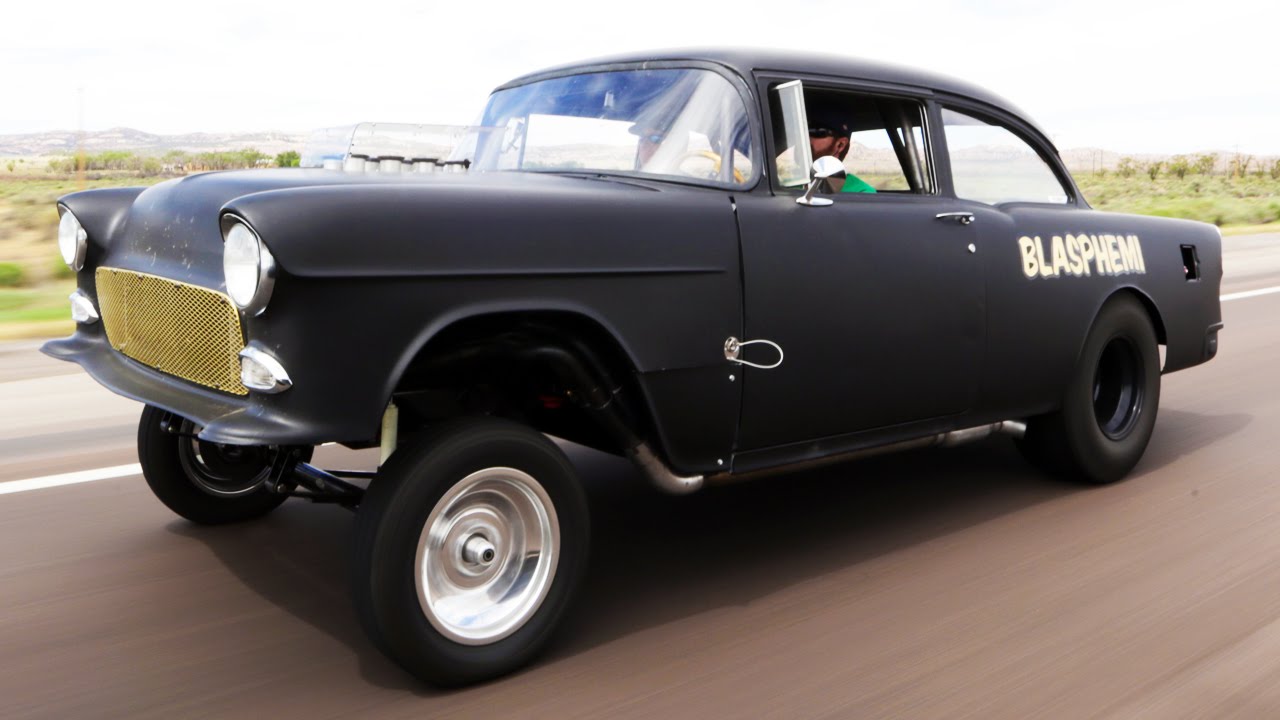
This is a gasser.  Gassers got their name because of the drag racing class they were in (B/Gas or blown/gas).  They had big engines with no supercharger, or smaller supercharged engines.  Look up “Roadkill Blasphemi” on YouTube for the build and cross-country blitz of one of my favorite cars – “Blasphemi.”

This is probably the ultimate Shelby Cobra.  It’s called the “Super Snake” because it has twin superchargers on top of an already-powerful engine.  Bill Cosby almost bought one, but took it on a test drive and thought he was going to die.  Carroll Shelby bought it.  Only two were made, but it was incredibly fast.  It’s rumored that in testing the car hit 210 mph – in 1966!  To me, it’s the ultimate factory hot rod.

This is a 1969 Dodge Daytona replica made by a host of the /DRIVE Network, Mike Musto.  It’s one of my favorite cars ever.  He took a 1969 Charger and turned it into a Daytona.  It’s the ultimate cross-country cruiser.  Just looking at it sends shivers down my spine.

The only stock part about this Mustang is the roof, A-pillar, and C-pillar.  It’s the latest creation from the brilliantly mad folks at RTR and Hoonigan.  Ken Block had it built.  It’s got a stroked NASCAR-spec engine that makes 850 horsepower that goes to all four wheels.  That’s right, this car is AWD.  You need to watch “Gymkhana 7” if you haven’t already.  It’s simply amazing.


What Era of Motorsport Was the Best?

This idea is simple:  What era of motorsport was/is the best?  What drivers were/are the best?  What motorsport was/is the best?  What cars were the best?  What track was the best?

For me, I can’t choose just one.  1960s Top Fuel drag racing was the best of the 1960s.  There were plenty of big names competing against smaller names, many of whom have been lost to the sands of time.  Some of those names we are familiar with – Don “Big Daddy” Garlits, Don “The Snake” Prudhomme and Tom “The Mongoose” McEwen (anybody who’s ever had a large collection of Hot Wheels has/had models of their cars).  Their cars were spectacularly fast (Garlits was the first to break 200 mph in his Top Fuel dragster), and they always put on one hell of a show.  I’m going to say that Lions Drag Strip in Long Beach, CA was the best.  While I never visited it (it closed in 1972), it is rumored to have been one of the best drag strips ever.  If you’re into Facebook, look up “THE GLORY DAYS OF DRAG RACING.”  It’s a closed group, but they will let you in.  It’s got a lot of great vintage photos.  Read their rules before posting something.

Another great one for me was 1980s Formula 1.  Ayrton Senna, Alain Prost, Mario Andretti, and the late Clay Regazzoni.  It was a fierce era of turbocharged cars with well over 1,000 horsepower duking it out on the fastest tracks on the planet.  BMW had cars with 1,400 horsepower and manual transmissions (yes, you had to take your hand off of the steering wheel in a tight corner in a powerful car to shift).  Ayrton Senna and Alain Prost simply dominated the sport until the tragic death of Senna in 1994.

Finally, I’m going to say that 1980s-current off-road racing is great.  I mean, who doesn’t like watching Ivan “Ironman” Stewart bombing around Baja in his Toyota trophy truck?  Or for those American car fans, how about Robby Gordon and his HUMMERs from a long time ago?  To me, it’s the most entertaining form of motorsport, and I’ve been hoping to travel to Baja to watch the Baja 1000 for a while.

Here are some of my favorite pictures to prove it.

Out and About in Sonoma County

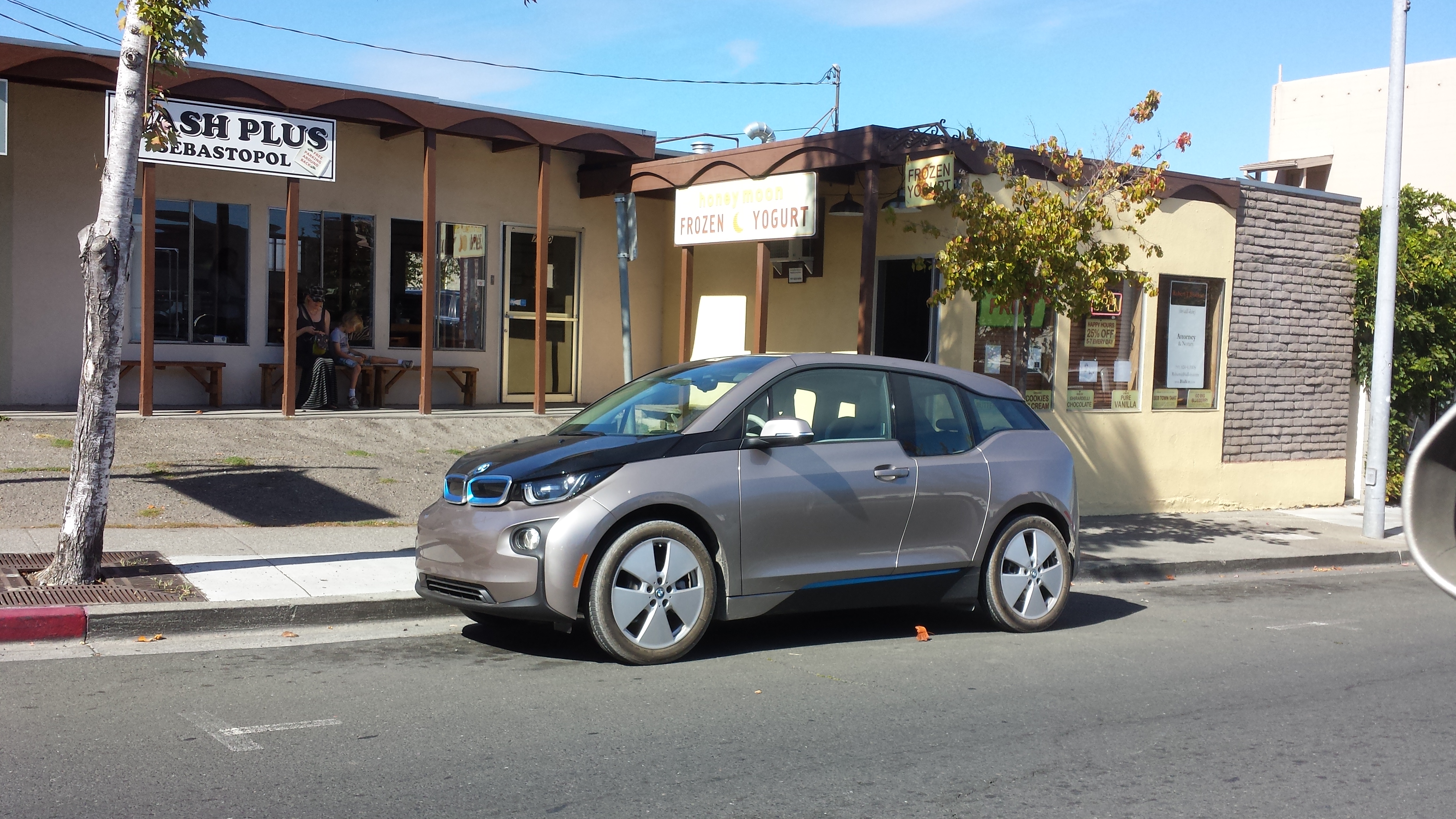
A member of the editing staff saw what is quite possibly the most ugly BMW ever while out on assignment…for something completely unrelated to ugly BMWs.  The ugly BMW in question?  The BMW i3.  It’s essentially a Prius for the visually impaired wealthy.

BMW i3

Every time I see a BMW i3, I immediately think of a HUMMER H2 that took the ugly economy car pill.  I think you’ll agree with me…

10 Cars that Could Make You a Millionaire!

We all like to make money.  All of you like cars (me included!).  Ten cars could (theoretically) allow you to make a cool $1,000,000 – most of them NOT by themselves.  Anybody who has been buying/selling old cars knows that the classic car market has been taking a crash course on Wall Street.  It’s either boom or bust.  Bust happened in 1990 when a hyper-inflated Ferrari market crashed in the time frame of a year.  In 2007-2008, the market for Mopars with Hemi engines crashed, with many cars losing 2/3 of their value within 18 months.  The basic premise of this blog post is to tell you what cars you can buy for not too much money, and sell for a hefty profit.  Well, there are a few exceptions to that rule, but I think you’ll agree with my decisions for those cars.

However, that’s not to say that the market is dead.  In fact, it’s quite the opposite.  The market is globalized in a way it couldn’t have been just 10 years ago.  Only 20% of Russia had internet access in 2007, but now almost 80% have access.  Now that Russians have more money to spend, they are looking for ways other than cheap economy cars or an old Mercedes-Benz with 300,000 miles on the odometer to get around.  Cars continue to be more accepted as investments among those who wouldn’t care about them otherwise.  Sure, one could consider it a bubble, but until then, here are some cars, erm, investments, that I would buy with my tiny fortune.

  1. 1962-1965 Shelby Cobra.  The original Shelby Cobras are what I am referring to (Shelby makes continuation Cobras).  It’s quite possible that prices for the Cobra have already priced, as prices for these things are literally enough to make a Wall Street investor empty their bank account in a few short minutes.  The MkI and MkII (260 and 289 cubic-inch V8 Cobras) will run you about $800,000.  Forget buying a 427 Cobra – those are at least $1 million!  For the small-block Cobras, prices are up from $500,000 just five years ago, and that was up from $150,000 in 2003.  Yikes.
  2. 1970-1973 Datsun 240Z.  Remember when you could buy a Datsun 240Z for $4,000 in 2004?  Well, the average sale for 2013 was $19,000.  People who wanted one when they were young now (hopefully) have the discretionary income to buy one.  Plus, the Z looks timeless.  It’s like a more mature, cheaper Toyota 2000GT.  It’s great, easy and cheap to own, and a hoot to drive.  That won’t change.  What will likely change are the prices.  If the Datsun 240Z is any indication of the rising market demand for 1970s Japanese sports cars, expect prices to rise dramatically in the next few years.  If you want one, get it NOW!
  3. 1970-1971 Mercedes-Benz 280 SE 3.5 Cabriolet.  Nobody really thought that any regular-production, post-300SL Mercedes-Benz would be worth anything.  I didn’t for a while.  Nobody thought much of them because they were designed to last forever.  How can a car become more valuable when it never changes?  Then, three 280 SE 3.5 Cabriolets sold last August at the RM Monterey Auctions for a whopping average price of – brace yourselves – $265,833.  In 2010, the average transaction price was a still-high $94,000.  It’s hard to think that this extreme inflation will continue for much longer.  But, it’s not showing any signs of stopping.  Time to re-mortgage the house if you want one of these!
  4. 1976-1981 Ferrari 512BB.  Most of the male readers of this blog likely had posters of this car on their bedroom walls.  Combining absolutely timeless bedroom-wall-poster looks with the exotic, screaming power of the Berlinetta Boxer’s six-carburetor, vee-crank flat V12, you can’t go wrong.  Prices haven’t changed much since 2007, with prices staying right about $140,000.  However, you can still find one for under six digits.  For about $95,000, you can buy one for the price of what a grey market car would have cost you 35 years ago.  If that’s not a deal, I don’t know what else is.  Buy two and wait patiently.  Time to sell the house!
  5. 2009 Alfa Romeo 8C Competizione.  Alfa Romeo is back into the U.S. with the 4C.  It’s a great car.  It’s better looking than any new Ferrari, it’s faster than anything from Japan or America on a race track, and I want one.  The 8C was an amazing one-year blip in Alfa Romeo’s 19-year absence from the American car market.  The price now?  Hard to tell, as they were about $250,000 new, and only 84 were ever sold in the U.S.  Nobody is letting go of them, either, so yeah, good luck finding one.  Most are being held in private collections, but it’s going to be a challenge to start a market for them if nobody sells them.
  6. 1972-1974 BMW 2002 tii.  The BMW 2002 was a great car.  All of the automotive magazines said it was better than any muscle car out there.  It was nimble, light, and deceivingly fast.  The most desirable 2002 is the fuel injected version, called the 2002tii.  It was light, potent, reliable, and it favored fun over everything else.  Like the Datsun 240Z, they weren’t worth much of anything for a very long time due to their abundance.  In 2004, a nice 2002tii was carrying about $10,000.  Now, prices have blown past $20,000, and people are really only beginning to appreciate them.  Yeah, BMW only made 38,000 of the 2002tii, but an awful lot of them were used up.  Even if you buy one and it doesn’t go up in prices, you’ve still got one helluva car.  It’s a win-win situation.  Basically, for the price of a smallish shapeless blob painted silver, you can get a reliable daily driver that will get you thumbs up all over the place, and a tidy look.  Why not buy one?
  7. 1944-1986 Willys CJ.  The Willys CJ is one of the record holding cars for being in production.  It remained in production basically unchanged for 42 years.  The older models are pretty cool.  Parts are abundant for them, and there is a thriving after market for them.  They look cool, can go literally anywhere, and are so reliable that it makes any Honda or Toyota’s reliability look like a joke.  Plus, any old Willys CJ will be a barrel of fun.  It may not make you a million bucks, but you can buy one for a relative song right now.  Prices for these cool little vehicles that helped win WWII are cheap.  You can buy a really nice one for about $15,000, but where’s the fun in something that’s been restored by somebody other than you?  Get one that needs some work for about $7,500.  If you want to get even more on the cool factor, get a genuine Willys military Jeep.  That’s about $7,500.
  8. 1970-1974 Dodge Challenger:  The Dodge Challenger was one of the cars that lost 2/3rds of its value in 2007-2008, but prices are once more on the rise.  The R/T models with the 426 Hemi “Elephant” engine are the most desirable.  If you can’t swing one with the 426, get one with the massive 440 cubic-inch V8 (that’s 7.2 liters!) Six Pack.  That has six carburetor throats feeding gas and air into those wonderful sounding 440 cubic inches.  Even the models with the 383 cubic-inch V8 are fun.
  9. 1955-1957 Chevrolet Bel Air:  The Tri-Five Chevy’s are great cars.  They are fun, beautiful, reliable, and the prices are always climbing.  Now is the time to get one.  My personal favorite is the 1957 Bel Air convertible.  It looks like a Cadillac.  If you want one to be a pro-touring car, a drag car, or a show queen, there is no shortage of parts availability for these cars.  The 1956 models are the cheapest of the three years, but they are still pretty expensive.  If you get one now, enjoy it, show it, do burnouts, and have fun with a priceless piece of Americana.
  10. 1970-1972 Chevrolet Chevelle SS454 LS6:  This is probably one of the most iconic Chevrolet’s ever.  It’s got a massive Chevrolet 454 cubic-inch V8 (7.4 liters) with the legendary LS6 code name.  It makes a thundering 450 horsepower in LS6 form.  In the lesser LS5 form, it makes a still-impressive 360 horsepower.  If you can’t swing the climbing prices of the LS6 Chevelle, go for a still-mighty Chevelle SS396.  It’s still going to be a lot of fun, and it will handle better, thanks to less weight on the front of the car.  Plus, you can yank out the 396 and put a crate 454 underneath.  If you want more power, you can put a 468 cubic-inch V8, a 489 cubic-inch V8, a 572 cubic-inch V8, a 598 cubic-inch V8, or a 632 cubic-inch V8.  I would go for the 468 stroker motor, as it doesn’t add too much weight to the front, but it adds far more power.  Nelson Racing Engines (nelsonracingengines.com) makes a 600-horsepower 468 that sounds just about right for a Chevelle…

That’s all that I have to offer you, but I’m sure that you have your own suggestions.  Let me know in the comments section.


The 12 Stunning Detroit International Auto Show Debuts!

The Detroit International Auto Show always has a lot of cool new debuts.  As one might expect, a LOT of new American metal debuts there.  But, foreign cars are also starting to be debuted at Detroit more and more.  Enjoy my top 12 debuts

  1. 2015 Ford F150:  With the majority of the 2015 Ford F150 made out of aluminum, the 2015 Ford F150 lost almost 700 pounds.  In terms of design, Ford clearly heard the raving about the Atlas Concept.  The 2015 F150 looks almost exactly like the Atlas!  In terms of engines, Ford’s taken the liberty of making smaller, more powerful engines the norm for the F150.  The base engine is a 3.5-liter V6 (the same one residing under the hood of the Explorer).  Ford also dropped the thirsty 6.2-liter V8 from the lineup.  The only available V8 is the splendid 5.0-liter “Coyote” V8 shared with the Mustang.  The 3.5-liter twin-turbocharged EcoBoost V6 stays, but the EcoBoost has a smaller EcoBoost sister engine.  The smaller EcoBoost engine displaces a seemingly small 2.7 liters, yet makes as much power as the outgoing 3.7-liter V6.  All four engines will be mated to Ford’s six-speed automatic, but don’t be surprised to see the 10-speed automatic being co-developed with GM come into the mix sometime soon.  I can’t wait to see the 2015 F150 in person!
  2. 2015 Chrysler 200:  Chrysler’s been hit hard the last five or six years.  First, it’s bankruptcy.  Then, it’s being bought out completely by Fiat, then it’s just about every model coming out of the Auburn Hills factory being blasted with hate mail from every single automotive magazine in the U.S.  Chrysler’s trying to make up that image.  The design of the 2015 Chrysler 200 is simply stunning.  Based on the Dodge Dart’s platform, the 2015 Chrysler 200 will be instantly recognizable to anybody who has seen a 2013 Dodge Dart.  Chrysler’s trying to make the 200 easier to live with.  It’s got standard pass-through storage, better ergonomics, and most things in the cabin are electronic.  The 9-speed automatic that is used in the Jeep Cherokee will be standard across the line.  A 2.4-liter TigerShark 4-cylinder engine borrowed from the Dodge Dart is standard.  The step-up engine is a 295-horsepower 3.6-liter Pentastar V6.  I don’t know about you, but Chrysler just might be able to make an extremely competitive car in an extremely competitive segment.
  3. 2015 Cadillac ATS Coupe:  Cadillac’s seen a massive resurgence in past years.  The 2008 CTS won Motor Trend’s 2008 Car of the Year trophy, and the 2013 ATS and 2014 CTS have both been praised for their good looks and fun-to-drive factors.  Just about everything is shared with the ATS sedan.  That’s a good thing.  The 2.0-liter turbocharged 4-cylinder engine has 295-lb-ft of torque available at 3000 RPM.  Amazingly, the ATS coupe is said to weigh just 45 more pounds than the ATS sedan.  Cadillac’s even partnered with AT&T, Verizon, and T Mobile to ensure that the ATS Coupe has 4G LTE hotspot connectivity.
  4. 2015 BMW M3/M4:  BMW’s become obsessed with turbocharged engines.  Not only do they offer more performance, but they reduce weight and give better fuel economy.  The 2015 M3/M4 have a twin-turbocharged inline-six-cylinder engine that makes somewhere in the neighborhood of 425 horsepower.  The standard transmission is a six-speed manual (score for the purists), and a seven-speed dual-clutch automatic transmission borrowed from the M5 is optional.  BMW says that they cut 175 pounds compared to the E90 generation M3, so the 2015 M3/M4 should weigh about as much as an E46 M3.  The M3/M4 look extremely aggressive.  The front ends have massive air intakes, a bulging power-rise hood, and a wider front and rear track compared to the standard 3/4 Series models.
  5. 2015 Chevrolet Corvette Stingray ZO6:  The 2015 ZO6 makes 625 horsepower (13 less than the ZR-1), and it has an 8-speed automatic transmission that shifts faster than a Porsche PDK transmission.  Chevy’s offering THREE aerodynamics packages borrowed from the C7.R race car, and it has the seven-speed manual transmission from the regular Stingray standard.  GM says that the 2015 ZO6 shattered course records at the Milford proving grounds on its FIRST time at the track!
  6. 2015 Ford Mustang:  Since I’ve already covered the 2015 Ford Mustang, I won’t spend too terribly much time on the 2015 Mustang.  Ford won’t answer many questions about the 2015 Mustang, which means that they’re still working on it.  Whatever.  It looks great, and I expect it to handle much better, as it’s been redesigned from the ground up!
  7. 2014 Porsche 911 Targa:  Finally, Porsche’s come out with the return of the iconic 911 Targa.  The 911 Targa doesn’t have the sliding top like previous Targas.  The Porsche 911 Targa is sure to bring back fond memories for many.  Because it’s a Porsche, expect to be set back at least $100,000 for a Targa 4S.  I can’t wait to see the 2014 911 Targa in person!
  8. 2015 Subaru Impreza WRX STI:  Subaru has made it’s reputation for making pocket rockets.  The 2015 WRX gave some hope for enthusiasts.  It’s equally at home rocketing down a gravel road or zooming around a track.  The STI improves on that.  It makes 305 horsepower (it uses the same engine as the previous generation), but it looks a whole lot better than the previous generation.  It looks more like a DTM race car combined with a WRC rally car.  Subie won’t tell ANYBODY how much the STI will weigh.  That’s a shame, because previous Subaru WRX STI’s have been plump.
  9. Kia GT4 Stinger Concept:  I think that I can safely agree with everybody here that Kia seriously needs to stop making amazing-looking concept cars until it decides to build them.  The GT4 Stinger has four seats, a turbocharged 4-cylinder engine, rear-wheel drive, and a six-speed manual.  Naturally, one’s mind drifts towards the Subaru BR-Z and Scion FR-S, the natural competitors to the GT4 Stinger.  Before Kia shoves this car into some secret bunker at the 38th Parallel, they need to build this car.  The engine is essentially a depowered version of the 400-horsepower engine used in the Pirelli World Challenge Optimas.  Kia, are you reading my thoughts?  If you are, BUILD THIS CAR!
  10. Toyota FT-1 Concept:  Toyota’s trying to appeal to enthusiasts.  The last car that did that?  The Supra.  Toyota’s FT-1 looks stunning, and it’s even available in Gran Turismo 6!  Toyota won’t tell what’s under the hood.  We all know that the Supra engine is dead.  Lexus is experimenting with high-powered 5.0-liter V8s in the IS F, and I could easily see the IS F’s engine under the hood of this stunning concept.  Even if Toyota doesn’t build this car, it still shows what future Toyota styling might look like.
  11. Volvo XC Concept Coupe:  Volvo’s made it’s living with industry-leading safety advances, but safety doesn’t sell millions of cars.  So, Volvo’s started cranking out extremely promising concept cars.  Considering that Plug-in Hybrid is etched into the fenders, it’s obvious that the XC Concept Coupe is definitely a hybrid.  Volvo stresses the fact that the XC Concept Coupe has “rich XC Heritage.”  Considering Volvo’s been making SUV’s since 1997, one could agree that the XC Concept Coupe would look stellar as a shooting brake.  
  12. Audi A8 L Security:  Some fullsize  luxury sedan buyers want theirs to be bulletproof.  Audi’s joined the fight against gunfight victims with the A8 L Security.  The A8 L Security is beefed up to an extreme.  It takes 450 man-hours to make all of the bulletproof components for the A8 L Security.  It is able to withstand sub-caliber machine gun fire, and buyers can even opt for an emergency exit system that blows the hinges off the doors, as well as a fire suppression system and an emergency fresh-air system.  The extra weight will substantially hamper performance, but the driver and passengers can get out of a sticky situation safer.

On a separate note, I have to go in for surgery next week.  During my time in the hospital, I will not have access to a computer, and I probably won’t be up to publishing anyways!  I don’t know how long I will be out for, but keep yourselves entertained with the Motor Trend Youtube Channel!  My favorite show is Roadkill.  I think you’ll enjoy it just as much as I do.  You can start watching the videos now at http://www.youtube.com/user/MotorTrend

The Top 25 Japanese Sports Cars That Enthusiasts Crave!

For those of you who have owned a Japanese sports car, you know that they have the perfect balance of performance, practicality, and speed.  My dad drove a 1970 Datsun 240Z, one of the most sought-after Japanese cars – ever!  It was fast, barrels of fun, reliable, and easy to drive (if one didn’t mind the light, loose rear end).  It was fast in the curves, but it could win in a straight line, as well.  He could get 1/4 mile times in the 11.5 second range.  He would pass Ferrari’s, Porsche’s, Lamborghini’s, and just about every other super car of the early 1980’s.  But, he would be smoked by the time he reached 1/2 of a mile.  He was topped out by then.  He didn’t mind.

One of our family friends owns a 1967? Datsun Fairlady Roadster.  It’s a sight to see!  It looks like a Triumph, but it’s way better!  It seats the same amount of people, yet it weighs almost 300 pounds less.  It’s also infinitely more reliable, and faster.

I have compiled a list of the top 25 Japanese sports cars that enthusiasts give the thumbs-up to.  Enjoy my list.

  1. 1969 Toyota 2000GT:  The Toyota 2000GT was Toyota’s answer to the Porsche 911 and Jaguar E-Type.  It was the unspoken answer.  James Bond drove one in You Only Live Twice.  To this day, that chase scene is one of the best in movie history.  The Toyota 2000GT looked like a Jaguar E-Type Coupe that sat two.  However, it’s high price and exclusivity prevented it from becoming the Japanese Jaguar E-Type.
  2. 1970 Datsun 240Z:  The Datsun 240Z was designed to be an affordable, faster, better-looking competitor to the Chevrolet Corvette and Porsche 911.  The Datsun 240Z was powered by a 2.4-liter inline 6-cylinder engine making somewhere close to 200 horsepower.  It weighed about 2500 pounds, so it went everywhere in a hurry.  It could keep up with Ferrari 250 GTO’s on the track all day long, and shame a Camaro Z/28 in a drag race.  This car was a rocket.  Today, 240Z’s sell for about $25,000 for a good example.  But, don’t buy one at an auction – Barrett-Jackson sold one in Monterrey for $155,000 in 2012.
  3. 1985 Toyota MR2:  The Toyota MR2 was one of the smallest sports cars of the 1980s.  It was also like looking at a race car.  It had a mid-mounted 1.6-liter 4-banger that pumped out 125 horsepower.  It revved to 9000 RPM, and had a cam for every 3000 RPM.  It had a top speed of 154 mph, and it was stable in almost every condition.  It tipped the scales at 1900 pounds.
  4. 1999 Toyota Supra:  The Toyota Supra was the last true Toyota-built sports car.  It was also a massive change in technology and direction for Japanese sports cars.  It was powered by a 3.0-liter inline six cylinder engine that was boosted by twin turbos that ramped power up to a raspy 220 horsepower.  It was fast, and it looked like it came out of rally-car racing.  It had a massive rear wing, a raspy engine note that turned into a bellowing howl at redline, and meaty tires that wouldn’t look out of place on a Dodge Viper.  This puppy wants to play.
  5. 1986 Toyota Celica AE86:  The 1980s were the peak of lightweight sports cars.  The Toyota Celica AE86 was no exception.  It was based off of the AE86-generation Corolla economy car (that generation was the only generation of Corolla that was fun to drive!).  It was light, insane, relatively powerful, good-looking, and fun to drive.  My dad wanted one (he ended up buying a Honda Accord).  So did most teens and young adults.  That’s how good the Celica AE86 was.  It left a lasting impression on everybody who drove it.
  6. 1996 Nissan Silvia S15:  The Nissan Silvia S15 was the last generation of the wildly popular Nissan Silvia.  It boasted a powerful 250-horsepower six-cylinder engine that was helped out by a massive turbocharger.  At full throttle, it sounded like a F/14 Tomcat fighter jet.  Tuners adored it.  Paul Walker, star of the Fast & Furious series movies, owns a 580-horsepower S15 Silvia.
  7. 1990 Mazda MX-5 Miata:  The 1990 Mazda MX-5 Miata turned the world around.  Safety standards in the U.S. were so strict that it was almost impossible to build a light roadster.  Mazda had the RX-7 (but it was powered by a rotary engine), but it was too heavy and large.  Mazda built the Miata out of forged aluminum, which brought the car’s weight down to 2000 pounds.  Other automakers were building cars that weighed 3500 pounds, because they thought it was more expensive to build cars out of forged aluminum.  Mazda proved them all wrong.  The 1990 Mazda MX-5 Miata is still one of the most amazing cars in the world to drive.
  8. 1993 Mazda RX-7 CSL:  The Mazda RX-7 is one of the few cars to be powered by a rotary engine.  The RX-7 CSL was a lightweight version of the popular RX-7.  It was faster, and all models were built for Japan (right hand drive).  Except for one.  The only Mazda RX-7 CSL to have left-hand drive is at Mazda USA’s headquarters in California.
  9. 2007 Toyota MR-S:  The Toyota MR-S is viewed to be the last sports car that Toyota built.  Yes, Lexus and Scion build sports cars, but Toyota doesn’t anymore.  Anyways, the Toyota MR-S paid homage to the MR2 of the 1990s, with a mid-mounted engine and front-wheel drive.  While it may look like a chick magnet, it is one fast chick magnet.
  10. 2000 Acura Integra GS-R:  The Acura Integra was one of the best-selling Acura’s ever.  It had a high-revving I4 engine, a five-speed manual transmission, it was practical, and it was fast.  All of that was put together into a tidy, sleek package.  The final iteration of the Integra introduced the world to something called VTEC.  While VTEC is standard on all four-cylinder Honda’s and Acuras, altered valve timing and valve lift was F1 stuff in 2000.
  11. 2006 Mazda Mazdaspeed 3:  The Mazda 3 was already a popular economy car, but Mazda knew that they could get far more out of the car.  They turned to their in-house tuner, Mazdaspeed.  Mazdaspeed turbocharged the engine, put big, aluminum rims, sticky tires, a big rear wing, and torque steer.  Torque steer is what Mazdaspeed is associated with nowadays.
  12. 2000 Mazda RX-8:  The Mazda RX-8 may have ended production in 2011, but that doesn’t stop it from being on this list.  It had suicide doors (now only seen in pickup trucks), a rotary engine, and good looks.  It also happened to be heavy and under powered.  Nothing stopped people from loving, however.
  13. 1998 Nissan 240SX:  The Nissan 240SX was popular here in the States.  Not only did it have stunning looks, but it had performance to match it.  Unfortunately, the only engine we got here was a 2.4-liter four-banger from the Frontier pickup truck.
  14. 1986 Nissan Pulsar GTI-R:  This car could not be built again.  It was a subcompact hatchback that could barely squeeze two adults into the tiny cabin.  The GTI-R took performance to a whole different level.  It was built to satisfy World Rally Championship homogilation rules.  Only 5,000 baby Godzilla’s were built, but they were fast.  Fast as a bat out of hell.  It had a turbocharged engine, AWD, and lots of bodykit add-ons.
  15. 2009 Nissan GT-R:  The Nissan GT-R has been around for over 40 years in some form or another.  Godzilla was Motor Trend’s 2009 Car of the Year.  It packed a twin-turbocharged 3.8-liter V6.  Nissan has come out with various iterations of this generation of the GT-R.  The most recent is the 2013 Nissan GT-R Track Pack (the fastest stock Nissan to date).
  16. 1988 Honda CRX Si:  The Honda CRX was one of the fastest econoboxes of the 1980s.  It was light, extremely fun to drive, and stylish.  Plus, it was based off of the wildly popular Civic.  The CRX Si was the final CRX.  In the U.S., it came with a less powerful I4 than Japan’s.  That ushered in the era of Honda shade-tree mechanics.
  17. 2003 Nissan 350Z:  The Nissan 350Z brought back affordable, quick, sportiness to the world.  It was about the same size of the 300SX, but it didn’t have two turbochargers.  It had a powerful naturally-aspirated V6 that garnered praise from automotive journalists around the world.  The engine was so sweet that Nissan still uses it for many of their V6 cars.
  18. 2000 Acura Integra Type-R:  Yes, I know that there are two Acura Integra’s on this list.  They deserve to be.  Especially this one.  The Integra Type-R was the last Integra made.  It got the Type-R treatment (lower weight, more power, more looks, more chassis-stiffening).  It was also the most stolen Acura to date.
  19. 2000 Honda S2000:  Most people celebrate their 50th birthday with lots of friends and family.  Honda built a very special car.  The Honda S2000 was a track-oriented beast of a car.  It had a 237-horsepower engine, rear-wheel-drive, and perfect balance.  A manual transmission helped a lot, as well.
  20. 2009 Subaru Impreza WRX STi:  Subaru took the hum-drum Impreza, turned it into a rally-rocket with a turbocharged engine, a manual transmission, and lots of bodywork.  Then, Subaru’s rally team got their hands on it.  They built the raucous Impreza WRX STi.  STi stands for Specially Tuned Impreza.  It is fast, practical, and barrels of fun.  It’s the equivalent of a bouncy ball coming out of a gumball dispenser.  Unfortunately, it’s ending production.  Buy one while you can.
  21. 2010 Mitsubishi Lancer EVO MR/GSR:  This is possibly the most radical Mitsubishi ever.  It has a 291-horsepower turbocharged I4.  It also has a dual-clutch transmission pulled from rally cars.  AWD is standard.
  22. Datsun 510:  The Datsun 510 closely resembles a BMW 2002 Tii.  Why?  Why not?  Japanese automakers used to build their cars in a similar fashion to their European competitors.  It came with fully independent suspension, a Positraction rear end, a five speed manual, and a high-revving four-banger.  It was a hoot to drive.
  23. Acura NSX:  The first widely produced Japanese exotic car sent Ferrari, Lamborghini, Porsche, and Chevy scrambling for the drawing board.  It changed the definition of super car.  In my eyes, it’s the most influential Honda ever.  If that wasn’t a big enough slap to Ferrari, Lamborghini, Porsche, and Chevy, F1 driver Ayrton Senna assisted in the development of the car.
  24. Scion FR-S/Subaru BRZ:  The Scion FR-S and Subaru BRZ may only have 200 horsepower, but they are so perfect at what they do that it’s not even funny.  They are rear-wheel-drive beasts on winding roads and tracks.  Just don’t drag race anything other than a Smart Car.  You’ll lose.  Badly.
  25. 1993 Honda Prelude:  The Honda Prelude was one step behind the Acura NSX in terms of looks, performance, and just about everything.  It had front-wheel-drive, VTEC (shhh!), seating for four, and stunning good looks.  It revved to 10,000 RPM in some versions, and power was always there.  It is still a collector’s item for Japanese car fans. I can only wonder why…

History Buffs, Classic Cars, Say Hello!

Chickens and eggs, salt and pepper, cars and guys (and gals), these things all go together!  Want to know what brings geeks and car buffs together?  Car websites!  I guess it’s good that I’m the best of both worlds…I’m excited right now because two of the world’s most successful Japanese automakers recently added websites that can help history-loving car buffs truly enjoy their classic cars!  Don’t know who I am talking about?  Think Nissan and Toyota.  These websites are addictive, educational, and fun.  Both websites detail the entire lineup of both automakers.  From Day One.  What is fun on the Toyota website is the “Select a Body style” button, where you can click pickup trucks, and it will show you every single Toyota pickup truck since Toyota started 75 years ago!  On both websites, clicking on a car will bring up a photo gallery, as well as a full list of specs, and the origins of the car’s name.  Those unfamiliar with Toyota’s names outside the American market will be pleasantly surprised.  For example, would you rather have a Lexus RX, or a Toyota Harrier?  I know what I’d choose? If that’s not enough for Toyota fans, you can organize the list into what cars have what engine choices.  You can choose from the bulletproof 22R four-cylinder to the tuner-favorite 2JZ inline-six.  Nissan’s website isn’t as full of cool tricks as Toyota’s, it does have full lists of the evolution of each Nissan model.  Each car has it’s own photo gallery, specs sheet, and a short blurb about the car.

You can get lost in the depths of Toyota’s website from the link below:

http://www.toyota-global.com/company/history_of_toyota/75years/vehicle_lineage/family_tree/index.html

You can get lost in the depths of Nissan’s website from the link below:

http://press.nissan-global.com/COMMON/HERITAGE/database/en_index.html

How Fifteen Cars Can Tell the Tale of the American Dream

“An innovative car (the Prius), its insufferable drivers (the pious), and the advent of a new era” proclaims chapter 13 in the book, Engines of Change.  Pulitzer Prize-winning author, Paul Ingrassia, has a HUGE stash of knowledge about Detroit’s ups and downs, Japan’s ups and downs, and the automobile’s upa and downs.  Engines of Change comprehensively covers fifteen cars.  It starts at the revolutionizing Ford Model T, and works its way up to the Toyota Prius.

The front cover pretty much says it all.  “A narrative like no other:  a cultural history that explores how cars have both propelled and reflected the American Experience-from the Model T to the Prius.”

“From the assembly lines of Henry Ford to the open roads of Route 66, from the lore of Jack Kerouac to the sex appeal of the Hot Rod, America’s history is a vehicular history-an idea brought brilliantly to life in this major work by Pulitzer Prize-winning journalist Paul Ingrassia.  Ingrassia offers a wondrous epic in fifteen automobiles, including the Corvette, the Beetle, and the Chevy Corvair, as well as the personalities and tales behind them:  Robert McNamara’s unlikely role in Lee Iacocca’s Mustang, John Z. DeLorian’s Pontiac GTO, Henry Ford’s Model T, as well as Honda’s Accord, the BMW 3 Series, and the Jeep, among others.  Through these cars and these characters, Ingrassia shows how the car has expressed the particularly American tension between the lure of freedom and the obligations of utility.  He also takes us through the rise of American manufaturing, the suburbanization of the country, the birth of the hippie and the yuppie, the emancipation of women, and many more fateful episodes and eras, including the car’s unintended consequences:  trial lawyers, energy crises, and urban sprawl.  Narrative history of the highest caliber, Engines of Change is an entirely edifying new way to look at the American story.”

I recommend reading it.  It may be a bit expensive ($30.00), but it’s money very well spent.  Once you’ve read the first chapter, you’ll be hooked in to the book.  You probably won’t stop until you’ve finished the book.  Paul Ingrassia has a sense of humor, just itching for you to start laughing aloud about various people’s (and cars) mistakes.

I would like to thank my faithful reader, Uncle Howie for giving me the book.  Thanks, Uncle Howie!  It’s an awesome book!

The Family’s New Car – Minivan Style

Due to the popularity of last week’s post, The Family’s New Car, I decided to go ahead and evaluate minivans.     I researched  four top picks:  The Mazda5, the Chrysler Town & Country, the Nissan Quest, and the Toyota Sienna.  Good luck shoppers!

2012 Mazda5: There wasn’t enough information available for me to evaluate te 2013, so here is the 2012 information.  With a starting price of $22,975 for a top-of-the line Mazda5, the Mazda5 undercuts the other minivans by almost $4,000.  It is fun to drive, seats six, and looks good while doing it.  The Mazda5 has a small 2.5 liter four-cylinder engine that has Mazda’s Skyactive engine technology.  This engine pumps out a somewhat-measly 157 horsepower and 163 lb-ft of torque.  When loaded down with five people and luggage, the engine struggles to keep the car at 70.  However, the Mazda5 is the only minivan that gets relatively good mileage.  It gets 21/28 city/highway.  Power is fed to the front wheels through a five-speed automatic that is relatively quick, yet outdated for today’s standards.  The Mazda5 has the lowest monthly fuel cost of the four minivans mentioned at $203.  But, the Mazda5 has the smallest fuel tank of the bunch at 15.9 gallons.  Bluetooth, A/C  and climate control, heated/cooled seats, Satellite Radio, and leather are standard and/or in the Mazda5.  All-season tires, a power glass sunroof, and Alloy wheels are also standard.  ABS, an anti-theft system, child-seat anchors, side/curtain airbags, stability control, and traction control are all standard, as well.  The Mazda5 is also relatively spacious.  It is relatively quiet for a minivan, with noise levels mainly staying with minimal amounts of wind noise.

The 2013 Nissan Quest is the car that Motor Trend dubbed the unspoken hero of the minivan world.  With an invoice of $24,222, the Quest undercuts the Chrysler Town & Country by almost $4,000.  It is remarkably fun to drive, with responsive steering, good power delivery, comfortable seating for seven, amazing visibility.  It’s 3.5 liter V6 is shared across the Nissan board, and it is smooth and powerful.  It’s fuel tank can hold up to 20 gallons.  Plus, the Quest gets 19/25 city/highway, with a monthly fuel bill running you $232.  With 260 horsepower and 240 lb-ft of torque coming from the engine, the Quest seems like it is a bit underpowered on paper.  When you drive it, there are substantial amounts of torque on demand.  The CVT transmission is smooth, but it buzzes when the engine revs above 4500 rpm.  Considering the fact many CVT’s are noisy transmissions, the Quest’s CVT is smooth.  Bluetooth is standard on the SV trim and above.  Keyless ignition is standard on the S model.  The interior is cloth, but don’t let that throw you off from buying an S.  The seats are supportive and comfortable for long road trips.  All-season tires are standard on the S.  However, the Quest is the only minivan available with steel wheels.  ABS, an anti-theft system, child seat anchors, side/curtain airbags, traction control and stability control are all standard.  The Quest is also one of the most spacious minivans on the market, with almost 60 cubic inches of rear legroom.

The Chrysler Town & Country is the most powerful minivan available for purchase currently.  Chrysler’s new Pentastar V6 is the only engine option, yet it produces 283 horsepower and 260 lb-ft of torque.  It is also the most expensive minivan that one can buy for a base model.  It costs $28,735.  However, the Town & Country has a lot going for it.  It’s six-speed automatic has been retuned for maximum fuel-efficiency.  The Town & Country gets okay mileage at 17/25 city/highway.  It also has the largest monthly fuel bill of $243.  A/C with climate control, bluetooth, a built-in hard-drive, navigation, power seats, rear-seat DVD, Satellite Radio, and leather are all standard and/or optional on the base model.  All-season tires are mounted on alloy wheels.  ABS, an anti-theft system, child seat anchors, side/curtain airbags, stability control, traction control are all standard and/or optional.  The EPA says that the Town & Country has up to 196.5 cubic inches of interior room just itching to be used.  Plus, the Town & Country is fun to drive, due to the fact that it has perfect amounts of torque at almost any rpm over 1,000 rpm.  The Town & Country also has responsive steering, but tire howl can be easily achieved by going around a corner too fast.  The Town & Country also has comfortable leather that is standard across the board.

The 2013 Toyota Sienna has long been a bestseller in the minivan segment.  However, the 2011 redesign brought substantial updates but funky looks.  To many (including me), the Sienna looks like a cross between a pug and a bullfrog.  It has a V6 engine that is standard (a four-cylinder was available until the 2012 model year, then cut) that produces 266 horsepower and 245 lb-ft of torque.  It is responsive and quick, but it gets very loud under acceleration.  Drivers will not appreciate the large rearview mirror when driving forward.  With fuel economy ratings of 18/25 city/highway, the Sienna has a monthly fuel bill of $232.  Bluetooth, rear-seat DVD, Satellite Radio, cloth, an iPod dock are all standard/optional.  All-season tires are mounted on alloy wheels.  ABS, an anti-theft system, child seat anchors, side/curtain airbags, and stability control and traction control are all standard/optional.

My first choice to Mom would be the Mazda5.  However, we may need that extra seat, so the Quest would be next on the list.  After that, I would recommend the Town & Country, as it is a good blend of looks, power, and comfort.  The Sienna is last, due to the fact that it is slower than all of the others except for the Mazda5, and it is not very much fun to drive.  If I had to buy any one of these minivans, I would have to go with the Mazda5.  Why?  It looks good, it’s adequately powered, and it is barrels of fun to drive.

The Family’s New Car – What Will it Be?

So many people have been driving their old cars.  The economy, ya know.  Well, the old cars need CPR (or most likely, a quick and painless retirement).  I decided to research options.  So here you are, a comparison, and contrast, of  the:  Toyota Prius Plug-In, the Toyota Camry Hybrid, and the Chevrolet Volt.  I thought that this topic would interest you, so this post is going to be a bit longer than usual.

Toyota Prius Plug In:  The Toyota Prius plug-in is virtually indistinguishable from a normal Prius.  The only way one can tell the Prius Plug-In apart from a regular Prius are the silver paint on the mirrors, door handles, and tailgate, the car looks the same.  Of course, the blue-and-white PLUG-IN HYBRID stickers help.  There is also a cutout in the left fender that houses the outlet for the charging cord.  In terms of the inside, there are only a few PLUG-IN HYBRID stickers and logos.  The cargo floor is also a couple of inches higher, due to the larger battery pack.  From the driver’s seat, the car is virtually the same as a regular Prius.  The only differences are the fact that the battery pack is much heavier (it is made out of lithium-ion).  The car will take a tortoise-like 11.3 seconds to reach 60.  In three hours (from a 110-volt current), the car will be completely charged.  However, if you have a 220-volt current, you will be on your way in an hour and a half.  If you drive like a senior, you can get 13 miles of range before the car starts the normal hybrid cycle of a Toyota Prius.  If you drive faster, the range will subsequently go down.  Quickly.  You can go up to 62 in full electric mode, but that will drain the battery within minutes.  Accelerating to freeway speed or going up a hill will bring a moan that sounds like Leo when he’s tired from the engine.  Car & Driver gingerly drove the car in the city and were sustained by pure electric power 39% of the time, and got an average of 56 mpg neatly displayed on the navigation screen.  However, there are limited dealers that are authorized to sell the Prius Plug-In, so be sure to contact dealers near you.  The Toyota Prius Plug-In that I configured on the Toyota website came into a grand total of $33,208 (including an $850 destination charge/shipping tax).

Toyota Camry Hybrid:  The Toyota Camry Hybrid has crisper handling than the basic Camry.  The Camry Hybrid has a larger trunk than the previous generation (a gain of 2.5 cubic inches to 13.1 cubic inches) and the right side of the rear seat is now the only side that can accommodate long objects.  Passenger space has increased to 102.7 inches from 101.4 inches.  Toyota has trimmed about 220 pounds from the previous Camry Hybrid, thanks to the use of high-strength steel.  The low-rolling-resistance tires and a slicker drag coefficient of 0.27 makes the Camry Hybrid more fuel-efficient and faster.  The three “optitron” dials in the car’s multi-information display show:  mileage, range, and very important energy flow.  In uplevel XLE models, a leather interior and an infotainment system will run you $1160.  The eco setting accessed through the multi-information display will significantly inhibit throttle openings and will lower the air-conditioning power consumption to a dull roar.  When in pure electric mode, one can travel 1.6 miles below 25 mph.  While the Camry Hybrid won’t win a drag race against a Mustang, it will win a drag race against the basic Camry.  The Camry Hybrid rockets to 60 mph in a monumental 7.3 seconds!  The Camry Hybrid will brake shorter and sooner than the previous generation Camry Hybrid.  Stops have been measured at 178 feet, compared to the older Camry Hybrid’s 200.  Also, the new electric braking system is so smooth that you won’t feel queasy, even if you stomp on the brake pedal.  There is not enough lateral support in the front seats during hard cornering.  There is more rear-seat room, thanks to the car’s redesign and the center console and front seatbacks being redesigned.  This is especially better for the passenger in the center seat.  The Camry Hybrid LE that I configured on the Toyota website came into a grand total of $27,033.  That includes the $850 destination charge/shipping tax, which puts the car on par with the Chevrolet Volt (in terms of pricing).

Chevrolet Volt:  Changes in the battery pack in the Chevrolet Volt have made the car’s range go up to 38 miles in pure electric mode.  The EPA fuel economy for the car has gone up to 98 mpg.  The larger battery pack means that the charging time from a 120-volt current will snap up 10.5 hours of charging time.  With a 240-volt current, that time is dramatically reduced to 4.25 hours.  Any Chevrolet Volt sold in California will automatically come with a low-emissions package that will make it legal to drive in the carpool lane with only one person.  For many owners, work is just within reach of the electric range, so they can charge the car at work and come home without ever turning on the gas generator engine.  When owners DO use the gas generator engine, the cost is usually less than $100 a month.  This is mainly because of the massive amounts of technology stored in the Volt.  The regenerative braking system can eke about 8 more miles of range into the car.  The car will give owners neck-snapping performance in sport mode, and very little acceleration in eco mode.  The Volt that I configured on the Chevrolet website was $42,720, but of you add in the $10,000 discount on the Volt, the Volt will run you a mere $22,720.  Add in the $7,500 tax rebate and the Volt will run you $25,220.

The Kia Optima Hybrid is a hybrid family sedan that competes (ish) with the Camry Hybrid.  It has a lot of bang for the buck, but it has surprisingly bad fuel economy for something with a hybrid logo.  The Optima Hybrid is stylish, fun to drive, relatively fast, and did I mention that it will cause traffic jams because of its looks?  It only costs a mere $26,000 base price!

Here’s where the fun begins!  Comparing and contrasting the three cars won’t be easy.  I never thought it would be.  The Prius won’t win a beauty contest.  That goes to the Volt.  In terms of range, the Volt wins again.  In terms of being family-friendly, hats off to the Camry Hybrid.  In terms of technology, the Prius Plug-In and the Volt are tied.  The Volt wins the performance criteria.  In terms of utility, the Prius Plug-In wins again.  In terms of pricing, the Volt is REALLY trying to end up in your driveway.  The Camry Hybrid is REALLY good at making it into your driveway.  The Prius Plug-In has the potential to sell as well as the conventional Prius.  Which car would I recommend to my parents, or their friends?  I would recommend the Volt to them, as it is the most efficient, fun to drive, and has a good deal of storage space.  Plus, it wins the beauty contest (in my eyes).  It also comes with leather at no added cost, an HOV sticker, and a REALLY cool sound system.  Oh, and did I mention that it was the 2011 Motor Trend Car of the Year!.  My second choice?  The Camry Hybrid.  In years to come, the Camry Hybrid will be easy to find parts for, and it should last us a very long time.  Plus, it’s still family-friendly and it’s a winning formula that’s been proven many times over.  It’s also got crisp handling (a much-needed improvement for Toyota), and it has over 600 miles of range.  Why wouldn’t I recommend the Prius Plug-In to them?  Well, it’s not as fun to drive (important), it looks like it came out of Star Trek, and only certain dealers can service it.  That’s a BIG, BIG problem.  The Optima Hybrid lags behind the others in everything but looks.