Carroll Shelby: A Legendary Auto-Tuner

Since 1958, Carroll Hall Shelby has been one of the foremost race car drivers and auto-tuners in the U.S., or even the world!  He has raced all over the place, and tuned thousands (make that tens of thousands!) of cars.  Here is his life story.

In 1923, Carroll Hall Shelby was born to Warren Hall Shelby and Eloise Lawrence Shelby, in Leesburg, Texas.  His father was a rural-route mail carrier.  By the time Carroll was 7, he was suffering from heart valve leakage problems, and spent most of his childhood (up until 14) in bed.  When he turned 14, his heart problems “disappeared.”  When Carroll was 15, his family moved to the huge (to him) city of Dallas (Leesburg only had about 200 residents).  Young Carroll went to Woodrow Wilson High School in Dallas, Texas.  According to an un-named Shelby biographer (not me!  I’ve got a name…), his passion (make that lust) for speed was shown when he got a speeding ticket for going 85 mph on an empty road. And, it was the first time he had ever driven the family car! 

As he graduated high school, WWII was already in its third year. America needed men to enlist, so Carroll joined the United States Army Air Corps.  He loved flight-school, but couldn’t go overseas, because of his history of heart problems.  So, he became a mechanic.  Not only did he repair engines, but he also would fly planes that had been ‘grounded’ (stuck on the ground because of various problems).  When flying the fixed grounded planes, he would drop love letters onto his fiancée’s front porch.  In turn, she would bring love letters to him, when she brought food to the base. 

After three years of serving his country, Carroll had a family to support (his wife, Jeanne Fields Shelby and his daughter, Sharon Anne Shelby).  He started a dump truck business in Dallas, but it didn’t work out.  So, he went into the oil business.  That didn’t work out either.  I guess that those things weren’t enough for a man who would make the Cobra an icon of speed and style.  So, he took an aptitude test.  Instead of indicating that his mechanical genius could take far beyond what he imagined, it said that maybe chicken farming was the right job.  So, he just went out and bought a flock of chickens…

After making a little bit of money in his first year of biz, the chickens started to drop dead left and right.  So, with the remaining chickens pumping out eggs and chicks, Carroll started buying old sports cars and tuning them.  An auto-tuner is a person who takes a car, an improves its performance.  He would then sell them in the local newspaper or Hemmings Motor News.  To test them out before selling them, he would often take them to races across the country.  Before he knew it, his garage was stuffed to the ceiling with trophies!  (He had to have an extension built onto the house!)  In 1952, he always won 1st or 2nd place.  So much for chicken farming. 

His racing fame spread, and soon he wasn’t driving his race car to the track, it was being shipped there!  He went to Europe for the first time in 1958, for the 24 Hours of Le Mans.  He won it, and the next year, won again!  So, he was now the cutie hanging in every girl’s room (not Justin Bieber, girls)! 

Some people happen to be so exciting, they need to be done in installments, so look on Friday for the remainder!
A Cool Vette

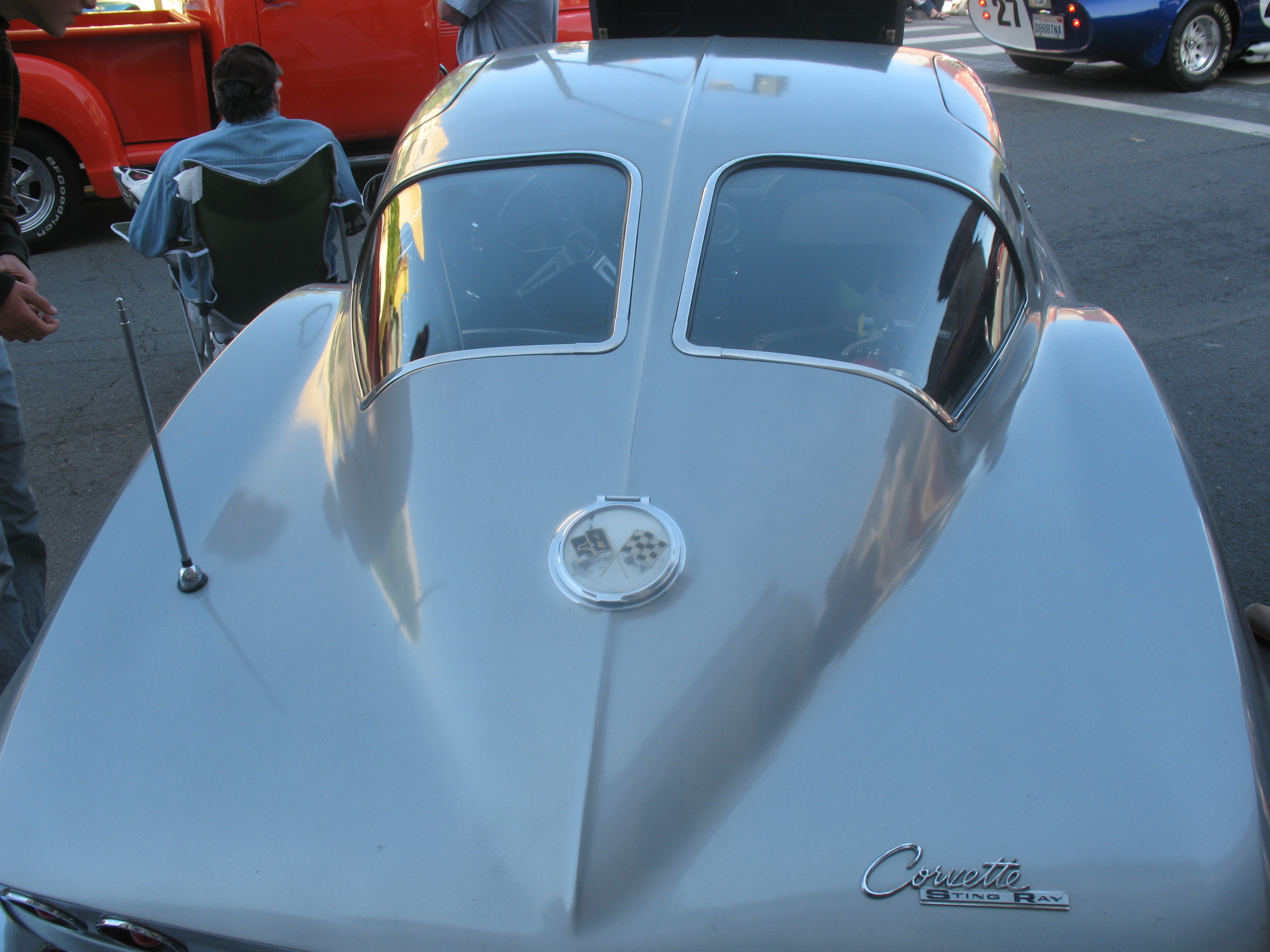
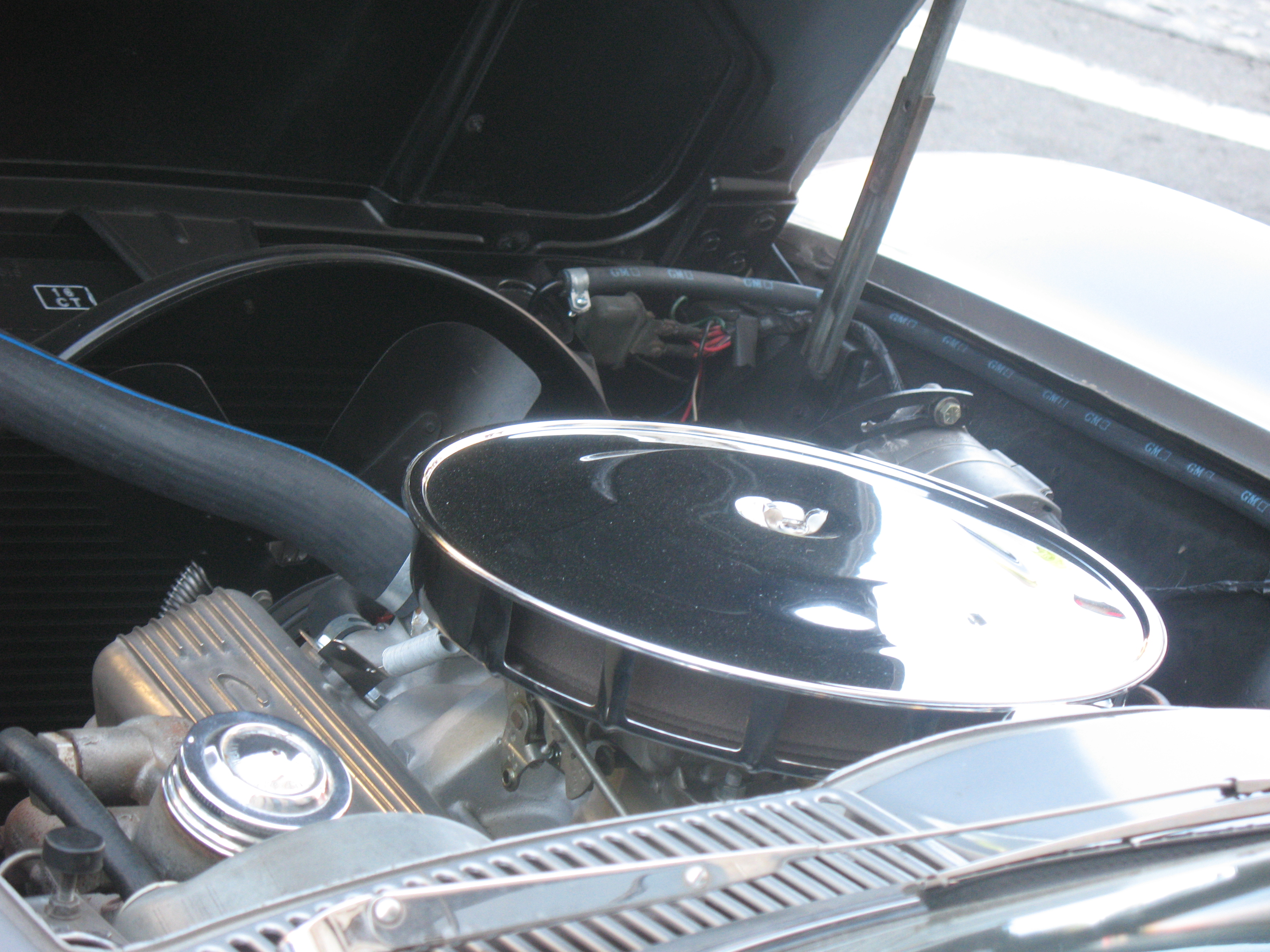
I saw the “Epic, Awesome ’63 Corvette! ” (Even better, a Fuelie!) And, yes, it was cool.

­­­­­­­­­­­­­­­­­­­­­­­In 1963, the Corvette was redesigned.  After almost 10 successful years of the first generation, the aging Chevy Corvette was in need of a redesign.  So, Chevrolet had their chief designers, Bill Mitchell and Larry Shinoda, design a new Vette.  The distinctively designed Corvette was made fun of by critics (now it is one of the most sought-after Corvettes ever made!  Ironic.). 

­­­­­­­­­­­­­­­­­­­­­­­

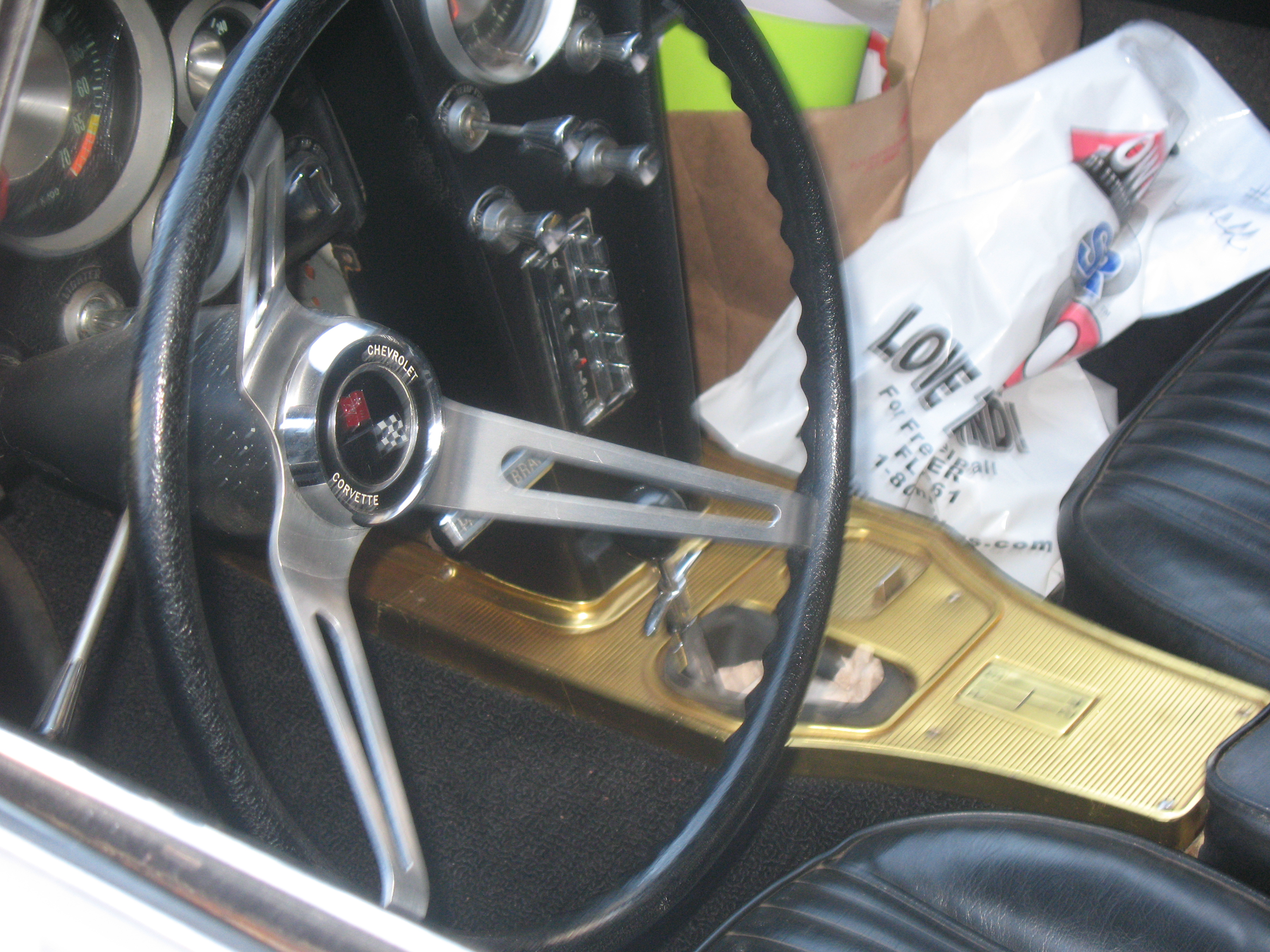
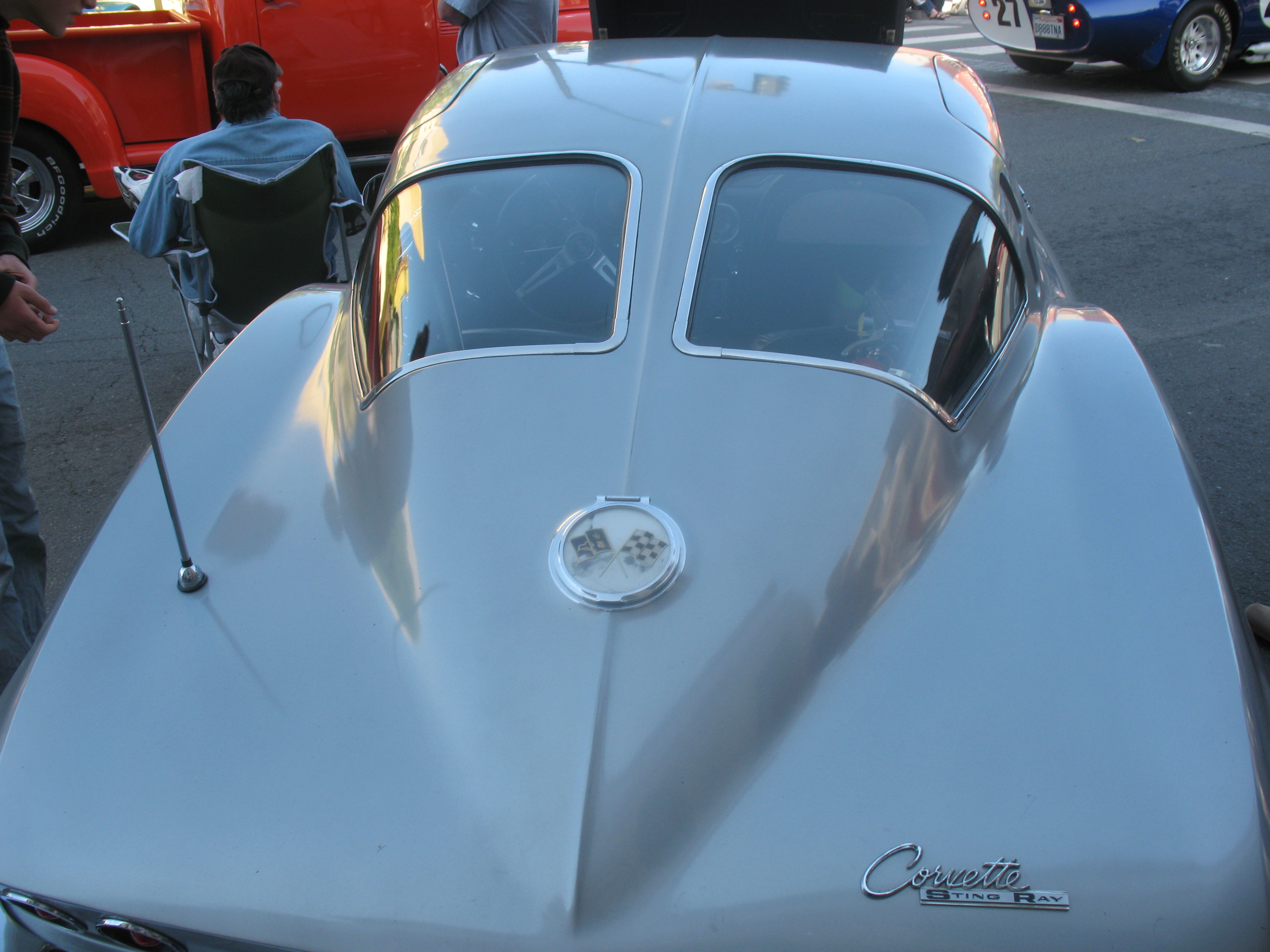
The Corvette Sting Ray had a two-seater cabin like other Vettes, but it had a two-piece rear windshield.  The 1963 Corvette Sting Ray had engine choices ranging from a 327 cubic inch V8, to a 396 cubic inch V8, and the best, a 427 cubic inch V8.  The 396 was offered from 1964-1966.  The 327 had a very rare “Fuelie” option.  Very few Fuelies were ever made, and these pictures are actual ones I took at the American Graffiti salute (look at my previous post, “Where Were You in ’62?”) of a 1963 Corvette Sting Ray Fuelie.  The second picture may look like it has a carburetor, but it is only a massive cold-air intake! 

This particular Sting Ray has the optional AM/FM radio option, along with the standard four-speed manual.  The sloping rear deck was meant to reduce drag, and increase styling.  Larry Shinoda had the rare talent of designing beautiful cars that were very aerodynamic.  The fuel-filler is behind the rear deck. (They did this because of the fuel tank being underneath the cargo area.) 

The Fuelie Sting Ray made 250 bhp (brake horsepower), a lot less than the 375 bhp carbureted version!  Even though bigger disc brakes were available on the Fuelie, many people chose the carbureted version because of its cheaper price (the Fuelie option cost $538).  The Fuelie could be optioned with any of the normal options available on Corvettes.

Talk about a beautiful car…

Trivia moment!  Did you know that the ’63 Vette Sting Ray Fuelie could go up to 152 mph!  VROOM!

Where Were You in ’62?

That is the theme of the movie, “American Graffiti”®.  I literally went back in time, when I went to an American Graffiti® tribute parade on Sunday.  I saw so many cool old muscle cars from the ‘50’s and ‘60’s, my eyes popped like popcorn, and my brain melted and oozed through my ears!  The rumbling El Caminos roared down the road, the Mustangs trotted down the street, and the belching T-Buckets and hotrods were hot enough to kill you! 

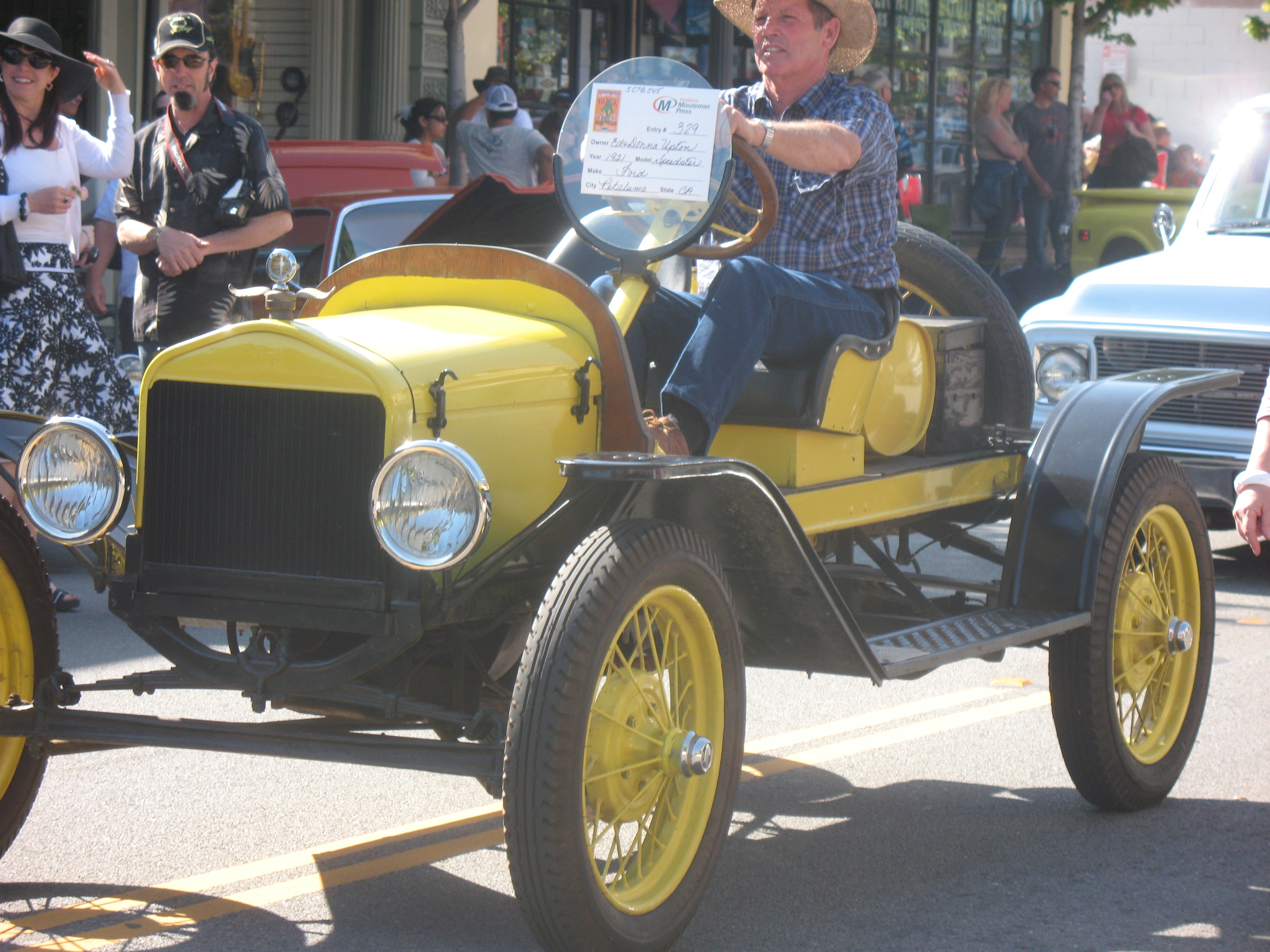
My favorite truck was a Ford Model A pickup that had no roof!  It had ghost flames, a Chevy 400 small-block V8, and an umbrella!  Not just any umbrella!  It was also the gearshift!  Ha Ha!  At one point, the umbrella dislodged itself from its position in 2nd gear, and flew onto the windshield!  It was a good thing that it shoved the transmission into neutral!  Even though it stalled the truck, it was funny!  The driver was as cool as ever.  He just had his passenger get out and fix the umbrella.  Then, the truck started up again.    

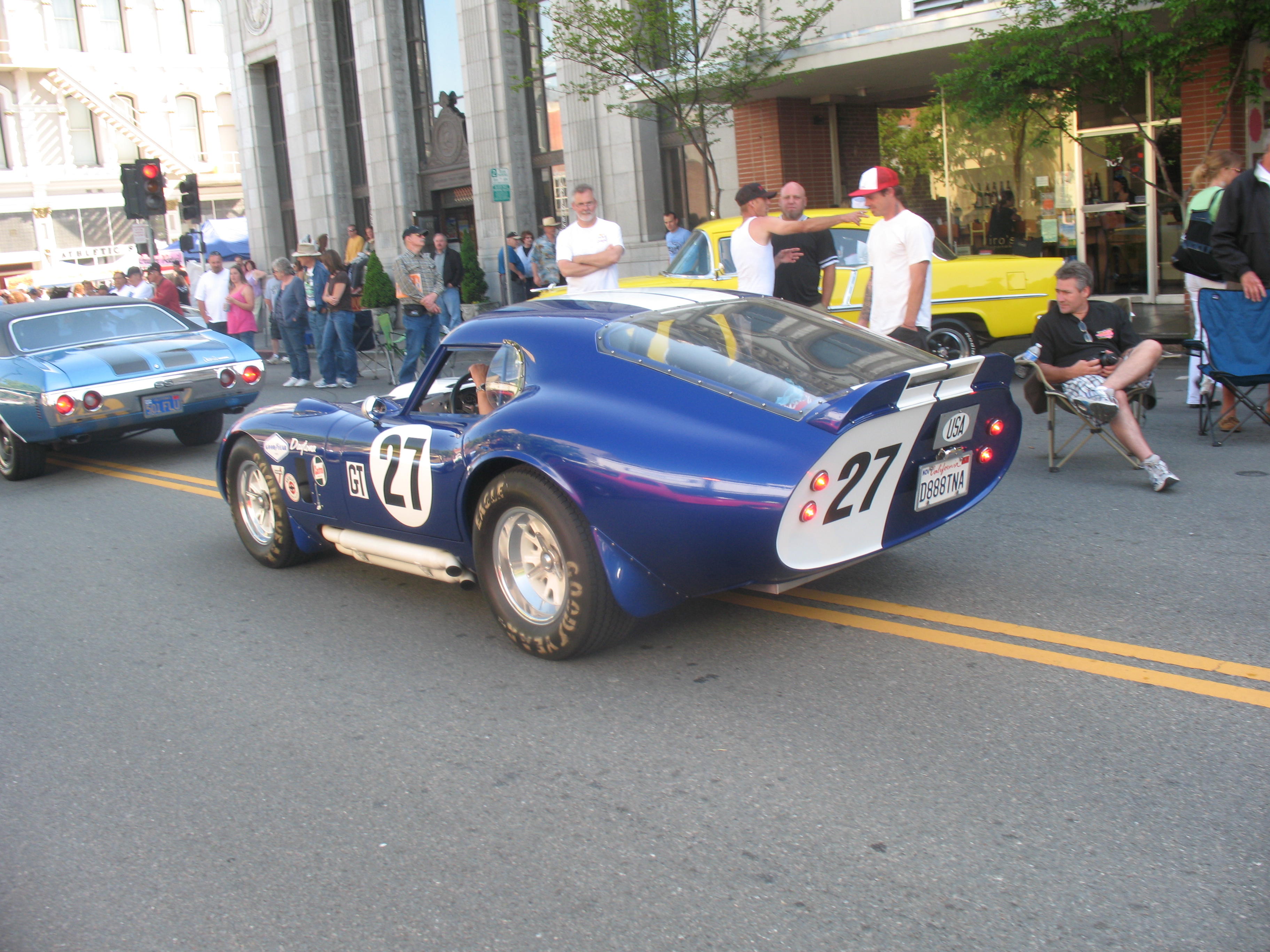
But, the car that I really wanted was a Shelby Cobra!  The body is made by Shelby American in Las Vegas, and then transported to a facility in Fresno, where the engine and all the other parts are put in.  My friend’s dad signed up to (possibly) win a red Cobra that was stripped down.  I want the other one, which is white and blue.  They both have 427 engines, mated to a Tremec 5-speed manual.  The red one makes about 460 horsepower, the other makes 550.  They know this because they dyno-test the engines.  When the Shelby rep turned on the blue and white one, it sounded a bit slow at first, but then became faster, until it was idle speed.  Of course, idle speed is at a mere 2000 rpm.  The red one only has 875 miles on it, but that’s because it only comes out of the trailer, into the trailer…  And the occasional parade…  The other, meanwhile, has about 6548 miles on it.  That’s because it was driven to Vegas to be signed by Carrol Shelby!  The rigs that they used to tow the Cobras were a 2010 Dodge Ram 2500 with a twin-turbo Cummins diesel!  Maybe it could win a drag race in towing…  The other was a 2004 Ford Excursion with the Powerstroke diesel.  The Excursion was stock, except for a Borla exhaust system. 

But, back to the point.  There was an old Chevy business coupe that had the radio on.  This might seem normal, except for the fact that there was a song playing that sounded like somebody was murdering a cow with a butter-knife!  It sounded like:  Moowuocuouaouw…  And, the owner had stopped the car because of a stalled T-Bucket!  So, it went on for about 5 minutes! 

All these old cars were working fine, but a newer car wasn’t.  On the way out of Petaluma, there was a young man in a Honda Civic hatchback.  He was in the middle of the intersection when it stalled!  He kept jamming the tranny into reverse, 1st gear, reverse, 1st gear…  Well, you get the idea. 

Heading home on Highway 101, we saw a lot of the classics coming back from the parade.  Many of them were loud, and I saw many drivers wearing earplugs.  It was like a whole second parade!  

Here is the website.  Even though the cruise ended three days ago, I still thought that you might want to look around on the website.  http://www.americangraffiti.net/index.html

I NEED that Cobra NOW!  It is awesome!  Al the summer jobs in the world might not be enough to pay for it!  I could dog sit from here to eternity, and not have enough money!  But, then again, they’d probably charge a ridiculous price for it!    

Trivia moment!  Did you know that the Cobra 427 was the fastest car of its day?  It could accelerate from 0-60 mph in 3.9 seconds!  VROOM!

Hold Onto Your Socks for the Most Exciting Post Yet!

GMC has had a very interesting history.  GMC has been making high-quality trucks for the past 110 years, and has been a supplier of trucks to the U.S. Government.  GM is a large automotive corporation with companies underneath GM.  The companies are:  GMC, Chevrolet, Buick, Isuzu, and Opel.  Pontiac, Saturn and HUMMER all are in the history books now. 

On December 22nd, 1901, Max Grabowsky started the “Rapid Motor Vehicle Company”, which made some of the earliest commercial trucks ever built.  Those trucks used one-cylinder engines!  Fuel efficient, yes, 0-60, 6 hours…   I’d rather push a wheelbarrow…  My lawn tractor has a bigger engine!  In 1909, General Motors bought the company, and renamed it “General Motors Truck & Coach Builder.”  In 1912, there were 22,000 trucks made by GM, 372 of them were GMC Trucks.  Out of those 372 GMC Trucks, 6 of them were chosen to be part of the GM display at the New York International Auto Show. 

In 1916, a GMC Truck crossed theUS in only thirty days. Quite a feat for a truck in 1916.  Ten years later, a two-ton GMC Truck drove fromNew York CitytoSan Franciscoin five days, thirty minutes!  WOW!  Those trips were taken as publicity stunts for GMC!  GMC hired people to drive those trucks across theU.S.

During WWII, GMC produced over 600,000 trucks for the U.S.military.  During the war years of WWII, GMC bought a controlling part of Yellow Coach; a bus maker.  In 1943, GMC purchased the remaining bit of Yellow Coach for about $100,000.   Because of increased competition in the bus market, GMC has been out of the bus business for over20 years. 

Being virtually identical to Chevy trucks, the only differences are: different grilles, more features, and better options.  Even though GMC’s are typically sold at Buick dealers, you can also find many GMC’s at a Chevrolet dealership near you.  Even though Chevy trucks usually sell better, GMC’s do sell in very large numbers. 

GMC’s lineup currently includes:

Sierra 1500

Sierra 2500

Sierra 3500

Canyon

Acadia

Yukon

YukonXL

Terrain

Savanna.

The Sierra 1500, when equipped with the right options, can tow up to 10,000 pounds.  It can also haul up to 1 ton.  There is a luxury version of the 1500 that is called “Sierra 1500Denali.”  It comes with: GM’s Quadrasteer (a system that uses all four wheels to steer), AWD, Navigation, Six-Speed Automatic, and a 6.2 liter, 403 horsepower V8. 

The Sierra 2500 shares only the GM 6-Speed Automatic with the 1500.  The 2500 has the option of GM’s “Duramax” Diesel engine, mated to an Allison Six-Speed Automatic Transmission with an overdrive.  The 2500 also can be equipped with a 6.0 liter, 360 horsepower gasoline V8 mated to a GM Six-Speed Automatic.  Recently, the “Denali” trim line was added to the model lineup for the 2500 and 3500’s alike.

The 3500 comes with the “Dually” option.  The “Dually” is has 4 rear wheels, instead of 2.  The “Dually can only come with the Duramax and Allison.  The 3500 can tow up to 17,500 pounds with a bumper trailer or 5th wheel trailer. 

The Canyon is GMC’s light-duty pickup truck.  It comes standard with a 2.9 liter, 185 horsepower four-cylinder and five-speed manual.  The other two engines that it can be optioned with are a 3.7 liter, 242 horsepower 5-cylinder, or a 5.3 liter, 300 horsepower V8.  The only automatic transmission is a four-speed automatic. 

The Acadia is GMC’s replacement for the aged Envoy SUV.  The Acadia is part of GM’s new “Lambda” SUV platform.  TheAcadiais GMC’s version of the Chevy Traverse and Buick Enclave.  TheAcadia, Enclave and Traverse come standard with a 3.6 liter, 288 horsepower V6.  That engine is mated to a Six-Speed automatic.  TheAcadiacan be optioned with AWD and 8 seats. 

TheYukon and Yukon XL are GMC’s versions of the Chevy Tahoe and Suburban.  They come with the same engines and transmissions.  The popular engine/transmission choice is the 5.3 liter, 315 horsepower V8 with the 6-Automatic.  They can be optioned with 4WD or 2WD. 

The Terrain is GMC’s first compact SUV.  It comes standard with front-wheel-drive and a 2.4 liter, 182 horsepower four-cylinder.  A six-speed automatic is standard across the whole trim line.  If you need to tow, but don’t want to have to step up to the Acadia, then the 3.6 liter, 264  horsepower V6 is a good choice.  You can then tow 5,000 pounds with the V6. 

The GMC Savanna is GMC’s only van.  That doesn’t mean, however, that the Savanna is badly optioned.  You can choose between rear-wheel-drive and AWD.  The Savanna’s top engine choice is a 6.6 liter, 365 horsepower Duramax Diesel V8.  That engine gets to enjoy a six-speed automatic with an overdrive.  You can choose between many packages and options.  The top two packages/options are the: Ambulance Package with all the Ambulance options and the Camper Package, which has any option that a hardcore recreation family can enjoy. 

As you can see, GMC offers a lot for the money; it just depends on what truck, SUV or van you want to buy.  Here is a list of the awards given to GMC’s over the years:

IntelliChoice Best Value Award 2008

Vincentric Best ¾ ton truck award 2011

2011 USNews good truck award

Internetautoguide.com Best truck award (2500 model)

Truck Trend Best Truck 2011 Award (tied with Chevy Silverado)

Coulter Motor Company Best Truck/SUV/Van maker award.

As you can see, GMC has a lot of awards under its belt.  (I hope that their pants don’t fall down [that is with the belt on]). 

GMC has also published a book; GMC; the First 100 Years.  

http://www.gmc.com/

GMC has also published a book; GMC; The First 100 Years

The Cars You Can Only Dream of Owning!

Remembering my promise to write a post on the Petersen Automotive Museum in L.A., I don’t want to keep you in suspense any longer.  Today I discuss the supercar exhibit at the Petersen showing through October.    

When it is wet and rainy out in L.A. (which it almost never is), fancy car sightings are about as rare as seeing an elephant in front of your house!  That left my Grandpa and me few choices to car spot.  We decided to go to the Petersen Automotive Museum to gawk at the supercar and hybrid/alternative fuel exhibits.  The hybrid exhibit was cool enough, but the supercar exhibit was even cooler.  The hybrids and alternative fuels cars included a: Toyota Prius, Ford Focus Electric, Mercedes-Benz SLS AMG E-Cell and a classic Chevy truck converted to coal power.  Those cars could be cars of the future! (Minus the Prius! Which is car of the present.) What about that old Chevy? Coal power is terrible for air quality and is fossil fuel dependent. 

Meanwhile, the Supercar exhibit.  Perchance to dream… Let me tell you what mine eyes saw within that treasured vault.  The cars included a: 1963 Ferrari 400 Superamerica, a 1968 Bizzarini Manta, a 1988 Porsche 959, a 1990 Ferrari F40 and 2006 Bugatti Veyron Grand Sport, just to name a few.  Those makers are some of the most well-known supercar makers that are around today (with the exception of Bizzarini).  BOOYAH!! (Thanks, Uncle Bob!)

The Porsche 959 was the fastest car of its day, with one even hitting 202 mph! Much of the technology that was inside the 959 was so good that it has been used on all the Porsche 911 Turbo’s!

The Bizzarini Manta was a one-off (one-off means that the vehicle is just a crazy idea made into reality by some random person) car that was converted from a Le Mans prototype into a street car.  About 30 were made total, only about 8 remain today.

The Bugatti Veyron Grand Sport is the second fastest production car in the world.  The fastest is its big brother, the Veyron Super Sport.  The Grand Sport can hit 253mph and go from 0-60 mph in just 2.8 seconds.  The Veyron Super Sport can hit 268 mph and go from 0-60 mph in just 2.6 seconds. 

The definition of a supercar is:

1.  It must have all or many of the latest technological goods equipped on it. 

2.  It must be very easy to drive at high speeds.

3.  It must have very good performance to actually be a supercar.

4.  It must have a very high top speed.

5.  It must have a very high price tag (just joking!)

6.   At least one must be sent to me! (Just in case that I ever crash, I will have extras.)

Some of the cars that I would have liked to take home from the exhibit are the: Porsche 959, Ferrari F40 and the Bugatti Veyron Grand Sport.  Okay…I wish I had a souvenir such as a Porsche 959…

Unfortunately, the website shows a lot of cars, and we only saw about 15 cars in the exhibit.  We thought that we would be there for most of the afternoon.  We were bummed out! We saw a security guard and asked him “why are there so few cars in the gallery?”

He said “Some of the owners wanted their cars back.  My job is just to guard all of them.  Sorry”

It was still a very cool exhibit.  I am attaching the website of the Petersen with the supercar exhibit for you to read.  http://www.petersen.org/default.cfm?docid=1081

I have already done a biography on Robert E. Petersen. 

Here is the link to my Petersen post.  Feel free to read it.

https://unmuffled.wordpress.com/2011/02/23/making-dreams-come-true-this-is-not-a-marketing-exercise-for-disney/

Every boy’s (and a few girls’) dream come true!

My dream car

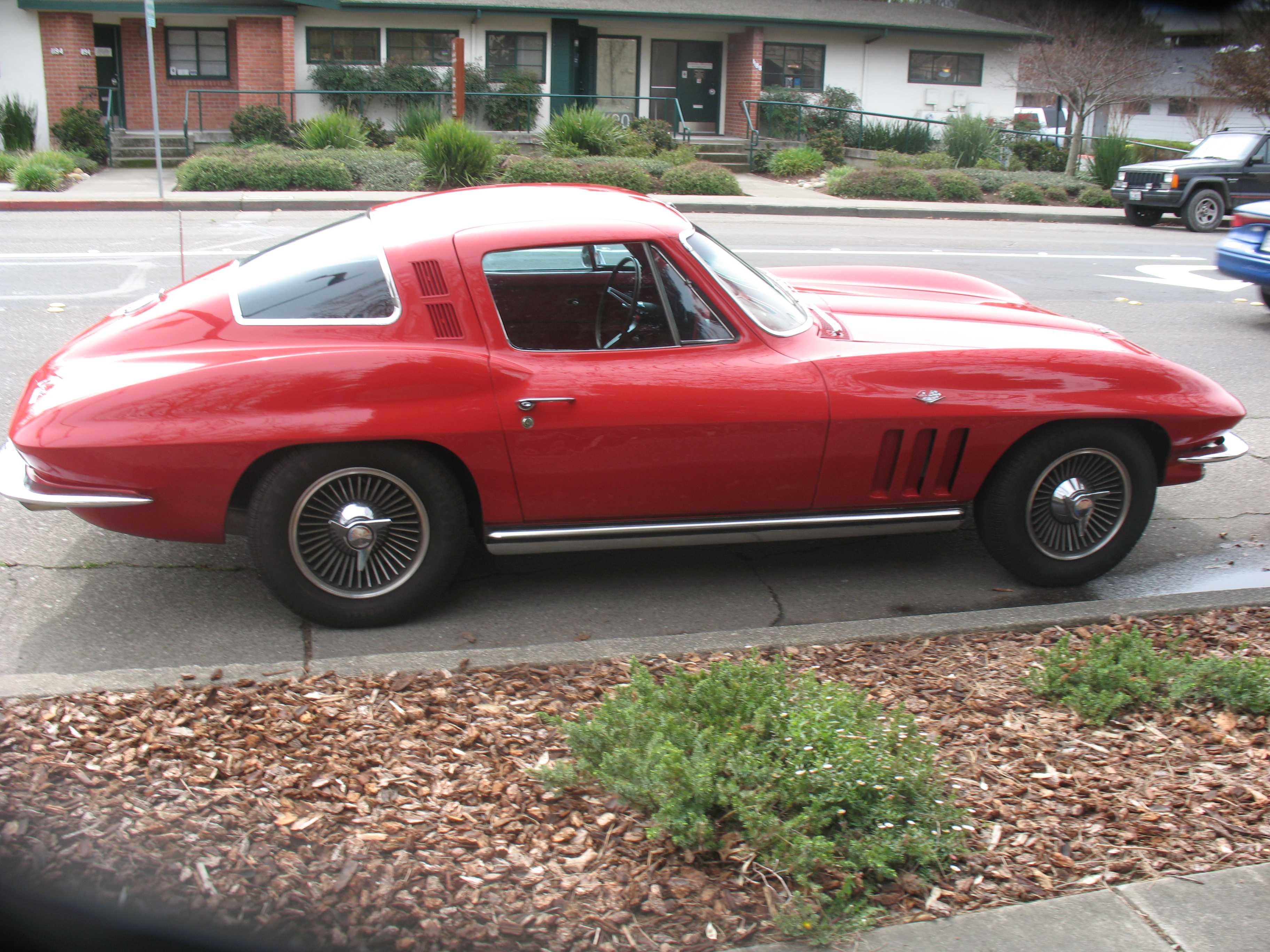
With a little help from Queen: “Is this real life or is this just fantasy? Caught in a landslide to escape from reality.  Open your eyes, look up to the skies and see” this beautiful 1964 Corvette Stingray Coupe! Too bad it wasn’t a convertible, otherwise I would have just jumped into it!  Cherried out and Roman Red (restored and painted original red) it sported the 454 cc V8 Tri-Pack.  That is one FAST Vette!  It had the optional 4-speed manual.  Some people count sheep at night, I count Vettes, especially oldies!    

Current events: I bet that you didn’t know that Guy Fieri’s Canary Yellow Lamborghini Gallardo was being serviced at the Lamborghini dealer in San Francisco.  Somebody just climbed down the inside of the building using climbing gear and cut the lock, opened the garage door and drove off into the night! WOW!! He’ll probably just wait until the new Aventador comes out this summer.

The Engine’s in the Back and Other Funny Car Stories.

Everybody’s first car tends to be well-used older cars.  Old cars equal problems.  So, everybody has funny car stories.  Why wouldn’t they? 

My Grandma Betty grew up in Egypt.  Egypt was bustling and Cairo was stuffed full of Europeans.  When you went to the market, there were camels (not the cigarette company) in the streets and the pyramids were in the background.  The cars that intimidated pedestrians were Rolls-Royces, Duesenburgs, Bentley’s and sports cars.  The Arabs used to call the Duesenburgs “the father of two behinds”, as the front and back looked the same!!  Can’t you just see that?  I can. 

Grandma Betty used to go to the swim-club, and one day, everybody was bored.  Should they play water polo or just hang out in the pool?  Somebody announced, (French accent) “I am going to leave!”  So, he got into his Fiat Topolino (Topolino means little mouse in Italian) and started to drive off, but four strong men picked up the Topolino so that the wheels were spinning in the air!  Hahahahaha! 

Another time, her brother’s friend took her and her brother to the beach in Alexandria.  His friend owned an MG sports car, and her brother let her sit inside with his friend, while he sat on the convertible top.  She said “you should have heard him “OUCH! *#@*!!”  Uncle Elliott shouldn’t have complained, as usually they squished 8 people in an MG.  Three in the seating compartment, three or four on the convertible top, and one on the hood or fender!  So, his friend had to go into downtown Alexandria for something and they went with him.  He thought that he had taken his dark green MG, but as there was nearly identical MG parked nearby, he took the wrong car.  They all had a good laugh when they found out!  She still has a good laugh about it all these years later!

My Grandpa Jack’s first car was a 1947 Ford Coupe with no emblem on the nose.  He bought it with the money he earned by selling newspapers on a busy intersection in Los Angeles.  He said “It was very spacious for a coupe, and it comfortably held four people in its backseat.”  He used it to get himself to UCLA and to take his mother and friends around Southern California.  He bought it used and sold it user.  He also said that it was cooler than him, but he didn’t know that until later.  I think he is cooler than his car! 

Grandpa Jack has had a lot of cars and therefore; has many funny car stories.  He bought a new car in 1963 or 1964, a Plymouth Valiant.  The first night that he had it, he and my Grandma Roz took his brother and sister-in-law out to dinner.  When his brother-in-law went to open the car door, the door handle fell off in his hand!  Grandpa Jack told me “I guess that’s why they call it a handle!”  Two days later, the ceiling upholstery started to fall off.  He said “it is like owning a boat; the two happiest days are buying and selling it.” 

When Jack was in the military in Austria, he and grandma bought a brand-new VW Beetle.  He didn’t want to take the cold military bus to work every morning.  When he was stationed stateside, they shipped the VW over with them. They drove through Oklahoma to get to Ohio.  While in some small town in Oklahoma getting gas for the VW, there were some old men sitting out front of the store.  When they spotted the Beetle they asked my Grandpa (old cowboy accent) “what car is that?”  He told them that it was a Volkswagen.  They asked “what’s that?”  He told them again it was a Volkswagen.  They replied “Never heard of it.”  He told them it was made in Germany.  The answer, well you can probably guess “never heard of it.”  He told them that the engine was in the back.  That got them out of their rocking chairs and looking.  They asked “engine’s in the back?!”  He had to take out luggage from the trunk to show them that there was no engine there.  He showed them the turn signal, the Mox Nix sticks (that means in German “makes no difference sticks!)  The old men said, “My oh my! All these new inventions.”   My grandparents both say that it was like one of the original western movies!    

My good friend Joshua, his dad, Michael is full of funny car stories.  His first car was a 1959 Ford Fairlane with an in-line six cylinder engine and manual transmission.  One of his friends had a small sized Ford V8 engine that he put into the Fairlane.  One day they decided to burn rubber.  It didn’t turn out that well; they blew the first, second and reverse gears in the transmission.  So, whenever he needed to pull into a parking space he was fine.  The difficulties started to occur when he had to back out of the parking space.  Some of his friends would have to push it out of the parking space for him.  If he was alone, he’d resort to yelling for a helping hand.  Once, he even got a tow truck to pull him out.

I can’t wait to start doing some funny car stories of my own when I get the ’82 Chevy S10 that’s coming my way!

Making dreams come true. This is not a marketing exercise for Disney!

What if you could start a business that includes all of your interests, and then later in life, start a museum?  Could you imagine starting a museum that has many of the things that interest you in it?

If you could do that, then you would be Robert Petersen.  Robert E. Petersen was quiet, but very determined and also extremely successful.  A happy, creative and insightful man, he started the Petersen Publishing Company and the amazing Petersen Automotive Museum in Los Angeles. 

Robert Einar Petersen was a native of Southern California who was born in 1927.  His mother died when he was 10, leaving his Danish father to take care of him.  His father was a mechanic and often took Robert to work with him.  At age 12, Robert knew how to weld and fix an engine- any engine at that.  After graduating from Barstow high-school in the early 1940’s he went to work in the Hollywood movie studios as a messenger boy.  After a brief Army Air Corps stint of just one year, he started a publishing company. 

In 1948, he started Hot Rod Magazine, which was all about the growing hot rod culture.  He sold copies of Hot Rod at local speedways, such as Riverside International, for 25 cents apiece.  It was a way for him, and the others that worked alongside him, to give helpful advice to teens and have fun.  He was instrumental in creating the first hot rod show.

In 1949, he created Motor Trend, a magazine that was focused towards the production car enthusiasts.  Production cars are cars that come off a production line and are not custom built.  In addition to Motor Trend and Hot Rod, he created about six more magazines, such as Teen and CARtoons.

He is firmly remembered in the business world as a success story.  He was actively into sport shooting, and was the Commissioner for sport shooting in the 1984 Los Angeles Olympics.  He had to construct a sport shooting range on the site of an old dairy farm within a month. 

In 1994, one of his lifelong passions came true; he and his wife Margie Petersen created the Petersen Automotive Museum as an educational museum.  Most of the cars inside the 300,000 square foot area are from his own collection. 

He was the president of the Los Angeles Boys & Girls club for many years and was on the national board for the boys and girls clubs throughout the U.S.  He also supported many charities for children until his death. 

The Directors of the Petersen Automotive Museum said “What made him so special was that he gave every ounce of his energy and abilities to his dreams.  He was a quiet man who truly became an American icon.”  The Directors also said “He made his living doing things he loved and he found success at every turn.  The way he lived his life, always looking for ways to give back in return for the success he enjoyed, made you proud to count him as a friend.  The museum is now his legacy.” 

He died on Friday, March 23rd, 2007 after a short but valiant battle with cancer at age 80.  His wife Margie survived him.

Overall, Robert E. Petersen was a man of few words, but loved to pursue whatever he wanted to with a passion.  He was also very much into hunting and having a good time.  Robert E. Petersen gave back as much as he got out of life.  What a lucky man!

If you would like to read more from the Petersen Museum website, then I hope you will enjoy the link.

http://petersenautomuseum.com/

The Beach Boys and the car-crazy song legacy they created.

The Beach Boys are one of the most well known bands that have sung about cars.  They gave an impression that all kids should be hopping into their car and going to the beach to surf.  They celebrated independence and freedom in life for teenagers.  I can’t drive yet, but I CAN hop onto my bike and go to the beach.  It might take me a while (especially with a surfboard on my back!), but it sounds fun!  The American postwar economy was booming and cars were being sold left and right.  The young men who had fought in WWII came home and had kids, and those kids were the true cool of the 50’s and 60’s.   Those were the kids the Beach Boys were singing to. 

The Beach Boys’ lead singer, Brian Wilson, and his cousin, Mike Love, and other members of the band, wrote some very famous songs that referred to cars.  The 1960’s were the golden postwar years after WWII.  This is important because cars and money were everywhere and people thought that it would last forever.  It could have, except for the 1970’s oil crisis. These are some songs I chose to mention.

Brian Wilson wrote most of the songs mentioned here.  His cousin Mike Love also wrote some of these songs.  I am also attaching the YouTube videos of the songs so you can watch them.  (Parents, just so you know there is no inappropriate language.)  I hope you enjoy watching and reading about them. 

“Little Duece Coupe”.  A deuce coupe is a chopped down three or five window coupe.  A coupe is a French word meaning two doors.  I hope you enjoy it.

http://www.youtube.com/watch?v=Qcb2vIFVCLA.   

“409”.  This is one of the Beach Boys’ more famous songs.  The opening line is “She’s real fine my 409. I saved pennies and I saved my dimes.”  With words like that, how could you go wrong?    A 409 means 409 cubic inches.  Chevrolet made a 409 CC V8.  If you don’t understand CC, then go back to my earlier post, Geeky Speak, it talks about engine size and CC’s.  I hope you enjoy the video.

http://www.youtube.com/watch?v=xKKP_cZuk54.

The next song that is coming down the road is “Custom Machine.”  Custom Machine was written in 1963 for the Album “Little Duece Coupe”.  A custom machine is simply a custom-built hot-rod.  Custom Machine is a good song, but is not as well known as “I Get Around”.  I hope that you enjoy it:

http://www.youtube.com/watch?v=BpcGEOEeBb0.

Roaring down the road is “I Get Around”.  It starts as “Round, round, I get around.”  It was one of the Beach Boys’ best-selling single songs ever.  Brian Wilson is leading vocals on “I Get Around.”  Critics and the remaining members of the Beach Boys all say that it deserved to be one of their best-sellers of all time.  It makes me want to hop into a car and drive with my arm hanging out the windowsill.  The video is very enjoyable.   http://www.youtube.com/watch?v=GiekNHjkLTk.

Next up for me is “Honkin’ down the Highway.”  Weird title, anyone agree?  This time, it is the band member Al Jardine singing the lead.  I once saw somebody actually honking down the highway.  Their horn was broken and wouldn’t stop honking!!  Ha Ha!!!!  I hope you enjoy the video and the story.  http://www.youtube.com/watch?v=AHVCfj6WHXw.    

“In my car” was written for the 1989 album “Still Cruisin”.  It was homage to the early days of the Beach Boys.  For them, it was back to the simpler days of singing when they sang great singles.  “In My Car” was about just going into your car and driving in it.  I hope you enjoy it.  http://www.youtube.com/watch?v=RraBzJ_XVFo.    

The best-seller in Sweden in 1963 was the Beach Boys song “Little Honda”.  Really.  I am not joking.  I don’t know why it was a bestseller!  Maybe the Swedish just liked the Beach Boys a lot.  Maybe the Beach Boys were just trying to impress the Swedish with this song.  Watch the video for fun.   

http://www.youtube.com/watch?v=2m1rrMB3JdA.

Another good song is “Our Car Club.”  It was made about the local car club in the town where the Wilson brothers grew up, Hawthorne, California.  Carl Wilson (Brian’s older brother) remembered watching them go by every night in front of his house. 

http://www.youtube.com/watch?v=2m1rrMB3JdA.

“This car of mine.”  This car of mine was written after Dennis Wilson (Carl and Brian’s older brother) went to a car dealership to buy a car and found out that somebody had just bought it a half hour before.  I hope you enjoy the video.

http://www.youtube.com/watch?v=wfrSVGiB5e0.

Let’s finish with “The Little Old Lady from Pasadena.”  The song originated when after WWII, an elderly man would die and leave his wife a powerful car that she almost never drove.  The song is about an old lady who was left with a “Super Stock Dodge”.  This lady not only drove it every day, but would race all the young adults and teenagers with their souped-up musclecar’s. 

When I went across the country with my family, we visited some friends in Virginia who we called Grandma and Papa.  When we were going out to dinner with them, Grandma Lois drove.  I don’t mean she just drove.  I mean DROVE F.A.S.T!  We had to floor it to keep up with them.  Go Granny Go!!  I hope that you enjoy the link.

http://www.youtube.com/watch?v=SQMqgSaZZmM

There will be other bands I will write about later, so listen up!  It sounds like a lot of fun driving with the terror of Colorado Boulevard! EEEK!

The American Musclecar; the history and techno-speak of a great style of cars.

Warning:  This post is very technical.  I promise in my next posts to decode the geeky stuff.                  

Just so you know, I am not misspelling musclecar and ponycar!  That is how they are spelled.  So no funny comments, please! 

 There are debates about which car was the first true musclecar.  This is like the chicken and the egg theory.  Which came first?  Some say the Chevrolet Corvette was the first, as it debuted in 1953.  Others say the Ford Thunderbird, which debuted in 1957.  Others say that it was the Pontiac GT0 which debuted in 1964.  I believe that it was the Ford Mustang, as the Corvette and T-Bird didn’t sell in large numbers.  The GT0 started going off the dealership lots when the 69’ Judge edition came out.  (Am I innocent, your honor??)  The Ford Mustang was the first of those to truly disappear off the dealership lots.  The proof is that more than 3 MILLION have been sold since 1965. 

 What makes a musclecar a musclecar?  Well, let me tell you.  A msuclecar is expected to have big, powerful engines and lots of power to do big, smoky burnouts without trying hard.  A musclecar is a two-door coupe with plenty of room under the hood for exhaust systems and a big, rumblin’ v8. 

 From my point of view, the musclecar started out with the Ford Mustang’s launch in 1965.  The Mustang appealed to an audience that was primarily young people in their late teens to their early twenties.  Mostly male.  They all had disposable income.  The Mustang originally came with your choice of a 200 cubic inch (4.0 liter) in-line six cylinder, a 289 cubic inch v8 (4.6 liter) with either a 3-speed automatic, a 3-speed manual (available with the 6 cylinder only) or a 4-speed manual (only with the v8) since the 3-speed automatic was available across the board.  There was also a convertible option and a “normal” coupe style or a fastback style. For three years, Ford’s hugely popular Mustang had no competition. 

 In 1969 the Pontiac Firebird and Chevrolet Camaro came out and were the first true competitors to the Mustang.  Also, the Dodge Challenger and Charger came out and were very popular, but not as popular as the Mustang.  Around the same time, Chevy came out with the Impala, which left the dealerships in herds.

In 1970, Ford introduced its first big engine in the Mustang; the legendary 302 cubic inch v8.  The funny thing was that the 302 was really 301 cubic inches and was therefore not the 5.0 liter v8 Ford promoted it as.  It was 4.9 liters.  Try saying “five point oh” and then say “four point nine”.  Which sounds more appealing?  Five point oh, right? 

Let’s drive over to the Chevrolet dealer and check out the Camaro.  The Camaro had the anemic Stovebelt in-line 6 as the base engine, but that dated back to the 1930’s, so Chevy put in the stuff of legends: the small-block v8.  That engine had become a popular drag/ hotrodding engine.  It also powered the Corvette, the awesome sports car.  The small-block engines had cubic inch sizes from 350 cubic inches (5.7 liters) to 427 cubic inches (7.0 liters).  Trivia moment! Did you know that the Stovebelt in-line 6 was called the Stovebelt after an engineer found out that the belts were the same belts that early gas stoves used? Probably not. 

Dodge, not to be outdone by the Chevy and Ford engines, had the 426 Hemi engine (7.0 liters).  All Chrysler/Dodge products with that engine came with a 4-speed manual transmission with an overdrive.  As on could expect, those cars were very FAST and won a lot of drag races.

Unfortunately, the 1970’s oil crisis meant that the EPA and the government tightened emissions standards and soon the previously anemic six cylinder engines were leaving the dealerships in large numbers.  After the oil crisis, the automakers never really recovered, the engines gave out less and less horsepower and torque.  Dodge’s Challenger became a front-wheel drive fuel efficient car that almost nobody bought.  Legendary car tuner, Carrol Shelby, slapped a turbocharger on it and soon it grew in sales numbers. 

In the 1990’s the automakers started getting back their old fame for their musclecars/ponycars and soon, with the exception of Dodge and Chrysler, started increasing their sales numbers, especially Ford with the Mustang.  The Mustang became so popular that Ford made what some, including me, think was a bad idea.  Ford put a 289 v8 back under the hood of the Mustang.  The 289 was less powerful than the 302. 

When the turn of the century happened, pretty much everything stayed the same until 2003.  In 2003 Chevy shocked fans by discontinuing the Camaro.  For seven years the Mustang had no competition whatsoever.  In 2005, the Mustang was redesigned and had a totally retro design that made it the most popular Ford ever.

In 2010, Chevy and Dodge brought back the Camaro, the Challenger and the Charger.  The Chrysler 300 was Chrysler’s answer to a musclecar and has been a good comeback car for Chrysler.  It had been around since 2005.  The Camaro was much more popular than the Challenger.  Dodge recently put a new 392 cubic inch v8 (6.4 liters) which is 0.3 liters larger than the 6.1 v8 that was previously the top engine in the Challenger.  Ford recently brought back the 5.0, except THIS time it is truly a 302 v8! 

 Today’s musclecar/ponycar offers speed, driving fun, all the modern comforts one expects in a modern car, powerful engines, and last of all, great looks.

Having sat in a Mustang GT500, I can report that it was an awesome experience.  You can tell how much power is in it by how big the speedometer is (175 mph) and the need for a boost gauge.  The interior is nice looking and comfortable, but a few too many hard plastics for my taste.  The exterior is smoking hot looking, especially in red with white stripes.  

The musclecar wars are just beginning with the Camaro Z28 coming out next year and all of the tuned Challengers.  They are also expected to look good in racecar form and win a lot.  The Challenger and Mustang both compete in NASCAR and win a lot. 

This is my brief history of the musclecar.  Plenty of books have been written about the history of the musclecar only.  The musclecar is one of my favorite styles of cars, and besides, I’m male.  I think I’ll just go out and buy a Mustang GT500.  That is, if my mom lets me…