The Greatest American Turbocharged Cars

Many people think that turbochargers belong in heavily modified import cars.  Well, that’s partially true.  Europe has turned out some impressive turbocharged cars, as well as the US of A.  Here are America’s greatest turbocharged cars.

  • Ford Mustang SVO:  The 2015 Ford Mustang has a 2.3-liter turbocharged 4-cylinder engine, just like the SVO Mustangs of the 1980’s.  The first turbocharged Ford Mustang showed up in 1979 with a 135-horsepower, turbocharged, 2.3-liter four-cylinder engine.  It was an alternative to the downsized 4.2-liter V8 found in the Mustang GT.  But, it wasn’t until Ford’s Special Vehicle Operations (SVO, now known as Special Vehicle Tuning or SVT) got their hands on one that it became anything noteworthy.  It came with a factory-installed Hurst short-throw shifter, revolutionary Koni adjustable shocks, ABS disc brakes at all four corners, a limited-slip differential, and a screaming, turbocharged 205 horsepower.  Drivers even had the cool option of flicking a dash-mounted switch that allowed the car to run on lower-grade fuel for a certain amount of time.  When it ended it’s production run in the late 1980’s, it was something to be feared.  It looked especially menacing in grey.
  • 1965 Chevrolet Corvair:  Believe it or not, the Corvair actually had a go-fast option.  It had two, in fact.  One was the Crown Corvair, which used a mid-mounted 283-cubic-inch Corvette V8, and the other was a turbocharger bolted onto the engine.  From the factory.  It made 150 horsepower initially, but by the time the Corvair died, it made 180 horsepower.  Unlike many other turbocharged cars, the turbocharged Corvair did not use a wastegate, the internal exhaust flap that opens at higher engine speeds to prevent over-spinning the turbine.  Instead, Chevy engineers simply built enough backpressure into the exhaust system to prevent overboost and serious engine damage.  Very few Corvairs with the turbocharged engine were ever made.
  • Oldsmobile F85 Jetfire:  Oldsmobile was one of the early adopters of turbocharging technology.  It released the powerful F85 Jetfire in April of 1962, and the car was something of a small success.  It took the fabled 3.5-liter high-compression “Rocket” V8, cranked up the boost, and let it rev.  It made a screaming 215 horsepower, and it was easily quicker than many naturally aspirated cars of 1962.  Plus, owners got an ashtray-sized boost gauge in front of the shifter.  The engine had problems with detonation, which is the process where the hot air-fuel mixture under pressure spontaneously ignites before the spark plug has a chance to ignite it.  So, the Turbo-Rocket engine was fed a mixture of methanol alcohol and water (the same stuff fed to dragsters).  This allowed the mixture to not ignite as quickly and get a higher octane level.  Today, water/alcohol injection is commonplace in high-performance tuner car applications, but isn’t it cool that F85 Jetfire owners had to periodically fill their “Turbo Rocket Fluid” reservoir?
  • Buick GNX:  If there’s a poster-child for American turbocharged cars, the Buick GNX wins, hands-down.  The all-black, tire-smoking, Ferrari Testarossa-beating, quarter-mile waltzing Buick GNX was and still is a force of nature.  Buick initially started turbocharging it’s anemic 3.8-liter V6 in 1978 for the Regal and the LeSabre, introducing the fast Regal Grand National line in 1982.  It culminated with 1987 with the GNX.  Buick purposefully underrated the crank horsepower at 276 horsepower, but dyno tests showed that the car made at least 315 horsepower at the wheels.  This means that the car made somewhere close to 360-370 horsepower at the crank.  It even beat the twin-turbo Callaway Corvette that I featured on my blog a couple of months ago in the quarter mile.  The GNX would go through the quarter mile in the low 13-second range at around 125-130 mph.  Just 547 GNX’s were built in 1987, each specially massaged by AMC/McLaren.  Today, the turbo Buick’s are something of a legend, and many go for upwards of $30,000.  The car was so successful on the street the Buick entered a naturally-aspirated V8 version of the car in NASCAR’s Grand National series (now known as the Nationwide Series), where it was extremely competitive.
  • 1989 Pontiac 20th Anniversary Turbo Trans Am:  The all-white Pontiac Trans Am picked to be the pace car for the 73rd annual Indy 500 was completely different than the first turbocharged Trans Am, which was all mustache and no Burt.  This 1989 force-fed pony car was something completely different.  I liken it as the Pontiac storm trooper to the Buick GNX Darth Vader.  Pontiac subcontracted an engineering firm to swap Buick GNX engines (made by Buick for Pontiac) into the Trans Am.  But, the story doesn’t (and shouldn’t) end there.  Anniversary-edition Trans Am’s got better-flowing heads than the GNX, stainless-steel headers, GNX-sized Eaton intercoolers, a cross-drilled Comp Cams crankshaft, and their own engine tuning higher up in the powerband.  The net result was a car that officially produced 250 horsepower at the crank, but made closer to 320 horsepower at the crank.  This marked a return to the horsepower-underrating days of the muscle car, started by, you guessed it, Pontiac.  It was the fastest pace car ever in the history of the Indy 500, which is impressive, given the fact that many fast cars have been chosen since then.
  • Ford Thunderbird Turbo Coupe:  The Beach Boys made the T-Bird famous with the line, “fun, fun, fun, until her daddy takes it away.”  The T-Bird was fun until Daddy (the EPA) introduced emissions regulations that took the fun out of the T-Bird.  By 1982, the T-Bird was a horrible, anemic shoebox of a car.  Happily, 1983 saw the rising of the phoenix.  It’s beak-like hood had twin nostrils that meant that there was a turbocharged engine underneath that pointy hood.  Other than the amazingly 1980’s-FILA edition, the T-Bird Turbo Coupe was at it’s peak in 1987 and 1988.  That was when stick-shifted version of the Fox-bodied T-Bird came equipped with a whistling 190 horsepower, four-wheel ABS disc brakes, and a limited-slip differential.  Those nostrils on the hood, by the way, are functional, as they feed air directly to the top-mounted intercooler.
  • Shelby GLHS:  It’s hard to find a car that has a shape that’s more square than the Dodge Omni.  The blocky Omni had all of the sporting pretensions of a worn-out water shoe.  Then, you hand the Omni over to Carroll Shelby.  Early Omni GLH (unofficially Goes Like Hell) cars weren’t turbocharged, but by the mid-1980’s, America was becoming obsessed with the turbocharger.  So, by the mid-1980’s, the Omni GLH had enough punch to beat any VW GTI of the era.  For the 1986 model year only, 500 cars were further tweaked by Shelby to become the Omni GLHS (Goes Like Hell S’More), which was a 175-horsepower breadbox with more boost, better suspension, and factory options like a roll cage and heavy-duty oil cooler borrowed from the Ram 250 with the Cummins Diesel.  Quite possibly the best part of the GLHS:  The uprated top speed of the GLHS was too much for the regular 85 mph speedometer of the Omni, so Shelby simply added a sticker to the bottom of the gauge with increments up to 135 mph.
  • Shelby CSX-VNT:  Another Shelby creation was the CSX-VNT, which was based off of the homely Plymouth Sundance and Dodge Shadow.  Initially, the CSX-VNT packed 175 horsepower, and like the earlier GLHS, went like a bat out of hell.  Shelby built a small run of 1,001 cars for the Thrifty rental car company with slightly less power.  In the final year of CSX-VNT production, 1989, the CSX-VNT included some new, unique technology previously only seen on race cars – variable turbine geometry.  Computer-controlled vanes moved to direct the hot exhaust gas stream to improve spool-up time.  While it’s power rating remained the same at 175 horsepower, it had dramatically better response time in the low end, virtually eliminating turbo lag.  The next time this technology would show up in the U.S. market would be in 2011, with the 997-generation Porsche 911 Turbo.  That was more than 15 years later.
  • GMC Syclone:  In 1990, Gale Banks Engineering cracked the 200-mph mark at the Bonneville Salt Flats in a compact GMC pickup truck with no turbocharger or supercharger.  In 1991, the streetable version of that high-powered pickup showed up on dealer lots.  It’s 4.3-liter Vortec V6 engine was turbocharged with the help of Gale Banks himself.  It came standard with ABS and AWD, neither of which were options on the S15 Sonoma.  You couldn’t haul much with the Syclone, unfortunately, as it was only rated to haul 500 pounds.  Too bad, but you could still fill the bed with the egos of every single Porsche, Ferrari, Lamborghini, and Maserati driver on the road.  This all-black, one-year-only mini-truck was the fastest-accelerating production vehicle in America for a few years, easily getting off of the line, thanks to the torque-rich engine and AWD.  It got to 60 mph somewhere in the low 4-second range.
  • GMC Typhoon:  A spin-off of the one-year-only Syclone, the Jimmy-bodied Typhoon was officially rated at 280 horsepower, though dyno tests showed that it made at least that at the wheels, meaning that it made somewhere around 320 horsepower at the crank.  It could easily beat a Ferrari 348 off of the line and up to about 70 mph, when the 348 really got into the powerband.  Just under 5,000 Typhoons were made between 1992-1993, and unlike the black-only Syclone, could be bought in a variety of colors.  In fact, Clint Eastwood used to drive a Forest Green Typhoon around in his Dirty Harry days, where he would pull up to a stoplight and ask punks if they felt lucky. Most thought they were going to beat some middle-aged guy in his SUV with their Mustang or import car.
  • Dodge Neon SRT4:  In 2003, Chrysler/Dodge’s Street Racing Technology (SRT) team got hold of the friendly-faced Neon subcompact car, and built what is still the car to beat for bang-for-your-buck performance.  A frog-eyed four-door sedan with a functional front-mounted intercooler peeking out of the grille, the tiny Neon made mincemeat out of everything from a Porsche Boxster to a Nissan 350Z.  Dodge claimed 230 horsepower, though dyno testing showed that the car made at least that much, if not more at the wheels.  This means that the engine was making close to 280 horsepower at the crank.  Something else that is cool about the Neon SRT4 is the fact that it doesn’t have a muffler on it.  This allows it to have vastly better turbo flow.  Resonators keep the volume semi-sane, but the Neon really makes a lot of noise when you give it some go-juice.
  • Chevrolet SS Turbocharged:  Initially available only as a supercharged coupe, the Cobalt SS was always OK in performance testing, but it wasn’t going to set any records.  Starting in 2009, the Cobalt SS came as either a sedan or coupe with a turbocharger bolted onto a small four-cylinder engine.  It made 260 horsepower.  Should you want a cool sleeper, if you aren’t afraid of the ignition recall, you can get a Cobalt SS, take the badges off, swap the big chrome rims for something more discreet (like the regular Cobalt rims), and you’d have the makings of a good sleeper.  It had a no-lift-shift system – just keep your right foot floored so that you don’t loose boost – and you’ll see the quarter mile fly by in under 13 seconds, and will keep up with a Porsche 911 on a road course.  Take it out to the twisties out on the road, and you’ll be able to keep up with a motorcycle, thanks to the tiny size of the Cobalt.

1986 Ford Mustang SVO 1986 Shelby Omni GLHS 1988 Ford Thunderbird Turbo Coupe

1989 Shelby CSX-VNT 2004 Dodge Neon SRT4


1962 Oldsmobile F85 Jetfire 1965 Chevrolet Corvair Spyder Turbo

1987 Buick GNX

1989 Pontiac Trans Am 20th Anniversary Edition

1991 GMC Syclone 1992 GMC Typhoon


Out and About in Sonoma County and Oregon!

It’s been a while since I published an Out and About in Sonoma County.  However, that’s because I got some great pictures from Oregon AND Sonoma County!  I hope you enjoy them!  I will provide commentary on ALL of the cars – basically fun facts on them!  I also got some pictures from Mother’s Day Weekend up in Redding, CA.  Those are included as well.

This is my 300th post, so next week, I am doing a giveaway of a Roadkill hat!  Every reader or subscriber MUST leave a comment saying that they wish to be entered in the giveaway.  Remember, leave a comment to get a chance to win!

Oregon:  

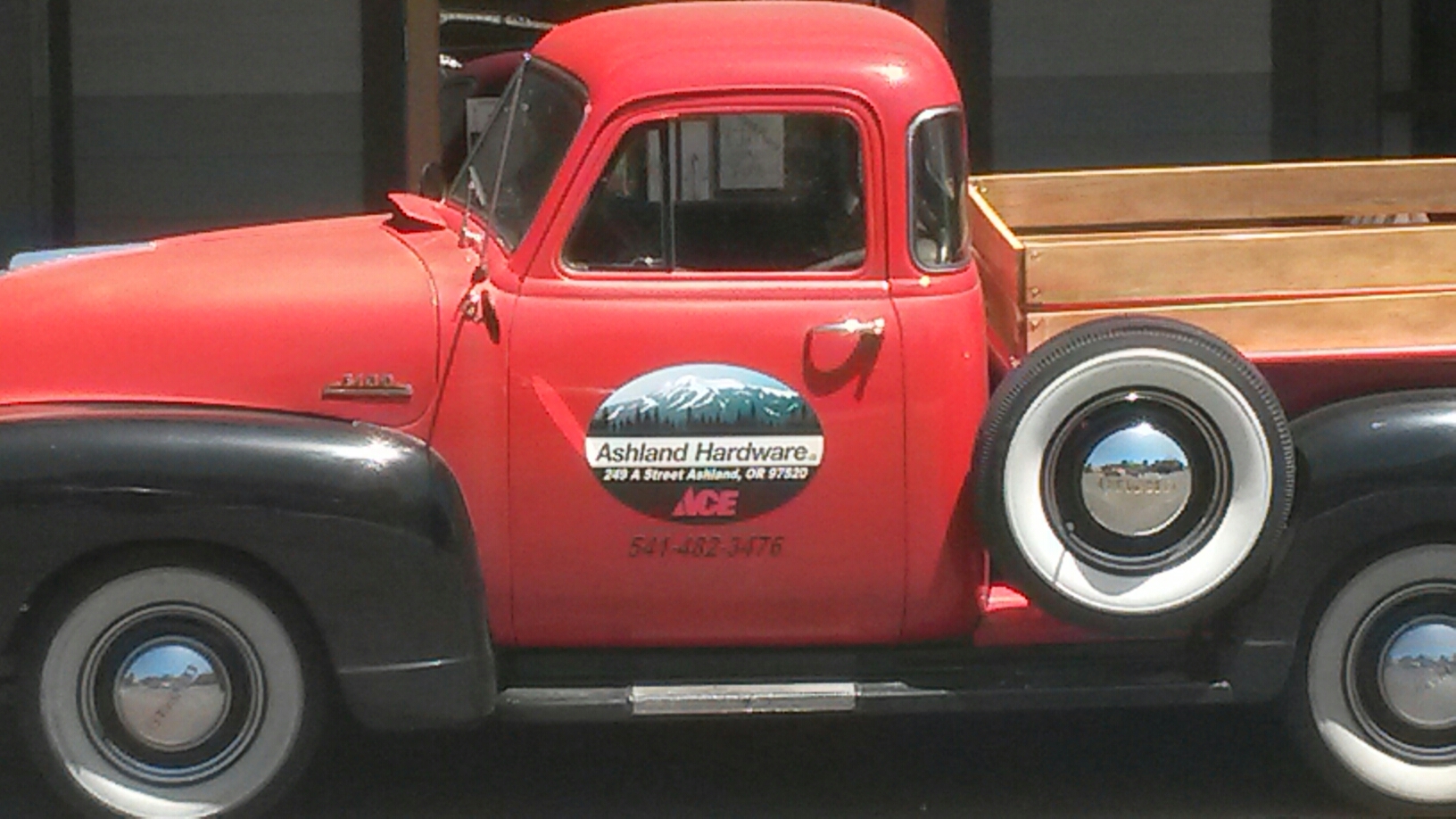
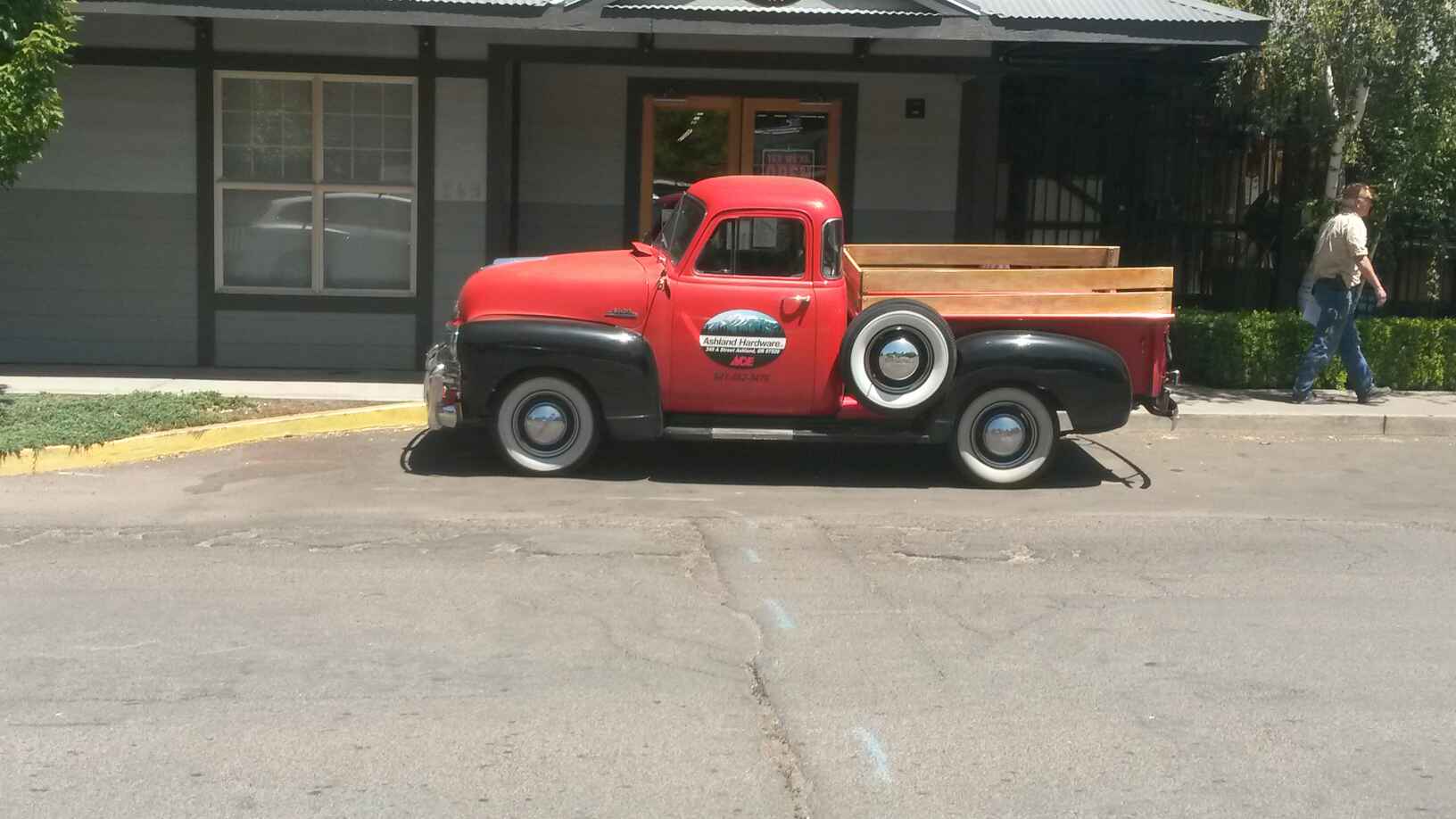
The Ashland, Oregon ACE hardware store has this simply stunning 1950-52? Chevrolet 3100.  It's absolutely stunning.
The Ashland, Oregon ACE hardware store has this simply stunning 1950-52? Chevrolet 3100. It’s absolutely stunning.  The thing popping up right in front of the windshield is for the air conditioner.  It’s like the air grabber hoods on the hi-performance 1960’s Mopars – it pulls air in when the switch is flipped on.
I'm simply in love with the Harley-Davidson themed paint!  It really helps accentuate the beautiful lines on these old trucks.
I’m simply in love with the Harley-Davidson themed paint! It really helps accentuate the beautiful lines on these old trucks.
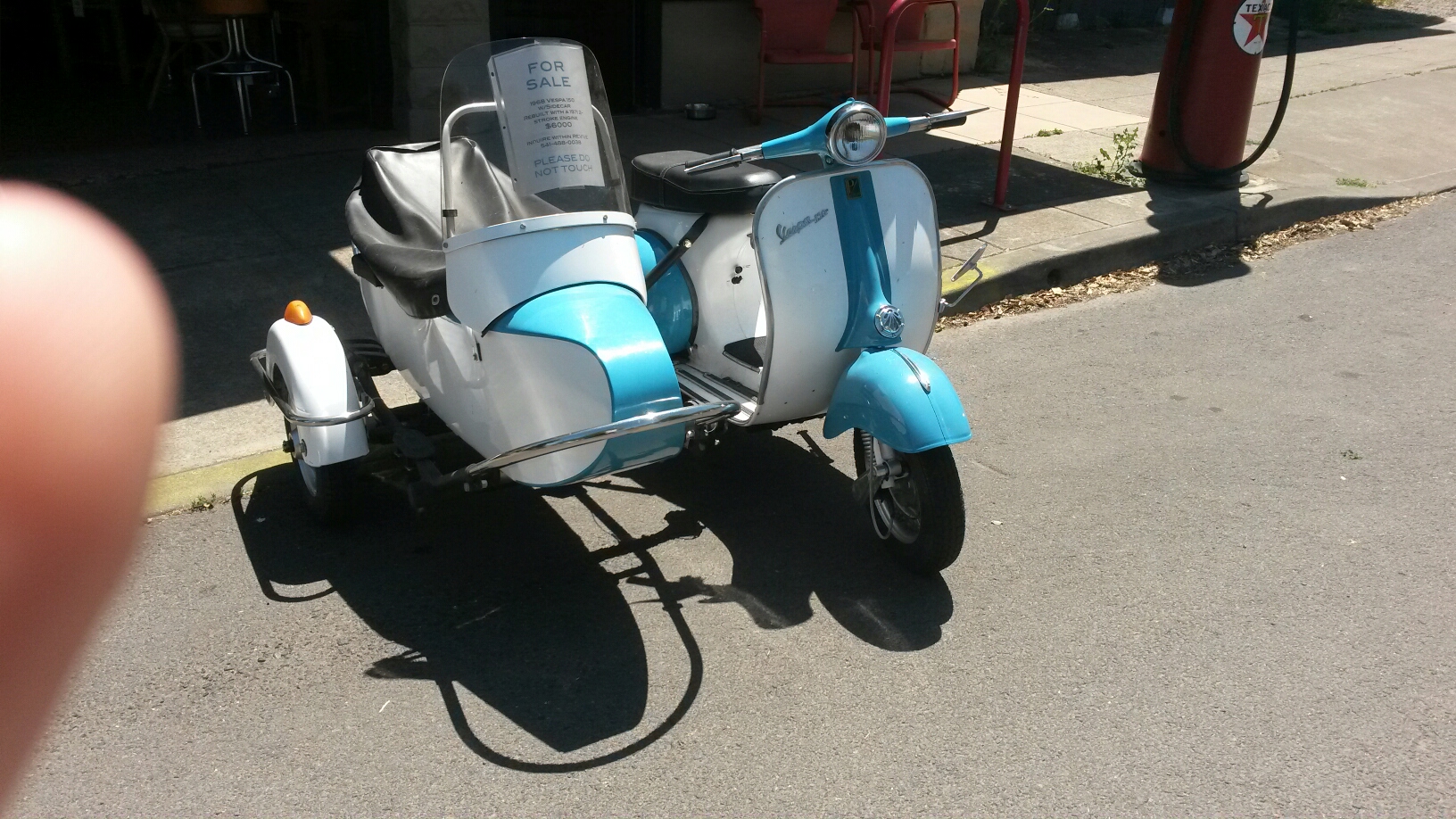
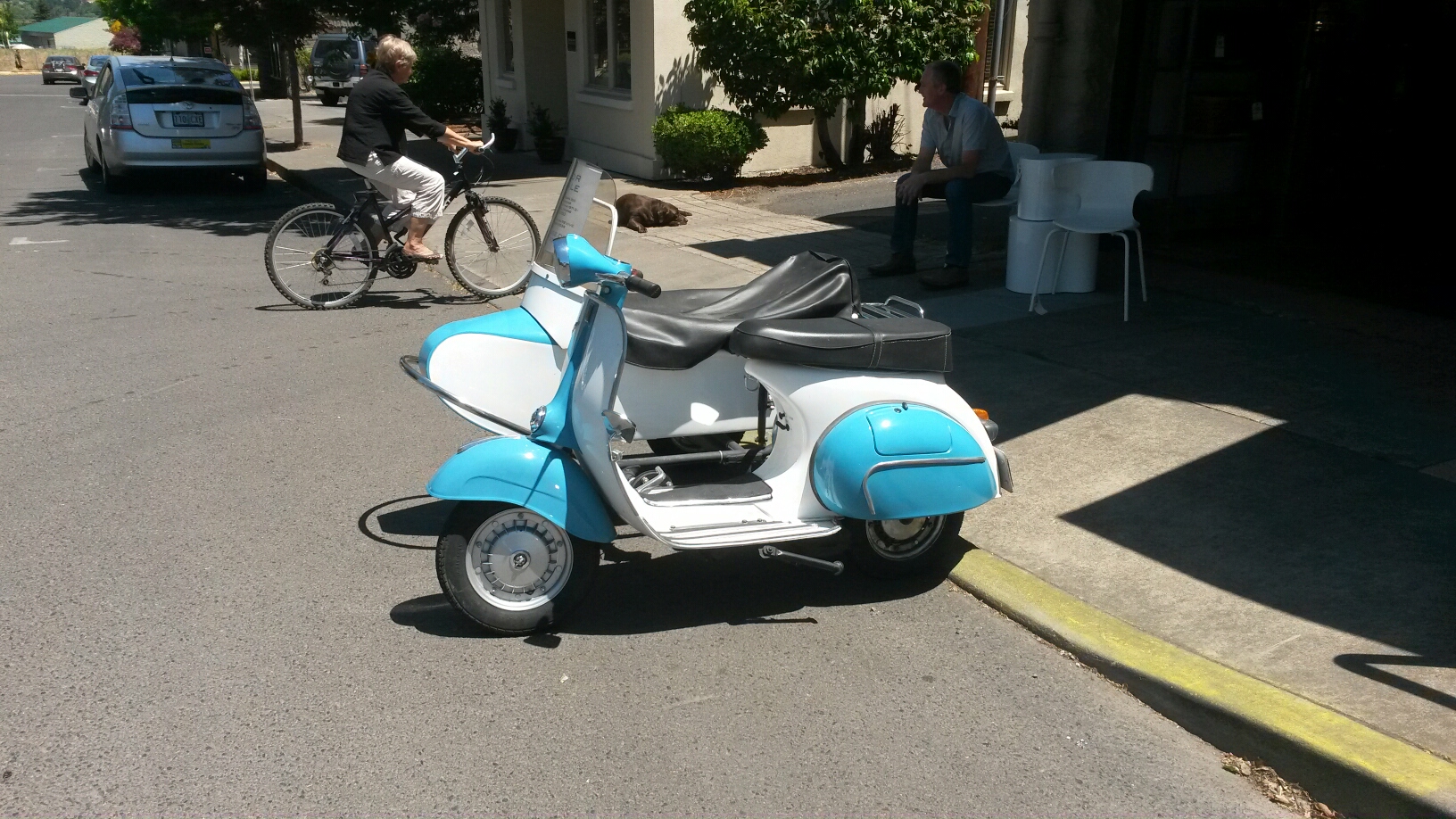
Are you a fan of a classic Vespa?  This stunning 1968 Vespa was for sale for a meager $6,000!  I was working on going 50/50 on it with my sister.  It didn't work.  It  has a 1971 engine for a bit more poewr and reliability.  The sidecar gives it a practical side...
Are you a fan of a classic Vespa? This stunning 1968 Vespa was for sale for a meager $6,000! I was working on going 50/50 on it with my sister. It didn’t work. It has a 1971 engine for a bit more poewr and reliability. The sidecar gives it a practical side…

20140606_123559

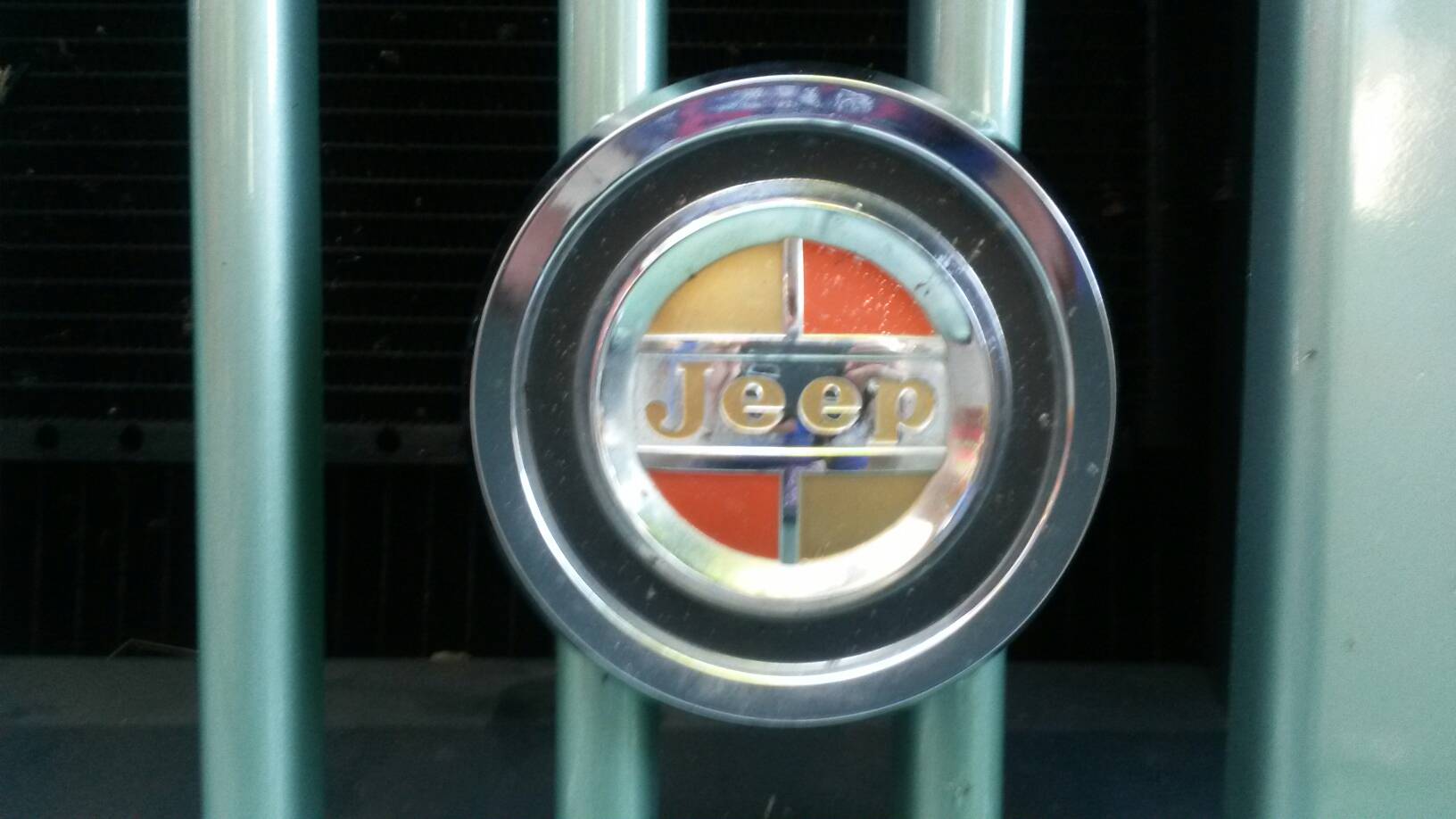
This is probably the best Jeep badge that the world has ever seen.  It may be a direct BMW rip-off, but whatever!
This is probably the best Jeep badge that the world has ever seen. It may be a direct BMW rip-off, but whatever!
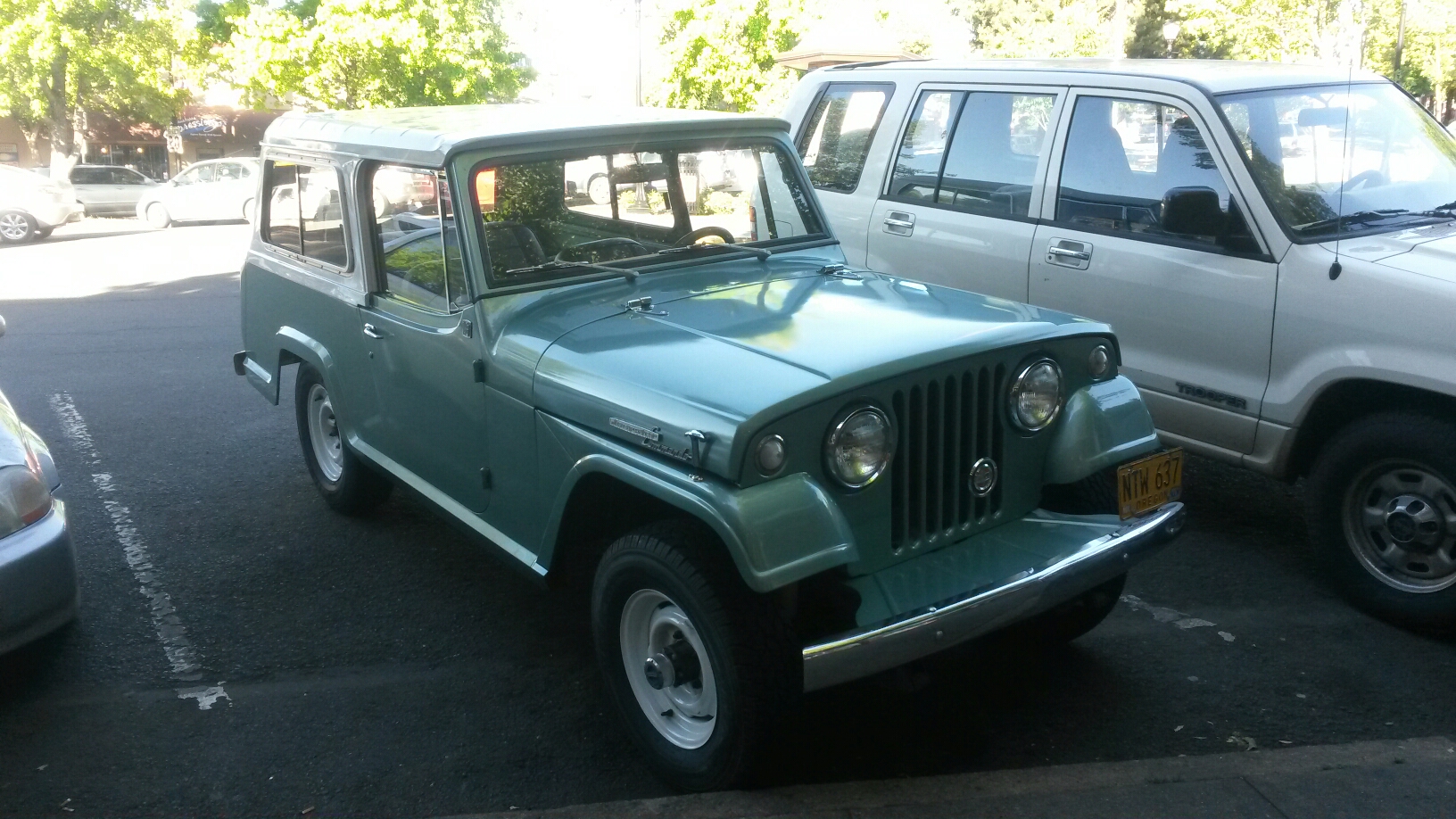
This simply amazing Jeep Jeepster Commando was probably the nicest Jeep that I have ever seen - I don't care if it's 2WD or not!
This simply amazing Jeep Jeepster Commando was probably the nicest Jeep that I have ever seen – I don’t care if it’s 2WD or not!
How's this for cool?  I've never really seen a '32 Ford dirt track racer before, so this was a cool first for me!  I wasn't able to get closer to it, otherwise I would have done a separate blog post on it!  It was a very cool '32 Ford, though!
How’s this for cool? I’ve never really seen a ’32 Ford dirt track racer before, so this was a cool first for me! I wasn’t able to get closer to it, otherwise I would have done a separate blog post on it! It was a very cool ’32 Ford, though!

Sonoma County:  


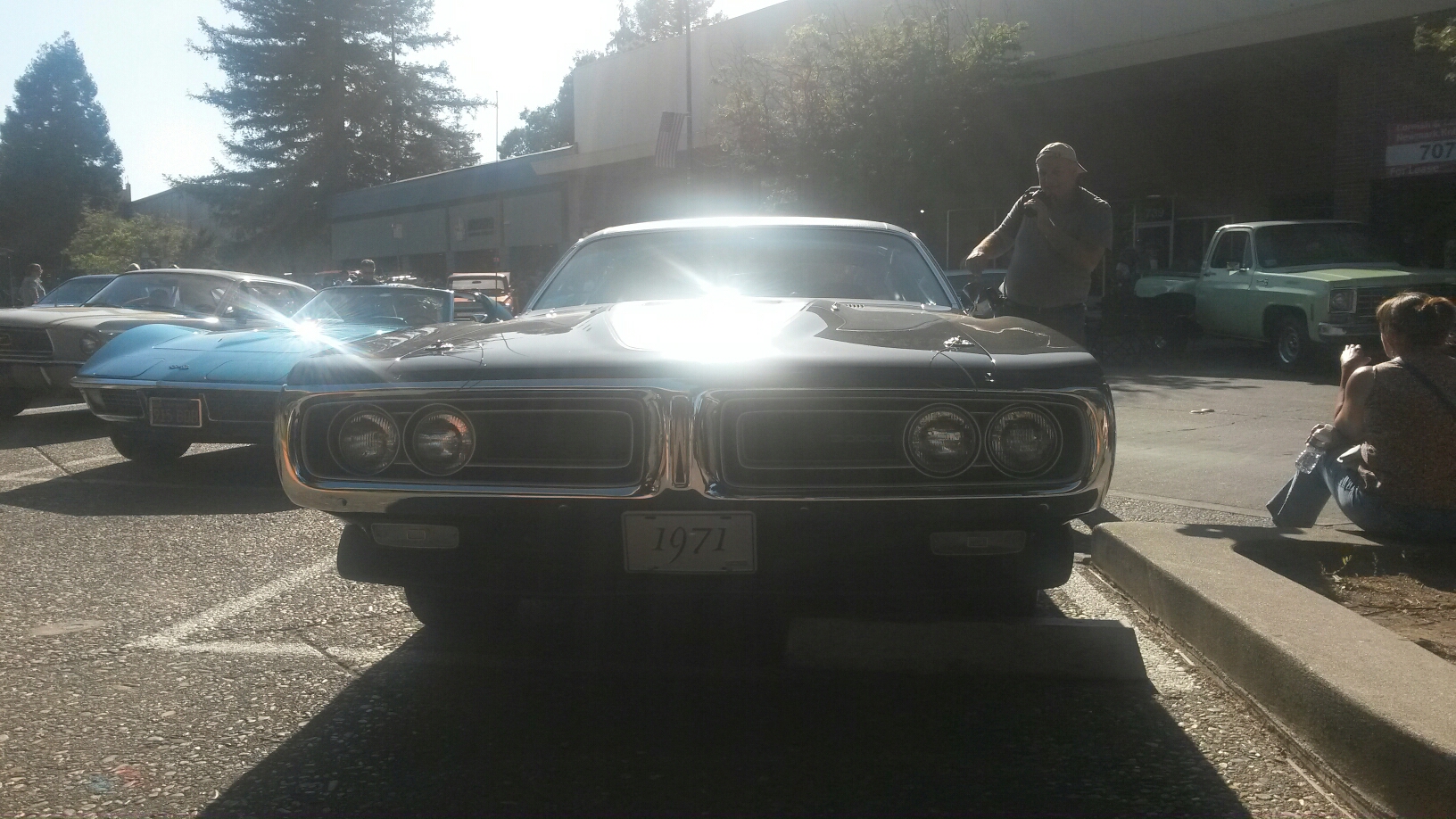
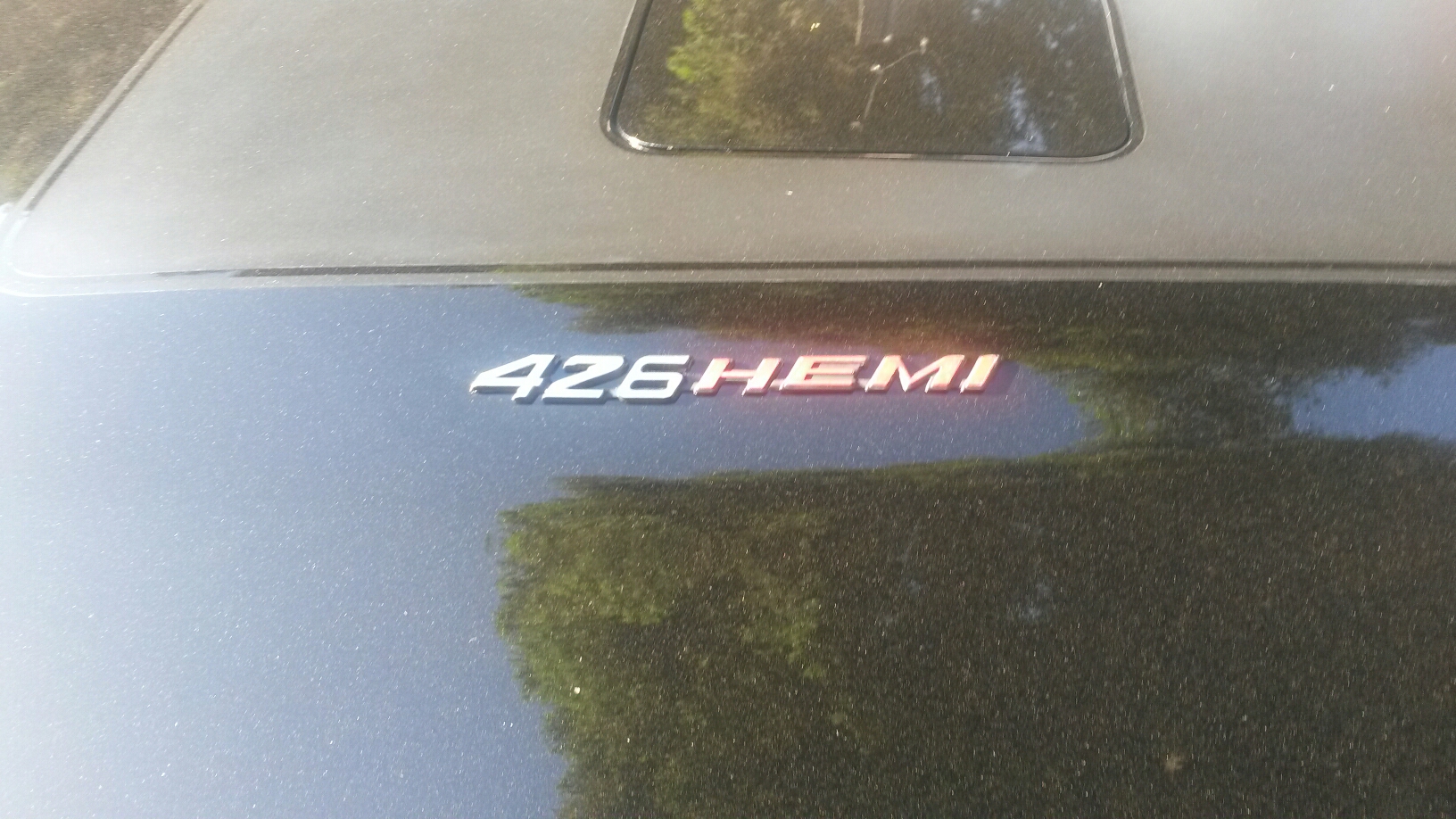
How'd you like this to be in your rearview mirror?  Sorry if I just gave you nightmares...This 1971 Dodge Charger R/T is equipped with the 426 HEMI.  It doesn't get much better than that!
How’d you like this to be in your rearview mirror? Sorry if I just gave you nightmares…This 1971 Dodge Charger R/T is equipped with the 426 HEMI. It doesn’t get much better than that!
Man, this is just one of THE best engines in the world!  Let me tell you a funny story about this car and another car.  Somebody in a 1949 Chevy lowrider tried to do a burnout.  All he did was send a bunch of smoke out of his tailpipes.  The owner of this fine triple-black '71 Charger proceeded to do a burnout without really having to try too terribly hard right through an empty intersection!
Man, this is just one of THE best engines in the world! Let me tell you a funny story about this car and another car. Somebody in a 1949 Chevy lowrider tried to do a burnout. All he did was send a bunch of smoke out of his tailpipes. The owner of this fine triple-black ’71 Charger proceeded to do a burnout without really having to try too terribly hard right through an empty intersection!
If this doesn't make you drool, then I don't know what will!  This stunning 1970 Plymouth Superbird was SOOOOO cool!  It was in the Limelight Green color, along with the Super Commando 440 cubic-inch V8.  More to come on this iconic car.
If this doesn’t make you drool, then I don’t know what will! This stunning 1970 Plymouth Superbird was SOOOOO cool! It was in the Limelight Green color, along with the Super Commando 440 cubic-inch V8. More to come on this iconic car.
Yes, the Superbird really does make the iconic "meep-meep" from Looney Tunes - as does the Plymouth Roadrunner that the Superbird is based off of!
Yes, the Superbird really does make the iconic “meep-meep” from Looney Tunes – as does the Plymouth Roadrunner that the Superbird is based off of!

Redding, CA:  

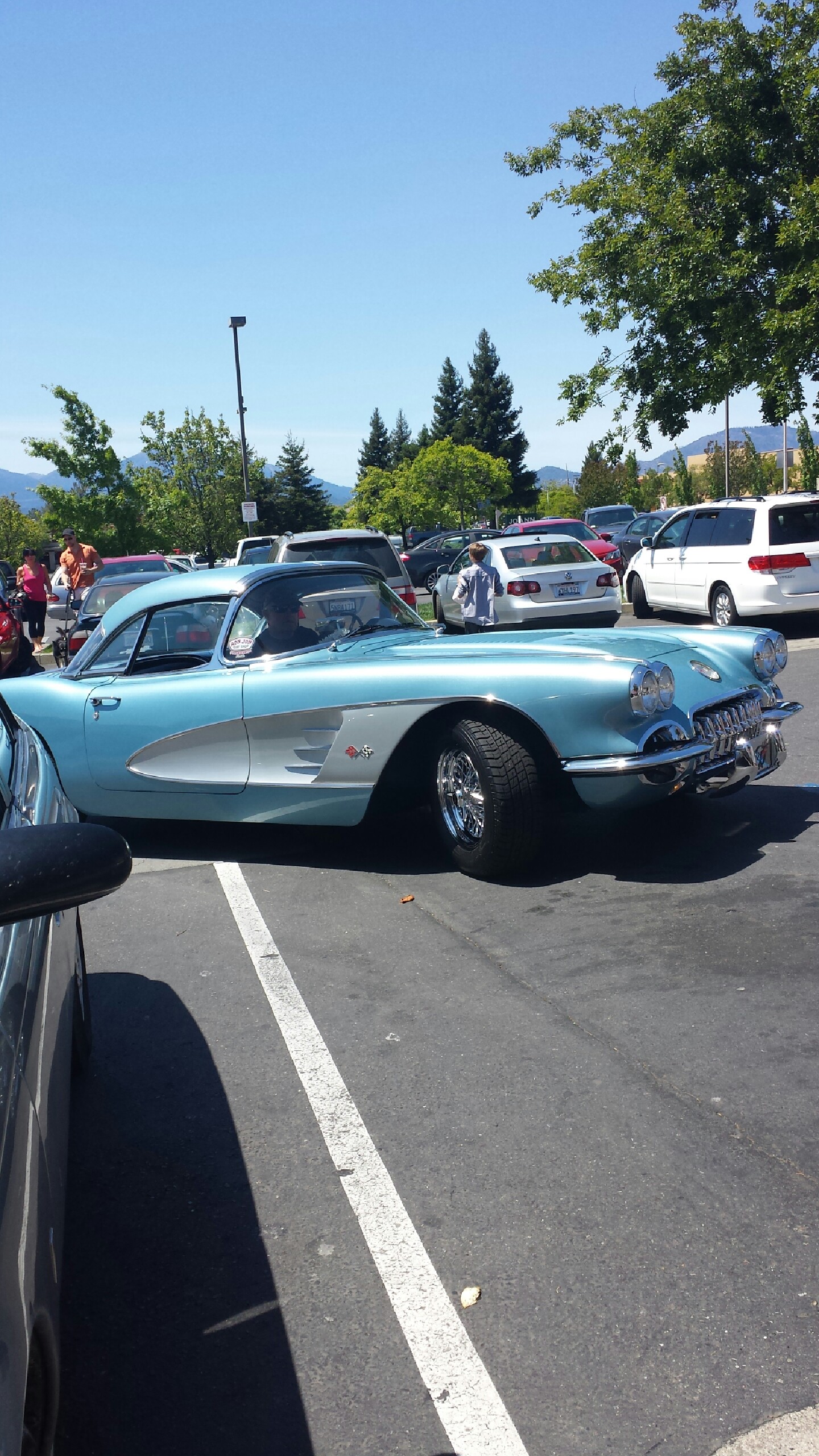
How's this for nice?  This is probably one of THE nicest Corvettes that i have ever seen!  It was all-original, so it has the punchy 283 cubic-inch V8 and a four-speed manual.  Plus, it's got absolutely amazing looks.  The only thing that isn't original is the wheels, but they went perfectly with the car.  This would be an excellent car for touring the country with.  One of these days I will do that in a classic car - I promise!
How’s this for nice? This is probably one of THE nicest Corvettes that i have ever seen! It was all-original, so it has the punchy 283 cubic-inch V8 and a four-speed manual. Plus, it’s got absolutely amazing looks. The only thing that isn’t original is the wheels, but they went perfectly with the car. This would be an excellent car for touring the country with. One of these days I will do that in a classic car – I promise!

A Cool Classic

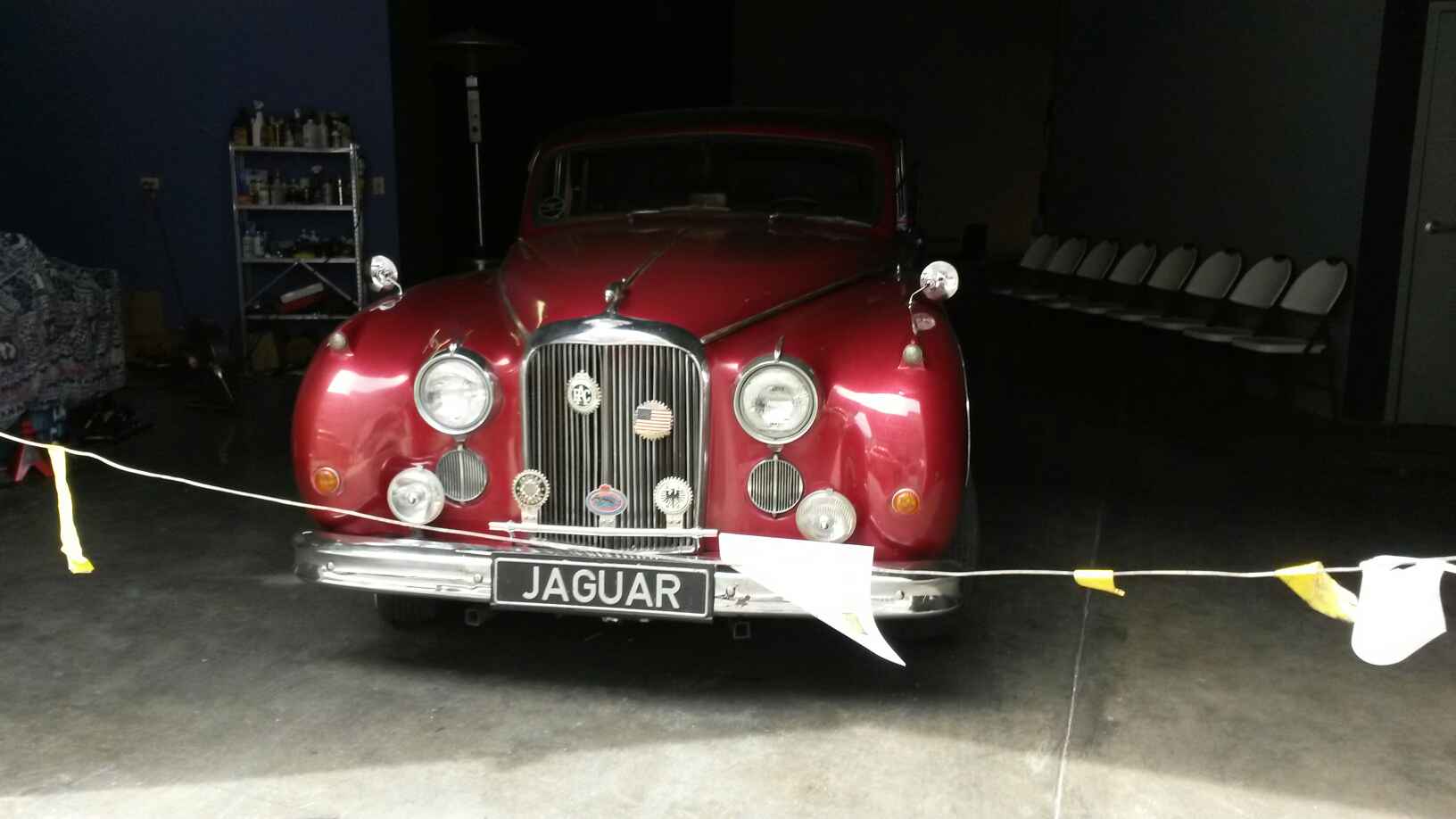
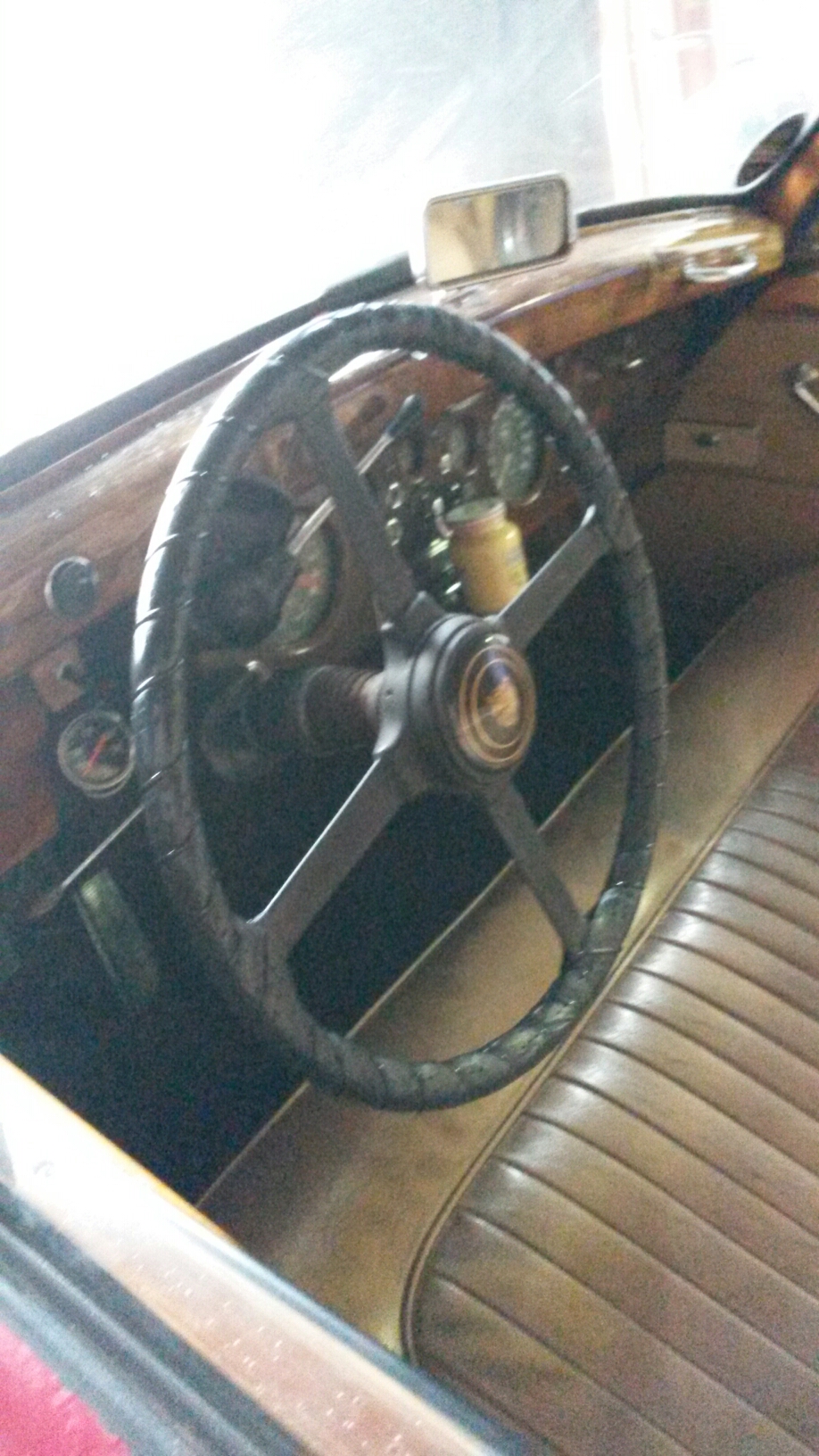
A while ago, my dad introduced me to one of his business partners who just happened to happen to own a 1960 Jaguar MK9.  Hmm…Maybe I just needed to see it…Well, I’m happy to report to you that it is, without doubt, one of the most breathtaking cars that I have ever laid my eyes on.  Not only does the beautifully patina’d maroon and good paint look absolutely stunning.  Oh, and if stunning looks and a spotless beige leather interior complete with Grey Poupon jars (you never know who might need them!) aren’t enough, this car used be Ike Turner’s car.  So, this car isn’t just ANOTHER Jaguar MK9…

The story behind the owner of the car is an interesting one in itself.  My dad’s business partner, Michael Page, used to be the bassist for Iggy and the Stooges, which was a band that opened for the Rolling Stones.  Mike also played for Chuck Berry and other bands in the 1970’s.  Mike now runs a small studio down in Southern California.  When I asked Mike if he still played musical instruments, his reply was, “Naw, I’m content to listen to it now.”

The story behind how the car ended up being in Michael’s hands is an interesting story itself.  During Ike and Tina Turner’s long divorce, Ike parked the Jag on blocks in a back lot of Paramount Pictures for somewhere around 17 years.  One day when Mike was walking in the back lot, he saw the Jag, was absolutely smitten, and made an offer on the spot.  It was accepted.  He then proceeded to, as he put it, “I stood on my head for about an hour with the guy from Paramount just trying to figure out what kind of engine was in it.  Eventually, I saw a label that said ‘Chevrolet 350 C.I. V8.'”  That means that the engine is a Chevrolet 350 cubic-inch small-block V8.  The Chevy 350 V8 is a popular choice for engine swaps in Jaguars.  It requires very little work to install, it has decent power stock (a LOT when it’s tuned), and it’s an extremely reliable engine.  That can’t be said about any Jaguar engine.  Just ask my uncle or grandmother.  As a whole, a 1960 Jaguar is a pretty sturdy car.  It’s made all out of steel (the only aluminum is inside), it’s got glass that could probably stop a bullet, and the tire treads wouldn’t look out of place on something destined to go off-road.

After Mike had owned the car for a couple of months, he decided to take it out for a spin on the freeway.  When he got up to 55 mph, the engine was screaming at something close to 5,000 RPM, and he was playing tag with a bunch of tractor-trailers and grandparents.  Not exactly my (or his) definition of fun.  He got off of the freeway and went to the local transmission shop and had them install an overdrive.  Now, the RPM’s are cut down to 2,500 RPM (most modern cars turn 1,800-2,000 RPM’s on the highway), and he can go up to 70 mph without worrying about killing the engine.  The overdrive, Chevy small-block V8 and Turbo 350 transmission are the only parts that didn’t come with the car.  That is, other than the tires!

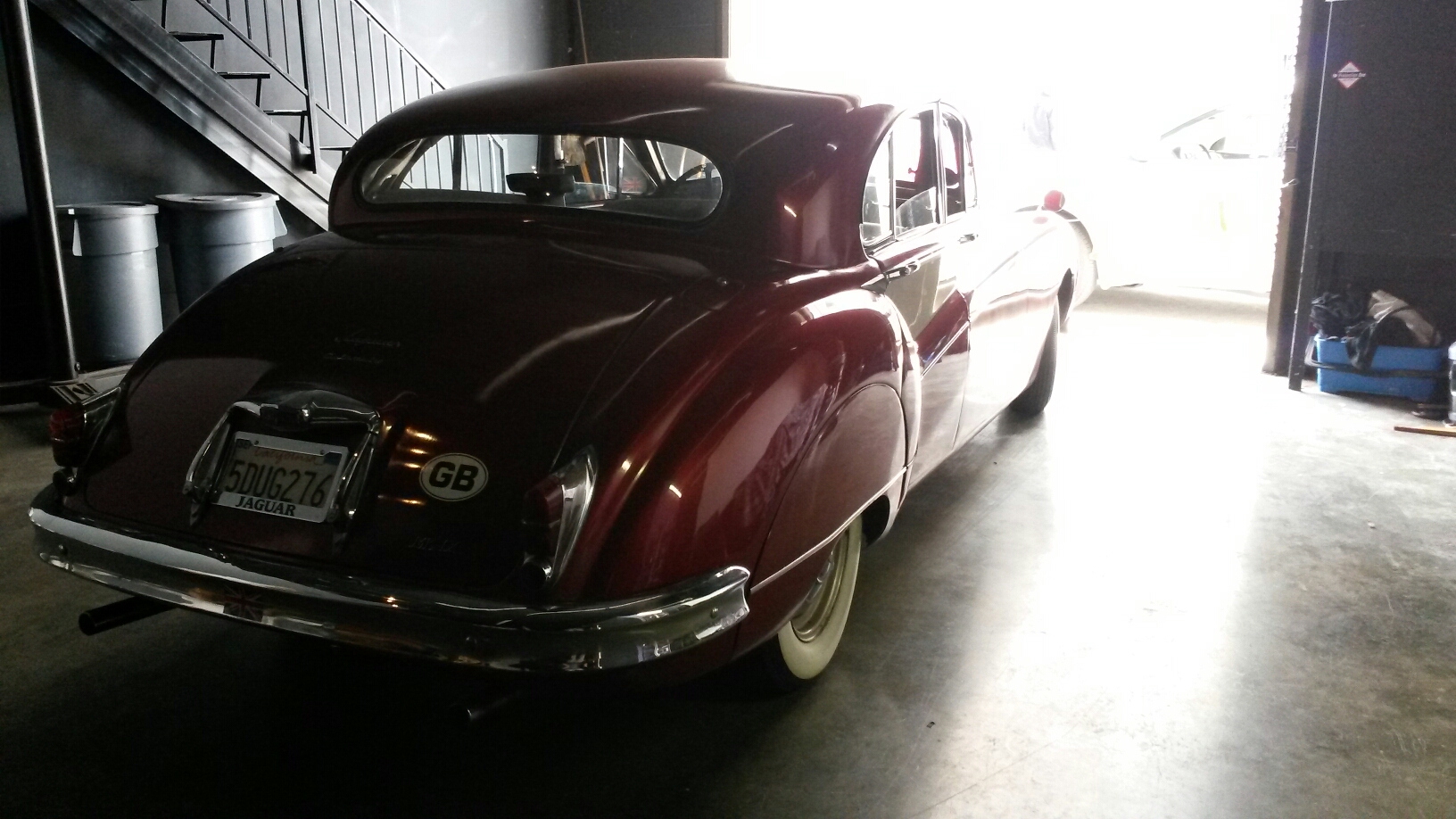
Speaking of tires, the tires are modern Coker radial tires with big, tall whitewalls on them.  If whitewalls are put on the right car, they can turn a show-stopper into a car that will literally make people’s heads turn right off their neck!  That’s what my dad’s business partner did with this Jaguar.  The whitewalls make this classic Jaguar look better than it did when it rolled off of the Jaguar assembly line in Coventry, England, in 1960.  Not many cars can pull that off.  Plus, the engine, transmission, and overdrive give a car that wasn’t really driveable before the engine/transmission swap driveability.

In terms of driveability, Mike says that it drives like a wallowy, new car.  It’s got suspension technology from 1960, so it’s not the best choice to throw around a road course.  With the stock engine and transmission sans overdrive unit, the Jaguar MK9 isn’t easy to drive unless you toodle around town.  The stock engine was designed for people to take a slow, scenic drive of the British countryside, not for freeway cruising.  Bring a car like that to America where there are vast expanses of freeways, and you’re essentially got a death wish.  Mike essentially said the same.  The stock three-speed manual has a stiff clutch, according to Mike, and three short speeds aren’t going to do you any favors when you’re cruising.  The Turbo 350 transmission greatly improves the driveability factor.  The Jag doesn’t have power steering, but it tips the scales at about 3,400 pounds, so you’re really not having to put THAT much effort into turning it.  It does, however, have power brakes, so that does make it easier to stop it, even though there was no such thing as ABS back then.  With the Chevy engine and transmission, plus the overdrive unit, Mike could easily drive across the state of California if he so wished.

His Jaguar doesn’t have thousands of man-hours put into restoring it to #1+ condition.  It doesn’t have ABS, cruise control, or satellite radio like most modern cars.  It’s a survivor car.  Trust me, the Jag is perfectly fine that way.  It’s got absolutely gorgeous looks before the paint, which accentuates the car’s looks even more.  It has beautiful walnut wood varnished to an almost matte look.  It doesn’t need to have hundreds of thousands of dollars to get best-of-show at every car show.  These old Jaguars have a certain charm to them that very few other cars, classic or modern, can duplicate.  They’re not absolutely cute like a Austin-Healey Bugeye Sprite nor do they look like they were hewn from a block of stone like a 1967 Chevrolet Camaro.  They have an understated elegance to them, plus that cute British charm.  With the right paint colors on them, like gold and maroon, they can be quite a looker.

If you have a self-esteem issue, buy a Jaguar MK9 NOW!  Nobody really lusts after them, so they cost far less than a 1960 MK2, which is also a good car for those with self-esteem issues.  People will want to take pictures of themselves standing in or next to the car (#selfie), and Mike says that whenever he goes out, he literally has to either leave an hour just to talk to people, or park the car and run.  I’d leave an hour.  Running’s not my thing…

I’ve attached some photos of the Jag for you to literally drool over.  As I’ve previously said, it’s one of the most beautiful cars that I’ve ever seen.  It really looks stunning, especially with some light, but not too much.  I’ve never seen it at sunrise or sunset, but I can only imagine how beautiful it is at those times.


Badges are awesome - just ask this car!
Badges are awesome – just ask this car!


Grey Poupon is a requirement for British cars, I guess...
Grey Poupon is a requirement for British cars, I guess…


Sorry about the view - it was the best that I could get!
Sorry about the view – it was the best that I could get!

Editor’s note:  Mike actually played with Chubby Checker, NOT Chuck Berry!  My apologies!

The World’s Fastest Electric Car!

Don Garlits is a drag racing legend.  It’s why he’s known as “Big Daddy.”  Garlits has set records, not only for the amount of wins, but also for eclipsed times, trap speeds, etc.  He’s been active in the drag racing world for the better part of 60 years.  Many credit him for actively starting to make Top Fuel drag racing safer.  He’s learned the hard way on how unsafe old nitromethane dragsters are.  His favorite engine is the 426 Hemi that propelled him to many a victory.  Now, at age 81, he’s trying to set yet another record.

The eerie silence of electric vehicles is a bit creepy to some.  Nowhere is it more apparent than a 1/4 mile dragstrip.  Top Fuel dragsters make 8,000 horsepower, shake your body to the core, and easily hit 150 decibels.

Big Daddy’s Swamp Rat 37 isn’t what he usually drag races.  This is evidenced by the fact that he went 323 mph six years ago.  He regularly drag races a 2009 Dodge Challenger Drag Pak (Dodge’s equivalent of the Ford Mustang Cobra Jet and Chevy COPO Camaro, except it’s got a 600 horsepower Viper V10 under the hood).  Anyhow, Swamp Rat 37 isn’t nearly as quick as other cars he’s sailed down the 1320 feet of a quarter mile in.  But, his new record proves that electric dragsters aren’t slow, either.  According to Wired, Garlits and Swamp Rat 37 just went 7.258 seconds at 184.01 mph at Brandenton Motorsports Park in Florida.  That’s a little bit short of the 200 mph Garlits is aiming for, but he still went 24.16 mph faster than the previous record.

Very few electric cars make supercars look slow, though the Tesla Model S does come close – very close.  However, Big Daddy’s dragster makes every supercar look slow.  Swamp Rat 37 has six 7.5-inch DC electric motors.  Total output from those motors is 1,500 kilowatts, equivalent to about 2,000 horsepower.  Power for those motors is provided by four lithium-ion battery packs that store 420 volts and 3,600 amps.  It’s a little bit more powerful than sticking your finger into an electrical outlet.  Since he’s living his life 1320 feet at a time, there’s no such thing as range anxiety.

Big Daddy built up to full power over the course of several runs, turning in a 10.9, an 8.75, and on his fifth run, he hit 178.42 mph.  His sixth run was the record-shattering run.  For me, the most striking noise is not the whir of the electric motors, but the tires.  The noise of the tires is always drowned out by the thundering engines used in Top Fuel dragsters.  For some,  this may devalue electric dragsters forever, but Big Daddy has shown the world that there’s potential in everything.

Enjoy the video of Garlits setting the record.  http://www.youtube.com/watch?v=Ea4igN8Thtg

254-MPH Callaway Sledgehammer Chevrolet Corvette for Sale!

For those of you who remember the cars of the 1980s, you’ll know that many of those cars didn’t have much more than 200 horsepower.  Fox-Body Ford Mustangs had 225 horsepower, tops.  Chevrolet Corvettes didn’t have much more.  Buick Grand Nationals didn’t even top 275 horsepower.  Nissan 300ZX’s barely made 200 horsepower.  Then, Callaway came along with an 898-horsepower 1988 Corvette that went 254 mph.  They called it the Sledgehammer.  It gave hope to us automotive enthusiasts at the time that horsepower wasn’t a thing of the past.  Sure, it wasn’t a factory vehicle, but who cares when you’re driving a Chevrolet Corvette at 254 mph?  By the time you will read this, the Sledgehammer Vette will have a new owner, as it’s crossing the block at the 2014 Dana Mecum Kissimee, Florida, auction.

Some background on the car:

John Lingenfelter (the same guy who would later start Lingenfelter Performance Engineering drove the car to 254.76 mph.  This was done on October 26, 1988 at the Transportation Research Center in Ohio.  This was done after the car was driven – not trailered – driven! from Connecticut.

Power comes from a Chevrolet small-block V8 with aluminum Brodix heads, and a custom cam that targeted the sweet spot between heavy breathing and docile city driving.  This is the kind of car where you can drive it to a standing mile event, set records, and drive it home.  Since all Callaway cars are turbocharged, the Sledgehammer was no exception.  It has a TO4B Turbonetics twin turbocharger kit with twin intercoolers.

The engine wasn’t the only place to receive modifications.  For high-speed stability (remember, very few race cars had hit 250 mph, and only a couple of partially-stock cars had ever been above 250 mph before this point), Callaway consulted with legendary race-car builder Carroll Smith.  Smith relocated the Sledgehammer’s lower control arms to reduce ride height by one inch (a lower center of gravity is the best at high speeds) and added Koni shock absorbers.  Goodyear ultra-high-speed tires were paired with 17-inch Dymag aluminum wheels.

Callaway wanted the world to know that this was one special Corvette.  The body is a special Callaway Aerobody.  It looks pretty stock, but it has an elongated shovel nose and a high rump.  Inside, it looks relatively stock, until one sees the leather-padded roll bar (every Corvette has to have some sort of luxury…), the five-point harness, and the various gauges for monitoring engine vitals.

As if that didn’t make it even more special, it’s esteem has been significantly raised because Bloomington Gold folks chose the Sledgehammer as one of the 50 Corvettes that have significantly influenced the Corvette phenomenon.  Bloomington Gold doesn’t invite your neighbor Bob with his Corvette convertible to be part of the Bloomington Gold Great Hall.

It’s a very special car that is meant to be driven – hard!  The Sledgehammer would be perfectly at home at a superspeedway like Talladega International Superspeedway.  Congratulations to whomever owns a piece of Corvette history.


The Differences Between Circuit Racing, Drag Racing, and Oval Racing

My mom recently asked me what the differences were between circuit racing, drag racing, and oval racing.  For those of us who aren’t race freaks, this may prove helpful.  I know that it will prove helpful for my mom.

Drag racing is for all essential purposes, putting a big, powerful motor into a lightweight car, and adding other go-fast goodies to it, and then going to the drag strip and winning.  Ok, I wish it was that simple.  Many of the fast drag racing cars that you see going hundreds of mph down a straight 1/4 “drag strip” are purpose built.  The fast, cool cars that everybody loves are the Top Fuel dragsters.  Those are the long, huge-engined cars that blast down the drag strip in just 5 seconds.  But, there are also street-legal drag racers that are almost as quick.  Hot Rod Magazine puts on an event every year called Hot Rod Drag Week.  The fastest cars there in the Unlimited class consistently run low 7-second passes.  It’s truly mind-boggling to watch a steel-bodied 1965 Chevrolet Nova II blast down the drag strip at 6.94 seconds.  I have attached a video explaining the history of street legal drag racing, and I found it informative and fun.  https://www.youtube.com/watch?v=TccUZOHuJuI

Circuit racing can mean two things.  One is oval racing like NASCAR or IndyCar, which is not how I view it.  The other is what they call “road-racing.”  Road racing is essentially a twisty track paved with concrete, not sticky asphalt.  It’s usually very fast, and it requires a lot of effort and concentration to wrangle a car around said track.  Formula 1 runs many road courses every season, and NASCAR runs two road courses (Sonoma Raceway and Watkins Glen).  But, the most well-recognized road race is the 24 Hours of Le Mans, as well as other endurance races.  Road racing is taxing on the engine, transmission, suspension, and the driver.  Darrell Waltrip (yeah, he’s the guy with the world-famous “Boogity, boogity, boogity) once said of Sonoma Raceway, “Floor the gas, upshift, mat the brakes, downshift, repeat.”  That can be said for many road courses around the world.  It’s not easy.
Oval racing is sometimes called circuit racing.  I don’t know or care why.  I just know that oval racing is NOT circuit racing.  If you find out or know why, tell me.  Anyhow, oval racing is NASCAR and IndyCar.  It’s extremely fast, and it’s taxing on the driver.  With NASCAR, pit stops are often between 8-20 seconds!  Famous oval tracks are Daytona International Speedway, Talladega International Superspeedway, Bristol Raceway, and Darlington Raceway.  Not only are all of those oval circuits fast, but they can have deadly consequences if you can’t get out of the way.  Dale Earnhardt Sr.’s 2001 death at the Daytona 500 was a shock to the racing community, but it only highlighted just how deadly NASCAR is.  Speeds reaching 200+ mph are common on these oval tracks.  Bill Elliott once hit 210 mph at Talladega, which is a record that stands to this day.

Since I’m onto the different kinds of racing, I might as well do other kinds of racing.

Top-speed racing is kind of the thing nowadays.  Standing mile events are common in several states, but the big top-speed races are at the Bonneville Salt Flats and El Mirage (El Mirage is a large dry lakebed in Southern California).  The fastest run at Bonneville was 763 mph back in 1997, with Andy Green driving Thrust SSC.  Not only did that break the sound barrier for the first time in a car, but Green is planning to hit 1,000 mph with Team Bloodhound SSC next year.  Back to top-speed racing.  It’s fast, and can be deadly.  I have attached a Roadkill episode showing Freiburger and Finnegan chasing a top-speed record at Bonneville in a 1981 Chevrolet Camaro.  It’s fast, funny, and surprisingly informative.  https://www.youtube.com/watch?v=JEcbwvNaxE8

Drifting is where you take a RWD car, pull the handbrake, and break the rear end loose.  Professional drifters include Vaughan Gittin, Jr., Ken Gushi, Tanner Foust, and Ken Block, just to name a few.  Drifting originated in Japan in the mid-1970s, and it’s become a popular sport ever since.  Typical drifting machines are RWD vehicles with either a GM LS-Series engine, or a turbocharged Toyota engine.  Drifters are people who like to make lots of tire smoke and dial in a lot of opposite lock into the steering.  Drifting a RWD car should be simple:  If it’s a new car, defeat the traction and stability controls.  Then, find a big, open space (without curbs or trees!), floor it, pull up on the handbrake, and the rear end will hopefully break out.  If and when it does, steer INTO the drift!  Steering away from the drift will spin the car and make you look like an idiot.  Steer into the drift, and apply more steering and throttle as needed.  If you feel uncomfortable, tap the brakes enough to get the rear end of the car to step back into line a bit.  Also, make sure that you don’t have expensive tires on.  Drifting eats up the treads surprisingly quickly, and you probably know that Pirelli P Zero Corsas aren’t exactly cheap.  I have attached yet another video done by the Motor Trend Channel talking about turbos vs. V8s and drifting.  It gives a unique perspective into drifting, and it’s got a TON of tire smoke!  https://www.youtube.com/watch?v=3H8ItG5SK9o

Rallying can mean a couple of things.  One is where you are given directions and you drive your car on public roads to a destination.  The kind of rallying that most of us are familiar with is WRC and GRC (World Rally Cross and Global Rally Cross).  Those rally machines look stock, but don’t be fooled!  Ken Block and Tanner Foust are both professional drifters and rally drivers.  They both happen to be very good.  Ken Block’s Ford Fiesta looks like a stock Fiesta with aggressive tires, and a wild paint job, and a loud exhaust note.  It’s got a lowered, heavy-duty suspension, a 650-horsepower twin-turbocharged four-cylinder, and a six-speed manual.  It is FAST!  Ken also is a cool, nice guy who loves dogs.  Especially Alaskan Huskies.  His two Huskies’ names are Yuki and Bentley.

Autocrossing is often sanctioned by the SCCA (Sports Car Club of America), and it involves weaving a car in between traffic cones.  It’s fast, and it’s demanding on the suspension and tires.  Yet, people flock to it year after year.  It also is hard on the driver.  Some cars happen to be extremely good at autocrossing, and the Meyers Manx dune buggy in the late 1960s-1970s was very good.  It was light, fast, and it stuck to pavement like nothing else.  Nowadays, the Mazda Miata is the go-to choice for autocrossers.  I’ve attached the most recent Roadkill episode, where Freiburger and Finnegan attempt to beat a Kia Rio5 with all of their cars that still run.  I won’t spoil which cars win for you.  I’ll let you watch and laugh as they spin and throttle the Crusher Camaro, I’ll even let you watch and grimace as Finnegan blows up the parking assist pin in his wife’s 1969 Chevrolet El Camino, and watch as God-knows-what comes flying out of their 1968 Dodge Charger.  https://www.youtube.com/watch?v=II3z353OZWA

I think that I’ve covered just about everything here.  If you find anything else that you can think of, let me know in the comments section.  I will do another blog post on the different types of racing.  I would love to, as it would help me immensely.

Ford Wins 12 Hours of Sebring for the First Time Since 1969!

The last time Ford won the 12 Hours of Sebring was back in 1969.  That was when a Ford GT40 MkI beat out a Ferrari 312P.  That was at the tail end of Henry Ford II and Enzo Ferrari’s decade-long motor sports rivalry.

Now, 45 long years later, Chip Ganassi Racing’s Ford Daytona Prototype brought the glory back to Dearborn after 12 chaotic and dramatic hours.

The skilled drivers, Marino Franchitti, Scott Pruett, and Memo Rojas, managed to get the Ford Daytona Prototype across the finish line a mere 5 seconds ahead of Ryan Danziel and the Extreme Speed Motorsports HPD ARX-03B.  They managed to do this after a late restart bunched the field up.

The win makes Chip Ganassi the only team owner ever to have race titles from the Daytona 500, Indianapolis 500, Rolex 24 Hours at Daytona, and the 12 Hours of Sebring.

As for the GT classes, cars from Stuttgart took the win.  Andy Lally, John Potter, and Marco Seefried won GT Daytona in the No. 911 car.  Amazing pit stops helped Jörg Bergmeister, Patrick Long, and Michael Christensen drive the CORE Autosports Porsche 911 RSR to victory in the GTLM class.

With the Prototype Challenge class, former NASCAR Nationwide Series champion Colin Braun helped put the CORE-ORECA Chevrolet FLM09 best reigning class champion Bruno Junquiera.

With the highly anticipated Chevrolet Corvette C7.R, fuel pump issues and 2 spins dropped the leading Vette to 6th, which disappointed driver Oliver Gavin.  Ben Keating and the SRT Viper GT-D retired within the first hour after a truly spectacular fire.

The revolutionary Nissan DeltaWing led its class for several laps, but retired after Lap 104, thanks to a collision on that lap, in addition to a botched pit stop and multiple mechanical issues.

1957 Chevy Bel Air Returned 30 Years After Being Stolen!

How often is it that you get your car back after it’s been stolen?  What about if it was stolen 30 years ago?  What about if it was a cool ’57 Chevy Bel Air?  What about if it was stolen and returned almost a year before it disappeared for 30 years?  That’s what happened to Santa Rosa, California resident Ian “Skip” Wilson.  When California Highway Patrol investigator Mike Maleta informed him that there was a 1957 Chevrolet Bel Air in a shipping container bound for Australia that might be of some interest to him.  Since U.S. Border Protection and Customs does routine checks of shipping containers bound for wherever, it may be no surprise to Customs agents.  Once they found out the car was stolen, it was handed over to the CHP to build a case.  Then, Ian Wilson received a call from Mike Maleta, a CHP investigator about the car.  The VIN matched what Ian gave Maleta, and the car was on its way to Ian’s house after a few days.  This isn’t the first time the car was stolen – it was stolen back in 1983, but returned to him without the engine and transmission.  He had bought the car back in 1975 for $375, and he hadn’t started re-rebuilding the car when it was stolen from his driveway in 1984.

The white-over-yellow hardtop now is a sparkling creamsicle orange with a Chevy 350 V8/Turbo 350 transmission setup.  It’s got disc brakes and rack-and-pinion steering.  A brand-new black leather interior complements the paint beautifully, and the slightly chromed 17-inch wheels also look sweet.  The rebuild is extremely recent, with the odometer showing nine miles showing on the odometer.

Skip had to pay just $900 for transportation, and originally was told by the DMV that he needed 30 years of back registration to get the car registered.  The state backed off for the back registration request.

Yeah, I’d pay $900 for a basically brand-new 1957 Chevrolet Bel Air.  

The 12 Stunning Detroit International Auto Show Debuts!

The Detroit International Auto Show always has a lot of cool new debuts.  As one might expect, a LOT of new American metal debuts there.  But, foreign cars are also starting to be debuted at Detroit more and more.  Enjoy my top 12 debuts

  1. 2015 Ford F150:  With the majority of the 2015 Ford F150 made out of aluminum, the 2015 Ford F150 lost almost 700 pounds.  In terms of design, Ford clearly heard the raving about the Atlas Concept.  The 2015 F150 looks almost exactly like the Atlas!  In terms of engines, Ford’s taken the liberty of making smaller, more powerful engines the norm for the F150.  The base engine is a 3.5-liter V6 (the same one residing under the hood of the Explorer).  Ford also dropped the thirsty 6.2-liter V8 from the lineup.  The only available V8 is the splendid 5.0-liter “Coyote” V8 shared with the Mustang.  The 3.5-liter twin-turbocharged EcoBoost V6 stays, but the EcoBoost has a smaller EcoBoost sister engine.  The smaller EcoBoost engine displaces a seemingly small 2.7 liters, yet makes as much power as the outgoing 3.7-liter V6.  All four engines will be mated to Ford’s six-speed automatic, but don’t be surprised to see the 10-speed automatic being co-developed with GM come into the mix sometime soon.  I can’t wait to see the 2015 F150 in person!
  2. 2015 Chrysler 200:  Chrysler’s been hit hard the last five or six years.  First, it’s bankruptcy.  Then, it’s being bought out completely by Fiat, then it’s just about every model coming out of the Auburn Hills factory being blasted with hate mail from every single automotive magazine in the U.S.  Chrysler’s trying to make up that image.  The design of the 2015 Chrysler 200 is simply stunning.  Based on the Dodge Dart’s platform, the 2015 Chrysler 200 will be instantly recognizable to anybody who has seen a 2013 Dodge Dart.  Chrysler’s trying to make the 200 easier to live with.  It’s got standard pass-through storage, better ergonomics, and most things in the cabin are electronic.  The 9-speed automatic that is used in the Jeep Cherokee will be standard across the line.  A 2.4-liter TigerShark 4-cylinder engine borrowed from the Dodge Dart is standard.  The step-up engine is a 295-horsepower 3.6-liter Pentastar V6.  I don’t know about you, but Chrysler just might be able to make an extremely competitive car in an extremely competitive segment.
  3. 2015 Cadillac ATS Coupe:  Cadillac’s seen a massive resurgence in past years.  The 2008 CTS won Motor Trend’s 2008 Car of the Year trophy, and the 2013 ATS and 2014 CTS have both been praised for their good looks and fun-to-drive factors.  Just about everything is shared with the ATS sedan.  That’s a good thing.  The 2.0-liter turbocharged 4-cylinder engine has 295-lb-ft of torque available at 3000 RPM.  Amazingly, the ATS coupe is said to weigh just 45 more pounds than the ATS sedan.  Cadillac’s even partnered with AT&T, Verizon, and T Mobile to ensure that the ATS Coupe has 4G LTE hotspot connectivity.
  4. 2015 BMW M3/M4:  BMW’s become obsessed with turbocharged engines.  Not only do they offer more performance, but they reduce weight and give better fuel economy.  The 2015 M3/M4 have a twin-turbocharged inline-six-cylinder engine that makes somewhere in the neighborhood of 425 horsepower.  The standard transmission is a six-speed manual (score for the purists), and a seven-speed dual-clutch automatic transmission borrowed from the M5 is optional.  BMW says that they cut 175 pounds compared to the E90 generation M3, so the 2015 M3/M4 should weigh about as much as an E46 M3.  The M3/M4 look extremely aggressive.  The front ends have massive air intakes, a bulging power-rise hood, and a wider front and rear track compared to the standard 3/4 Series models.
  5. 2015 Chevrolet Corvette Stingray ZO6:  The 2015 ZO6 makes 625 horsepower (13 less than the ZR-1), and it has an 8-speed automatic transmission that shifts faster than a Porsche PDK transmission.  Chevy’s offering THREE aerodynamics packages borrowed from the C7.R race car, and it has the seven-speed manual transmission from the regular Stingray standard.  GM says that the 2015 ZO6 shattered course records at the Milford proving grounds on its FIRST time at the track!
  6. 2015 Ford Mustang:  Since I’ve already covered the 2015 Ford Mustang, I won’t spend too terribly much time on the 2015 Mustang.  Ford won’t answer many questions about the 2015 Mustang, which means that they’re still working on it.  Whatever.  It looks great, and I expect it to handle much better, as it’s been redesigned from the ground up!
  7. 2014 Porsche 911 Targa:  Finally, Porsche’s come out with the return of the iconic 911 Targa.  The 911 Targa doesn’t have the sliding top like previous Targas.  The Porsche 911 Targa is sure to bring back fond memories for many.  Because it’s a Porsche, expect to be set back at least $100,000 for a Targa 4S.  I can’t wait to see the 2014 911 Targa in person!
  8. 2015 Subaru Impreza WRX STI:  Subaru has made it’s reputation for making pocket rockets.  The 2015 WRX gave some hope for enthusiasts.  It’s equally at home rocketing down a gravel road or zooming around a track.  The STI improves on that.  It makes 305 horsepower (it uses the same engine as the previous generation), but it looks a whole lot better than the previous generation.  It looks more like a DTM race car combined with a WRC rally car.  Subie won’t tell ANYBODY how much the STI will weigh.  That’s a shame, because previous Subaru WRX STI’s have been plump.
  9. Kia GT4 Stinger Concept:  I think that I can safely agree with everybody here that Kia seriously needs to stop making amazing-looking concept cars until it decides to build them.  The GT4 Stinger has four seats, a turbocharged 4-cylinder engine, rear-wheel drive, and a six-speed manual.  Naturally, one’s mind drifts towards the Subaru BR-Z and Scion FR-S, the natural competitors to the GT4 Stinger.  Before Kia shoves this car into some secret bunker at the 38th Parallel, they need to build this car.  The engine is essentially a depowered version of the 400-horsepower engine used in the Pirelli World Challenge Optimas.  Kia, are you reading my thoughts?  If you are, BUILD THIS CAR!
  10. Toyota FT-1 Concept:  Toyota’s trying to appeal to enthusiasts.  The last car that did that?  The Supra.  Toyota’s FT-1 looks stunning, and it’s even available in Gran Turismo 6!  Toyota won’t tell what’s under the hood.  We all know that the Supra engine is dead.  Lexus is experimenting with high-powered 5.0-liter V8s in the IS F, and I could easily see the IS F’s engine under the hood of this stunning concept.  Even if Toyota doesn’t build this car, it still shows what future Toyota styling might look like.
  11. Volvo XC Concept Coupe:  Volvo’s made it’s living with industry-leading safety advances, but safety doesn’t sell millions of cars.  So, Volvo’s started cranking out extremely promising concept cars.  Considering that Plug-in Hybrid is etched into the fenders, it’s obvious that the XC Concept Coupe is definitely a hybrid.  Volvo stresses the fact that the XC Concept Coupe has “rich XC Heritage.”  Considering Volvo’s been making SUV’s since 1997, one could agree that the XC Concept Coupe would look stellar as a shooting brake.  
  12. Audi A8 L Security:  Some fullsize  luxury sedan buyers want theirs to be bulletproof.  Audi’s joined the fight against gunfight victims with the A8 L Security.  The A8 L Security is beefed up to an extreme.  It takes 450 man-hours to make all of the bulletproof components for the A8 L Security.  It is able to withstand sub-caliber machine gun fire, and buyers can even opt for an emergency exit system that blows the hinges off the doors, as well as a fire suppression system and an emergency fresh-air system.  The extra weight will substantially hamper performance, but the driver and passengers can get out of a sticky situation safer.

On a separate note, I have to go in for surgery next week.  During my time in the hospital, I will not have access to a computer, and I probably won’t be up to publishing anyways!  I don’t know how long I will be out for, but keep yourselves entertained with the Motor Trend Youtube Channel!  My favorite show is Roadkill.  I think you’ll enjoy it just as much as I do.  You can start watching the videos now at http://www.youtube.com/user/MotorTrend

The Best Cars for the End of the Holiday Season!

I think that this is a bit of a tradition for me.  Last year, I wrote a post about the same time as this one.  It was also about the best cars for the end of the holiday season.  I have fond memories of picking through cars that I thought deserved to be on this list.  While my list may not be as prestigious as Car & Driver’s 10Best, I would like to think of it as my personal version.  Except, I will be doing a list like this for every season!  That’s right:  Winter, spring, summer, and fall!  After much thought, I have finally decided what cars deserve to be on my list.  The criteria for the cars:  The cars on the list must all be new or substantially updated, they must be able to be entertaining in a snowy climate, and they must be able to seat at least four people comfortably (that way you can go on a road trip with the kids or friends!).  Enjoy my list!

  1. Bentley Flying Spur:  The Bentley Continental Flying Spur Speed was on my list last year.  However, the Flying Spur is no longer burdened with the Continental name.  It does still share a platform with the Continental, though.  It’s a brute of a car, weighing in at 5644 pounds.  It’s definitely as large as an elephant – it is 17.4 feet long, and it it weighs as much as a male elephant bull.  Don’t despair – this car rockets to 60 mph in an equally stunning 4.3 seconds.  This car will keep pace with a sprightly Lotus Evora S all day, without much drama or effort.  This car has 616 horsepower mated to a superb ZF 8-speed automatic transmission.  The powerful W12 engine is more efficient – it gets 12/20 MPG city/highway, according to the EPA.  However, snowy hoonage will likely lower that number…  It has every option one can imagine, including private multimedia screens for the kids.  Bang & Olufsen sound-deadening wireless headphones will keep the people in front sane.
  2. Ford F-150 FX2/FX4 Sport Tremor:  The Ford F-150 SVT Raptor Crew Cab rumbled and burbled its way onto my list last year because of its substantial updates, most notably the 6.2 liter V8.  This year, it’s more efficient, yet just-as-fun sister joins the party.  The Sport Tremor comes in 2WD or 4WD, regular cab only.  It comes with Ford’s powerful, efficient 3.5-liter twin-turbo EcoBoost V6.  Power gets there through a 4.10:1 rear end, so these trucks will be fast.  I know that it doesn’t seat four, but don’t despair – you can always get the Raptor!  The performance figures for the Sport Tremor aren’t out yet, but a 2012 Ford F-150 XLT 4X4 Crew Cab got to 60 in a quite-respectable 6.2 seconds.  Expect the Sport Tremor to get there in about 5.8-5.9 seconds.  While it won’t keep up with the Bentley in a straight line, it CAN haul a whole lot more, and get better gas mileage!
  3. SRT Viper/GTS/TA:  The Viper has a ground-shaking 8.4-liter V10 that pumps out 640 horsepower.  It comes with a 6-speed manual transmission and RWD only.  This will play with the boys.  I know that it doesn’t seat four, but hey, it’s a Viper.  It’s not a Bentley!  The RWD, 640 horse Viper should be a hoot to hoon around in the snow.  Stability control and traction control will help.
  4. Porsche 911 Turbo/Turbo S:  The Porsche 911 Turbo is a great car to own.  Not only will the 991-generation Turbo remain a collectible for a long time, but the 991 911 Turbo/Turbo S has a bunch of new technology designed to help the driver get around a track faster.  It has AWD, 560 horsepower in the Turbo S, and seats for four.  While the rear seats may only be fit for presents, the kids will have to suck it up and squeeze in there for a bit.  But, the drive there will be worth it.  The 911 Turbo/Turbo S is turbocharged, which makes it a cinch to drive fast, especially in wet or low-traction environments.  This car was designed to make the worst of drivers look good, and the best of drivers look legendary.  Have fun with this car.
  5. Porsche 918 Spyder:  If you own this car, I want to go for a spin in it!  Porsche has had the 918 Spyder in testing for years – prototypes were running around Germany as far back as 2007.  The 918 Spyder has a hybrid-electric system that distributes the gobs of 874 horsepower and an astounding 944 lb-ft of torque to all four wheels.  The 918 Spyder Weissach Package loses 88 pounds by using ceramic wheel bearings and film wrap instead of conventional aluminum and paint.  It won’t seat any more than two, but that’s okay.  This car will blow your mind at the speeds it reaches without effort, as well as the confidence it gives the driver at any speed.
  6. Subaru WRX:  Subie is legendary in the rally world for building fast, reliable cars that don’t look like much.  The 2015 WRX lives up to these statements.  It loses the massive rear wing found on the previous generation of WRXs, but it has power and fun.  It is bigger, but it makes 268 horsepower and 258 lb-ft of torque.  It’s suspension has been firmed up 39% in the front, and 62% in the rear.  This car will play all day with a Mitsubishi Lancer Evo, and be as flat as a Porsche Cayman S while cornering.  The torque vectoring system uses the rear differential instead of the brakes to vector the torque.  It doesn’t look pretty, but then again, no Subie in recent memory has looked mesmerizing.  Subaru invests money in engineering, not in styling.  That’s fine with me.
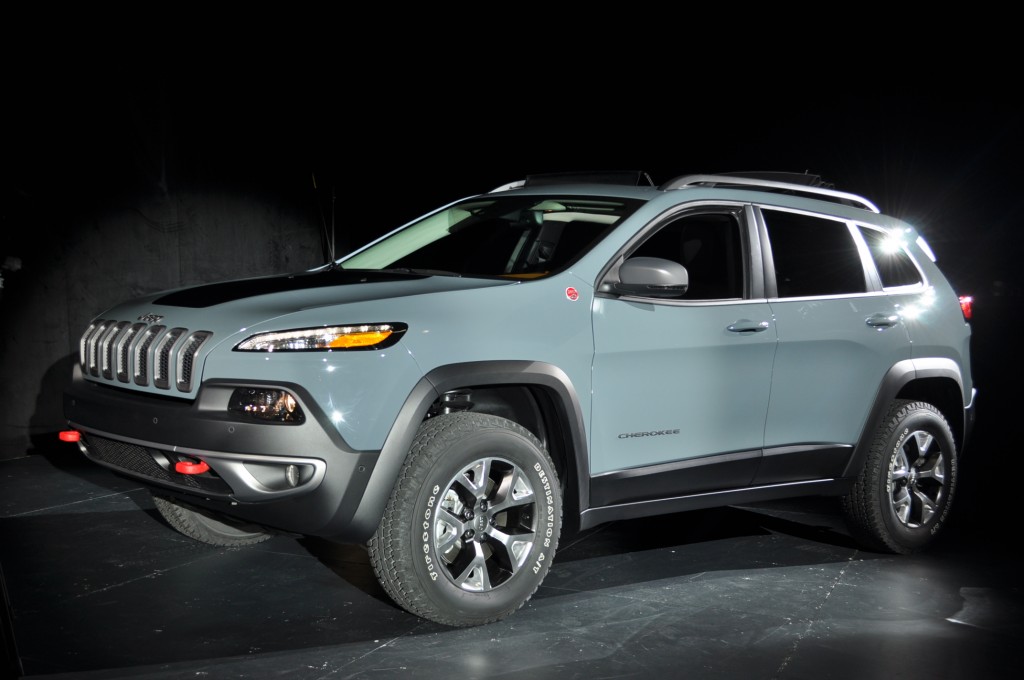
  7. Jeep Cherokee:  For those of you who remember the Jeep Cherokees of yore, close this tab, shut off your computer, grab your wallet, and go get a Jeep Wrangler.  This Cherokee is NOTHING like the harsh-riding Cherokees of the 1980s and 1990s.  This Cherokee comes standard with FWD, but 4WD is optional.  The Cherokee Trailhawk will keep pace with a stock Wrangler or SVT Raptor all day long without breaking a sweat.  The Cherokee is packed with lots of useful, cool tech.  I won’t bore you all of that technology, but I will say that for those in need of something affordable with 4WD, the Cherokee deserves a second look.
  8. Chevrolet SS:  The Chevy SS is the thunder from down under.  It’s based off of the Holden Commodore, and it’s got a high-performance 6.2-liter V8 with 415 horsepower.  The SS is the first RWD Chevy sedan since 1996 for civilian use – the Caprice PPV is available for lucky cops, and it’s truly spectacular.  It is capable of making those who owned a muscle car as a teenager feel young again, while allowing Mom and the kids to experience the fun.  It’s not all about burnouts – the SS can hold its own in the twisties.  The 415-horse V8 and six-speed automatic mated to RWD will make it entertaining for anybody to drive, any season, at any time.  I want one, if you haven’t noticed!
  9. 2014 Chevrolet Silverado:  Chevy is good at this game!  Two cars on my list is kinda hard.  Yet, Chevy introduced two cars capable of being on this list, which both of them are.  The 2014 Silverado truly gives the buyer everything that is needed or wanted, and then some.  There are literally 50 different cab/bed combinations, let alone the plethora of engine/transmission/2WD/4WD combinations.  The 2014 Silverado was designed to be one of the best in the game, and it doesn’t disappoint.  It’s got clever tech for all of the engines to make the engines more competitive in an ever-evolving segment.  The Silverado doesn’t come with the option of an extended cab anymore – safety regulations and loss of demand killed it for Chevy, but it comes with a “Quad Cab” option that offers more space than an extended cab, as well as the look of a crew cab.  It starts off as a perfectly nice base model, before climbing the ladder of expensive and unneeded options to become a pure luxury truck.
  10. Ram 1500:  The Ram 1500 has long been one of my favorite 1/2 ton trucks.  Ever since it’s massive – and popular redesign in 1993, the Ram 1500 has always had a brutish Hemi V8 underhood.  Recently, Ram introduced an EcoDiesel V6 shared with the Jeep Grand Cherokee.  It’s the first diesel in a 1/2 ton pickup since the 1980s.  I know the deal about diesels.  My dad owns a 2003 GMC 2500 4X4 with the Duramax diesel.  But, the Ram 1500 offers the same noise levels as the Ram equipped with the Hemi V8.  If you don’t want a diesel, you can always opt for the refreshed Hemi V8, which has more cool tech to aid in towing and hauling.

Have a fun, happiness-filled end of the holiday season!  In these final days of 2013, I urge you to take a walk in the park with friends, your kids, and/or the family dog (if you have one), and do whatever fills your heart with enjoyment.  Have a wonderful Winter Break!

Enjoy the pictures of the cars (and trucks!) on my list: