California Man Accused of Stealing the Same Ferrari Twice!

Cars are stolen a lot.  It’s an unfortunate reality, but it’s life.  It’s just pretty much unheard of when the same person steals the same car twice.  But, that’s what apparently happened recently in Fontana, CA.

I don’t know what his motives were, but Earnie Hooks stole a certain black 2014 Ferrari 458 Italia Spider.  According to police, Hooks was intoxicated when he pulled up to a roadside checkpoint.  When the police ran the plates, they found out that the car was reported stolen.

Hooks managed to evade the police (given the car at his disposal, probably not too hard to pull off) and later abandoned the car, which was found and taken to impound.  However, about 3 a.m. the next morning, a special somebody broke into the impound lot and stole the car…again.  He was found five days later in Studio City, still driving the stolen Ferrari.  The LAPD arrested him, and Hooks somehow found the gall to plead not guilty to both the charges of car theft and resisting arrest.

Twice Stolen Ferrari

Here’s the Ferrari after Hooks was arrested.  I guess that if you’re going to steal something, go for the nicest possible car in sight…

Twice Stolen Ferrari

Here’s Hooks.  I don’t know where he got so banged up, but my best guess is during his arrest.

All I can say about this is wow.  For somebody to steal a Ferrari while drunk, evade police, BREAK INTO the impound lot, steal the car, and drive it around Los Angeles for 5 days and not be noticed is pretty amazing.  Don’t do this, kids.


10 Cars that Could Make You a Millionaire!

We all like to make money.  All of you like cars (me included!).  Ten cars could (theoretically) allow you to make a cool $1,000,000 – most of them NOT by themselves.  Anybody who has been buying/selling old cars knows that the classic car market has been taking a crash course on Wall Street.  It’s either boom or bust.  Bust happened in 1990 when a hyper-inflated Ferrari market crashed in the time frame of a year.  In 2007-2008, the market for Mopars with Hemi engines crashed, with many cars losing 2/3 of their value within 18 months.  The basic premise of this blog post is to tell you what cars you can buy for not too much money, and sell for a hefty profit.  Well, there are a few exceptions to that rule, but I think you’ll agree with my decisions for those cars.

However, that’s not to say that the market is dead.  In fact, it’s quite the opposite.  The market is globalized in a way it couldn’t have been just 10 years ago.  Only 20% of Russia had internet access in 2007, but now almost 80% have access.  Now that Russians have more money to spend, they are looking for ways other than cheap economy cars or an old Mercedes-Benz with 300,000 miles on the odometer to get around.  Cars continue to be more accepted as investments among those who wouldn’t care about them otherwise.  Sure, one could consider it a bubble, but until then, here are some cars, erm, investments, that I would buy with my tiny fortune.

  1. 1962-1965 Shelby Cobra.  The original Shelby Cobras are what I am referring to (Shelby makes continuation Cobras).  It’s quite possible that prices for the Cobra have already priced, as prices for these things are literally enough to make a Wall Street investor empty their bank account in a few short minutes.  The MkI and MkII (260 and 289 cubic-inch V8 Cobras) will run you about $800,000.  Forget buying a 427 Cobra – those are at least $1 million!  For the small-block Cobras, prices are up from $500,000 just five years ago, and that was up from $150,000 in 2003.  Yikes.
  2. 1970-1973 Datsun 240Z.  Remember when you could buy a Datsun 240Z for $4,000 in 2004?  Well, the average sale for 2013 was $19,000.  People who wanted one when they were young now (hopefully) have the discretionary income to buy one.  Plus, the Z looks timeless.  It’s like a more mature, cheaper Toyota 2000GT.  It’s great, easy and cheap to own, and a hoot to drive.  That won’t change.  What will likely change are the prices.  If the Datsun 240Z is any indication of the rising market demand for 1970s Japanese sports cars, expect prices to rise dramatically in the next few years.  If you want one, get it NOW!
  3. 1970-1971 Mercedes-Benz 280 SE 3.5 Cabriolet.  Nobody really thought that any regular-production, post-300SL Mercedes-Benz would be worth anything.  I didn’t for a while.  Nobody thought much of them because they were designed to last forever.  How can a car become more valuable when it never changes?  Then, three 280 SE 3.5 Cabriolets sold last August at the RM Monterey Auctions for a whopping average price of – brace yourselves – $265,833.  In 2010, the average transaction price was a still-high $94,000.  It’s hard to think that this extreme inflation will continue for much longer.  But, it’s not showing any signs of stopping.  Time to re-mortgage the house if you want one of these!
  4. 1976-1981 Ferrari 512BB.  Most of the male readers of this blog likely had posters of this car on their bedroom walls.  Combining absolutely timeless bedroom-wall-poster looks with the exotic, screaming power of the Berlinetta Boxer’s six-carburetor, vee-crank flat V12, you can’t go wrong.  Prices haven’t changed much since 2007, with prices staying right about $140,000.  However, you can still find one for under six digits.  For about $95,000, you can buy one for the price of what a grey market car would have cost you 35 years ago.  If that’s not a deal, I don’t know what else is.  Buy two and wait patiently.  Time to sell the house!
  5. 2009 Alfa Romeo 8C Competizione.  Alfa Romeo is back into the U.S. with the 4C.  It’s a great car.  It’s better looking than any new Ferrari, it’s faster than anything from Japan or America on a race track, and I want one.  The 8C was an amazing one-year blip in Alfa Romeo’s 19-year absence from the American car market.  The price now?  Hard to tell, as they were about $250,000 new, and only 84 were ever sold in the U.S.  Nobody is letting go of them, either, so yeah, good luck finding one.  Most are being held in private collections, but it’s going to be a challenge to start a market for them if nobody sells them.
  6. 1972-1974 BMW 2002 tii.  The BMW 2002 was a great car.  All of the automotive magazines said it was better than any muscle car out there.  It was nimble, light, and deceivingly fast.  The most desirable 2002 is the fuel injected version, called the 2002tii.  It was light, potent, reliable, and it favored fun over everything else.  Like the Datsun 240Z, they weren’t worth much of anything for a very long time due to their abundance.  In 2004, a nice 2002tii was carrying about $10,000.  Now, prices have blown past $20,000, and people are really only beginning to appreciate them.  Yeah, BMW only made 38,000 of the 2002tii, but an awful lot of them were used up.  Even if you buy one and it doesn’t go up in prices, you’ve still got one helluva car.  It’s a win-win situation.  Basically, for the price of a smallish shapeless blob painted silver, you can get a reliable daily driver that will get you thumbs up all over the place, and a tidy look.  Why not buy one?
  7. 1944-1986 Willys CJ.  The Willys CJ is one of the record holding cars for being in production.  It remained in production basically unchanged for 42 years.  The older models are pretty cool.  Parts are abundant for them, and there is a thriving after market for them.  They look cool, can go literally anywhere, and are so reliable that it makes any Honda or Toyota’s reliability look like a joke.  Plus, any old Willys CJ will be a barrel of fun.  It may not make you a million bucks, but you can buy one for a relative song right now.  Prices for these cool little vehicles that helped win WWII are cheap.  You can buy a really nice one for about $15,000, but where’s the fun in something that’s been restored by somebody other than you?  Get one that needs some work for about $7,500.  If you want to get even more on the cool factor, get a genuine Willys military Jeep.  That’s about $7,500.
  8. 1970-1974 Dodge Challenger:  The Dodge Challenger was one of the cars that lost 2/3rds of its value in 2007-2008, but prices are once more on the rise.  The R/T models with the 426 Hemi “Elephant” engine are the most desirable.  If you can’t swing one with the 426, get one with the massive 440 cubic-inch V8 (that’s 7.2 liters!) Six Pack.  That has six carburetor throats feeding gas and air into those wonderful sounding 440 cubic inches.  Even the models with the 383 cubic-inch V8 are fun.
  9. 1955-1957 Chevrolet Bel Air:  The Tri-Five Chevy’s are great cars.  They are fun, beautiful, reliable, and the prices are always climbing.  Now is the time to get one.  My personal favorite is the 1957 Bel Air convertible.  It looks like a Cadillac.  If you want one to be a pro-touring car, a drag car, or a show queen, there is no shortage of parts availability for these cars.  The 1956 models are the cheapest of the three years, but they are still pretty expensive.  If you get one now, enjoy it, show it, do burnouts, and have fun with a priceless piece of Americana.
  10. 1970-1972 Chevrolet Chevelle SS454 LS6:  This is probably one of the most iconic Chevrolet’s ever.  It’s got a massive Chevrolet 454 cubic-inch V8 (7.4 liters) with the legendary LS6 code name.  It makes a thundering 450 horsepower in LS6 form.  In the lesser LS5 form, it makes a still-impressive 360 horsepower.  If you can’t swing the climbing prices of the LS6 Chevelle, go for a still-mighty Chevelle SS396.  It’s still going to be a lot of fun, and it will handle better, thanks to less weight on the front of the car.  Plus, you can yank out the 396 and put a crate 454 underneath.  If you want more power, you can put a 468 cubic-inch V8, a 489 cubic-inch V8, a 572 cubic-inch V8, a 598 cubic-inch V8, or a 632 cubic-inch V8.  I would go for the 468 stroker motor, as it doesn’t add too much weight to the front, but it adds far more power.  Nelson Racing Engines (nelsonracingengines.com) makes a 600-horsepower 468 that sounds just about right for a Chevelle…

That’s all that I have to offer you, but I’m sure that you have your own suggestions.  Let me know in the comments section.


A Chance to Buy Rare Muscle Cars from America’s Fastest Decade!

Owners of any given car can auction their car(s) off for any given reason.  You can auction the car off to get profit from an investment, to raise funds for another car, health reasons, etc.  Sometimes, however, it’s not the owner’s choice for the cars to be auctioned off.  Especially if the cars were purchased through illegal means.  David Nicoll amassed some very rare classic American muscle cars during his time as president of New Jersey’s Biodiagnostic Laboratory Services (BLS for short).  Now, Nicoll is facing somewhere between 17-22 years in federal prison for bribery charges.  His small collection of classic American muscle cars will be crossing the auction block on September 12 at a U.S. Marshal’s Service public auction in Lodi, New Jersey.

David Nicoll purchased his car collection literally through the blood of hours.  During his time as president of BLS, the FBI and the U.S. Attorney’s Office say that Nicoll received $33 million dollars in payments from a medical blood test bribery scheme that he personally oversaw for 7 years, and which netted well over $100 million dollars in total revenue.  Per the prosecution, BLS would bribe physicians to send their patients for medical tests which were often unnecessary, to be paid for by insurers.  Not one to be sly and frugal with his illegal gains, Nicoll was an extravagant spender.  It’s on FBI and IRS record that he spent $154,000 at a gentlemen’s club, over $400,000 in sports tickets, $700,000 on an apartment for his “female companion,” and over $5 million dollars in cars.

But, we’re not here to discuss fraud and extravagant spending on things like housing, clubs, and sports.  We are here, my friends, to talk about his fabulous taste in classic American iron.

Nicoll did not spend those ill-gotten $5 million dollars on chrome-clad Lamborghini Aventador’s or diamond-enrusted Rolls-Royce Ghosts.  His collection did, however, include a few Ferrari’s.  Instead, the bulk of that money was spent on some of the finest, rarest, and most expensive classic muscle cars ever created.  The inventory list of the A.J. Willner auction looks like a “best of 1967-1970.”  For sale are a:  1967 Shelby GT500, a 1969 Chevrolet Yenko Nova, a 1969 Chevrolet Yenko Camaro, a 1969 Chevrolet Yenko Chevelle, a 1970 Plymouth HEMI Superbird, a 1970 Chevrolet Chevelle SS 396 L78/L89 Convertible, and a 1970 Ford Mustang Boss 429.  Here’s the scoop on these cars:

  • 1969 Chevrolet Yenko Nova.  This is quite possibly one of the most coveted and valuable cars to be crossing the block.  It is a Rally Green 1969 Chevrolet Yenko Nova.  One of only 37 ever produced and believed to be only one of seven original Yenko-built Nova’s remaining, the Yenko Nova was said to be the fastest of the Yenko supercar trio because of it’s light weight.  It was able to get to 60 mph in just 4 seconds.  That’s about how long it takes a modern Porsche Boxster to get to 60.  Just like the other two Yenko supercars, the Nova is powered by Chevrolet’s answer to the 426 HEMI – the powerful L72 427 cubic-inch (7.0 liters) V8 Chevrolet big-block V8.  Nicoll purchased the car for $580,000, but classic coveted muscle car sales have been a series of peaks and valleys for the past few years.  The pre-auction estimate is about $475,000 or so, as another Yenko Nova sold for that in 2012 at the Indianapolis Mecum auction.  We shall see what the car will fetch at auction.
  • 1969 Chevrolet Yenko Camaro:  While “mass market” is a relative term for classic Yenko supercars, the Yenko Camaro and Chevelle were produced in slightly higher quantities.  Yenko only produced 201 Camaros and 99 Chevelles.  FBI records show that Nicoll spent about $365,000 on his Le Mans Blue Chevelle.  The amount spent on his Camaro was not disclosed.
  • 1970 Plymouth HEMI Superbird:  Nicoll didn’t limit his purchases to just Chevy’s – he bought a Tor Red 1970 Plymouth HEMI Superbird.  He bought the most valuable cars from the Big 3 (sorry, AMC!).  On the Mopar front is an extremely rare 1970 Plymouth Superbird with the 426 HEMI dressed in a stunning coat of Tor Red.  Plymouth only produced 135 Superbird’s with the 426 HEMI, and this car is one of even fewer HEMI ‘Bird’s with the 4-speed manual.
  • 1967 Ford Mustang Shelby GT500:  I’m not exactly sure of what the color is, but it looks like it is Lime Gold Poly.  Even if it’s a different color, it doesn’t make it any less stunning.  The GT500 is powered by Ford’s powerful 428 cubic-inch Police Interceptor V8 (7.0 liters) putting power down to the wheels through a Ford C4 3-speed automatic transmission.
  • 1970 Ford Mustang Boss 429:  This particular Boss 429 is finished in Grabber Green.  It is powered by Ford’s NASCAR-intended 429 cubic-inch V8 (7.0 liters) “semi-hemi” engine.  It puts the power down through a four-speed manual transmission.  It is quite possibly the most valuable Mustang ever created, with only 859 ever produced.

Those with a good deal of money wanting a bone-stock, amazing muscle car will almost certainly want to be in Lodi, New Jersey on September 12, 2014, for the U.S. Marshal’s Service Auction through A.J. Willner Auctions.  You can view the cars at A.J. Willner’s website at http://www.ajwillnerauctions.com/auctions/us-marshals-seized-vehicle-collection


Blancfleet Hopes to Be the Supercar Version of ZipCar!

Blancfleet, a New York City-based supercar-rental company, is really, really cool.  While most of us can’t afford to buy a supercar, let alone drive one for a day or more, Blancfleet makes driving one for an extended period of time possible by using a timeshare program very much like ZipCar.  Blancfleet founder Charles Polanco says that “Blancfleet aims to become the next ZipCar,” though your average ZipCar drop-off point likely won’t have a Nissan GT-R, Pagani Huayra, or Bugatti Veyron Grand Sport Vitesse.  Many supercar rental companies charge fees that would give even Bill Gates a nightmare.  Blancfleet, however, uses crowdfunding to get the large fees one normally sees down to (relatively) sane levels.  As Blancfleet stated in May, the company actually BUYS the cars, rather than leasing the cars from the automaker for a certain period of time.  Most other supercar rental companies lease the cars for three years so they can get the new versions when they come out.  Blancfleet allows each car a certain amount of rental hours per year, and money made from these hourly rental periods is used to pay for the cars (just like ZipCar).

ZipCar has become wildly popular with urbanites who don’t want the hassle of having to own a car.  With ZipCar, you rent a car for a certain amount of hours, go to a designated drop-off and pick-up point, and the car is waiting for you.  ZipCar users pay the fee either electronically or on-site through a ZipCar representative.  Paperwork is filled out online once unless something personal changes.  ZipCar is marginally more expensive than renting a car through, say, Hertz, because the insurance costs are built into the rental fee.

Back to Blancfleet.  Blancfleet knows that it can be extremely difficult to obtain insurance to rent a supercar.  The potential damage that could happen to any given supercar in the Blancfleet fleet could easily eclipse the average price of a house or condominium.  For the renter of the car, liability insurance can only cover so much, except in rare instances.  The massive deposits required by many other supercar rental firms mean that even a scratch on a given rented supercar could cost the renter thousands of dollars.  To make the rental process more attractive, Blancfleet self-insures all of it’s cars – all costs are mushed into the rental fee, and the risk of damage is spread through the hundreds of people who have crowdfuned Blancfleet.  This means that renting a supercar through Blancfleet is far less expensive than renting it through the Hertz Dream Car fleet.

Of course, renting a supercar and cheap don’t exactly rhyme.  If you want to drive around New York City in a Bugatti Veyron or cruise the streets of Fort Lauderdale in a Pagani Huayra, you’ll have to cough up $1,325 and $1,040 an hour, respectively.  That is, once enough people pledge enough hours to afford the car’s $1 million+ dollar price tags.  However, you could have a LOT of time in a $83-an-hour Nissan GT-R, or even a $204-an-hour Ferrari 458 Italia.  Both the GT-R and the Ferrari are already in Blancfleet’s fleet.  But, the important thing is that you’ll be able to rent a Pagani Huayra or Bugatti Veyron – that is, if you skip the bills for a month (or three).  Plus, you’ll feel like a million bucks driving it around!  Or, you could just stop daydreaming and head over to Blancfleet’s website at https://blancfleet.com/Home.aspx and sign yourself up for a rental period.  Just let me know when you do.  Sign-up looks to be pretty straightforward and quick, so do it NOW!

The current Blancfleet fleet includes:  Mercedes-Benz S550, Tesla Model S, Lamborghini Gallardo, Mercedes-Benz G550, Land Rover Range Rover Sport, Mercedes-Benz SLS AMG, Porsche 911, and a Nissan GT-R.  Prices for the cheapest vehicle – the GT-R start at $83 an hour.  Blancfleet has not yet bought the Veyron or the Huayra, but is planning to do so soon.  Until then, you’ll have to settle for something equally as cool – the Tesla Model S.

Blancfleet is currently only based in New York City, but is currently building a Blancfleet drop-off and pick-up office in Fort Lauderdale.


The Greatest American Turbocharged Cars

Many people think that turbochargers belong in heavily modified import cars.  Well, that’s partially true.  Europe has turned out some impressive turbocharged cars, as well as the US of A.  Here are America’s greatest turbocharged cars.

  • Ford Mustang SVO:  The 2015 Ford Mustang has a 2.3-liter turbocharged 4-cylinder engine, just like the SVO Mustangs of the 1980’s.  The first turbocharged Ford Mustang showed up in 1979 with a 135-horsepower, turbocharged, 2.3-liter four-cylinder engine.  It was an alternative to the downsized 4.2-liter V8 found in the Mustang GT.  But, it wasn’t until Ford’s Special Vehicle Operations (SVO, now known as Special Vehicle Tuning or SVT) got their hands on one that it became anything noteworthy.  It came with a factory-installed Hurst short-throw shifter, revolutionary Koni adjustable shocks, ABS disc brakes at all four corners, a limited-slip differential, and a screaming, turbocharged 205 horsepower.  Drivers even had the cool option of flicking a dash-mounted switch that allowed the car to run on lower-grade fuel for a certain amount of time.  When it ended it’s production run in the late 1980’s, it was something to be feared.  It looked especially menacing in grey.
  • 1965 Chevrolet Corvair:  Believe it or not, the Corvair actually had a go-fast option.  It had two, in fact.  One was the Crown Corvair, which used a mid-mounted 283-cubic-inch Corvette V8, and the other was a turbocharger bolted onto the engine.  From the factory.  It made 150 horsepower initially, but by the time the Corvair died, it made 180 horsepower.  Unlike many other turbocharged cars, the turbocharged Corvair did not use a wastegate, the internal exhaust flap that opens at higher engine speeds to prevent over-spinning the turbine.  Instead, Chevy engineers simply built enough backpressure into the exhaust system to prevent overboost and serious engine damage.  Very few Corvairs with the turbocharged engine were ever made.
  • Oldsmobile F85 Jetfire:  Oldsmobile was one of the early adopters of turbocharging technology.  It released the powerful F85 Jetfire in April of 1962, and the car was something of a small success.  It took the fabled 3.5-liter high-compression “Rocket” V8, cranked up the boost, and let it rev.  It made a screaming 215 horsepower, and it was easily quicker than many naturally aspirated cars of 1962.  Plus, owners got an ashtray-sized boost gauge in front of the shifter.  The engine had problems with detonation, which is the process where the hot air-fuel mixture under pressure spontaneously ignites before the spark plug has a chance to ignite it.  So, the Turbo-Rocket engine was fed a mixture of methanol alcohol and water (the same stuff fed to dragsters).  This allowed the mixture to not ignite as quickly and get a higher octane level.  Today, water/alcohol injection is commonplace in high-performance tuner car applications, but isn’t it cool that F85 Jetfire owners had to periodically fill their “Turbo Rocket Fluid” reservoir?
  • Buick GNX:  If there’s a poster-child for American turbocharged cars, the Buick GNX wins, hands-down.  The all-black, tire-smoking, Ferrari Testarossa-beating, quarter-mile waltzing Buick GNX was and still is a force of nature.  Buick initially started turbocharging it’s anemic 3.8-liter V6 in 1978 for the Regal and the LeSabre, introducing the fast Regal Grand National line in 1982.  It culminated with 1987 with the GNX.  Buick purposefully underrated the crank horsepower at 276 horsepower, but dyno tests showed that the car made at least 315 horsepower at the wheels.  This means that the car made somewhere close to 360-370 horsepower at the crank.  It even beat the twin-turbo Callaway Corvette that I featured on my blog a couple of months ago in the quarter mile.  The GNX would go through the quarter mile in the low 13-second range at around 125-130 mph.  Just 547 GNX’s were built in 1987, each specially massaged by AMC/McLaren.  Today, the turbo Buick’s are something of a legend, and many go for upwards of $30,000.  The car was so successful on the street the Buick entered a naturally-aspirated V8 version of the car in NASCAR’s Grand National series (now known as the Nationwide Series), where it was extremely competitive.
  • 1989 Pontiac 20th Anniversary Turbo Trans Am:  The all-white Pontiac Trans Am picked to be the pace car for the 73rd annual Indy 500 was completely different than the first turbocharged Trans Am, which was all mustache and no Burt.  This 1989 force-fed pony car was something completely different.  I liken it as the Pontiac storm trooper to the Buick GNX Darth Vader.  Pontiac subcontracted an engineering firm to swap Buick GNX engines (made by Buick for Pontiac) into the Trans Am.  But, the story doesn’t (and shouldn’t) end there.  Anniversary-edition Trans Am’s got better-flowing heads than the GNX, stainless-steel headers, GNX-sized Eaton intercoolers, a cross-drilled Comp Cams crankshaft, and their own engine tuning higher up in the powerband.  The net result was a car that officially produced 250 horsepower at the crank, but made closer to 320 horsepower at the crank.  This marked a return to the horsepower-underrating days of the muscle car, started by, you guessed it, Pontiac.  It was the fastest pace car ever in the history of the Indy 500, which is impressive, given the fact that many fast cars have been chosen since then.
  • Ford Thunderbird Turbo Coupe:  The Beach Boys made the T-Bird famous with the line, “fun, fun, fun, until her daddy takes it away.”  The T-Bird was fun until Daddy (the EPA) introduced emissions regulations that took the fun out of the T-Bird.  By 1982, the T-Bird was a horrible, anemic shoebox of a car.  Happily, 1983 saw the rising of the phoenix.  It’s beak-like hood had twin nostrils that meant that there was a turbocharged engine underneath that pointy hood.  Other than the amazingly 1980’s-FILA edition, the T-Bird Turbo Coupe was at it’s peak in 1987 and 1988.  That was when stick-shifted version of the Fox-bodied T-Bird came equipped with a whistling 190 horsepower, four-wheel ABS disc brakes, and a limited-slip differential.  Those nostrils on the hood, by the way, are functional, as they feed air directly to the top-mounted intercooler.
  • Shelby GLHS:  It’s hard to find a car that has a shape that’s more square than the Dodge Omni.  The blocky Omni had all of the sporting pretensions of a worn-out water shoe.  Then, you hand the Omni over to Carroll Shelby.  Early Omni GLH (unofficially Goes Like Hell) cars weren’t turbocharged, but by the mid-1980’s, America was becoming obsessed with the turbocharger.  So, by the mid-1980’s, the Omni GLH had enough punch to beat any VW GTI of the era.  For the 1986 model year only, 500 cars were further tweaked by Shelby to become the Omni GLHS (Goes Like Hell S’More), which was a 175-horsepower breadbox with more boost, better suspension, and factory options like a roll cage and heavy-duty oil cooler borrowed from the Ram 250 with the Cummins Diesel.  Quite possibly the best part of the GLHS:  The uprated top speed of the GLHS was too much for the regular 85 mph speedometer of the Omni, so Shelby simply added a sticker to the bottom of the gauge with increments up to 135 mph.
  • Shelby CSX-VNT:  Another Shelby creation was the CSX-VNT, which was based off of the homely Plymouth Sundance and Dodge Shadow.  Initially, the CSX-VNT packed 175 horsepower, and like the earlier GLHS, went like a bat out of hell.  Shelby built a small run of 1,001 cars for the Thrifty rental car company with slightly less power.  In the final year of CSX-VNT production, 1989, the CSX-VNT included some new, unique technology previously only seen on race cars – variable turbine geometry.  Computer-controlled vanes moved to direct the hot exhaust gas stream to improve spool-up time.  While it’s power rating remained the same at 175 horsepower, it had dramatically better response time in the low end, virtually eliminating turbo lag.  The next time this technology would show up in the U.S. market would be in 2011, with the 997-generation Porsche 911 Turbo.  That was more than 15 years later.
  • GMC Syclone:  In 1990, Gale Banks Engineering cracked the 200-mph mark at the Bonneville Salt Flats in a compact GMC pickup truck with no turbocharger or supercharger.  In 1991, the streetable version of that high-powered pickup showed up on dealer lots.  It’s 4.3-liter Vortec V6 engine was turbocharged with the help of Gale Banks himself.  It came standard with ABS and AWD, neither of which were options on the S15 Sonoma.  You couldn’t haul much with the Syclone, unfortunately, as it was only rated to haul 500 pounds.  Too bad, but you could still fill the bed with the egos of every single Porsche, Ferrari, Lamborghini, and Maserati driver on the road.  This all-black, one-year-only mini-truck was the fastest-accelerating production vehicle in America for a few years, easily getting off of the line, thanks to the torque-rich engine and AWD.  It got to 60 mph somewhere in the low 4-second range.
  • GMC Typhoon:  A spin-off of the one-year-only Syclone, the Jimmy-bodied Typhoon was officially rated at 280 horsepower, though dyno tests showed that it made at least that at the wheels, meaning that it made somewhere around 320 horsepower at the crank.  It could easily beat a Ferrari 348 off of the line and up to about 70 mph, when the 348 really got into the powerband.  Just under 5,000 Typhoons were made between 1992-1993, and unlike the black-only Syclone, could be bought in a variety of colors.  In fact, Clint Eastwood used to drive a Forest Green Typhoon around in his Dirty Harry days, where he would pull up to a stoplight and ask punks if they felt lucky. Most thought they were going to beat some middle-aged guy in his SUV with their Mustang or import car.
  • Dodge Neon SRT4:  In 2003, Chrysler/Dodge’s Street Racing Technology (SRT) team got hold of the friendly-faced Neon subcompact car, and built what is still the car to beat for bang-for-your-buck performance.  A frog-eyed four-door sedan with a functional front-mounted intercooler peeking out of the grille, the tiny Neon made mincemeat out of everything from a Porsche Boxster to a Nissan 350Z.  Dodge claimed 230 horsepower, though dyno testing showed that the car made at least that much, if not more at the wheels.  This means that the engine was making close to 280 horsepower at the crank.  Something else that is cool about the Neon SRT4 is the fact that it doesn’t have a muffler on it.  This allows it to have vastly better turbo flow.  Resonators keep the volume semi-sane, but the Neon really makes a lot of noise when you give it some go-juice.
  • Chevrolet SS Turbocharged:  Initially available only as a supercharged coupe, the Cobalt SS was always OK in performance testing, but it wasn’t going to set any records.  Starting in 2009, the Cobalt SS came as either a sedan or coupe with a turbocharger bolted onto a small four-cylinder engine.  It made 260 horsepower.  Should you want a cool sleeper, if you aren’t afraid of the ignition recall, you can get a Cobalt SS, take the badges off, swap the big chrome rims for something more discreet (like the regular Cobalt rims), and you’d have the makings of a good sleeper.  It had a no-lift-shift system – just keep your right foot floored so that you don’t loose boost – and you’ll see the quarter mile fly by in under 13 seconds, and will keep up with a Porsche 911 on a road course.  Take it out to the twisties out on the road, and you’ll be able to keep up with a motorcycle, thanks to the tiny size of the Cobalt.

1986 Ford Mustang SVO 1986 Shelby Omni GLHS 1988 Ford Thunderbird Turbo Coupe

1989 Shelby CSX-VNT 2004 Dodge Neon SRT4


1962 Oldsmobile F85 Jetfire 1965 Chevrolet Corvair Spyder Turbo

1987 Buick GNX

1989 Pontiac Trans Am 20th Anniversary Edition

1991 GMC Syclone 1992 GMC Typhoon


The Ferrari LaFerrari is a Dream Come True…for a Lucky Few!

It should be worth mentioning to you that copious amounts of drool may ensue while reading this article.  If you’re a numbers junkie, read ahead.  If you’re an experience junkie, read ahead.  If you’re a looks person, read ahead.  Well, you got it.  There’s something for everybody in this car, and this article! The 2015 Ferrari LaFerrari is the most powerful production Ferrari ever made.  Yipe.  It’s also the first hybrid Ferrari ever made.  Yowza.  It’s carbon-fiber tub (where the driver and passenger sit) is made from the same carbon fiber as the frighteningly fast Ferrari F1 cars, and it’s formed by the same team that makes the F1 cars.  Wow.  It’s name translates to “The Ferrari.” As emissions regulations around the world get harder, supercar manufacturers are forced to turn to alternative different forms of power.  McLaren’s powerful P1 hypercar uses two turbochargers, an electric motor, and an already powerful 3.8-liter V8.  Stuttgart fired back with an equally impressive salvo that is the 918 Spyder, which uses an insanely powerful naturally aspirated V8 with two electric motors.  The LaFerrari is just as, if not more impressive.  It’s pretty darn hard to beat a Ferrari V12 for power, reliability, and sound. All three of said cars are spiritual and literal successors to simply amazing hypercars from about 10-15 years ago.  The P1 is the successor to the legendary McLaren F1 of the late 1990’s.  The 918 replaces the controversial Carrera GT, the car that Paul Walker and Roger Rodas died in late last year.  The LaFerrari replaces the stunning Enzo, named for Enzo Ferrari, the founder of Ferrari.  But, we aren’t going to be talking THAT much about the LaFerrari’s rivals. The seats are bolted directly to the carbon fiber tub, which means that they are not adjustable.  Ferrari tailors seat padding for each and every customer and their passenger.  A small lever does move the pedals fore and aft.  The flat-bottomed steering wheel adapted from the Ferrari 458 Italia Speciale telescopes and moves up and down.  The LCD screen that is the speedometer and tachometer has a 9000 RPM redline, but the engine will briefly go to 9250 RPM. The V12 engine is pulled from the F12 Berlinetta, which means that it displaces 6.3 liters, and puts out a shriek like nothing of this world.  It trades low-end power for a higher redline (the F12 stops revving at 8250 RPM, and the LaFerrari stops revving at 9000).  It also makes 58 more horsepower (731 versus 789).  The 161-horsepower electric motor that is bolted to the back of the equally fabulous seven-speed twin-clutch automatic transmission kicks in at low speeds and when the engine hits redline.  There is no EV mode, as Ferrari estimates that the range from the batteries is under 6 miles, and Ferrari has no plans of adding more batteries or EV range. With a combined 950 horsepower, this car is more far more powerful than the 903-horsepower P1 or the 887-horsepower 918 Spyder.  This means that the Launch button looks pretty dang tantalizing.  Ferrari claims 0-60 in under 3 seconds, but won’t allow any major automotive media publications to gather data. A nice touch is the small plaque at the bottom of the steering wheel, which allows owners to put whatever they want onto it.  The steering should be quick, as Ferrari says that the steering wheel will turn just under two turns lock-to-lock.  That’s on par with an F1 car.  Yet another Ferrari first is the electromechanical steering.  That basically means that an electric motor boosts the steering in addition to the power booster. The rear wing moves up and down, yet Ferrari claims that it shouldn’t impede driver rearview visibility too terribly much.  The flaps at the front of the hood lift up when the brakes are applied.  Combine those two flaps with the rear wing, and the car can generate up to 800 pounds of downforce at 125 mph. The LaFerrari also has an active exhaust system.  This means that there is a series of flaps inside of the mufflers to mute the noise when you’re not digging into the throttle.  When you get into the throttle, the valves stay open for more noise.  Another bonus – the electric motor’s high-pitched whine is drowned out by the wail of the V12! Yet another added bonus is the fact that every single piece of electronics in the LaFerrari don’t interfere with the driver, which means that the driver can drive as fast as they want to (on a track!) without having to fight all of the nannies.  That’s a problem with most new cars.  Give a driver a car with nannies that they have to fight, and it can lead to a horrible driving experience.

Ferrari LaFerrari Drift

Ferrari LaFerrari


The Seven Most Significant Carroll Shelby Cars Ever!

Carroll Shelby was a guy who built cars the way that they should be built.  This meant that every single Shelby creation was a masterpiece.  He is best remembered for the 1963-1966 Cobra, but he also built many more cars that are noteworthy.  The racer-turned-chicken-farmer-turned-respected-tuner was an amazing guy who did much, much more than make fast cars go faster.  After his heart transplant, he started a foundation.  His foundation, Carroll Shelby Foundation helps fund heart surgeries for children.

  1. 1965 Ford Mustang Shelby GT-350.  The Ford Mustang was an affordable musclecar.  It was fast in a straight line, but it wasn’t meant to go around corners.  When Lee Iaccoca called Carroll Shelby in 1965, Carroll Shelby told Iaccoca, “Lee, you can’t make a racehorse out of a mule.”  Yet, the 1965 Shelby Mustang GT-350 was one of the fastest cars of the decade.  It used Ford’s all-aluminum 289 cubic-inch V8, a Muncie M-22 “Rock Crusher” transmission, and tons of suspension and chassis modifications.  It was available through a “Get it Friday, Race it Saturday and Sunday, and Drive it Back Monday” program through Hertz.  The GT-350K was the highly successful racing version.
  2. 1965 Shelby Cobra Daytona Coupe.  The Shelby Cobra is one of the world’s most iconic cars, let alone America’s.  It used a stylish, lightweight British AC Ace body and chhassis, a Ford V8, and way too much fun for one person.  The most iconic Cobra was the 427 Cobra, which utilized Ford’s new, all-aluminum 427 cubic-inch V8 that was designed to compete with the 426 Hemi (the engine Shelby originally wanted for the Cobra).  That turned it into one of the fastest cars ever.  In late 1964, the 427 Cobra enjoyed massive racing success, but it didn’t have enough aerodynamic oomph for the long straights at Le Mans.  So, Carroll Shelby had Peter Brock design the Cobra Daytona Coupe.  The Daytona Coupe made a 1-2-3 finish at Sebring International Raceway, and it then went on to win the same finish at Le Mans, putting it 4th overall behind three Ferrari prototypes.
  3. 1965 Shelby Cobra 427.  Arguably the most iconic Shelby ever built, the 427 Cobra was a monster.  It used Ford’s race-proven 427 cubic-inch V8, and your Pontiac GTO or Chevrolet Camaro RS would run for mommy.  The 427 Cobra was a fairly neutral car in terms of handling, even when you got your foot into it.  Even then, it was predictable. Yet, when those 480 pound-feet of torque kicked in at 6,000 RPM, you’d better be holding onto something and have a lot of road ahead of you.  It tipped the scales at just over 2,700 pounds, and the big Ford V8 made a beautiful sound when you nailed it.
  4. 1968 Ford Mustang Shelby GT500KR.  The GT500KR used Ford’s all-new 428 Cobra Jet engine, which was kind of a loud, torquey boat anchor in stock form, but Shelby had a few tricks up his sleeve.  He took the cylinder heads and manifolds from the 427 racing engine, and raised the redline by 1,000 RPM.  This engine gained almost 30 horsepower just by that.  Car Life said of the car in 1968, “At 6000 RPM, the Cobra Jet will pull a semi trailer up Pikes Peak.  At less than 2000, it wouldn’t pull the petals off of a daisy.”  People still rave over the engine almost 50 years later.  It was docile under 2,000 RPM, but it came alive above that.
  5. 1986 Dodge Omni Shelby GLH-S.  The little Dodge Omni was a pretty decent little car, but Carroll Shelby slapped a turbocharger and suspension upgrades onto this little car.  It started the hot-hatch craze, and it still shames many hot hatches today.  It was a sleeper.  Many automotive magazines said that it would leave two very skinny, long tire marks through third gear.  If that’s not impressive, I don’t know what is.
  6. 2002 Shelby Series 1.  The Shelby Series 1 was the last Shelby to actually be built from the ground up by Shelby.  It used an Oldsmobile Aurora V8, a GM 700R4 transmission, and a Ford 9-inch rear-end.  Many people complained about the fact that it felt like an unfinished car.  You know what?  Let them yammer.  it was fast, fun, and stylish.
  7. 2013 Ford Mustang Shelby GT500.  This Mustang deserves to be on this list.  It was the last car to have personal oversight by Carroll Shelby, and it shows.  Shelby took the supercharged 5.4-liter V8 found in the 2012 GT500, and stroked it out to 5.8 liters. It gained 112 horsepower with the stroking of the engine and other tricks.  It uses Mahle pistons, a Tremec TKO600 transmission, a single-overhead-cam, a special Comp Cams valvetrain, and a big 2.3-liter Eaton supercharger.  The engine only gained about 50 pounds, thanks to extensive use of aluminum and titanium.  Ford claims that it will go 200+ miles an hour.  Motor Trend got one up to 197 mph, but I bet that if it was given enough open road, they would see at least 200.  When it was dyoned, it topped the dyno out at 211 mph, and it was still pulling.

10 Cars That You Just Have to Love, Even if They Were Lemons

Lots of cars are reliable.  Lots of cars aren’t reliable.  A lot of British and German cars fall into the not-so-reliable category.  My uncle can attest to that with the fact that his 2001 Jaguar XK8 has spent about half of its life in the shop.  On the other side of reliability, another one of my uncles had an Audi Quattro for something like 10 years, and he never had any reliability issues.  My dad’s had trouble with his 2003 GMC Sierra 2500 HD with the Duramax diesel engine.  My 2003 Chrysler Town & Country is just a few hundred miles away from hitting 200,000 miles, and it’s been one of the most reliable cars that I’ve ever seen.  Anyhow, the basic premise of this blog post is to tell you the top 10 cars that we all love, even if they were (or still are) lemons.

  1. 2001-2005 Porsche 911 and Boxster:  The 996-generation Porsche 911 was the first Porsche to ever have a water-cooled engine.  For Porschephiles, that’s the equivalent of the Pope converting to Buddhism.  The 2001-2005 Porsche 911 and Boxster had a teeny, weeny, little problem with their engines where the faulty intermediate shafts could fail, turning a fine sports car into a very expensive paperweight.  Even after enough owner complaints, Porsche started fixing the problem, but only on a case-by-case basis, which meant that many owners were left out to dry unfairly.  It’s easily one of the largest black spots in Porsche history, which is a true shame, because these cars were otherwise some very nice drives.
  2. 2001-2003 Subaru WRX:  The first Subaru WRX to be offered in the U.S. had a massive problem with the transmission.  The five-speed manuals were extremely fragile, and the tuner-friendly engine often meant that the tiny boxer four-cylinder engine was tuned to within an inch of its life.  All Subarus have problems with their head gasket, but the 2001-2003 WRX often gave its head gasket up before it even reached 100,000 miles.  I can forgive all of this, because aside from these two problems, it’s a reliable daily driver that’s a LOT of fun.  The purity of these WRX’s means that your inner Swedish rally driver fantasies can come true.
  3. 1993-1995 Mazda RX-7:  One of the last rotary-powered cars (the last was the Mazda RX-8), the Mazda RX-7 was a true driver’s car.  However, apex seal failure hangs over every owner’s head like a cloud.  Apex seal failure means a complete engine rebuild or replacement if the car is not maintained at the proper intervals.  The massive amounts of premium fuel and oil going into the engine didn’t help matters, either.  Still, the 3rd-generation Mazda RX-7 is an amazing driver’s car.  Plus, many owners say that there’s  truly nothing like spooling up the second sequential turbocharger.  Mazda had made the RX-7 with two turbochargers – one for the lower rev range only, and the other for the upper rev range only.  It’s been a long, long time since the last RX-7 was built, and I really hope that Mazda gets their act together and builds an RX-9.
  4. 1999 Ford Mustang SVT Cobra:  This was a one-model-year special put on by Ford, and it was supposed to be a drag racing special for the street.  However, it didn’t  take long for enthusiasts, mainly drag racers, to figure out that it was making WAY less than the 320 horsepower that Ford advertised.  Ford traced the problem to aluminum residue in the intake and exhaust systems.  Ford did well by fixing the problem free of charge.  However, the public snafu on Ford’s part caused Ford to drop production of the SVT Cobra after just one model year.  The upside is that there are no other reliability problems with the SVT Cobra Mustang.  Because it’s a single-model-year special-edition Mustang, it’s got potential to be a future classic.  Don’t be intimidated if you see one for sale with lots of modifications – Ford designed this car to be tuner-friendly.  Just make sure that there’s good documentation of the car.
  5. 2008-2010 Nissan GT-R:  Like many supercars, the Nissan GT-R came with launch control.  The difference was that the launch control function could potentially blow up the transmission and void the warranty, leaving the unlucky owner with a $20,000 repair bill.  Nissan settled a class-action lawsuit in Decemer 2010, and the launch control was dialed back on 2011-up models.  It’s impossible not to love the GT-R and it’s mind-altering ability to be an absolute freight train on race tracks of any kind, just avoid the hard launches.
  6. 2001-2006 MINI Cooper S:  Anybody who was (or is) an owner of the 2001-2006 MINI Cooper S felt more like a beta tester for a video game than anything else.  Here’s the relatively short list of, uh, ‘bugs:’  Electric power steering pumps that could catch fire, supercharger failure after just 80,000 miles, and head gaskets that seemed to be timed to blow up as soon as the warranty expired.  Despite it being a sub-$20,000 car new (and used), it’s got maintenance costs of a 2001-2005 Porsche 911 or Boxster (see #1 on this list for reference).  If you can forgive those faults, the handling is some of the best this world has ever seen.
  7. 2010 Ferrari 458 Italia:  Most mid-engine Ferrari’s have a wholly undeserved reputation for spontaneous combustion.  However, with the 2010 Ferrari 458 Italia, the argument was valid.  The adhesive bonding between the wheelwell and the engine heat shield would melt and catch fire.  Reports vary, and if Ferrari is to be believed, only 11 cars were affected by this.  All 1248 Ferrari 458 Italias sold until that point were recalled.  Ferrari still claims that this only happened during hard driving, but asking owners of Ferraris to not drive their car hard is laughable.  After the concerns of owners becoming BBQ, the Ferrari 458 Italia once again ascended to its rightful place as the best mid-engine car the world has ever seen.
  8. 2003 GMC Sierra 2500HD:  These things are supposed to be bulletproof, right?  Think again.  The fuel injection systems on the Duramax diesel-engine trucks are notorious for the fuel injectors cracking.  My dad has a 2003 GMC Sierra 2500HD, and the engine’s been rebuilt something like 4 times.  If you buy one of these vehicles, make sure to get it with the LQ4 6.0-liter V8.  The Allison 1000 heavy-duty transmissions will go over 150,000 miles without trouble.  Just DON’T get it with the Duramax!  Not only are engine rebuilds expensive, but they are frequent.  If you buy one, make sure you find one with good documentation, as many of these were used for hauling and towing, both of which put phenomenal stress on the engine and transmission.
  9. 1996-2005 Volkswagen Passat:  This was the infamous era of VW unreliability.  The B5-generation of the Passat had steering problems – the rack-and-pinion assembly was prone to stripping, which means no steering.  When it stripped, it would burn out the power booster, which means that other parts are brought into the mix.  Volkswagen made a lot of these cars, and some of them are good.  Other family sedans are good choices.
  10. 2003 Land Rover Freelander:  This is quite possibly one of THE most unreliable vehicles EVER!  It was quite simply bad.  The engine was bad, the cheap interior fell apart after just a few thousand miles, and forget replacing parts for it.  The replacement parts were usually just as bad as the stock parts.  Avoid this car at ALL costs!


Ford Wins 12 Hours of Sebring for the First Time Since 1969!

The last time Ford won the 12 Hours of Sebring was back in 1969.  That was when a Ford GT40 MkI beat out a Ferrari 312P.  That was at the tail end of Henry Ford II and Enzo Ferrari’s decade-long motor sports rivalry.

Now, 45 long years later, Chip Ganassi Racing’s Ford Daytona Prototype brought the glory back to Dearborn after 12 chaotic and dramatic hours.

The skilled drivers, Marino Franchitti, Scott Pruett, and Memo Rojas, managed to get the Ford Daytona Prototype across the finish line a mere 5 seconds ahead of Ryan Danziel and the Extreme Speed Motorsports HPD ARX-03B.  They managed to do this after a late restart bunched the field up.

The win makes Chip Ganassi the only team owner ever to have race titles from the Daytona 500, Indianapolis 500, Rolex 24 Hours at Daytona, and the 12 Hours of Sebring.

As for the GT classes, cars from Stuttgart took the win.  Andy Lally, John Potter, and Marco Seefried won GT Daytona in the No. 911 car.  Amazing pit stops helped Jörg Bergmeister, Patrick Long, and Michael Christensen drive the CORE Autosports Porsche 911 RSR to victory in the GTLM class.

With the Prototype Challenge class, former NASCAR Nationwide Series champion Colin Braun helped put the CORE-ORECA Chevrolet FLM09 best reigning class champion Bruno Junquiera.

With the highly anticipated Chevrolet Corvette C7.R, fuel pump issues and 2 spins dropped the leading Vette to 6th, which disappointed driver Oliver Gavin.  Ben Keating and the SRT Viper GT-D retired within the first hour after a truly spectacular fire.

The revolutionary Nissan DeltaWing led its class for several laps, but retired after Lap 104, thanks to a collision on that lap, in addition to a botched pit stop and multiple mechanical issues.

Ferruccio Lamborghini – a Biography of the Man Who Wanted a Better Ferrari

When you see a Lamborghini for the first time, you are probably wondering if an alien owns it.  It looks otherworldly.  This blog post is going to delve into the story behind the man who created Lamborghini Automobili, Ferruccio Lamborghini.  I hope you find his life as interesting as I do.

Ferruccio Lamborghini was born on April 28, 1916 to Antonio and Evelina Lamborghini in the beautiful region of Northern Italy.  Not much is known about his childhood, other than the fact that his parents were viticulturists.  What we do know is that Ferruccio Lamborghini was fascinated with farming machinery, rather than the farming lifestyle.  Following his passion for mechanics, Ferruccio went to the Fratelli Taddia technical institute in Bologna.  In 1940, Ferruccio was drafted into the Italian Royal Air Force for WWII.  He started off as a vehicle mechanic at the Italian garrison on the island of Rhodes.  He eventually became supervisor of the vehicle maintenance unit there.  When the island fell to the British in 1945, Ferruccio was taken prisoner.  He was unable to return home until 1946.  Upon his return, he married, but his wife died in 1947 while giving birth to their son, Antonio Lamborghini.

After that, Ferruccio opened a small garage near Bologna.  In his spare time, Ferruccio modified an old Fiat Topolino that he had purchased, one of the many that he would own over the years.  He took his extensive mechanical abilities to the tiny city car and turned it into a thundering, two-seat, open-top, 750-cc, roadster.  He entered the car in the 1948 Mille Miglia.  His participation in the tiny Topolino ended after 700 miles, when he ran the car into the side of a restaurant in the town of Fiano, in the province of Turin.  As a result of the crash, Lamborghini lost all enthusiasm for racing, a bitter sentiment that would last until the late 1960s.

In 1949, Ferruccio started Lamborghini Trattori, a small tractor company that would eventually become the European equivalent of John Deere.  His increasing wealth allowed him to buy more expensive, faster cars than the tiny Fiats that had provided with reliable, albeit slow, transportation for many years.  In the early 1950’s, he owned such cars as Lancia’s and Alfa Romeo’s, and at one point, he owned enough cars to drive a different one for every day of the week.  He added a Mercedes-Benz 300SL Gullwing, a Jaguar E-Type coupe, and two Maserati 3500GT’s.  He once said of the latter, “Adolfo Orsi, then the owner of Maserati, was a man I had a lot of respect for: he had started life as a poor boy, like myself.  But I did not like his cars much.  They felt heavy and did not really go fast.”

In 1958, Lamborghini traveled to Modena to buy a Ferrari 250GT, an early Ferrari with a Pininfarina body.  He went on to own several more 250GT’s, including a Scaglietti-designed 250 SWB Berlinetta and a 250GT 2+2.  He thought that Enzo Ferrari’s cars were good, they were too noisy and rough to be proper road cars.  He categorized the 250GT’s as repurposed track cars with poorly done interiors.  Ouch.

He found that Ferrari’s had bad clutches, requiring frequent, expensive trips to Modena to replace them.  Ferrari technicians would squirrel the cars away for hours on end to perform the service, which immensely dissatisfied Lamborghini.  He had expressed his dissatisfaction about Ferrari’s after sales service multiple times before, which he perceived to be extremely substandard compared to other auto manufacturers.  He brought this to Enzo Ferrari’s attention, but was rudely dismissed by the pride-filled Ferrari.  He eventually successfully modified one of his personal 250GT’s to outperform stock 250GT’s, he decided that he was going to start an automobile manufacturing venture of his own, with an aim to create the perfect touring car that he felt nobody could build for him.  His belief was that a grand touring car should have attributes lacking in Ferrari’s, namely high performance without compromising tractability, ride quality, or interior appointments.  Being a clever businessman, Lamborghini knew that he could triple the profits if he used tractor parts from his tractor company.

The 1970’s OPEC Oil Crisis caused a large financial crisis for Lamborghini.  Lamborghini Trattori, which exported about half of it’s tractors, ran into trouble when the South African importer cancelled all of their orders.  The Bolivian military government cancelled a large shipment of tractors ready to ship from Genoa.  Since all of the Lamborghini Trattori employees were unionized, they could not be fired or laid off, which put immense financial strain on the company.  Lamborghini sold his entire share of the company (72%) to SAME, a rival tractor company, in 1972.

Not long after that, the entire Lamborghini franchise found itself in dire straights.  Development at Lamborghini Automobili slowed as costs were cut.  So, Ferruccio started negotiations with Georges-Henri Rossetti, a wealthy Swiss businessman and close friend.  Ferruccio sold Rossetti a 51% share in the company for US$600,000, which was enough to keep Lamborghini Automobili alive.  He continued to work at the factory even though he had no official controlling share in the company.  Rossetti rarely involved himself in Lamborghini Automobili’s affairs.

The 1973 OPEC Oil Crisis didn’t improve financial matters, either.  Consumers flocked in droves to smaller, more practical cars with better fuel economy.  By 1974, Ferruccio had become so disenchanted with the automobile manufacturing business that he severed all connections with the automobile manufacturer that bore his name.  He sold his remaining 49% share of the company to Rene Leimer, a friend of Rossetti.

After departing the automotive world, Lamborghini started an industrial valve and equipment manufacturer, as well as a heating and air conditioning company, Lamborghini Calor.

In 1974, Lamborghini exited the industrial world and retired to a 740-acre estate named La Fiorita on the shores of Lake Trasimeno, in Central Italy.  Returning to his farming roots, Lamborghini took delight in hunting and making his own wines.  He even designed a personal golf course.  At age 58, he fathered Patrizia Lamborghini.

At age 76, Lamborghini died on February 20, 1993 at Silvestrini Hospital after suffering a heart attack 15 days earlier.  He is buried at the Monumental Cemetery of the Certosa di Bologna monastery.

Bullfighting is an integral part of the Lamborghini identity.  In 1962, Lamborghini visited the Seville ranch of Don Eduardo Muira, a renowned breeder of fighting bulls.  He was so impressed with the raging bulls that he decided to adopt a raging bull as the emblem of Lamborghini Automobili.

After producing two cars with alphanumeric designations, Lamborghini once again turned to bullfighting for inspiration.  Don Eduardo was filled with pride when he learned that Lamborghini had named a car after his family and their legendary line of bulls.  The fourth Lamborghini Muira was unveiled to him at his ranch.

The Lamborghini Islero was named for the bull that killed the legendary bullfighter Manolete in 1947.

The Lamborghini Espada was named after the Spanish word for sword, and sometimes used to refer to the bullfighter himself.

The Lamborghini Jarama had a special double meaning – it was intended to refer to the historic bullfighting region of Spain, but Ferruccio was worried that there would be confusion with the also-historic Jarama motor racing track.

After naming the Lamborghini Urraco after a bull breed, Lamborghini broke from tradition and named the Countach, not for a bull, but for a rather rude expression used by Piedmontese men to describe a beautiful woman.  I don’t know why either.  Legend has it that designer Nuccio Bertone uttered the word in surprise when he saw the Countach prototype.  The Lamborghini LM002 SUV and Lamborghini Silhouette were the other exceptions.

The 1982 Lamborghini Jalpa was named for a bull breed.

The Lamborghini Diablo was named for the Duke of Veragua’s bull that fought an epic battle against El Chicorro in 1869.  It also means “devil” in Spanish.

The Lamborghini Murcielago was named for the legendary bull whose life was spared by El Lagartijo for his ferocious performance in 1879.  It also means “bat” in Spanish.

The Lamborghini Reventon was named for the bull that killed the young Mexican bullfighter Felix Guzman in 1943.

The 2008 Lamborghini Estoque concept car was named for the estoc, the sword traditionally used by matadors.

The Lamborghini Aventador was named for a bull that was bred by the sons of Don Celestino Cuadri Vides.  The bull was killed in a particularly gruesome fight, and after the fight, the left ear was cut off of the bull and given to the matador for good luck.

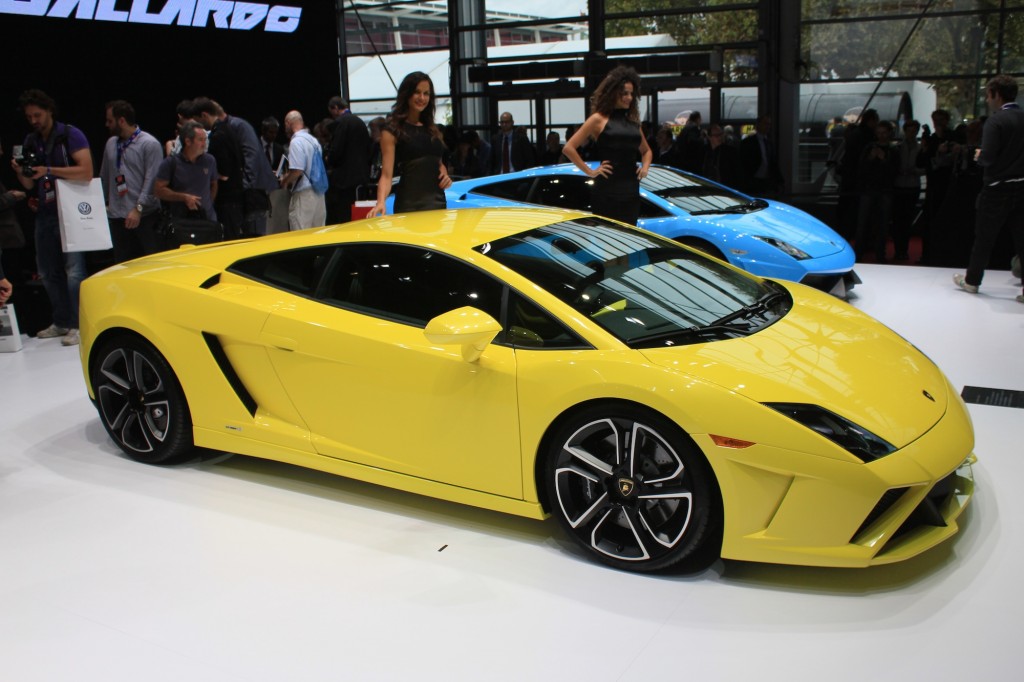
The Lamborghini Gallardo was named for one of the five ancestral castes of the Spanish bullfighting breed.

The Lamborghini Huracan is named for a bull that fought in 1879.  Huracan also means “hurricane” in Spanish.

All of Lamborghini’s companies are still around in some form or another today.  Lamborghini Trattori is still a subsidiary of SAME.  His son, Tonino (Antonio) Lamborghini designs a line of clothing and accessories under the Tonino Lamborghini brand.  His daughter, Patrizia Lamborghini, runs the private winery on his estate.

A museum near the factory honoring Lamborghini, the Centro Studi e Richerche Ferruccio Lamborghini, opened in 2001.  The museum is located just 25 km (15.2 miles) from the factory in Sant’Agata Bolognese.  Tonino may even be there to greet you, as you have to write ahead to get in, as conferences often happen and the museum is closed to the public.