Porsche Never Designed the 911 Around it’s Rear Engine

It’s certainly one of the most iconic automotive designs ever.

I’m sure that if you named just one thing about one of the air-cooled Porsche 911’s, it’s been written about.  While being in and around the car is like watching a movie you’ve seen multiple times, it still has that mystical allure that reels you in each time.

Seeing the car is an experience that is hard to forget.  It’s probably because you can’t compare the design to any other car on the road.  It’s incredibly and undeniably unique.

Yes, it’s got a hint of VW Beetle and the Porsche 356 that preceded it, but we tend to forget those cars when we see one.  The car was designed to carry four adults and their luggage around in comfort and style, yet be fun to drive.

Most “true” sports cars only have two seats, yet the 911 has four.  This is odd, but somebody high up at Porsche presumably wanted something that could carry more than two people.  Unless they wanted to make it incredibly long, the engine would have to be behind the rear axle.

However, this isn’t the universally-accepted truth.  The idea that Porsche is wedded to the engine-in-the-back philosophy is one that you could seriously consider.  The 911 was preceded by the mid-engine 550 Spyder, then followed by the mid-engine 914, the front-engine 924 and 928.  The purpose-built racecar built by Porsche in the same era, the 904, was mid-engine.  The car that truly preceded the 911 was the rear-engine 356, which was essentially a rear-wheel-drive VW Beetle with a nice interior.  For all essential purposes, the 911 is the second and final Porsche rear-engine design, redone a few times.  Even the 356 began as a mid-engine car.

This rear seat thing is why the driver sits higher than most other sports cars.  It allows their legs to be slightly more bent, which gives more space to the folks in the rear seat.  This is also what makes the roof so tall, as well as how far forward the windshield goes.

It’s flat-six engine is only three cylinders long, so the rear overhang is no longer than most front-engine sports cars.  But, it’s also significantly lower overall than most other sports cars.

Most people rail on the car because of it’s rear-engine location, but the truth is, that’s not the most interesting part of the design.  They should focus more on the tall and forward-positioned windshield, and the single sweep backwards to the tail end of the car.

The original Porsche 911 was a massive 15 inches shorter than the Jaguar E-Type, which is really the only comparable car in terms of cabin space and performance.  In short, the 911’s proportions are more to do with the fact that it was designed to carry two people in the back, rather than having the engine in the back.

The real allure of the 911 for me is the fact that Porsche placed function over form, yet created an intensely beautiful and unique car that nobody else was capable offering.  It is utterly unique, and nothing can quite compare to it.

The interior is nothing special, but there’s something beautiful and understated about it. It’s very simple, but owners say that the car is far from basic.  The car may be small, but it’s far from cramped.

There is something that draws me to the surprising compactness of the original 911.  It’s actually a small car.  While I know that modern cars have grown substantially, the original 911 is about the same size as a stock 1930 Ford Model A.  It’s really not a big car, yet it’s got an impressive amount of utility to it.  I really want to drive one, or at least ride in one.

download

This is the infamous Porsche 550 Spyder. James Dean died in one.
Most racers in the 1960s got started in either an MG or a Porsche 356, both of which dominated the road racing circuit for many years.

1973 Porsche 914

Porsche 924 Porsche 928 GTS

1964 Jaguar E Type

2003-Volkswagen-Beetle

1930 Ford Model A Sedan


Why a Rare Porsche Will Top $1.5 Million at Auction

While you could say that just about any Porsche 959 is a stunning car, this one is just an absolute neck-turner.  It’s black over carmel brown, and it’s one of only three made in this color combination.  Talk about rare.

Porsche only made 337 959’s from 1986-1989.  Each and every single one of them is still a technological tour-de-force, but when they came out, there was truly nothing else like it on the road.

The car that I’m talking about is a 1988 model, and it could be yours, should you be going to the Gooding & Company Pebble Beach auction in August.  It’s sale price is estimated to be between $1.6-1.8 million, which, if proved accurate, will only reflect the voracious appetite for collectible Porsches like this.

The Porsche 959 remains one of the most technologically-advanced and interesting supercars ever built.  Up until recently, they were a rare, astonishing sight in the US, due to the idiotic, bureaucratic import laws that the US has.  Why?  Because only 50 out of the 329-337 (production numbers vary, depending on who you ask at Porsche) built between 1986-1989 came to the US.  However, since the bulk of 959’s were built before 1988, the import laws are completely open on them, meaning that you can drive them legally on US roads without fear of the car getting crushed and you getting massive fines.  This is very good news for American car enthusiasts and collectors.

Gooding & Company is calling this car a “Komfort” model, which means that it’s the road-going version of the 959.  Komfort was Porsche’s way of differentiating the road-going 959 from the “Sport” version of the 959, which raced in everything from rally to endurance racing.  The Komfort cars were powered by a 444-horsepower, twin-turbocharged, 2.8-liter flat six-cylinder engine that was connected to a six-speed manual (most cars at the time still had four-speed manuals – a six-speed was simply out of this world).  It was completely ahead of its time in terms of speed, technology and handling.

“Car & Driver” recorded a smoking 3.6-second 0-60 run, and somehow had the cojones to get it all the way up to 190 mph.  Porsche says that the car has the potential to hit 205 mph, so it seems obvious that “Car & Driver” just didn’t have the nerve…That being said, the 190 mph that they recorded held their top speed record until 1997 and the McLaren F1.

What made the car so revolutionary was the fact that it had electronically-controlled AWD. The only other production car to use electronically-controlled AWD was the Audi Quattro, which started using the system back in the mid-1980s.  This system could distribute torque depending on the dynamic load on each wheel.  It could also be locked at a fixed torque split.

I’ve never quite seen such a beautiful Porsche, and while I’ve never seen a 959 in person, this is an absolute stunner.  The 959 is high up on my automotive bucket list, and this one only elevates it to be alongside other legendary cars like the Pagani Huayra, Dodge Daytona, Ford GT40, and Shelby Cobra, among others.

I’ve attached the link to the car from Gooding & Company for you to look at.  There are very few details on it, but they will be available closer to the auction date (think late July).  http://www.goodingco.com/vehicle/1988-porsche-959-komfort-2/

If you can’t afford that much, there is a beautiful 1973 Porsche 911 Carrera 2.7 RS Lightweight at the same auction that is estimated to go for $1.0-1.2 million.  I’ve attached the link for it also.  If you have the means, I highly recommend buying both and driving the wheels off of them.  Cars like these are meant to be driven.  http://www.goodingco.com/vehicle/1973-porsche-911-carrera-2-7-rs-lightweight-3/#tab1

This is the 959 coming up for sale in August.  It's beautiful.
This is the 959 coming up for sale in August. It’s beautiful.

The Evolution of Crazy

Pro Street is a popular form of hot rodding nowadays.  It’s also incredibly easy to define, unlike rat rods or Pro Touring.  Pro Street is classic cars with the rear wheeltubs dramatically enlarged for insanely wide tires.  However, defining Pro Street gets a bit more difficult from there.  Is it a fairgrounds car with big dirt tires?  A street-optimized race car? A race-optimized street car?  Or is it a full-on race car?  It can be any and all of those.  Pro Street has evolved throughout the years from essentially fairgrounds cars to street-optimized race cars.  I’ve taken the pleasure of outlining important years and cars in the evolution of Pro Street.  While your idea of Pro Street might differ, or not be there, I hope this helps.

1972: Grumpy Jenkins Pro Stock Vega:  Bill “Grumpy” Jenkins essentially ushered in Pro Street with the advent of his groundbreaking NHRA Pro Stock tube-chassis Chevy Vega in 1972.  Nobody had ever seen massive tires tucked under a production body before. Yes, the extreme Funny Cars had been using the look for a few years prior, but they had fiberglass body shells, so let’s not count those.  Grumpy went all-out groundbreaking by using a completely tubular frame, which allowed him to run those massive 14-inch-wide and 32-inch-tall drag slicks previously reserved for Top Fuel.  Every single Pro Stock car borrows heavily from that groundbreaking Vega in 1972.

Grumpy Jenkins Chevy Vega

1979: Scott Sullivan’s 1967 Chevy Nova:  No, this beautiful 1967 Chevy Nova was not the first Pro Street car.  Not by a long shot.  However, it was the first car to get massive attention past a small magazine feature on it.  It thundered onto the scene in 1979, just a year after the Car Craft Street Machine Nationals were launched to tire-burning success.  It created the perfect test-and-tune environment for Pro Street.  Sullivan has been known for setting hot rodding trends with just about every car that he builds.  His 1967 Nova was no exception.  It may not have been as innovative as his other cars, but it doesn’t make it any less beautiful, thanks to it’s highlight stripe and color-matched bumpers.  It even had the perfect stance.  Sullivan sold the car in 1984 to Pro Mod racer Ron Iannotti.

Scott Sullivan 1967 Chey Nova

1980: Some Tubbed Street Machines: Many street rod builders of the late 1970s became brainwashed by Scott Sullivan’s beautiful 1967 Chevy Nova (see above), and completely redid their cars.  Just about every car from this era had the back half of their chassis tubbed, and many builders simply moved the leaf springs far inside the chassis to fit the massive drag slicks.  Seeing a car with a Roots blower sticking out of the hood was a must well into the 1990s.

Pro Street Pontiac GTO

1985: Fully Tubbed Street Rods: The cover of the July 1985 ‘Hot Rod’ magazine announced the “Fat Attack” of fully tubbed street rods.  One of the cars on the cover was “Fat Jack” Robinson’s 1946 Ford coupe, painted in a vivid Coast Guard orange.  The car was tubbed like a true Pro Street car, but it was intended to thunder down the drag strips of America.  His car was the result of the first round of the nostalgia drag racing scene of the time.  His car inspired several other pre-1948 fully-tubbed cars.  Those cars on the cover of ‘Hot Rod’ showed how the Pro Street look merging into the vast world of street rods.  It wasn’t long before you’d look around at a hot rod show and see a bunch of 1940s Ford coupes sporting massive rubber.  Unfortunately for Fat Jack Robinson, his car ended up being totaled in a crash at Fremont Drag Strip.

Fat Jack Robinson 1946 Ford Coupe

1992: Trailer/Fairgrounds Queens: Dick Dobbertin’s nutso Pontiac J2000 Pro Street car arrived on the scene in 1986.  You’re probably wondering why I said 1992.  That’s because the trend of taking a lowly late-model FWD car being converted to a fully-tubbed, RWD car started then.  It made it OK to build an over-the-top Pro Street car that only looked good, which have now been dubbed Pro Fairgrounds.  Why Pro Fairgrounds?  The show venue was the only place where these cars could really shine.  I mean, who would really want to drive a car with more than 1,000 horsepower and a short wheelbase down a dragstrip?  If you want that kind of crazy, buy a vintage Fuel Altered car.  This radical Pontiac J2000 started the Dare to be Different movement in the automotive world, by starting battles to see who was able to build a bonkers Pro Fairgrounds car that nobody else had built yet.  Soon thereafter, builders came to their senses and started the Dare to be the Same movement, which leads us to our next section.

Dick Dobbertin Pontiac J2000

1992: C.A.R.S. Camaro: Many of the builders of Pro Fairgrounds resented building cars they couldn’t drive.  They wanted truly functional rides, not simple street rods with a big block, but cars that had gigantic rubber, big wheelies, and low drag strip times.  Detroit and Ohio even started a large movement to build cars that were all-steel-bodied, fully tubbed, go eight seconds in the quarter mile, dress them up with bumpers and various trim pieces, cruise them up and down the iconic Woodward Avenue in Detroit with license plates, and then race them head-to-head all weekend.  One of the first cars featured in magazines was the C.A.R.S. Inc.-sponsored Chevy Camaro of Rick Dyer and Danny Scott.  That iconic Camaro served as the main inspiration for the ‘Hot Rod’ 1992 Fastest Street Car Shootout.

Rick Dyer Chevy Camaro

1993: Mark Tate’s Chevy Camaro: That little Fastest Street Car Shootout gained so much popularity so quickly that it couldn’t sustain itself.  The heavyweight champs, the Pro Street cars, were losing to flat-out Pro Stock-chassis cars.  Those Pro Stock chassis cars were never meant to be driven on the street, unlike the Pro Street cars.  Mark Tate joined the fray in 1993 with his stock-bodied Pro Stock-chassis 1967 Chevy Camaro.  Then it was Tony Christian’s 1957 Chevy 210.  After Christian, it was Bob Reiger and his radical Pro Stock Chevy S-10.  Appeal for Pro Stock/Pro Street cars started to wane.  These weren’t cars you could build in the garage for $10,000 anymore.  These were cars racking up bills well over $100,000.  People wanted fast cars that they could drive on the street for not much money.

Mark Tate 1967 Chevy Camaro

2011: “Modern Pro Street:” This is a total niche created in the Pro Street world by those wanting a fast car with all of the modern mechanicals.  Cars of this look have a Pro Fairgrounds look, street machine behavior, and sometimes a late-model body.  These cars usually have the newest engines, turbos, EFI, and the wheels are usually gigantic with incredible tread.  The beautiful Mustang shown here is the 2007 Ford Mustang from Fastlane Motorsports.  It has a 2010 5.4-liter V-8 with an old-school Weiand 6-71 blower showing out of the hood.

Fastlane Motorsports 2007 Mustang

2012:  Larry Larson’s Chevy Nova: This is where Pro Street is now.  Larry Larson owns a stunning 1966 Chevrolet Nova that has truly incredible performance.  He’s run 6.90 seconds at well over 200 mph in the quarter mile after driving 80 mph on the highway all day.  How does he do it?  Modern technology.  He’s got a bored and stroked Chevy big-block motor with twin turbochargers, EFI, and lots of other amazing technology.  He’s able to drive it all day to a drag strip, run incredible times, turn around and go home without killing his car.  He’s had a LOT of experience in the drag racing world, so he only uses the best parts.  If Grumpy Jenkins were alive today, his mind would be absolutely blown.  Mine is.

Larry Larson 1966 Chevy Nova

That’s where Pro Street is, and where it’s come from.  These cars have state-of-the-art technology, and they are actually quite streetable cars.

Why You Should Buy a Classic Station Wagon

Most Americans over the age of 40 grew up waging hell in the backseat of a station wagon. Most of those station wagons were Buicks, Fords, Oldsmobiles, Chevys, and Mercurys. Some might have even been Pontiacs.  Here’s why they could turn into the next collector cars.  Those Americans who grew up turning the backseat into a war zone fondly remember them.  That same generation fondly remembers the Smokey and the Bandit Pontiac Firebirds (the one with the “screaming chicken” on the hood), so they buy them.  Station wagons from the 1970s and 1980s are now being bought more.  Prices are going up for these massive beasts.

The collector car market is going crazy right now.  People have more money to spend, and they want to enjoy an older car with their family.  They tend to buy cars that they remember fondly.  That’s why Chevy Blazers, “screaming chicken” Firebirds, and station wagons are starting to creep up in price.  Now is the time to buy them.

For all those people who say that station wagons are dorky and stupid, here’s a response:  station wagons have as much, if not more utility than most modern crossovers, and some SUVs, look better, and are far more fuel efficient.

Some station wagons are already highly sought-after collector cars.  They include the Chevrolet Nomad, antique woodies, and high-performance Pontiacs from the 1960s. However, there are still plenty of station wagons that can be enjoyed.  Here are some classic, and new wagons that you should consider buying.

  • 1991 Audi 200 20V Turbo Quattro Avant:  There is no point in going into the details of the 1986 60 Minutes debacle that came close to killing Audi.  There were some good cars that came out in the company’s darkest days, and one of them is the marvelous 1991 200 20V Turbo Quattro Avant.  This one-year-only package is incredibly rare.  Only 1,000 four-door sedans and about 200 station wagons got this package, and it was standard equipment on the two-door hatchback.  It’s a close cousin to the 1986 sedans that Audi used to dominate SCCA Trans-Am racing.  The twin-cam, 20-valve engine has five cylinders and goes through a five-speed manual to all four BBS wheels.  Maintenance is going to be a wee bit tricky, but enjoying this car won’t.
  • 1950-1991 Ford Country Squire:  This behemoth of a station wagon is what many Americans grew up in.  Early Country Squires are the expensive, sought-after woodies from the early 1950s.  Avoid them unless you have serious money and plans to upgrade just about everything on them.  However, starting in 1960, the Country Squire became the familiar family hauler.  They’ve covered millions of miles, millions of Americans remember them fondly, and they have starred in multiple movies.  They came with a Ford small-block V-8 (usually the 351 Windsor V-8 found in most Fords of the 1970s through the 1990s) and a mushy automatic transmission.  If you get a pre-1976 model in California, you can upgrade it to make the ultimate family hauler.  Just put in a modern Ford Coyote motor (the same engine as the Mustang), a Ford T-5 five-speed manual transmission, and some better suspension pieces and you’ll have the ultimate road trip/family hauler.  They are fairly reliable cars to begin with, and Ford made a lot of them, so finding one isn’t the challenge of the century like the Audi mentioned above.
  • Volvo V60 Polestar:  OK, who wouldn’t want a 345-horsepower station wagon that looks really cool?  Speak now or forever hold your peace.  While a mere 120 cars scheduled to come to the US over this summer isn’t a lot, it’s enough to make it a true collector car.  It’s a fast car, and Volvo has a rich history of deceptively fast station wagons.  It looks really cool with the big wheels, low-profile tires, blue paint, and it’s somewhat-bulbous styling.  Get one while you can, and enjoy it!  This is a car that’s meant to be driven, so drive the wheels off of it.
  • Saab 9-2X:  Why buy a re-badged Subaru WRX because GM said so?  Because it’s a more comfortable, tame early Subaru WRX.  For Saab faithful, it was too Subaru, even though it wasn’t nearly as blasphemous as the 9-7X “Trollbazer” which was just a Chevrolet Trailblazer with different wheels and badges.  For the rest of us automotive folks, it’s a more refined version of the spunky Subaru WRX.  Unlike the WRX, it doesn’t turn the wheels 90 degrees when you floor it.  Unlike other Saabs, you can get same-day service on it by simply going to a Subaru dealer.  It’s a far better car than the sales charts show.  Owners love it, and others snap them up.  They aren’t very big, and are more of a hatchback than a station wagon, but they are fun, reliable little cars that can really take a beating.  That’s something that most other Saabs can’t claim.
  • Morris Minor Traveller:  This cute little station wagon is based off of the popular Morris Minor.  Sir Alec Issigonis started his automotive success career with this car. The Morris Minor coupe and convertible debuted in 1948, and the Traveller station wagon followed suit in 1953.  It came to our shores through 1967. When other station wagons were ditching real wood for fiberglass and vinyl, the Traveller had real ash wood from the tailgate all the way to the B-pillars.  Not only does it look great, but it’s also the superstructure for the back half of the car.  That means you’ll have to sand and re-varnish periodically, but that’s going to be the extent of your automotive woes with this car.  Parts are cheap and easily sourced, and it’s an incredibly reliable car.  Not something you can say about most British cars.
  • Buick Roadmaster/Chevy Caprice:  Yes, they may have been the final gasp of GM’s RWD land barges, but who doesn’t want something that seats eight people, has a (slightly detuned) Corvette engine, and is gigantic?  These behemoths were the final iterations of the big American station wagons that so many Americans grew up in. They are still available and cheap for us to thrash around and haul kids around with.  You don’t need to do much to unlock the true potential of these engines – you just get the Corvette’s ECU, as the engines in these cars were the same as the Corvette’s LT1.
  • Cadillac CTS-V:  OK, most of us would LOVE to own a 556-horsepower station wagon that comes with a six-speed manual.  Look no further than the previous-generation Cadillac CTS-V wagon.  I know that this implies that there is another one coming, which we can only hope for, but this is probably the ultimate family burnout/drift/autocross/trackday/hoonmobile.  Period.  My friend Jonny Lieberman of Motor Trend had one as a long-term car for a year, and I’m still feeling the pangs of jealousy.  It has a detuned Corvette engine, but 556 horsepower is still plenty to rage through the quarter mile.  It would make the ultimate backup car for your local autocross/track day, and it would be a fun daily driver to boot.

I’m sure that many of my readers have some fun memories of being in station wagons as kids…let’s here them!


1991 Audi 200 Avant


1967 Ford Country SquireVolvo V60 PolestarSaab 9-2XMorris Minor Traveller1992 Buick Roadmaster WagonChevy Caprice WagonCadillac CTS-V Wagon Drifting

What are Bore, Stroke, Porting, and Relieving?

You hear car guys throw around the terms, “bore” and “stroke” all the time.  Most of us don’t know what that means.  I do.  Here’s what they mean, and how to identify them.

Bore:  Cylinder bore is the measurement of the diameter of the cylinders in an engine.

Stroke:  Stroke is the amount of movement a piston can move up and down.

A bored engine happens when you machine out the block.  For example, taking a 400 cubic-inch Chevy V-8 and boring out the cylinder walls to make the engine displace, say 500 cubic inches.

A stroked engine is simple to build.  You just pull out the current internal moving parts, and put in bigger ones.  Because bigger is better.  An infamous example of this is Chevy’s 302 cubic-inch V-8 from 1967-1969.  Chevy took their garden-variety 283 cubic-inch V-8 engine block, and put the bigger 327 cubic-inch V-8 internals in.  Voila.

An easy way to put into perspective just how thirsty an engine can be is to remember that a 302 cubic-inch engine will theoretically inhale and exhale 302 cubic inches of air and fuel in two revolutions of the crankshaft.  If you punch that engine out (slang for stroking it) to 347 cubic inches, then you’re going to have a more powerful engine.  That 347 stroker engine is popular with drifters – it’s based off of Ford’s capable 302 cubic-inch V-8.  A 347 cubic-inch engine is 14.9% larger than a 302.  So, that 350 horse 302 will have 402 horsepower.

Just stroking an engine for more power won’t solve your problems entirely.  A cam (or more nowadays) pushes on the intake and exhaust valves.  If you’ve got a bigger crankshaft and pistons, upgrade the cam!  You’ll have a far more reliable engine.  Upgrading the cylinder heads is also smart.

The nice part about stroking an engine is that the engine remains the same size externally.

Porting:  A ported engine refers to enlarging the intake and exhaust ports of an engine.  This makes for better and more airflow.

Porting is common in drag racing, especially with the use of nitrous oxide (yes, the same stuff that is used to push out whipped cream from the can).  It just makes more room for the air to go in and out.

Relieving:  No, the engine is NOT using the bathroom!  That would be relieving itself.  A valve seat is where the valve is attached to.  It’s usually a small mound of metal, but it doesn’t need to be.  Relieving just removes the extra metal to make more room for bigger valves.

Here are some pictures of the different kinds of engine enlarging.

This is a bored Chevy big-block V-8 engine block.  It’s been bored out from 454 cubic inches to 489 cubic inches.  That’s 35 cubic inches more air and fuel this engine will hork down.

This is a stroked Chevy small-block V-8 engine.  It displaces 383 cubic inches, rather than 350.  Instead of 350 horsepower, it makes 425 horsepower.  You can buy this engine from Summit Racing.

This is a close-up of a beautifully-ported Ford 302 cubic-inch V-8 from a 1987 Mustang GT LX 5.0.  The larger port is the exhaust port.  The small hole is the valve seat.

This is a relieved Ford 221 cubic-inch flathead V-8.


The Cars that Deserve a Stripped-Down Track Version

Some cars are just born to be demons on the track.  The track doesn’t necessarily need to be a road course – it could be off-road also.  These are the cars that deserve to be stripped down to the basics for maximum fun.

  • Audi TT:  The Audi TT has always been a decent sports car, but it’s always cried out for more power and aggression.  This is why it deserves to have the sound-deadening materials yanked out.  Audi being Audi will never do this, but who’s to say that some very smart person won’t?  In my humble opinion, I think it is perfectly sized for rallycross, which is like autocross in dirt or gravel.  It’s awesome.  Just add a vented hood, a spoiler, more power, beefy tires and suspension, and a rollcage, and you’re good to go.  Audi has a history of legendary rally cars, so it seems fitting to me to introduce it.
  • Chevrolet Corvette:  Yes, the new Corvette ZO6 is truly a monster at the track, but it also weighs more than it should.  I love supercharged engines, but they end up with heat soak after about 20 minutes, and then what?  If Chevy put the C7.R endurance race car’s engine in, it would weigh less and have as much power.  My idea of a ‘Vette track special would borrow heavily from the C7.R parts bin, and would utilize carbon fiber and titanium.  It wouldn’t be cheap, but it would beat just about anything this side of a race car.
  • Jeep Wrangler:  Jeep needs to build a pickup again.  Several aftermarket companies will sell you a kit to turn your Wrangler into a regular cab pickup.  It’s time for Jeep to do that…from the factory.  If Jeep put the 5.7-liter HEMI V-8 under the hood, the Wrangler pickup could actually tow and haul.  Better yet, Jeep could put the 3.0-liter turbodiesel V-6 under the hood.  Now, that would be something that would sell like crazy!  It would be big enough to haul dirtbikes, an ATV, firewood, camping gear, and other important off-road items.  If Jeep offered a toolbox where you could store stuff, that would be awesome.  I’m starting to get carried away with this now.  I’m going to let your imaginations continue your dream Jeep pickup.
  • Chevrolet SS:  The Chevy SS is Chevy’s big performance sedan.  It has the LS3 V-8 from the Camaro, and it comes with a stick!  It’s a stealth tire shredder, but it’s not very fast around corners.  If Chevy put the trick suspension and computer electrickery from the Camaro Z/28 or ZL1 in, talk about a real sleeper!  It really doesn’t need more power – it just needs less weight.
  • GMC Canyon/Chevrolet Colorado:  The new Chevy Colorado and GMC Canyon are great little trucks.  The Canyon just doesn’t stand out all that much from the Colorado.  Here’s my idea:  Make a street brawler version of the Colorado available only in 2WD (jam the 5.3-liter EcoTec V-8 from the Silverado in, along with the Corvette’s 8-speed automatic), and make an off-road monster version of the Canyon that would compete with the Jeep Wrangler and Ford F-150 SVT Raptor.  It would be about the same size as the Wrangler, yet have more utility.  It would also come with the V-8, but it would be the big Duramax diesel V-8 and Allison 6-speed automatic from the heavy-duty pickups.  It would be loud, and have the perfect gearing for bombing around the desert or rock crawling, thanks to the big tranny.  
  • Jaguar F-Type:  The Jaguar F-Type is already a holy drifting terror.  If you go onto YouTube and find hotlap videos of it, you’ll see what I mean.  It’s too much engine and not enough tire.  Jaguar should start a Formula Drift team with this car.  If they put on less-sticky tires, increased the steering angle, and put in super high gearing, they would have a drifting beast.  I would buy it.
  • Ford Mustang:  It’s the first mass-produced Mustang to come from the factory with independent rear suspension.  Recent reviews haven’t been exactly kind to it, however. They say that it’s chassis is still slightly hairy.  Well, let me tell you something, grumpy overworked people:  GET OVER IT!  This is one of the best Mustangs to come out of the factory doors in recent years.  If Ford irons out the suspension kinks, the Mustang will be a much better car.  I know, I’m harshly critical too, but the Mustang desperately needs to impress.  It’s already got plenty of power from it’s 302 cubic-inch V-8, which I might add, is the second most-popular crate engine sold in America.  I would take it out and put out Ford’s 3.5-liter EcoBoost V-6, which has twin turbos, but turbos do not a car make, Fast & Furious fanboys.  The reason I would choose this engine is that it is much lighter than the V-8, can easily be tuned to make as much, if not more power, and meets smog requirements with ease.  Oh, and I can mention that it has a race pedigree in endurance racing.

Those are the cars that I think really need a track makeover.  They are all amazing cars in their own right – you should own or drive at least one of them before you die.  Let me know what you think deserves to give other cars a beating on the track.


Have You Seen Travis Kvapil’s NASCAR Stock Car Recently?

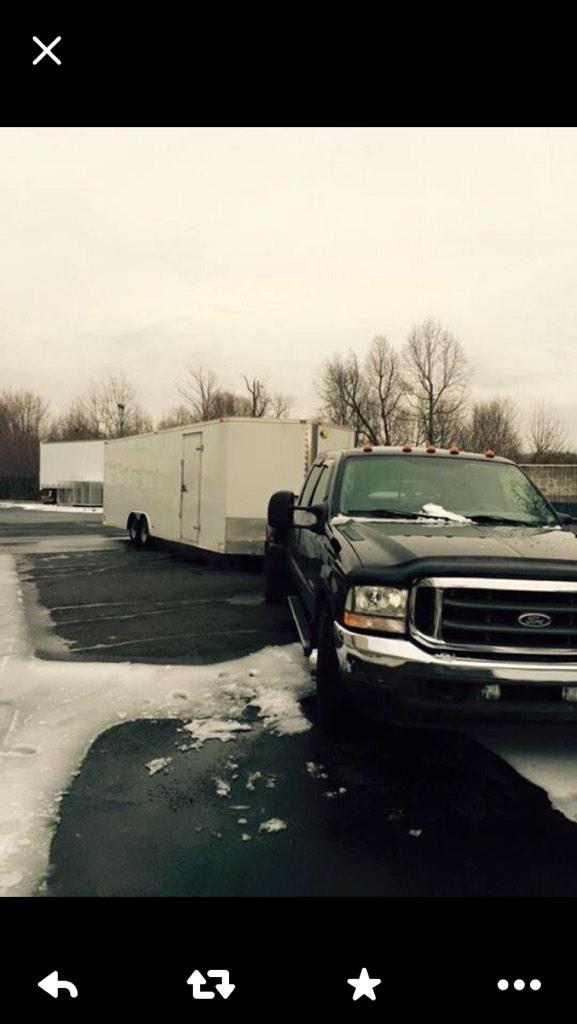
Travis Kvapil, a NASCAR Sprint Cup Series driver, was forced to withdraw from this weekend’s race after his car and hauler were stolen from his hotel near Atlanta.

A trailer with his red number 44 Chevy SS stock car was hitched to his black 2004 Ford F-350 dually.  The truck and trailer were parked outside of his hotel room in Morrow, Georgia, about 15 miles outside of Atlanta.

Surveillance camera video shows the truck and trailer being driven out of the parking lot at around 5:30 a.m, officials said.

The trailer is all white with no markings.  The thief probably didn’t realize that the racecar was inside.  They probably thought that it was lawn equipment or something else that could be easily sold.

The 2015 Chevy stock car is valued at $250,000, according to a police report.  Also inside the trailer was a spare engine valued at $100,000, as well as tools valued at about $18,000.

A spokesman for Kvapil said that the team has withdrawn from the race this weekend, due to the lack of a back up car.

If you have any information on the stolen car, please call the Morrow Police Department at (770) 961-4006.  If you see the truck and trailer on the road, both have New Jersey plates.

The F-350 is a black crew cab dually.  The trailer is a plain white bumper hitch dual-axle trailer.

View image on Twitter

Here’s a picture of Kvapil’s car:

kvapil-876.jpg

If you see the truck and trailer on the road, call 9-1-1.  They’ll tell you what to do.

If you see the stock car on the road, good luck catching up to it!  It can hit about 200 mph, and will withstand a crash far better than whatever you drive.  It’s also pretty hard to miss. Oh, and it’s really loud!  That being said, you probably won’t see it out on the road, especially back east!  Those big slicks won’t do it any favors in the snow…

The Top Car-Killing Movies!

Just about everybody knows that breaking stuff is fun.  When directors get gigantic budgets and a car chase to shoot, sometimes they go overboard.  These movies destroyed the most cars – the numbers are crazy!

  • Ronin (1998):  Yes, Ronin was a good movie.  One of the many cool parts about it?  Director John Frankenheimer was a former amateur racer.  He enlisted former French Formula 1 driver Jean-Pierre Jarier and 300 OTHER stunt drivers to film the insane chase through Paris.  The result?  An epic eight-minute chase sequence that deserves a spot in the car chase hall of fame.  Oh, and they destroyed a mere 80 cars.  That’s nothing compared to other movies on this list!  Watch it here:  https://www.youtube.com/watch?v=CVaNBrYLvFg
  • Bullitt (1968):  Yes, it is riddled with some funny errors – the 1968 Dodge Charger loses five hubcaps from four wheels over the course of the chase!  However, it is still one of the greatest car chases ever produced.  People are still making their own versions of it almost fifty years later.  The iconic Highland Green big-block Mustang fastback reached speeds well over 100 mph on the hilly streets of San Francisco, sometimes even with the legendary Steve McQueen behind the wheel!  More than 80 cars were destroyed during the filming of the movie.  https://www.youtube.com/watch?v=0vNvc9n1ikI
  • Gone in 60 Seconds (1974):  Director, producer, stunt driver, and star of the original Gone in 60 Seconds H.B. Halicki was given a tiny $150,000 budget, but the movie has now grossed more than $40 million.  He drove the original “Eleanor” – the tastefully customized 1973 Mustang (to this day, one of the best-looking Mustangs ever) throughout the chase scene.  Somebody else from the crew would drive the car throughout the rest of the movie (cameraman, actor, etc.).  Many of the bystanders were members of the public – there was no money for extras.  Some of the crashes were completely unscripted, which makes the movie that much better.  When Halicki clipped another car at 100 mph and spun into a lamppost, he ended up in the hospital.  The crash ended up in the film.  Gone in 60 Seconds destroyed 93 cars.  https://www.youtube.com/watch?v=GMz3g1x75pU
  • The Blues Brothers (1980 and 2000):  The 1980 version of the film held the record for the most cars violently destroyed until the 2000 remake, which smashed the record (pun intended) by a whopping ONE car!  For the 1980 film, 60 used police cars were bought for $400 apiece, fitted with reinforced frames.  Almost all of the cars were unusable by the end of filming.  The 1980 version destroyed 103 cars.  The 2000 version decimated 104 cars.  This is the 1980 version:  https://www.youtube.com/watch?v=LMagP52BWG8 and this is the 2000 version:  https://www.youtube.com/watch?v=LDEFL2fLGIE
  • G.I. Joe (2009):  Yes, it is an awful film by every account.  It also happened to briefly hold the record for most cars destroyed in a movie (112 cars).  It beat The Blues Brothers (2000) by eight cars.  Maybe blowing up stuff isn’t as exciting as we all thought it was as kids.  That being said, enjoy the gratuitous automotive destruction at https://www.youtube.com/watch?v=E0GBhbu-0aQ
  • A Good Day to Die Hard (2013):  Sometimes, it’s best to leave the best alone.  Some movies don’t need a sequel, let alone four.  Die Hard is one of said movies.  Sadly, 25 years after Bruce Willis “killed” Alan Rickman (the guy who played Snape in the Harry Potter movies, kids), we are talking about the fifth and worst Die Hard yet.  Willis and the cast somehow destroyed 132 cars and badly damaged an incredible 518 cars PAST their 132 dead brethren.  That being said, the car chase is good.  https://www.youtube.com/watch?v=gWNie0rdXlI
  • The Junkman (1982):  Have you ever heard of The Junkman?  I hadn’t either until now.  It’s the crashiest film you’ve never heard of.  Directed by H.B. Alicki, the crash-hungry director of Gone in 60 Seconds, it reportedly killed more than 150 cars.  https://www.youtube.com/watch?v=aIh_IbxIrr8
  • Fast Five (2011):  All in all, over 1000 cars have been destroyed since the first Fast & Furious.  That’s more than one a minute in total film time.  260 cars were destroyed in Fast Five.  However, Fast & Furious 6 used about 400 cars, with few surviving.  https://www.youtube.com/watch?v=F-4zZBGfF98
  • Matrix Reloaded (2003):  Somehow, the folks behind Matrix Reloaded managed to kill 300 cars loaned to them by GM.  https://www.youtube.com/watch?v=wSPAPeO17Zk
  • Transformers 3 (2011):  By definition, every one of the 532 cars destroyed were ready for the junkyard – they were all donated to director Michael Bay because of flood damage.  They needed to be scrapped by law anyways – why not destroy them violently? https://www.youtube.com/watch?v=wSPAPeO17Zk

Well, that’s my list!  I hope that you enjoyed it, as well as the chase scenes.  I recommend you watch this song while listening to “Rockin’ Down the Highway” by the Doobie Brothers.  It seems fitting.  https://www.youtube.com/watch?v=Drg50H3nNAk

The Vehicles That Forever Changed the Automotive Landscape

These are not the best cars ever made.  Rather, they are the cars that have shaped modern cars.  I hope that you enjoy my list.  Please share any corrections if you feel necessary.

  • Ford Model T:  This was the car that made the production line possible.  It was also the car that made cars affordable to the American public.  Ford produced well over 15 million of them before production ended in 1927.  They are fairly simple to own, and they can keep up with city traffic if you want.  With so many built, there are many clubs and associations for the Model T all over the country.  Just look up “Ford Model T club <insert your area here>” on Google.  I can practically guarantee you that there is at least one club that you can join if you are the new owner of a Model T.  People drive them all over the place on tours.  You can take one into Alaska if you so please.  There are always plenty for sale anywhere between $10,000-40,000.  If you want to daily drive one, all you need is a good arm to crank-start it, and some adjustments to the timing.  Just retard the timing a big, be gentle with the gas, and you’ll have a car that gets up to 35 mph.  That’s plenty good for most city driving.
  • 1916 Cadillac Type 53:  Every single modern car owes a lot to this Caddy.  It was the first car EVER to come from the factory with an electric starter and a modern control layout, both of which we take for granted today.  The Type 53 wasn’t popular with Americans or the world, mostly because of it’s price (about $3,000).  However, the Austin Seven copied the Caddy and set the die for all cars to come.  Yet, I still credit the Cadillac.
  • 1932 Ford:  This was the first affordable car available to the American public with a V-8 engine.  It had a flathead V-8 making a whopping 85 horsepower.  Today, that’s comparable to a car making 500 horsepower from a V-6 (not unheard of).  Anyhow, it was affordable to some Americans.  It became known as “The Deuce,” as did the third-generation Chevrolet Nova.  It was the fastest affordable car of it’s day, which is why it was the escape vehicle of choice for Bonnie and Clyde.  It’s unclear how many were made, but it’s estimated that well over 1.5 million were sold.  Remember that Ford was selling these cars in 1932, right before the peak of the Great Depression!  It became one of the most popular cars to hot rod.  I want one, and we can call ourselves lucky that there are reproduction steel bodies, chassis (yes, that is plural and singular), and used engines aplenty.  How’s that for cool?  You can build your very own reproduction Deuce for about $20,000.  It’s going to be so much more fun than that Corolla you’ve had your eye on.
  • Willys/Bantam/Ford Jeep:  WWII veterans say that the Jeep was the vehicle that won WWII.  They are right.  It can still embarrass most purpose-built vehicles on a dirt road or in mud.  It was the first 4X4 to be sold to the American public en masse, and it proved to be popular.  After WWII, Willys decided to market the Jeep as an alternative to a tractor for farmers.  Chrysler still rakes in hundreds of millions on new Jeep Wranglers every year.  It’s truly an iconic vehicle.
  • 1948 MG TC:  This little wood-framed British roadster is what allowed such amazing cars as the Lotus Elise, Mazda Miata, and even the mighty Shelby Cobra to be.  Every single great American racing legend – Carroll Shelby, Phil Hill, Richie Ginther, and many others got their start in an MG TC.  On a winding road, this little car that only made 55 horsepower and 64 lb-ft of torque would simply run away from any American car, regardless of power output.  Much of what we hold dear as an automotive enthusiast was started by this little car.  It’s influence on every single sports car from 1948 on is immeasurable.  It’s still fast enough to embarrass a modern Chevy Camaro Z/28 on a windy road.  That’s pretty damn fast for a car that makes 450 less horsepower.
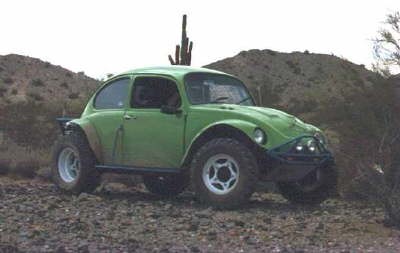
  • VW Beetle Type 1:  It’s the single most-produced car in history.  It’s an elegantly simple design that has stood the test of time better than most cars produced at the same time.  It was the foundation for the legendary Porsche 356, Meyers Manx dune buggy, and VW Transporter bus.  It was FWD, came as either a convertible or a coupe, had a tiny rear-mounted four-cylinder engine, and cost far less than any new American car on the road.  It became extremely popular with people of all ages and demographics.  Many new parents went out and bought a Beetle, and it would serve millions of families around the world faithfully for 20 years or more without major problems.  Most new cars can’t say that.  In the hippie movement, it became extremely popular.  Once the off-roading community got their hands on one, the legendary Baja Bug was born.  It is still fast enough to keep pace with a modern Trophy Truck in the horrible dirt roads of Baja, or the sand dunes of Pismo Beach.  Almost every desert town in the world will have at least several Baja Bugs running around.  It’s fast, sturdy, and capable, yet can be driven around town without complaining.  And the best part is you can build yourself one for about $5,000!  That’s not including a starter vehicle, by the way!  My grandparents owned one.  You probably know somebody who’s owned one.
  • Toyota 2000GT:  This was the car that put the Japanese automotive industry on notice with the world.  It was a more expensive alternative to the Jaguar E-Type, Chevrolet Corvette, Ford Thunderbird, Porsche 911, and the like.  It’s achingly gorgeous, and only a handful were built.  It’s also achingly expensive.  Toyota proved that they could hang with whatever Europe happened to build.  James Bond drove one.
  • Lamborghini Miura:  It’s not the quintessential Lamborghini – that goes to the equally-amazing Countach, but it set the standard for supercars.  It came around because Ferrucio Lamborghini wanted to build a better Ferrari.  When Lamborghini was going to debut the Miura concept car at the Geneva Motor Show in 1965, they didn’t even have a body!  They had a chassis with a V-12, a transmission, and wheels.  That was it.  However, the Miura looks absolutely stunning.  It’s one of the most beautiful cars ever built, and every single supercar owes a lot to the Lamborghini Miura.
  • Citroen DS:  When it debuted in 1955, it was the most technologically-advanced car in the world.  It had hydraulic suspension, a streamlined fiberglass body shell, four wheel disc brakes, a twin-cam V6, and many other technological innovations.  It was one of the first truly modern cars.  One can compare it to the Tesla Model S.  That’s how revolutionary it was.
  • 1955-1957 Chevrolet 210/Bel Air:  The Tri-Five Chevrolet’s are some of the most beautiful cars ever produced.  My personal favorite is the 1957 Chevrolet Bel Air coupe.  The 1955 Chevy became forever immortalized with Two Lane Blacktop and American Graffiti.  Yes, the sinister ’55 is the same car in both movies!  The 1955 Chevrolet introduced the revolutionary Chevrolet small-block (Mouse motor) V-8 to the world.  The 1957 Chevy Bel Air with the 283 cubic-inch V-8 and Rochester mechanical fuel injection became legendary on NASCAR tracks and dragstrips around the country.  It was as fast the Jaguar E-Type 10 years later.  I’m still wanting one!
  • Austin Mini:  Alec Issigonis sketched it on a bar napkin.  He never knew that it would become one of the most popular vehicles of the 20th century.  Let’s forget that it’s a cultural icon for a moment.  It was the first FWD car to come with a transversely-mounted engine (the engine was mounted sideways), which means that it’s the template for most FWD cars on the road today.  It became a motorsports icon in everything from endurance racing to rally racing.  It also became iconic in several movies – The Italian Job, The Bourne Identity, Mr. Bean, and Goldmember.  It’s also a major cultural icon.
  • Ford Explorer:  This was the vehicle that kicked off the SUV craze of the 1990s-today.  It was based off of the lowly Ranger pickup, but had a comfortable interior and the second generation had good looks.  It’s still a best-seller today.  It’s popular with the off-road community because it’s a Ranger with more space for people.  My parents owned one.  You probably know somebody who’s owned one.
  • Shelby Cobra:  Yeah it’s an obvious one for this list.  Carroll Shelby took a British roadster, and put a small-block Ford motor from the Mustang into it.  Then, he went hog-wild and put a big-block Ford into it.  That catapulted the Shelby Cobra into automotive fame.  Anybody who knows something about cars knows of the Shelby Cobra.  It could hang with anything.  It could beat a Chevrolet Corvette with the coveted L88 big-block V-8 in the curves and straightaways.  It dominated endurance and road racing for a glorious 3 years before Shelby stopped production of it.  It also dominated the NHRA Pro Stock drag racing class for a few years.  Today, there are at least 20 different companies who will sell you a Cobra replica.  Get a Factory Five replica.  It’s Shelby of North America licensed, and it comes with modern mechanical parts, yet can still hang with a modern hypercar.  
  • Chevrolet El Camino:  In it’s first generation, it was quite a looker.  Chevy didn’t sell too terribly many of the Impala-based ute, but you’ve probably seen a few driving around your town/city.  The second generation proved to be much more popular.  It was based off of the massively popular Chevelle, and you could get one with the rare, coveted LS6 V-8.  I remember reading an article about an owner of an LS6 Elco (a nickname for the El Camino), and he said that he has to drive it around with sandbags in the bed to keep it from spinning out.  That’s what happens when you have a massively-underrated 450 horsepower and no weight over the rear tires.  If you could get it to hook up, it would go through the 1/4 mile in 13 seconds flat at 125 mph.  That’s about as fast as a modern sports car.  I’ve heard driving one isn’t any different than driving a Chevelle, except for throttle modulation.  Flooring it from a stop, even with the still-powerful 327 cubic-inch V-8 will give a glorious burnout.  I want one.
  • 1968-1970 Dodge Charger/Charger 500/Daytona:  The second-generation Dodge Charger is one of the most beautiful cars ever built.  It’s got muscular elegance.  It had curvy “Coke Bottle” styling, and a plethora of engine choices.  The base engine was the “poly” 318 cubic-inch small-block V-8 that stayed in production in one form or another from 1959-2004.  The next step up was the 383 cubic-inch “Commando” big-block V-8.  After that, it was the 440 “Super Commando” big-block V-8.  One rung above that was the 440 Six Pack – a 440 with three two-barrel Holley carburetors.  The top of the ladder was the mighty 426 HEMI “Elephant Motor” big-block V-8.  The Charger 500 was designed for NASCAR, so it had a rear window flush with the body, along with other small aero modifications.  The Daytona was truly legendary.  Only 503 were sold to the general public, only 70 of which had the 426 HEMI.  The rest had the 440 Six Pack.  It was designed for NASCAR superspeedways, and it truly dominated.  It looked comical with it’s 19-inch long nose cone and nearly two-foot tall rear wing.  The only reason the wing was so high is that anything shorter and the trunk wouldn’t close! The Charger was catapulted into fame by The Dukes of Hazzard for one generation, and for the millenials, they were captivated by the supercharged 1968 Charger used in Fast & Furious.
  • Datsun 240Z:  This little Japanese sports car wasn’t a smashing success, but it certainly left it’s mark on sports cars.  It was light, looked drop-dead gorgeous, had a reliable, powerful engine, and a five-speed manual transmission.  Very few cars at the time had a five-speed.  All of that combined meant that it was a serious threat on a windy road.  Today, they are becoming collector cars, which is a shame, as they are built to be driven.  That’s not to be said that you can’t find a cheap one – you still can.  Hot rodders who are enamored by Japanese cars, but love the power of an American V-8 put a Chevy small-block V-8 and some suspension bits in, and have one hell of a ride.  My grandparents and dad owned one.
  • Audi Quattro:  This AWD notchback with a turbocharged 5-cylinder engine was so successful on the rally circuit that AWD was banned from the sport for about 10 years.  Stock, it’s not at all reliable (except for the first two years of production), but upgrading the engine internals will give you a strong, reliable, fast, and cool daily driver.  It’s truly an all-weather car.  I chose this car because of the impact that it had on rallycross and rally racing.  Any car with AWD past 1985 would have been much worse if it weren’t for the Audi Quattro.  My uncle owned one.  He should have kept it and given it to me.
  • Ford Mustang:  This was the car that started the ponycar craze.  No matter how much Ford hypes it as a muscle car (and Chevy with the Camaro), it IS NOT and never will be.  It is a pony car.  The Dodge Challenger is a muscle car.  Sorry Ford, but I’m just stating the truth.  Don’t shoot the messenger.  That being said, Ford introduced a whole new type of car to America.  Buying a Mustang with the base six-cylinder engine meant that you were carefree but had to watch your cash.  Getting it with the V-8 meant that you were carefree, but who cared about money – you only live once!  Getting it as a convertible only reinforced that.  The Shelby GT350 Mustang of 1965 was part of a deal with Hertz where you could rent the car on Friday, drive it to the racetrack on Saturday, race and win, go again on Sunday and win, and then drive it back to the rental lot.  It was somewhat streetable, but it really did well on the racetrack.  Carroll Shelby originally didn’t want to do it – he told Lee Iaccoca that “Lee, you can’t make a racehorse out of a mule.”  Yet that so-called mule became a massive racing success.  It’s still in production 50 years later.  Many American moms went from a station wagon to a Mustang and never looked back.
  • Pontiac GTO:  Originally offered as a package on the mid-size Tempest in 1963, the GTO took the thundering 389 cubic-inch V-8 from the Le Mans and shoved it into the considerably smaller Tempest.  It was a smashing success, so Pontiac decided to turn it into it’s own model in 1964.  It was much more popular that way, and the ultimate model was the 1969 Judge Ram Air IV.  It came with the then-new 455 cubic-inch V-8 and a functional Ram Air hood (the Ram Air package came in four stages), a Muncie M-22 “Rock Crusher” transmission, and bodywork that let you know that you really were king of the street.  It was truly stunning, especially in green.  It went dormant for 20+ years before appearing as a rebadged Holden Monaro in the US.  It wasn’t very popular.  It’s probably because Ford launched the retro-styled S197-generation Mustang right around the same time.  The 2004-2006 GTO looked nothing at all like any other GTO.  It didn’t look very good.  Nowadays, the modern “Goat” is popular with hot rodders who want to have all of the modern conveniences and glorious power.  Some even take the body off of the GTO and put on a classic car’s body.  Voila, you have a car that looks like a classic, but handles and drives like a new car.  Plus, they are easy to put bigger engines in.  Drifters are starting to find them.  Beware.
  • Lexus LS400:  This big Lexus was the car that sent Germany scrambling back to the drawing board.  The LS400 competed with the Mercedes-Benz S-Class and BMW 7-Series.  The German cars were stodgy cruisers that were heavy, large beasts on the street, but smooth on the highway.  The Lexus took that trademark Japanese agility and feeling of being a smaller car, threw in a buttery-smooth engine and transmission (the ads showed a champagne flute on the hood while the engine revved.  The champagne never overflowed – or came close to that!), a sumptuous leather interior, and made it a fun car to drive.  Lexus kept it in production from 1989-2000 in one basic form or another.  It sold well, and is a completely bulletproof car in terms of reliability.
  • Chevrolet S-10:  OK, I am a bit biased on this, but hear me out.  The Chevrolet S-10 replaced the dismal LUV pickups of the 1970s in 1982.  It came with an underpowered 4-cylinder engine or a more powerful 2.8-liter V-6.  In 1988, Chevy added their new 4.3-liter V-6 to the S-10.  It literally doubled the towing and hauling capacity, as well as making it a far more enjoyable truck to drive.  My S-10 is a 1989 Tahoe model.  That means that it was top of the line.  It has a cloth interior, an AM/FM radio, air conditioning, and it has fuel injection (the 1988 model had a carburetor).  You could get it as a regular cab or an extended cab.  Bed sizes were a 5-foot bed or a 6.5-foot bed. That’s not huge, but for somebody in a crowded city who needs a pickup, it’s perfect.  You could get it in 2WD or 4WD.  Mine is 2WD.  It was wildly successful, and you can still see a lot on the road.  Some people are taking modern Chevy LS3 E-Rod engines (smog-legal V-8’s) and stuffing them into an S-10.  They’re quite the sleeper.
  • Porsche 911 Turbo:  When it first debuted in 1975, it was a total animal of a car.  Lift off of the gas going into a corner, and you’d hit the guardrail with the backside of the car.  You had to keep your foot in it.  It made an underrated 276 horsepower (think closer to 350), had no ABS, a clutch that was so stiff that some had to literally push their leg down to depress the clutch, and a 5-speed manual transmission.  It was a total monster of a car that dominated the racing circuits, but was completely and totally unstreetable.  But, put one on a windy canyon road, modulate the throttle, and you had a recipe for speed.  Porsche still makes it.  However, it now makes a ridiculous 520 horsepower, and is truly the ultimate all-weather supercar.
  • Ford GT40:  This was the car that dominated endurance racing during the 1960’s.  It was the result of Enzo Ferrari refusing to sell his company to Ford in 1964.  Henry Ford II decided to beat Enzo Ferrari at his own game on his own turf.  Talk about owning a bully.  The GT40 was aerodynamic, muscular-looking, and was built for racing.  Ford built about 20-40 for the street (it’s unclear how many).  The first models came with a Shelby-tuned 289 cubic-inch V-8 that made 300 horsepower via a tri-power (three two-barrel carburetor) setup and forged internals and an Isky cam.  This engine was so durable that when Ford disassembled the engine after the season was over, it looked brand-new.  Later models came with Ford’s mighty 427 cubic-inch FE-Series “Cammer” engine.  This engine was the same one in the Shelby Cobra.  It made about 500 horsepower.  Both engines were mated to a four-speed manual.  The GT40 simply dominated the 24 Hours of Le Mans and 24 Hours of Nurburgring.  It was insanely fast, and it could be heard from over a mile away.  It beat Ferrari at their own game for years, before the FIA changed the rules, and both Ferrari and Ford had to comply.  Ford pulled out of Le Mans endurance racing for 20+ years and let Ferrari dominate.


Yes, that is a young Harrison Ford standing next to one of the most iconic hot rods ever.  It’s a 1932 Ford Hi-Boy (the body was lifted off of the frame so the frame could be tweaked).  It has a Chevy 283 cubic-inch small-block V-8 with crackling sidepipes.  This was the car that made me appreciate the little deuce coupe.

This is a fuelie 1957 Chevy Bel Air.  It became known as the “Black Widow” because it only came in black with white tape stripes, a black-and-white interior, and the red center caps on the wheels.

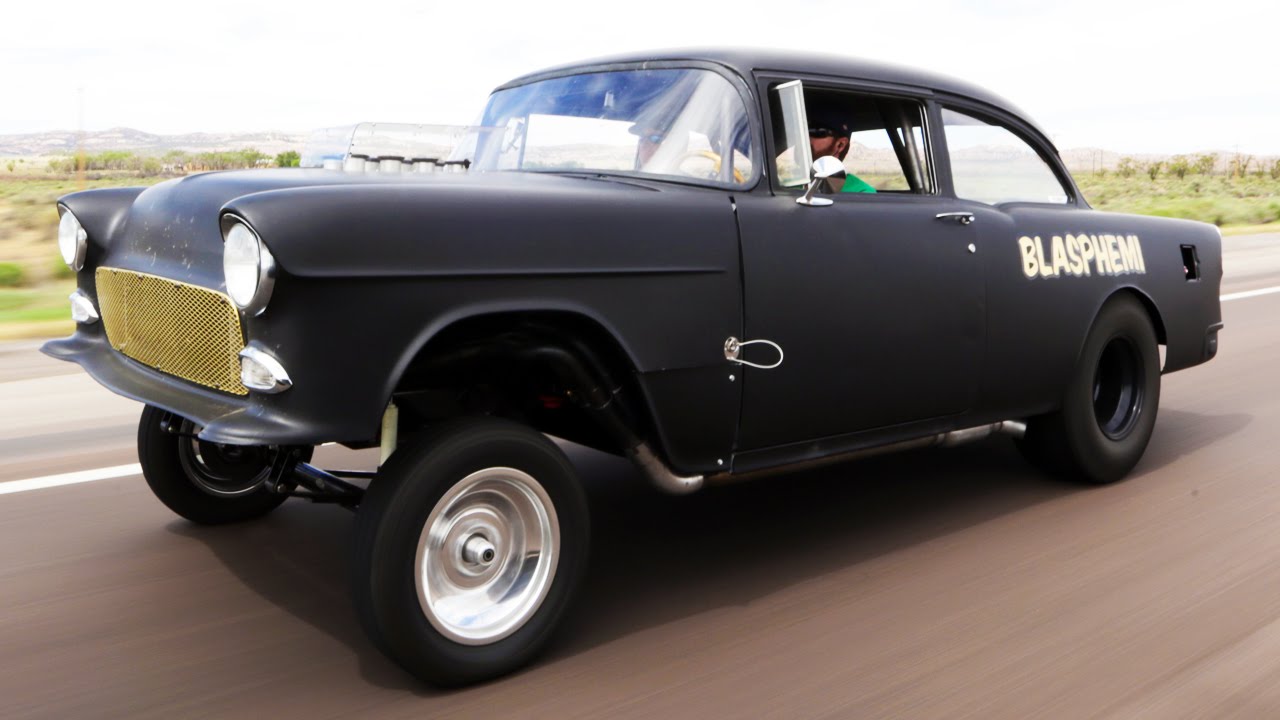
This is a gasser.  Gassers got their name because of the drag racing class they were in (B/Gas or blown/gas).  They had big engines with no supercharger, or smaller supercharged engines.  Look up “Roadkill Blasphemi” on YouTube for the build and cross-country blitz of one of my favorite cars – “Blasphemi.”

This is probably the ultimate Shelby Cobra.  It’s called the “Super Snake” because it has twin superchargers on top of an already-powerful engine.  Bill Cosby almost bought one, but took it on a test drive and thought he was going to die.  Carroll Shelby bought it.  Only two were made, but it was incredibly fast.  It’s rumored that in testing the car hit 210 mph – in 1966!  To me, it’s the ultimate factory hot rod.

This is a 1969 Dodge Daytona replica made by a host of the /DRIVE Network, Mike Musto.  It’s one of my favorite cars ever.  He took a 1969 Charger and turned it into a Daytona.  It’s the ultimate cross-country cruiser.  Just looking at it sends shivers down my spine.

The only stock part about this Mustang is the roof, A-pillar, and C-pillar.  It’s the latest creation from the brilliantly mad folks at RTR and Hoonigan.  Ken Block had it built.  It’s got a stroked NASCAR-spec engine that makes 850 horsepower that goes to all four wheels.  That’s right, this car is AWD.  You need to watch “Gymkhana 7” if you haven’t already.  It’s simply amazing.


Which Modern Ponycar is the Best?

Modern ponycars have progressed a lot in the past 50 years.  While the Ford Mustang started the ponycar craze, the Chevy Camaro and Dodge Challenger have caught up (and surpassed it) in many ways.  If you are looking for a new ponycar, I hope that this post will help you.

2015 Ford Mustang:  The 2015 Ford Mustang is pretty groundbreaking.  It’s the first Mustang to come from the factory with fully independent front AND rear suspension.  Most Mustangs that had IRS (independent rear suspension) were factory hot-rod specials (Mustang Cobra, SVO, etc.).  Not any more.  The 2015 Mustang comes right off of the assembly line with IRS in any iteration.  Previous generations of Mustang used an antiqued live rear axle circa 1964.  Going over a bump or around a curve was not for the faint of heart.  Axle hop is scary, especially if you happen to be going at a high rate of speed.  Motor Trend recently tested a 2015 Mustang GT, and found that it weighed a whopping 196 pounds heavier than the previous generation.  While this certainly isn’t Ford’s first foray into IRS with the Mustang, the rear end bobbling around while on the gas is not fun, and neither is massive understeer when the gas is let off.

However, that’s NOT how most Mustang drivers are going to drive their car.  IRS pays off big time when you’re cruising in any car.  The IRS is worlds better than a live axle when you’re cruising.  In previous generations of Mustang, one small bump was enough to make you think that the semi in the lane next to you would be the last thing that you’d see.  Think about how much you drive on the freeway.  It’s a lot, right?  Heavier is often better on the freeway.  Not for fuel economy, mind you, but for cruising.  You just feel more planted to the ground.

Powering the Mustang is Ford’s fabulous (and famous) 302 cubic inch V-8 (5.0 liters).  It’s lightweight, aluminum, and it’s got a lot of power.  It’s got 435 horsepower and 400 lb-ft of torque, thank in no small part to the previous-generation Boss 302’s valves, springs, connecting rods, and crankshaft.  Part of what makes this engine so fun is the fact that it loves to rev.  It doesn’t rev high, but it revs better than a pushrod V-8 has any right to.  A big part of a muscle car is driving around with the windows down and listening to that sweet thundering bellow that these engines make.  Ford’s 302 sounds good…once you put an aftermarket exhaust system on it.  I’m going to hedge a safe bet that 2015 Mustang owners will go straight to the muffler shop right after the warranty runs out.  Putting that power to the ground is either a six-speed manual or a six-speed automatic.  Go for the manual.  It automatically makes a car more fun to drive.  Trust me.  I drive a stick.

The base engine is a high-revving 3.7-liter V6 borrowed from the Interceptor Utility.  It’s a good engine, but my first choice is the 2.3-liter EcoBoost four-cylinder engine.  It’s small, but it’s got a turbocharger on it.  I know that a turbocharger does not a car make, but it does in this case.  Here’s why you should get the Mustang EcoBoost:  Lower weight, better fuel economy, and 320 lb-ft of torque.  Getting the EcoBoost Mustang also shaves a massive 96 pounds off of the front of the car.  Listening to the EcoBoost Mustang is fun, thanks to an amplified exhaust note.  It’s got a series of growls and pops, and when you pop the hood, you hear whooshes and whistles from the twin-scroll turbocharger.

Stopping the porky Mustang is a set of big Brembo slotted disc brakes.  Brembo makes probably the best brakes in the world.  They never overheat or lose stopping distance.  The brakes on the Mustang are almost 15 inches tall, and they work great, stopping the overweight pony in just 107 feet.  By no means is the EcoBoost Mustang meant to be a replacement for the Mustang GT – the Mustang GT is a completely different car.  It’s just meant to be a fun alternative to it.  

2015 Chevrolet Camaro:  Ever since it made a big splash in the ponycar segment in 2010, the Camaro has been an entertaining car.  In SS form, it comes with a free-revving LS3 6.2-liter V-8 making 426 horsepower.  It’s got visibility akin to a ski mask, but the burbling, rumbling engine note is almost enough to forgive the visibility.  However, an engine does not a car make.  The SS without the 1LE package understeered my dear friend at Motor Trend, Jonny Lieberman, right off of the track at Willow Springs International Raceway.  That would be traumatizing for anybody.  Not Jonny!  He’s driven just about every current-generation Camaro, and the best he’s driven is the fire-breathing Z/28.  I’m still jealous.  For us mere mortals that don’t have $75,000 to spend on a Chevrolet Camaro, the SS 1LE is almost as good a driver’s car.  It’s simply unflappable.  You’re going to make a mistake before the car does, let’s put it that way.  Why is that?  Well, it’s got specatcular magneothermal shocks borrowed from the Corvette ZR1 and Camaro ZL1.  This is the Camaro to (almost) end all Camaros.  Jonny’s fallen in love with this car – for good reason.  It’s just one of those cars that begs you to go faster around the next corner.  I would kill for a Z/28 Camaro, but until then, my faithful readers will have to get me a SS 1LE.  

2015 Dodge Challenger:  The big news about the Challenger is the Hellcat.  For about $60,000, you can have THE most powerful factory muscle car ever.  It’s not as powerful as the current bunch of hypercars, nor is it as fast.  But, it’s far, far cheaper.  I mean, who doesn’t want 707 horsepower?  If you can’t afford the Hellcat, it’s all good.  You can get the Challenger Scat Pack.  You can get a car with 485 horsepower for under $40,000!  The problem with the Challenger is weight.  It’s simply not a small car.  It’s big, wide, loud, powerful, and it soaks up anything the road can throw at it with ease.  It’s also 400 pounds heavier than the Camaro 1LE.  You won’t notice the weight in a straight line because it’s got more horsepower than it’s rivals.  The Challenger isn’t something you want to take in tight, windy roads.  It’s just too big.  It is, however, the car that you would want to tour the country in.  The Hellcat is insanely loud – I’ve heard one at speed, and it sounds about as loud as a NASCAR Sprint Cup Series car.  It’s that loud.  Dialing the Challenger back into the realm of sanity is the Challenger Scat Pack.  It’s got the 6.4-liter HEMI V-8 from the Challenger SRT8, and it just howls and revs to the heavens.  It sounds like a mini Hellcat, minus the blower whine.  Speaking of blower whine, the Hellcat got it just right.  The engine was so loud that they had to put an amplifying cooling chamber in the supercharger itself to make it be heard.  A job well done, Dodge.  The Challenger is the car you want to take on a road trip.  It’s big, comfortable, it can take two large coolers and luggage in the trunk, and it can take the kids, or two buddies easily in the back.  Driving this with the windows down is the only way to drive it.  You can just sit back and listen the the burbling, howling, crackling exhaust note that sounds right out of a vintage Trans Am race.  Want to know what the Hellcat sounds like?  It sounds like NASCAR, a Ferrari V8, a plane, and a Top Fuel dragster, with blower whine mixed in.  It’s a haunting, addictive melody.  It’s the car that you just want to cruise around in, revving the engine and doing burnouts and donuts in empty parking lots.

Overall, which car would I take?  That’s hard to say.  The Mustang EcoBoost is certainly a good choice, but you just can’t hear the engine itself very well.  The Camaro Z/28 is an excellent choice, too, but it’s a stripped-down track toy that’s not meant for daily driving (case in point:  air conditioning is an option).  The Camaro 1LE is good, too,  so I’d probably get the 1LE Camaro.  The Challenger?  Hellcat, Hellcat, Hellcat!  It’s just the very definition of muscle car.  It’s so powerful that when you’re going straight with ALL of the nannies on, it will still go completely sideways.  Think of another modern car that can do that.  I certainly can’t.

If I had to go with just one of these cars, I’d get the Hellcat.  It’s the very definition of affordable performance, and even a tuner car Mustang with 800 horsepower won’t be the same.  The most powerful Camaro offered is the 580-horsepower ZL1, which handily beats the 435-horse Mustang.  Just go with the Hellcat and let me know when you get it!  I’ll feature you, sing praises about the Hellcat (it shouldn’t be too hard), and never stop saying thank you.

P.S.  Ford made the Mustang Cobra Jet (a factory drag-strip only special) until August, but there are some to be found at various racing dealerships or classifieds.  I’ve even seen a few in Hemmings Motor News.

P.P.S.  Chevrolet makes the COPO Camaro (also a factory drag-strip special).  It’s got more engine choices than the Cobra Jet, and it looks pretty darn cool.