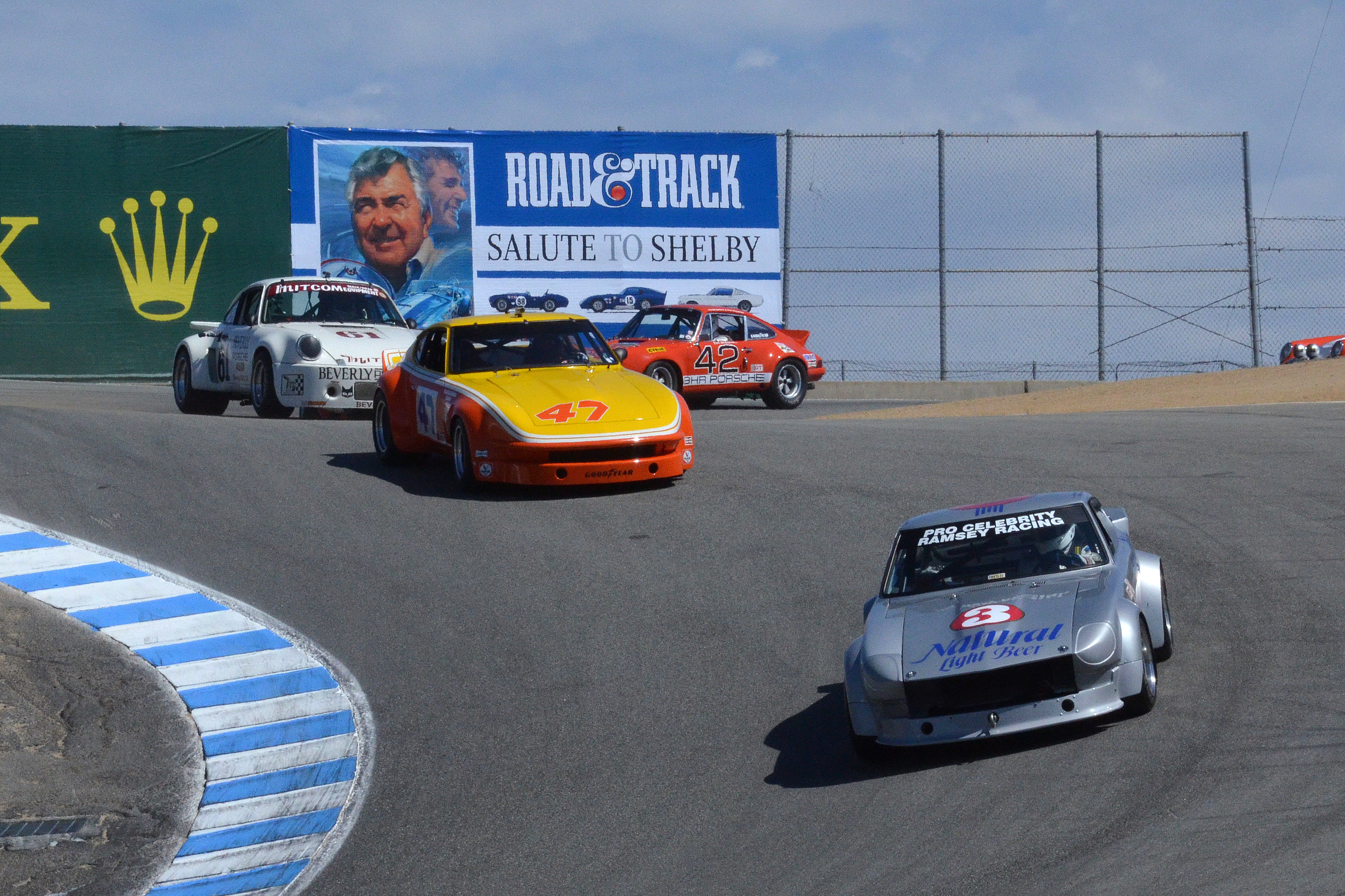
A Wonderful Day at the Track!

I’m pretty sure that I’ll be getting some comments from you wonderful readers telling me that I am one lucky guy.  I know that I am, thank you very much!  You’re probably wondering why I’m so lucky.  Allow me to explain.

In the beginning of March, my uncle set me up with one of his friends who was going to be lapping his 1970 Datsun 240Z at Sonoma Raceway.  Emails were exchanged, and then we got to the track early.  We saw the Z (pictures will be near the bottom of this post!), and went into that garage.  The team mechanics were going through the checklist.  I’ll be monkey’s uncle if I tell you that car didn’t sound amazing!  It sounded wonderful!  At idle, it had a burble that popped, hummed, whistled, and belched at the same time.  Since it has such a high idle speed (2000 RPM, average), it’s kind of loud.  At full throttle, it sounds like a Lamborghini Aventador, a Ford Mustang Shelby GT500, a motorcycle, and a Corvette ZR1.  Life couldn’t be much better.

The owner and driver of the Z, David Martin, showed up, and we said hello.  After a few minutes of talking, we went down to pit row and watched as David’s instructor, Ken, told him to do 10 warm up laps.  We sat on the concrete barrier wall, and watched classic race cars go flying around the track.  One team had a large trailer with about five classic Porsche 911’s and a couple of new ones.  Next to us was a portable shade tent that was keeping a Can-Am Ferrari and a 375 America from 1956 from the harsh effects of the sun.  The 375 was beautiful, and extremely fast.  The Can-Am Ferrari was scarily fast.

In one of the garage stalls near us was a team with a 2005 Ford GT super car.  They had a guy sitting there with a laptop computer analyzing everything about the car.  When I say everything, I MEAN everything!  The Can-Am Ferrari (don’t ask what it was – I don’t know!) was faster than the Ford GT, which knocked out 1 minute, 30 second laps.

At lunch, we talked with David’s instructor, Ken.  Ken used to race everything from F1 to stock cars.  His story is sad, but I can tell you something good about him:  He’s one of the best drivers I’ve ever seen!  After lunch, we had to wait for a bit because a car blew its engine on the final turn, and all the oil spilled out.  We waited.  And waited.  And waited.  Finally, cars were allowed back on the track.  David waited until other cars had gone through where the oil slick was.  Then, he headed out, but he went much slower those laps.

At about 2:00 PM, it was time for us to go.  Sadly, track day was over.   We said our goodbyes, and headed home.  I think that you will enjoy the history of David’s Z.  I’ll also share with you some pictures of him and his Z.

Here’s the history:

In 1974, Brad Fisselle made the decision to step up from the SCCA (Sports Car Club of America) Professional Division to IMSA (International Motor Sports Association).  he formed a full team and company, which was named Transcendental Racing.  Transcendental Racing built, developed, tested, and raced their new creation.  Their creation?  A 1970 Datsun 240Z prototype for the IMSA Camel GT Series.  In 1975, Brad had his first three professional victories and was awarded IMSA’s Most Improved Driver award, becoming the only man to win these coveted awards in both IMSA and the SCCA.  He then went on to win eight out of the eleven races that his team entered in for the IMSA GTU series.  During this time, Brad Fisselle beat the Datsun factory team many times.

This Datsun 240Z is the 1976 IMSA GT/U Championship car.  The chassis of this car was the first 240Z imported to the United States in 1970.  My dad had one of the original 240Z’s as his father did all the legal work for Datsun!  Mac Tilton designed the suspension and built some of the specialized parts. The chassis, roll cage and body were all constructed by Dave Kent with assistance from Yoshi Suzuka. Yoshi was also responsible for the design of the aerodynamics on the car. John Knepp of Electramotive built the engine.  Many of these businesses are long dead.  In it’s day, this Datsun 240Z was the fastest and most technologically advanced car in IMSA and SCCA.

Sometime in the early 1990’s it was decided that a full restoration was needed.  The car was starting to fall apart, and didn’t look as good.  The team’s original captain, Joe Cavaglieri was hired for this task.  The car was stripped down to the chassis, and rebuilt from the tires up to 1976 IMSA GTU specifications.  Using development parts from the NISSAN GTP program, modern electronics, and new piston and cam designs the engine produces 400hp.  Considering that this comes from a 2.0-liter inline six-cylinder, that’s quite impressive.  No turbochargers or superchargers have ever been near this car.

In the day the team was the one of the very best in IMSA, the preparation of the car was always at the highest level, more like that of a top Indy Car team than a GTU team. The restoration was done with that same mindset. The car is absolutely perfect both cosmetically and in performance. The fit and finish, attention to detail and superb craftsmanship exhibited in this restoration is spectacular.  Right now, the car is capable of winning a podium position at any classic car race, or winning a Best-in-Show at Pebble Beach.  Since the completion of the restoration, the car has competed in the Mitty at Road Atlanta and the Monterey Historic Automobile Races plus two club events and one test day.

Here is a list of the championships that the car has competed in:

IMSA GT/U (Grand Touring Under 2.5L) 1975 Season Mid Ohio 2nd GTU (Pole Position) Laguna Seca 2nd GTU Mosport 1st GTU Mid America 1st GTU Talladega 1st GTU

1976 Season (IMSA GT/U Champion): Road Atlanta 1st, GTU 15 OA, Laguna Seca 2nd, GTU 10, OA Ontario 4th, GTU 12, OA Lime Rock, 1st GTU, OA Mid Ohio 1st, GTU 5, OA Daytona 250 1st, GTU 9, OA Sears Point 2nd, GTU 9, OA Talladega 1st, GTU 5, OA Pocono 1st, GTU 5, OA Road Atlanta 500 1st, GTU 8, OA with John Morton Daytona Final 1st GTU.

I’ll stop keeping the pictures from you, and share them with you.
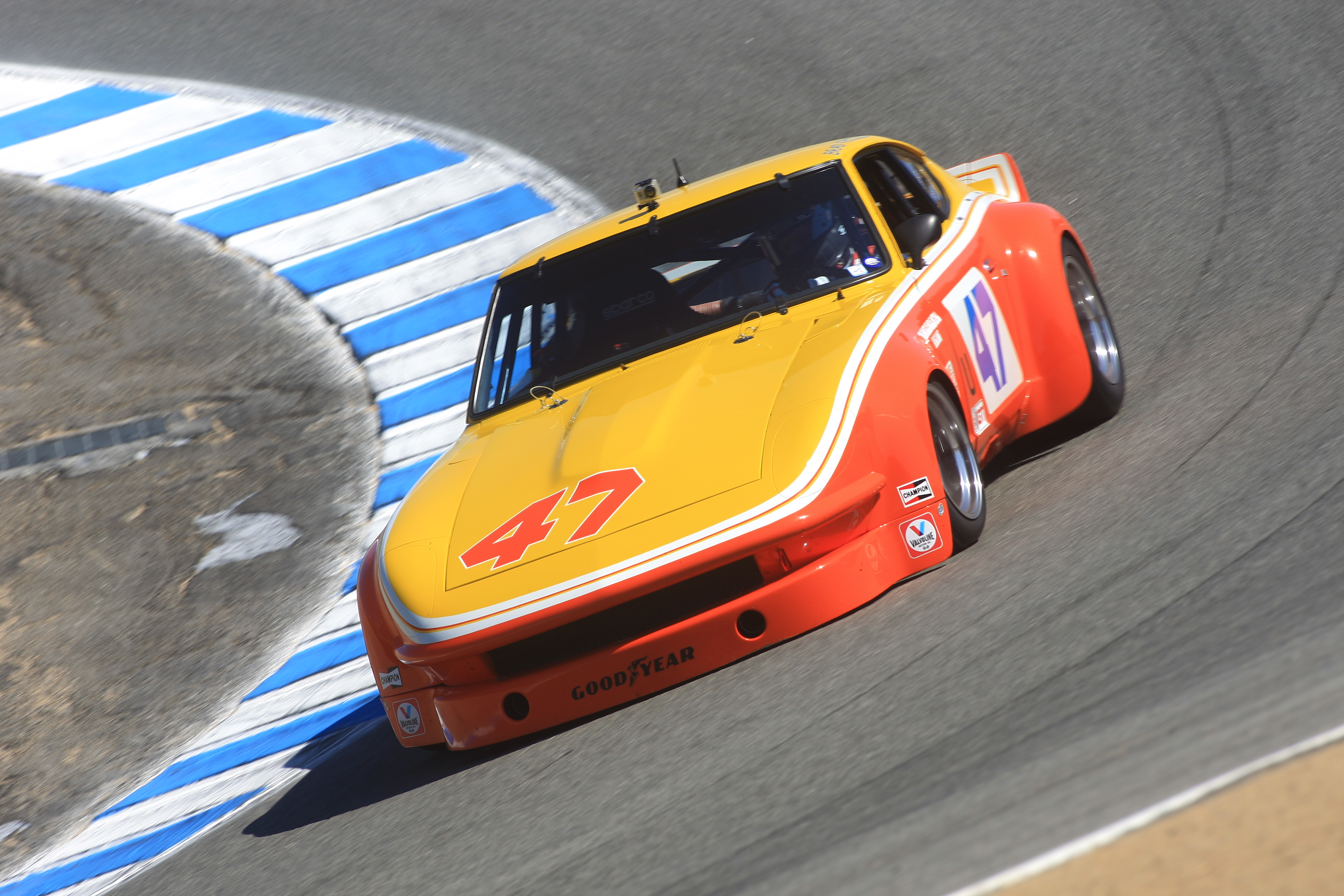
This is David at the 2012 Rolex Reunion at Mazda Raceway Laguna Seca at the infamous Corkscrew S-Bend.
This is the same race, but on a different lap.  This is also at the Corkscrew.
This is the same race, but on a different lap. This is also at the Corkscrew.

I’d like to give many, many thanks to David Martin of Red Car Winery and the Martin Group for letting me hang around and watch him.  I’d also like to say thanks to his awesome mechanics and instructor, who were kind enough to talk to me about racing throughout the day!  Thanks to my amazing uncle who originally set me up with David!  Thanks to David, his team, and my uncle, for letting me come with my dad so we could have an awesome day watching an awesome person drive an awesome car!   Clearly, I had a great day.  Told you I was lucky.
Tougher Than Tough

In 1946, Mercedes-Benz hired several American engineers that designed the DUKW (or DUCK) trucks to build a truck that could be worked for agriculture.  They were more than happy to.  The Unimog was born.  It was originally designed to give power take-off to large forestry saws and equipment and/or large pieces of farm machinery.  It had permanent 4WD capability, equal size wheels.  This, coupled with portal axles, allowed the Unimog to travel along horrible, bombed-out roads at speeds that are still considered insane.  Due to their portal axles, their ground clearance was about 26-30 inches off the ground – stock!  Their flexible frame acts as part of the suspension.  All of this makes it just about the worst choice for a tow rig.  Yet, it still does its job very well.  Because of its unique build structure, Unimogs can easily climb boulders 1 meter high.  

Newer models can have the pedals, steering wheel, and instrument cluster moved from the left side to the right side in the field.  This allows workers to conveniently “pass the wheel to their coworkers – provided the vehicle is at a stop!”

The Unimog can be built in up to 40 different combinations!  Some of these can be a small gasoline-power engine unit that is a short wheelbase unit (common for delivery or construction) to a 40-foot, 300-horsepower monster!

Just about every military uses the Unimog – even the U.S. Marines.  Semper Fi.  Back to militaries.  Many militaries use at least one type of Unimog.  Civilians use them, as well.  Many disaster relief organizations have large fleets of Unimogs.  The Red Cross uses about 4,000 Unimogs.  Fire departments, hazardous-material transporters, utility companies, and equipment carriers.  Their capability to operate in almost any situation makes them ideal for this.  One place where you can see Unimogs is at McMurdo Station, where they bring supplies, give power, and even build!  Unimogs can easily be fitted with a backhoe, front loader, a dump bed, and even cranes.  Even the Governator has one – a 2012 U1300 diesel Unimog registered in California!

In North America, Unimogs haven’t been the most popular truck.  Part of the reason is that smog requirements for large purpose-built trucks are much different in Germany than the U.S.  Some of it also can be given to the lack of enthusiasts.  Many Unimogs that you see in North America have been imported, or were sold by the Case Corporation in the 1970s.

Unimogs are very successful in motorsport competitions – especially desert rallys.  They have won the Truck Class several times in the 1980s in the Paris-Dakar rally.  They have also won by accident – multiple times!  Their main purpose is to provide support for cars and/or motorcycles racing in the desert.

Just two years ago, Mercedes-Benz unveiled a wild Unimog concept.  It looked crazy.  But,  Mercedes-Benz said that some of that styling would make it into the new Unimog.  Some did.  The new Unimog has some of the futuristic styling, which is skillfully blended into the macho sheet metal.

Some of the new equipment that comes with the new Unimog is smart.  For example, the cab has been completely redesigned.  Now, drivers can see almost 200 degrees – in any direction!  New work and power systems allow the Unimog to be even more adept at everything it does.  The hydraulics have been redesigned from scratch.  They can now push, pull, lift, and do many more tasks.  One really neat feature about the new Unimog is the synergetic traction drive that allows the driver to change from manual mode in the transmission to hydrostatic mode while on the go.  Most trucks with features like that need to be at a complete stop for that to happen.  The biggest changes, however, are from the new engines.

The most potent engine is a massive 7.7 liter diesel that cranks out a monstrous 354 horsepower and a Herculean 885 lb-ft of torque.  Many of the engines offered on the new Unimog circulate gasses to comply with emissions standards in many countries.

This truck is not one to be messed with.  If you are in a Ford F150 SVT Raptor in the desert, and you see a Unimog, don’t challenge the driver to a race.  The Unimog will win.  By far.  It will also win rock-crawling competitions against Jeep Wranglers, mud pit contests against jacked-up pickups.  All of this will look effortless.  That’s what happens when you’ve got 57 years of experience behind you.

Retromania!

For those of you who reminisce about the days of old, when the spectacular Ford Bronco, Chevy Blazer, and Jeep CJ5 ruled the road, fear not!   You can stop worrying about these new crossovers that dominate the market.  There are still purpose-built SUV’s out there like the Jeep Wrangler, Land Rover LR4, etc.  However, if you want a hunk of classic iron, you may need to pay a bit more.  I have ranked 8 classic SUV’s that were built to drive anywhere.  I have included current market prices, and some information about them.

  1. 1960-1984 Toyota Land Cruiser.  While the Land Cruiser has gained weight, features, and technology, it still has that sense of purpose.  You can find one anywhere from Cape Town to your neighbor’s driveway.  That’s how popular the Land Cruiser was in its first iteration in the U.S.  According to Hagerty Car Insurance, the price of classic Land Cruisers has tripled in the past five years.  The current market value for a first-generation Land Cruiser will run you about $31,000.  
  2. 1958-1971 Land Rover Series II.  For almost 10 years, a Land Rover Series II was the first motorized vehicle 60% of the world had ever seen.  These old Land Rovers are so capable that no modification is usually needed/wanted.  Land Rover owners like their Land Rovers stock.  A Land Rover Series II will set you back $26,500, at current market value.
  3. 1966-1977 Ford Bronco.  Ford’s first SUV is an amazing vehicle.  It is extremely capable, yet it is able to be driven daily.  The Bronco was unique for Ford – it didn’t share ANY basic engineering/parts with any other Ford.  Those of you who own one of these old Bronco’s know how hard it used to be to get parts for these Bronco’s.  Currently, a 1966-1977 Bronco is valued at $25,250.  Not too bad, especially for something so capable and cool.
  4. 1971-1985 Land Rover Series III.  The Land Rover Series III is a much more evolved version of the Series II (look above for some information!).  They closely resemble the Series II, but DO NOT get them mixed up!  Collector values for the Series III have jumped 50% in the past three years!  The estimated value for a Land Rover Series III is $22,000.
  5. 1961-1980 International Scout.  Appreciated for its technical simplicity and overall charm, the 1961-1980 International Scout is widely regarded as America’s Land Rover Series II.  The International Scout was originally introduced as a commercial pickup before turning into what is now called an SUV.  The estimated market value is now $19,900.
  6. 1963-1991 Jeep Grand Wagoneer.  A precursor to the modern-day luxury SUV, like the Lexus LX460, the Jeep Grand Wagoneer was targeting those who needed more space than a CJ5, but needed the capability of a Jeep.  It sold in spades.  You can get one in iffy condition for relatively little money, but some sell for far more than the $15,750 that is the current market value.
  7. 1954-1986 Jeep CJ.  Before it became the Jeep Wrangler, it was called the Jeep CJ (Civillian Jeep).  While the original CJ5 was prone to tipping, due to its short wheelbase and high center of gravity, the CJ7 was longer – and more stable.  You can buy one for $15,450.
  8. 1969-1972 Chevrolet Blazer K-5.  The Chevrolet Blazer was based off the rugged C/K-10 pickups offered by Chevrolet and GMC.  It was built to compete with the Ford Bronco.  But, it quickly took the sales lead, thanks to creature comforts like air conditioning and a comfortable interior.  Plus, it had the same off-road capabilities as the Ford Bronco.  The Blazer is relatively affordable, with a market value of $14,400.

These are all great, relatively affordable SUVs.  If you have enough money to buy one, I recommend starting here.

Questioning Cars? Don’t Question the Lamborghini Pregunta!

Many consider IT to be one of the last cars built by Lamborghini before Volkswagen bought them in 1999.  It’s now up for sale.  I’ll save you the suspense, and tell you what it is.  Car nuts like me will know what it is by the end of the first sentence.  For those of you who don’t know, the Lamborghini Pregunta was the last Lamborghini built before the Volkswagen Group took over the iconic car company in 1999.  I know, you guessed it.  Perhaps it had something to do with my transparent post title…  If you want a Pregunta, be sure to cough up 1.6 million Euros (about $2.1 million USD).

The French Exotic car dealer, Autodrome, is selling the car.  Autodrome claims that they bought the car directly from the coachbuilder who built the car in late 1998.

“Pregunta,” Spanish for “Question,” was born during an extremely turbulent time for Lamborghini.  In 1994, Chrysler had owned Lamborghini for about 9 years.  Chrysler decided that they wanted to sell the iconic company.  They did.  Megatech Group bo0ught Lamborghini.  For a year.  It was then sold to Tommy Suharto, the son of the former Indonesian president.  By 1998, Suharto was going through a large financial crisis.  Lamborghini was up for sale.  Again.  Audi stepped in and saved the day.  However, the Pregunta was born before the official handover took place.

The Pregunta was based off of the legendary Diablo, but it used rear-wheel-drive instead of all-wheel-drive.  This meant that the Pregunta was a handful to drive.  I guess that it would be, with 530 horsepower being directed to the rear wheels.  All of that gave the Pregunta a supposed top speed of 207 mph.  Inspiration for the still-controversial design came from Formula 1 and the booming aerospace industry.  It had then-new technologies like carbon-fiber construction, optical fiber lighting, and rearward-facing cameras instead of mirrors.

If you pine for a Lamborghini from the days when Lamborghini wasn’t part of the massive Volkswagen Group, the Pregunta might just be the ticket to finishing off your collection – that is, if money isn’t an issue.  It won’t be when my readers start pledging a bit more than $1.22…I think we all know who I’m talking about, right?

110 Years, 11 Special Cars, 11 Special Highlights

In honor of its 110th anniversary, Buick is celebrating as much as it possibly can.  In light of this momentous anniversary, Buick recently released 11 photos of 11 influential cars that helped transform Buick, or gave a lasting a impact on the brand.  Along with the photos, Buick selected 11 highlights from its 110 years of making cars.  I will share the highlights and the cars for you.

Highlights

  • Through the end of 2012, Buick has sold 43 million cars.  That’s the equivalent of every vehicle sold in the U.S. in the past three years alone!
  • The 1938 Buick Y-Job is regarded as the world’s first concept car.  It’s waterfall grille can still be found on modern Buicks, and its futuristic technologies were not seen until the 1970s.  These technologies were power windows, high-performance cylinder heads, and an aluminum engine block.  The car was built in honor of Harley Earl, the legendary GM designer.  Harley Earl drove the car himself for more than 15 years.
  • The 1963 Buick Riviera is regarded as one of history’s most beautiful cars.  It will be turning 50 this year.  The powerful sports coupe is said to have been inspired by a Rolls-Royce that GM head of design, Bill Mitchell, saw through a fog in London.  It was powerful, fast, and astonishingly pretty.
  • Buick is also steeped in motorsports history.  Buick has proved its mettle on racetracks since times as early as 1908.  Buicks have served as pace cars for the Indianapolis 500 six times.  They also have won two NASCAR Manufacturer Championships – in 1981 and 1982.
  • After almost 30 years of engineering, a Buick hit 100 miles per hour!  They appropriately named it the Buick Century.
  • The fastest stock Buick is the 2012 Buick Regal GS compact luxury midsize sedan.  It hit 162 mph at the 2012 Nevada Open Road Challenge.  This achievement was set by Road & Track
  • The quickest Buick to 60 mph was also one of the rarest.  Car & Driver recorded a speedy 4.6 seconds for the 1987 Buick GNX.  547 of these dark sleepers were built.
  • Powertrain innovation is part of Buick.  Today, their 2.0 liter, direct-injected, 4-cylinder engine produces a ridiculous 259 horsepower (estimated).  Displacement, however, was king in the 1970s.  The largest Buick engine that ever went into a Buick was a 455 cubic inch (7.5 liter) V8.  It was introduced in 1970.
  • The Buick Electra 225 nameplate was introduced in 1959.  The “225” stood for the length of the car – it was 225 inches long!  But, the 1975 Buick Electra was the longest Buick ever built.  It was 233.7 inches from bumper to bumper.
  • The first Buick, the 1904 Model B, was also the shortest.  It rode on an 83-inch wheelbase.  The 2013 Buick Encore isn’t that small.  It is the shortest Buick since the 1912 Buick Model 34 (90.7 inches).  It rides on a 100.6-inch wheelbase.
  • Throughout its history, Buick has made many cars with seats for two, four, and six.  However, only two vehicles have been made that can seat eight:  The 1991-1996 Buick Roadmaster Estate and the 2008-present Buick Enclave.

That’s a history lesson in itself.  Some of these cars are truly beautiful.  Go onto Google Images, and look for the 1938 Buick Y-Job.  It is, in my opinion, one of the most beautiful cars ever built.  It also happens to be technologically advanced.

Buick has offered some amazing cars over the years.  Happy anniversary Buick!

Car Envy or Out n’ About

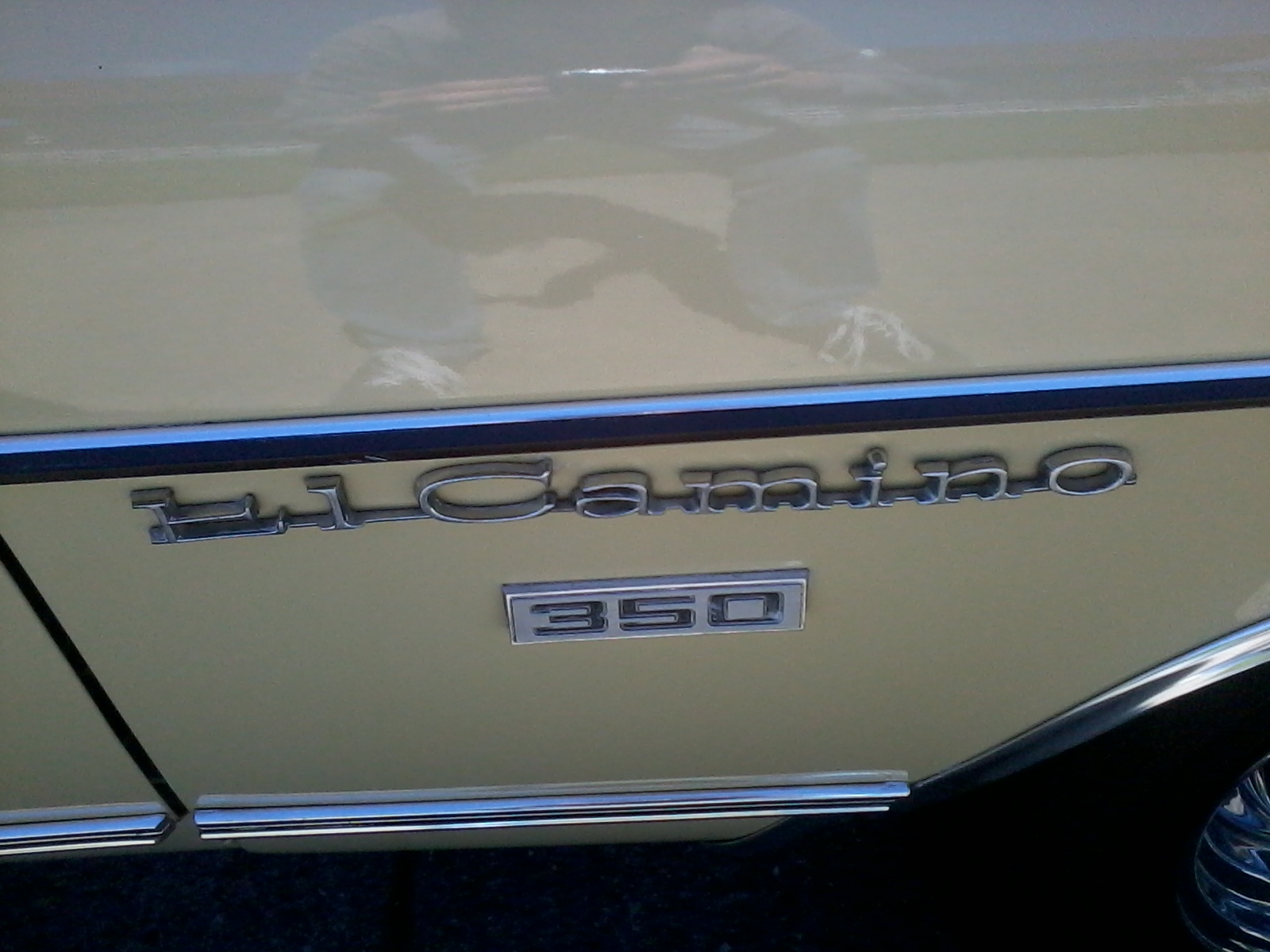
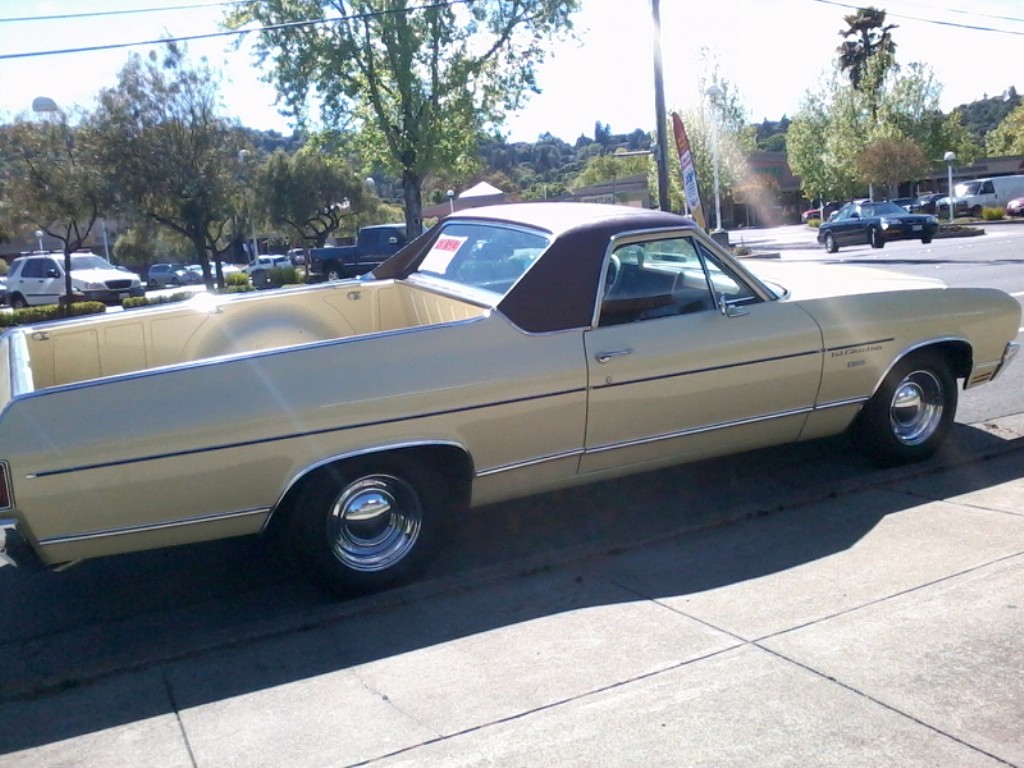
While I was having some family time, I saw this wonderful 1970 Chevrolet El Camino.  I got enough pictures for you to drool over!  Enjoy…Even better, it was for sale.  A mere $12,500, and it could have been mine.  But, some readers (we all know who I’m talking about) didn’t want to pledge more than $1.22.  That’s not even close to the asking price!  Anyways, I figured I’d take some pictures for your enjoyment.  Just make sure that you don’t drool on your keyboard!

Photo0200

Photo0198

Photo0201

That’s all for today, but there are some other drool-worthy cars coming your way.  Soon.

Is the Jaguar F-Type Finally the Replacement for the E-Type?

This is undeniably one of the most amazing Jaguars to come out of Jaguar’s doors since the iconic E-Type ended production in 1974.  It doesn’t have the sweeping, bullet-like lines of the E-Type (Enzo Ferrari once called it the most beautiful car in the world!), but it does bring memories (fond, and not-so-fond) to owners and E-Type lovers.  Jaguar head of design, Sir Ian Callum said that the F-Type cannot top the E-Type.  It’s not nearly as iconic, beautiful, and it’s brand-new.  Basically, he tells Jaguar faithful to suck it up and get over it.  Plus, 40 years separate the Jaguar E-Type from the F-Type.  Yes, there were two stillborn attempts at an F-Type before.  They failed.  Is it possible that there will never be a successor to the E-Type?  Not now, at least.  The driving force behind the F-Type was Ratan Tata (the owner of Jaguar), founder, CEO, and owner of Tata Motorcars.  He owns an E-Type, and was insisting that a replacement be built.  Jaguar obliged.  Probably because they didn’t want to have to rebuild his E-Type every year or so (E-Types are notorious for being lemons).

The Jaguar F-Type is shorter and chunkier than other Jaguars.  Take an XK, shorten it by about a foot or so, and you’ve got a vague idea of the F-Type.  It’s about as wide as a Camaro ZL1 (greater width gives better weight distribution, balance, and room), but just over a foot shorter.  It’s low.  Like XKR-S GT low.  That’s about 1.55 inches off the ground in certain models!  There are hints of the E-Type all over.  The rear bumper?  It kinda disappears, letting you oggle the twin center tailpipes (like an E-Type), the taillights are thin, wrap-around style, with big circles in them for the brake lights (again, E-Type).

Remember those twin tailpipes?  They are for V6 models only.  Yep, a V6 Jag.  Who’d think?  The smart Jaguar engineers who gave a 3.0 liter-V6 340 horsepower!  They built a 3.0 liter V6 from scratch, gave it almost 250 horsepower, and slapped a supercharger on it.  The F-Type S version of the V6 gets an even more ridiculous 380 horsepower.  While that’s not as scary as the Nissan GT-R’s 545, it’s plenty to move this Brit along in a hurry.  For those wishing for a V8 can get one.  The V8 is the standard-issue Jaguar/Land Rover supercharged 5.0-liter V8 that has been detuned to a still-ridiculous 495 horsepower.

All F-Types send their power to the rear wheels via an 8-speed Quickshift transmission (that’s what it’s been named by Jaguar…Don’t ask!).  It’s quick, and it has no trouble in manual mode!  Yay for hoonage!

Like all new cars sold in the West, there are so many features on the F-Type that I could fall asleep just listing half of them!  There’s a few that are noteworthy:  The hood is enormous, tilts forward, piece of aluminum that encases the engine.  With the hood open, there isn’t that much to look at.  There’s simply a massive engine cover made out of plastic.  Lovely.

Jaguar says that when there are two passengers in the car, the weight distribution is 50-50.  Unloaded, it’s 52-48.  Impressive for something that weighs 3500 pounds.

In my opinion, there isn’t anything to criticize except the tiny trunk.  7.1 cubic inches is what one typically would find on a Bugatti Veyron Super Sport.  If you want a $70,000 two-seat convertible, the Jaguar F-Type might just be the ticket.

Despite it’s rather modest specs, the Jaguar F-Type is NOT a car you want to race your Mustang against on a winding canyon road.  The F-Type will leave you so far behind in the dust that it’s almost funny.  It’s fast – 5.1 seconds to 60, according to Jaguar, but it corners like a Formula 1 car.  It flings itself into a corner with so much gusto that you’ll be gripping the steering wheel!  With the top down, you’ll likely be grinning like a madman.  Why?  The exhaust pops, cracks, growls, snaps, and burbles so much when you downshift it might scare pedestrians…

As good a car as the $70,000 ‘base’ F-Type is, the $81,000 V6-powered monster is the way to go.  It gives you 40 extra horsepower that aren’t really needed, 19-inch wheels, big brakes, and a plethora of items one might expect to find on car three times as expensive.  Plus, it will reach 60 in a scant 4.8 seconds.  And, Jaguar says that the transmission is still being worked on for improved shift times, and better launches.  All the better for the inner hooligan in all of us.

When you sit in the $92,000 V8-powered F-Type V-8 S you will immediately know that this trim level is a wholly different car.  When you dump 110 horsepower onto a relatively short chassis, you’ve got a handful.  This car erupts from a stop so violently that you’ll think that 4.2 seconds must be incorrect.  I know this may be a bad analogy, but it explains the different versions.  The ‘base’ F-Type is like driving a Ford Mustang GT Premium.  The S version is like driving the Ford Mustang Boss 302.  The V-8 S is like a combination between the Mustang Boss 302 version and the GT500 version.  It’s a well-handling hot rod.  Flooring the throttle will result in quite possibly the loudest blast of noise that you’ll ever hear from a British car.  It bellows, roars, screams, rumbles, cracks, and hums – all at the same time.  Then, you’ll be thrown back into your seat, the tires will squeal, and you’ll lay tire tracks for hundreds of feet.

This is it.  It’s not what E-Type lovers wanted, but it’s so much better than the styling.  It’s quite possibly one of the best British cars of the 21st Century.  How about so far?  I’ll let you decide…

Now Just WHERE Do You Think You’re Going?

In the merciless world of auto racing, aerodynamics can mean last place for a car, or first place for a car.  Windshear, a North Carolina-based company specializing in wind tunnels introduced a 19,504 square foot facility that has a 10.5 foot wide treadmill for cars that can go all the way up to 180 mph – without letting the car move an inch!  It took Windshear $40 Million and two years, but the facility has been open since 2008.  This means that this wind tunnel is 100% perfect for NASCAR race cars.

Normally, well-funded teams blow colored air or smoke at a car to measure drag.  Not in THIS wind tunnel!  It’s as simple as driving the car up onto the treadmill, strapping it down, and flooring it.  Then, the team’s engineers can analyze airflow around the spinning wheels, tail, bumper, and undercarriage to get a complete picture of the drag inflicted on the car.  There are also sensors directly beneath the wheels to measure downforce, which directly affects grip.

The facility costs about $4,000 an hour for a team to drive the car for an hour.  This means that not everybody will be able to measure how fast they can get their car to go, but it IS always a LOT of fun to put an industrial fan below a custom treadmill and see how fast you can run…I know it’s not QUITE the same, but it IS a lot cheaper…

Do You Own the World’s Most Popular Car of 2012?

According to the large data-organization company, Polk, the Ford Focus, Fiesta, and F-Series are some of the best-selling vehicles in the world!

The Ford Focus is the most popular car in the world, with over 1 million units sold worldwide.  The two biggest countries?  The U.S. and China.  One in four Focuses sold goes to somebody in China.  That translates to 250,000 cars going to Chinese consumers.  The U.S. was right behind, with 245,922 Focuses sold.

The Ford Fiesta is the second most popular car in the world.  It is more successful in other countries like Europe and South America, but 723,130 units were sold worldwide.  Something note:  The Fiesta was down 17.2% last, selling a mere 56,775 units in America, but it is an international success.  This just goes to show that Ford’s global vehicle strategy is working!

The sales king of America again won the third most popular vehicle in the world title.  It does get the most popular truck title, which is amazing!  Ford sold an astonishing 785,630 F-Series workaholics.  82.1% of those went to Americans.  That translates to 645,223 American vehicles.  The rest went all around the world, mostly to Canada.

Just think, “I have one of the three most popular cars in the world from 2012!  And I drive all the time!  How cool!”  I would have loved to have contributed to the 2012 list, but there is still time for my readers to buy one of these vehicles for me, so that my car can reach the 2013 list…