Car of Your Dreams or Dream a Little Dream For Me

Building the car of your dreams ain’t that hard. No, I don’t mean the building it from the wheels up!  You can do it from the comfort of your living room or office!  It’s that easy!  Just about every automaker has an online configurator that is, quite possibly, the culprit in work-time computer fun.  These configurators go far beyond the days of old, when you just had to hope that the car you wanted was waiting for you in a car lot.  It’s super easy to send the car of your dreams from an online configurator to a dealer.  The dealer will email you, telling you how much your wallet will shrink to have that car in your driveway.

Try not to get carried away with the nearly ten million possible configurations available!  Otherwise, just another lost day at work or school!

If you are looking for a new MINI Cooper S, here is an example: http://www.miniusa.com/#/build/configurator/mini_clubs-m

But, for me, the best one yet is the Bugatti.com configurator.  Try to avoid endless hours of daydreaming at the computer.  You still like your job, right?  http://www.bugatti.com/en/veyron-16.4/configurator.html

With the Rolls-Royce Ghost, the combinations are so endless, that you could stay on the computer until October, and you still wouldn’t be finished picking out every little detail!  I figured that with a cheap car (the MINI), an ultra-exclusive car (the Veyron), I needed something for the everyday person.  I proudly present the Rolls-Royce Ghost!  http://configure.rolls-roycemotorcars.com/ghost.html#/i12,i13

Of course, this wouldn’t be a good post with out some good ol’ American Muscle.  So, I had to include a 2011 Ford Mustang Boss 302 Laguna Seca!  With a Retail price of $48,778, a lease of $884 a month, this car certainly isn’t cheap!

Most automakers have an online configurator for all their cars.  The downsides are that many automakers don’t let you see changes to the car interior. Chevy and Honda let you see the interior, but not the carpets. If it’s under the hood, go onto Google Images.  You won’t find it on the website.  Also, most sites require you to have a good high-speed internet connection.  And all the latest multimedia connections, such as an email address and/or Facebook or Twitter.  If you configure your dream car for me, and post it with your comment, you might have a surprise!

Remember to Dream a Little Dream Of Me!
Survival of the adaptive

The car world according to Darwin.  Since the Ford Taurus made a comeback in 2010, Ford engineers have been working harder than an air traffic controller at La Guardia.  They have been experimenting with radar to avoid the immenent threat of a head-on collision. 

Here is what George Mone of the magazine, Wired, has to say.  “Heading south on the New Jersey Turnpike, Ford Motor Company engineer Jerry Engelmen swings his 2010 Ford Taurus into the left lane to pass a semi.  The Taurus hesitates, slowing down, and then Engelman adjusts his heading.  The car takes off. 

“Larry,” he calls to his colleague in the back seat, “write that down!” 

Engelman is driving, but just barely.  The Taurus has a radar-based adaptive cruise-control system that lets him set a top speed and then simply steer while the car adjusts its velocity according to traffic.  He’s been weaving and changing lanes, doing between 45 and 70 mph- and hasn’t touched a pedal in an hour.” 

Since 2007-8, Ford engineers have been working on this particular system.  They have logged over 60,000 miles a year on a few test cars with the adaptive cruise-control system.  This tech has been around for a while.  Jaguar, Mercedes-Benz and Volvo have all offered this technology since, at least, 2004.  But now its afforable.  Ford now offers the system standard on the Taurus SE model, and hopefully will be putting it in the Super Duty line of trucks by 2013.  The system is similar to the one used in small private planes (such as a Cessna 172).  

The system works by projecting radar beams forward and sideways to look for anything that could cause an accident.  It emits pings, which warn the driver, and tell the cruise-control box that there is a potential hazard ahead.  The radar’s reach is as wide as three Taurus’ put exactly side to side.  On a ten-lane highway, the car will be actively looking at three or four of the lanes on each side.   If there is an immenent collision, the car tightens the seatbelts, warns you, and primes the brakes. 

Engelman says that the production version is pretty much flawless.  Good.  Imagine me driving a Taurus SHO down a quiet country road (of course, I am NOT speeding), and all of a sudden, there’s a dump truck pulling out of a driveway.  I’d probably stop short, thanks to the quick reaction of my radar assisted cruise-control.  But my best guess is that I’d have a seatbelt-shaped bruise across my chest!  I think that I’ll probably be getting the Taurus as my first car, when I’m 16 because my mom thinks that teenage boys plus gas pedals equals disaster!  Whatever.  Call it new math.

Darwin would be proud of the system.

The Remaining History of Nissan/Infiniti

The year 1989 was a milestone for Nissan.  They launched a new luxury line called Infiniti.  The first Infiniti was a large ultra-luxury sedan called the Q45.  The Q45 had a 300 horsepower, 4.5 liter V8.  It also had a four-speed automatic with an available sport mode and standard overdrive.  Another highlight was its four-wheel adaptive suspension.  It drove like the Mercedes-Benz S-Class.  The one downfall was that it looked like a hunk of steak!  Toyota responded by starting the Lexus luxury line.  In an October 1989 Motor Trend comparison, the Lexus LS 400 won by a good margin to the Q45. 

In 1991, Nissan received its first award from the EPA.  The Future Electric Vehicle concept car was also unveiled.  The desperately underpowered Infiniti M30 comes into production.  The 162 horsepower from its 3.0 liter V6 couldn’t overcome its obesity of 3,333 pounds.  The convertible version was even slower and heavier.  It was an underpowered and unliked competitor to the Lexus SC. 

In 1992, the first Nissan Altima rolled off the assembly line in Smyrma, Tennessee.  It was fun to drive, had tons of standard features, and was an amazing competitor to the Toyota Camry and Honda Accord.  The sales of the compact car, the Sentra topped 2 million!  Also the “four-door-coupe” Infiniti J30 was introduced.  Its alien lines were something to behold.  But, it was fun to drive. 

Throughout the 1990’s, sales were dragging Infiniti down to rock-bottom.  Then, the 1997 QX4 was the knight in shining armor saving Infiniti from almost certain death and destruction.  The QX4 was based on the Nissan Pathfinder.  It had more premium accomidations than the Pathfinder.  Because it was truck-based, the QX4 directly competed with the Toyota Land Cruiser and Lexus LX. 

In early 2000, Infiniti replaced the J30 with the I30.  The I30 shared a platform and engine with the Nissan Maxima.  In 2002, Infiniti decided that the 201 horsepower, 3.0 liter V6 in the I30 was not powerful enough.  The Maxima had just gotten an engine upgrade to Nissan’s new VQ series engine, which upped the power ante to 228 horsepower.  Now the I30 was the I35.  The I35 had the 3.5 liter V6 standard, with a five-speed automatic borrowed from the XTerra SUV.  My grandma Betty owns an I35, and loves it! 

2003 was a groundbreaking year for Infiniti.  Infiniti was seeing the light.  They redesigned the Q45, but it didn’t sell well.  But, what truly saved Infiniti was the G35.  It was Nissan Skyline based.  It’s 303 horsepower, 3.5 liter V6 and quick-shifting five-speed automatic transmission brought buyers to the dealer like a dog chases a cat.  Infiniti could not keep the G35 in stock!  The next year, the FX35/45  had the same success as the G35.  It had many G35 components and was very fun to drive, had station wagon-like versitility, and all-weather capability.  Plus, it could tow up to 2,000 pounds with the optional 325 horsepower, 4.5 liter V8 from the Q45.  This made it a competitor to the BMW X5 and Lexus RX 330. 

In 2004, Nissan launched it’s biggest vehicle yet: the Armada SUV.  With seating capacity for eight, towing capability up to 8,500 pounds, and four-wheel-drive, the Armada competed with the likes of the: Ford Expidition, Chevy Tahoe and GMC Yukon.  Infiniti also launched the QX56.  It had the same 317 horsepower, 5.6 liter V8 and five-speed auto.  But, it had many more bells and whistles.  That meant tha it got less mpg than the Armada, which got 15 mpg.  The QX56 got 13. 

Throughout the early 200o’s, Nissan and Infiniti really didn’t change much.  The highlights were the redesign of the Pathfinder, XTerra and Frontier. 

In 2007, Infiniti redesigned the G35 sedan.  The engine got three more horsepower, and there was more interior space.  THe following year, the G35 Coupe followed.  Infiniti decided that the G35 wasn’t powerful enough.  Barely six months into its new redesign, the G35 became the G37.  It had a much more lethal 3.7 liter V6 with 330 horsepower.  A seven-speed auto became standard.  Also, the EX35 small SUV came into production.  It had the seven-speed auto and 3.5 liter V6 from the G. 

Earlier this year, Nissan/Infiniti CEO Carlos Ghosn unveiled the new M sedan.  The previous M35/45 was slow, and didn’t drive well.  The new M37/56 has a 3.7 liter V6 borrowed from the G37.  It also has the seven-speed auto.  The M56 has a 420 horsepower, 5.6 liter V8 with direct injection, variable valve timing and an aluminum engine block. 

In June 2009, the new Nissan Altima and Maxima were unveiled, along with the Rouge and Murano SUV’s. 

Recently, Nissan came out with a convertible version of the Murano, called the Murano CrossCabriolet.  Infiniti also came out with a hybrid version of the M, called the M35h.  It has the 3.5 liter engine from the EX35 SUV, with a lithium-ion battery pack.  It also has a dual-clutch transmission.

As of now, Nissan and Infiniti are enjoying good sales, amazing leadership from Carlos Ghosn, and lots of positive feedback.

The Long and Winding Road from DAT to Nissan

“To Infiniti and Beyond!”  Those (kind of) famous words from Buzz Lightyear from Toy Story really describe the amount of work Nissan and its sister company, Infiniti put in.  As I write these words, there are probably some next-generation Infiniti G’s, Nissan Altima’s and many more that we’ll delve into another time. 

The history of Nissan and Infiniti is lengthy, but interesting.   

In 1914, in Japan, three men; Kenjiro Den, Rokuro Aoyama, and Meitaro Takehuchi founded an automobile company called DAT.  They took the first letter from their last names to make the acronym: DAT.  DAT made military trucks, but the demand for military trucks was nil.  It forced DAT to merge with another company (but I am getting ahead of myself!).  Two years before DAT was bought by Nissan, they came out with a car called the Datson (son of DAT). In 1933 DAT was bought by an auto-parts supplier; Nissan When Nissan bought DAT, the Datson was renamed the Datsun.  “Son” in Japanese means ‘loss’.  ‘Nissan’ was an abbreviation used on the Japanese stock market (the founders of Nissan Auto Parts liked the sound of Nissan). 

During WWII, Nissan Motor Co., Ltd and all its subsidiaries (including DAT) made trucks, planes and engines for the Japanese military.  DAT was temporarily moved to captured land in China.  It kept on producing military equipment until China threatened to bomb the factory in 1948.  Then DAT went back to Japan.  Cars were imported under the Mitsubishi name to South America, where there was a booming business for foreign cars.

Shortly after the DAT company was renamed Datsun, in 1951, Nissan started to make its own cars.  Using help from Datsun, they built a legendary vehicle.  It could be called one of the first SUV’s, and was Japan’s answer to the Willys and Ford Jeeps.  It had more horsepower than the Willys and Ford (85), a complex (for the day) 4×4 system, and was more capable in everything.  The vehicle was named the Patrol.  It is still sold everywhere around the world except in the U.S.  You can have one shipped over in parts and register it as a kit car. 

In 1958, the first Datsun to go on U.S. roads was a Datsun Bluebird, becoming one of Datsun’s top sellers until the 1970’s.  “Fuel-efficient, fun, fast enough, and big enough for the whole family!” was Datsun’s advertisement.  What kind of person is in the market for a “fast enough”car?

In 1960, the Datsun Motor Company (but owned by Nissan, so you can call it the Nissan Motor Company) established a firm hold on U.S. soil when they bought a headquarters building in Santa Barbara, California.  Los Angeles, forget it!  Too expensive.  Santa Barbara was perfect:  Right by the sea, pretty, and close to LA. 

In 1962, Nissan finally had to tackle the European market.  They set up headquarters in Sunderland, England.  Since then, there are Nissan HQ’s all over Europe.  Four years later, Nissan merged with the Prince Motor Co.  This meant that there was a larger pool of engineers.  Nissan added the Gloria and Skyline models within a year.  One concept for each car, and three prototypes total.  Wow.  Usually, there are about two concepts per car, and close to twenty prototypes.  Boy, the Japanese are efficient!

The legendary Datsun 240Z came roaring into production in 1969!  With 150 horsepower, it had Porsche performance at half the price!  The four-speed manual had  a beefy, yet easy to use clutch.  According to my dad (who drove one!), as the 240Z aged, the carb had to be tweaked every 150 miles! 

During the 1970’s oil crisis, the 1973 Nissan Sunny was the car to get, as it scored number 1 on EPA tests.  It achieved huge popularity in the U.S. and around the world. It got over 65 mpg!  No wonder it was so popular!  They should bring it back into production.  Say your prayers Prius!

The year 1980 was groundbreaking for Nissan.  A new plant opened up in Tennessee for trucks, thus avoiding the chicken tax. 

Three years later, the Datsun name was discontinued.  All vehicles that were previously Datsuns were then Nissans.  The Datsun 280Z was discontinued.  To make up for the loss of the amazing Z line, Nissan started to make the 300ZX.  It was the next generation Datsun Z!  Even today, Nissan still makes the Z line (with the 370Z!).

Three years later, the first Nissan Bluebirds for Europe started flying off the production line in Sunderland, England.  Bluebirds had been in production for 30 years, when they started making them for the Western European market.     

In 1988, Nissan of Europe was very well-established, and started to win a lot of awards.

Tune into my blog next Tuesday to read about what happens next to Nissan!  Happy weekend!

New Cars!

Hello and Welcome Back!  Now don’t you go bein’ downhearted and downcast ‘cuz my promise from my last post didn’t work out!  Construction pictures to come!  Patience is a virtue.  Good things come to those who wait.  “All human wisdom is summed up in two words – wait and hope.”  Alexandre Dumas.  “Patience is the companion of wisdom” St. Augustine’s priest.  You have the idea, be extremely patient, otherwise “nothing of importance happened today.”  King George III, July 4th 1776.   

Two years ago, the economy was tanking and the auto industry took a major hit.  Last year, the economy (briefly) improved, and better cars started pouring out from the factories.  Many cars debuted at auto shows (Ford Mustang 5.0, Honda CR-Z, Caddy CTS-V Coupe and Wagon…).  There was a lot of buzz at all the auto shows last year.  Many cars also met their demise (fortunately), such as the: Chevy Aveo, previous generation Ford Focus, Ford Mustang 4.6 & 4.0, and Bentley Arnage.  Many more also didn’t see the new light.  There were substantial updates on the: Honda CR-V, Subaru Impreza WRX and WRX STI, and the Ford F150 SVT Raptor.  Many others are worth mentioning, but I’ll spare you the boredom. 

This year, many performance cars (Pagani Huayra, Scion FR-S, Ford Mustang Boss 302, Chevy Camaro ZL-1, etc) made their debut.  All the major (and minor) auto mags like these cars.  Other vehicles (Ford F-Series Super Duty, Chevy 2500 Silverado, GMC 2500 Sierra, Ford F150 [with new engines], Huyndai Equus, and Genesis R-Spec) have been revamped. 

More and more vehicles are being imported (Fiat 500, Scion iQ…) from foreign countries (Japan, Germany, England, Italy, and North Korea).  The Indian Tata Nano won’t be imported here unless you want to see the inside of a Federal Prison. 

The Scion iQ is expected to arrive on our shores shortly after Thanksgiving because of the disaster in Japan.  Toyota had made a lot of iQ’s for the Chicago Auto Show, when the tsunami and earthquake hit and over 200 iQ’s were destroyed.  It will be a competitor to the Smart ForTwo, MINI Cooper, and Fiat 500. 

We can also hope to see a Lamborghini sedan, and a Bugatti sedan called the Galibier.  A few months ago, a eulogy was delivered for the Bugatti Veyron Super Sport (rest in peace).  Now the only available new Veyron is the Grand Sport convertible.  How about going 253 mph and getting a tan?  VROOM!

I can safely promise you that by the end of the month you’ll be glued to your chair and computer reading my blog!  There’ll be heavy machinery, MORE new car info, and best of all, a SURPRISE!  Yay!

Louis Chevrolet, possibly one of the greatest men in the car industry

Louis Joseph Chevrolet was born in La Chaux-de-Fonds, Canton of Neuchâtel, Switzerland on Christmas Day 1878.  In 1886, his family moved to Beaune, in the Cote-d’Or département (country subdivision) region of France.  It was there that young Louis became interested in autos, or anything that was motorized.  Soon after he moved to Beaune, he got a job in Paris, working for the Roblin Mechanics Shop; where he worked fixing bicycles.  In 1900, he emigrated to Montreal, Quebec, Canada.  In 1901, he moved from Montreal to New York City as a mechanic.  When he was in Montreal, he was working for the De Doin-Bouton “Mottorete” company (car biz).  In 1902, the company was bought by private shareholders, and Louis lost his job.  About a week after he lost his job, he got a telegram informing him that his father had just died.  He immediately sent back a telegram urging his mother Angelica, and family to come to the U.S.  On May 2, 1902, the Chevrolet family arrived in Brooklyn. 

Eventually, Louis got a job at Fiat in Manhattan, working for the racing team.  In 1903, he watched his first auto race. 

On a sunny and beautiful July 3rd, 1905, Louis Chevrolet married Suzanne Treyvoux.  His honeymoon was in Niagara Falls, in between races. 

Louis had two sons:  Charles Chevrolet, born in 1906; and Alfred Chevrolet, born in 1912. 

Not long before Charles was born, Louis got a job on the Fiat Racing Team.  Louis’ first documented race was on May 20, 1905.  He drove William Wallace’s 90 horsepower Fiat.  He performed considerable mechanical work on it.  Louis beat the previous one-lap mile record, which was 53 seconds.  Louis did it in 52.4.  He then went on to Chicago for an ACA race, where his Fiat developed radiator problems.  At his next race (with a repaired Fiat), he beat Barney Olfield.  Over the next 6 months, he would beat Olfield in 10 out of 11 races. During an early morning practice for the second Vanderbilt Cup, Louis went into a patch of fog and hit a telegraph pole!  Oh, and did I mention that he was driving a 110 horsepower Fiat? 

On March 5th, 1909, Louis and Arthur (his brother) Chevrolet were hired by the Buick Racing Team.  In one of the races that Louis was competing in, he was leading, and his front suspension failed, giving the lead to Harry Grant.  Louis was able to bring the broken Buick to a halt safely. 

In 1917, William C. Durant (founder of GM) thought that ‘Chevrolet’ had a pleasant sound to it.  He then pressured Louis to design a six-cylinder car.  Louis agreed and designed and built the first Chevrolet prototype.  Durant was wise in marketing the car as ” a fast, enjoyable family car designed by a race-car driver!” The car sold quickly.  Unfortunately, Louis’ relationship with Durant was loathing  at best. 

Durant started pressuring Louis to design a lower priced car.  Louis retorted by saying that he did not want his name to be associated with a lower-priced car.  Louis sold his stock in GM to Durant and left, thus leaving an opportunity to become extremely wealthy.  Oops!  Louis went back to racing. 

In 1928, Louis’s brother, Gaston was killed in a tragic racing accident on lap 146 in Beverly Hills, CA.  Louis, overcome by the loss of his youngest brother swore to never race again.  He sold all his race cars, and started to build race-car engines. 

In the stock-market crash of 1929, Louis lost all of his life savings.  He died penniless in 1941, working on a Chevrolet assembly line, making Army trucks. 

Thus ended the life of one of the greatest men in the auto and racing industry. 

Louis was inducted into the National Race Car hall of Fame in 1995.  He was also inducted into the National Sprint Car Hall of Fame in 1989.  He is best remembered for so many victories in the early days of auto racing.

My first (and possibly last) cars!

The Bijan Bugatti

You know the old saying “An Apple a Day Keeps the Doctor away.”  Well, Here’s another saying: “A Bugatti Veyron a Day Keeps  Sadness away.”  Well, you shouldn’t buy one a day, as your house will be foreclosed on, but imagine if you COULD have one a day! Or how about one for a day?  I can…

But, I think I should get to the point.  When I was recently down in So Cal, I saw not one, but TWO Bugatti Veyron’s!  And, did I mention that I saw them both in 1 day!  Awesome!

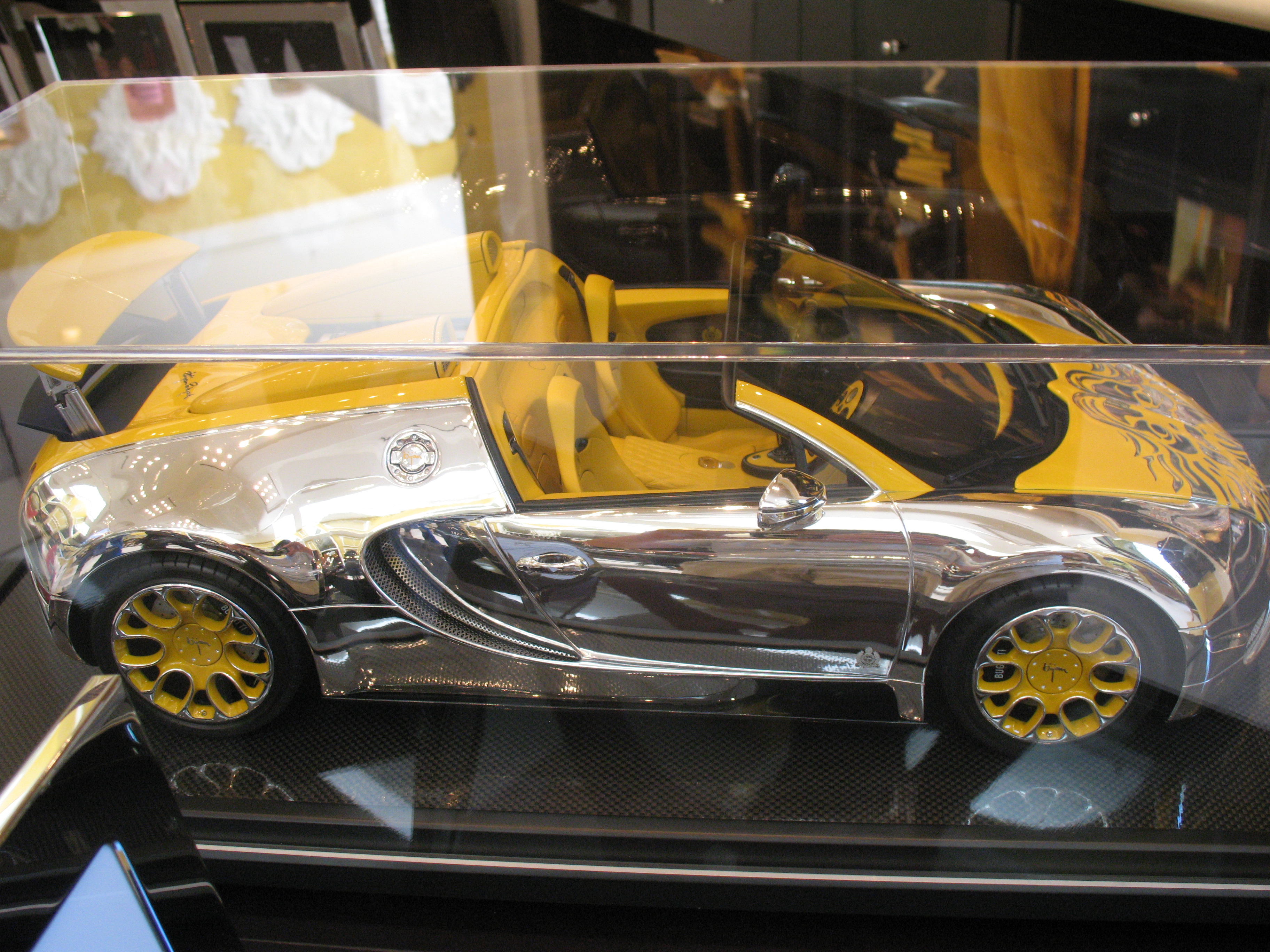
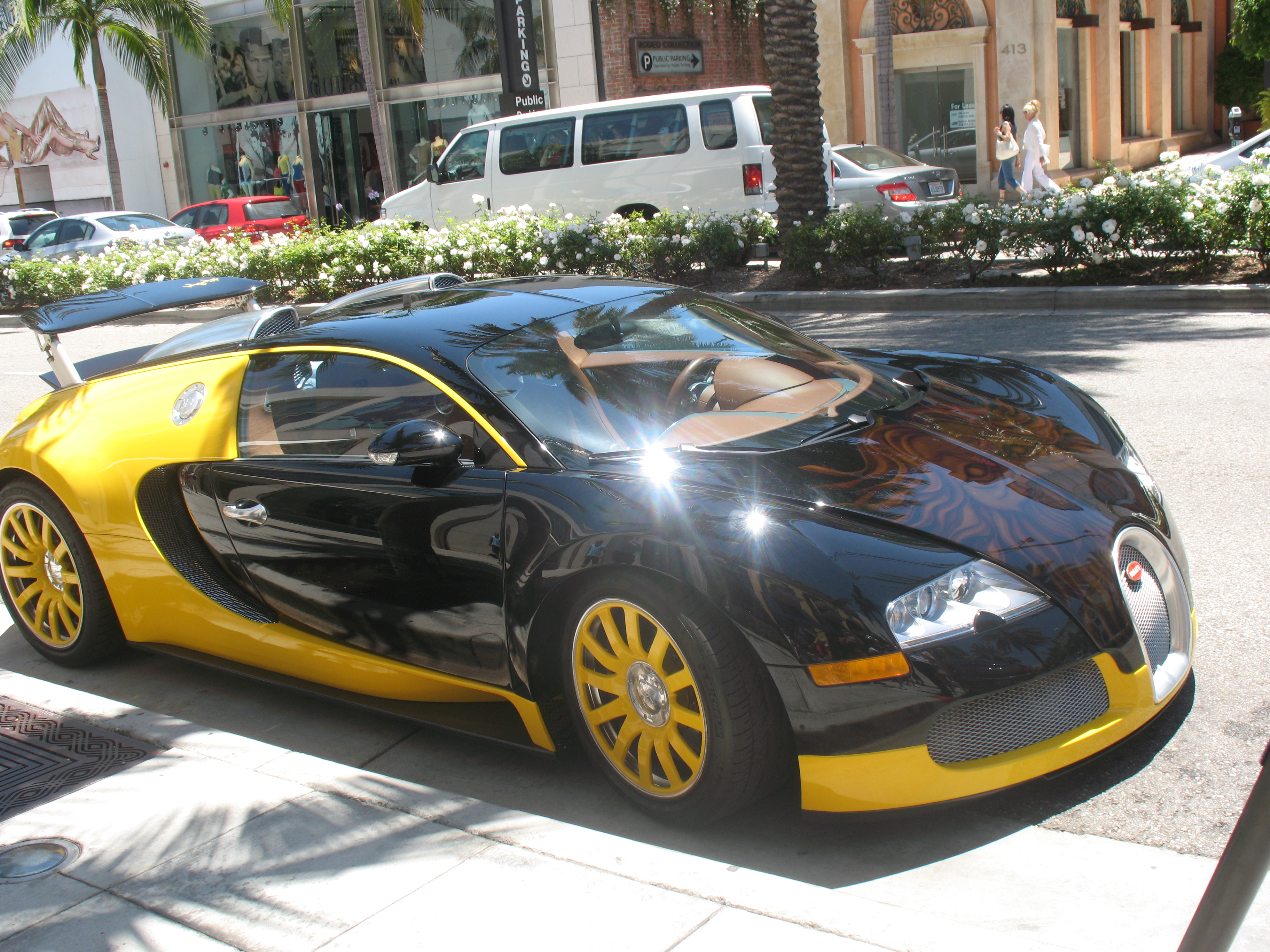
One of them was on Rodeo Drive in front of the Bijan store.  Nice…  I couldn’t help but take pictures for you!  I was walking Rodeo Drive with my grandpa Jack, looking for something nice when I spotted the Veyron.  We went across the street and took some pictures.  Grandpa Jack knocked on the Bijan door, and we were beckoned in.  There was a small version of the Veyron inside a glass case.  We were told that it wasn’t for sale, but merely a display.  But, IF you buy a Veyron, Bijan will make a limited-edition Bijan Bugatti Veyron.  Are you Veyron owners listening out there?  I hope so.  I REALLY want a Bugatti like the Bijan one:  Yellow and Black on a black/carbon fiber interior.  Wow.  That car is positively the best-looking car ever!


Bijan's Bugatti Model

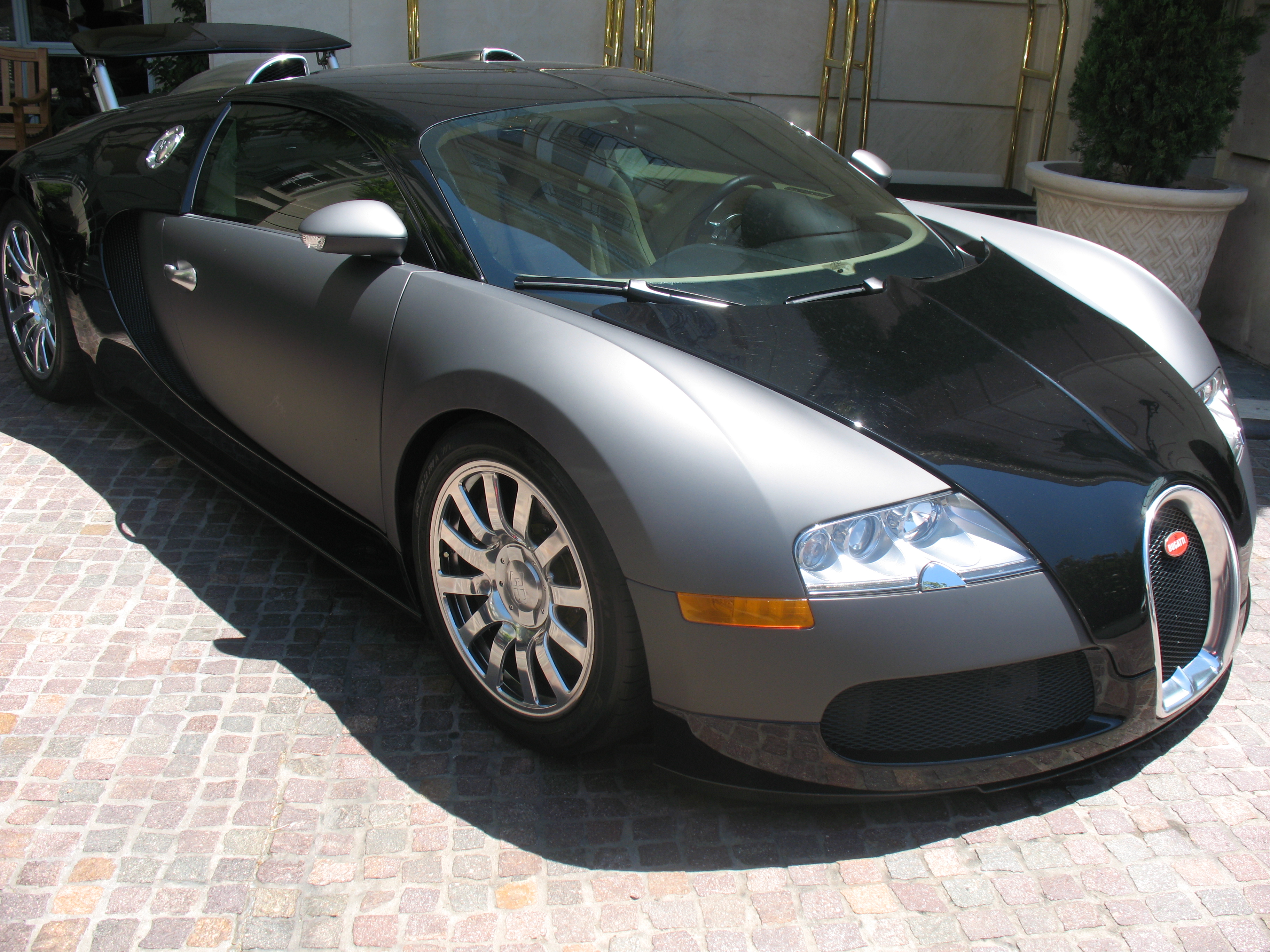
The other was at the Peninsula Hotel in Beverly Hills.  I took pictures of that as well.  My mom spotted the one at the Peninsula.  Here’s a funny story that happened while she was taking pictures.  While she was taking pictures of the Bugatti on her phone, a young man came up to her and said “it’s so expensive, it should come with a girlfriend and cover her maintenance costs!”  He then proceeded to also take pictures!  That must have been a cool sight!  Two people next to each other, taking pictures of the second-fastest- and second-most expensive car in the world!  Wow!  The Veyron at the Peninsula is similarly amazing; it is Gray and Black, with the same interior (Bugatti only offers one interior design).

The valet’s don’t know who owns it, because the hotel manager parks it.  He parks it in a spot where you HAVE to look at it!  Nice, huh?  The valets aren’t allowed to tell anybody who owns the Veyron (if they knew).  All they know is that it’s somebody extremely wealthy (or somebody extremely in debt!).  My Grandpa and I went back to see it.  Awe inspiring!

Bugatti Veyron

Are you ready for the spectacular specifications for the Veyron?

– W16 engine:  1001-1200 horsepower, 922-1106 foot-pounds of torque.

– Ricardo 7-speed, dual-clutch automatic:  Shifts in sport mode: as short as 80 milliseconds.

– All-Wheel-Drive:  Torque-vectoring rear axle (only on Super Sport), 3.92:1 rear axle!

With all that horsepower and torque, can you imagine how hard it would be to drive with a six-speed manual transmission?  You’d have to be a Top Fuel Dragster driver (that is with a manual!)  Yikes!

One last picture to leave you with…..

Bugatti Veyron

What To Do When You’re Stuck in Traffic

Answer: Listen to a good book on tape. 

Have you ever been in the car going somewhere, and stuck in a traffic jam?  I’m sure you have.  I have.  Los Angeles, CA is one of the most congested cities in the U.S., along with New York City and Washington DC. 

The book, “Traffic: Why We Drive the Way We Do” explores, in-depth, the psychology of traffic.  It discusses why we drive the way we do, and all about traffic patterns.  It is available all over the place (Amazon, Barnes & Noble…).  It’s written by Tom Vanderbilt, an editor for The Economist.  It’s an extremely fascinating book that I highly recommend.

Cars, songs & culture

I’m driving in my Pink Cadillac.  NOT!  I’d rather be in a purple Rolls Royce.  Not.  Again.  Today we learn about cars and music (what could go wrong?).  Cars and music go together like bread and butter.  Always have and always will.  What could be better than flying down the highway at 95 mph and listening to rock and roll blasting.  Mom, if you’re reading this, then I am just exaggerating.  Songs refer to cars and show cars in their videos.  They are part of the same culture.

Just like my Beach Boys post,  I have downloaded some songs about cars for you to listen to and watch.  Right below the text is the link for the song I talk about.

First on the playlist is “Drive”, by The Cars.  My mom went to one of their concerts!  Rick Ocasek wrote the lyrics, Robert “Mutt” Lange produced it, and the lead vocals were by bassist and lead vocalist Benjamin Orr.  This video is from their 1979 tour. http://www.youtube.com/watch?v=l6avuh3K_70

“Drive My Car” by The Beatles.  This video is from the tour when the song debuted.  A woman tells a man that she is going to be a famous movie star.  She also offers him to be her chauffuer, adding “and maybe I’ll love you.” http://www.youtube.com/watch?v=8Ts2U1mkfz4

“Fast Car”, by Tracy Chapman.  Its a good song.  Its about a poor girl who’s mother divorces her alcoholic father.  She (the girl) then marries a man who, despite having a job at a grocery store, falls into poverty and depression.  He then starts drinking.  She tells him to “get into his fast car and drive away.” It’s a sad song.  http://www.youtube.com/watch?v=bfqEisOIMJc

“Car Song” by Woody Guthrie.  Yeah, I know he did folk music, so this IS folk music.  Original folk music.  You’ll see.  Period.  End of sentence.  I dare you to NOT crack up when he does car noises!  (I want to see if you think this is funny!)  Trivia moment!  Did you know that Woody was an Okie?   http://www.youtube.com/watch?v=DUDtFdnn9oQ

“Pink Cadillac” is by Nat King Cole’s daughter, Natalie Cole.  It has great dancing, a Cadillac and awesome music.   It is filmed at a gas station!  http://www.youtube.com/watch?v=7FdAO1JgvA0

Aretha Franklin performs this song, “Freeway of Love.”  It gives you nice views of Detroit, funny clips of some cars, and of course, Aretha!http://www.youtube.com/watch?v=Ip_pjb5_fgA

I’m sure many of you have either heard this song, or heard of it.  It is “Little Red Corvette”, by Prince.  It was the second music video performed by an African-American artist (the first was Michael Jackson with Billie Jean). http://www.youtube.com/watch?v=MS70tCPP-_4

Gary Numan performs this song, “Cars.”  It’s a teensy bit on the sci-fi (make that A LOT a bit) side of music.  Its fun.  It’s got a futuristic feel, and a techno beat.  http://www.youtube.com/watch?v=Ldyx3KHOFXw

This is a cover of Bruce Springsteen’s song, “Fire” done by the Pointer Sisters.  http://www.youtube.com/watch?v=gRCydGQvvE4

Bruce Springsteen does this nice music video of “I’m on Fire.”  It doesn’t refer to cars, but I’ve included it because of the ’58 T-Bird Convertible.  Sweet ride!  http://www.youtube.com/watch?v=gRCydGQvvE4

Rascal Flatts sings “Life is a Highway.”  The group did the songs for the movie, “Cars.”  It’s about driving the highway of life.  I really think that you’ll enjoy it.  http://www.youtube.com/watch?v=gRCydGQvvE4

Of course, this wouldn’t be a post without “Route 66”, by Nat King Cole.  Route 66 was the “Main Street of America” for over 40 years.  On a personal level, you can see lots of old cars, scenery, and possibly the best, the Sno-Cap Diner in Seligman, AZ.  I know I did.   Enjoy this video.  http://www.youtube.com/watch?v=dCYApJtsyd0

And one of my personal favorite songs, “I Can’t Drive 55”, by Sammy Hagar.  It’s a really fun video with a Ferrari.  The video ends with Sammy putting the Ferrari in first gear, and putting the pedal to the metal.  http://www.youtube.com/watch?v=RvV3nn_de2k

I hope that you’ll start a playlist titled “Candler’s Car Songs”!  If you do, then I’ll be your personal DJ!  Hopefully, you’ll listen to them and maybe download them to your iPod (I would, except I’m waiting for an iTunes account, mom!).

Carroll Shelby part 2

More Carroll Shelby!

When we left Carroll, he was roaring around every racetrack in the U.S., and in Europe!  He was the Dale Earnhardt Sr. of his day.  He was the girls’ cutie pie, and the boys’ hero (after Patton).  Here is the rest of his life. 

In 1959, he retired from roaring around Le Mans Raceway at 150 mph, to start his racing school:  ‘The Carroll Shelby School of High-Performance Driving.’  The reason that he chose to be stuck behind a desk all day was heart disease had become a large threat within his family.  And the track was (and still is) no place for a race car driver’s heart to blow. 

In 1962, Carroll decided that he’d better have a signature car.  So, he started thinking.  He bought an AC 260 roadster, and put a Ford 260 V8 that he had lying around in.  He still didn’t have a name.  One night, he had a dream where the car came to him and told him its name was Cobra.  He woke up and jotted the name down on a note pad on his nightstand.  In the morning, he told his friend that the car needed to be called Cobra.  And so it was.  That night, he went cruising around Dallas in the first Shelby Cobra prototype.  He was looking for Vettes (he didn’t find any).  But, the Cobra went into production two months later. 

By 1965, about 80 Cobra’s had been produced, with Ford V8’s ranging in size from 260 cu. inches to the mighty 427 V8.  To be homogolated (big word!  It means to register a specific automobile for international racing.  And it’s not even definition day yet!) for Le Mans, an automaker had to sell at least 100 vehicles.  What Carroll did was build about 80 cars, and skip about 20 Vehicle Identification Numbers (VIN’s).  The Cobra won at Le Mans many times, leaving Corvettes and Ferraris in the dust (or biting the dust). 

By 1991, Carroll was on an urgent heart transplant list.  He realized that there were kids who had heart conditions as bad, or worse than his.  So, he started the Carroll Shelby Children’s Foundation.  It helps children who need a heart, to find a heart.  It has helped over 10,000 children, since it was started in 1991. 

When Lee Iacocca was at Ford, he called up Carroll, and asked him to make a higher-performance Mustang.  Carroll answered the phone and told Lee “Lee, I don’t think that anybody can make a racehorse out of a mule.”  But, Carroll decided to go with Lee’s idea, and tuned a Mustang.  Thus, the first Shelby GT350 was built. 

In the 25 years since the first Cobra, Carroll made a deal with Ford to have Mustangs shipped to his plant in Las Vegas.  He would then tweak them to make them into Shelby GT350’s and Shelby GT500’s.  In fact, he made over 50,000 GT350’s and GT500’s since 1965.  One cool fact!  After a 35-year hiatus, the Shelby GT350 is making a comeback (and a very strong one!) 

In addition to pumping out thousands of tuned cars (Ford Mustangs and other cars) from his Las Vegas factory, he came out with a chili kit.  He has been cooking chili since his racing days.  He also sponsors a chili cook-off in Texas.   

Once asked in an interview about his heart in early 2009, the 86 year old Texan replied “I’ve had this [heart] for almost 19 years now, and it’s been serving me better than the previous heart.  D’ya think that I’m about to die on you?  *#@%, no!”