If my car had as many viruses as my computer, I wouldn’t be able to go anywhere!
Check in tomorrow for an actual post.
If my car had as many viruses as my computer, I wouldn’t be able to go anywhere!
Check in tomorrow for an actual post.
Infineon Raceway, formerly known as Sears Point Raceway, is located near Sonoma,California. It is host to one of five NASCAR races on road courses. It is also host to SCCA (Sports Car Club of America) racing and the Toyota/Save Mart 350. The Toyota/Save Mart 350 is a 350 kilometer (220 mile) race that is held annually at Infineon Raceway. Some noticeable names who have won the race include Dale Earnhardt Sr. and Jr. There are many motorcycle races held there throughout the year. It also has a ¼ mile drag strip, which is most often used by Full Throttle Drag Racing. The track hosts IZOD Indycar. The whole track is a winding, twisting 2.52 mile road course. For over 40 years, Infineon Raceway has been one of the top tracks in the world. It also has a lot of great views of Southern Sonoma County and Pablo Bay. On a clear day, one can see out all the way to San Francisco and to Oakland. The things that make Infineon Raceway so special are: it is the main track in California (it used to be Riverside International, but RI was torn down to be a shopping mall.), it is in prime rubber-necking country (wineries, great views, etc.), it is close by Sonoma, and a short drive for anybody in the Bay Area.
The track was conceived when an attorney and a developer from Marin County were on the property for a hunting trip. The ground was broken and graded in 1968. The first race happened there in December 1st, 1968. The property was originally a 720 acre dairy farm. Now, there are some cows, but it is a 1600 acre track. Many people still refer to Infineon Raceway as Sears Point Raceway, even though the computer chip company, Infineon, bought the track in 2002. It was originally named Sears Point Raceway after the nearby Sears Point Ranch.
In 1969, the track was sold to an entertainment company based in Los Angeles, Filmways Corp., for $4.5 million. From the time it was bought, to early 1970, a variety of racing events happened there, including: USAC IndyCar races, NASCAR stock car racing, SCCA races, and drag races (not governed by NHRA, but they still happened anyway).
In 1970, Dan Gurney won a 150 mile USAC Indycar race that included some notable names, such as: Al Unser, Mario Andretti and Mark Donahue. Not log after the race, the track was closed, as a result of Filmways’ losing $300,000 in May of that year.
Even though the track had been closed for three years, Hugh Harm and Parker Archer (investors) agreed to lease the track for $1 million. Bob Bondurant announced that he was going to move his high-performance driving school from Ontario Speedway to Sears Point Raceway. Six months later, Bondurant and his partner Bill Benck took over control and management of the raceway from Archer and Harm. AMA races were popular, but stopped, as a result of rising insurance policies.
In 1975, a lawyer with no drag racing experience hired Jack Williams, the 1964 Top Fuel Drag Racing Champion, to be his operations chief. A group that was called Black Mountain Inc., included Bondurant and others, bought the track from Filmways for around $1.5 million. Not long after, Kenny Roberts did wheelies during the final two laps, waving to a crowd of 20,000 in a AMA-Sonoma Motorcycle Classic. Five years later, the Long Beach Grand Prix Association joined Black Mountain Inc., in hopes of improving marketing and PR.
In 1981, the Long Beach Grand Prix Assoc., lead by Chris Pook, decided to rename Sears Point Raceway the Golden State International Raceway. Black Mountain objected, by saying “that Filmways still had ownership of the track; and, therefore, could make the ultimate decision.” In the end, the track remained Sears Point Raceway, but Bondurant retired from the committee. Soon after Bondurant retired, an argument happened, and the track was purchased for $800,000 at an auction.
In 1983, Ford Motor Company became a major sponsor. As a result, many Ford clubs in Sonoma County were able to rent the track at significantly lower costs.
Two years later, the track was completely repaved, with help from massive funds from “Pave the Point” fund-raising organization. Some new shop spaces were also built at the track. Many of the original shop buildings were either torn down or remodeled.
In 1986, Harvey Berg took control of the track. Berg then named Darwin Doll the new track president. For a few years, Doll was track president. (He retired around 1990.)
The next year, 1987, the track signed a deal with NHRA (National Hot Rod Association) for a five year contract. The Dragway was to be used for the California Nationals. Other shop buildings were needed, so they were built. Shop space instantly grew to over 700,000 square feet.
In 1988, the first NHRA-sanctioned drag race happened at Sears Point Dragway. The winners were: Mark Oswald, Harry Scribner and Joe Amato. Over 32,000 spectators showed up to watch Joe Amato edge out Dick LaHaie by one hundredths of a second. Also, Berg fired Doll, and brought in an IBM executive, Glen Long, to be the new track president.
NASCAR made its début in the Sonoma Valley in 1989, with Ricky Rudd taking home the trophy. Rudd had a very good win at Infineon Raceway, but at the Atlanta Journal 500, his car stalled, and he went slamming into a pit of a competitor; killing a tire changer.
In 1991, the Skip Barber Racing School replaced the Bob Bondurant School of High Performance Driving at the track. In its 3rd year at Sears Point Raceway, the NASCAR race drew out more than 70,000 spectators.
Three years later, the track needed a way to keep track of who was leading. To do that, they needed to build a scoreboard. A 62-foot-four-sided electronic scoreboard was built in the middle. Also, a medical facility and 18-nozzle gas station were built.
In 1995, the NASCAR Craftsman Pro Truck Series was added to the tracks’ already extensive list of races. Also, some luxurious VIP tower suites, and a two story driver lounge/medical facility. Another notable thing that happened was IMSA and Trans-Am races returned to the track.
The next year, O. Bruton Smith & Speedway Motorsports, Inc. bought the rights to the track, with an option to buy the whole track within three years. (They bought the track 2.5 years later.)
The Jim Russell Racing School asked O. Bruton Smith if they could have their world-famous driving school at the track. On a personal note, I would LOVE to take the Jim Russell go-karting class at IR! There’s always hope for sponsorship… The Skip Barber Racing School went to Laguna Seca Raceway. (Now called Mazda Raceway Laguna Seca.) The reason that it has Laguna Seca in it’s name is because it is built on an old Lagoon (Laguna in Spanish); every spring and fall, the Laguna Seca is drained because of flooding fears.
In 1998, a new straightaway called “The Chute” was added to the tracks already long course. The Chute spans 890 feet, and will be used only for NASCAR races. The Chute is a long straightaway that comes out of turn #8. The amount of laps for the Save Mart/Kragen 350 increased by 50%, from 74 to 112. That meant that the drivers might fall asleep during the race!
The next year, in 1999, a new series was added to the major event schedule; the American Le Mans Series. The ALMS series marked the return of sports cars racing at Sears Point Raceway. Also, the NASCAR Craftsman Truck Series went on hiatus, so the track could get started on the Modernization Plan a lot sooner. That was a good thing, as the track needed a big overhaul.
In 2000, the track got approval to start on its Modernization Plan. When the plan finished, it had cost $70 Million. What was included in the plan was: hillside terraced seats, garages for competitors, and wider roads for less internal traffic.
In 2001, the plan went into action. Fans were then able to experience amazing races at a state-of-the-art facility. Also, some improvements were made to the track, including: a miniature chute at turn 4a, and more run-offs at many of the turns. Those small improvements lengthened the NASCAR course from 1.949 miles to 1.99 miles.
Sears Point Raceway announced that it was being renamed Infineon Raceway in 2002, as part of a ten year strategic plan with Infineon Technologies. The Infineon Raceway Karting Center includes a 16 turn, sweeping part of the track. Also, the dragstrip was finally separated from the track. Out of the 1320 feet of dragstrip, 660 are a concrete launch pad.
In 2003, Robby Gordon won in his class, and broke all of the previous lap times. (His record has only been beaten twice!) Also, four more garages were added to the already large number (40). The medical facility was also remodeled.
Four wins for Jeff Gordon at the 2004 Dodge/Save Mart 350. Wow! Also, a new event was put on the schedule; it was called the California Outdoor Sports Championships. It included: slalom courses, road racing, and mountain cross. There were also many other events that took place there. That must have been fun to watch!
The year 2005 was a big year for Infineon Raceway, the IndyCar Series returned to the Sonoma Valley, after a 35 year hiatus. Tony Kanaan claimed the trophy, in the Dodge/Save Mart 350, Tony Stewart got the checkers. During the NASCAR Weekend, the Infineon Raceway Wall of Fame was unveiled. Rusty Wallace, Mark Martin, and Warren Johnson were all inducted during the NHRA Weekend. Speedway Children’s Charities distributed $546,606, which brought the total from the past three years to $1.3 million!
In 2006, Jeff Gordon continued to dominate the NASCAR field, with his fifth win at Infineon Raceway. Marco Andretti won in the open-cockpit racing class. He was also the youngest driver to ever compete at Infineon Raceway, let alone win. He was 19 years old! Infineon Raceway sold the racing school to a London bus company called Emotive Group. Infineon Raceway was named “Business of the Year, 2006” by the Sonoma County Chamber of Commerce.
Juan Pablo Montoya made history at Infineon Raceway when he competed in the 2007 Toyota/Save Mart 350. He was the third foreign-born driver ever to compete. He placed 32nd in the qualifying race. Montoya reset the record for the biggest improvement from qualifying to the race. The event also debuted the Car of Tomorrow race on a road course. Jeff Gordon and his teammate, Jimmie Johnson didn’t pass pre-race inspection, and were forced to start at the back. John Force, Tony Schumacher, Greg Anderson, and Matt Smith also claimed victories. Andretti Green Racing had a bad day: Dario Franchetti sustained damage to his car on lap #69, when he accidentally hit his teammate Marco Andretti. That would not be good for anybody, let alone a professional racing team. The track also hosted the fourth and final Cougar Mountain Classic road cycling and mountain biking event. Matt Mladin, Ricky Rudd, Gary Sclezi, Bob Piccinini, and Joe Huffaker were all inducted into the wall of fame. The Wall of Fame is a large wall at IR, where copper plaques with driver’s faces and their achievements are displayed.
In 2008, Kyle Busch won his first NASCAR Sprint Car Cup on a road course. His victory marked the first Toyota victory in the Sonoma Valley. Also, Ken Klapp and Doug Kallita were inductees for the wall of fame. (Ken Klapp and Doug Kallita are famous race car drivers [retired now, but still famous], who made a 1-2 finish at Daytona Speedway in ’08.)
Kasey Kahne copied Kyle Busch on the same road course. The win was also the first for the team owner, Richard Petty. Dario Franchitti won FIVE different IndyCar classes, he went home with first place overall at the end of the season.
Last year, Jimmie Johnson won his first NASCAR Sprint Car Cup at Infineon Raceway at the Toyota/Save Mart 350. Rick Hendrick was inducted into the Infineon Raceway Wall of Fame because of his 5 Sprint Car victories at Infineon Raceway. A Team Penske driver, Will Power completed a weekend that most can only dream about. The previous year, he had broken his back on the 75th lap of the Indy Races. He also received the Mario Andretti Road Championship trophy from Mario Andretti himself. Ron Capps won in the Funny Car NHRA Nationals at the 23rd drag racing event of the year. Josh Hayes of Yamaha won the West Coast Moto-Jam, and taking a back-to-back win at the AMA Superbike Nationals.
Infineon is not all about fun, and they have made improving the lives of others a priority. The Speedway Children’s Charities is an organization that is dedicated to making better lives for kids who are in financial distress, medical distress or educational distress. The Sonoma Chapter has distributed over $3.7 million to over 140 qualified youth groups, since 2001. Much of the money is gathered on major race weekends.
Go Green, and GO HIPPIE! The Infineon Raceway “Go Green” program sends over 50 tons of recyclable material to the recycling plant every year. It also prompts visitors to IR, to recycle whatever possible. More than 73 million tons of recyclable materials have been collected since Infineon Raceway started the program in 2004! During major race weekends, Infineon Raceway recycled more than 67 tons of recyclable material. Over 140 million tons of recyclable materials have been recycled in the past four years! To continue their “Go Green” efforts at the track, Infineon Raceway has added over 3,000 sheep to their “stables” to naturally maintain the grasses around the facility.
Since I live near Infineon Raceway, I see a good bit of advertising going on for the raceway. Yes, the economy has been tough, but Infineon Raceway is still in action! For many years, people have traveled hundreds, sometimes thousands of miles, just to see a weekend race. Every year, there is always something new and interesting at Infineon Raceway.
I would like to put out a special thank you to Jen and Infineon Raceway. You can look forward to coverage from Infineon Raceway over the summer. I have attached the Infineon Raceway website for you to enjoy. Hopefully, I will see some of you there!
 What is this thing? Animal, vegetable, mineral? No. So what the heck is this vehicle? It deserves its own category in the car world. I don’t really know what kind of car it is, but it appears to look like a Ford Business Coupe body that has no paint, and a HUGE engine.
The engine appears to be a Dodge 392 Hemi V8 engine with what looks like a turbocharger. The engine looks like a crate engine, and probably makes about 600 horsepower.
The rear roll cage is most likely custom-built, but is cool!
The wheels look like Cragars. Since Cragars come only in silver,
Given an empty stretch of road, this car can probably reach up to 150 mph! (That is, if there are no cops around!)
On the way back home, I saw this creation being towed back home; that is, on a tow truck! Oops!
Post a comment if you have a better idea of what this is.
Even though there are many explanations of how the Porsche logo coming into being, there can only be one that is true. Why don’t we delve into the three stories that are out there?
According to a spokesperson from Porsche Cars North America, the Porsche logo was sketched on a dinner napkin! Here is the story: Max Hoffman, a very influential car distributor, met with Ferdinand Porsche to discuss the Porsche logo. They met inManhattan,New Yorkto discuss the future logo in a diner! The discussion veered to Hoffman’s belief that Porsche needed a powerful, but elegant logo. It also needed to be distinctive. So, Hoffman sketched the logo, right then and there, on his dinner napkin.
But, if you go to Stuttgart,Germany, and ask a Porsche spokesperson there, he or she will tell you something completely different: Ferdinand Porsche certainly did ask Hoffman to help him with the logo, but Hoffman flew to Stuttgartto help! They will tell you that the logo was designed by renowned Porsche designer, Franz Xaver Reimspiess, and certainly not drawn in Manhattan!
According to the residents of Stuttgart, the Porsche logo is actually the coat of arms from medieval times, from the city of Stuttgart. Yes, the Porsche logo does have the name of Stuttgart,Germany on it; it is actually referring to where Porsches are made.
What Porsche did was they drew their own logo and threw in the Stuttgartcoat of arms. So, the residents of Stuttgart are partially true.
Does it really matter who is right and who is wrong? Probably not.
Here is the Porsche website, which has a virtual tour of the Porsche museum and factory!
What story do you think is true? You can post a comment with your answers.
Before we delve into the German compact car world, I promised you on Friday that I would reveal the answers for the metaphors and similes. Here are the answers:
Jaguars are sleek, fast and agile: just like the jungle cat. That sentence is a simile.
The Shelby Cobra spits glorious thunder and lightning as thunderstorms inject fear into the hearts of dogs. That sentence is metaphor.
The roaring semi pants up the grade. That sentence is a metaphor.
The internal combustion engine is the roaring belly of the car. That sentence is a metaphor.
If you don’t know what I am talking about, then look at my previous post, English Period.
Now, let’s transition our transmission to the history of Volkswagen’s compact hatchbacks (excluding the Beetle).
__________________________________________________
The Golf/Rabbit/GTI
In German, Volkswagen means “the people’s car”. Volkswagen was part of the Auto Unions’ from the 1920’s and ‘30’s. They also made Jeep-like vehicles for the Nazi regime. During the 1930’s, they started making the Beetle, an affordable car. Adolf Hitler commissioned Ferdinand Porsche, the father of Porsche and Volkswagen, to build a “Volkswagen-the people’s car”. The Beetle was meant to be the German Ford Model T, but better. The prototype Beetle’s were built in Porsche’s garage. Sadly, only a few Beetle’s from the 1930’s and 1940’s remain today. The ones that do remain, however, are the most sought after German cars of that era.
I picked the Golf/Rabbit/GTI trio to be a post, because they are: safe, fairly reliable, fun to drive, fuel efficient, and are a versatile platform. It is amazing what Volkswagen has done with a simple platform. Plus, the car is cheap! VW’s reliability is improving with every generation. VW’s have always been very unreliable, and they are a welcome change. The Golf/Rabbit/GTI that I would choose would be a 2010 GTI two-door with the optional DSG transmission.
In May of 1974, Volkswagen introduced a new car: the Golf/Rabbit. The Golf name was for Europe and markets other than theU.S. The Rabbit name was for theU.S.and Canadian markets. The new cars proved to be an instant hit, with many cars sold within the first few months. Two years later, Volkswagen decided to add a “sportified” version of the Golf/Rabbit to the existing line-up. The more potent GTI hatchback was added to the Golf/Rabbit line-up and was a hit (it still is today). The GTI has a four-banger (cylinder) with a turbocharger on it. Many variations of the Golf have been produced, such as the Volkswagen Caddy, Volkswagen Pup and the Golf Cabriolet (German for convertible). The first generation Golf/Rabbit was produced from May 1974-August 1984 (with variations). In 1979, a Jetta sedan was put into production. The Jetta was a four-door Golf/Rabbit/GTI without the rear hatch.
The second generation was produced alongside its older brother for almost a year, before the factory was a dedicated Golf/Rabbit/GTI factory. In 1985, the first all-wheel-drive Golf/Rabbit’s went on sale, as the Golf/Rabbit Country. When ABS was federally mandated for all new cars in theU.S., the Golf/Rabbit was no exception.
The third-generation Golf/Rabbit/GTI debuted in 1991 inEurope. Two new engines debuted with it: VW’s now tried and true VR6 narrow-angle V6, and a Turbocharged Direct Injection (TDI) Diesel engine. Both engines are used extensively throughout the current Volkswagen/Audi/Porsche model range. The Jetta III was also introduced as the Volkswagen Vento in the South American market. The Golf Mk3 (internal model design number) won the award of 1992 European Car of the Year.
The Golf Mk4 was introduced to the VW line up in August 1997. As of 2009, there were some Golf’s still in production in South America and parts ofAfrica, because of their cheap cost. Production ended in December of 2006.
Even though production started in mid-2003, the Golf Mk5 reached our shores in 2006. Yet again, the Jetta was just a Golf without the hatchback style. A Rabbit (it was still called the Rabbit in theUS) won a Car & Driver comparison because of its interior levels and driving enjoyment. For the first time, VW’s DSG (Dual-Sport-Transmission) was available. The DSG is a dual-clutch design similar to Porsche’s PDK (I won’t even bother trying to spell PDK in German!).
The Golf Mk6 started production in January 2009, and is basically a face-lifted Golf Mk5. The 2011 Jetta rides on an all-new platform that will be used for the Golf Mk7.
Variations of the Golf ______________________________________________________
Volkswagen been on the hunt for fuel efficient cars and engines. They have been using diesel engines for years, and trying out electric cars.
There was a Golf CityStromer in the 1970’s that was an experimental Golf converted to electric power, using lead-acid battery packs. Unfortunately, it never made it to production.
Awards and Titles:
1992: European Car of the Year
2006: 1st place in a Car & Driver economy car comparison
2010: Kelley Blue Book’s #3 out of 10 green cars of 2010.
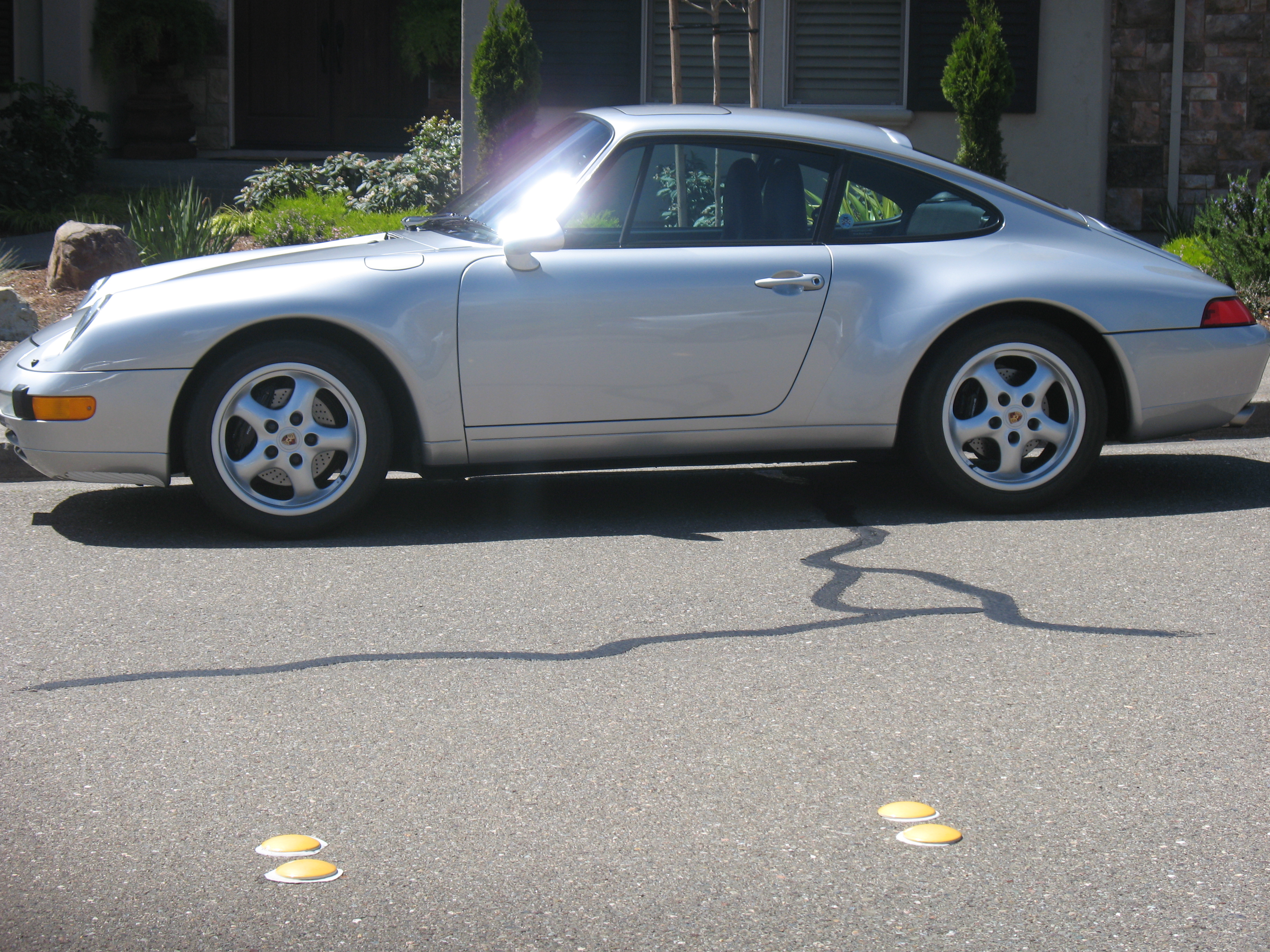
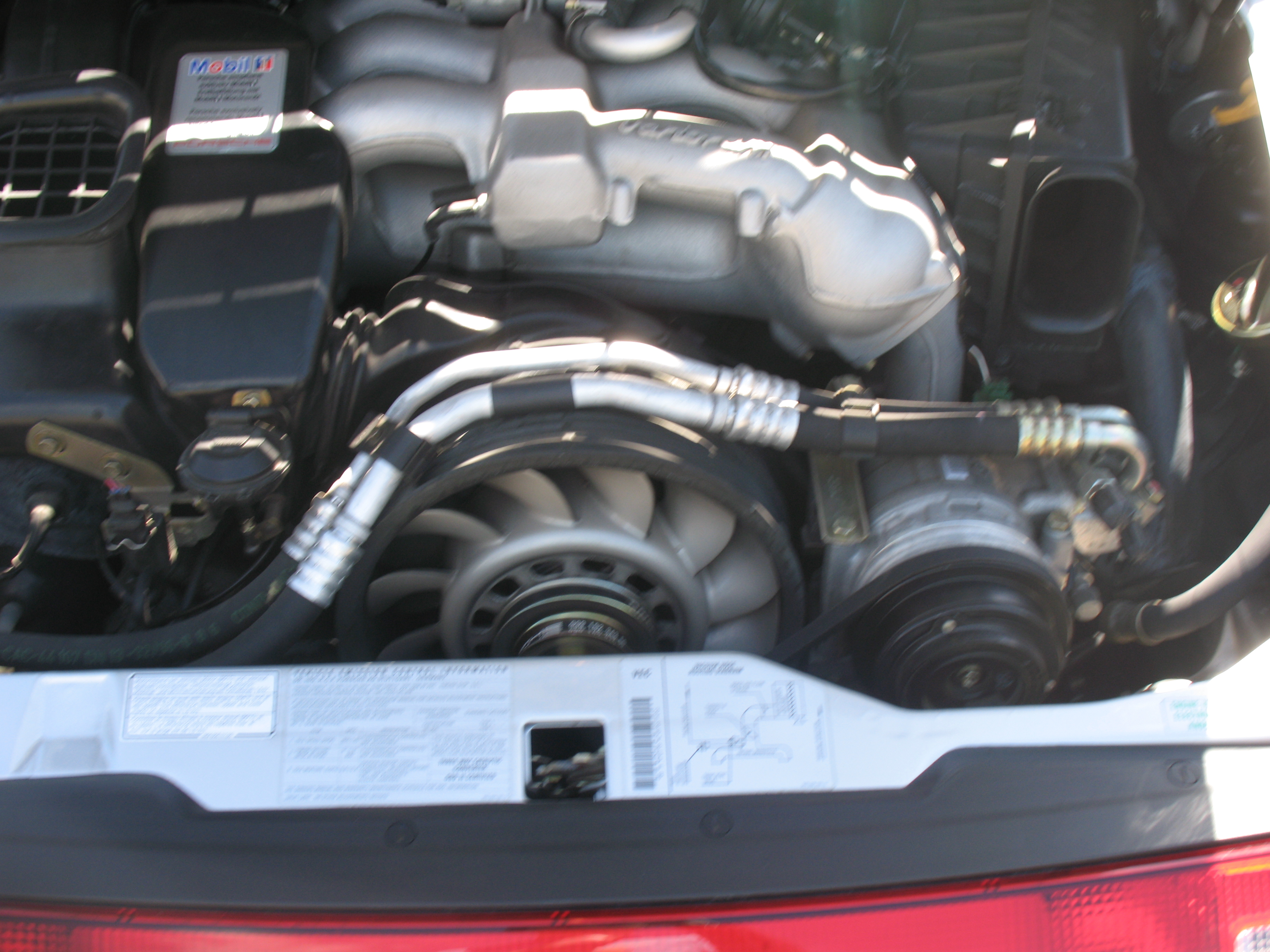 Wicked (epic) Weekend Fun! It was a dream come true, a ride in a Porsche 911 Carrera (with a former race car driver)! Early Sunday morning, I went for a ride on the back-roads ofNorthernCalwith Jerry Gladstone (check my post “A Racer’s Life”). About twenty minutes into the ride, we encountered some curves that challenged the car. From then on, you can guess what fun I had! When it got a bit chilly out, Jerry turned on the “Grand Old Porsche Heater smell”. The heater coolant smell comes in to the cabin and makes it smell! PU!
After a while, we started to share some funny stories. His first car was given to him by his dad. Something broke in the transmission and he couldn’t afford to fix it, so he sold it and bought an MG TC! He has had an: MG TC, Mazda Miata, Porsche 912, and three other Porsches. The Porsche that I rode in with him is his fifth! It is a 1997 993 Series 911 Carrera. It is the quietest 911 that he has owned! The Flat-Six makes about 300 horsepower and makes a great howl/scream! Jerry says that the six-speed manual is precise and easy to shift. He can’t use 6th gear, as the car will pick up speed until it reaches its 171 mph top speed! VROOM! The 993 was the last air-cooled 911 generation to be produced. The Recaro sport seats grab you like crab’s pinchers and hold you firmly. There is a small switch that may look like nothing, but it controls how much down force is going to the rear wing, which pops out. At one point, there was a small dip in the road that we simply flew over. It was just like in “Ferris Bueller’s Day Off” when the parking attendants drove the Ferrari.
Zooming through country roads at high speeds, we quite often got the thumbs up from bicyclists going very slowly. When we were at a stoplight because of road construction, Jerry put the Porsche in neutral and revved the engine to 7000 RPM! Somebody in a BMW Z4 held his hands over his ears! That got Jerry and I laughing like maniacs!
The hand-brake, he calls “the stick”! It looks like a small black stick with grooves in it! When we got out and went into the garage, he told me “inhale the grand old Porsche smell!” The smell can only be related to leaked oil and radiator fluid! It smells almost as good as food to me!
Thanks for the fun ride Jerry! I talked about it so much that my mom and dad finally told me “We’ve already heard about it ten times!” Maybe Jerry will let me drive his Porsche when I am old enough…
Why did I pick Honda? Because Japan is on everybody’s mind right now and I would like to honor Honda. I saw a video of wrecked Honda’s and Toyota’s in a shipping yard. The yard had been hit by the tsunami and earthquake. It was very sad to see thousands of wrecked cars. They were destined for the U.S.
Honda started out in 1959 as a small automaker making even smaller trucks, called the Honda T360. It was designed to be small as to avoid the “chicken tax”. The chicken tax is a government tax on all new cars. The T360 was so small that it couldn’t hold an average dining-room chair! It barely sold in Japan and therefore, never made it to the U.S. Good thing. It would have been too small for Americans. It would be too short for my sister!
Honda has numerous factories in Japan and the U.S. The factories make all of Honda’s motorcycles and cars. Honda has also been a large manufacturer of hybrids since 2000. In 2001, Honda surpassed Nissan as the largest Japanese automaker in the world. In 2008, Honda passed Chrysler to become the fourth largest automaker in the U.S. Today, Honda is the sixth largest automaker in the world.
Honda’s line-up of cars sold world-wide include: Fit, Civic, Accord, CR-V, Pilot and Odyssey.
The Honda Civic was introduced worldwide in 1978 as a small, affordable compact car available to the masses. My uncle owned one of the original Civics! The Civic is no longer sold in Japan- it isn’t popular enough! Americans just keep buying the Civics off the lots. When the next-generation Civic comes out this fall, it will be the 8th generation. It will look very similar to the current Civic, but it will have all-new engines and transmissions.
The Honda Accord came out in 1976 and was produced in Sayama, Japan until 2008. The current Accord plant is in Marysville, Ohio. The Accord has been offered in a large variety of body-styles including hatchbacks, sedans, wagons and coupes. My mom and dad both owned one during college! My grandpa Jack has a 2009 Honda Accord EX-L V6 coupe. The Accord’s newest style is the “Crosstour”. It is almost like a wagon/SUV.
The Honda Insight is a medium-sized hatchback about the size of a current-generation Toyota Prius. It has Honda’s true and tried Integrated Motor Assist. IMA is a simple hybrid system that has an electric motor that is only good for helping out at idle and in parking lots. The Insight is the cheapest hybrid currently on sale in the U.S. The original Insight was nominated for the 2001 North American Car of the Year by J.D. Power and associates.
The Honda CR-V came out in 1995 as a small, affordable SUV meant to be every person’s car. Its sales have amounted up to 1,785,540. You can buy a really big house with that much money. The thing is, it isn’t money, it’s the number of cars sold. Too bad it’s not money! I had my eye on that Bugatti Veyron Super Sport with the clear-coat finish! Darn! The Veyron SS costs as much as all those CR-V sales!
The Honda Fit has been one of Honda’s best-selling hatchbacks. Its sales amount up to 1,363,358 total Fit’s sold! WOW!!!! It has been the recipient of three Car & Driver 10Best awards and is one of the safest compact cars out on the road today. It is called the Honda Aria and Honda Jazz in other markets. Trivia note: the Fit’s windshield is the same size as an average minivan’s!
The Honda Odyssey is Honda’s only minivan, but it is one of their best-sellers. My mom and dad almost got one instead of our Chrysler Town & Country. They didn’t want to wait to get the Odyssey because there was a long waiting list. The Odyssey came out in Japan and was so popular that Honda decided to take the Odyssey to other markets, first the USA and on and on. The Odyssey is part of the New York City Taxi & Limousine Commission. It was also badge-engineered by Isuzu as the Isuzu Oasis. The current generation has Honda’s first six-speed automatic. Well, actually it is the second, the first is in the Acura MDX.
My favorite Honda? The 2008 Honda S2000 Club Racer (CR). Yours? I am sure that you have one. I am attaching Honda’s website. http://automobiles.honda.com/ Honda has stopped production on all of its cars that are made in Japan because of the crisis there. You can expect to see very few new Civics and Elements out on the road for the near future. Pity. Honda was also the first Japanese auto-maker to release a dedicated luxury car brand, Acura. Honda’s slogan is “Honda. The power of dreams.” That is very true, as many cars that they have made are well-loved cars that can last a very long time.
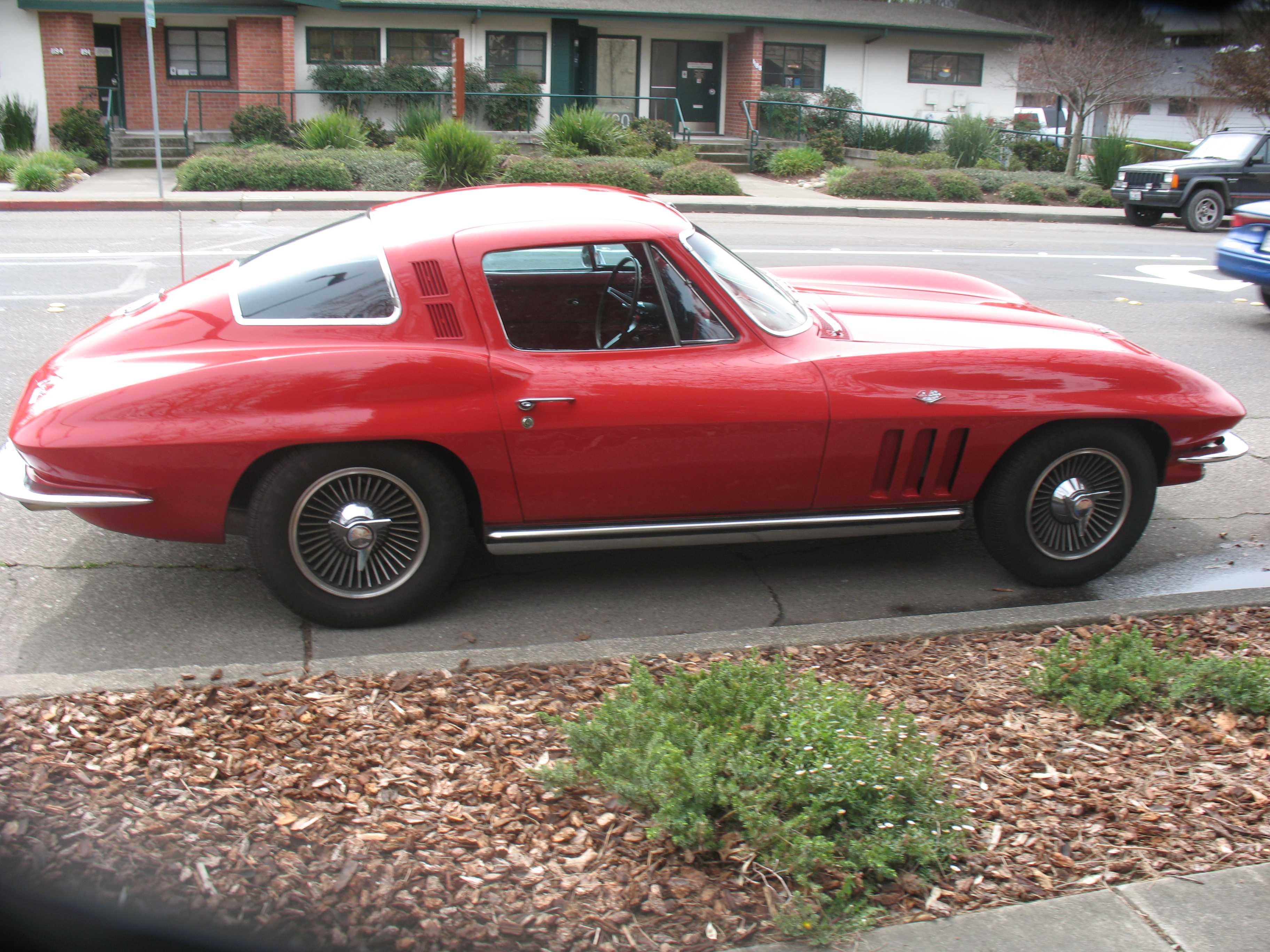
With a little help from Queen: “Is this real life or is this just fantasy? Caught in a landslide to escape from reality. Open your eyes, look up to the skies and see” this beautiful 1964 Corvette Stingray Coupe! Too bad it wasn’t a convertible, otherwise I would have just jumped into it! Cherried out and Roman Red (restored and painted original red) it sported the 454 cc V8 Tri-Pack. That is one FAST Vette! It had the optional 4-speed manual. Some people count sheep at night, I count Vettes, especially oldies!
Current events: I bet that you didn’t know that Guy Fieri’s Canary Yellow Lamborghini Gallardo was being serviced at the Lamborghini dealer in San Francisco. Somebody just climbed down the inside of the building using climbing gear and cut the lock, opened the garage door and drove off into the night! WOW!! He’ll probably just wait until the new Aventador comes out this summer.
Everybody’s first car tends to be well-used older cars. Old cars equal problems. So, everybody has funny car stories. Why wouldn’t they?
My Grandma Betty grew up in Egypt. Egypt was bustling and Cairo was stuffed full of Europeans. When you went to the market, there were camels (not the cigarette company) in the streets and the pyramids were in the background. The cars that intimidated pedestrians were Rolls-Royces, Duesenburgs, Bentley’s and sports cars. The Arabs used to call the Duesenburgs “the father of two behinds”, as the front and back looked the same!! Can’t you just see that? I can.
Grandma Betty used to go to the swim-club, and one day, everybody was bored. Should they play water polo or just hang out in the pool? Somebody announced, (French accent) “I am going to leave!” So, he got into his Fiat Topolino (Topolino means little mouse in Italian) and started to drive off, but four strong men picked up the Topolino so that the wheels were spinning in the air! Hahahahaha!
Another time, her brother’s friend took her and her brother to the beach in Alexandria. His friend owned an MG sports car, and her brother let her sit inside with his friend, while he sat on the convertible top. She said “you should have heard him “OUCH! *#@*!!” Uncle Elliott shouldn’t have complained, as usually they squished 8 people in an MG. Three in the seating compartment, three or four on the convertible top, and one on the hood or fender! So, his friend had to go into downtown Alexandria for something and they went with him. He thought that he had taken his dark green MG, but as there was nearly identical MG parked nearby, he took the wrong car. They all had a good laugh when they found out! She still has a good laugh about it all these years later!
My Grandpa Jack’s first car was a 1947 Ford Coupe with no emblem on the nose. He bought it with the money he earned by selling newspapers on a busy intersection in Los Angeles. He said “It was very spacious for a coupe, and it comfortably held four people in its backseat.” He used it to get himself to UCLA and to take his mother and friends around Southern California. He bought it used and sold it user. He also said that it was cooler than him, but he didn’t know that until later. I think he is cooler than his car!
Grandpa Jack has had a lot of cars and therefore; has many funny car stories. He bought a new car in 1963 or 1964, a Plymouth Valiant. The first night that he had it, he and my Grandma Roz took his brother and sister-in-law out to dinner. When his brother-in-law went to open the car door, the door handle fell off in his hand! Grandpa Jack told me “I guess that’s why they call it a handle!” Two days later, the ceiling upholstery started to fall off. He said “it is like owning a boat; the two happiest days are buying and selling it.”
When Jack was in the military in Austria, he and grandma bought a brand-new VW Beetle. He didn’t want to take the cold military bus to work every morning. When he was stationed stateside, they shipped the VW over with them. They drove through Oklahoma to get to Ohio. While in some small town in Oklahoma getting gas for the VW, there were some old men sitting out front of the store. When they spotted the Beetle they asked my Grandpa (old cowboy accent) “what car is that?” He told them that it was a Volkswagen. They asked “what’s that?” He told them again it was a Volkswagen. They replied “Never heard of it.” He told them it was made in Germany. The answer, well you can probably guess “never heard of it.” He told them that the engine was in the back. That got them out of their rocking chairs and looking. They asked “engine’s in the back?!” He had to take out luggage from the trunk to show them that there was no engine there. He showed them the turn signal, the Mox Nix sticks (that means in German “makes no difference sticks!) The old men said, “My oh my! All these new inventions.” My grandparents both say that it was like one of the original western movies!
My good friend Joshua, his dad, Michael is full of funny car stories. His first car was a 1959 Ford Fairlane with an in-line six cylinder engine and manual transmission. One of his friends had a small sized Ford V8 engine that he put into the Fairlane. One day they decided to burn rubber. It didn’t turn out that well; they blew the first, second and reverse gears in the transmission. So, whenever he needed to pull into a parking space he was fine. The difficulties started to occur when he had to back out of the parking space. Some of his friends would have to push it out of the parking space for him. If he was alone, he’d resort to yelling for a helping hand. Once, he even got a tow truck to pull him out.
I can’t wait to start doing some funny car stories of my own when I get the ’82 Chevy S10 that’s coming my way!
Before I launch into this, I just wanted to tell you that this is just #1 of a series. Today’s entry is about Gasoline and Oil.
What is gasoline?
The definition of oil is: any liquid substance at room temperature that is hydrophobic and has high carbon and hydrogen content. Oil can be petroleum based, vegetable based, animal oil based, or essential oil based. What is oil? Natural Gas and oil make Petroleum, which means “Rock oil” in Latin. Oil is made up of decaying fossilized sea creatures. Oil is found as a solid, liquid or gas. Oil is usually found as a liquid. When liquid oil is sticky and black it is called crude oil. When it is found as a clear and volatile liquid, it is called condensate. When solid, it is called asphalt and when it is semisolid it is called tar.
The three main types of hydrocarbons (hydrocarbons are little water particles that keep oil liquid-ish) are: Alkanes, Aromatics, and Napthenes. Saudi “heavy crude” oil has more Napthenes in it than in many other crude oils. Saudi “heavy crude” makes up the bulk of the U.S.’s oil.
Where do hydrocarbons occur? Methane is a natural gas that is a simple hydrocarbon that develops bacteria. It comes mostly from farms, but there are vast quantities of it under the ocean. Flower and plant smells are produced by hydrocarbons as well. Perfume makers steam and crush plants to get the essential oils out of the plant. Human bodies produce hydrocarbons in the form of cholesterol. Other hydrocarbons in the body are in steroid form of Progesterone & Testosterone. The hydrocarbons in crude oil have chain or ring shapes. In 2001, astronomers observed near a dying star some ring shaped oil molecules.
The history of ancient oil:
The first real use of ancient oil was “Bitumen”, or tar. Bitumen was used to waterproof or glue. It was the downfall of the burning of Carthage, because all Hannibal’s troops had to do was set fire to 1 house and up went the city. The Persians used a thinner form of Bitumen called “Naft” to fire flaming missiles into battle. Because it was such a deadly weapon in battle, the Byzantine navy used Naft mixed with sulfur and quicklime, it was called Greek fire. In the Crusades, Jews dumped burning oil onto invading crusaders. This idea was used back in Europe, where it was not used very often because oil was very expensive. Around the turn of the Common Era, the Chinese invented the first oil drill in Sichuan by using bamboo tipped with iron, they used these drills to look for salt, and when they drilled very deep they found Brine, (salty water) oil and natural gas, no one knows what they did with the oil.
Oil for Light. 70,000 years ago prehistoric people discovered animal oil for use as lamps. The ancient Egyptians used clay bowls that held wicks. The ancient Greeks improved the lamp design by adding a lid to the bowls to protect themselves from burning and sputtering oil. The 1780’s saw a new design for lamps, which was a long chimney and a circular wick. Also, in the 18th century, America was the first country to realize the importance of whale blubber as good oil for lamps. Soon the coast of New England was the biggest whaling industry in the world and blubber gave a bright, clean light. Demand for blubber was high. Kerosene was developed in 1846 by a chemist. Kerosene is highly flammable, and is used for camping stoves and lamps.
The Dawn of the Modern oil age:
For 1000 years the Middle East had distilled oil for Kerosene. In 1853, a Polish Chemist figured out how to make Kerosene on an industrial scale. In 1856 he set up the world’s first crude oil refinery in Poland. Up to this point people had been using whale oil. Whale oil was very expensive. Kerosene quickly replaced whale oil and everyone wanted Kerosene, especially the U.S. The first oil well was drilled in Azerbaijan in 1847. Many oil wells were sunk in the late 1800’s. In the 1860’s, Azerbaijan was responsible for 90% of the world’s oil and the name for it was the Black City. In 1930 there were 26.7 million cars on the road in the U.S., now there are 62 million in the U.S. There was so much money to be made in oil that people called Wildcatters started to drill oil wherever there was a sign of it. Most went broke, but a lucky few got gushers and got rich. Texas, Oklahoma and California each got very rich because of copious amounts of oil. Also during this time, oil was used to make other products like plastic or nylons and Tupperware.
The first oil well in the Americas was discovered in Ontario, Canada. Within a few years, that area of Ontario was covered with derricks (frames for supporting drilling equipment).
The first oil well in the U.S. was in Titusville, Pennsylvania. Water wells there were often contaminated with oil. In 1901, some workers in Spindletop, Texas discovered the first Gusher. A gusher is oil forced up through a drilling hole by its own pressure. Boomtowns. As oil wells were quickly dug, the workers for the wells needed places to stay. So they started towns. They were tough places built almost overnight. Some were quite literally “boom towns” because of the horrible storage of nitroglycerin often meant that towns could be blown up in a matter of minutes.
The big need for oil started with the big, gas-guzzlers of the 50’s and 60’s. In the 1970’s, the result was a huge oil crisis. Now there is even less than before and America keeps on chugging out more and even more gas-guzzlers. America’s dependence on foreign oil has been going on since the 1950’s. In the 1940’s FDR created alliances in the Middle East for oil. There has been a big demand for oil since the 1950’s onward. For a very long time, America and the world thought there was a never ending supply of oil. The 1970’s brought a big oil crisis, like when OPEC drilled less oil, and we started wars based on need of oil. For example, Operation Desert Storm in the 1990’s. When the Iraqi’s were retreating they set fire to the oil wells in Kuwait and made the U.S. help Kuwait try and put out the fires, to not make Kuwait’s economy dissolve and make Kuwait environmentally disastrous. The fires burned for 7 months.
World opinion about U.S oil consumption is bad and many countries think that our environmental policies are going down the drain. The world is using non-renewable resources. The huge cost to the environment, the use of energy to move oil around is a problem. The Exxon Valdeez incident on March 23, 1989 shows that things can be horribly built and take their toll on the environment.
Gasoline engine pictures
V8 engine from a Bentley
4.6L 3-valve SOHC V8 installed in a 2006 Ford Mustang GT
GM 2.2L 16 valve 4 cylinder DOHC engine from a 2005 Chevrolet Cobalt SS
 The Unmuffled Auto News