The Best Advertisement on Paper!

I don’t know if you’ve heard of Scott Devon and his small company that made a few custom-built Dodge Vipers back in 2010.  Too bad if you didn’t hear of them.  They were awesome, truly. They don’t custom-build Vipers anymore, but they DO have a small store in Beverly Hills where they sell:  Devon leather jackets, jeans, eyewear, watches, scents, and other Devon apparel.  A motorcycle is out, but costs well above $100,000. But, I wanted to share with you the advertisement from 2010 of the Devon GTX.  Enjoy:

The Devon GTX: The Art of Speed

Behold the 2010 Devon GTX: boasting world-class performance prowess, it is an illustrious super car for the ages, an iconic modern classic in the making.  With a stiff, lightweight body utilizing a carbon fiber-based structure; the Devon GTX is where ultimate form meets ultimate function – a study in achieving power and prestige.

Conceived by the visionaries at Devon Motorworks, the GTX encapsulates the clarity and elegance of a Mies van der Rhoe architectural creation and the provocative lines of a Henry Moore sculpture-bodies of work that have profoundly influenced company founder and namesake Scott Devon.  “It’s a car everybody put talent and emotion behind to create – a modern classic that will stand the test of time,” says Devon.  An able-bodied automobile defined by an unparalleled  aesthetic has come to fruition in a record time – in a record time – in a mere 24 months of development, the next American supercar has evolved from concept to reality.

The Power of Precision

The numbers scream of the Devon GTX’s deft ability, further validated by its production car lap record at America’s Famed Laguna Seca Raceway.  With a V-10 engine that produces 650 horsepower at 6100 RPM, performance is ultimately enhanced by optimally refined airflow, exhaust and headers, massive 380-mm front and 355-mm rear rotors.  The GTX’s six-speed manual transmission engages prompt respons from the deep-skirted, 10-cylinder aluminum engine block.  The perfectly pitched exhaust note is low and smooth, symphonic music to the driver’s ear.

Design of Distinction

In form, the GTX is breathtaking – a balanced blend of sweeping architecture and seamless structure.  Each vehicle is coach-built to specification with meticulous attention to detail.  Superior materials define the content- the highest quality carbon fiber, chrome inlays and fine leather.  Yet, the strategic placement of metals is strictly guided by minimalist principles.  In the artistic tradition of Mondrian, what abounds is an efficient and exquisite balance of taste and sparse line work.  The front and rear overhangs subtly cling to the body.  Tactile elements represent a wholehearted strength that resonates with emotion.  Two-tone wheels speak visual volumes about the machine’s agility and are fitted against Michelin Sport Cup (R) tires.

A dual center rear exit chrome exhaust is a controlled study in perfect design and engineering application.  Sloping lines cue the romantic heritage of American motor sports. The GTX interior, a continuum of the exterior’s design lexicon, is framed by a jewel inspired dashboard and accentuated by the capable technology of McIntosh displays and surround-sound speakers, ampmeter and sub-woofers.  A white shifter knob reflects against the piano-black surface of the finished gearbox.  Carbon fiber-reinforced racing seats are lined with chrome trim, with the option of six-point racing harnesses, and are outfitted with stiff performance durometer seats and bolsters.  Dual-grained leather surfacing throughout and a leather-wrapped steering wheel create distinctive style ofest by polished aluminum parts.

Southern California, with its historical relevance to the golden years of American car culture, provides the perfect setting for Devon’s growing business.  Only 36 limited edition bespoke vehicles will be produced each year, making the GTX a truly unique collector’s item.  The company plans to introduce more cars, motorcycles, watches, and other enthusiast-related products that span across the spectrum of the elite to the accessible.  The GTX is the blueprint, establishing a benchmark for the Devon Motorworks brand.

And another startup pretty much bites the dust.  Just 30 Devon GTX’s were actually made, because the Dodge Viper took a two year nap.  What a lot of advertising noise.


Editorial Note: The writer of this blog (okay, Candler) had an entry ready for posting on Saturday.  Unfortunately, the top manager and editor (okay, mom) neglected her duties in proofreading.  Unfortunately, proofreading in a timely manner seems to be a skill she needs to address (along with sending birthday cards in a timely manner).  My humble and sincere apologies.
The 2012 American Graffiti Salute Coverage!

Remember my post last year on the 2011 American Graffiti Salute?  Well, the 2012 Salute topped the 2011 in just about every way!  I know that you’ll DEFINITELY agree with me when you see all the pictures…!  For many of the pictures, I will provide what information I know…

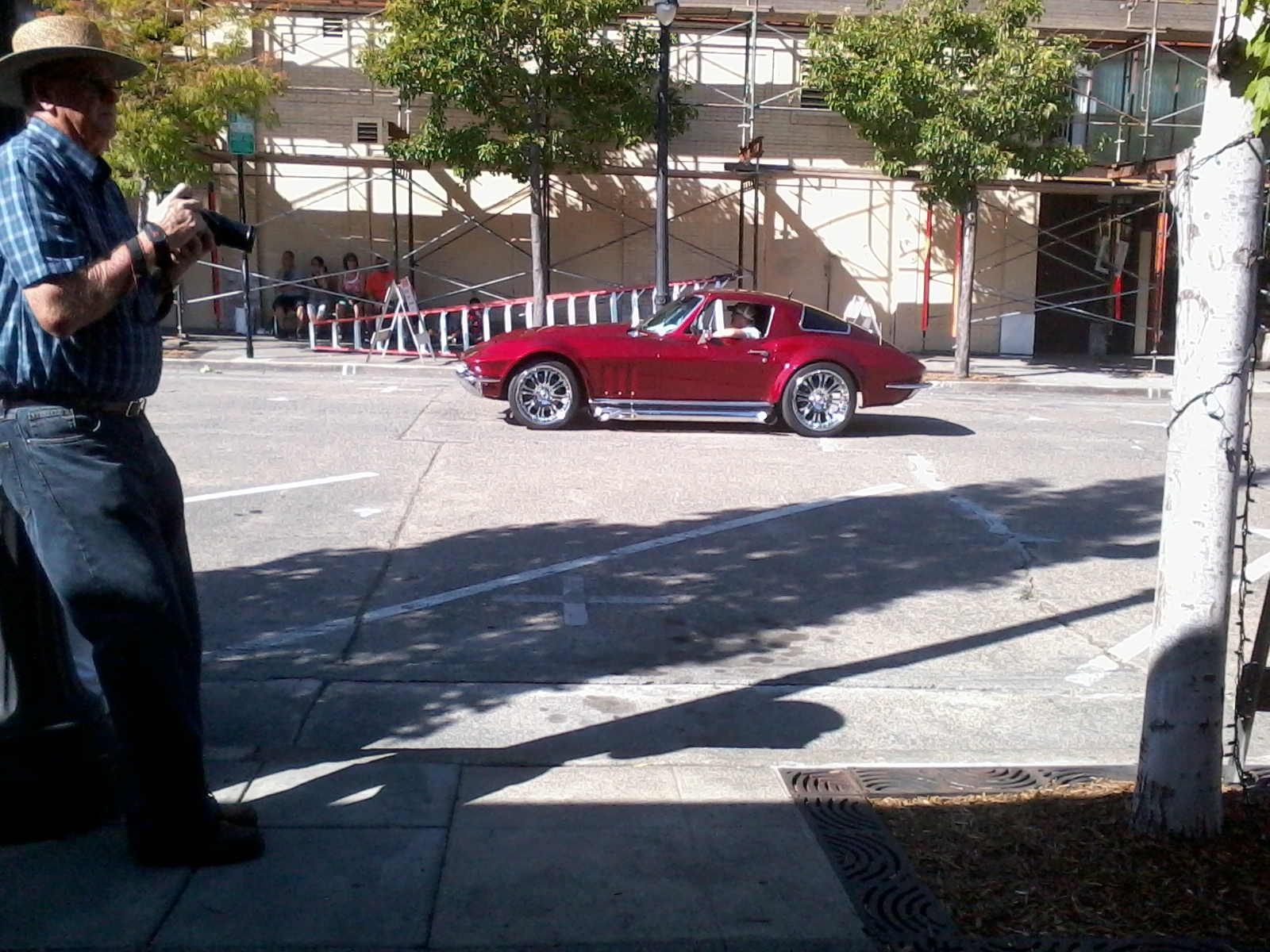
This 1966 Chevy Corvette Sting Ray has some nice candy-apple-red paint that would make a cherry jealous.  I have no idea what engine and transmission are under the hood, but I’d like to take it for a “test drive…”

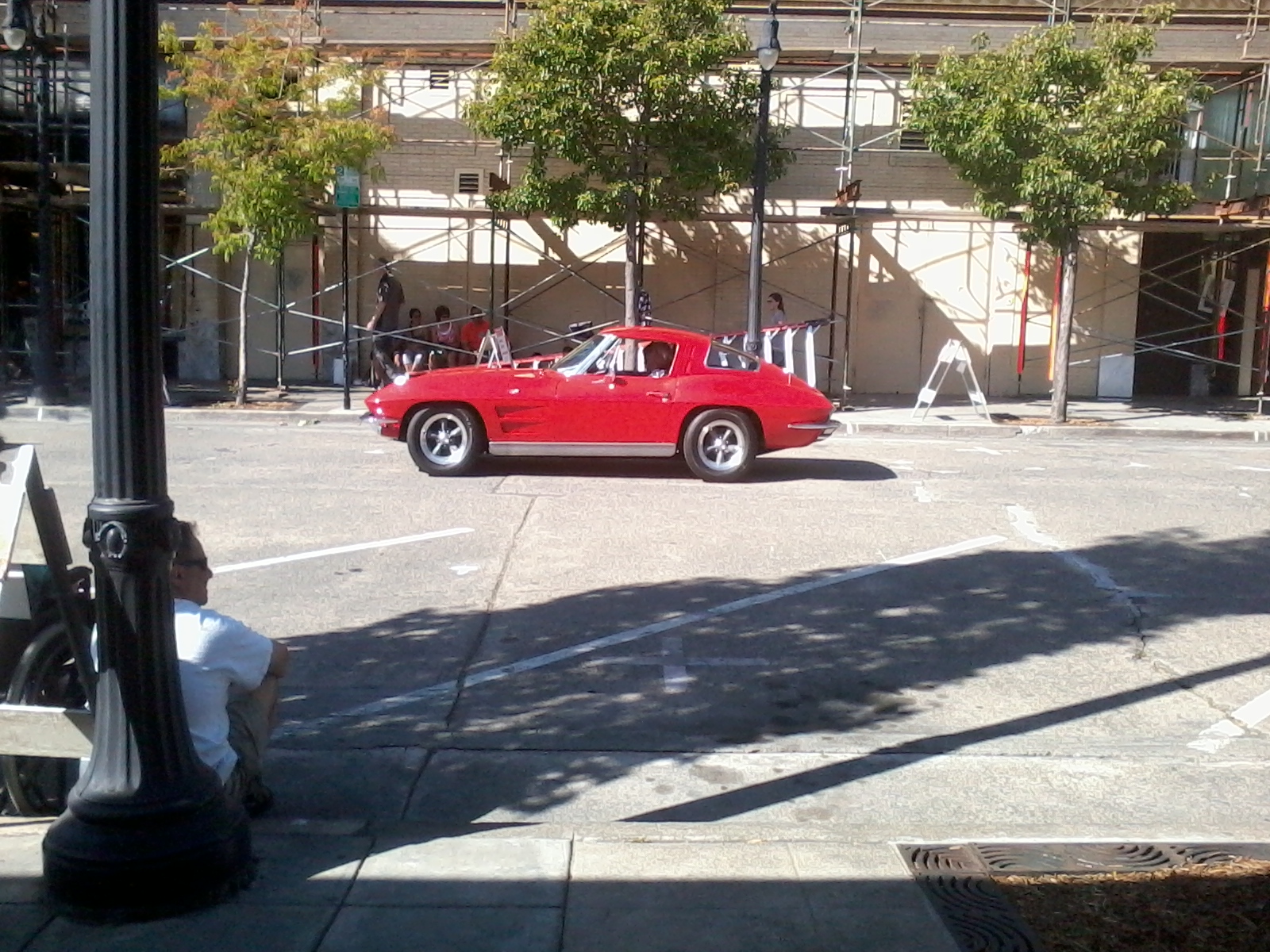
What I DO know about this even MORE amazing 1963 Corvette Sting Ray with the hallmark split windows is that the original owner bought it new with the high-performance 427 V8 and the Muncie “Rock-Crusher” M21 four-speed manual.  Lovely.  Even better at 125 mph…

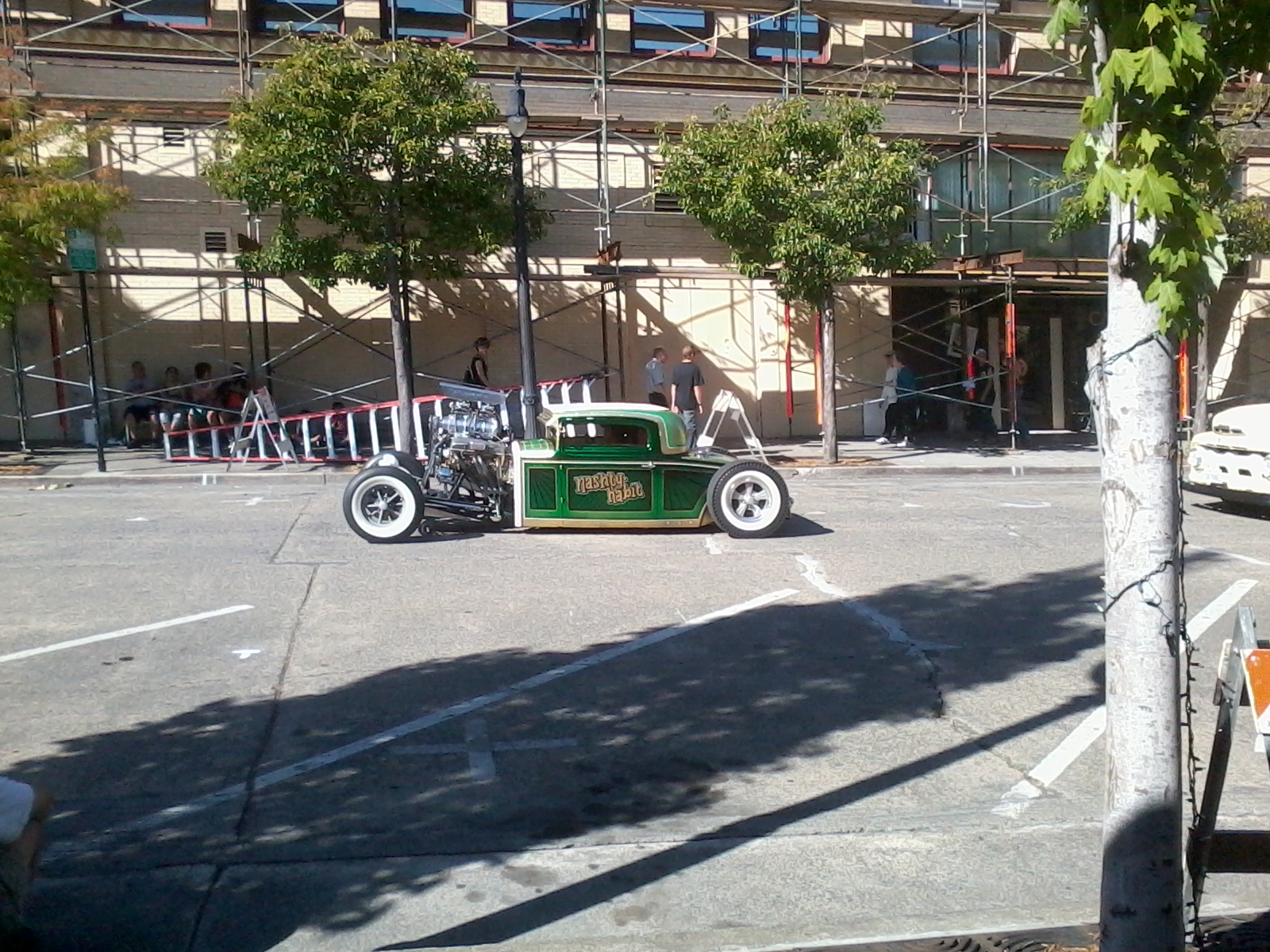
My cover photo of “Nashty Habit” is higher-resolution than this picture, but here’s the info:  Nashty Habit has a 454 engine from a souped-up Chevelle and a five-speed manual from G-d knows where.  The wheels are custom-forged, and the body and chassis are from a 1931 Nash.

This 1950s Ford step-van looks and sounds to be original.  But then again, who knows what secrets it might have under the hood…

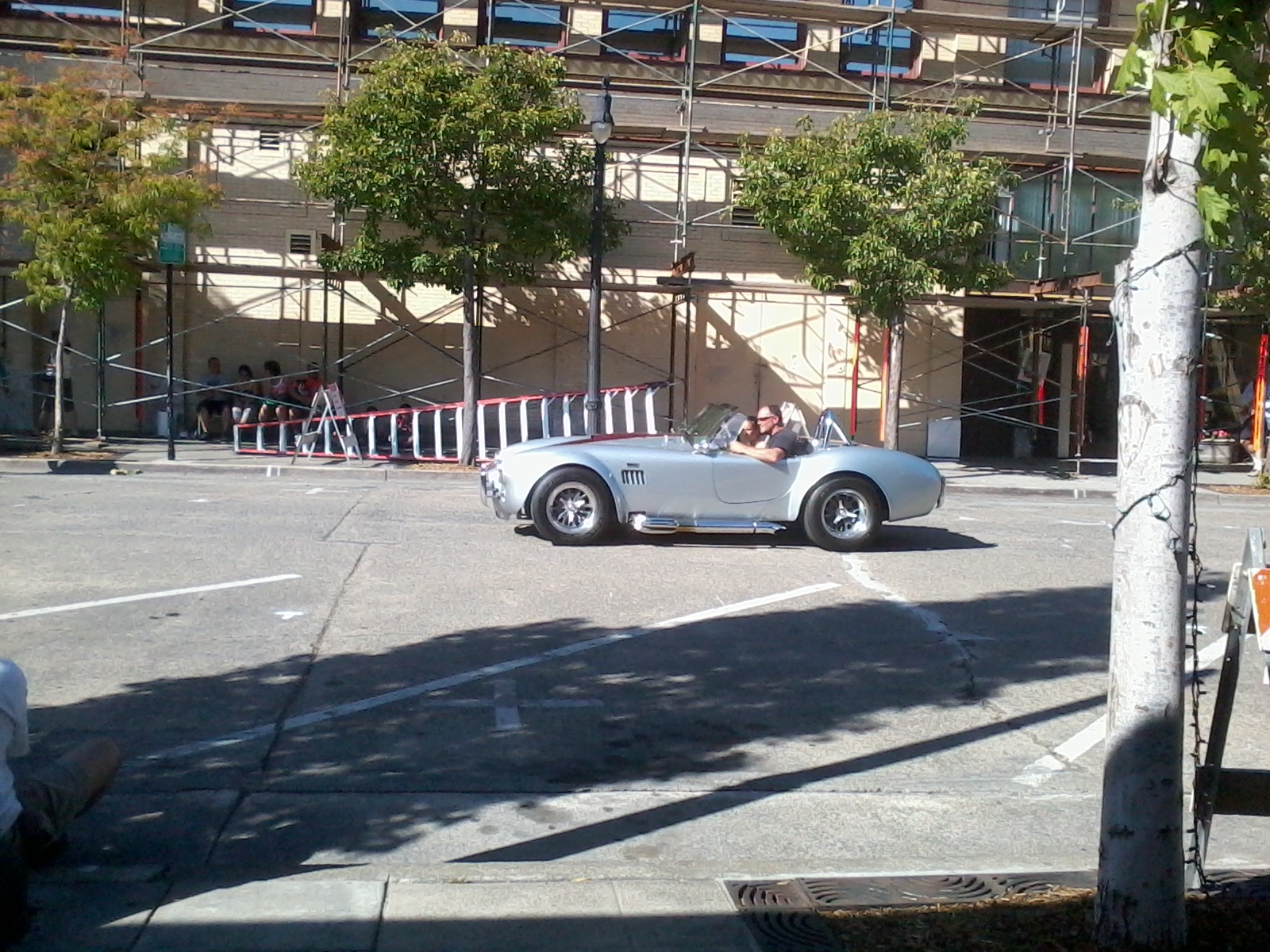
This 1992 Shelby Cobra replicar has a Chevy Corvette Z06 engine and a Mustang five speed manual.  I know this because I was walking by and saw the sign for the car (hence the information on all the cars).

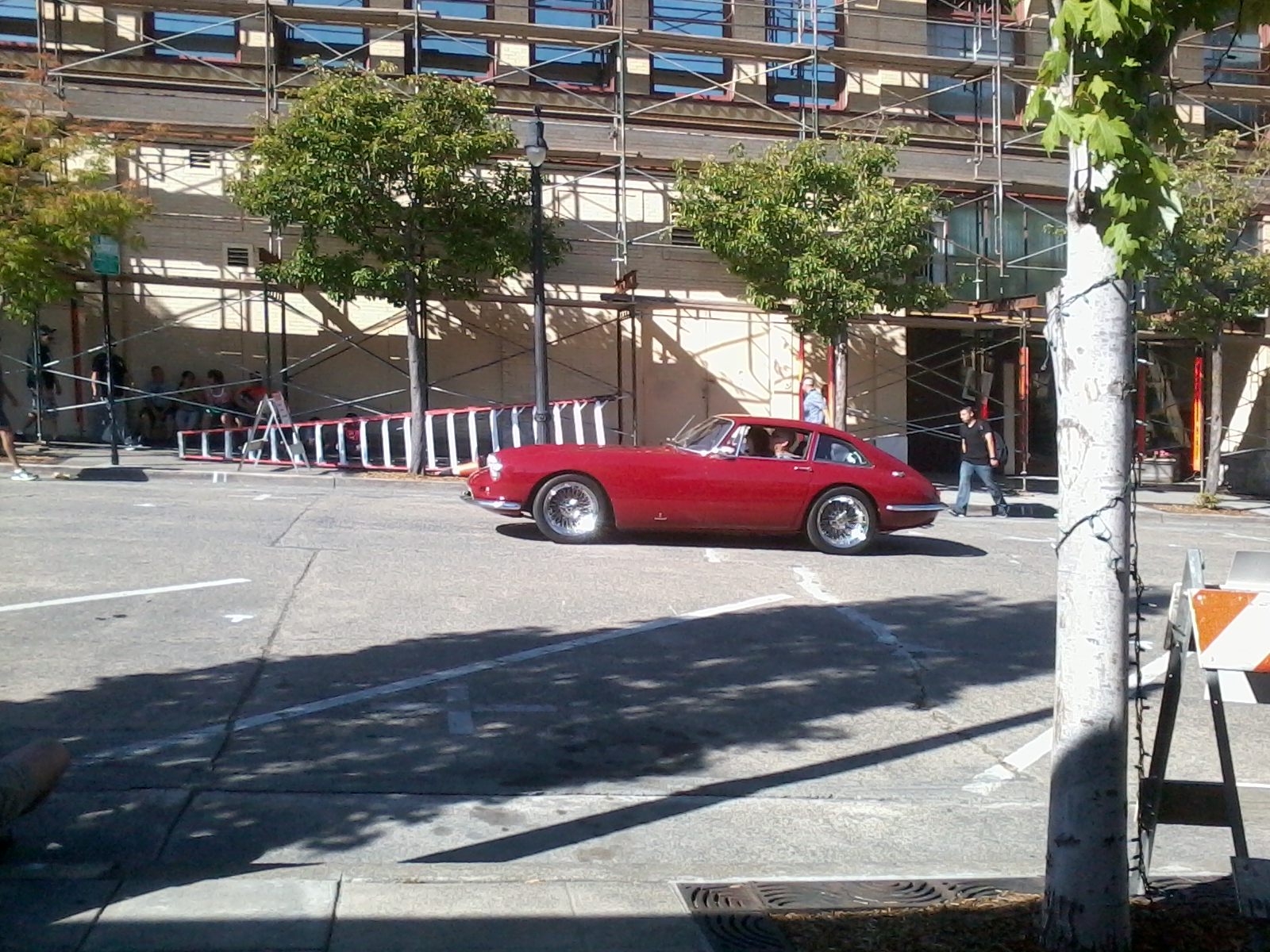
Remember this E-Type/60’s Ferrari replicar from last year?  If you don’t, it’s got a new Ford 5.0 liter Coyote crate engine that pumps out somewhere in the general vicinity of 500 horsepower.  VROOM!

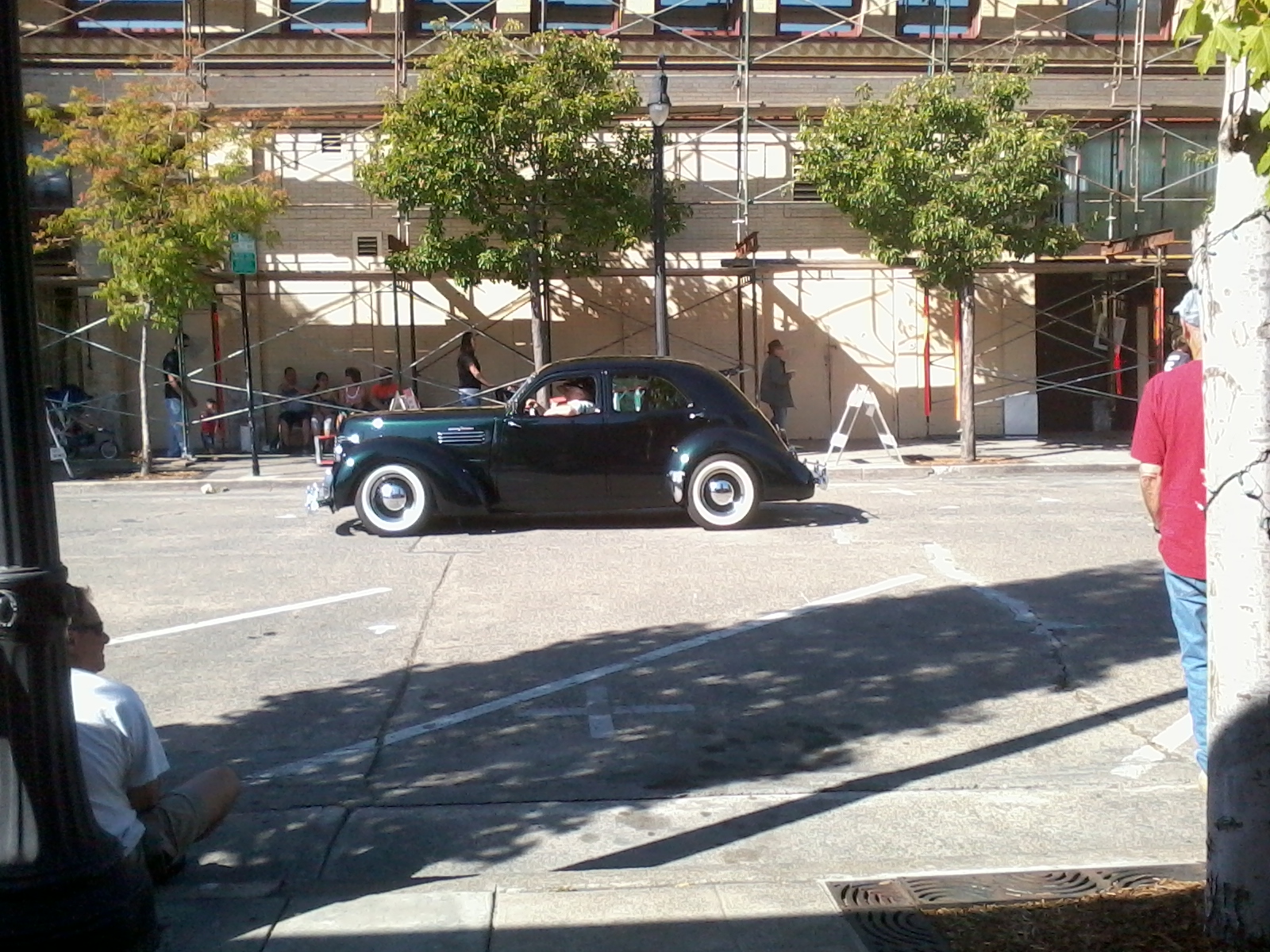
This 1938 Graham Town Car was bought new by the owner’s grandfather, and has been passed down generation by generation.  The car was frame-off restored in 2003 by the current owner.  Apparently, it’s more comfortable than a 1960’s Cadillac or Lincoln.  It’s got a full leather interior, seats five comfortably, and gets 21 mpg.  And I almost forgot to mention that it’s got close to 240,000 miles on the odometer!

Please DON’T ask me WHY this 1995 Plymouth Prowler was in the parade!  My guess is that it is NOT a delivery vehicle, but simply an advertising piece for the pizza parlor!  I don’t know HOW “Pinky” got the car into the parade!

This other ’63 Chevy Corvette Sting Ray Split Window Coupe was bought in 1993 in very dilapidated condition.  It needed a lot of work, but it IS a rare fuel-injected ’63 that they bought for something ridiculous like $6,500!

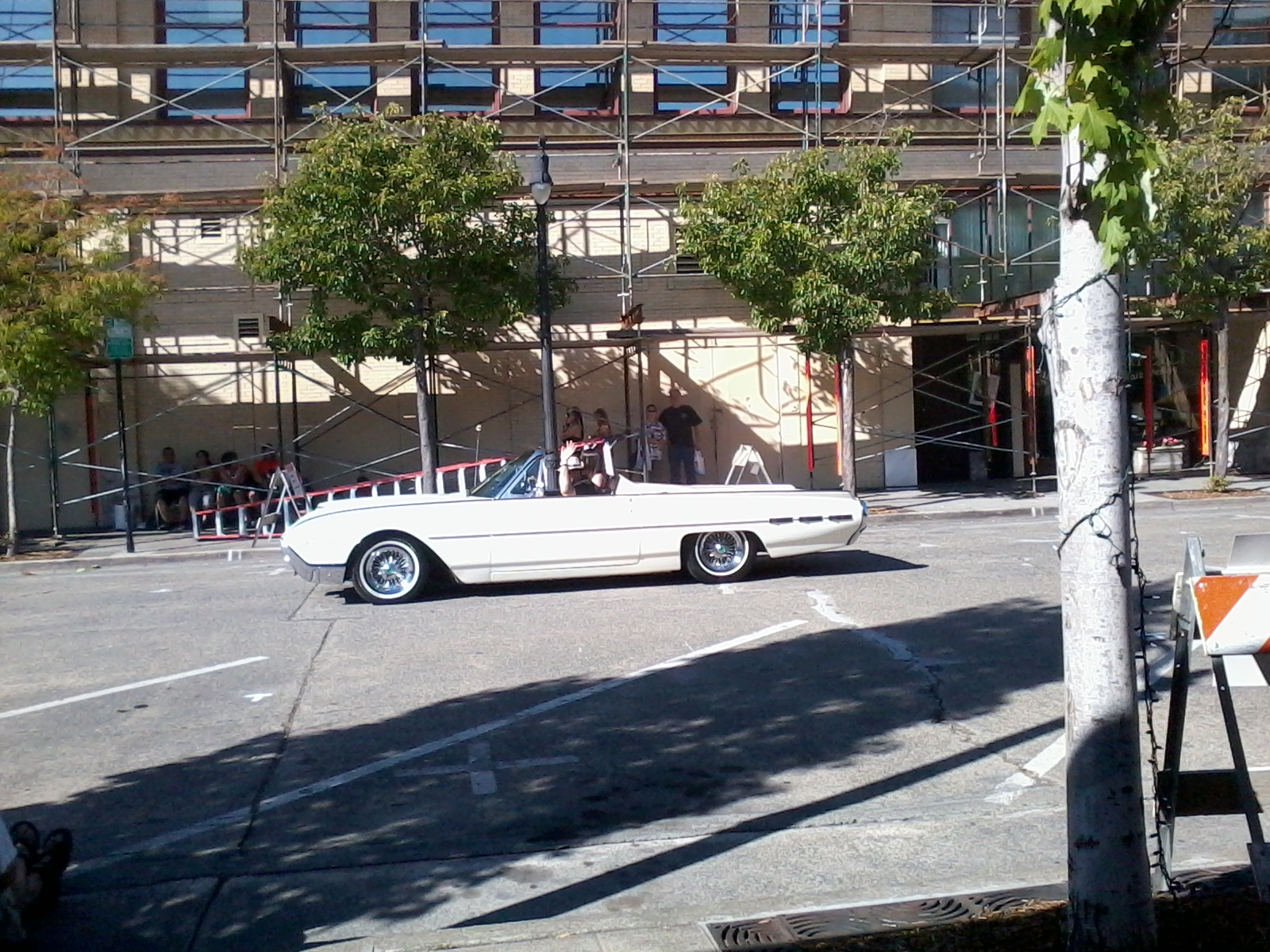
This 1962 Ford Thunderbird has the high-performance 390 cubic inch V8 that slurps fuel at the ridiculous rate of 8 miles per gallon!  But, it IS very fun to drive and only has 23,000 miles on the clock.  It must be really hard to not use all 480 lb-ft of torque when passing a Prius!

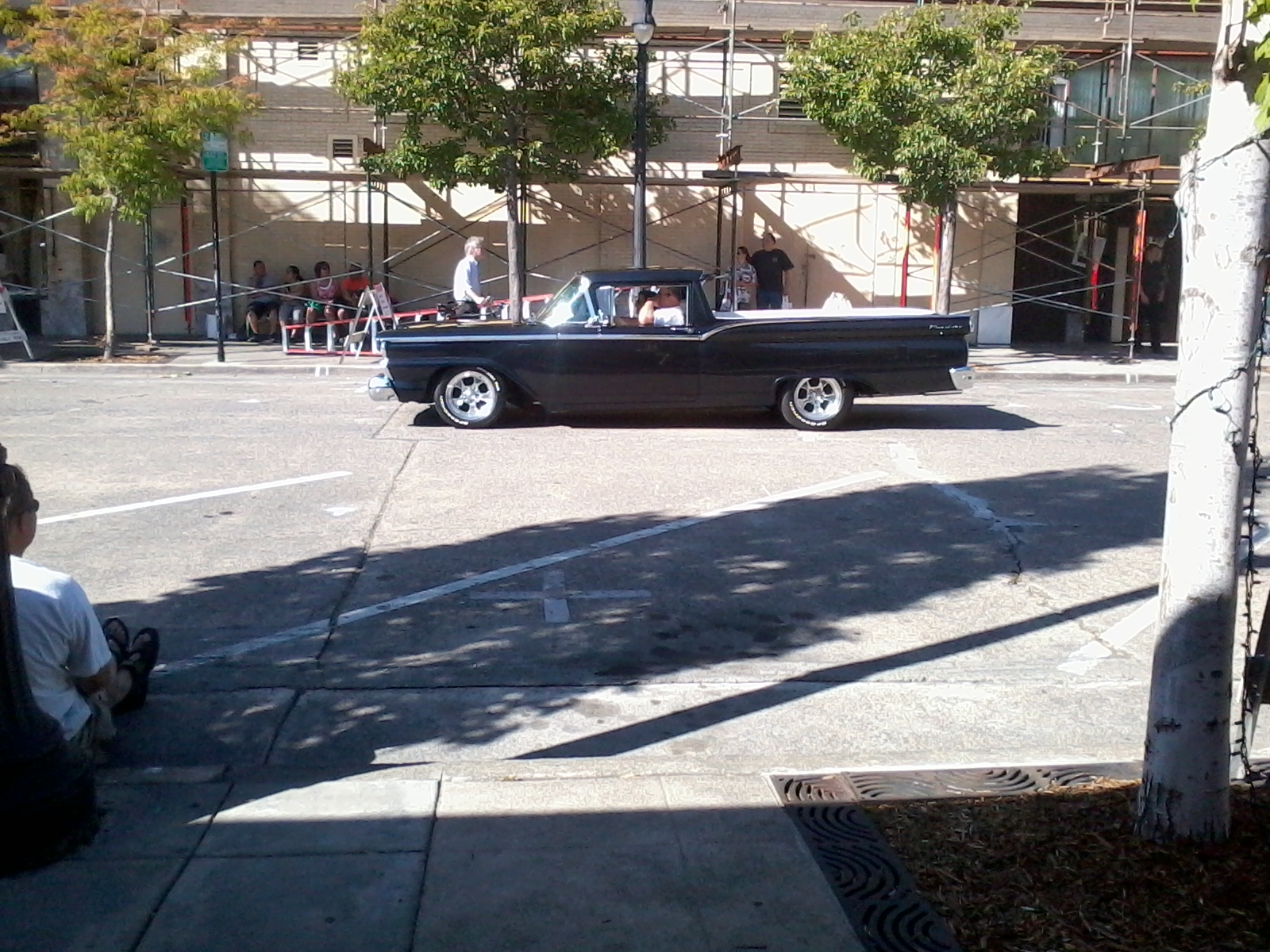
This lovely 1957 Ford Ranchero pick-up has almost 100,000 miles on the clock and has been owned since new by a local Ford fanatic!  It has the easy-to-drive 390/automatic combo, and most of those have been used towing old Fords around!

This 1949 Mercury Club Coupe has a large 8.1 liter engine from a  2002 GMC Sierra pickup.  It may not have a lot of horsepower, but it’s got enough torque to make a bulldozer jealous!  VROOOM come literally!

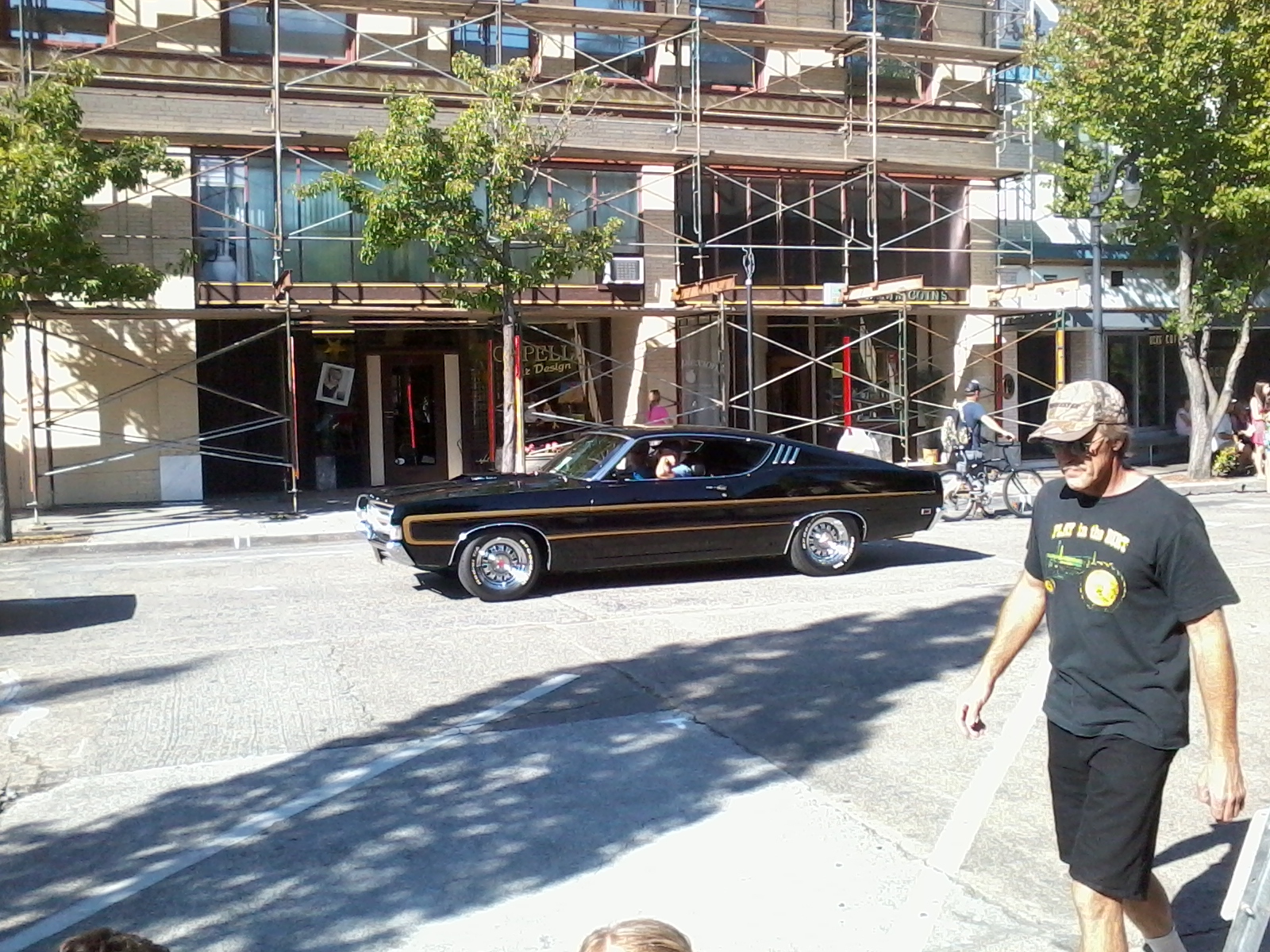
This amazing 1970 Ford Torino Talladega has a numbers-matching 428 Cobra Jet engine and Muncie M21 transmission that send power to the rear wheels via yet another numbers-matching Ford 9-Inch rear end.  The tires are Goodyears that have better traction than a Formula 1 race-car!  VROOM should come in epic doses on THIS car!

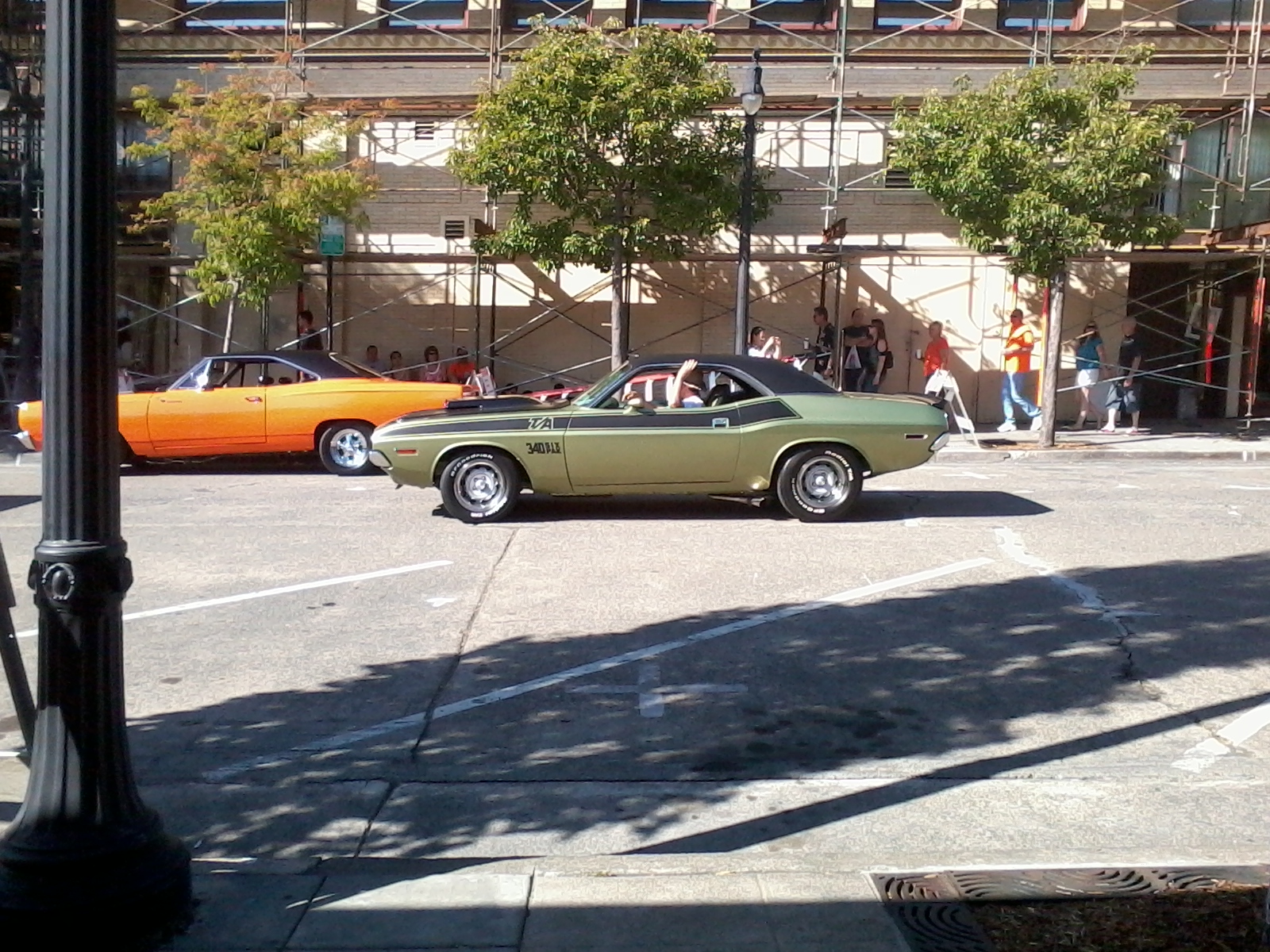
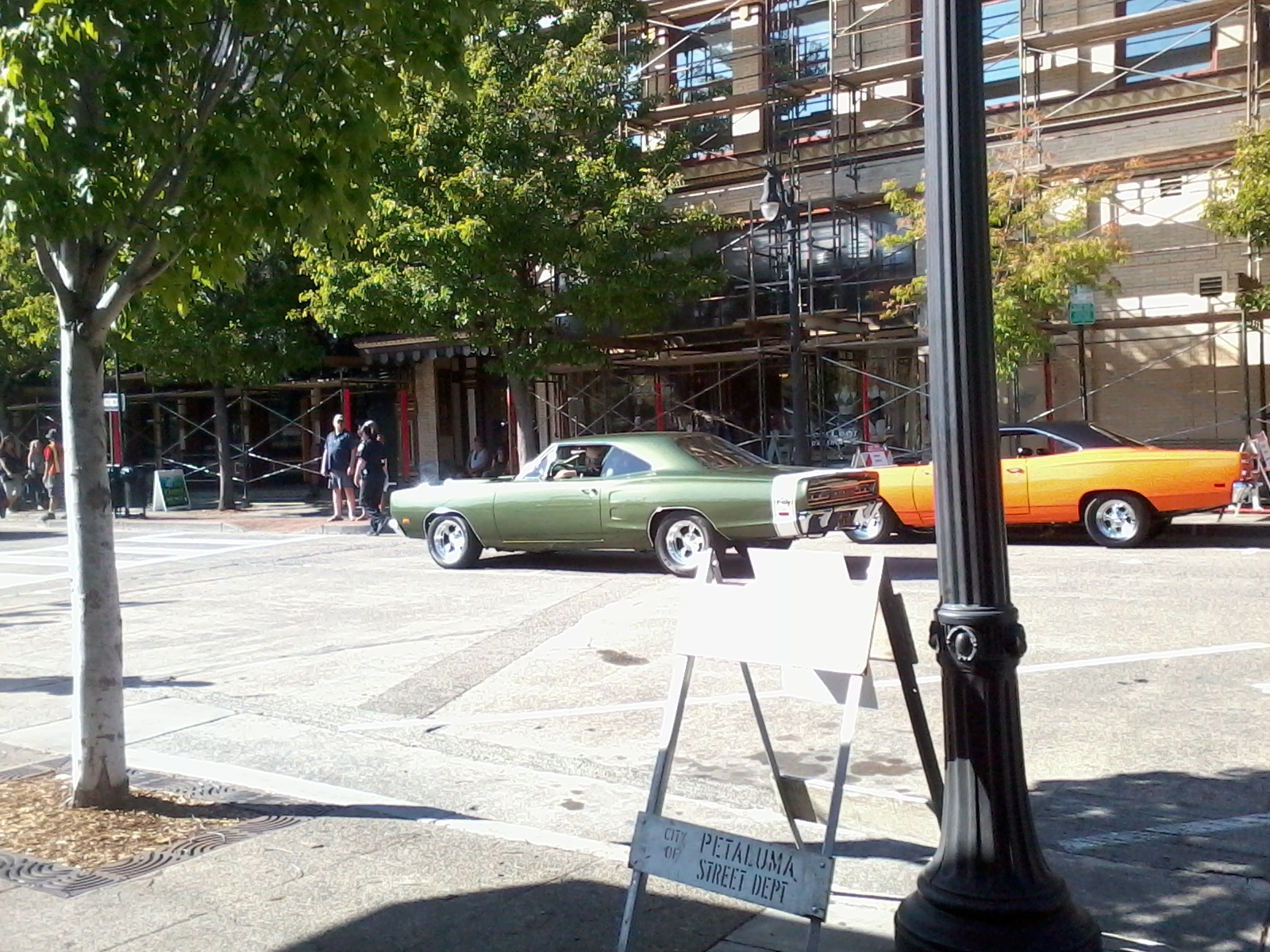
This rare forest-green/black Dodge Challenger T/A could look better in my opinion, but it’s fast, so that’s all that matters…With the historic 426 Hemi engine mated to a four-speed-manual, this car can go up to 140 mph!  But it probably comes at the expense of comfort and fuel economy.

This quite amazing Pontiac Tempest was built just two months before the GTO came out in 1962.  Bought new with the high-power 326 V8, this car DEFINES the phrase “fun in the sun!”  It’s been a daily driver since the day the owner received the pink slip.  It’s had not one, but TWO restorations (1981, 2009) in it’s 180,000 mile career!  I would LOVE to drive this car if I could!

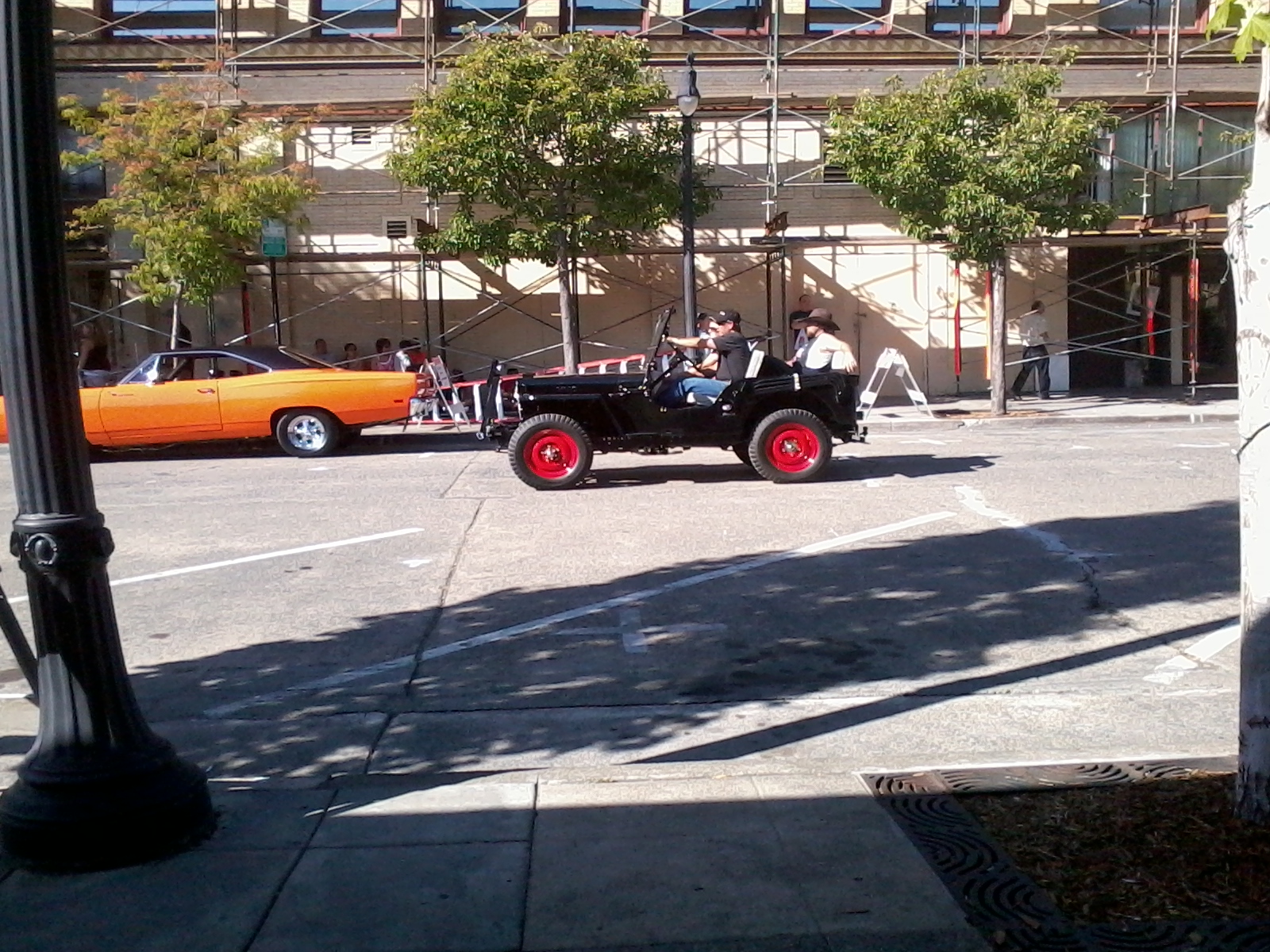
This 1946 Willys JEEP was bought just a few years ago from the original owner, and the owners enjoy every single mile that they rack up on the odometer!  These old JEEPs are some of the toughest vehicles in the world, often going up to 400,000 miles before they are made into cheap toaster ovens.  I hope that THIS JEEP doesn’t follow the same route as it’s siblings – civilian-issue JEEP’s from the 40’s are very hard to find, always fetching up to $20,000 for the better ones.

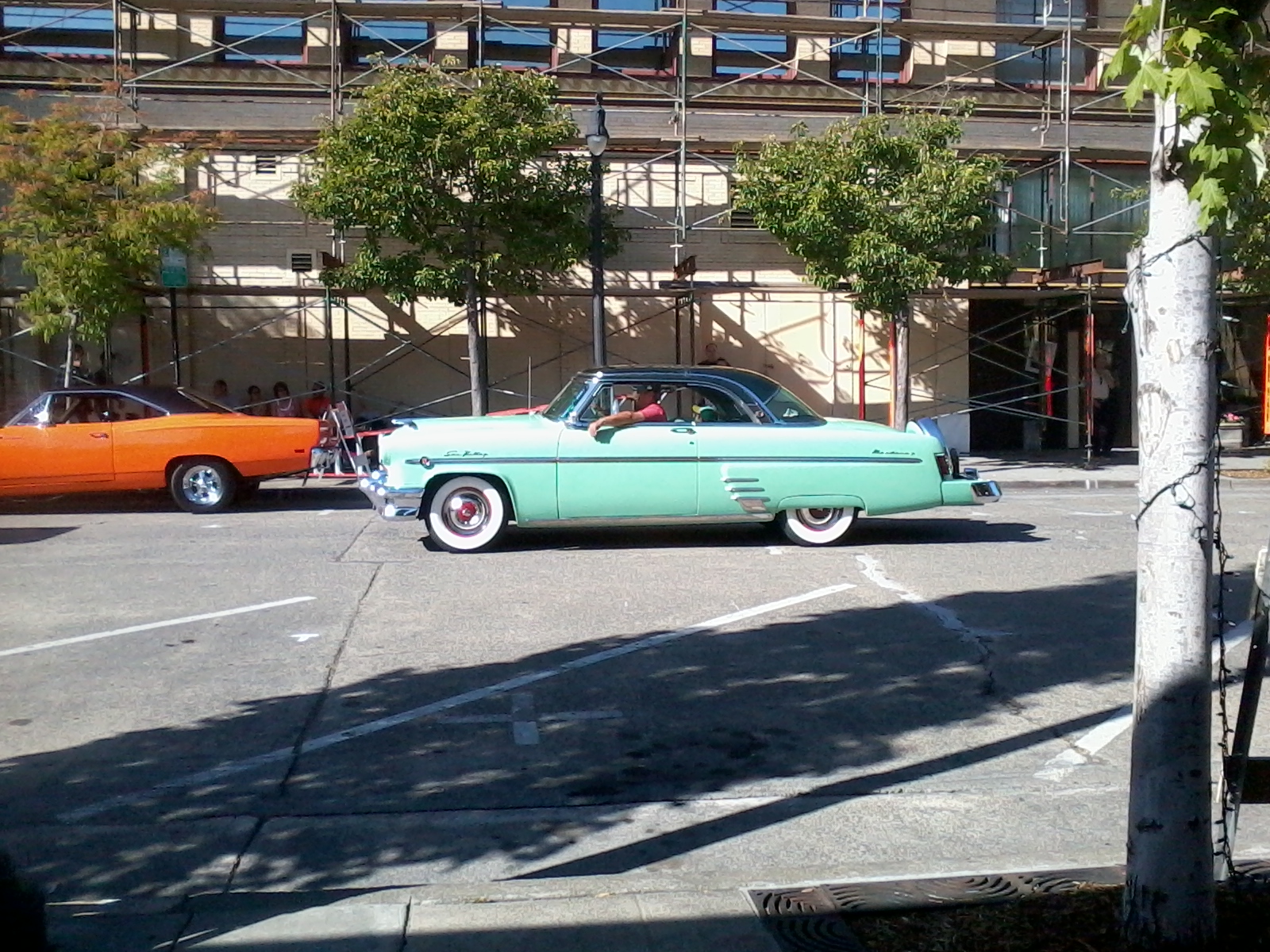
This lovely 1953 Mercury Club Coupe is all-original, and has been owned since new by the original owner.  It’s got the extremely rare “Skyroof” glass roof and the even rarer “Aquamarine Blue” paint.  It may not be fast, but you’ll get there in style!

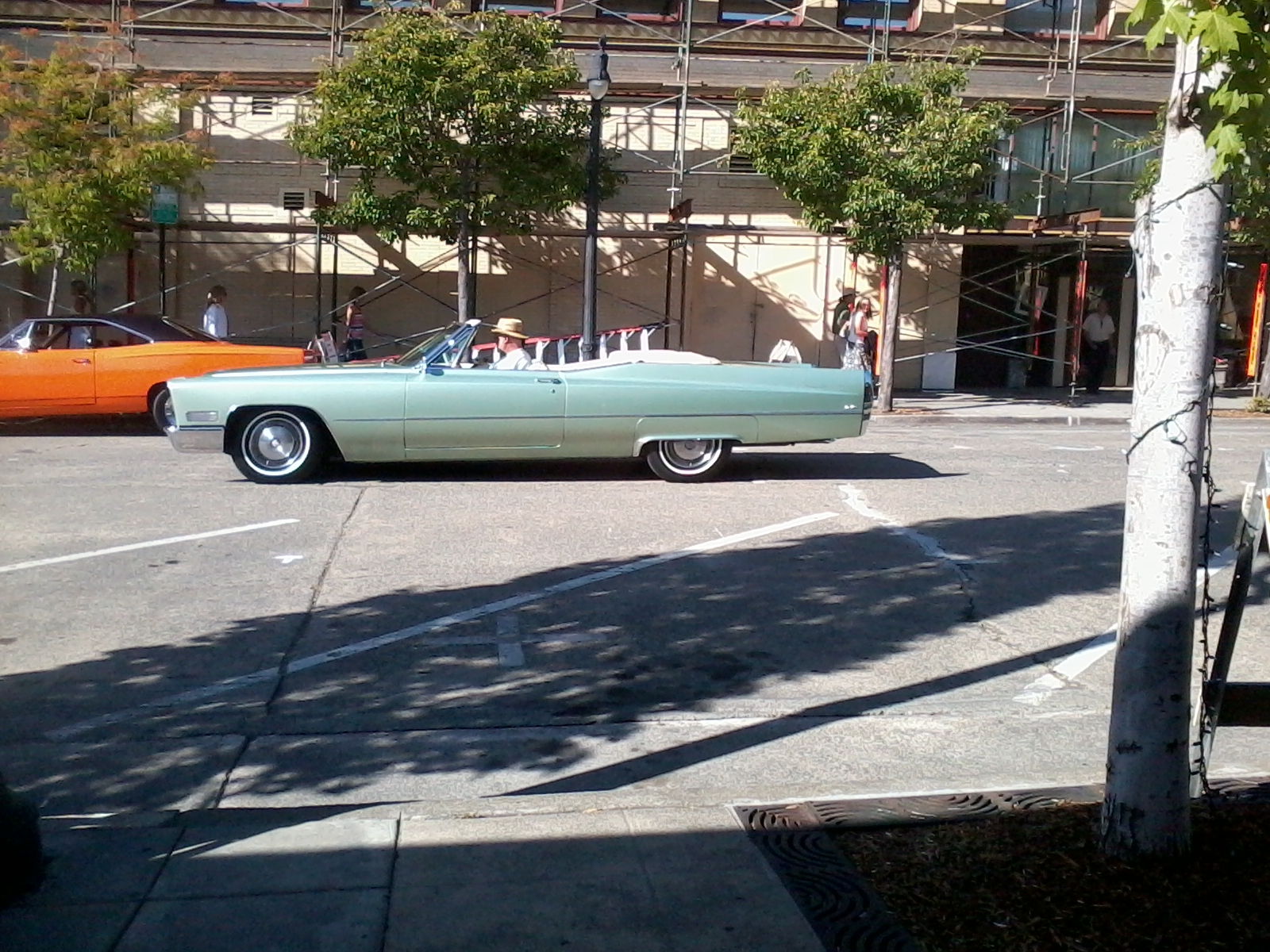
It’s nice to know that the owners of these late ’60s-early ’70s Cadillac “Land Yachts” take pride in their cars, and take them to parades.  They are nice cars, but they are big, hard to drive, and slow.  But, they are very comfortable, and effortless cruisers on the Interstates.

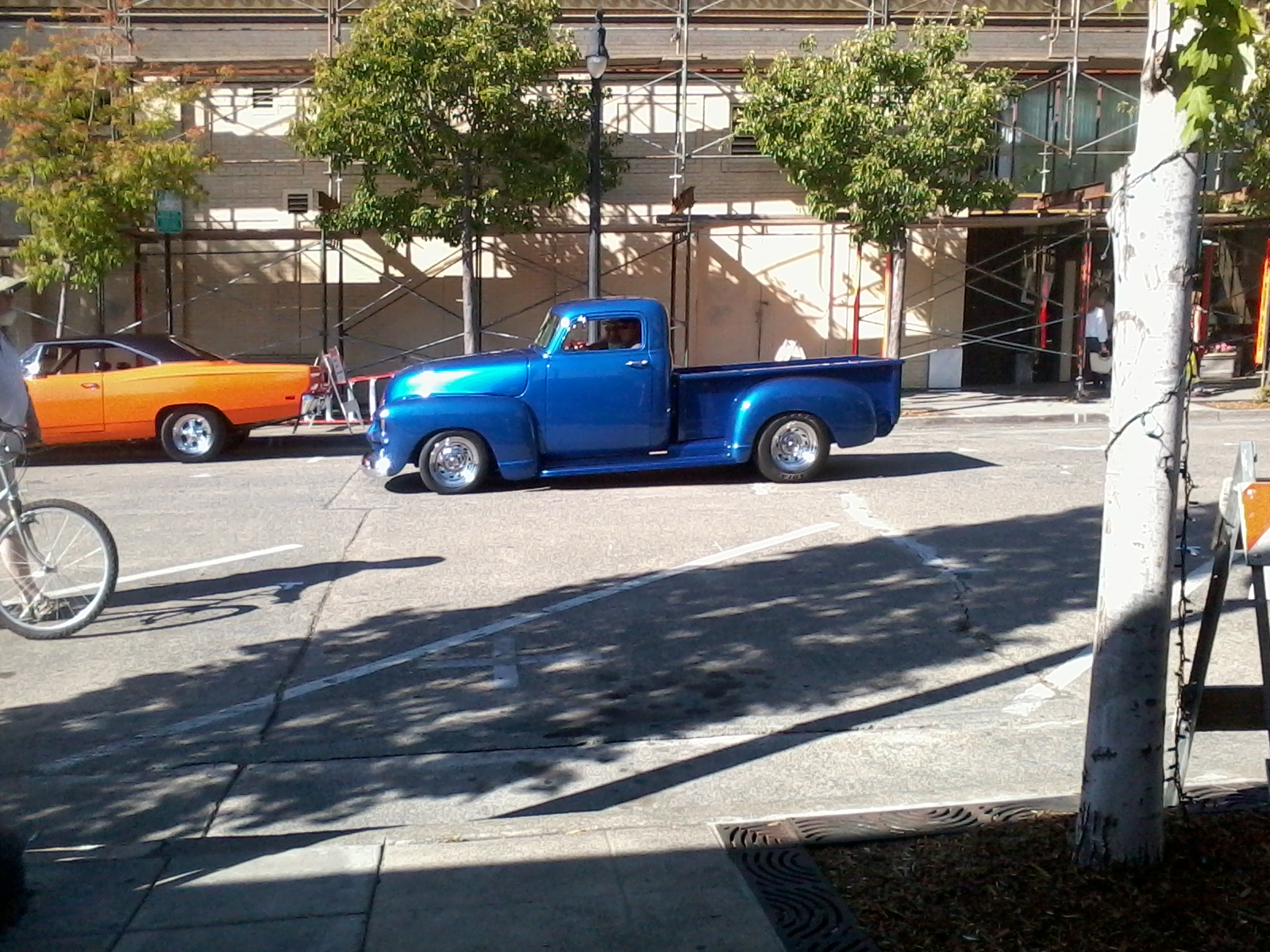
This chopped Chevy half-ton pickup has a Chevy 350 c.i. engine that pumps out way too much horsepower and torque for something this old!  One could call it a street racer, but I prefer to call it a random creation!

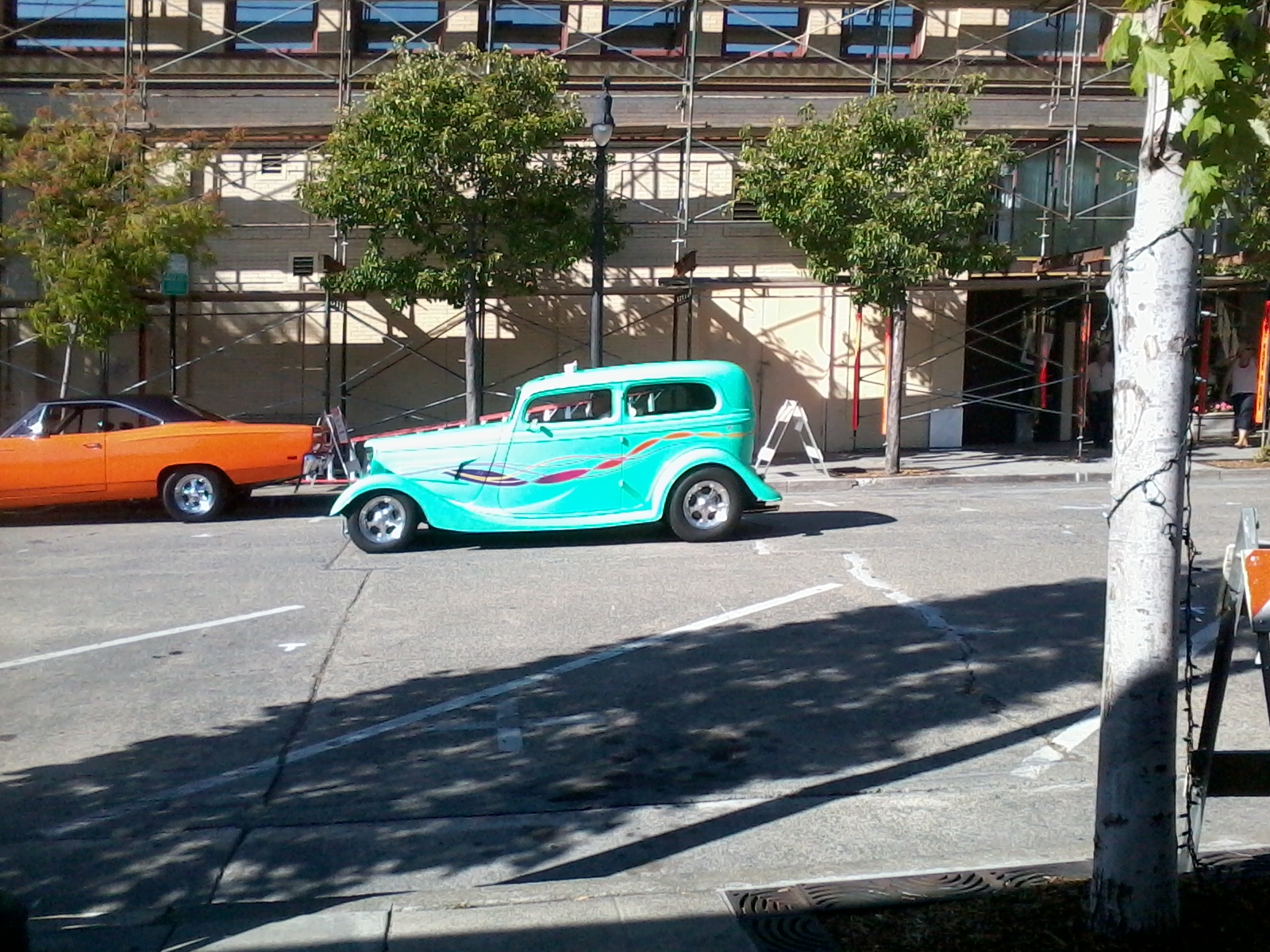
This 1934 Ford Tudor sedan has been thoroughly souped-up, but it has Ford 460 C.I. V8 and a leveling kit that makes a smooth ride when racing a GTO!  Plus, it’s got a Rockland Standard Gear Tranzilla T71 six-speed manual that can handle too much torque!

This 1966 Plymouth Roadrunner is all-original except for the brand-new Cragar rims and B.F. Goodrich tires.  It sounds simply amazing, and I’m sure that just about anybody would like to drive it!  I would…

This faithful 2004 Shelby Cobra 427 replicar has just about everything (and then some) on it!  To the untrained eye (which I’m sure that none of you have!), one might assume that it actually IS a ’64 Cobra, but they would be so wrong that it would be bordering on stupidity!

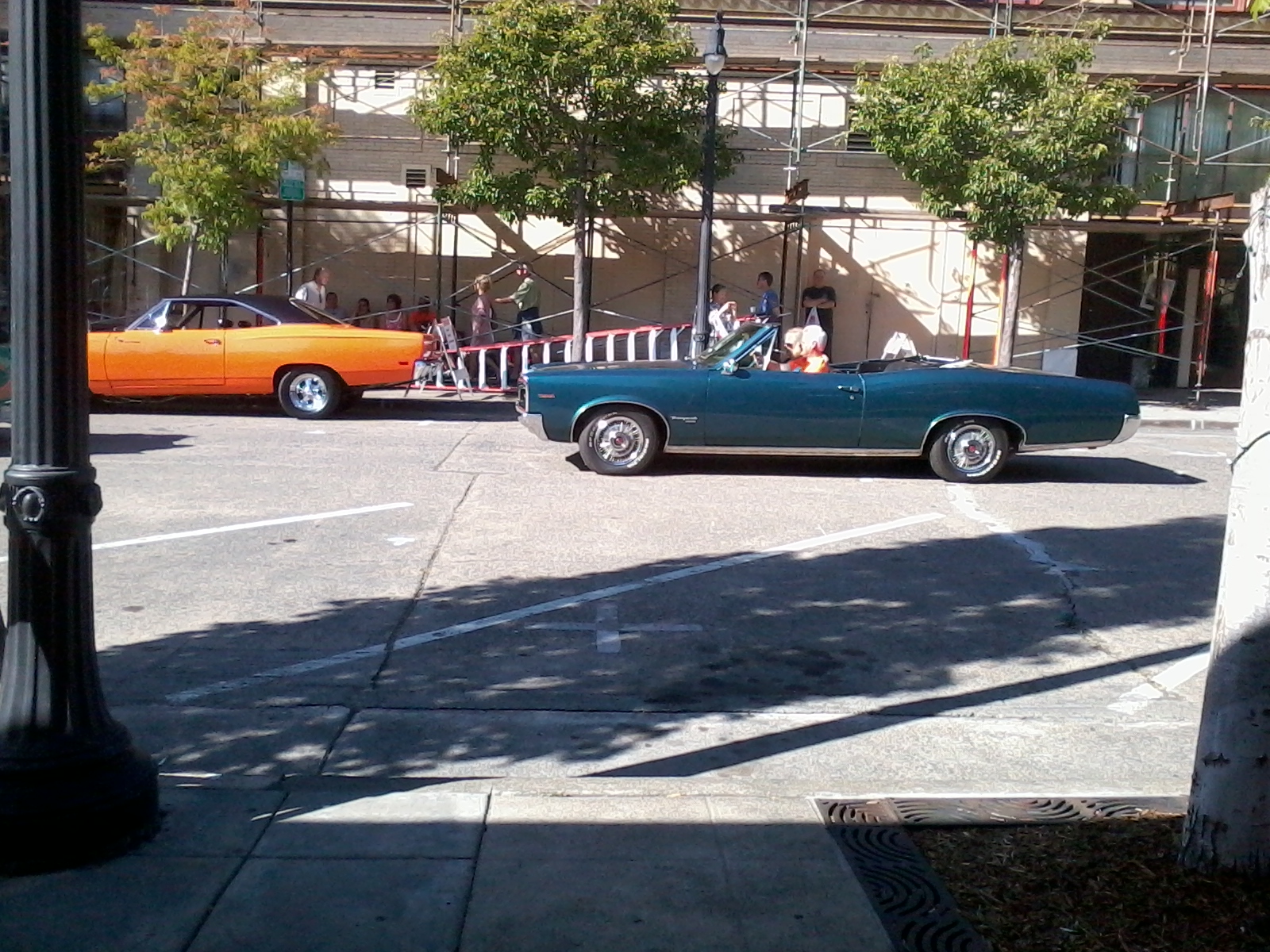
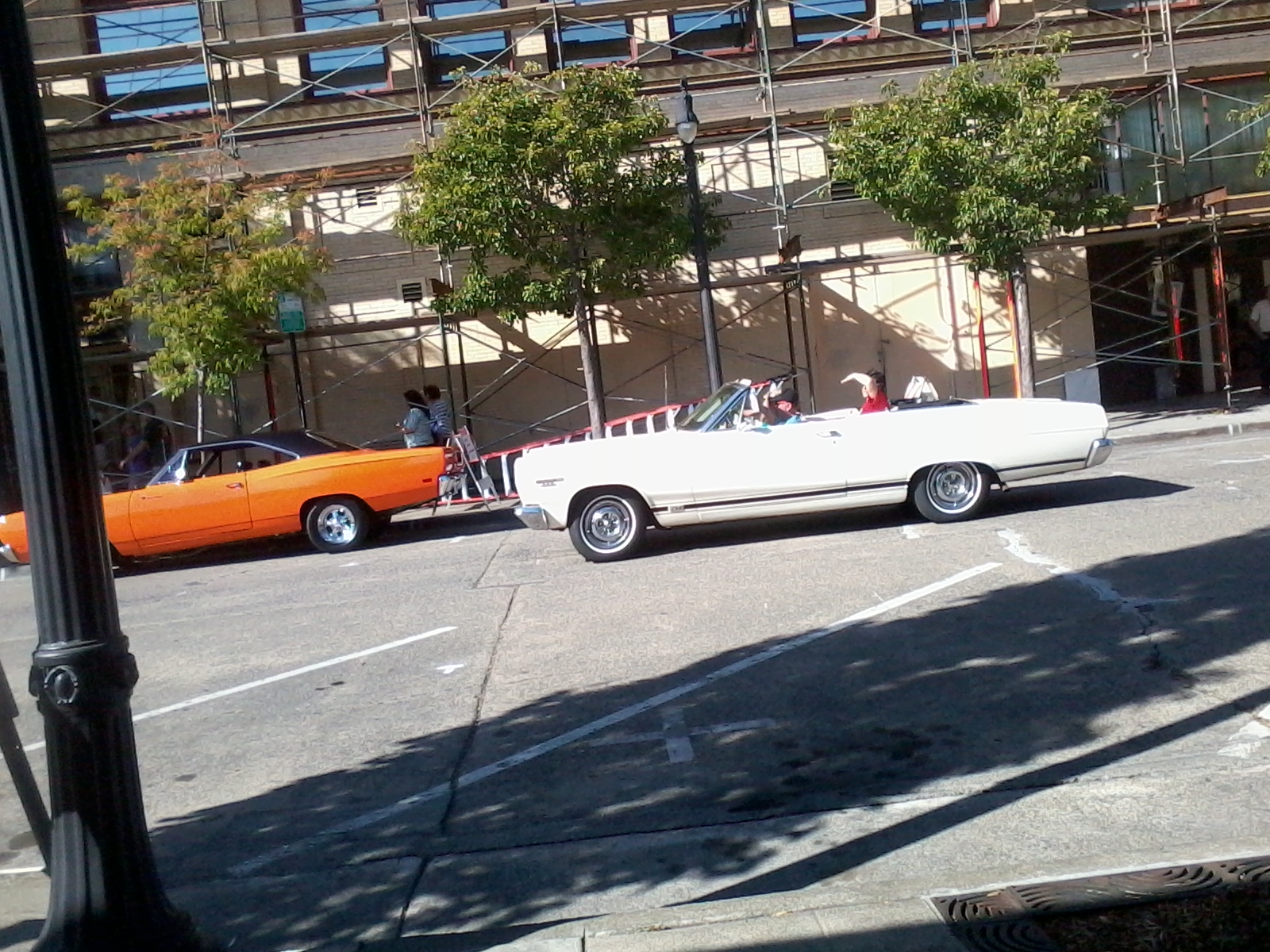
This 1967 Mercury Cyclone convertible has the 390 C.I. V8 pumping out enough horsepower to make a semi jealous!  Those optional “Dog-Dish” rims help with the aerodynamics and timeless looks of the 1967 Mercury Cyclone!

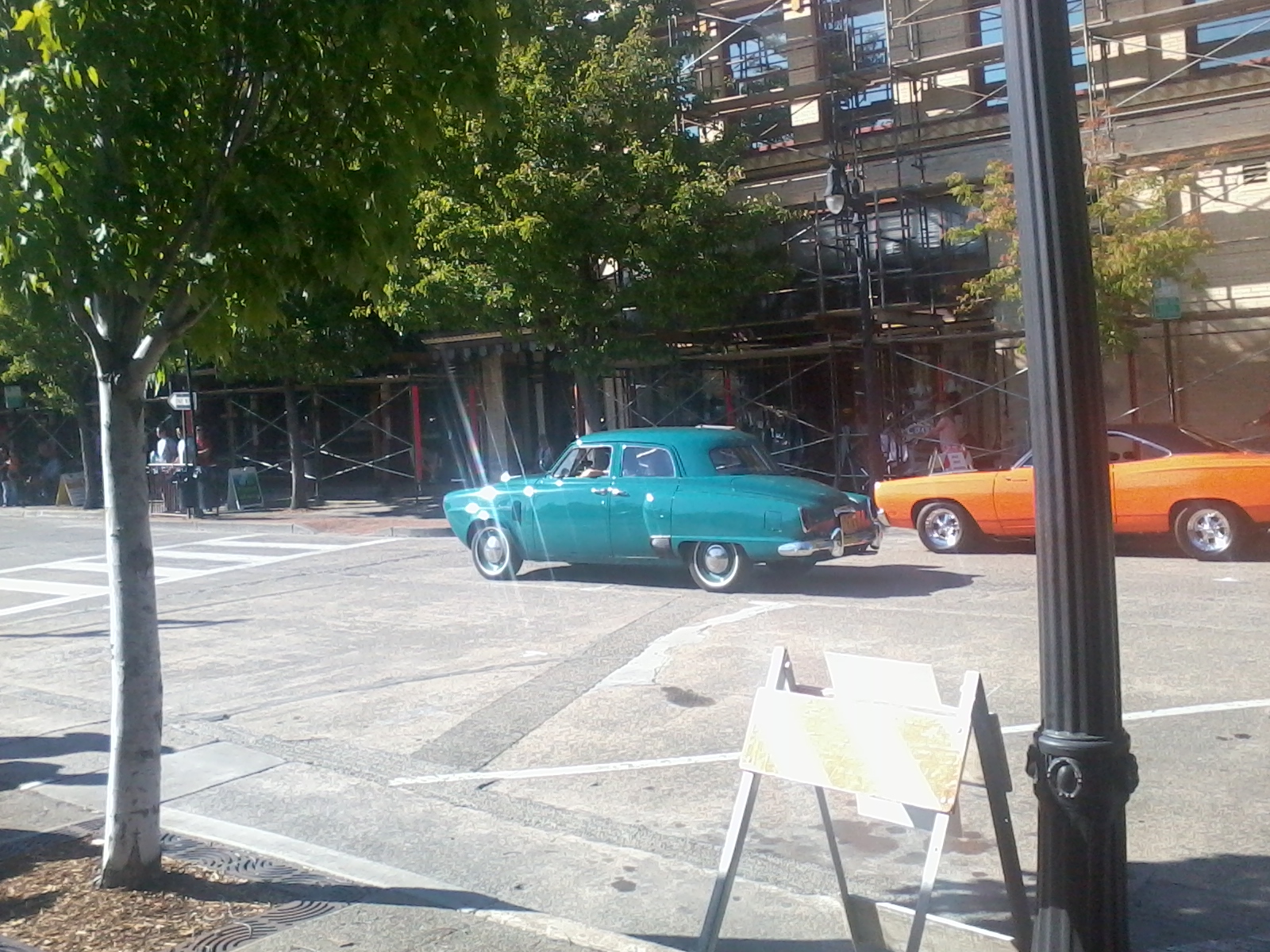
Remember this classic Studebaker Hawk sedan from last year?  If you don’t it’s got the small six-cylinder that has only 120 horsepower, but everybody (and I mean EVERYBODY) was giving these people the thumbs up!  They were cool (literally) because of the cool old air conditioner that sucks air in and cools it before it blows into the cabin!

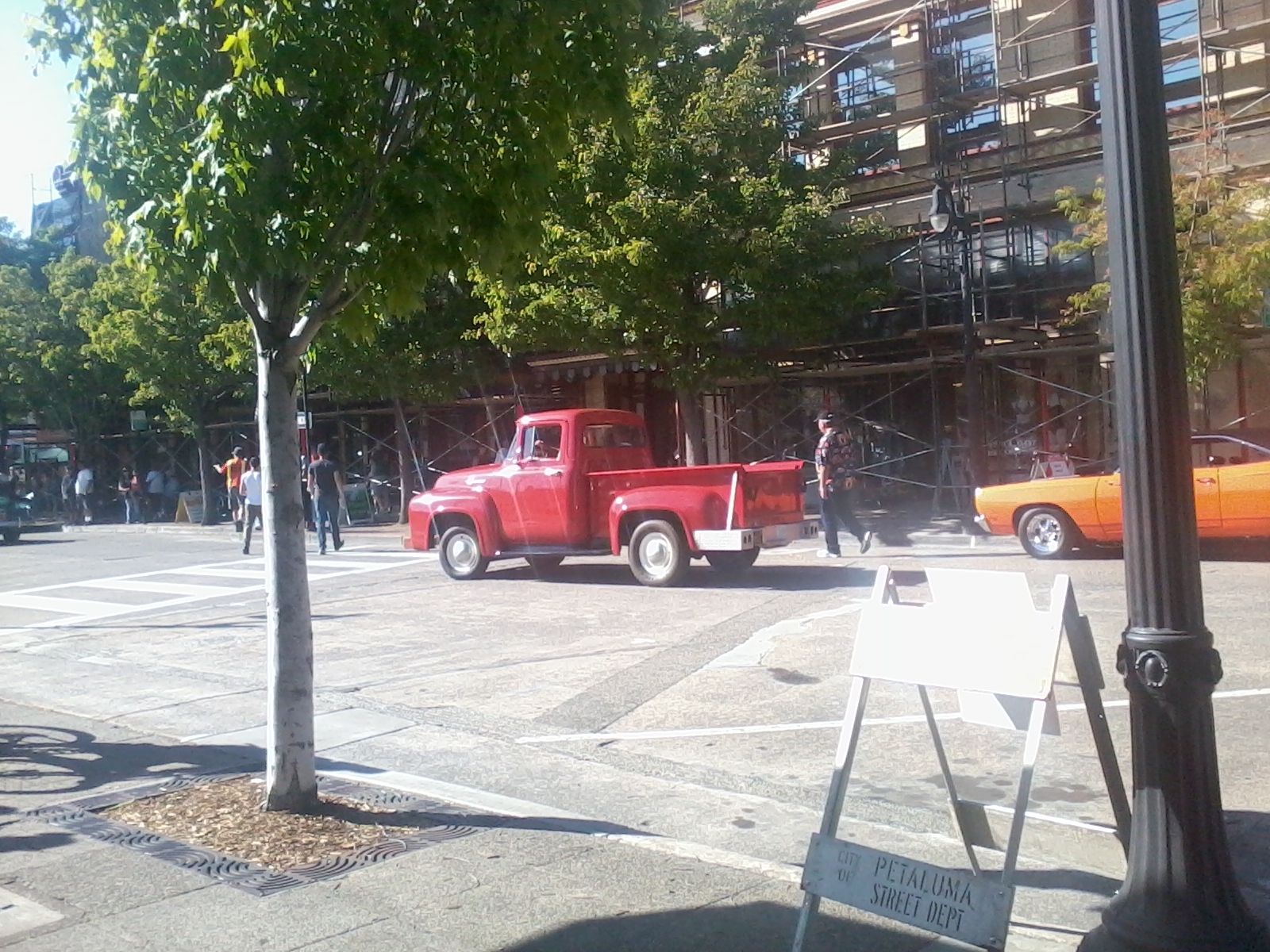
This is the last amazing picture that I will show you, so I’ll give you all the tough specs on this 1950 Ford F100 pickup.  It has the powerful old six-cylinder engine and goes about 40 mph, but is pretty cool!  I wish that I could have seen some awesome readers of the Unmuffled Auto News there!  Well, see you next year!

The Japanese Mater… (A ‘Cars’ Reference)

If you’re thinking of the tow truck that had to pick you up yesterday, it would be ridiculously over sized on Japan’s tiny roads!  Tow trucks, along with many other things, are ‘supersized’ in America. The tow truck I’m thinking of is quite different – it’s Japanese, it’s got two wheels, and it’s a Honda!

Yes, it almost looks like something out of Terminator or one of the Transformers movies, but it’s not.  Here’s two “Transformers” together somewhere in Japan…

Here are a few pictures to entertain and to educate!

When I first saw the picture of one of these tow vehicles starting to tow a early ’90s VW Golf, I thought my eyes were deceiving me!

I also have sad auto news to pass along.  Carrol Shelby died six days ago at the age of 89 from pneumonia.  You can check out my biography blog post of him through the link below.

https://unmuffled.wordpress.com/2011/06/15/carroll-shelby-a-legendary-auto-tuner/

https://unmuffled.wordpress.com/2011/06/18/carroll-shelby-part-2/

Michelin Tires (Part 1)

The history of Michelin Tyres, Ltd can be traced back to 1829, with the marriage of Edouard Daubree and Elizabeth Pugh Parker.  Elizabeth was the niece of the man who found rubber in benzene.  She introduced rubber into the French Auvergne region, where she made play balls for children.  She started making them by hand, then by a machine that her husband invented.  A few years later, in 1832, Edouard Daubree and his cousin Aristide Barbier started a rubber factory in the small town of Clermont-Ferrand, France.  They made such things as: farm machinery, rubber balls, gaskets, valves, and tubing.  Thirty-one years later, they named the company Barbier Daubree & Co.  The same year, it was changed to E.Daubree & Co.  In 1867, J.G. Bideau, a local lawyer, invested in the company (which was then run by Ernest Daubree, who had taken over the business).  Since Bideau then owned almost 65% of the company, it was changed to J.G. Bideau & Co.

In 1889, two brothers, Edouard and Andre Michelin co-manage the company, and the                                      name was changed to Michelin & Co.  By this time, the plant was employing 52 people, and was producing about 200,000 rubber balls a year.  Two years later, a cyclist arrived at the plant, in need of supplies to repair the Dunlop tires on his bicycle.  After three hours of hard labor, the tire was off, and was patched.  The next morning, Edouard tested out the repaired tire in the factory courtyard.  After only a few laps around the courtyard, the tire failed again.  However, Edouard was enthusiastic about pneumatic tires, so he started experimenting with the idea.  A couple of months later, he took out his first patent.  We can thank Edouard for the pneumatic tire – its comfortable and long lasting ride.

A few years later, in 1895, the Eclair, built by Andre Michelin, entered the Paris-Bordeaux-Paris race, did not win, but was a milestone in automobile history – it was the first car to use pneumatic tires!  The following year, Edouard and Andre were at the Universal and Colonial Exposition in Lyon, when Edouard saw a stack of tires, which prompted him to say “Give it arms and legs, and it could be a man!”  Soon afterwards, Andre and Edouard Michelin had the French cartoonist, O’Galop draw a figure of tires with the Latin line “nunc esl bibendum”, which means “it’s time to drink!”  Andre also added the now infamous slogan “Michelin tyres drink obstables!”  To this day, Bibendum (also called the Michelin Man) has been an iconic symbol in the automotive world.

Edouard had to travel a lot on behalf of the company.  Most likely, he spent a great deal of his time in flea-bag hotels and eating in unappealing restaurants.  So, he decided to create a travel guide.  In 1900, the first Michelin Guide was published.  Within the first month of sales, more than 35,000 copies had been sold.  On the front cover, Andre Michelin’s famous words “This guide is born with the century, and will last as long as the century does.”  Michelin Guides are called by some “the traveller’s Bible.”  The Michelin Green Guides are oriented towards longer trips.  They include:  Historical background, art and architecture, cultural insights, as well as food and hotel information.  The Michelin Red Guides are oriented towards shorter trips, and they include:  Food and hotel information.  The Red Guide was published in 1900, and is often called the Red Guide, due to its distinctive red cover.  Michelin Must See Guides are oriented towards nature, and are often used for weekend getaways, and camping trips.  Overall, Michelin Guides are a nice additions to a trip.  Plus, almost 30 million copies of the Red Guide have been published.  Over 88 million copies of Michelin Green Guides, Red Guides, and Must See Guides have been published, so it shouldn’t be too much of a problem to get a new one…

For those wanting to look at Michelin’s website, here it is:  http://michelinman.com/

Stay tuned for ‘Part 2’, which will include the remaining aspect of Michelin’s extensive history, as well as their criteria for their tire development, and definitions (like, what IS a pneumatic tire?).

I Smell a Rat…

You are probably thinking of the pesky mammal that squeaks, eats any food that you left out, and is a general annoyance.  I’m thinking of the rat motors, built by Chevy in the 1960’s.  The rat motor was Chevy’s big-block V-8.  They were offered in 396 ci, 402 ci, 427 ci, and 454 ci regular production engines.  There were also the special aluminum-block 427 ci, 430 ci, 465 ci, 495 ci, and 510 ci rats, built especially for race cars.  Built in factories, they were genetically engineered rats (or at least mechanically engineered!)  Now for the interesting part…  The name was coined by drag racers and tire-smoking teenagers (NOT me), who called it the rat because it was an outsized companion to the small block “mouse” engines, and the rat’s ability to scare the Chrysler Hemi “elephant” motors. Trivia moment:  The Chrysler Hemi was called “the elephant” because it was so heavy!  So, inevitably, the Chevy rat has gone down in history without many of the nicknames it deserves.

Let’s Joyride in this Car

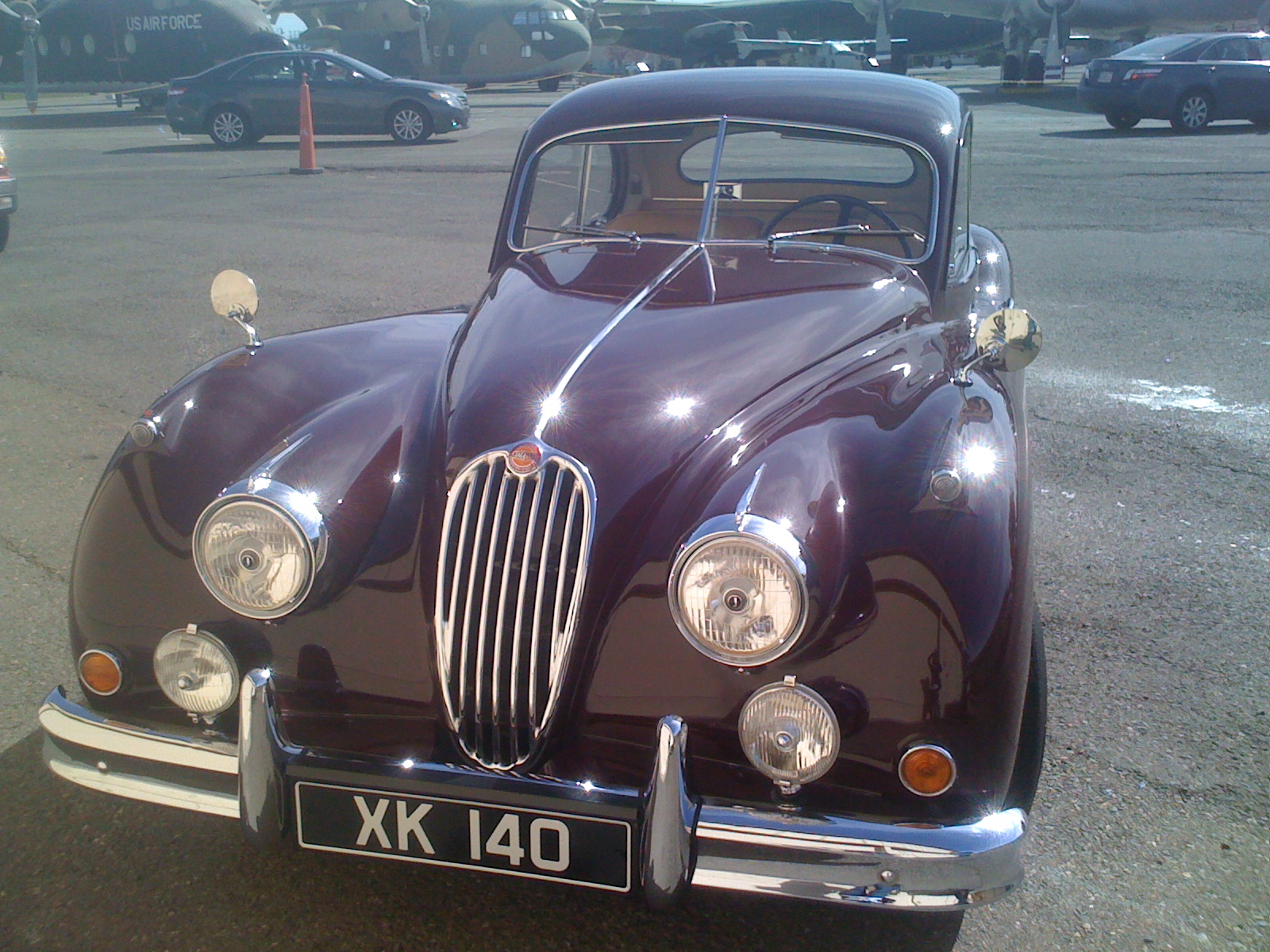
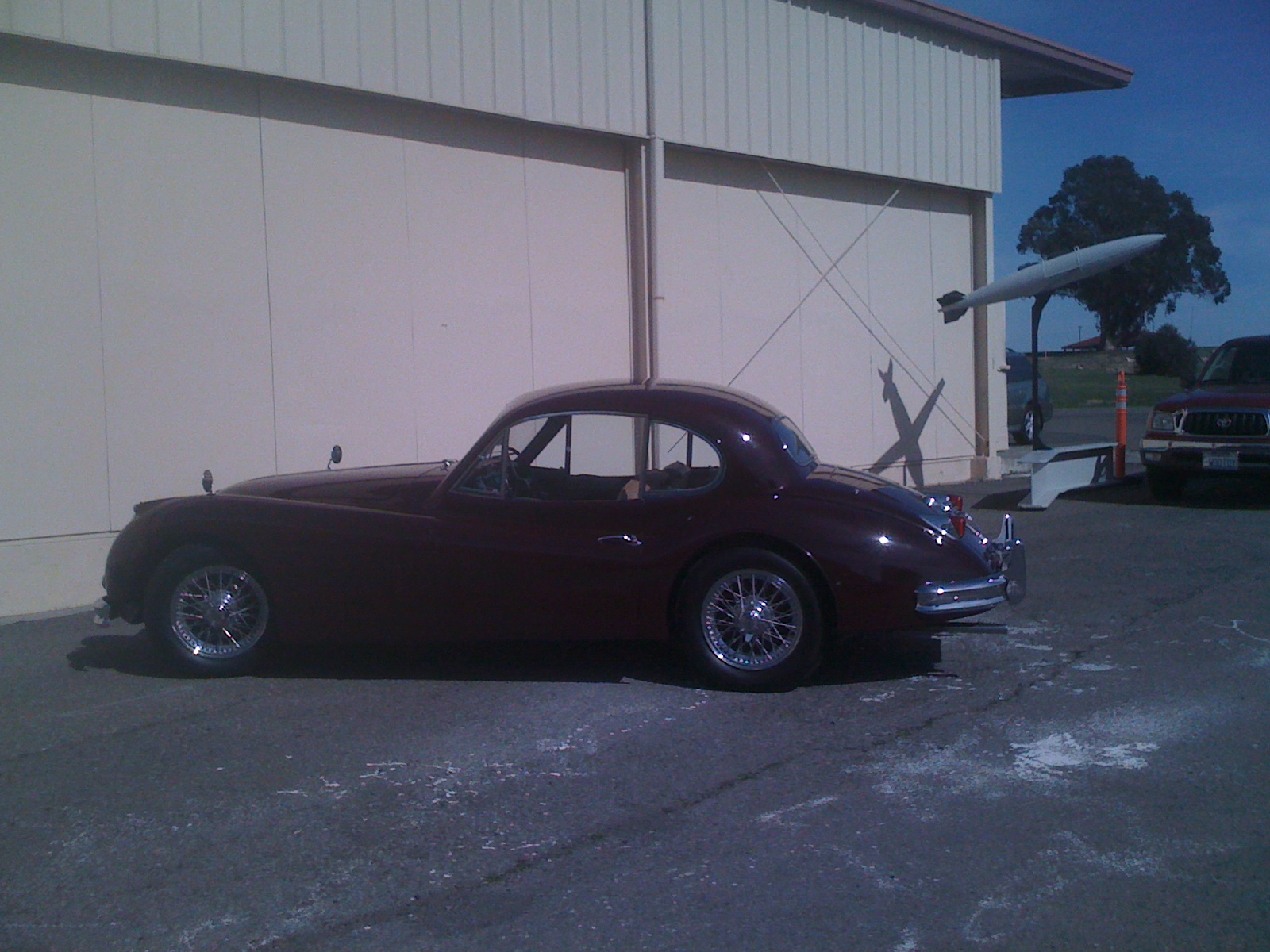
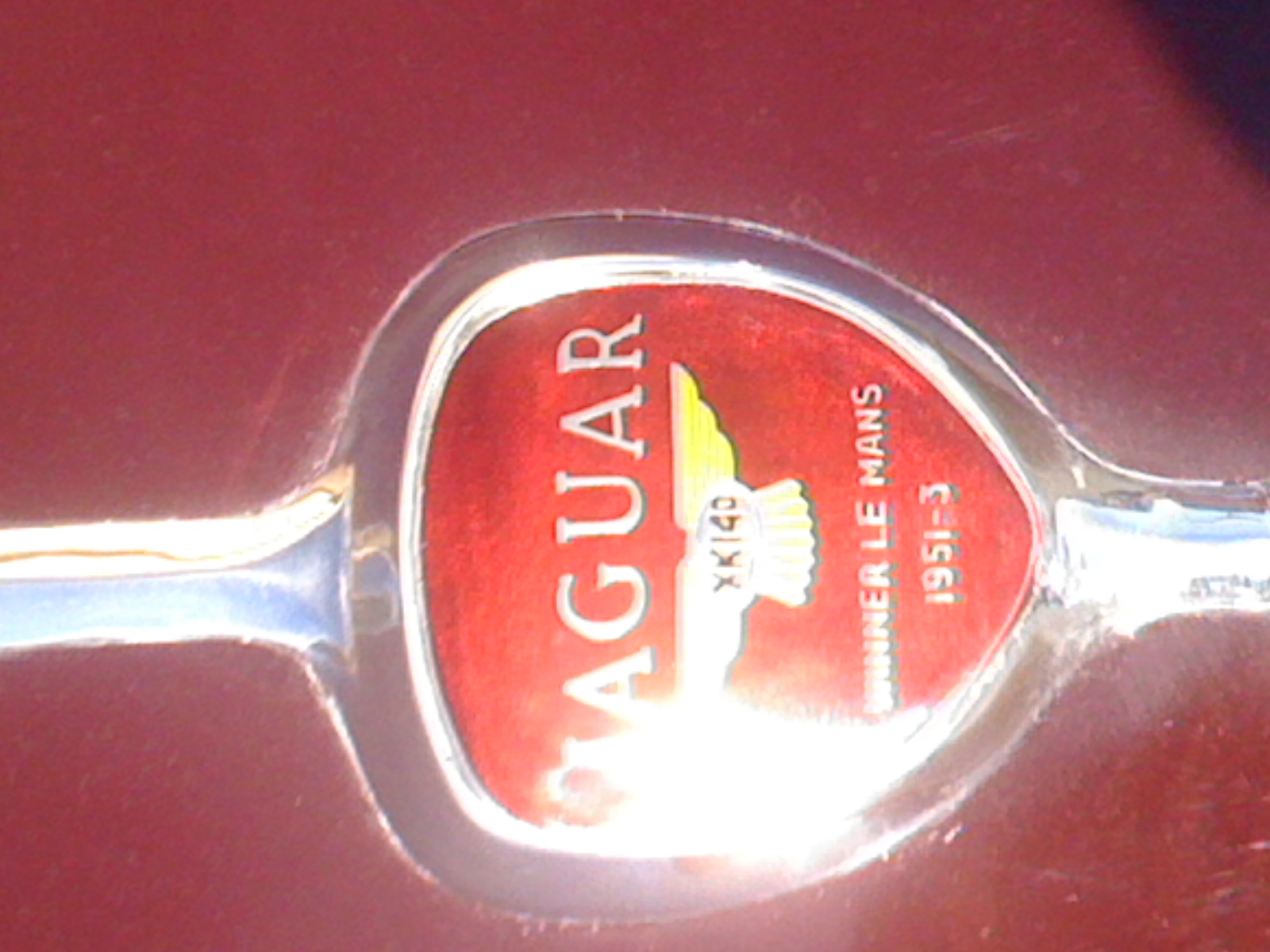
While touring a local air museum and looking at the planes parked outside, I happened to see this beauty parked outside.  I was skeptical about getting closer, but my good ol’ mom convinced me to hop a fence (well, duck it is more like it), and get closer.  Wow.  A beautiful 1958 Jaguar XK140.

The facts:

  • Very few XK140’s were made from 1957-1960.
  • Even fewer were made in this lovely shade of maroon.
  • Mostly, they were convertibles with a body-color hardtop like this pristine example.
  • This car with a 4-speed manual, 3, 4-liter inline, six cylinder and two person seating (with a small cargo shelf), probably cost a fortune to get to this level of restoration.  Maybe over $100K.

Since 2007, XK140’s have been plodding along in value.  Though the xk140 may not be as much fun to drive as an E-type, they are usually an equally affordable option to a 1950’s Corvette.  My advice to current XK140 owners is to hold on to your car.  They will go up in value.  While currently selling for about $60 grand, I would bet that in a few more years, prices will go up.

Back in 1959, these beauties sold for $3,750.  The money spent was well worth it.  Many notable people such as; Jay Leno, Dale Earnhardt, Sr, John Lennon, and Bill Cosby have all owned one at some time or another.  Sir William Lyons would have been proud to know how much these are treasured.

Who Wants to Play “Red-light, Green-light?”

The Traffic Light.  Some might call it the greatest invention of traffic control.  Others might call it a pain in the @$#.  I call it one of the greatest inventions of traffic control.  I had a LOT of fun researching the history of the traffic light!  Uh-oh, I see an amber light ahead…

In 1920, Detroit, Michigan, police officer, William L. Potts got frustrated at the number of cars that would go zooming through the intersection, on many occasions nearly missing a pedestrian.  He devised a signal that had railroad lights that were: green, amber and red.  He then took an old telegraph pole and put the lights on it.  Needing to have power to make the lights flash, he took electrical wiring and hooked it up to the electrical supply for his house.  That was the first electrical traffic signal that the world knew.  It was installed on the corner of Woodward and Michigan avenues in downtown Detroit.

This is what the first traffic signal looked like: Potts Traffic Light photo courtesy The Henry Ford, Greenfield Village.

Before long, there were traffic signals all over Detroit, Washington D.C., Los Angeles, and San Francisco.  Police officers had an easier time controlling traffic, and pedestrians were able to cross the street without having to go across with a coffin and a shovel!

Are you ready for a cool traffic fact?  I thought so.  Do you know what the percentage of drivers do when they see an amber light? Well, 85% of them DON’T know what to do.  That leaves about 10% who DO know what to do.  The final 5% usually get it right 47% of the time.  The other 53% of the time, they get a ticket.  Today, most people hit the brakes suddenly, or floor it.  What you are SUPPOSED to do is slow down, unless you have control of the intersection.  Then, you can floor it…  The red light happens 10 seconds later.  So you can’t go suing me if you go through an amber light turning red, while reading this post, AND get a $1000 ticket for going through a red light while on your cell-phone!

Today, traffic lights have evolved from the humble beginnings of railroad lights to LED lighted traffic lights that are computer driven!  Preposterous…

The Ultimate Self-Driving Machine!

So, you know how BMW has always been known for building the “Ultimate Driving Machine” for so many years?  Well, the car of the future that was being bragged about in the ’50’s was a self-driving car!  Well, more than sixty years later, that brag is starting to come true.  There are many auto-makers working on a self-driving car.

Google, a longtime internet search engine has quietly and patiently been working on a self-driven car.  The cars they are using are six Toyota Prius’, and an Audi TT.  They are currently negotiating with Chevrolet to get a Camaro SS to use for research.  The Priii and TT have logged over 140,000 miles in testing.  These cars are not allowed to drive by themselves.  A manned operator and assistant sit in the driver and passenger seats.  The reason that there have to be an operator and assistant in the car is the car might go crazy and create a major car crash.  The problem is Google would lose years of valuable data.

Nevada passed a bill on June 24, 2011 that makes self-driving cars legal to drive within the state.  An operator must be in the car to make it legal, otherwise the NHP (Nevada Highway Patrol) will pull it over and impound it.  Google met with the governor of Nevada, and showed up to every meeting of the Nevada Legislature.  They even met with the Nevada state rep!

As Google Software Engineer, Sebastian Thrun said on the Google blog, “According to the World Health Organization, more than  1.2 million lives are lost every year in road traffic accidents. We believe our technology has the potential to cut that number, perhaps by as much as half. We’re also confident that self-driving cars will transform car sharing, significantly reducing car usage, as well as help create the new “highway trains of tomorrow.” These highway trains should cut energy consumption while also increasing the number of people that can be transported on our major roads. In terms of time efficiency, the U.S. Department of Transportation estimates that people spend on average 52 minutes each working day commuting. Imagine being able to spend that time more productively.”

You can easily distinguish one of the Google test cars by its roof-mounted laser range finder, which helps it ‘see’ traffic and adjust its speed accordingly.  If any of the software ever malfunctions, the operator in the driver’s seat can turn off all the software as easily as a driver turns off cruise control.

Google also has a deal with Apple to supply them with computers.  The engineers in the cars take all the information from the car onto a computer, which then sends it all to Google’s Mountain View campus.  IBM is also trying to negotiate with President Obama to sign a contract to take out 450 traffic signals around the U.S. and put in “smart” signals.  This means that the signals will be able to transfer traffic information around the area to the car.  If this does work out, then the Google test cars could find out important information, and take a detour.

So far, the Google cars have gone down Lombard street, gone across the Golden Gate Bridge, gone down to Los Angeles from the Mountain View campus of Google software all the way down Highway 1.  They have driven down Rodeo Drive, down Olympic Boulevard in Los Angeles, and driven through LAX.  Wow!  I’ve even seen one in Los Angeles!  You know what I say, ONLY IN LA!

DARPA has also gotten into the self-driven auto field as well.  They host a series of races for self-driven vehicles (none of which Google competed in) across the Mojave desert, and in traffic.  Since DARPA is a branch of the military, the races were heavily sponsored by the US Army. More than 10,000 drivers of supply trucks, tanks, jeeps and HUMVEE’s have been killed since 1945.  The rate is expected to climb up to almost 300 deaths a year in 2020.  So, the Army needs to figure something out.  Soon.  The Army is currently working on a semi truck to tackle the European Alps in 2013.  There is even a documentary on the first DARPA race, titled “NOVA: The Great Robot Race.”

Colorado hosts an annual hill climb at Pikes Peak.  The goal is to get up to the peak in the shortest time possible.  Let me clarify, the hill-climb is for CARS, not people!  At last year’s climb, the Google Audi TT competed.  The Google Audi TT did fairly well for something with a radar system.  It did a 15 minute, 14.453 second hill climb.  Though there was no self-driven class at Pikes Peak, there will be one in 2012.  Now I can see why Google asked for that Camaro SS…  Google is thinking of taking their Audi TT to Infineon Raceway sometime next summer.  They are even thinking of having the car drive itself from Google’s headquarters to Infineon Raceway.  Maybe they’ll do it on a track day!

One can only imagine the possibilities!  You could have the car take the kids to school, take you to work, go to the market with your wife, and then fuel up!  Then pick up the wife and kids, and then you…  How fun!  Especially if the car could cook all your meals for you!  All right, I’ll be quiet now…

I’ll Drive Anything!

Due to various staffing problems, the post I promised for Friday never graced the glorious text of my blog.  Sorry!  Here’s a really helpful tip:  Never go on vacation and expect your family to post your article for you!  Have a friend do it.  They’re more dependable…

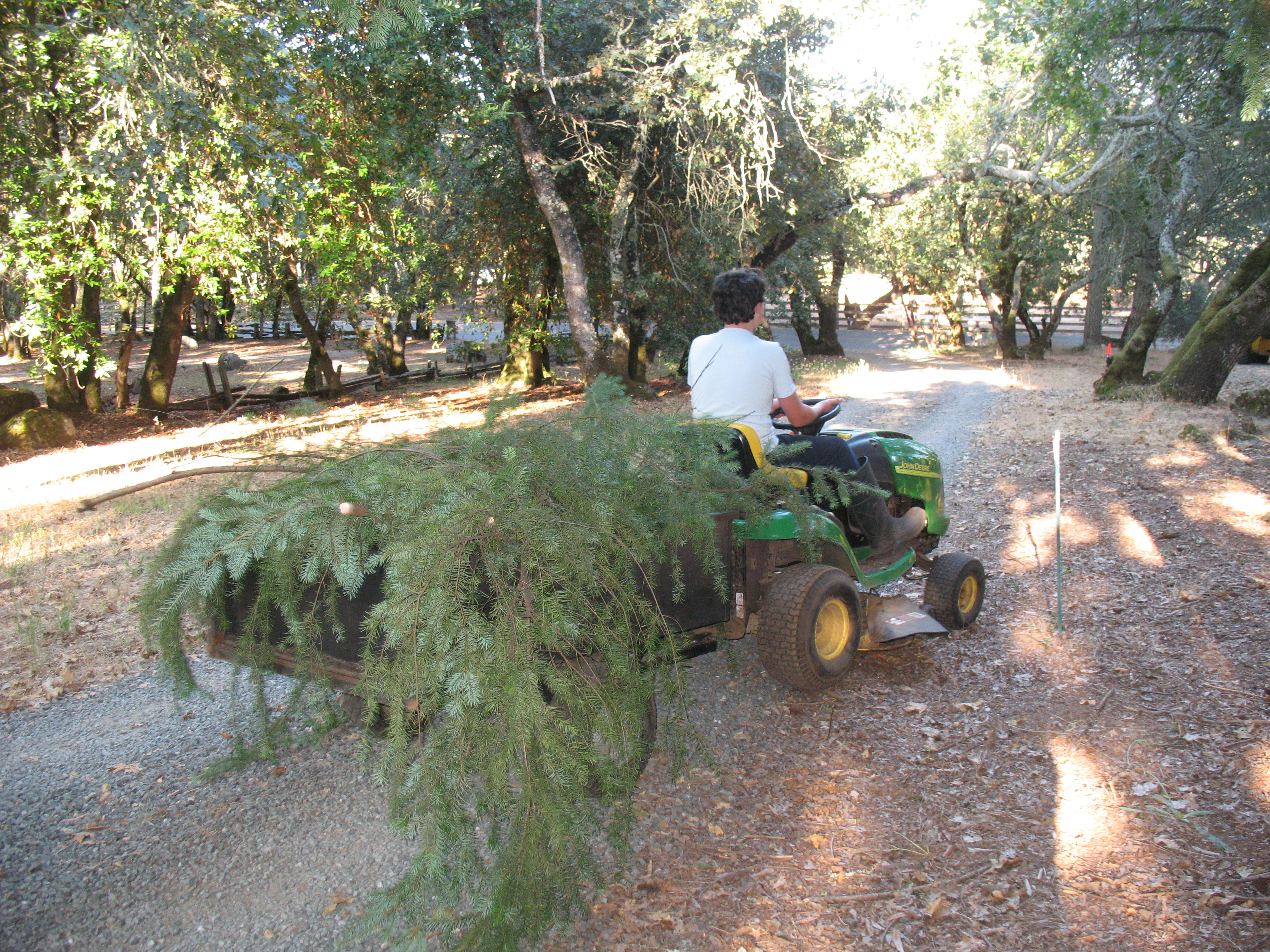
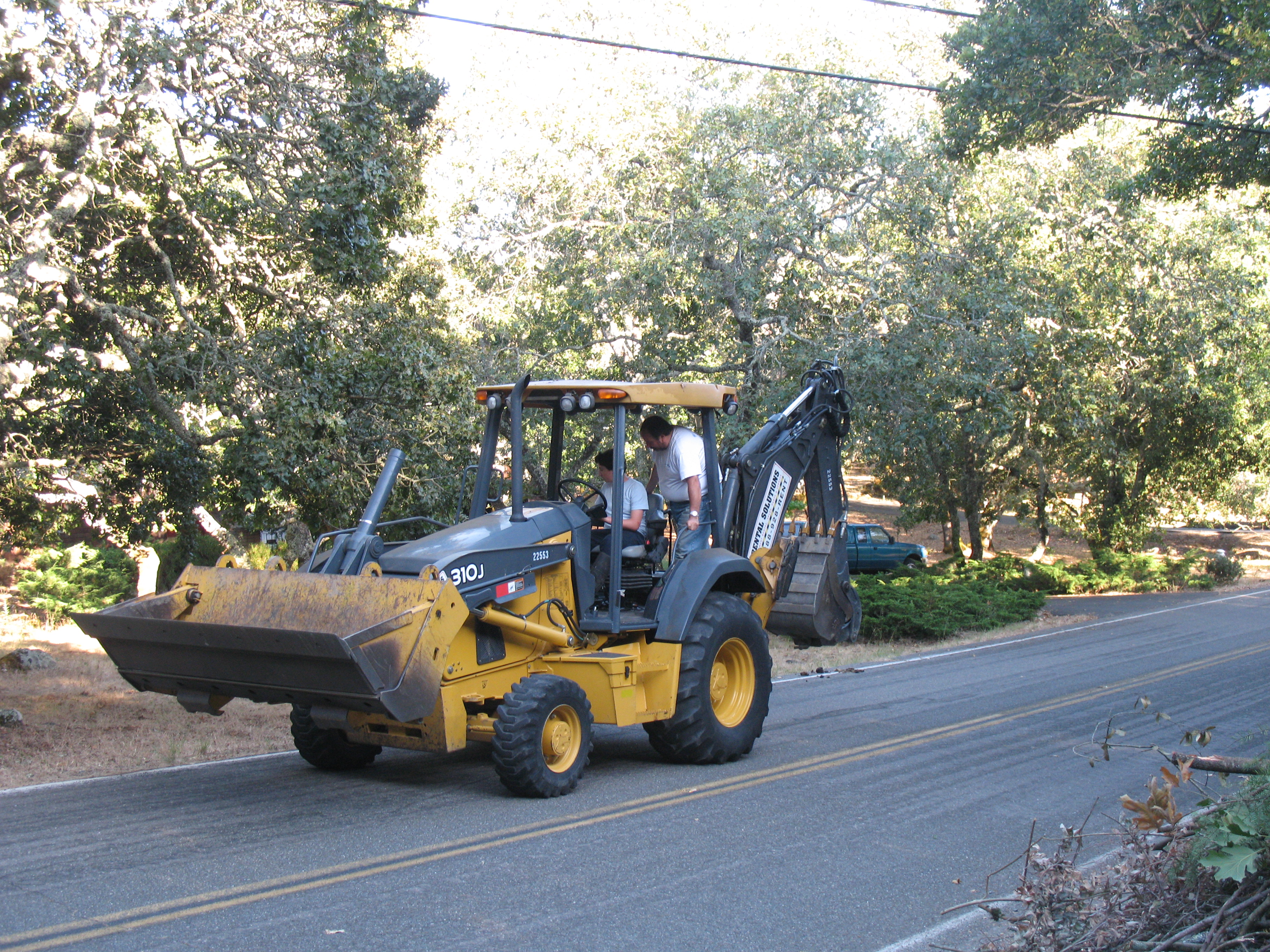
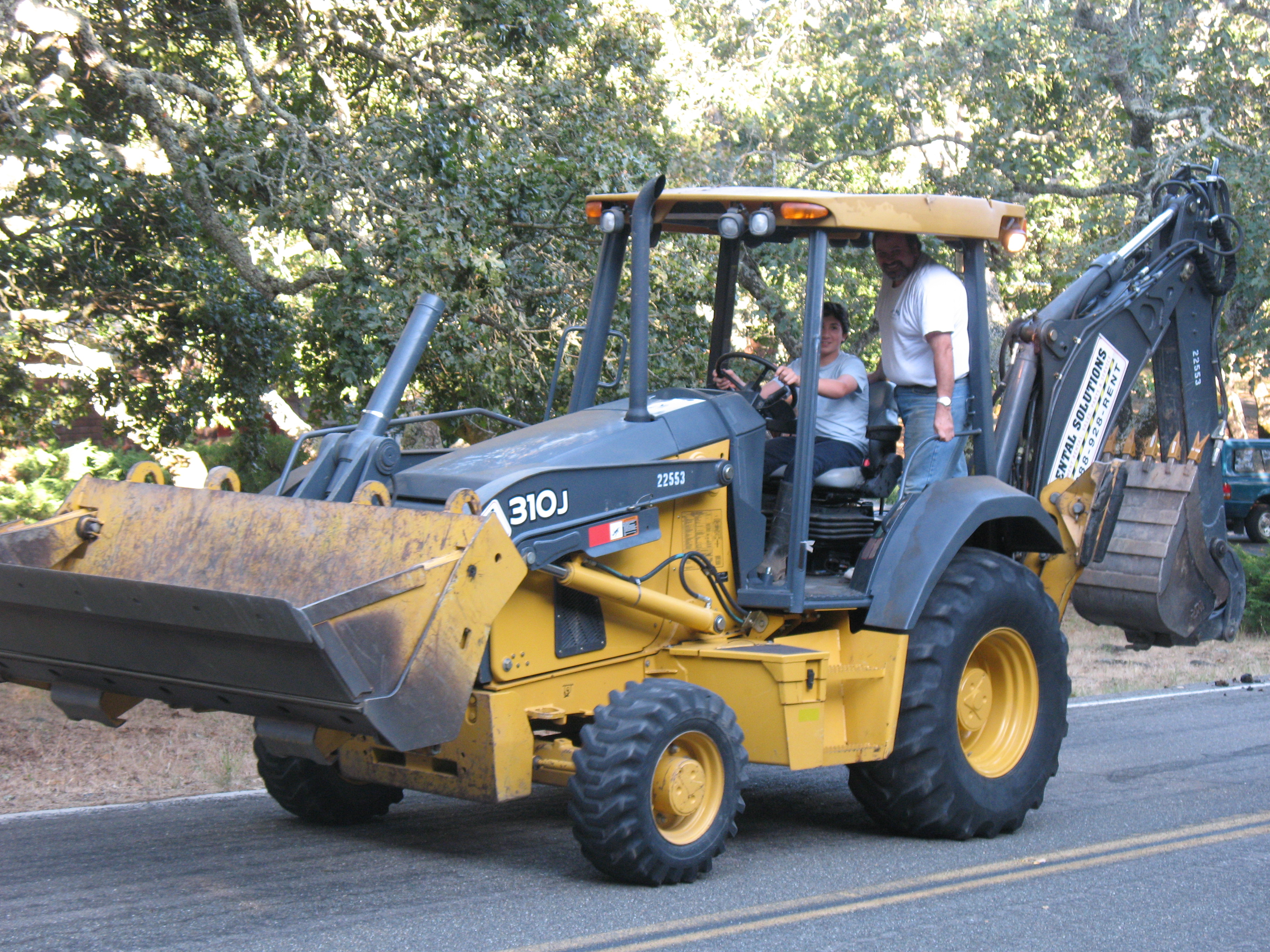
“Really, a thirteen-year-old driving a lawn tractor and backhoe?  I think it’s time to call the Police.”  Don’t.  Really.  It’s okay.  There were adults nearby, and besides I drive the lawn tractor all the time (whenever needed by my parents!). I’m so helpful, as long as it requires heavy machinery and cars (Next up, a cement truck?)

The John Deere L110 (lawn tractor) has a 17.5 horsepower, 0.75 liter single cylinder engine.  It is a two-stroke engine to keep maintenance costs low.  It has a CVT (Continuously Variable Transmission) with a low “gear”, and a high “gear.”  It can tow up to 800 pounds (larger than the competition), and carry up to 400 pounds.  There are some complaints about hitching up the trailer.  Instead of a normal trailer hitch, it has the very old-fashioned way: the Cotter’s pin and small hitch.  It’s very easy to jackknife the trailer, as it is longer than the tractor, and isn’t fifth-wheel.  If it was fifth-wheel, I could go flying (small exaggeration) all over the place!  One can only hope…

With the backhoe, it’s another story.  It was my second time driving one.  The first time, it was a much smaller one (about 5,000 pounds) than the John Deere 310J (around 15,000 pounds) that I drove.  The 310J is easier to drive than it looks.  I mean, you won’t turn out a two minute lap around Virginia International Raceway, but maybe a one hour lap (max speed is 20 mph)!  It won’t turn out a five-second quarter mile either!  But, you can go just about anywhere (that doesn’t include tree-climbing!).  You also should consider a Chrysler Town & Country as a family vehicle; the 310J gets  worse gas mileage and can comfortably hold about three people.  I miss that backhoe SOOOOO much!

Stay tuned for pictures of me driving the family van.

Look out in Italy!

Vroom! Wee-ooh! You’re speeding down an expressway in Italy, and you look back.  There’s a very loud car that looks like it wouldn’t be out of place in a science fiction movie.  You wonder “what is that?”  You think “that can’t be a police car.  It’s too low.  But, there is a light bar and siren.”  So, you pull over.  A well-dressed officer steps out.  You roll down the window, and, believe it or not,  he writes you a ticket.  When he is finished, you ask him what the car is.  He replies “It’s a 2008 Lamborghini Gallardo LP560-4.  Like it?”  You should.  The car cost the Italian Police Force $350,000!

It started out as a normal Lamborghini Gallardo LP-560-4 with the optional Sea Blue color.  They then took it to a custom hot rod shop, and had them put a siren, light bar, and CB radio.  That cost them $50,000.  Next was all the necessary paint, tires, radar gun and laptop computer.  That was $100,000.

Very few officers get to drive it.  The ones that do are the best of the force.  They are handpicked by the Prime Minister of Italy.

Other high-performance police cars include a: Lamborghini Mercielago, Porsche 911 Turbo S, a Chevy Corvette ZR1, a Ford Mustang Shelby GT500 Super Snake, and many more.

Sadly, in 2010, this amazing Lamborghini Gallardo went MIA when it was trying to chase down a hipped-up Toyota Prius.  The Prius had the defective gas pedal and floor mats.  The driver [of the Prius] managed to stop, but the Lamborghini Polizia Gallardo wasn’t.  It smashed into the Prius going 175 mph.  The driver of the Prius was uninjured, but the Gallardo officer was severly injured with a broken neck.

Here are some pictures of the Gallardo.  Ouch.

Lamborghini Gallardo Police Car 1119x759

http://image.automobilemag.com/f/multimedia/photo_gallery/sports_cars/6684253+w1024+h768+st0/0503_lamborghini_gallardo_police_car_02_1024.jpg